Nuclear Labs' $15bn Outside Work: Who Signs Off?
By the Factrail desk · Method: how we source and score · Last reviewed

TL;DR
US nuclear labs recovered nearly $15bn from outside work. New Energy Department rules shift routine approvals to contractors. Who checks the deals?
Key graph impact
The article explains graph entities; the causal edges belong to the facts and drivers it links to.
- ArticleNuclear Labs' $15bn Outside Work: Who Signs Off?
- mentionsDriverNuclear Deterrence Stability
Article
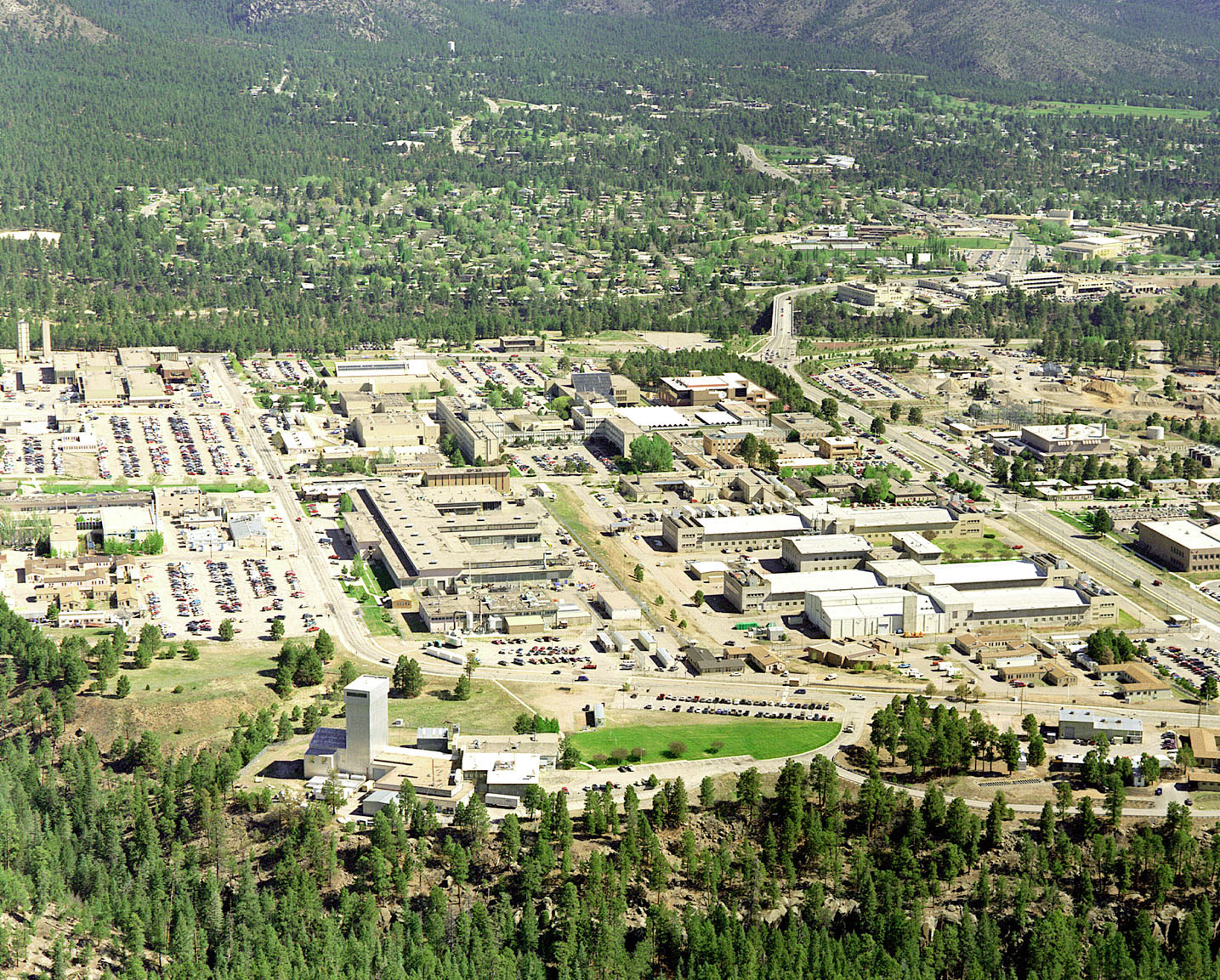 Credit: Los Alamos National Laboratory / Wikimedia Commons; attribution required. Wikimedia Commons file (opens in a new tab).
The institutional accountability trail links US Department of Energy (opens in a new tab), Chris Wright (opens in a new tab) and nuclear deterrence stability (opens in a new tab). Their roles in the policy and oversight chain should be distinguished from any unverified claim of direct financial benefit.
America's Nuclear Labs Recovered Nearly $15bn From Outside Work. New DOE Rules Put More Routine Approvals in Contractors' Hands.
Factrail investigation | United States | Policy decision: 5 August 2026 | Research checked: 2 November 2026
SEO title: Nuclear Labs' $15bn Outside Work: Who Approves the Deals? Meta description: GAO counted almost $15bn of reimbursable nuclear-lab projects. Two new DOE orders delegate some approvals while preserving federal safeguards. Proposed slug (unreserved): nnsa-nuclear-lab-partnerships-15-billion-doe-approval-rules-2026
The finding
The United States' nuclear-weapons laboratories did almost $15 billion of reimbursable work for customers outside the National Nuclear Security Administration (NNSA) between fiscal years 2019 and 2024. That is not $15 billion in private profit, nor a new Trump-era award: the Government Accountability Office's 10 September 2026 review (opens in a new tab) counts costs recovered from sponsors, most prominently other federal agencies. But the money exposes a consequential power question. On 5 August 2026, the Department of Energy (DOE) issued separate rules for federal and non-federal partnerships, permitting contractor-level execution of qualifying projects inside previously approved scopes while retaining federal oversight and higher-risk review. The audit, based mainly on the earlier rule and historical transactions, does not establish how the new delegations are operating. The public accountability test is now whether DOE can demonstrate which sponsor, contractor and federal official authorized each project, how the full costs were recovered, and whether nuclear-weapons priorities were protected.
What is new in this examination
The useful finding is a document crosswalk, not a claim to have discovered secret contracts. GAO's September report describes the scale and economics of the partnerships; DOE's new federal order 481.2A (opens in a new tab) and non-federal order 481.1F (opens in a new tab) define who can approve work after 5 August. An older 2013 GAO investigation (opens in a new tab) explains why independent approval and usable annual reporting matter. A separate March 2026 inspector-general audit (opens in a new tab) tests whether major site contractors classify subcontracts correctly. Read together, these documents identify the decisions and records that could verify accountability. None proves a corrupt deal, a politician's undisclosed stake, or that the newer orders have already weakened controls.
The money is real, but its direction is routinely misunderstood
The GAO found that the eight government-owned, contractor-operated NNSA sites recovered between $2 billion and $3 billion annually from outside sponsors during fiscal years 2019–2024, totaling almost $15 billion expressed in constant fiscal 2024 dollars. The Department of Defense provided about $7.6 billion, or 51% of the six-year total. Sandia National Laboratories accounted for more than half of reimbursed work; Kansas City National Security Campus had the largest percentage growth in reimbursed costs, exceeding 400% across the period. These are different measures: a site total is not a sponsor total, and the DOD and Sandia numbers overlap rather than add together. The audit counted more than 20,000 agreements, not necessarily that many distinct research programs. GAO report, extent and sponsor figures (opens in a new tab).
An outside sponsor pays for labor, equipment use, overhead and other allowable costs associated with its project. In the federal case, the sponsor may be another taxpayer-funded department; one federal account reimburses a different federal enterprise. For non-federal partners, reimbursement can come from companies, universities or other entities. DOE's non-federal rule explicitly permits a sponsor to use money it previously received from federal sources where the original grant or agreement allows it. That is a legal funding condition, not evidence of a particular disguised transfer. A credible beneficiary ledger must identify the original source of funds, the agreement, the receiving site, and the product or intellectual property delivered. It cannot classify all $15 billion as taxpayer subsidies to private corporations.
The documentary timeline: a longstanding business meets new authority
In October 2013, GAO warned that DOE's predecessor Work for Others program lacked consistent independent checks and clear project accounting. DOE subsequently made reforms, including guidance that determinations about eligibility could not simply be delegated to private contractors. GAO marked some recommendations implemented, but the recommendation for readily available annual summary reporting remained closed without implementation after DOE shifted to reporting as needed. That distinction survives in the GAO-14-78 recommendation record (opens in a new tab).
The modern NNSA study covered fiscal 2019–2024, with fieldwork continuing through September 2026. The Senate committee report accompanying the fiscal 2025 defense authorization process requested GAO scrutiny. During the study, DOE replaced the 2024 version of Order 481.1E with two directives approved 5 August 2026: 481.2A for other federal sponsors and 481.1F for non-federal sponsors. GAO's narrative still discusses the previous combined order, so its historical performance figures cannot be treated as a before-and-after evaluation of the August reform. On 10 September the audit was released. On 2 November, the critical unresolved question is whether current DOE transaction records show proper risk classification and federal review under the replacement directives.
There is an additional administrative uncertainty. GAO says NNSA's Office of Strategic Partnership Projects sat under its Office of Enterprise Planning and Analysis during the review, but officials said in June 2026 that the parent office was being eliminated and they did not yet know where the partnership office would move. That is evidence of an announced organizational transition, not proof the function was abolished or that projects went unmonitored. A dated organizational chart and delegation register would settle the question. GAO-26-108229, background and footnotes (opens in a new tab).
The decision and veto map: politicians set direction; officials certify projects
President Donald Trump and Energy Secretary Chris Wright are the politically accountable executive leadership for DOE's current direction, while Congress controls statutory authority, appropriations and oversight. The two August directives were initiated through DOE management offices; the available documents do not show Wright personally approving each agreement or Trump directing an individual laboratory transaction. That is an important boundary between political responsibility for the framework and evidence of personal intervention in a contract.
For federal projects, Order 481.2A requires an eligible mission benefit, no adverse effect on core work, no direct competition with domestic private industry and no detrimental future resource burden. The responsible contracting officer must ensure written determinations and certification. That governmental determination cannot be delegated to a contractor. Federal sponsors must also attest to the relevant legal authority and procurement competition rules. Under a federally approved master scope of work, however, a facility contractor can determine that an individual transaction fits the approved scope without a fresh transaction-level contracting-officer approval. The contractor must document the determination, and the contracting officer retains review, oversight and the duty to place funding onto the contract. Classified work and sensitive activities carry additional controls. DOE Order 481.2A, sections 4(d)–(e) (opens in a new tab).
For non-federal work, Order 481.1F makes risk-based delegation more explicit. Low-risk activity under a previously DOE-approved scope may proceed with delegated contractor-level authority; higher-risk or out-of-scope work requires federal review. The field-office head and contracting officer control the master scope and delegation. A contractor's written determination remains subject to review; foreign-country-of-risk projects and classified activities face additional gates. The federal official can revoke improperly used delegated authority. This is not wholesale privatization of approval, but it does make the quality of risk screening, scope definitions and audit trails consequential. DOE Order 481.1F, sections 1, 4 and 5 (opens in a new tab).
Who is commercially positioned to benefit?
The most visible named private entities are operators of government laboratories, not necessarily the outside sponsors who funded each project. DOE identifies (opens in a new tab) National Technology & Engineering Solutions of Sandia, LLC as Sandia's operator; Sandia identifies it (opens in a new tab) as a Honeywell subsidiary. DOE separately identifies Honeywell Federal Manufacturing & Technologies (opens in a new tab) at Kansas City and Triad National Security (opens in a new tab) at Los Alamos. Those corporate relationships explain who manages personnel, subcontracts and day-to-day facilities. They do not establish that an operator's profit equals the amount of project reimbursements passing through a site.
The direct customer benefits are often operational rather than a dividend. The GAO cites the Missile Defense Agency's use of Sandia for hypersonic target-vehicle testing and describes how Air Force projects can support weapon components. It says some facilities have capabilities not available elsewhere. A private non-federal customer could benefit from unique expertise, accelerated development, rights under a negotiated agreement, or access to specialized infrastructure. The particular financial benefit cannot be assigned to a named company without its SPP contract and cost/rights schedule. In fact, the largest identified sponsor is DOD, a public agency, not a private investor.
A contemporary commercial connection illustrates the risk of careless attribution. Reuters reported on 5 May 2026 (opens in a new tab) that Anduril named Sandia as part of an industry team developing Golden Dome space-based interceptor prototypes, alongside several space companies. This establishes a publicly announced team relationship. It does not establish that Anduril received a particular NNSA SPP agreement, that Sandia was paid through the SPP mechanism, or that the arrangement was approved under the August directives—which were issued later. Those are separate records requiring independent verification.
A cost ledger that changes the taxpayer story
The most revealing accounting figure is not the six-year headline. In fiscal 2024, GAO's table records approximately $2.661 billion in SPP reimbursed costs and $1.368 billion in associated indirect costs, about 52%. Sandia accounted for approximately $1.349 billion of reimbursed costs and $769 million of indirect costs, about 57%; Kansas City accounted for $500.8 million and $220 million, about 44%. The Savannah River site's indirect-cost figure was unavailable, and GAO notes that its prior management arrangement limits comparability. These are site accounting figures for one fiscal year, not contract profit margins or evidence of excessive fees. GAO Table 2 (opens in a new tab).
The mechanism matters. A laboratory's security, utilities, maintenance and technical infrastructure are expensive even when a particular machine is not working on the nuclear stockpile. Charging outside projects a fair allocation of overhead can reduce the amount NNSA itself must finance. If sponsors withdraw, DOE may still have to maintain the capability; federal budgets could absorb more fixed costs. But an overhead charge is not automatically an incremental cost avoided: some expenditures would exist anyway, and allocations depend on cost-accounting rules. To test value for money, Congress needs to see whether direct and indirect charges are appropriate, whether sponsors pay them, and whether the additional workload displaces essential nuclear work. No published figure in these documents computes a net taxpayer saving from eliminating all SPP or from expanding it.
The strongest counter-case: these partnerships can be essential
The argument for preserving outside work is substantive. All nine federal SPP partners GAO interviewed said the projects were essential to their missions; some said NNSA facilities were their only practical source for certain capabilities. Sandia's MESA microelectronics infrastructure can remain active between core assignments. At Nevada, GAO described reimbursed training for radiological first responders, where reduced outside funding could require another way to sustain a public safety capability. At Los Alamos, however, plutonium pit-production demands were already constraining new outside work; the share of site costs associated with SPP fell from about 8% in fiscal 2020 to 6% in fiscal 2024. These are reasons to ration access by mission priority, not evidence that either all expansion or all cuts would be prudent. GAO, mission and capacity sections (opens in a new tab).
The new orders also contain meaningful safeguards: preapproved scopes, written determinations, federal oversight, competition protections, restrictions on sensitive foreign work, and conditions for use of intellectual property. The mere existence of delegated routine approvals does not prove a reduction in actual scrutiny. It could make repetitive low-risk transactions faster while reserving scarce federal review capacity for higher-risk work. That is the strongest administrative defense, and it is testable rather than rhetorical: compare processing time, rejected projects, findings from post-award reviews, exceptions, and corrective actions under both regimes.
An independent contractor audit offers a caution, not a conviction
The DOE inspector general's 4 March 2026 audit (opens in a new tab) examined firm-fixed-price subcontract classifications at Honeywell's Kansas City operation and Triad's Los Alamos operation. It covered more than $1.6 billion of such subcontracts issued from December 2023 through January 2025. Honeywell identified 36 misclassified records, and the audit found one at Triad. The inspector general nevertheless concluded that the operators generally classified subcontracts properly, noted corrective actions and made no recommendations. It recorded no questioned costs in that audit.
Those subcontract dollars are not the GAO's $15 billion SPP ledger; adding them would double-count or conflate different populations without evidence. Nor is a classification error a finding of fraudulent diversion. The relevant lesson is narrower: contractors' internal coding determines which transactions can be found and reviewed. When the August SPP rules allow routine approvals within master scopes, the quality of classification and written contractor determinations becomes a central oversight input. A follow-up audit should test those new SPP records directly rather than infer a violation from an unrelated sample.
The public consequences and who carries the risk
There are at least four constituencies. DOD and other federal customers receive access to specialized weapons, testing and emergency-response capabilities. Private operators manage laboratories and may earn contract fees under their management agreements, but those fees are distinct from SPP reimbursements. Non-federal sponsors can obtain specialized technical work and sometimes rights to results, subject to agreements and security restrictions. Taxpayers ultimately fund much of the infrastructure and, where the sponsor is another federal agency, the reimbursed work itself. The public can benefit from shared use of fixed assets, but can also bear the cost of displaced stockpile work, weak pricing controls or intellectual-property arrangements that fail to protect federal investment.
The possible loss is not automatically $15 billion, $1.4 billion or the full value of a management contract. The first is a six-year reimbursed-cost total; the second is one year's allocated overhead reimbursement; a management contract finances broader operations. Any claim of personal enrichment by Trump, Wright or laboratory executives would require separate financial and decision evidence. None has been established here. The accountability finding is that public assets and private contractor discretion intersect at approval and cost-allocation points whose effectiveness must be checked transaction by transaction.
What the evidence cannot yet answer
The publicly reviewed records do not provide a complete 2026 transaction-by-transaction list of non-federal sponsors, their ultimate beneficial owners, the origin of their funds, or the intellectual-property rights negotiated. They do not disclose how many post-August projects used master scopes or delegated approvals, how many were rejected as high risk, whether field offices performed timely spot checks, or how the office reorganization was completed. The GAO's historical data stop at fiscal 2024; it would be misleading to label them the current 2026 revenue run-rate. Nor does the Golden Dome partnership announcement prove an SPP payment to any particular company.
No direct right-of-reply request was made to DOE, NNSA, Honeywell, Triad, Sandia or Anduril in preparing this documentary draft. Their publicly available positions and the auditors' reported agency comments are represented; this is not a claim of fresh interviews. The report must remain a draft pending independent legal, editorial and technical review.
What would change the finding
The decisive disclosure would be a machine-readable register showing project ID, sponsor, public or private funding origin, contract operator, scope, risk tier, federal approval or delegation, date, direct and indirect charges, reimbursements, any subcontracting, and rights to the deliverable. A second test would compare site-specific nuclear-mission capacity and delayed work before and after approval; a third would compare approved versus rejected applications and the actual findings of periodic field-office audits. The new directives expressly assign duties to contracting officers, field elements and the CFO. Those records should make it possible to distinguish lawful, valuable collaboration from unreviewed exceptions.
The evidence-bounded verdict is therefore neither that national laboratories are secretly being sold to private companies nor that every dollar of outside work is an efficiency dividend. Federal facilities performed a large, documented reimbursable business; DOE has now clarified and divided its approval pathways, including controlled contractor discretion. The next accountability decision belongs to DOE leadership and Congress: demand proof that the delegated approvals, cost recovery and mission safeguards work in practice rather than treating the presence of written rules as proof of their enforcement.
Documentary sources
- GAO, Nuclear Security Enterprise: Strategic Partnership Projects Can Support Mission, Operations, and Research, GAO-26-108229, 10 September 2026 (opens in a new tab).
- DOE Order 481.2A, Federal Strategic Partnership Projects, approved 5 August 2026 (opens in a new tab).
- DOE Order 481.1F, Non-Federal Strategic Partnership Projects, approved 5 August 2026 (opens in a new tab).
- GAO, National Laboratories: DOE Needs to Improve Oversight of Work Performed for Non-DOE Entities, GAO-14-78, 25 October 2013 (opens in a new tab).
- DOE Office of Inspector General, DOE-OIG-26-18, 4 March 2026 (opens in a new tab).
- DOE, Sandia National Laboratories management contract (opens in a new tab).
- Sandia National Laboratories, Partnerships National Reach and operator disclosure (opens in a new tab).
- DOE, Kansas City National Security Campus management contract (opens in a new tab).
- DOE, Los Alamos National Laboratory management contract (opens in a new tab).
- Reuters, Anduril announces team for Golden Dome interceptor effort, 5 May 2026 (opens in a new tab).
- DOE/NNSA, Strategic Partnership Projects program description (opens in a new tab).
- DOE, Sandia site-wide environmental review and 2026 record of decision (opens in a new tab).
Evidence
The sources this article cites, claim-bearing material first.
- gao.gov · gao.gov/products/gao-26-108229
- energy.gov · energy.gov/documents/doe-o-481-2-afederal-strategic-partnership-projects2026-07-23pdf
- energy.gov · energy.gov/documents/doe-o-481-1-fnon-federal-strategic-partnership-projects2026-07-23pdf
- gao.gov · gao.gov/products/gao-14-78
- energy.gov · energy.gov/ig/articles/audit-doe-oig-26-18
- files.gao.gov · files.gao.gov/reports/GAO-26-108229/index.html
- energy.gov · energy.gov/nnsa/sandia-national-laboratories-contract
- sandia.gov · sandia.gov/partnerships_reach/index.php
- energy.gov · energy.gov/nnsa/kansas-city-national-security-campus-contract
- energy.gov · energy.gov/nnsa/los-alamos-national-laboratory-contract
- reuters.com · reuters.com/science/anduril-announces-team-its-golden-dome-space-based-missile-interceptor-effort-2026-05-05
- energy.gov · energy.gov/nnsa/strategic-partnership-projects-spp
- energy.gov · energy.gov/nepa/doeeis-0556-site-wide-environmental-impact-statement-continued-operation-sandia-national
More analysis
Ranked by shared facts, drivers and people — never by publication date alone.