How Ratcliffe’s closure completed the UK coal-power phase-out
TL;DR
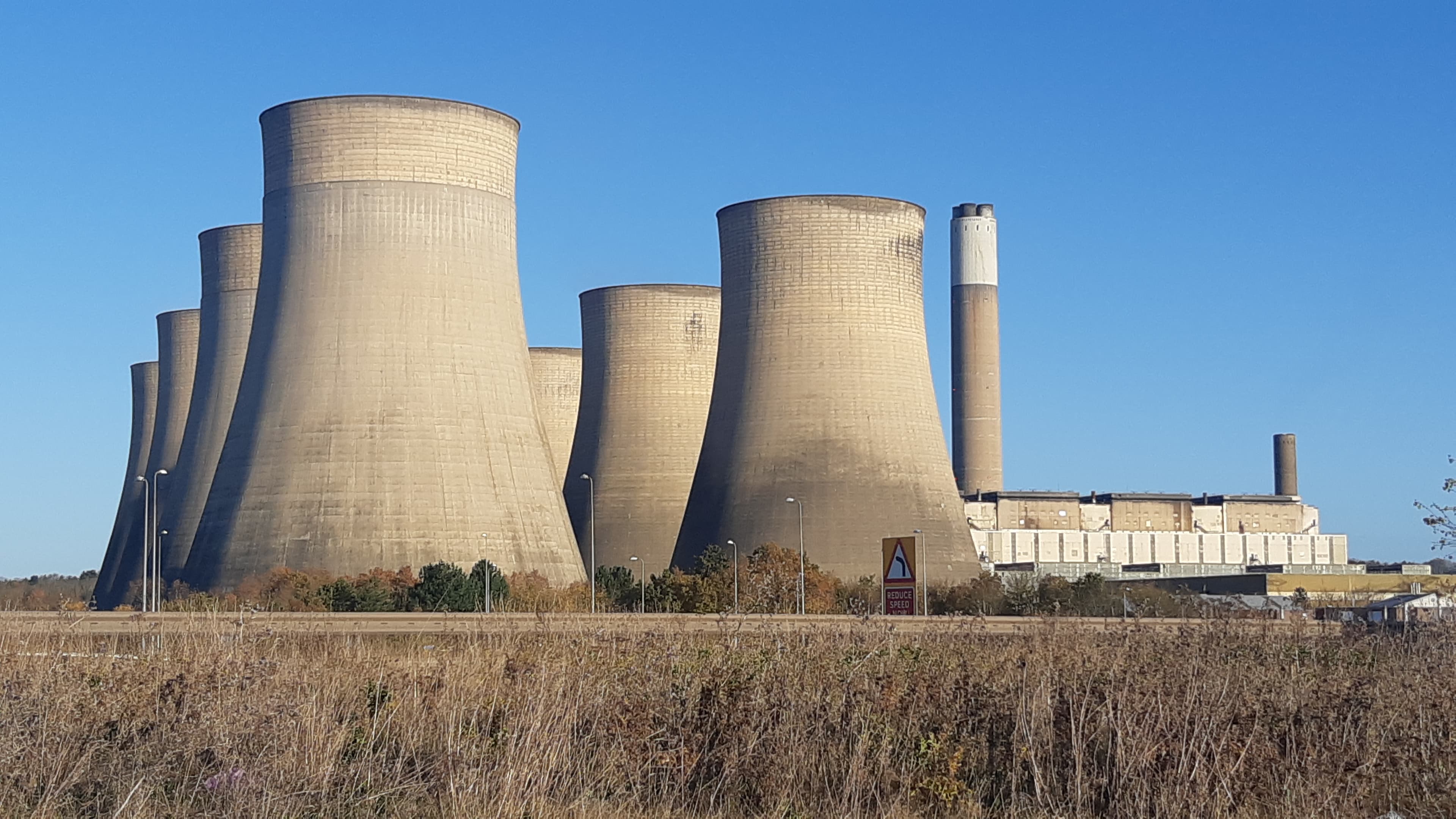
A source-grounded analysis of the final UK coal-plant closure, the official fuel-share series, and a transparent normalization that does not turn chronology into causal proof. The shutdown of Ratcliffe-on-Soar on 30 September 2024 closed the last operating coal-fired power station in the United Kingdom.
By the Factrail desk · Method: how we source and score · Last reviewed
Article
Executive summary
The shutdown of Ratcliffe-on-Soar on 30 September 2024 closed the last operating coal-fired power station in the United Kingdom. Uniper, the station’s owner and operator, announced that the plant would cease generation that day. Associated Press and Reuters independently reported the same final-plant event. The action completed a public policy timetable: the UK government had set 1 October 2024 as the date from which Great Britain would no longer use coal to generate electricity.
The evidence shows a long decline rather than a one-day transformation. The government’s 2021 policy statement reports that coal supplied about 40% of UK electricity generation in 2012 and 1.8% in 2020. The 2025 Digest of United Kingdom Energy Statistics reports a 0.7% share in 2024. Energy Trends then reports no coal-fired power-station generation in the first quarter of 2026. These are official observations with their original annual or quarterly frequency, not estimates created for this pack.
For a narrow “coal-power phase-out completion” driver, the pack normalizes the observed coal share against the documented 2012 value: P(t) = 1 − C(t)/40, bounded to the interval from zero to one. Here C(t) is coal’s percentage share of UK electricity generation. This produces transparent points of 0 in 2012, 0.955 in 2020, 0.9825 in 2024, and 1 in the first quarter of 2026. The formula is a declared progress scale, not a claim that the normalized number is a welfare score.
The causal chain
Three different propositions must remain separate. First, the government recorded a policy decision with a deadline. Second, Uniper recorded an operating action: closure of the last station. Third, official electricity statistics recorded the national fuel-mix outcome. The chronological fit is strong, but chronology alone cannot establish how much of the decline was caused by the deadline, carbon pricing, renewable investment, plant economics, electricity demand, gas generation, imports, or other factors.
The graph therefore stores the closure as a reviewed fact and links it to the phase-out driver through an AI-drafted Fact–Driver interpretation. Its impact direction is positive because closing the final plant is aligned with completion of the narrowly defined phase-out. Its impact weight is 0.0175, equal to the remaining normalized gap represented by a fall from the documented 2024 share of 0.7% to the zero benchmark on a 40-point baseline. That weight is bookkeeping within this declared scale. It does not estimate the fraction of historic decarbonization caused by Uniper.
The Driver–Indicator interpretation has strength 1 and direction −1 solely because the driver was defined as the exact inverse transformation of this one indicator. It is a definitional mapping, not an empirical causal coefficient. The indicator importance weight is 1 because this narrow driver model has one indicator. It must not be compared as a moral, economic, or environmental priority score across unrelated topics.
The contribution record assigns Uniper a direct contribution size of 1 for the scoped act “owner and operator closes the final named station.” The denominator is the set of direct actors responsible for that particular plant-closing act, not the full set of institutions and people that drove the UK’s multi-decade transition. The contribution remains review-required because the interpretation and its scope were drafted by AI.
What is uncertain
The policy and outcome concern coal used for electricity generation. They do not mean that the United Kingdom ended coal mining, industrial coal consumption, coal imports, or every lifecycle emission associated with the power system. The Q1 2026 zero is a quarterly power-station-generation observation; it does not by itself identify where displaced generation came from or quantify net emissions.
The 2024 share is an annual value that includes months before and after the 30 September closure. It is therefore appropriate as a final non-zero annual observation but not as a same-day measurement of the plant’s output. The Q1 2026 point is a quarterly confirmation of the post-closure state, not evidence that the closure alone caused every change in the fuel mix.
The government policy page supplies the official zero benchmark and two historical observations, while DUKES and Energy Trends supply later official observations. Their definitions should be rechecked together during human review for any revision or series-break note. The Reuters link is a syndication page because the accessible canonical Reuters story is reproduced there; the publisher and syndication relationship are recorded explicitly.
All causal edges, normalized weights, and scoped contribution values in this pack are interpretations awaiting human review. The source-backed fact, dates, and published fuel-share figures are kept distinct from those interpretations. No Person score, welfare score, or cross-topic ranking is calculated.
Evidence
The sources this article cites, claim-bearing material first.
- Uniper · The end of an era - Ratcliffe-on-Soar power station ends coal generation · 30 Sept 2024
- UK Department for Business, Energy & Industrial Strategy · End to coal power brought forward to October 2024 · 30 Jun 2021
- UK Department for Energy Security and Net Zero · DUKES 2025 Chapter 5: Electricity · 31 Jul 2025
- UK Department for Energy Security and Net Zero · Energy Trends: June 2026 · 30 Jun 2026
- Associated Press · Britain’s last coal-fired electricity plant is closing. It ends 142 years of coal power in the UK · 30 Sept 2024
- Reuters (syndicated by MarketScreener) · Britain to become first G7 country to end coal power as last plant closes · 29 Sept 2024