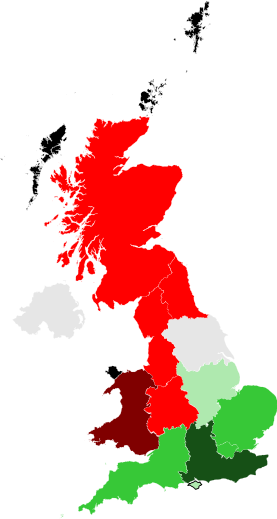
Boundary Commission for England
United Kingdom
The Boundary Commission for England reviews the geography of parliamentary constituencies so representation can adjust to registered electorate numbers and statutory requirements.
About
Why constituency lines matter
The Boundary Commission for England reviews the geography of parliamentary constituencies so representation can adjust to registered electorate numbers and statutory requirements. It is not a political party, the Electoral Commission or the United Kingdom's election administrator. Nevertheless its recommendations affect the territories in which every major English party competes. In 2023 the four UK commissions completed reviews that redistributed the existing 650 Commons seats across the four nations, allocating 543 to England, 57 to Scotland, 32 to Wales and 18 to Northern Ireland. The new constituencies were used in the July 2024 general election. For voters, parties and analysts, changed borders affect the comparability of election results and can alter which local communities share an MP. This effect is institutional, not proof that commissioners favoured one party.
Mandate and separation from politicians
England's commission exists under the Parliamentary Constituencies Act 1986 as amended, including by the Parliamentary Constituencies Act 2020. It works within statutory criteria for electorate equality, geography and representation of local connections. Ministers and parties may express views, and citizens participate in consultation, but published recommendations are developed through a legally defined independent review procedure. The commission cannot change the number of Commons members at will, decide the government's migration policy or award seats directly to a party. It recommends constituency names and boundaries using the prescribed electorate data. After completion, a separate legal implementation process gives boundaries effect. Parliamentary candidates then compete under election law; the Returning Officer, Electoral Commission and polling administrators perform different jobs.
The 2023 allocation in figures
The 2023 review allocated England 543 constituencies, ten more than the previous 533. Scotland fell from 59 to 57, and Wales from 40 to 32, while Northern Ireland remained at 18. The commission described two protected constituencies on the Isle of Wight, for which special arrangements applied. The four commissions had to operate within a total of 650 UK Commons seats. The statutory electorate range for most constituencies in the review was 69,724 to 77,062 registered voters, based on the specified quota and tolerance, with protected seats treated differently. The underlying measure was registered electors rather than the entire resident population. Children and people not eligible to register are therefore not counted in the same way. A constituent boundary is not intended as a census map showing equal numbers of all residents.
Consultation and methodological judgment
The English commission examined local ward boundaries, geographic size, community ties, existing constituencies and comments from interested parties. Initial and revised proposals underwent consultations, including public hearings and written evidence. The final English recommendations were submitted in 2023, and the formal statutory process followed before the 2024 election. There is no mathematical solution that preserves every previous constituency intact while also meeting strict electorate requirements. Changing one seat can require adjustments in neighbouring districts, creating trade-offs between population equality, administrative simplicity and local attachments. An apparent benefit to a political candidate may be a by-product of several legitimate constraints. Claims of deliberate political manipulation would require evidence that commissioners departed from statutory rules or improperly acted at a party's direction.
Financial and staffing boundaries
The commission's work is funded from public expenditure rather than member dues or corporate campaign donations. Its operating resources cover staff, electoral data, public consultation, publication and mapping activity; it does not command the much larger central government budget or the Electoral Commission's spending. Precise expenditure should be cited from the applicable annual accounts or departmental expenditure disclosures, with the reporting year specified. The constituency figure of 543 is the size of the English parliamentary allocation, not the commission's workforce or a monetary budget. There is no meaningful private membership number for the commission, because it is a public boundary-review body rather than a mass-membership organisation. The direct burden on taxpayers is the cost of conducting an independent review; downstream costs include communicating changed constituency boundaries and updating election systems.
Who benefits and who pays
Registered voters benefit when parliamentary constituencies meet a consistent electorate standard, limiting persistent differences in the number of electors represented by each MP. Communities can benefit when a commission respects geographic connections, though some will be separated from neighbours with whom they previously shared a representative. Election administrators and parties face adjustment costs when constituency boundaries change, including constituency association reorganisation, campaign data updates and new polling information. Residents bear the inconvenience of learning which seat they now live in; taxpayers fund the statutory review and its official implementation. A political party may gain or lose winnable areas in the new map, but the consequences depend on actual voter preferences and turnout. Electoral fairness is not identical to equal seats for equal national vote shares under first-past-the-post.
Impact on 2024 party comparisons
The 2024 election produced a large Labour majority, a significant Conservative defeat, a dramatic Liberal Democrat rise and rising support for Reform UK. Comparing a 2024 constituency result to 2019 without adjusting for changed borders risks attributing a boundary-induced composition effect to voter persuasion. Researchers use notional historical estimates when they want to compare results on comparable boundaries; those estimates remain calculations rather than ballots actually cast in 2019 under the new map. A national vote-share figure, by contrast, can be compared across elections without assigning old votes to new constituencies, although turnout and electorate composition still change. Commission reports identify which wards moved and should therefore be the foundation for local electoral maps and causal interpretations.
What the commission does not control
The Commission for England does not redraw devolved legislature constituencies as a single universal operation and does not supervise political parties' finances. Its electoral boundaries should not be confused with local authority districts, police areas, health-care catchments or postal addresses. It does not determine whether a voter is eligible to register, administer individual ballot counts or investigate unlawful campaign donations. Other public bodies perform those roles under different legal mandates. A boundary change can create new parliamentary seats with names familiar to residents but should not be taken as evidence of a change in local council tax authority or the jurisdiction of a court. Any effect on the allocation of public grants would require the separate formula of the grant programme to be identified.
Accountability and next review signals
The official final report, map files and consultation records allow independent inspection of whether the statutory rules were followed. For later comparisons use the commission's 2023 final report together with the UK Parliament's constituency guidance and official election returns. A fresh boundary review requires the relevant legally prescribed schedule, updated electorate data and a new consultation sequence. Analysts should track the formal start and closing dates rather than assume boundaries will change on every election cycle. The UK Electoral Commission, Conservative Party, and Reform UK provide related electoral context, but none has authority to set the Commission's statutory final boundaries.
Source documents
- Official record (opens in a new tab)
- Parliamentary reference (opens in a new tab)
- Financial or constituency evidence (opens in a new tab)
- Institutional background (opens in a new tab)
- Governing law or party review (opens in a new tab)
- Electoral process evidence (opens in a new tab)
- Official government reference (opens in a new tab)
- Independent election regulator (opens in a new tab)
By the Factrail desk · Method: how we source and score · Last reviewed