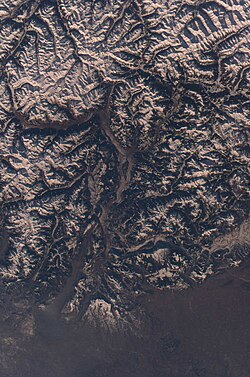
Trentino-Alto Adige/Südtirol
Trentino-Alto Adige/Südtirol is an autonomous region in northern Italy, bordering Austria and Switzerland…
Expert article
Trentino-Alto Adige/Südtirol is an autonomous region in northern Italy, bordering Austria and Switzerland, comprising the two autonomous provinces of Trentino and Bolzano (South Tyrol), with a total area of 13,607 km² and a population of 1,077,143 as of January 2023. The region features dramatic Alpine terrain, including the Dolomites, supporting economies centered on tourism, agriculture, and manufacturing, while maintaining one of Italy's highest GDP per capita figures, exceeding 45,000 euros regionally in 2023 driven by provincial variations such as South Tyrol's 59,800 euros. Formerly part of the Austro-Hungarian Empire, the territory was annexed by Italy following the 1919 Treaty of Saint-Germain-en-Laye, leading to ethnic tensions addressed through the 1946 Gruber-De Gasperi Agreement and the 1948 Autonomy Statute, which established Italian and German as official languages alongside protections for the Ladin minority. This framework grants substantial legislative and fiscal powers to the provinces, fostering stability despite historical separatist sentiments in the German-speaking north, and positions the region as a model of ethnic accommodation through decentralized governance rather than centralized assimilation.
History
Ancient and Medieval Periods
The region of Trentino-Alto Adige/Südtirol was inhabited during the late Bronze Age and Iron Age by Alpine tribes associated with the Fritzens-Sanzeno culture, spanning roughly the 6th to 1st centuries BC, characterized by hilltop settlements, bronze metallurgy, and burial practices indicating a semi-nomadic pastoral society. These peoples, collectively known as the Raeti, spoke a non-Indo-European language related to Etruscan and occupied the mountainous terrain from the Adige Valley northward into what is now South Tyrol, engaging in transhumant herding and limited agriculture suited to the alpine environment.
In 15 BC, Roman forces under Drusus and Tiberius conquered Raetia, including the Trentino-Alto Adige area, during campaigns aimed at securing the Alpine passes against potential invasions and integrating the region into the empire's northern defenses; the province of Raetia was formally established shortly thereafter, with Tridentum (modern Trento) founded as a key colony around 40-10 BC to administer the area. Roman infrastructure, such as the Via Claudia Augusta over the Brenner Pass constructed by 47 AD, facilitated military logistics and trade, while the province's primary value lay in its strategic barrier role rather than mineral or agricultural output, with local Raeti populations gradually Romanized through veteran settlements and Latin administration. By the 3rd century AD, Raetia was divided into Raetia Prima (including Trentino) and Secunda, but the region suffered depopulation from Marcomannic Wars and economic decline, contributing to its vulnerability during the empire's late crises.
Following the Western Roman Empire's collapse, the area fell under Ostrogothic control in the late 5th century under Theodoric, who maintained Roman administrative structures while promoting Arian Christianity among Germanic elites. The Lombard invasion of Italy in 568 AD established the Duchy of Trent, encompassing Trentino and parts of South Tyrol, as a frontier duchy under Lombard kings, marked by decentralized rule, fortified gastaldates, and a mix of Roman-Latin and emerging Germanic influences in law and land tenure. In 774, Charlemagne's Frankish forces defeated the Lombards, annexing the duchy into the Carolingian Empire as the March of Verona, with local governance shifting to Frankish counts and bishops who enforced Christianization and feudal obligations amid ongoing raids by Slavs and Avars.
During the high Middle Ages, the Bishopric of Trent emerged as a temporal power, elevated to princely status in 1027 by Holy Roman Emperor Conrad II, granting the bishop (initially Udalric) secular authority over Trentino's valleys and fostering ecclesiastical control over trade routes and silver mines at Schwaz and elsewhere. In South Tyrol, the Bishopric of Brixen (established 970) paralleled this, administering German-speaking areas under imperial oversight, while gradual German linguistic expansion occurred through Bavarian and Swabian settlers invited post-Carolingian to repopulate depopulated lands and defend passes. By the 12th century, the Counts of Tyrol, originating from the Meinhardiner dynasty around 1140 under Meinhard I, consolidated feudal lordships in the Eisack and Puster valleys, acquiring South Tyrol through inheritance and imperial grants; their rule emphasized castle fortifications like those at Tyrol Castle and economic integration via salt and transit tolls, setting the stage for Habsburg acquisition in 1363. This period saw ethnic stratification, with Romance-speaking valleys in Trentino under bishopric dominance and Germanization intensifying northward, driven by migration and administrative preferences rather than coercion.
Habsburg Rule and Early Modern Era
The County of Tyrol, encompassing the territories of modern Trentino-Alto Adige/Südtirol, entered Habsburg possession in 1363 when Margaret, the last Countess of Tyrol, bequeathed it to her late husband Rudolf IV's brother, Duke Albert III of Austria, integrating the region into the dynasty's Alpine holdings. This acquisition secured Habsburg control over key transalpine trade routes and passes, enhancing strategic connectivity between their Austrian and Swabian lands. The southern portions, including German-speaking South Tyrol and Italian-speaking Trentino, formed integral parts of the county, ruled initially as Habsburg counts of Tyrol.
In Trentino, the Prince-Bishopric of Trent functioned as a semi-autonomous ecclesiastical principality under Habsburg suzerainty since the 14th century, with prince-bishops holding temporal power over the area south of the Adige River. Habsburg emperors, as protectors of the bishopric, exerted influence over episcopal elections and policy, aligning it with imperial interests despite its imperial immediacy. The bishopric's governance supported local development, including fortifications like the Buonconsiglio Castle in Trento, which served as the princes' residence.
The early modern period saw the hosting of the Council of Trent from 1545 to 1563, summoned by Habsburg Emperor Charles V to address Protestant challenges through doctrinal clarification and ecclesiastical reforms central to the Counter-Reformation. Convened in Trento, the council's 25 sessions produced decrees on justification, sacraments, and clerical discipline, bolstering Catholic unity and suppressing Reformation influences in Habsburg territories, including Tyrol's staunchly Catholic populace.
Tyrol's economy during this era depended on alpine mining, with silver extraction in Schwaz peaking in the 16th century and funding Habsburg coinage and wars through dedicated mints. Copper and salt production complemented agriculture and trade, sustaining regional prosperity amid feudal structures. Local estates assembled in the Tyrolean Landtag wielded influence over taxation and legislation, often resisting Viennese centralization to uphold customary rights and militia traditions.
During the Napoleonic Wars, following Austria's cession of Tyrol to Bavaria in the 1805 Peace of Pressburg, widespread discontent led to the 1809 Tyrolean Rebellion against Bavarian and French occupation. Andreas Hofer, an innkeeper from the Passeier Valley, rose as a key leader, organizing peasant militias that achieved victories, including the defense of Innsbruck at Bergisel in August 1809. Despite temporary Austrian support, the rebellion collapsed after Austria's defeat at Wagram; Hofer was betrayed, captured by Italian forces, and executed by firing squad in Mantua on February 20, 1810. Hofer endures as a symbol of Tyrolean resistance and regional identity, particularly in South Tyrol, where he is commemorated through monuments, festivals, and historical narratives.
Annexation to Italy, Fascism, and World Wars
Following the armistice of Villa Giusti on November 3, 1918, Italian forces occupied Trentino and South Tyrol, regions previously under Austro-Hungarian control. The area was formally annexed to the Kingdom of Italy via the Treaty of Saint-Germain-en-Laye, signed on September 10, 1919, between the Allied Powers and Austria; the treaty ceded territories south of the Brenner Pass despite South Tyrol's predominantly German-speaking population, which comprised over 90% according to the 1910 Austro-Hungarian census. This annexation fulfilled promises made to Italy in the 1915 Treaty of London for its entry into World War I against the Central Powers, prioritizing strategic depth and irredentist claims over ethnic self-determination principles advocated by U.S. President Woodrow Wilson. Trentino, with its Italian-speaking majority, integrated more seamlessly, while South Tyrol's German-speakers faced immediate cultural tensions, though initial post-war administration under the liberal government allowed limited bilingualism.
The rise of Benito Mussolini's Fascist regime in October 1922 intensified assimilation efforts, particularly targeting South Tyrol's German ethnic identity through systematic Italianization. German-language schools were closed by 1923, replaced by Italian-only instruction; place names were Italianized via geographer Ettore Tolomei's 1926-1927 decrees, renaming Bozen as Bolzano and over 8,000 toponyms; and economic incentives drew approximately 70,000 Italian settlers to the region by 1940, diluting the local population. In Trentino, fascist policies focused less on linguistic suppression—given the prevailing Italian usage—but enforced corporatist economic controls, infrastructure projects like hydroelectric dams, and suppression of autonomist sentiments, with local clergy and socialists facing repression. Resistance manifested in passive non-compliance and cultural preservation, but overt opposition risked internment; by 1939, the Hitler-Mussolini "Option Agreement" allowed South Tyroleans to choose German citizenship and resettlement in the Reich or assimilation in Italy, with 86.5% opting out but wartime disruptions limiting actual emigration to about 75,000 individuals.
World War II transformed the region's status after Italy's armistice with the Allies on September 8, 1943, prompting Nazi Germany to occupy and annex Trentino-Alto Adige as the Operationszone Alpenvorland (Operational Zone of the Alpine Foothills) on October 7, 1943, under Gauleiter Franz Hofer. This zone encompassed both Trento and Bolzano provinces, reversing fascist Italianization by reinstating German administration, reopening German schools, and renaming sites in German, while conscripting around 15,000 South Tyroleans into the Wehrmacht or Waffen-SS, resulting in over 10,000 casualties. Trentino experienced similar militarization but less ethnic reorientation due to its demographic profile, serving as a defensive rear against Allied advances; partisan activity escalated, with Italian, German-Austrian, and Yugoslav groups clashing, culminating in reprisals like the 1945 Arco massacre of 23 civilians by retreating German forces. The zone persisted until Allied liberation in May 1945, after which Italian sovereignty was restored, though the period exacerbated ethnic divides and claims of wartime atrocities on both sides.
Post-1945 Autonomy Struggles and Ethnic Terrorism
Following the end of World War II, South Tyrol remained under Italian sovereignty as confirmed by the 1947 Paris Peace Treaty, but the accompanying Gruber-De Gasperi Agreement of September 5, 1946, obligated Italy to grant autonomy to the German-speaking population of Bolzano Province and adjacent bilingual areas in Trentino, including equitable economic development, preservation of ethnic identity, language rights, and proportional administrative representation. Austria was designated as the international protector to monitor implementation, reflecting concerns over Italy's historical assimilation policies. The 1948 Italian Constitution and inaugural Autonomy Statute established Trentino-Alto Adige as a special region, yet centralized powers within the regional government—dominated by the Italian-speaking majority in Trentino—undermined effective self-rule for the approximately 225,000 German-speakers in South Tyrol, who comprised over 60% of the provincial population but held minimal influence. This disparity fueled grievances, with South Tyrolean leaders petitioning for provincial separation and fuller autonomy, often invoking self-determination principles amid fears of cultural erosion.
Dissatisfaction intensified in the 1950s as Italian settlement policies and administrative Italianization persisted, prompting the formation of irredentist groups advocating reunification with Austria or independence. The Etschtal Committee (Etschlandes Befreiungsausschuss) evolved into the South Tyrolean Liberation Committee (Befreiungsausschuss Südtirol, BAS), founded around 1956 by Sepp Kerschbaumer, a local activist, alongside former combatants seeking to internationalize the issue through sabotage. From September 1956, BAS orchestrated over 300 attacks by 1961, targeting electricity pylons, rail lines, and Italian symbols to disrupt infrastructure without initial civilian casualties, aiming to expose autonomy failures and compel diplomatic intervention. The campaign peaked with the "Night of Fire" on June 11–12, 1961, when BAS detonated explosives at 37 high-voltage pylons supplying Bolzano's industrial zone, alongside dozens of other blasts, blacking out parts of northern Italy and drawing global media attention.
Italy responded with heightened security, deploying thousands of troops and launching Operation "Paesi" to dismantle networks through raids and arrests; Kerschbaumer was captured in November 1961 and died in custody in December 1964 under disputed circumstances, amid allegations of mistreatment. Violence escalated into direct confrontations, including the June 26, 1967, Cima Vallona ambush by BAS militants, killing four Italian soldiers—the deadliest incident—and prompting Italian counterterrorism measures. Overall, from 1956 to 1969, ethnic terrorism resulted in approximately 21 deaths (including security forces and attackers), 80 injuries, and extensive property damage, though BAS avoided mass civilian targeting to maintain moral claims to self-determination. Austria escalated diplomatic pressure via United Nations resolutions in 1960 and 1961, accusing Italy of treaty violations and straining bilateral ties to near-rupture.
These struggles catalyzed negotiations, culminating in the 1969 South Tyrol Package, which operationalized the 1972 revised Autonomy Statute by devolving powers to provinces based on linguistic proportions—92% to South Tyrol for German-speakers—encompassing education, culture, economy, and welfare, while phasing out residual terrorism as implementation progressed. The accords addressed causal roots of unrest, such as demographic safeguards and fiscal autonomy, reducing incentives for separatism, though isolated attacks persisted into the 1980s before full pacification.
Autonomy Implementation and Modern Stability (1972–Present)
The Second Statute of Autonomy for Trentino-Alto Adige/Südtirol, promulgated on November 10, 1971, and entering into force in 1972, devolved the majority of legislative and administrative competencies from the regional level to the two autonomous provinces of Trento and Bolzano, establishing a de facto provincial federalism within Italy. This reform addressed prior ethnic grievances by granting South Tyrol (Bolzano province) parity with Trentino in regional decision-making, including proportional representation based on linguistic groups for parliamentary seats and public employment. Implementation proceeded gradually through a "calendar of competencies," transferring powers in areas such as education, health, agriculture, and tourism over two decades, with completion by 1992.
Fiscal autonomy was a cornerstone, enabling the provinces to retain over 90% of locally generated tax revenues—such as income, property, and tourism taxes—shifting South Tyrol from near-total dependence on central funding in the 1970s to self-sufficiency by the 1990s. This financial independence facilitated targeted investments in infrastructure, vocational training, and sector-specific policies, driving economic divergence from Italy's national averages. By 2023, South Tyrol's GDP reached €32 billion with per capita income at €62,100, the highest among Italian provinces, fueled by tourism (contributing 15-20% of output), apple production, and small-scale manufacturing; Trentino mirrored this with sustained employment growth and population retention amid Alpine depopulation trends elsewhere.
The autonomy's power-sharing mechanisms, enforcing ethnic proportionality in governance and services, quelled post-1945 ethnic terrorism and irredentism, transforming latent conflict into cooperative stability without assimilation pressures. Separatist sentiments, once tied to Austrian reunification, evolved into demands for enhanced provincial powers within Italy, with no major violence since the 1970s and cross-border ties via EU frameworks like the Alpine macro-region initiative reinforcing integration. Politically, provincial governments have operated continuously, with fragmented coalitions reflecting linguistic balances but yielding policy continuity; the 2023 South Tyrol elections, for instance, produced a 12-party provincial council yet maintained Südtiroler Volkspartei dominance in German-speaking blocs.
By its 50th anniversary in 2022, the statute was hailed as a model of consociational success, underpinning low unemployment (around 3% in South Tyrol), high life expectancy, and minimal emigration, though debates persist over central government encroachments on fiscal shares and infrastructure like the Brenner Base Tunnel. The framework's resilience stems from causal incentives aligning local control with prosperity, obviating radical alternatives amid Italy's broader instability.
Geography
Physical Features and Borders
Trentino-Alto Adige/Südtirol occupies 13,607 square kilometers in northern Italy, forming the country's northernmost region and lying entirely within the Alps, with flat terrain limited to valley floors along major rivers. The region borders Switzerland's Graubünden canton to the northwest, Austria's Tyrol state to the north, Lombardy to the west, and Veneto to the south and east. The Brenner Pass, at 1,370 meters elevation, serves as the primary border crossing with Austria along the A22 motorway and railway lines.
The landscape features rugged mountainous terrain, including the Dolomites—a UNESCO World Heritage site spanning northern and eastern portions with distinctive jagged limestone peaks rising above 3,000 meters. The highest peak is Ortler at 3,905 meters near the Lombardy border in the west, while Marmolata, at 3,343 meters on the Veneto border in the east, is the tallest in the Dolomites. Valleys such as the Val d'Adige and Val d'Isarco carve through the region, supporting settlements and agriculture at lower elevations between 200 and 1,000 meters. The region contains 3,992 named mountains, underscoring its alpine dominance.
Climate, Hydrology, and Natural Resources
The climate of Trentino-Alto Adige/Südtirol varies significantly due to its alpine topography, transitioning from subcontinental conditions in the broader valleys to harsh alpine regimes at elevations above 2,000 meters. In lowland areas such as Bolzano, average annual temperatures approximate 11°C, with July highs reaching 28°C and January averages around 1°C. Trento experiences seasonal extremes from winter lows of -2°C to summer highs of 26°C. Precipitation is moderate, ranging from 700 to 900 mm annually in South Tyrol to 800 to 1,000 mm in Trentino, with higher amounts in southern and western sectors influenced by orographic lift from southerly winds; snowfall dominates above 1,500 meters, supporting winter tourism but also avalanche risks.
Hydrologically, the region is dominated by the Adige River, Italy's second-longest at 410 km, originating near Lake Resia at 1,550 meters elevation and draining a basin encompassing much of the territory before flowing south into the Po Valley. Key tributaries include the Noce, Avisio, and Fersina rivers, which originate in high alpine catchments and contribute to flood-prone dynamics during snowmelt. The area features over 300 lakes, with the northern basin of Lake Garda (partially in Trentino) being the largest, alongside Caldonazzo, Levico, Idro, Ledro, and glacial bodies like Braies and Resia; these reservoirs support irrigation, recreation, and power generation amid seasonal variability exacerbated by cryosphere melt.
Natural resources center on water and forests, with hydroelectricity leveraging abundant alpine runoff through over 860 plants across the provinces of Trento (280 facilities) and Bolzano (587), accounting for 17.8% of Italy's total hydropower capacity and contributing to northern Italy's outsized role in national production. Forests cover approximately 66% of Trentino's land area, primarily coniferous species managed for timber and erosion control, while South Tyrol maintains similar dense woodland at lower elevations. Mineral deposits, historically exploited for copper, silver, lead, zinc, and iron at sites like Predoi and Monte Calisio, now yield limited output, with mining largely supplanted by tourism and preservation efforts.
Biodiversity and Protected Areas
Trentino-Alto Adige/Südtirol features exceptional biodiversity driven by sharp altitudinal gradients, from low-elevation Mediterranean-influenced valleys to nival zones above 3,000 meters, fostering diverse ecosystems including broadleaf forests, coniferous woodlands, alpine meadows, and glacial refugia. In Trentino, vascular flora encompasses over 2,300 species, while South Tyrol records approximately 2,600 taxa, with 83% indigenous or archaeophytic and notable endemics like Primula tyrolensis and Saxifraga facchini. Fauna is characterized by robust populations of large mammals, including an estimated 100 brown bears (Ursus arctos), 26 grey wolf (Canis lupus) packs, over 36,000 roe deer (Capreolus capreolus), 30,000 chamois (Rupicapra rupicapra), and 12,000 red deer (Cervus elaphus) in Trentino, alongside raptors such as golden eagles (Aquila chrysaetos) and reintroduced bearded vultures (Gypaetus barbatus).
Approximately 30% of the region's land area falls under protection, encompassing national parks, provincial nature parks, and reserves that conserve habitats critical for endemic and migratory species amid pressures from tourism and climate change. The Stelvio National Park, established in 1935 and spanning parts of Trentino and South Tyrol, protects high-alpine environments with key fauna like alpine ibex (Capra ibex) and edelweiss (Leontopodium nivale). Trentino's Adamello Brenta Nature Park safeguards the largest protected area in the province, emphasizing geological features intertwined with biodiversity hotspots, while the Paneveggio Pale di San Martino Natural Park harbors ancient forests and endemic plants.
South Tyrol maintains seven nature parks, including Puez-Odle, Fanes-Sennes-Braies, and Sciliar-Catinaccio, which collectively preserve Dolomitic karst landscapes, glacial cirques, and species-rich meadows, supported by ongoing biodiversity monitoring programs tracking habitat types from near-natural forests to agricultural zones. The Dolomites UNESCO World Heritage Site, designated in 2009 across 141,903 hectares including significant portions of the region, underscores the area's global significance for evolutionary biology and geodiversity, hosting over 2,400 plant species and serving as a refuge for alpine endemism. These protections integrate scientific monitoring with policy to mitigate anthropogenic impacts, ensuring habitat connectivity for mobile species like ungulates and birds.
| Protected Area | Province | Establishment | Key Features |
|---|---|---|---|
| Stelvio National Park | Trentino & South Tyrol | 1935 | Alpine ibex, edelweiss, glacial ecosystems |
| Adamello Brenta Nature Park | Trentino | 1967 (reserve; park status later) | Largest in Trentino, ungulate populations, paleontological sites |
| Paneveggio Pale di San Martino Natural Park | Trentino | 2002 | Endemic flora, ancient spruce forests |
| Puez-Odle Nature Park | South Tyrol | 1990 | Dolomitic plateaus, high biodiversity meadows |
Politics and Governance
Autonomy Statute and Institutional Framework
The Special Statute of Autonomy for Trentino-Alto Adige/Südtirol, a constitutional law under Article 116 of the Italian Constitution, was initially enacted as Law No. 5 on 26 January 1948 but underwent major revision through Constitutional Law No. 1 of 20 January 1972, entering into force via Presidential Decree No. 670 on 31 August 1972. This revision devolved extensive legislative and administrative powers—encompassing education, health, agriculture, tourism, local transport, and environmental policy—from the regional assembly to the provinces of Trento and Bolzano, establishing the provinces as the core units of self-governance to accommodate the territory's linguistic diversity. The statute's constitutional status shields it from override by ordinary national legislation, with implementation overseen through bilateral commissions involving state and provincial representatives.
, a 35-member legislative body elected every five years to handle residual competencies such as interprovincial coordination, external relations, and certain fiscal policies, convening alternately in Trento and Bolzano. The Regional Government, led by a president elected by the council, executes these functions, though its role is subordinate to provincial autonomy. Financial provisions under Title VI allocate national transfers and tax revenues directly to the provinces, enabling independent budgeting; in 2024, the combined provincial budgets exceeded €8 billion.
Provincial institutions predominate, each mirroring state structures but with tailored ethnic safeguards. The Provincial Council (35 members, elected provincially every five years) enacts legislation and oversees the executive; the Provincial Government (typically 10-11 members) implements policies, with composition in Bolzano reflecting linguistic group proportions via proportional representation. The Provincial President, elected by the council, heads the government, promulgates laws, and negotiates with Rome. Joint bodies like the Commission of Twelve (regional-state) and Commission of Six (Bolzano-state) resolve disputes and enact the 137 protective measures from the 1969 Package, fully implemented by 1992.
Ongoing reforms, approved in draft by Italy's Chamber of Deputies on 7 October 2025 (192-0 vote with 32 abstentions), seek to clarify powers, enhance minority protections, and streamline joint commissions without altering core devolution. These adjustments address post-1992 encroachments by national laws, reaffirming the statute's emphasis on internal self-determination over irredentism.
Linguistic Proportions and Power-Sharing Mechanisms
The linguistic composition of Trentino-Alto Adige/Südtirol is determined through decennial censuses where residents declare affiliation to one of the recognized language groups, serving as the basis for proportional allocations in governance and public services. In the Province of Bolzano (South Tyrol), the 2024 census reported 68.61% of residents in the German language group, 26.98% in the Italian group, and 4.41% in the Ladin group, reflecting a slight decline in German and Ladin shares since 2011. The Province of Trento, by contrast, remains overwhelmingly Italian-speaking, with over 97% declaring Italian as their primary language and small Ladin and other minorities concentrated in specific valleys like Val di Fassa. Region-wide, these distributions yield approximately 62% Italian speakers, 34% German, and 4% Ladin, with the divide largely aligning with provincial boundaries due to historical settlement patterns and post-World War II migrations.
Power-sharing mechanisms, enshrined in the 1972 Autonomy Statute, prioritize ethnic proportionality to mitigate historical tensions from Italianization policies under Fascism, ensuring no group dominates institutions despite demographic majorities. In South Tyrol, the 35-seat Provincial Council allocates seats strictly proportional to language group sizes from the census, with elections segmented by group: voters select within their declared group via separate lists, preventing dilution by majority preferences and guaranteeing representation (e.g., Germans typically hold about 23-24 seats, Italians 7-9, Ladins 1-2). The Provincial Government mirrors this ratio, comprising a president (conventionally from the largest German group), vice-presidents from Italian and German groups, and ministers distributed accordingly, with Ladin assured at least one post if proportions fall below thresholds. Public employment, housing allocations, and provincial budget shares follow similar proportionality, extending to bilingual requirements in administration and education, where German and Italian hold equal status alongside Ladin in designated areas.
In Trentino, mechanisms are less elaborate owing to linguistic uniformity, but the Statute mandates protections for the Ladin minority, including co-official status in five municipalities, dedicated schools, and proportional access to cultural funding. The regional council, with 70 seats split evenly between provinces, indirectly incorporates linguistic considerations through South Tyrol's group-based elections, though de facto provincial autonomy since 1972 shifts most power-sharing to local levels. These arrangements, reviewed via periodic censuses like the 2024 iteration, have stabilized intergroup relations by institutionalizing veto-like safeguards against majority overreach, though critics argue they entrench segregation over integration.
Provincial Governments, Elections, and Key Figures
, and an executive junta appointed by the president from council members. Provincial elections occur every five years, determining the composition of the 35-seat councils in each province, with the president elected via preferential voting among party lists. These structures reflect the region's special autonomy, granting provinces legislative and executive powers in areas such as education, health, and local taxation, superseding regional institutions in most matters.
In the Province of Trento, Maurizio Fugatti of the Lega has served as president since November 2, 2018, leading a center-right coalition. Fugatti secured re-election on October 22, 2023, with 51.8% of the vote against challengers from the center-left, amid a fragmented council where the Democratic Party gained seats to reach seven, while Lega held six and Brothers of Italy five. The provincial executive includes up to seven assessors, focusing on policies like economic development and environmental management.
The Province of Bolzano, dominated by German-speaking autonomists, is governed by President Arno Kompatscher of the South Tyrolean People's Party (SVP) since 2014. Kompatscher was re-elected in the October 22, 2023, elections, where SVP received 34.5% of the vote—its lowest share since World War II—yet retained a plurality, forming a coalition with Italian-speaking and Ladin parties to secure a majority in the 35-seat council. Key opposition includes the Team Köllensperger (11.1%) and Greens (10.9%), reflecting ethnic power-sharing mandates that allocate seats proportionally by language group: 70% German, 25% Italian, 5% Ladin. The executive emphasizes bilingual administration and cross-border cooperation with Austria.
Prominent figures include Fugatti, noted for advancing provincial fiscal autonomy, and Kompatscher, who has navigated SVP's declining dominance by alliances preserving ethnic equilibria. Historical leaders like Luis Durnwalder (SVP, 1989–2014) shaped modern stability, while ongoing debates involve integrating rising populist forces without eroding consociational safeguards.
Controversies: Separatism, Centralism, and Ethnic Tensions
The annexation of South Tyrol to Italy in 1919 under the Treaty of Saint-Germain-en-Laye, followed by fascist policies of forced Italianization from 1922 to 1943—including bans on German language use, Italianization of toponyms, and resettlement of Italian speakers—intensified separatist sentiments among the ethnic German majority, who comprised over 90% of the population at the time. Post-World War II, the 1946 Gruber-De Gasperi Agreement between Italy and Austria pledged linguistic protections and autonomy for German- and Ladin-speakers, yet the 1948 Autonomy Statute integrated South Tyrol into a regional framework dominated by Italian-majority Trentino, perpetuating grievances over diluted ethnic safeguards and prompting irredentist calls for reunification with Austria.
Separatist activism escalated in the 1950s, with the Südtiroler Befreiungsausschuss (South Tyrolean Liberation Committee), founded in 1956 by Sepp Kerschbaumer, orchestrating over 300 bombings and acts of sabotage targeting power lines, railways, and Italian military sites to internationalize the dispute; these attacks resulted in 21 deaths, including civilians and security personnel, between 1956 and 1969. Austria's 1960 appeal to the United Nations, which passed resolutions urging negotiations, combined with domestic pressure from the Südtiroler Volkspartei (SVP), led to the 1969 "Package" of 137 protective measures and the 1972 Autonomy Statute (Constitutional Law No. 1), devolving legislative powers in education, culture, and welfare to the provinces while instituting ethnic proportionalism for public sector jobs and housing allocations. The 1992 UN deed of discharge between Italy and Austria formally ended the international phase of the conflict, though fringe separatist groups persist.
Centralist impulses from the Italian government have recurrently tested the autonomy's boundaries, as seen in delays to the 1972 statute's full implementation until 1988 and ongoing litigation before the Constitutional Court, which has curtailed provincial authority in areas like environmental regulation and fiscal transfers under the 2009 Law on Fiscal Federalism (No. 42). In the 2020s, disputes have included Rome's interventions in provincial budgeting amid national debt pressures and challenges to ethnic-based power-sharing mechanisms, viewed by local autonomists as encroachments eroding the consociational model that allocates parliamentary seats and resources proportionally to linguistic groups (69.4% German, 26.1% Italian, 4.5% Ladin per 2011 census).
Ethnic tensions, rooted in historical demographic engineering and post-war Italian immigration, manifest in segregated linguistic school systems—German, Italian, and Ladin tracks with minimal intergroup contact—and disputes over bilingual toponymy, where dual naming remains contested despite legal mandates. Proportionality rules ensure ethnic quotas in public employment (e.g., German-speakers holding 70% of posts by 2010), but critics argue they reinforce divisions and hinder integration of recent migrants outside the three groups. Recent electoral gains by separatist parties like Süd-Tiroler Freiheit, which secured third place with rising vote shares in 2023 provincial elections, signal lingering identity frictions, fueled by perceptions of cultural dilution and economic disparities favoring Italian-speakers in certain sectors, though outright violence has ceased and interethnic cooperation prevails in governance.
Economy
Macroeconomic Indicators and Regional Disparities
Trentino-Alto Adige/Südtirol ranks among Italy's wealthiest regions, characterized by high GDP per capita, low unemployment, and robust employment rates driven by tourism, specialized agriculture, and manufacturing. In 2023, the provinces of Bolzano/Bozen and Trento recorded GDP per capita figures of 59,800 euros and 46,400 euros, respectively, far exceeding the national average of approximately 35,000 euros. The region's overall economic growth in 2023 was modest, with real GDP volume increasing by about 0.4% in the Northeast macro-area, though Trentino specifically saw only 0.2% growth amid population increases outpacing output.
Unemployment remains exceptionally low, below 3% regionally in recent years, compared to Italy's 7.6% average in 2023, supported by employment rates exceeding 72% in 2024—among the highest nationally. Trentino's unemployment stood at 3.7% in 2023, while South Tyrol's labor market tightness reflects even stronger performance, with an employment rate of 74.2% in 2024 versus Italy's 62.2%. These indicators underscore the region's resilience, though productivity challenges persist, particularly in Trentino, where OECD analysis highlights labor shortages and a smaller export-oriented manufacturing base relative to national peers.
Significant disparities exist between the provinces, with South Tyrol outperforming Trentino across key metrics due to factors including higher-value tourism, apple and wine exports, and administrative efficiency under its autonomy framework. South Tyrol's GDP per capita is nearly 29% higher than Trentino's, reflecting structural differences: South Tyrol benefits from a more concentrated high-income service sector and agriculture, while Trentino's economy features greater reliance on medium-tech industry and hydroelectricity but faces tighter labor markets and slower recent growth. These gaps, while not eroding overall prosperity, highlight varying economic compositions, with South Tyrol's model yielding higher per capita output but both provinces maintaining fiscal surpluses and low debt through autonomous taxation powers.
| Province/Region | GDP per Capita (2023, EUR) | Unemployment Rate (2023) | Employment Rate (2024 Q2) |
|---|---|---|---|
| South Tyrol (Bolzano) | 59,800 | ~2.5% (inferred from employment data) | 74.2% |
| Trentino | 46,400 | 3.7% | ~72% (regional avg.) |
| Trentino-Alto Adige (aggregate) | ~53,000 (weighted est.) | <3% | 72.5% |
| Italy | ~35,000 | 7.6% | 62.2% |
Such intra-regional variation stems from historical ethnic and cultural alignments influencing sector specialization, with South Tyrol's German-speaking majority fostering ties to Alpine trade networks, whereas Trentino's Italian-majority areas emphasize diversified industry—yet both leverage autonomy for targeted investments reducing national dependencies.
Agriculture, Forestry, and Food Production
Agriculture in Trentino-Alto Adige/Südtirol is constrained by the region's mountainous topography, with cultivable land comprising approximately 22% of the total area in the Province of Trento, while the remainder is dominated by forests and pastures. The sector emphasizes high-value perennial crops suited to alpine microclimates, including apples, grapes, and forage for dairy production, supported by around 34,259 farms as of 2020, of which 20,023 were in South Tyrol and 14,236 in Trentino. Apples from valleys like Val di Non represent a cornerstone, with the region producing over 60% of Italy's total apple output, primarily varieties such as Golden Delicious and Red Delicious, which are processed into fresh fruit, juices, and desserts like strudel.
Viticulture thrives in the Adige River valley's terraced vineyards, yielding wines that benefit from cool nights and sunny days, with specialties including Pinot Grigio, Gewürztraminer, and Lagrein protected under geographic indications. Livestock farming, particularly dairy cattle grazing on alpine pastures, supports cheese production such as those from malga (mountain dairies), leveraging milk rich in flavors from high-altitude herbs. Cured meats like Speck, a juniper-smoked ham, emerge from traditional processing of local pork, integral to the regional economy and exports. In South Tyrol, agriculture and forestry together account for 4.5% of provincial GDP, underscoring their role despite the shift toward services and manufacturing.
Forestry dominates land use, with forests covering over 63% of the territory and supplying 43% of Italy's timber production through sustainable management that balances harvesting with carbon sequestration and biodiversity. Approximately 590,000 hectares of natural forest span 43% of the land area, primarily coniferous species like spruce and fir, harvested for lumber, paper, and bioenergy, with annual losses minimized at around 4,000 hectares as of recent assessments. These resources support 16,300 agricultural and forestry enterprises in South Tyrol alone, many family-operated and integrating non-timber products like mushrooms.
Food processing amplifies raw outputs into protected designation products, enhancing export value; for instance, Speck's smoking and curing techniques preserve meat for alpine storage needs, while wines undergo rigorous quality controls under DOC regulations. Dairy yields support artisanal cheeses from cow's milk, distinct for their nutty profiles derived from pasture diversity, contributing to a cuisine blending Italian and Tyrolean elements without reliance on imported staples. These activities sustain rural employment amid broader economic diversification, with challenges from climate variability affecting yields, as evidenced by correlations between temperature fluctuations and reduced apple and grape harvests.
Industry, Tourism, and Services
The manufacturing sector in Trentino-Alto Adige/Südtirol, particularly prominent in the Province of Bolzano/South Tyrol, contributes approximately 25% to the province's GDP and employs over 50,000 people, focusing on high-value activities such as metalworking, mechatronics, wood processing, and food production. In the Province of Trento/Trentino, industry has diversified since the 1980s, emphasizing machinery, electronics, rubber products, and mechanical engineering, though the average firm size remains small at under 10 employees, limiting scale-driven productivity gains. Regional exports in 2025-Q2 included €526 million in unspecified machinery and €359 million in food products, reflecting strengths in specialized equipment and agro-processing tied to local agriculture.
Tourism forms a cornerstone of the regional economy, leveraging the Alps, Dolomites (a UNESCO World Heritage site), and lakes for year-round activities including skiing, hiking, and cycling events like the Maratona dles Dolomites. In South Tyrol, the sector directly contributed 11.4% to GDP in 2019, with over 7.7 million arrivals and 33.7 million overnight stays recorded that year, figures that underscore its pre-pandemic scale before partial recovery post-COVID. Trentino's open-air tourism alone generated 429,000 arrivals and 3.2 million overnight stays in recent data, comprising over 10% of provincial totals and highlighting sustainable outdoor pursuits amid broader Italian tourism resurgence. The region ranked second nationally in visitor numbers in 2023, behind Veneto, with emphasis on winter sports in areas like Val Gardena and summer lake tourism at Garda, though productivity in hospitality remains constrained by seasonal demand.
Services, encompassing retail, finance, and professional activities, dominate employment across the region, supporting a 72.5% employment rate in 2024—the highest in Italy—amid low unemployment of around 2% in South Tyrol. With 308,700 employed in South Tyrol alone in 2022 across 61,761 businesses, the sector benefits from the region's high GDP per capita of €62,100 in 2023, though retail and tourism-related services exhibit limited productivity growth due to SME dominance and geographic isolation. Banking and financial services, while not sector-leading, align with broader economic resilience, with Trentino's transition toward knowledge-intensive activities enhancing professional services like ICT support. Overall, services absorb the shift from traditional agriculture and manufacturing, employing the majority of the workforce in a high-participation labor market.
Recent Trends: Productivity, Exports, and Policy Initiatives
Labor productivity in Trentino-Alto Adige/Südtirol, measured as value added per hour worked, has remained above the national Italian average but exhibited modest growth post-2020, constrained by a high reliance on small and medium-sized enterprises (SMEs) and seasonal tourism. In Trentino specifically, productivity stagnation has prompted OECD assessments highlighting the need for targeted interventions in skills development and entrepreneurship to unlock further gains, as only 3.3% of regional SMEs qualify as high-growth employment scalers compared to 4.1% in northern and central Italy. Alto Adige/Südtirol benefits from stronger industrial bases, with female employment rates at 69% enabling higher potential output per worker relative to neighboring regions. Overall regional growth in GDP per employed person averaged around 1-2% annually from 2022-2024, lagging broader EU alpine comparators due to limited firm scaling and innovation diffusion.
Exports from the region reached $11.5 billion in 2024, reflecting resilience amid global trade fluctuations, with a 2.18% quarterly increase to €2.95 billion in Q2 2025 driven by machinery and specialized equipment. Key products include machinery (€526 million in Q2 2025), food products (€359 million), and motor vehicles (€342 million), with Alto Adige contributing disproportionately through mechatronics and construction machinery, while Trentino emphasizes agro-food items like apples and wine. Primary destinations are Germany (€764 million), the United States (€321 million), and Austria (€243 million) in Q2 2025, supporting a trade surplus; notable 2024 surges included ships and boats (over €650 million) and furniture, offsetting national North-East export dips of -0.8% in some quarters. From 2020-2024, cumulative export growth exceeded 10% in value terms, bolstered by post-pandemic recovery in EU demand.
Policy initiatives since 2023 emphasize sustainability and innovation to address productivity bottlenecks and export diversification. The Green 2 Grow project, launched in Trentino, promotes climate-resilient tourism aligned with Global Sustainable Tourism Council standards, integrating provincial strategies for green infrastructure and reduced seasonal dependency, with projections for 15% winter tourism expansion by 2025. In Alto Adige/Südtirol, WIFO-backed efforts focus on labor productivity via R&D investments, while regional hubs target smart industry, ICT, and energy sustainability ecosystems. OECD-influenced measures advocate scaling high-potential SMEs through entrepreneurship support and social innovation, complemented by new science-technology hubs funded by provincial development agencies since 2023. These align with EU NextGeneration funds, prioritizing digital transformation and green exports, though implementation faces challenges from ethnic-linguistic divides in provincial coordination.
Demographics
Population Dynamics and Urbanization
The population of Trentino-Alto Adige/Südtirol stood at an estimated 1,086,095 residents as of 2025, reflecting a modest annual growth rate of 0.39 percent amid Italy's broader demographic stagnation. This growth contrasts with national trends, driven primarily by positive net migration rather than natural increase, as the region's birth rate of 7.9 per 1,000 inhabitants—Italy's highest—still falls short of the death rate at 9.0 per 1,000, yielding a natural balance deficit offset by a migration surplus of 6.3 per 1,000. Foreign residents numbered 102,890 in 2023, comprising 9.5 percent of the total population and contributing disproportionately to expansion with a growth rate of 44.9 per 1,000 foreigners. The region's low population density of 79.8 inhabitants per square kilometer stems from its alpine terrain, which limits habitable areas to valleys and plateaus.
Urbanization remains moderate compared to Italy's 71.3 percent national urban share, with settlement patterns concentrated in provincial capitals and valley corridors rather than sprawling metropolises. Trento, the largest city with 118,911 residents, and Bolzano with 106,463 form dual economic and administrative hubs, together accounting for over 20 percent of the regional population; secondary centers like Merano (41,539) and Rovereto (40,297) further anchor urban clusters in tourism and services. Rural dispersal persists in mountainous peripheries, where agriculture and forestry sustain smaller communities, though internal migration toward urban valleys has accelerated since the 1980s, correlating with economic shifts from primary sectors to tourism-driven services. This pattern yields a semi-urbanized profile, with urban growth fueled by inbound migration from southern Italy and abroad, enhancing labor availability in hospitality and manufacturing while straining housing in core areas.
Long-term dynamics indicate sustained expansion through immigration, with the regional population rising steadily from stabilization around 538,000 in Trentino province alone during the early 2000s, bolstered by high life expectancy—82.7 years for males and 86.7 for females, Italy's highest. Urban pressures manifest in Bolzano and Trento through infrastructure demands, yet the region's autonomy enables targeted policies like family incentives to mitigate aging risks, where over-65s approach national averages but are tempered by youthful migrant inflows. Overall, population stability hinges on balancing ethnic-linguistic retention with integration of non-EU arrivals, averting depopulation seen elsewhere in alpine Europe.
Linguistic Composition and Ethnic Distribution
In the Autonomous Province of South Tyrol, residents declare affiliation with one of the three protected linguistic groups every ten years, influencing political representation and public services. The 2024 census recorded 68.61% in the German group, 26.98% in the Italian group, and 4.41% in the Ladin group, showing a slight decline in the German share from 69.41% in 2011. These figures, compiled by the Provincial Institute of Statistics (ASTAT), reflect self-identification rather than proficiency, with German speakers concentrated in rural northern and western areas, Italians in urban centers like Bolzano, and Ladins in Val Badia and Val Gardena.
The Autonomous Province of Trentino, in contrast, lacks a similar declaration system, as Italian holds de facto dominance without competing protected majorities. Over 90% of residents speak Italian as their mother tongue, with linguistic minorities including approximately 18,500 Ladin speakers in Val di Fassa and smaller pockets of Mòcheno and Cimbrian (Germanic dialects) communities totaling fewer than 2,000 speakers. These minorities receive cultural protections, but ethnic distribution aligns closely with linguistic lines, tracing to historical migrations and Romanization patterns.
| Province | German (%) | Italian (%) | Ladin (%) | Year/Source |
|---|---|---|---|---|
| South Tyrol | 68.61 | 26.98 | 4.41 | 2024 |
| Trentino | <5 | >90 | ~3.5 | 2011 est. |
Ethnic identities generally correspond to these linguistic affiliations: German speakers descend largely from Austro-Bavarian settlers, Italians from Roman-era populations reinforced by post-World War I settlement, and Ladins from pre-Roman Rhaetic substrates with Romance continuity. Intermarriage and bilingualism occur, particularly in border zones, but group protections preserve distinct cultural spheres.
Migration Patterns, Integration, and Social Cohesion
In Trentino-Alto Adige/Südtirol, the foreign resident population reached 102,890 as of 2023, comprising 9.5% of the region's total population of 1,082,702 and reflecting a 44% growth rate in the foreign demographic over recent years, the highest among Italian regions. This increase stems primarily from labor migration tied to tourism, agriculture, and services, with inflows accelerating post-2010 due to EU enlargement and economic opportunities in alpine sectors. Net migration has contributed to population stability amid low native birth rates, with annual foreign inflows exceeding 5,000 in both provinces since 2020.
Disparities exist between the provinces: Trentino (Province of Trento) hosts approximately 47,000 foreign residents, concentrated in urban areas like Trento city for manufacturing and hospitality roles, while South Tyrol (Province of Bolzano) counts 55,913 foreigners as of December 2023, or 10.4% of its 537,533 inhabitants, often in rural and seasonal tourism jobs. Leading nationalities include Romanians and Moroccans in Trentino, and Albanians (6,923 residents, 12.4% of foreigners) alongside Germans in South Tyrol, reflecting both EU mobility and non-EU labor demands. Internal Italian migration has waned since the 1970s, shifting focus to international arrivals, though seasonal workers from Eastern Europe bolster short-term patterns without permanent settlement.
Integration policies emphasize language acquisition and vocational training, with Trentino's Cinformi center providing multilingual support for employment and family services since 2002. In South Tyrol, intercultural education initiatives, aligned with Council of Europe standards, address rising migrant pupils (up 20% in schools by 2023), but the consociational framework—reserving proportional quotas in housing, public jobs, and welfare for German, Italian, and Ladin groups—marginalizes "other" immigrants, limiting access and fostering parallel communities. This ethnic boundary institutionalization, rooted in post-1948 autonomy statutes, causally hinders full incorporation by prioritizing autochthonous protections over universal criteria, as evidenced by lower naturalization rates (under 5% annually for non-ethnic residents).
Social cohesion faces strains from these dynamics, with immigration politicized as a threat to linguistic equilibria; German-speaking parties have securitized borders, portraying migrants as diluting cultural dominance, while Italian groups resist perceived favoritism toward German locals. Empirical indicators show moderate tensions, including higher unemployment among non-EU migrants (15-20% vs. 4% regional average in 2023) and segregated rural settlements, yet EU-funded projects like EUMINT have enhanced cross-border refugee integration since 2019, mitigating overt conflict through economic inclusion. Overall, while Trentino exhibits smoother assimilation via civic policies, South Tyrol's ethnic consociationalism sustains cohesion among incumbents at the expense of newcomers, potentially eroding long-term unity absent reforms decoupling benefits from linguistic affiliation.
Culture and Identity
Traditions, Festivals, and Historical Influences
The cultural traditions of Trentino-Alto Adige/Südtirol are shaped by its position as a historical crossroads between Romance and Germanic spheres, with influences dating to Roman times through medieval Bavarian settlements and Habsburg rule over the County of Tyrol from the 11th century until 1919. Germanic tribes succeeded Roman administration in late antiquity, followed by the integration of the region into the Holy Roman Empire's Tyrolean county, fostering Alpine folk practices that emphasized communal agrarian rites and Catholic piety. Post-1919 annexation to Italy introduced tensions but preserved Tyrolean customs through bilingual policies and autonomy statutes, allowing continuity in German-language dialects and Ladin minority heritage amid Italian administrative dominance.
Key traditions include the donning of regional Tracht—elaborate folk costumes varying by valley, such as embroidered dirndls and leather shorts for men—worn during church services, processions, and harvest thanksgivings to symbolize communal identity and alpine self-sufficiency. Sacred Heart fires, lit on hillsides the Saturday preceding the feast (typically late May or June), commemorate devotion and ward off misfortune, a practice rooted in 19th-century Catholic revivals under Habsburg influence. Easter customs feature processions with consecrated herb bundles and baked goods like Krapfen, while farm-based rituals such as autumnal herb blessings sustain pre-industrial agrarian cycles. These persist due to the region's rural demographics and protected minority rights, countering assimilation pressures from mid-20th-century Italianization efforts.
Prominent festivals blend religious, seasonal, and gastronomic elements, often tied to Catholic calendars and local produce. The Bolzano Christmas Market, held annually from late November to early January on Waltherplatz, features wooden stalls with mulled wine, crafts, and Tyrolean baked goods, drawing from 16th-century market traditions adapted under Austrian rule. In Trentino, Feste Vigiliane in Trento occurs over the last week of June, reenacting medieval pageants with historical parades, fireworks, and artisan markets honoring the city's patron saint, Vigilio, whose 5th-century bishopric bridged Roman and Germanic eras. The Speck Festival in Villnöss valley takes place in October, celebrating cured ham production through tastings and folk demonstrations, reflecting pastoral economies predating industrialization. Carnival in South Tyrol involves masked processions and Schuhplattler dances—slapping thigh and shoe routines originating in 16th-century courtship displays—preserved in German-speaking valleys despite Italian national holidays. Kirchweih church dedications, varying by parish from spring to autumn, feature brass bands and communal feasts, underscoring the role of over 400 parishes in maintaining cultural cohesion.
Cuisine, Wine Production, and Culinary Heritage
The cuisine of Trentino-Alto Adige/Südtirol reflects the region's historical position as a cultural crossroads between Italian and Austro-Germanic traditions, incorporating hearty mountain fare adapted to alpine climates and local agriculture. In Trentino, staples include polenta served with game meats or freshwater fish from lakes like Garda, alongside cheeses such as Trentingrana, a hard grating cheese produced under strict PDO regulations since 2010. In Alto Adige/Südtirol, Germanic influences dominate with dishes like canederli (bread dumplings poached in broth, often flavored with speck or cheese) and speck, a lightly smoked, cured ham protected by PGI status since 1996, which requires production from pork thighs aged in mountain air for at least five months. Desserts draw from Tyrolean roots, featuring apple strudel (Apfelstrudel) with flaky pastry and spiced fruit, while seasonal specialties like zelten—a dense fruit-and-nut bread—mark holidays.
Culinary heritage emphasizes preservation of alpine produce, with Ladin communities in the Dolomites contributing unique elements like crafêi (ravioli stuffed with wild greens) and reliance on fermentation for sausages such as batz (blood sausage). Protected designations underpin authenticity: speck's PGI ensures traditional smoking over beechwood, while canederli variations highlight resourcefulness in using stale bread amid harsh winters. This heritage prioritizes local, seasonal ingredients—dairy from Aosta-breed cows, foraged herbs, and berries—fostering resilience in a terrain unsuited to Mediterranean crops.
Wine production thrives in the region's varied microclimates, with Alto Adige/Südtirol yielding about 1.2 million hectoliters annually as of 2023, of which 96% qualifies as DOC wines, the highest proportion in Italy. Whites comprise 62% of output, led by Gewürztraminer (originating from Tyrol in the 19th century) and Pinot Grigio, while reds like Lagrein—a native variety revived from near-extinction—account for 38%. Trentino focuses on sparkling Trento DOC metodo classico, producing over 10 million bottles yearly from Chardonnay and Pinot Noir, with whites dominating 76.5% of plantings per 2021 data. Cooperatives like Cantina Tramin, founded in 1891, drive quality through terraced vineyards up to 1,000 meters elevation, where diurnal temperature swings enhance acidity and aroma. Overall, the region ranks among Italy's top producers, exporting 40% of volume while maintaining small-estate viticulture that traces to Roman-era introductions adapted via Austro-Hungarian grafting techniques.
Media, Education, and Cultural Institutions
The media landscape in Trentino-Alto Adige/Südtirol reflects the region's linguistic diversity, with outlets operating primarily in Italian, German, and to a lesser extent Ladin. Public broadcasting is handled by RAI, which maintains a regional headquarters in Bolzano/Bozen providing bilingual programming tailored to local audiences, including news, cultural content, and regional affairs in both Italian and German. Local newspapers dominate print media; L'Adige serves as the primary Italian-language daily for Trentino and parts of South Tyrol, covering politics, economy, and culture with daily updates from Trento. In South Tyrol, German-language publications like Dolomiten hold significant circulation, emphasizing regional autonomy issues and Tyrolean identity, though exact readership figures vary annually based on provincial surveys. Private radio and TV stations, such as Radio Gruppo 5 and provincial broadcasters, supplement national coverage, often focusing on tourism and alpine events.
Education in the region operates under autonomous provincial frameworks, with Trentino following a standard Italian system emphasizing compulsory schooling from ages 6 to 16, structured as five years of primary education followed by three years of lower secondary (scuola media) and upper secondary options leading to university or vocational tracks. In South Tyrol, the system prioritizes mother-tongue instruction to preserve linguistic groups, allocating school places proportionally to the German (69%), Italian (26%), and Ladin (4%) populations as per 2011 census data; this results in separate German- and Italian-language school administrations, with Ladin schools in designated valleys offering trilingual curricula. English is introduced early as a second language, but instruction remains largely monolingual within each group to minimize assimilation pressures, though co-located facilities for shared resources exist in about 40 institutions across levels. Higher education includes the University of Trento, founded in 1962 with around 16,000 students across faculties in sociology, engineering, and cognitive sciences, ranked among Italy's top public universities for research output. The Free University of Bozen-Bolzano, established in 1997, serves South Tyrol with trilingual programs in economics, design, and agricultural sciences, enrolling over 3,500 students and emphasizing applied research in alpine contexts.
Cultural institutions emphasize the region's historical, scientific, and artistic heritage, often highlighting alpine ethnography and post-autonomy reconciliation. In Trentino, the MUSE Science Museum in Trento, opened in 2013, features interactive exhibits on biodiversity and geology, drawing over 200,000 visitors annually and integrating local Dolomite ecosystems into STEM education. The Mart Museum of Modern and Contemporary Art in Rovereto hosts international collections with a focus on futurism and 20th-century Italian works, including the Casa d'Arte Futurista Depero, and coordinates with Trento's civic gallery for regional exhibitions. Historical sites like Buonconsiglio Castle in Trento preserve medieval frescoes and episcopal artifacts, serving as a repository for Trentino's princely bishopric era. In South Tyrol, the South Tyrol Museum of Archaeology in Bolzano exhibits the 5,300-year-old Ötzi mummy, attracting global researchers and tourists to study Copper Age preservation techniques. These institutions receive provincial funding tied to autonomy statutes, promoting bilingual access where feasible, though German-language programming predominates in northern areas to align with demographic majorities.
Infrastructure
Transportation Networks
The road network of Trentino-Alto Adige/Südtirol is dominated by the A22 Autostrada del Brennero, a 314-kilometer toll motorway connecting Modena in Emilia-Romagna to the Brenner Pass on the Austrian border, with the northern segment traversing the region via Bolzano/Bozen and Trento. This infrastructure features two lanes per direction, each 3.75 meters wide, and serves as a critical corridor for both passenger and freight traffic across the Alps, handling substantial volumes due to its role in the E45 European route. Secondary roads, including state routes like the SS12 (Brennerstaatstraße), supplement connectivity in valleys and mountainous areas, though the terrain limits extensive highway development beyond the A22.
Rail transport relies heavily on the historic Brenner Railway, linking Verona to Innsbruck via Fortezza/Franzensfeste and the Brenner Pass, with ongoing upgrades to accommodate increasing freight demands. The line forms part of the north-south axis for European rail traffic, but current single-track sections in the South Tyrol portion constrain capacity, prompting maintenance closures such as the August 2025 shutdown between Bressanone/Brixen and Steinach am Brenner for infrastructure renewal. The Brenner Base Tunnel project, a 64-kilometer underground connection under construction, aims to bypass bottlenecks with twin single-track tubes, achieving a cross-border breakthrough in exploratory works by September 2025 and targeting operational status by 2032 to shift more freight to rail.
Air travel within the region is limited to small facilities, with Bolzano Airport (BZO) serving as the primary hub for short-haul flights to Italian destinations like Rome and Milan, operated mainly by SkyAlps with seasonal expansions. Trento-Mattarello Airport caters primarily to general aviation and private charters, lacking scheduled commercial services, while larger airports such as Verona Villafranca (119 km away) handle most international arrivals. Public transport integrates buses, regional trains, and cable cars under systems like Südtirol Mobil, supporting efficient valley access; cable car usage reached a record 143 million passengers in the 2023/24 winter season, reflecting reliance on aerial lifts for alpine mobility amid high tourism. Overall, the network prioritizes cross-border freight corridors, with roads bearing the majority of loads despite efforts to enhance rail alternatives through tunnel investments.
Energy, Utilities, and Digital Connectivity
Trentino-Alto Adige/Südtirol maintains a surplus in electricity production, generating approximately 11,244 GWh annually against a consumption of around 7,067 GWh, yielding a self-sufficiency rate exceeding 59%. This output is predominantly from hydroelectric facilities, which leverage the region's Alpine rivers and reservoirs, with historical data indicating that renewables accounted for 89.1% of total generation in earlier assessments. Production in Alto Adige alone rose from 6,378 GWh in 2022 to 9,502 GWh in 2023, reflecting variability tied to hydrological conditions. Key operators include Dolomiti Energia Holding, which manages hydroelectric assets across Trentino-Alto Adige and distributes 2.5 billion kWh yearly, and Alperia Group in Südtirol, focusing on hydro concessions.
Provincial policies emphasize renewable expansion and efficiency; the Autonomous Province of Trento's Environmental Energy Plan (2021-2030) promotes energy savings, industrial efficiency, and boosted renewable electricity output. In Südtirol, targets include covering over 90% of energy needs with renewables by 2050, building on existing community-based models like those in the Dolomites that have sustained local hydro and biomass production for over a century. Despite low production costs from hydro, regional electricity prices align with national averages, prompting critiques of pricing mechanisms.
Utilities for water supply draw from abundant mountain springs and aquifers, ensuring high-quality potable water distributed via extensive networks; Novareti, part of Dolomiti Energia, manages over 1,400 km of pipelines delivering 25 million cubic meters annually in Trentino. Provincial agencies like the Agency for Water and Energy Resources oversee integrated management, with Südtirol's systems sourcing from numerous springs and wells compliant with quality standards. Gas consumption has declined by 8% in recent semesters, below national trends, supported by district heating and efficiency measures.
Digital connectivity benefits from northern Italy's advanced infrastructure, with fixed broadband speeds in Südtirol ranging 42-153 Mbps, surpassing the national median of 52 Mbps. Household internet access exceeds 80%, with regular usage at 81.5%, among Italy's highest. Coverage nears national benchmarks of 99.6% for basic fixed broadband, though ultrafast options lag in remote valleys due to topography, prompting provincial initiatives to mitigate the digital divide via fiber expansion and partnerships. Mobile 5G deployment further supports rural connectivity, aligning with Italy's push for equitable access.
Symbols and Regional Identity
Official Emblems and Bilingual Designations
The official coat of arms of Trentino-Alto Adige/Südtirol combines elements from the historical arms of its two provinces: two silver eagles associated with Saint Wenceslaus, symbolizing Trentino, and two red eagles representing the Tyrolean heritage of Alto Adige/Südtirol. This design underscores the region's dual cultural and historical identity, with the eagles arranged diagonally on a shield.
The regional flag prominently features this coat of arms centered on a white field, distinguishing it from the provincial flags of Trentino (white-red horizontal) and Bolzano (burgundy-yellow horizontal with red eagle). Adopted following the establishment of the autonomous region in 1948, the flag and arms reflect the post-World War II accommodation of German-speaking populations in South Tyrol, integrating symbols of both Italian Trentino and Austro-Germanic Alto Adige traditions.
Bilingual designations are enshrined in the region's official name, "Regione Autonoma Trentino-Alto Adige/Südtirol," as specified in Italy's Special Statute for Trentino-Alto Adige/Südtirol, enacted by Constitutional Law No. 5 on February 26, 1948. This nomenclature acknowledges the predominantly Italian-speaking Trentino and the German-speaking Südtirol (South Tyrol), with "Alto Adige" as the Italian equivalent for the latter. In the Autonomous Province of Bolzano, all official documents and signage must employ both Italian and German, per provincial legislation implementing the statute, while Trentino uses primarily Italian. The bilingual approach extends to Ladin, a minority Romance language in specific valleys, where trilingual usage is mandated in those areas.
Debates on Identity, Autonomy, and External Relations
This divide stems from historical annexation of South Tyrol from Austria-Hungary after World War I in 1919, leading to persistent feelings among German-speakers of cultural affinity with Austria despite legal Italian citizenship. Surveys and personal accounts indicate that many German-speakers in Bolzano identify more strongly with Austrian heritage, fostering discussions on dual cultural loyalties without widespread support for secession. These identity tensions are exacerbated by immigration, with debates over integration of non-ethnic groups challenging traditional ethnic-based protections and raising questions about evolving notions of belonging.
Autonomy debates revolve around the 1948 Special Statute, constitutionally entrenched and revised in 1972 to grant provinces like South Tyrol extensive self-governance in areas such as education, health, and taxation, devolving over 90% of regional powers to provincial levels. Proponents, including the dominant South Tyrolean People's Party (SVP), argue this model has successfully preserved minority rights through proportional representation and veto mechanisms against dilutions of ethnic quotas, transforming post-war irredentism into stable self-rule since the 1970s. Critics, however, highlight implementation gaps, such as central government overrides in fiscal matters, prompting initiatives like the 2013-2014 Autonomy Convention, which involved over 400 participants debating enhancements but revealed inter-language group contrasts on issues like participatory democracy and further devolution. Recent discussions in 2024 focus on provincial government formation and statutory reforms to address EU integration challenges, with calls for stronger fiscal autonomy amid economic disparities between provinces.
External relations debates primarily concern historical ties with Austria, which renounced territorial claims via the 1972 implementation of the 1946 Paris Agreement under UN oversight, shifting focus to minority protections. Austria maintains a protective role, as evidenced by Foreign Minister discussions in March 2025 supporting South Tyrol's autonomy reforms without interfering in internal affairs, facilitated by shared EU membership that enables cross-border cooperation in culture and economy. Proposals like Austria's 2018 dual citizenship offer for German-speakers sparked bilateral tensions but underscored ongoing cultural linkages rather than revanchism, with minimal active separatist movements. These relations exemplify how autonomy has mitigated conflict, serving as a model for ethnic accommodation while prioritizing Italian sovereignty.
By the Factrail desk · Method: how we source and score · Last reviewed
Related people
Related organizations
Facts mentioned
Drivers named in the text
Linked because the text names them, not because anything was measured.
Linked pages by kind
Each bar counts the pages of that kind listed in the blocks here (a full list is shown as "N+"). Counts, not a rating.
- People5
- Organizations8
- Facts4
- Drivers1