
Bobbi Fiedler
Roberta Frances "Bobbi" Fiedler (née Horowitz) was a Republican Party politician from California who represented a San Fernando Valley district…
- Facts0
- Drivers0
- Indicators0
Roberta Frances "Bobbi" Fiedler (née Horowitz) was a Republican Party politician from California who represented a San Fernando Valley district…
Roberta Frances "Bobbi" Fiedler (née Horowitz) was a Republican Party politician from California who represented a San Fernando Valley district in the United States House of Representatives from January 3, 1981, to January 3, 1987. She was born in Santa Monica on April 22, 1937, to Jack and Sylvia Levin Horowitz, attended Santa Monica public schools, Santa Monica Technical School, and Santa Monica City College, and worked as a businesswoman before holding office. She died on March 3, 2019, in Northridge and was interred at Eden Memorial Park in Mission Hills.
Fiedler became a public figure through opposition to mandatory busing for school desegregation in Los Angeles. As a parent volunteer at a local elementary school, she organized an anti-busing group called BUSTOP, arguing against a program that sent students long distances from neighborhood schools. In 1977 she was elected to the Los Angeles Board of Education, where she served through 1980, and from 1977 to 1987 she was a delegate to California Republican conventions and a delegate to the Republican National Conventions of 1980 and 1984.
In 1980 she ran for the House in California's 21st district against ten-term Democrat James C. Corman, chair of the Democratic Congressional Campaign Committee and a senior member of the Ways and Means Committee, centering the campaign on busing. The official canvass recorded 74,843 votes (48.7 percent) for Fiedler and 74,091 (48.2 percent) for Corman, a margin of 752 votes, with Libertarian George J. Lehmann and Peace and Freedom candidate Jan B. Tucker sharing the remainder. The contest fell on the same day as the 1980 presidential election, in which Ronald Reagan defeated Jimmy Carter; the House biography notes that Carter's concession, delivered while polls in California were still open, may have discouraged Democratic turnout in the close House race. Redistricting in 1982 left her a safer Republican seat, and she was reelected to the 98th and 99th Congresses with more than 70 percent of the vote. She served on the House Budget Committee throughout her three terms and on the Joint Economic Committee in the 99th Congress, usually supporting the Reagan administration on spending while promoting homemaker retirement accounts, child-support enforcement, welfare changes, and the Equal Rights Amendment. She described herself as a "fiscal conservative and a social liberal."
She gave up the House seat to seek the 1986 Republican nomination for the United States Senate against Democrat Alan Cranston. On January 23, 1986, a Los Angeles County grand jury indicted Fiedler and her aide Paul Clarke, alleging that they had offered a $100,000 contribution to pay off the campaign debt of state Senator Ed Davis, a former chief of the Los Angeles Police Department, if he withdrew from the Republican primary. Fiedler said the charge was ridiculous and that she had done nothing wrong; Clarke called the case a political dirty trick. On February 26, 1986, Superior Court Judge Robert T. Altman dismissed both indictments: the evidence was insufficient to convict Fiedler, and, in Clarke's case, the Elections Code section covered advancing, paying, soliciting, or receiving money to induce a withdrawal, which Altman held did not reach a mere offer. In the June 3 primary she placed fourth, with 143,032 votes (7.2 percent), behind Ed Zschau (737,384 votes, 37.1 percent), Bruce Herschensohn (587,852, 29.6 percent), and Michael D. Antonovich (180,010, 9.1 percent); Davis finished fifth with 130,310 votes (6.6 percent). After Congress she returned to Northridge, married Clarke on February 15, 1987, and worked as a lobbyist and political commentator. In the fall of 1987 she sought to succeed Elizabeth Dole as United States secretary of transportation; the Reagan administration did not nominate her.
Roberta Frances Horowitz, later known as Bobbi Fiedler, was born on April 22, 1937, in Santa Monica, California, in Los Angeles County.
She was the second of two daughters of Jack Horowitz and Sylvia (Levin) Horowitz. Her father was born and raised in Brooklyn. A Jewish Women's Archive biography, drawing in part on an interview with Fiedler, describes him as a middleweight boxing champion, an artist, a plumber, a builder who had worked on the Empire State Building, the owner of a laundry, and later a building contractor. The Los Angeles Times also described him as a former middleweight boxing champion and wrote that, as a girl in Santa Monica, she liked to go with him to the fights. Her mother, born in Springfield, Massachusetts, passed on an interest in Jewish affairs and in Zionism. Bobbi and her sister, Esther Horowitz Michaels, grew closer as children after their mother joined their father in the family laundry.
In the 1940s she wore leg braces because she was severely pigeon-toed. She later said she had felt picked on because she was Jewish. Coming of age where Jews were uncommon in the neighborhood, she recalled antisemitic taunts. In a 1981 interview with the Los Angeles Times, she said the hurt had also helped her build strength and resiliency: "I was always pretty much a fighter. I don't mean physically fighting, but fighting for your rights."
She traced a distrust of government to childhood during World War II. "I recall very clearly what happened to the Jews—how everything they owned, everything they had, including their lives, was taken from them by a government that had no respect for anyone's needs but its own," she later said. She also said that being Jewish had affected her political thinking "not necessarily in the spiritual or religious sense" but "in the sense of being a minority, of being the object of discrimination."
Fiedler attended Santa Monica public schools and graduated from Santa Monica High School in 1955. She attended Santa Monica Technical School from 1955 to 1957 and Santa Monica City College from 1955 to 1959. That college, a public community college founded in 1929 as Santa Monica Junior College, had opened a technical school in 1937 and taken the name Santa Monica City College in 1945; in 1971 it became Santa Monica College. The congressional biography records attendance at the technical school and the city college, not a college degree.
A later profile remembered her in the 1950s with her hair in a ducktail and the collar of a leather jacket turned up, driving a bright pink stick-shift Buick she called the "Pink Pig." Before she started a family she worked as an interior designer. A short biographical encyclopedia describes the same years as work in the pharmacy business and as an interior decorator.
She married a pharmacist; published biographies do not give his name. During the 1960s the couple owned and operated two pharmacies in the San Fernando section of Los Angeles, and she worked behind the counter in what the Times called the two pharmacies she ran with her husband in the San Fernando Valley. Their daughter, Lisa, was born in 1961, and their son, Randy Alan, in 1964.
The marriage lasted about eighteen years. She and her husband filed for divorce in 1977, and she later told the Times that they had been "just moving in different directions." In the mid-1970s, before she became a public figure, accounts describe her as a mother and housewife whose days were divided among a parent-teacher association, temple affairs, and the family pharmacy.
Bobbi Fiedler and Roberta Weintraub organized BUSTOP, a San Fernando Valley parents' group opposed to mandatory desegregation busing in the Los Angeles Unified School District. Fiedler, an Encino parent who volunteered at a local elementary school while helping run a family pharmacy, later said she "felt I had to stop it" once a court order made large-scale reassignment likely. She said she could accept voluntary integration but not assignments that took away parents' choice of school, and she called classifying children by race or ethnicity unacceptable. A Los Angeles Times retrospective reported that about 30,000 people signed up within a few months of her starting the group. In 1977 the California Court of Appeal, in an order later quoted in the same litigation, described Bustop as an organization of about 65,000 parents, predominantly white, whose prime objective was to stop mandatory reassignment, and directed the trial court to let the group intervene.
The case was Crawford v. Board of Education. The American Civil Liberties Union filed it in August 1963 for Black students at one high school; the complaint was later expanded to segregated schools across the district and to Black and Hispanic children. After a trial that began in October 1968, Superior Court Judge Alfred Gitelson found in 1970 that the district was substantially segregated under the state and federal constitutions and ordered a plan. Voters removed him from office the next year. In 1976 the Supreme Court of California affirmed on the state constitution alone. Boards, it held, had to take reasonably feasible steps against segregation whether the cause was intentional or the product of housing patterns. It rejected a fixed racial percentage as the definition of a desegregated school and treated busing as one tool whose financial and educational costs could make it inadvisable.
Judge Paul Egly, assigned in 1977, rejected the district's mostly voluntary proposal, received death threats, and pressed for a plan parents and the board would help shape. Magnet schools and a voluntary busing program began under his supervision. The plan that took effect in the fall of 1978 mandatorily reassigned about 40,000 students in grades four through eight, some on daily round trips of two to four hours, and voluntarily transferred about 30,000 more. Bustop, supported by California's attorney general, asked Justice William Rehnquist to stay the order. Rehnquist described pairings of schools that were at least 70 percent Anglo with schools more than 70 percent minority, often miles apart. Bustop claimed round trips of generally 36 to 66 miles. On September 8, 1978, he denied the stay, writing that state courts could require busing on a lesser showing than the Fourteenth Amendment. After one year, every party was dissatisfied.
In 1977 the busing controversy dominated the election for the Los Angeles Board of Education. Fiedler challenged president Robert Docter, who had announced the Crawford decision and the integration plan. She defeated him, 56 percent to 44 percent, later saying she carried every city council district except the 8th, 9th, and 10th. Docter, who received threats and at times had security outside his Northridge house, blamed campaign sound bites. He did not dispute that tens of thousands of parents left or withdrew children, or that teachers quit rather than accept forced transfers. Fiedler served from 1977 until 1980 and left before the term ended.
Weintraub, who had come out of the same Valley campaign, led a recall of president Howard Miller, by then a symbol of the side prepared to carry out the court order, and won his seat. She stayed 14 years and was elected board president four times. By March 1981 she presided over an anti-busing majority; Fiedler had already gone to Congress.
Proposition 1, written by state Senator Alan Robbins, reached the ballot after a two-thirds vote of each house: 28 to 6 in the Senate and 62 to 17 in the Assembly. On November 6, 1979, voters approved it 2,433,312 to 1,112,923, or 68.6 percent to 31.4 percent, with a majority in every county and in 79 of 80 Assembly districts. State courts could no longer order pupil assignment or transportation unless the remedy addressed a specific violation of the Fourteenth Amendment and a federal court would be permitted to impose it. Districts remained free to adopt voluntary plans.
Egly did not treat the amendment as the end of Crawford. On May 19, 1980, he refused to stop mandatory reassignment, relying on the 1970 finding of de jure segregation, and ordered another plan built on compulsory busing. The Court of Appeal reversed. It held that the 1970 findings would not establish intentional segregation under the federal Constitution, so Proposition 1 barred that part of the remedy, and that the amendment itself did not violate the Fourteenth Amendment. In March 1981 the state high court denied review without comment. NAACP lawyer Joseph Duff called the refusal the worst blow in the 18-year case, and John Mack of the Los Angeles Urban League said it would leave children separated by race. The New York Times reported that the district then had about 535,000 students, 23.7 percent of them white, and that the plan affected 58,000 students in 153 schools. Weintraub's stated wish was to "dismantle immediately." On March 16, 1981, the board voted unanimously to end mandatory busing the following month.
Egly recused himself in 1981 and accused city and district leaders of shortchanging minority students. Board member Diane Watson said he had tried, and asked what a judge could do "when parents take their kids out of school." Mandatory busing lasted about three school years. Magnets and transportation permits continued, but in 1989 Duff said desegregation still had not been gained. Weintraub later said the compulsory plan "almost destroyed the entire school district," and Fiedler called the academic results "an unmitigated disaster." Docter said starting in grades five through eight had been the wrong design, then added of integration, "We just never tried it." The Times put Anglo enrollment at 55 percent in 1963 and 13 percent in 1991, and both Docter and Fiedler tied anger at the board to the mood behind Proposition 13. In 1982 the Supreme Court of the United States affirmed. Justice Lewis F. Powell Jr. wrote that a state may withdraw a busing remedy the federal Constitution never required; Justice Thurgood Marshall dissented.
Fiedler ran for the United States House of Representatives from California's 21st district, a middle-class, predominantly white part of the San Fernando Valley in Los Angeles that included Woodland Hills, Northridge, and Granada Hills. A city Board of Education member who had organized parents against court-ordered desegregation busing, she won the June 1980 Republican primary with about 74 percent of the vote against Patrick O'Brien.
The incumbent was James C. Corman of Van Nuys, a Democrat first elected in 1960 and in office since 1961. On the Judiciary Committee he helped pass the Civil Rights Act of 1964, which he later called his greatest accomplishment, and President Lyndon B. Johnson named him to the Kerner Commission after the 1967 riots. By 1980 he was the ranking California Democrat on the Committee on Ways and Means, working on tax and welfare bills, and he chaired the Democratic Congressional Campaign Committee. The Los Angeles Times later wrote that 1980 was his first serious challenge.
Democrats still outnumbered Republicans about two to one, but the Christian Science Monitor reported that district voters had backed Proposition 13, an anti-busing amendment, and Republican statewide candidates, and that national Republicans treated the seat as winnable. Corman, who accepted busing only as a last resort, mailed an eight-page explanation to about 175,000 voters and called busing "a miserable way to desegregate our public schools," while arguing that the issue belonged in the courts. Fiedler told the Washington Post he was "so out of touch he doesn't know what people in the district think," and the race turned largely on her opposition to the Los Angeles busing plan.
The secretary of state's certified canvass gave Fiedler 74,843 votes (48.7 percent) and Corman 74,091 (48.2 percent), a margin of 752 out of 153,770 votes, all cast in Los Angeles County. Libertarian George J. Lehmann received 2,791 (1.8 percent) and Peace and Freedom candidate Jan B. Tucker 2,045 (1.3 percent). Ronald Reagan carried California on the same ballot with 52.7 percent. The New York Times reported that state commentators tied part of the narrow result to Jimmy Carter's concession, about three hours before California polls closed. Corman said he would never run for Congress again, that he was sad to have lost on busing, and that the early concession had kept Democrats home.
The 1980 census added two California House seats, and Representative Phillip Burton of San Francisco drew a map that the Democratic legislature passed and Governor Jerry Brown signed in September 1981. It placed Fiedler's residence in the district of fellow Republican Barry Goldwater Jr., who for 14 years had represented most of the west Valley and southern Ventura County territory she would now seek. During the 1982 campaign she rode in Granada Hills' Youth in Action parade.
Republicans qualified referenda against the 1981 plans. In Assembly v. Deukmejian (January 28, 1982), the California Supreme Court held that the referenda stayed the statutes, then adopted them, including the congressional districts, as a temporary plan for the 1982 primary and general elections because the old districts were severely malapportioned. Voters rejected the package in June, but November's election still used those court-ordered lines. Goldwater left the House for a Senate race and lost the Republican nomination to Pete Wilson. The New York Times later wrote that the Republican from the old 21st was shifted into Goldwater's adjoining district, while a jagged new 26th in the Valley was drawn for Democrat Howard Berman, and that the maps yielded 28 Democrats and 17 Republicans, against 22 Democrats and 21 Republicans before the two new seats.
The redrawn 21st was safely Republican. In November 1982 Fiedler received 138,474 votes (71.8 percent), Democrat George Henry Margolis 46,412 (24.1 percent), and Libertarian Daniel Wiener 7,881 (4.1 percent), out of 192,767. Ventura County supplied 74,544 of her votes and Los Angeles County 63,930. In 1984 she received 173,504 (72.3 percent), Democrat Charles "Charlie" Davis 62,085 (25.9 percent), and Libertarian Robert T. Leet 4,379 (1.8 percent), out of 239,968, with 94,809 of her votes from Ventura County and 78,695 from Los Angeles County. The House historian's biography describes both results, each above 70 percent, as following a reapportionment that made the district a Republican stronghold.
Fiedler, a Republican, served in the United States House of Representatives from January 3, 1981, to January 3, 1987, for a San Fernando Valley district that included Woodland Hills, Northridge, and Granada Hills. She sat on the House Budget Committee for all three terms, the 97th through the 99th Congresses, and on March 4, 1985, was also named to the Joint Economic Committee. The House biography says she was the senior Republican on task forces on defense and international affairs and on health, and that she typically backed the Reagan administration and Republican colleagues on fiscal questions. In a January 11, 1981, New York Times survey of new congresswomen she called herself a “fiscal conservative and a social liberal.” A Jewish Women’s Archive profile says she called herself an independent Republican who voted her conscience, and credits that committee work with pushes for tax cuts, spending cuts, and defense spending tied to jobs.
She cosponsored constitutional amendments on federal budget procedure in 1983 (H.J. Res. 243) and 1985 (H.J. Res. 27), and H.R. 3520 in 1985, to require a graduated cut in the deficit toward balance. She was a conferee on H. Con. Res. 280 in 1984, on H. Con. Res. 152—which revised the fiscal 1985 budget and set figures for 1986–88—and on the reconciliation bill H.R. 3128 in 1985, and on S. Con. Res. 120, the budget for fiscal 1987–89. In 1986 she cosponsored H. Res. 573, affirming congressional opposition to a tax increase.
She did not follow the administration on every domestic cut. The Los Angeles Times reported in 1986 that when Reagan sought to reduce funds for people with disabilities, she opposed him, “recalling her days in leg braces.” Closer to the district, on June 22, 1983, she offered an amendment to the transportation appropriations bill to reduce funds for rail construction in Los Angeles. She returned to urban mass-transit money in 1985 and, in 1986, to the environmental study for the Southern California Rapid Transit District and to Metro Rail construction.
The House biography says she had not thought of herself as a feminist before taking office, but that she soon felt a “special obligation” to represent women’s concerns. In a May 6, 1984, New York Times article she said, “I began to realize that most men have very little real knowledge of the problems women face. They don’t understand the special responsibility of working full time and getting up at one or two in the morning with a sick child.” Citing the 1986 Almanac of American Politics, the biography notes that some feminists criticized her for not taking a more public role, even as she promoted retirement accounts for homemakers, child-support enforcement, welfare reform, and the Equal Rights Amendment.
In the 98th Congress she cosponsored H.J. Res. 1, the equal-rights amendment, spoke on it on November 15, 1983, and cosponsored H.R. 1527 and, in 1984, H.R. 5569, both written to drop gender-based distinctions in federal law. On February 10, 1983, she joined five colleagues in a statement to the president on “legal and economic equity for women.” For homemakers’ savings she cosponsored H.R. 765 (1983), which would have raised the retirement-contribution deduction to $2,500 and counted a spouse’s compensation, and in 1985 H.R. 22, again setting that deduction at $2,500.
She cosponsored H.R. 1991, on dependent-care services, and H.R. 983, to make the dependent-care credit refundable and add an investment credit for care-center property. She introduced credits for households caring for elderly relatives, H.R. 965 in 1983 and a refundable credit, H.R. 2114, in 1985, and cosponsored the Pension Equity Act, H.R. 4032, on which she also spoke, and H.R. 4280 on private-pension equity. On child support she cosponsored H.R. 3546, covering state enforcement through Social Security, and H.J. Res. 273, for a National Child Support Enforcement Month. The Los Angeles Times wrote in May 1986 that, with other Republican women, she pressed the White House for policies “including new sanctions against fathers who skip child support,” and that she supported “a woman’s right to have an abortion.” The Jewish Women’s Archive profile describes the same break with party leadership on abortion and the Equal Rights Amendment.
That profile credits her with helping salvage nine B-1 bombers marked for cancellation, tying the effort to defense spending that would protect jobs. The Record shows her speaking on Defense Department authorization bills and, in 1984 and 1985, on chemical-weapons funding, and in 1985 on H.J. Res. 180, the resolution to release procurement funds for the MX missile. In 1986 she cosponsored H. Con. Res. 150, calling for a national-security policy of “peace through strength.”
Her sharpest public clash with the Pentagon was over feral goats, not a weapons system. In January 1985 the Navy planned a week of helicopter hunting, using civilian shotgunners, against an estimated 1,500 goats on San Clemente Island, a gunnery range about 65 miles northwest of San Diego. The Navy said the goats were destroying habitat needed by endangered species, including the San Clemente loggerhead shrike, the sage sparrow, and the island night lizard. A hunt in 1983 had killed an estimated 600 before a court stopped the shooting. Fiedler and Cleveland Amory of the Fund for Animals failed to persuade Vice Adm. Tom Hughes to postpone the hunt; she called the meeting “extremely disappointing.” She appealed to Defense Secretary Caspar Weinberger, who gave the Fund until March 4 to trap and relocate goats. Fiedler said she had asked because “the American people hate to see useless slaughter take place.” Rescuers netted 60 the first day, toward a goal of 750; the Navy still planned to kill those left behind.
On Israel, the Record is more specific than any rating. In 1983 she introduced H. Res. 260, asking that Lev Shapiro and his family be allowed to emigrate there; cosponsored resolutions on Ethiopian Jews and on letting Anatoly Scharansky leave the Soviet Union; and spoke on Israel’s independence anniversary and Soviet Jewish emigration. In 1984 she cosponsored H.R. 4877, to move the U.S. embassy to Jerusalem, and H.R. 5140, to bar Stinger sales to Jordan and Saudi Arabia; in 1986 she cosponsored H.J. Res. 589 against further proposed missile sales to Saudi Arabia. The Jewish Women’s Archive profile says that support earned an A+ rating from the American Israel Public Affairs Committee. In 1985 she introduced H. Con. Res. 122, condemning actions in Nicaragua that hindered freedom of religion, and the Record lists her remarks that year and in 1986 on humanitarian and military aid to the Contras.
Representative Bobbi Fiedler sought the 1986 Republican nomination for the United States Senate from California rather than another term in the United States House of Representatives. Her House term was expiring, and she could not run for reelection and for the Senate at the same time. By June 1985 she was campaigning against three-term Democratic Senator Alan Cranston and, the Los Angeles Times reported, led Republican fundraising with about $400,000, though she had not formally announced. On January 3, 1986, she said she would enter the next Monday, with news conferences in Los Angeles, San Diego, San Francisco, and Sacramento, and she formally entered on January 6.
Thirteen Republicans were on the June 3 ballot. Representative Ed Zschau of Los Altos, from Silicon Valley's high-technology industry, ran as a free-enterpriser with a light hand on social issues. Bruce Herschensohn, a Los Angeles commentator and former aide and speechwriter to President Richard Nixon, argued that President Ronald Reagan's 1984 landslide had already moved voters to the right. Los Angeles County Supervisor Mike Antonovich, then the state Republican chairman, stressed immigration enforcement, opposition to abortion, and Reagan's defense buildup. State Senator Edward M. Davis of Valencia, a former chief of the Los Angeles Police Department, entered in February 1985 and led early polls on name recognition. Assemblyman Robert W. Naylor of Menlo Park, economist Arthur Laffer, and smaller candidates including Eldridge Cleaver also ran. The race divided the party by region: in nearly complete returns Herschensohn took about 55 percent in Orange County to Zschau's 22 percent, which the Times said still left Zschau ahead statewide.
Secretary of State March Fong Eu's official canvass gave Zschau 737,384 votes (37.1 percent), Herschensohn 587,852 (29.6 percent), Antonovich 180,010 (9.1 percent), Fiedler 143,032 (7.2 percent), and Davis 130,310 (6.6 percent). Naylor received 60,820 (3.1 percent) and Laffer 47,291 (2.4 percent); no other Republican reached 2 percent. Fiedler, who did not seek reelection from her San Fernando Valley district, finished fourth. Cranston won the Democratic primary with 1,807,244 votes (80.7 percent), and Zschau was nominated to face him.
On November 13, 1985, a Davis staff member told Ventura County District Attorney Michael D. Bradbury that someone identified as a Fiedler supporter had offered a contribution, reported as $100,000, to retire Davis's campaign debt if Davis withdrew. Bradbury, a Davis supporter, referred the allegation on November 15 to Los Angeles County prosecutors, the U.S. attorney, and the California attorney general because of that conflict and because the discussion occurred in Los Angeles County. He said the money was to clear a campaign deficit, not a direct payment to Davis, and that federal authorities told him they had no comparable law.
The first contact was between mid-level supporters. About two weeks later Davis's campaign manager, Martha Zilm, reached the Fiedler camp through Davis supporter George Moss and, wired at the district attorney's direction, recorded telephone calls and a meeting that included Fiedler and Paul Clarke, her administrative assistant, political adviser, and fiancé. No money changed hands.
On January 23 a Los Angeles County grand jury indicted both on one felony count each, after seven witnesses, although prosecutors had recommended charging only Clarke. The count used an Elections Code section enacted in 1893 and revised in the mid-1970s. As the Times quoted it, the law forbids a person to "advance, pay, solicit or receive or cause to be paid or received any money or other valuable consideration" to induce someone not to run or to withdraw, and a violation could bring up to three years in prison. Prosecutors told the grand jury that Clarke's offer to pay the debt if Davis quit was the crime, and Deputy District Attorney Candace J. Beason said "solicit" and "offer" meant the same thing. Davis remained a candidate. District Attorney Ira Reiner left for Europe four days after the indictment.
Fiedler and Clarke denied wrongdoing and called the prosecution political. Fiedler said, "This whole thing is ridiculous. I've done nothing wrong and I don't believe that anyone in my campaign has done anything wrong. We are the victims." Clarke said nothing improper or illegal had been done and called the case "one of the greatest political dirty tricks of all time."
On February 19 Reiner said the evidence was not sufficient to try Fiedler, so he would recommend dismissing her indictment while continuing against Clarke, and that the recording did not show Clarke had been entrapped. He added that there was significant evidence she was involved, but not enough for trial. Fiedler answered that both had "done nothing wrong."
On February 26 Superior Court Judge Robert T. Altman dismissed both indictments. He found the evidence inadequate to convict Fiedler. For Clarke he held that a mere offer, even if made, fell outside a statute limited to advancing, paying, soliciting, or receiving money; "offer" is not in the text, and "The court cannot rewrite the statute." The New York Times reported that he called the 1893 law, "seldom if ever used," unclear, and quoted him: "The court would have to rewrite this statute to encompass the conduct we are talking about." Altman rejected a federal-preemption defense, there being no federal counterpart, and found probable cause on Clarke only if an offer had been a crime. Reiner called that ruling a technicality, left an appeal open, and said Fiedler had taken part in "pretty shoddy business" by "trying to buy out an opponent." Defense attorney Daniel H. Lowenstein said they "did nothing illegal, they did nothing improper, they did nothing unethical." Fiedler said she was "extremely elated—but not surprised."
Davis accepted her dismissal but said, "I don't think she is innocent," and called Clarke's dismissal outrageous. A Times poll just after the indictment found 36 percent of Republicans less likely to vote for her once they were told of it. The bitterness, the paper later wrote, shadowed both campaigns through the primary, which she finished in fourth place.
Fiedler left the House in January 1987 and returned to Northridge, where commentary, lobbying, and Republican campaign work preceded later city and state appointments.
By spring 1987 she was a paid commentator on KABC-TV’s 5 p.m. news, usually for a few minutes on Mondays and Wednesdays opposite commentator Bill Press. She lobbied for National Technical Systems, an engineering firm with defense contracts, and for the circuit-board maker Conejo Circuits, and said she was not seeking more lobbying clients. She called Metro Rail a boondoggle that “will never be built,” and with school-board candidate Barbara Romey denounced what they called a “backdoor effort to bring back forced busing.” Her husband and former aide, Paul Clarke, consulted for Romey and for City Councilman Hal Bernson. She said a 1989 race against Mayor Tom Bradley was on her mind; in 1993 she said she was not planning to run.
In the fall of 1987 she expressed interest in succeeding Elizabeth Dole as United States secretary of transportation. The administration of President Ronald Reagan did not nominate her. On October 8, Reagan nominated Deputy Secretary James H. Burnley IV to the vacancy Dole had left.
She stayed in Republican campaigns. In 1988 she was Southern California co-chairwoman of George H. W. Bush’s presidential campaign, and in 1990 co-chairwoman of Bay Buchanan’s campaign for the party’s nomination for state treasurer. That April she endorsed real-estate broker Paula Boland to succeed Assemblywoman Marian La Follette in the northern Valley’s 38th District and pledged to help raise money. The Los Angeles Times later reported that she had also been active in Pete Wilson’s 1990 campaign for governor. In 1990 Donald Trump hired her for political advice while the Los Angeles school board was in court to buy his Mid-Wilshire Ambassador Hotel for a high school; the board later acquired it by eminent domain.
In 1988 she served on the City Council’s Citizens Advisory Panel on Transportation Solutions, which was to recommend a Valley light-rail route. She proposed a line along San Fernando Road from Union Station to Sylmar, saying it “makes great logical sense” for communities that depended on transit, and the San Fernando City Council endorsed it unanimously.
On July 16, 1993, Mayor Richard Riordan appointed her to the seven-member Community Redevelopment Agency board. She said she wanted the agency to spread spending beyond downtown, including to East Los Angeles and the Valley. On August 24 the City Council confirmed her, 12 to 1. Councilwoman Rita Walters cast the only no vote. Walters, who represented a heavily African American South-Central district, had clashed with Fiedler over busing on the Los Angeles Unified School District board, called the choice inappropriate, and cited Fiedler’s “history of extremely divisive activities.” Councilmen Richard Alarcon and Zev Yaroslavsky defended the appointment, and Fiedler said the Valley still needed housing help beyond the North Hollywood project.
In November 1995 she was the only commissioner to oppose extending that North Hollywood project and raising its spending cap, arguing that diverted property-tax growth would hit residents elsewhere: “When we take dollars away, we take them from people who don’t have a lot.” The council approved the extension after adding a 10 percent cap on administrative costs. She resigned from the agency in 1996.
On December 17, 1993, Governor Wilson named her to the five-member California State Lottery Commission, replacing former chairman John Price. Critics had accused the commission of rubber-stamping Director Sharon Sharp, who resigned after it awarded contracts worth hundreds of millions of dollars without competitive bids. Wilson spokesman Dan Schnur said even the appearance of impropriety had to be corrected, and Fiedler said she wanted the lottery “managed as scrupulously as possible” and open to qualified bidders.
She also joined the effort to detach the San Fernando Valley from Los Angeles. On September 15, 1997, with Boland and homeowner leaders Richard Close, Harry Coleman, and Don Schultz, she announced the San Fernando Valley Secession Board and said the Valley had “been disenfranchised for years.” Valley VOTE called the new board divisive. The group wanted a 2000 vote on cityhood, paired with a proposal to divide the school district, and a Times profile said Republicans treated her as an ally in both efforts. In 1998 she criticized Valley VOTE for drafting a city charter—“Why should one small group of people decide what the city of the San Fernando Valley will look like?”—and she and Boland broke with the group as too conciliatory, while still backing secession and independent Valley schools. In April 2000 she said a new city modeled on Los Angeles undercut the case for leaving a city that was “bloated and incompetent,” and she called a proposed transfer of more than a third of the city workforce “an error in judgment to satisfy a political interest—the employee unions.”
In the 1960s Fiedler and her first husband, a pharmacist, owned and operated two pharmacies in the San Fernando section of Los Angeles. She worked behind the counter while living as a housewife in the San Fernando Valley. The marriage ended in divorce in 1977. By the mid-1990s the children were Lisa Fiedler Keating of Granada Hills and Randy Fiedler of Northridge.
Her second husband was Paul A. Clarke. He was a suburban insurance salesman when they met at a 1976 anti-busing rally in the Valley. He managed her 1977 campaign for the Los Angeles Board of Education and later served as her congressional campaign manager and chief of staff. He was also her congressional administrative assistant, and during the 1986 Senate primary he was her fiancé. The couple had known each other for ten years and had announced plans to marry the year before the wedding. It was the second marriage for both.
On February 15, 1987, they were married in a short private ceremony at the Sportsmen's Lodge in Studio City. About twenty relatives and close friends attended, including her two children from the first marriage. The couple smashed a drinking glass and were lifted onto chairs, both Jewish wedding customs, and about 150 guests came to a reception afterward, among them Los Angeles school-board member Roberta Weintraub and state Senator Alan Robbins. Fiedler, then 49 and working as a commentator at KABC-TV, said, “I’m ecstatic.” Clarke, 40 and a political consultant, said, “When it’s time, it’s time.”
Clarke died of lung cancer on December 27, 1996, at their Northridge home. He was 50. Besides Fiedler, survivors included her two children, his parents, Paul and Isabella Clarke of Rockville, Maryland, and three grandchildren. A memorial service was held at Eden Memorial Park in Mission Hills.
On May 1, 1998, the Los Angeles Times reported that Fiedler and the political activist Harry Coleman were to be married that Sunday, May 3, at the Knollwood Country Club in Granada Hills. The paper described the wedding as a bipartisan gathering of Valley officeholders and noted that both were advocates of separating the San Fernando Valley from Los Angeles.
In 1990 Fiedler was found to have lymphoma, described in the Los Angeles Times as a systemic cancer. She said she overcame it through chemotherapy and bone marrow treatments. A 1993 profile reported that she had “beat back” the 1990 illness. A biographical article drawn in part from an August 19, 1996, interview with her characterized the illness as a “vicious case” of lymphoma. She remained active in Valley politics after treatment. The notice of her death did not give a cause.
Roberta “Bobbi” Frances Fiedler, of Northridge, died on Sunday, March 3, 2019, at the age of 81. Groman Eden Mortuary and Eden Memorial Park conducted a private funeral and graveside service. The Office of the Historian of the U.S. House of Representatives records her interment at Eden Memorial Park in Mission Hills.
Congressional reference works described Roberta “Bobbi” Fiedler as a San Fernando Valley outsider rather than as an insider in the United States House of Representatives. The House Office of the Historian, citing a January 1981 New York Times survey by A. O. Sulzberger Jr., recorded her own label: a “fiscal conservative and a social liberal,” a former homemaker and businesswoman whose fight against Los Angeles desegregation busing produced one of 1980’s largest upsets. The biography compared that campaign with the route Louise Day Hicks of Massachusetts had taken to the House a decade earlier.
She usually voted with the Ronald Reagan administration and Republican Party colleagues on taxes, spending, and defense, serving all three terms on the Budget Committee, and broke with much of the party on women’s issues. The House biography describes her as not having been a feminist before she entered politics, and quotes Steven V. Roberts of the New York Times on her sense of a “special obligation” to represent women, because “most men have very little real knowledge of the problems women face.” The 1986 Almanac of American Politics, cited there, added that some feminists criticized her for not taking a more public role on equal rights, despite support for the Equal Rights Amendment, homemaker retirement accounts, and child-support enforcement. Women in Congress notes that she, Lynn Martin, Marge Roukema, and Paula Hawkins—Republican women elected in 1980—initially refused to join the Congresswomen’s Caucus, distancing themselves from liberal Democrats and from friction with the Reagan majority.
Los Angeles reporters described the style as combative. In January 1986, during her United States Senate campaign, Karen Tumulty and Kevin Roderick wrote that she showed “little regard for the politics of compromise and conciliation,” that her “tenacity and bluntness regularly irritate even fellow Republicans,” and that critics questioned her command of Budget Committee substance. They also reported a reputation as a “dogged fighter against government waste” and as an outsider who cared more about constituents than about being “beloved.” That May, John Balzar called her a “combative suburban populist” and, using Paul Clarke’s phrase, “the housewife who got elected”—“pugnacious, quarrelsome, hard-edged,” and drawn to what she called “heavy combat.” A March Times Poll found her the only GOP Senate hopeful Republican voters rated more unfavorably than favorably, by 3 to 2; she called the bribery indictment a net plus, and poll director I. A. Lewis said it had hurt her. The House biography’s judgment was that the indictment was dropped but that “the political fallout was costly,” leaving her with about 15 percent in the primary.
Among California Republicans of the Reagan years, her standing came from the busing backlash, not from a durable statewide bloc. In Law & Social Inquiry, Ariela Gross placed Bustop, the Valley group Fiedler helped form with Roberta Weintraub, in a grassroots history of colorblind conservative constitutionalism. Gross wrote that Bustop “sought at all costs to prevent busing for the purposes of integration,” did not produce the violence of Little Rock or the Boston desegregation busing crisis, and tied parental “choice” and “white flight” to the tax revolt. In a 1988 oral history Gross uses, Fiedler said she opposed “deliberate segregation” because she was Jewish and remembered Japanese American internment and the Holocaust, yet “strongly oppos[ed] mandatory integration” and treated neighborhood patterns as “free choice.” Gross quotes Judge Paul Egly, who heard the Los Angeles Unified School District case, that “racism was a basic premise and impetus” behind Proposition 1, the November 1979 curb on court-ordered assignment, given Bustop’s warning that white families would leave. Bill Boyarsky, who covered the dispute for the Los Angeles Times, later wrote that critics, “including the Jewish establishment, first tried to dismiss her as an inconsequential Valley housewife and then a bigot,” while Arnold Steinberg called her “hardly a movement conservative.”
She left a seat reapportionment had made safely Republican to challenge Senator Alan Cranston, and finished well behind the primary winner, moderate Ed Zschau. In 1997 the Times still called her the Valley’s “Everywoman” and a politician “outsiders love to hate”; she said people were rarely neutral about her. When Mayor Richard Riordan nominated her to the Community Redevelopment Agency in 1993, Councilwoman Rita Walters, her old school-board adversary from South-Central Los Angeles, said the agency required “a great deal of sensitivity” to minority communities and that, in her experience, “that sensitivity is not present.”
Ranked by shared high-impact facts, then explicit ties, then shared drivers.
 Arthur LafferArthur BAffiliated
 Jerry BrownEdmund Gerald "Jerry" Brown JrAffiliated
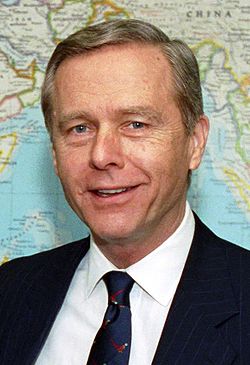 Pete WilsonPeter Barton Wilson (born August 23Affiliated
 Ronald ReaganRonald Wilson Reagan (February 6Affiliated
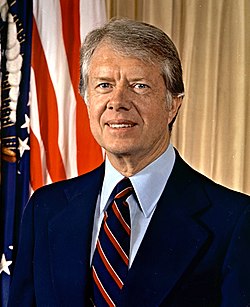 Jimmy CarterJames Earl Carter JrAffiliated
How the record is sourced and how the score is derived.
The score is formula-derived (Factrail formula v1, version 1.0.0), not an editorial verdict. Read the methodology.
By the Factrail desk · Method: how we source and score · Last reviewed
Dispute a fact on this pageNamed here, or represent someone who is? Request a right of reply.
People and organizations as listed in the Related section of this page; facts, drivers and the pages that name it as listed in the blocks here. Counts, not a rating.