
Gina Hinojosa
Gina Hinojosa is an American attorney and Democratic Party politician who, on November 3, 2026, was elected governor of Texas…
- Facts0
- Drivers0
- Indicators0
Gina Hinojosa is an American attorney and Democratic Party politician who, on November 3, 2026, was elected governor of Texas…
Gina Hinojosa is an American attorney and Democratic Party politician who, on November 3, 2026, was elected governor of Texas, defeating three-term Republican Party incumbent Greg Abbott. The Associated Press called the race for her on election night, and Abbott conceded. At 52, she is due to take office in January 2027 as the state's first Latina governor and the first Democrat to hold the office since Ann Richards, who lost reelection to George W. Bush in 1994 and left office in 1995. She is a fifth-term member of the Texas House of Representatives for District 49, which covers part of Travis County in central Austin, and was still that district's representative in the days after the gubernatorial election.
A Brownsville native, Hinojosa has called herself a daughter of the Rio Grande Valley. She moved to Austin in 1992 to attend the University of Texas at Austin, where she earned a degree in Plan II Honors and government, and in 1999 received a J.D. from the George Washington University Law School and a Texas law license. Before seeking office she worked as a labor and civil-rights lawyer, including in the Office of Legal Counsel at the American Federation of State, County and Municipal Employees and at the Austin firm Kator, Parks & Weiser. In 2012 she won an at-large seat on the Austin Independent School District board of trustees after proposed budget cuts threatened neighborhood schools, including the elementary school her son attended, and in January 2015 the other trustees elected her board president. She was elected to the House on November 8, 2016, took the seat in 2017, and made public-school funding and opposition to school vouchers the center of her legislative work.
Hinojosa announced her campaign for governor in October 2025, after other prominent Democrats had not stepped forward against Abbott, who entered the year with more than $100 million in campaign cash and a record of double-digit wins. She argued for fully funding public schools, ending the private-school voucher program the Legislature enacted in 2025, replacing Texas Education Agency Commissioner Mike Morath, and sending $1,500 to each Texas household from the state's savings account. Abbott's campaign spent nearly $118 million on advertising, against about $26 million by hers, and described her House votes as those of a high-tax liberal who would damage the state's economy; she called those characterizations false and kept the campaign on schools, household costs, and what she described as corporate influence in state government.
The gubernatorial result was part of a wider Democratic sweep that included James Talarico's defeat of Ken Paxton for the U.S. Senate, a Democratic majority in the Texas House, and Democratic victories for lieutenant governor and attorney general, while Republicans retained a state Senate majority. On November 5, 2026, in her first public appearance after the win, Hinojosa said the transition would be bipartisan and that Abbott's office had agreed to cooperate. She has pledged to remove Morath on taking office and to roll back vouchers and state takeovers of school districts; scholars quoted by The Texas Tribune have noted that existing takeover statutes, and the need for Senate confirmation of a new education commissioner, would still limit what a new governor could do alone.
Gina Hinojosa was born on December 8, 1973, in McAllen and grew up in Brownsville, in Texas’s Lower Rio Grande Valley. She has said she attended Brownsville public schools and spent summers in nearby Mission, where her grandparents lived, and that she still returns to family in Brownsville. In a 2025 interview she called that upbringing “a real gift because I never knew I was a minority,” adding that she “thought everybody was Mexican” and “always felt like my culture was the dominant culture.” A saying she often heard from her grandmother, “No te dejes”—a Spanish call to fight back or defend oneself—was later chanted at her October 2025 campaign launch in Brownsville.
Her father, Gilberto Hinojosa, is a second-generation Mexican American born in Alamo and, according to the ACLU of Texas, the first in his family to graduate from college. He finished Mission High School in 1970, earned a bachelor’s degree in political science from Pan American University—described in later accounts as now the University of Texas Rio Grande Valley—and received a law degree from Georgetown University Law Center in Washington, D.C. El País reported that he worked for a migrant legal-action program in Washington, directed the migrant division of a rural legal-services office in Colorado, and then practiced with Texas Rural Legal Aid in Brownsville. The ACLU of Texas identifies that Brownsville post as managing attorney of the legal aid office.
He entered elective office in April 1984, winning a seat on the Brownsville Independent School District board and serving as vice president. In January 1985 he was appointed to Cameron County Court-at-Law No. 2; Governor Mark White named him to the 107th Judicial District Court in 1986; and in 1990 he was elected a justice of the 13th Court of Appeals. Voters chose him Cameron County judge in November 1994, and he left that office in December 2006 after twelve years. Governor Ann Richards appointed him to the Texas Board of Criminal Justice. He later chaired the Texas Democratic Party; by October 2025, Valley coverage referred to him as a former chair.
Her mother, Crisanta Guerra Lozano, was born in San Luis Potosí, Mexico, and studied law at George Washington University. Citing a Martindale-Hubbell profile, El País described Lozano’s practice as medical malpractice, insurance defense, and litigation over pharmaceuticals and medical devices. Other reporting has cast the household in legal-aid terms: MyRGV.com called Hinojosa the daughter of legal-aid lawyers, and in 2026 the San Antonio Current identified Lozano, then a San Antonio resident, as a legal-aid attorney.
Hinojosa graduated in 1992 from Homer Hanna High School and that year moved to Austin to attend the University of Texas at Austin. She finished in 1996 with a Plan II Honors and government degree, the combination recorded both by MyRGV.com and in a biographical sketch held by the Texas Legislative Reference Library. Plan II, established in 1935 in the College of Liberal Arts, is a four-year interdisciplinary honors major whose core includes a senior thesis and whose electives are often used for a second field of study. In 1999 she received a J.D. from George Washington University Law School—MyRGV.com referred to the school as the George Washington National Law Center—and was licensed to practice the same year. Aside from those years in Washington, she has lived in Austin since college.
Hinojosa was admitted to the State Bar of Texas on November 3, 1999, after receiving a J.D. from George Washington University Law School in May 1999. The bar lists her as Regina Inez “Gina” Hinojosa, bar card number 24012836, eligible to practice in Austin as a public-interest lawyer in labor and employment law, with no public disciplinary history. The profile also lists admission to the U.S. Court of Appeals for the Federal Circuit, which the bar notes is attorney-reported. Before elected office, news accounts described her as a civil-rights and labor, or union, lawyer.
Her Texas House biography, archived by the Legislative Reference Library, says her first legal job was in the Office of Legal Counsel of the American Federation of State, County and Municipal Employees in Washington, D.C.. It says that in Austin she then joined Kator, Parks & Weiser, representing employees in employment discrimination cases based on race, gender, age, and disability. The firm, now Kator, Parks, Weiser & Wright, is a Washington-based employment practice with an Austin office that represents workers, including federal employees. A law-school note, drawing on her campaign website, also names AFSCME and Kator, Parks & Weiser.
That biography states that in 2005 she “worked on the prevailing legal team” in litigation it describes as a suit against U.S. House Majority Leader Tom DeLay over illegal campaign contributions to Republican candidates for the Texas House. The civil judgment reported that year was narrower. In May 2005, Travis County District Judge Joseph Hart ruled that Bill Ceverha, treasurer of Texans for a Republican Majority, a committee founded by DeLay, failed to report corporate money used in 2002 Texas campaigns. Hart found that $532,233 in corporate funds had been used for campaign activity rather than only administrative expenses, and ordered Ceverha to pay five defeated Democratic candidates $196,660. DeLay was not a defendant. Trial accounts name the plaintiffs’ lawyers as Joe Crews, Cris Feldman, and David Richards and do not describe Hinojosa’s role. The ruling came during criminal investigations of the same fundraising; it did not impose liability on DeLay.
The biography says that after she and her husband started a family, she worked part-time for Catholic Charities’ Office of Immigrant Concerns, Texas Rural Legal Aid, and the Equal Justice Center, helping recover unpaid wages. Texas Rural Legal Aid, founded in 1970, merged with four other programs in 2002 and became Texas RioGrande Legal Aid. A 2012 Austin Chronicle profile said she had worked on civil-rights issues with Texas RioGrande Legal Aid, which gives free civil representation in 68 Southwest Texas counties, and with the Equal Justice Center. That Austin-based nonprofit, founded in 2001, represents low-wage workers on unpaid wages, overtime, discrimination, and retaliation, and states that its cases have helped recover more than $20 million in unpaid wages. Form 990 filings list her as an uncompensated board member for fiscal years ending December 2013 through December 2024; she is absent from the return for the year ending December 2025.
The biography also says she volunteered with Austin Interfaith and helped lead its push to require companies receiving City of Austin economic incentives to pay a living wage. She entered elected office in 2012, winning an at-large seat on the Austin Independent School District board.
On November 6, 2012, Gina Hinojosa won an open at-large Position 8 seat on the Austin Independent School District Board of Trustees, a districtwide post in Austin. Official Travis County returns gave her 93,407 votes (68.99 percent) to 41,982 (31.01 percent) for Mary Ellen Pietruszynski, executive director of the Sooch Foundation. Annette LoVoi did not seek another term in the seat. The Austin Chronicle called the result the largest trustee margin that night and a win for Education Austin, the employees’ union, which endorsed Hinojosa, a civil rights lawyer. It described Pietruszynski as unable to shake a view that she would back Superintendent Meria Carstarphen.
Hinojosa has since said she ran because Pease Elementary, the downtown school her son attended in kindergarten, was threatened with closure. She told KUT in 2026 that she “got mad and I ran for the school board,” and a biographical sketch at the Texas Legislative Reference Library says a proposal to close neighborhood schools, including Pease, was the reason. Coverage of the 2012 race itself stressed community engagement and the administration more than any one campus.
She and three other new trustees took office on November 19, 2012. The board that night elected Vincent Torres president, Hinojosa vice president, and Jayme Mathias secretary. Community Impact reported her election as 8–1 and said Cheryl Bradley abstained. In December it voted 5–4 to end the district’s contract with IDEA Public Schools after 2012–13, ending an in-district charter at the former Allan Elementary and a planned expansion to Eastside Memorial High School. Hinojosa, voting with the majority, called the partnership divisive. On January 28, 2013, she voted against single-sex schools in the combined Pearce and Garcia middle-school zones; the plan passed 5–3. On February 24, 2014, the board approved 5–4 her motion to restore three-year contracts for experienced teachers and other professionals, reversing a 2011 move to one-year deals, when the Chronicle reported there was no money for raises. In September she asked the Austin City Council for $5.5 million for support programs, citing a $20 million structural deficit and state recapture, often called Robin Hood, which required the property-wealthy district to send part of its local taxes elsewhere. Mayor Lee Leffingwell resisted shifting those costs to the city.
That week the Texas Civil Rights Project warned that closing under-enrolled East Austin schools would fall mainly on Black and Hispanic students. Hinojosa told the Austin American-Statesman that closures were not a useful way to save money and that she knew of no closure plan. The district said it then had “no plans to close any school,” while also calling closures one option in its facility master plan. On October 27 the board unanimously added “gender identity” to student and employee rules against discrimination, harassment, and retaliation. Hinojosa asked what education the district already gave on gender expression.
On January 6, 2015, trustees elected Hinojosa president, Amber Elenz vice president, and Mathias secretary, and swore in new members, including Kendall Pace in at-large Position 9. Trustees are unpaid and serve four-year terms. In June, staff put raises of 2 or 3 percent at a gap of about $37 million. Hinojosa listed revenue ideas, including partnerships and a city tax not subject to recapture in the same way as a district tax. The Austin Monitor said those ideas covered about $19.5 million and described Austin ISD as Texas’s largest recapture payer.
Campaigning in early 2016, she told the Chronicle that local steps could not fix school finance, that as president her work had been “bridging relationships,” and that roughly $1,000 of the average district tax bill left Austin schools under recapture. On December 14, 2015, after filing for Texas House of Representatives District 49, which Elliott Naishtat was leaving, she resigned the presidency effective the next day and remained the Place 8 trustee. She said the law did not require her to leave the board, but that she should not preside while campaigning. Elenz became acting president.
The board reorganized on January 19, 2016, electing Pace president unanimously, Paul Saldaña vice president, and Julie Cowan secretary. Hinojosa said she would stay until her term ended that November. She did not run again. On November 8, Cindy Anderson won Position 8 with 92,070 votes (55.76 percent) to David Ryan Quintanilla’s 73,037 (44.24 percent). At the November 28 meeting Hinojosa swore in Anderson, received a standing ovation, and urged the board to back policies for “a more just, vibrant and thriving community.” Pace, Saldaña, and Cowan were reelected.
Hinojosa, a Democrat, has represented District 49 in the Texas House of Representatives since January 10, 2017. The district lies entirely in Travis County and covers central Austin. She succeeded Elliott Naishtat, a Democrat who left the seat after 26 years.
On March 1, 2016, she won a seven-candidate Democratic primary outright, with 17,485 votes (56.96 percent) to Heather Way’s 5,752 (18.74 percent) and Huey Rey Fischer’s 4,322 (14.08 percent). No Republican filed. On November 8 she defeated Libertarian Rick Perkins, 68,398 votes (84.41 percent) to 12,631 (15.59 percent). Unopposed in the 2018 Democratic primary, she beat Republican Kyle Austin, 76,851 (83.00 percent) to 15,736 (17.00 percent). In 2020 she received 80,258 votes (78.85 percent) against Republican Charles Allan Meyer (18,277; 17.96 percent) and Libertarian Kenneth M. Moore (3,248; 3.19 percent). In 2022 the totals were 68,786 (83.44 percent) to Republican Katherine Griffin’s 11,882 (14.41 percent) and Libertarian J. David Roberson’s 1,768 (2.14 percent). In 2024 she was unopposed and received 80,498 votes.
She did not seek another House term in 2026, leaving District 49 open while she ran for governor. She defeated Republican incumbent Greg Abbott on November 3, 2026. As of November 6 she was governor-elect and still the District 49 representative; the Legislative Reference Library listed that House term through January 12, 2027.
In the 85th Legislature (2017) she served on Economic and Small Business Development, Homeland Security and Public Safety, and House Administration, and on the joint committee on Disclosure of Emergency Call Information. She was vice chair of Human Services in the 86th (2019) and 87th (2021), with Defense and Veterans’ Affairs and then Criminal Jurisprudence. In the 88th (2023) she sat on Business and Industry, Public Education, and the Select Committee on Educational Opportunity and Enrichment. In the 89th (2025) her assignments were Public Education, Land and Resource Management, and the conference committees on House Bill 2011 and Senate Bill 2972.
In December 2022 she ran to succeed Chris Turner as House Democratic Caucus chair. John Bucy of Austin withdrew and endorsed her; Trey Martinez Fischer of San Antonio won, and Hinojosa moved to make the vote unanimous. In January 2025 the Austin American-Statesman identified her as chair of the House Democratic Campaign Committee. That December the committee named Houston representative Christina Morales chair for the 2026 cycle.
She joined two efforts to deny the two-thirds attendance the Texas Legislature needs to act. On May 30, 2021, House Democrats, Hinojosa among them, walked out and killed Senate Bill 7, a Republican elections bill, for the regular session. She described the break as organized by rank-and-file members rather than caucus leadership. After Abbott called a special session, at least 51 of 67 House Democrats, including Hinojosa, flew to Washington, D.C., on July 12 to block a successor bill and lobby Congress. The first special session ended without the bill. A quorum returned around August 19 in a second session, and Abbott signed Senate Bill 1 on September 7.
Senate Bill 1 banned overnight and drive-thru early voting used in Harris County in 2020, tightened mail-ballot identification, and widened poll-watcher access. Abbott said it would hinder fraud. Lawsuits said it burdened voters of color and voters with disabilities. Limits on Sunday voting and easier election challenges were dropped before passage. Arrest warrants could not be served outside Texas. The Texas Supreme Court later said the constitution allows both a quorum break and efforts to compel attendance.
In August 2025 most of the House’s 62 Democrats, including Hinojosa, left around August 3, many for Illinois, to stop a mid-decade congressional map that President Donald Trump wanted in order to add as many as five Republican seats in the U.S. House. Because the call also covered bills after deadly July 4 flooding in the Hill Country, the walkout stalled flood response as well as the map.
Texas House Democrats in Illinois on August 3, 2025, after leaving the state to deny a quorum on a congressional redistricting map.
Abbott said he would try to remove members who stayed away, citing a nonbinding 2021 opinion by Attorney General Ken Paxton. On August 4 the House voted 85–6 to authorize civil arrest warrants. Speaker Dustin Burrows signed them; they do not apply outside Texas and are not criminal charges. Rules adopted in 2023 also fine a member $500 for each day absent in order to impede the House, plus enforcement costs, and bar campaign funds from paying the fines.
Democrats returned on August 18. Burrows said the House was “done waiting.” Caucus chair Gene Wu said the absence had bought time for a lawsuit; Martinez Fischer stayed in Illinois. Both chambers passed the map on party-line votes, and Abbott signed it on August 29, saying Texas was “now more red” and the lines fairer. State party chair Kendall Scudder said he had favored Trump’s aims.
In April 2026 the House Administration Committee fined most of 53 participants $8,354 each—$6,000 for 12 days plus $2,354 in police costs—about $421,890, above the $7,200 salary. Democrats on the panel called the fines punishment of a constitutional tactic. On May 15, 2026, the Texas Supreme Court declined to remove the members, holding that discipline belongs to the House, though Justice James Sullivan warned a repeat could raise abandonment of office. The U.S. Supreme Court later allowed the map, setting aside a lower-court finding of racial gerrymandering.
In 2019 the Texas House of Representatives passed House Bill 3, the session’s school-finance rewrite, authored by Rep. Dan Huberty with joint authors Diego Bernal, John Zerwas, Ken King, and Alma Allen, and sponsored in the Senate by Larry Taylor. Gina Hinojosa was one of 124 coauthors, not a joint author or a conferee; she withdrew a floor amendment. The House adopted the conference report 139–0 on May 25, and Gov. Greg Abbott signed the bill on June 12.
The enrolled law sets the basic allotment at $6,160 per student in average daily attendance. Reporting on the conference report described a rise from the $5,140 then in use, within an approximately $11.6 billion package that also compressed property taxes. Districts had to put at least 30 percent of any per-student funding gain into pay for non-administrators, with 75 percent of that share for teachers, librarians, counselors, and nurses, prioritizing teachers with more than five years of experience. The Texas Education Agency projected the changes would cut recapture—payments from property-wealthy districts to the state—by about $3.6 billion over the next biennium. The $6,160 figure was not raised in 2021 or 2023.
In 2023, House Bill 100, by Rep. Ken King, began as about $4.5 billion in new school funding. Under Lt. Gov. Dan Patrick, the Senate added education savings accounts and held the basic-allotment increase to $50, below the House’s $90. Hinojosa called it “a full-on assault on our public schools by Lt. Gov. Dan Patrick” and said, “I’m not just a no; I’m a hell no on that bill.” The bill died, and a special-session measure tying money to vouchers also failed. She filed separate bills to fund schools on enrollment rather than attendance—House Bill 31 in 2023 and House Bill 1157 in 2025. Both died in the Public Education Committee. Commissioner Mike Morath estimated a full shift to enrollment funding at about $6 billion.
In 2025, House Bill 2, by Public Education Chair Brad Buckley, with Bernal and Ryan Guillen, was the finance bill. Hinojosa voted yes. On April 17 the House passed a version 142–5, reported as $7.7 billion, that would have raised the basic allotment by $395, to $6,555. The law Abbott signed on June 20 instead used a $55 biennium adjustment and a Teacher Retention Allotment—$4,000 or $8,000 in districts of 5,000 or fewer students, and $2,500 or $5,000 in larger districts, by years of experience—plus $45 per student for support staff.
A former Austin Independent School District trustee, Hinojosa sat on the House Public Education Committee in the 88th and 89th Legislatures. Her 2025 House Bill 1212, which would have limited A–F comparisons between neighborhood campuses and schools that enroll by choice, died in committee. The testing bill that passed was Buckley’s House Bill 8, from the second called session. By the 2027–2028 school year the agency must replace STAAR with beginning-, middle-, and end-of-year assessments and revise ratings and interventions. The House passed it 82–56 on August 26, 2025, concurred 79–47 on September 3, and Abbott signed it on September 17. Amendments she offered were adopted, but she voted no, saying the agency would still write the test used in takeover decisions: “We’re going to have TEA both create the test that determines whether or not the school and district are taken over by them. That’s a conflict.”
Her charter-school admission bills failed. House Bill 43 (2019) and House Bill 97 (2021) reached Calendars and went no further. House Bill 1179 (2025), barring open-enrollment charters from screening on discipline history except for students already in a disciplinary placement, died in Public Education.
A special-education measure she joined did pass. House Bill 1188, the Caytlin Handley Act, by Rep. Christian Manuel, lists Hinojosa, Ben Bumgarner, James Frank, and Toni Rose as joint authors. At the first individualized-education-program meeting for a student with an intellectual disability or developmental delay, a district must tell the parent about the local intellectual and developmental disability authority, including Medicaid waiver services. It passed the House 126–3 and the Senate 31–0; Abbott signed it on May 29, 2025, effective immediately for 2025–2026.
Across sessions Hinojosa opposed school vouchers structured as education savings accounts, with rural Republicans who said the programs would drain public schools. The 2023 regular session ended with neither vouchers nor the House Bill 100 increase. In the fourth called session that November, Rep. John Raney’s amendment stripping education savings accounts from House Bill 1 passed 84–63, with every Democrat and 21 Republicans. The funding bill died, and Abbott carried the fight into the 2024 Republican primaries.
Senate Bill 2 passed in 2025, authored by Sen. Brandon Creighton and sponsored in the House by Buckley. The comptroller runs the program. Spending is capped at $1 billion for the biennium starting September 1, 2025. A child may receive 85 percent of average state and local funding per student, up to $30,000 with a disability or $2,000 if home-schooled, beginning in 2026–2027. The House passed it 86–61 on April 17. Every Democrat present voted no, as did two Republicans, former Speaker Dade Phelan and Gary VanDeaver. Hinojosa voted no and said, “This bill is everything that is wrong with politics.” The Senate concurred 19–12 on April 24. Records date Abbott’s action to May 3, 2025, effective September 1.
Outside school finance and education accountability, Hinojosa's record in the Republican-majority Texas House of Representatives was a short list of bills signed by Greg Abbott and a larger set of proposals that never left committee. In the 89th Legislature's 2025 regular session she was the primary author of 35 House bills. Thirty-four did not advance past referral, one was withdrawn from the schedule, and none received a floor vote or became law. Non-education measures that passed in earlier sessions were generally narrow.
House Bill 3488 in 2017 let a for-profit corporation elect public-benefit status, name specific public benefits, and require its board to balance shareholders' financial interests with those benefits. Abbott signed it on June 14, 2017, effective September 1. In 2019 she authored two disaster laws. House Bill 1307 directed the Texas Division of Emergency Management, if funds were available, to contract for a system through which disaster-affected people could apply for help from more than one source and control who saw their information. House Bill 137 required the Texas Commission on Environmental Quality to notify local emergency managers within 30 days when a dam was classified as a high or significant hazard. Both were signed in June 2019. House Bill 4293 in 2021 required a free statewide text-reminder program for criminal-court dates, aimed at cutting missed appearances and jail stays for failure to appear, effective September 1, 2021. Her only primary-authored law in 2023 authorized specialty plates for certain professional sports teams.
The main health-financing law she passed was one she sponsored. Senate Bill 1350, by Senator Kirk Watson, let the Travis County hospital district, Central Health, collect mandatory payments from private hospitals and use them as the nonfederal share of Medicaid supplemental payments for uncompensated care. Abbott signed it on May 31, 2019, effective immediately, and the district's board created the fund on June 19. As a joint House sponsor in 2023, she backed Senate Bill 699, which extended the program from December 31, 2023, to December 31, 2027. House Bill 602 in 2021, a publicly funded "Healthy Texas Program," died after referral to Insurance. So did House Bill 3511 in 2023 and House Bill 2158 in 2025, which would have excepted an abortion when, in a physician's reasonable medical judgment, it was necessary because of a lethal fetal anomaly.
Wage bills that moved furthest still failed. House Bill 2960 in 2019, barring noncompetes for certain low-wage employees, cleared Business & Industry 8–1 and reached Calendars without a floor vote; the 2023 successor, House Bill 1043, cleared that committee 6–3, was placed on the General State Calendar on May 10, and died. House Bill 3226 in 2021, a minimum wage of at least $15 an hour for workers designated essential by federal critical-infrastructure guidance, was only referred to committee. In 2025, bills limiting rent increases during applications, requiring notice of rent increases, and restricting investment-firm and corporate ownership of single-family rentals were referred and left there. On property tax, she voted no when the House passed Senate Bill 2 on April 30, 2019, 107–40, a bill meant to slow city and county revenue growth. She was a joint author of exemptions that did become law: House Bill 115 in 2021, for certain charity-owned housing for homeless people, effective January 1, 2022, and House Bill 4645 in 2023, for certain low- or moderate-income housing, effective January 1, 2024.
Bills she filed on mail-ballot postage, limited ballots after a county move, volunteer deputy registrars, campus polling places, and preregistration of some people under 18 were referred to Elections in 2023 and 2025 and did not advance. Voting measures that became law were administrative. As a joint House sponsor of Senate Bill 957, by Senator Donna Campbell, she backed a 2017 law assigning each local ballot proposition a unique number or letter. House Bill 1130, which she authored, created a "Register to Vote" specialty plate, effective September 1, 2019.
On October 15, 2025, fifth-term Austin state representative Gina Hinojosa entered the Democratic primary for governor with a video and a rally of more than 100 people in her hometown of Brownsville. A civil-rights and union lawyer and former Austin Independent School District board president, she said she had considered running for comptroller—the office set to run the state’s new $1 billion private-school voucher program—before deciding that Gov. Greg Abbott was “the problem.” In the video she said the fight was “against the billionaires and corporations who are driving up prices, closing our neighborhood schools and cheating Texans out of basic health care,” and she criticized $10 million Abbott had taken from voucher supporter Jeff Yass.
The field already included Houston businessman Andrew White, son of former Gov. Mark White; rancher and retired firefighter Bobby Cole; and Bay City council member Benjamin Flores. Abbott’s campaign manager, Kim Snyder, called her “out of step with Texans.” White said she represented her district well but that Democrats needed a nominee who could join progressives with moderates and independents; she answered that public schools had “never been a partisan issue in Texas.” A January 2026 Texas Tribune guide put her cash on hand at about $661,000 against more than $105 million for Abbott, and noted that Rice University political scientist Mark Jones had ranked her among the most liberal members of the Texas House of Representatives.
On March 3, 2026, she won the primary without a runoff. With 98.7 percent counted, NBC News reported 1,285,425 votes, 58.5 percent. Former U.S. representative Chris Bell took 9.8 percent, Angela Villescaz 6.8, Patricia Abrego 5.8, Andrew White 5.3, Bobby Cole 5.1, Jose Navarro Balbuena 3.0, Carlton Hart 2.9, and Zach Vance 2.7. She said voters were “ready for change” and wanted to end what she called the “Greg Abbott Corruption Tax.”
Abbott was seeking a record fourth term after winning his first three gubernatorial races by double digits, including a 2022 margin of more than 10 points over Beto O'Rourke. The Texas Tribune later wrote that few people outside Central Texas had heard of Hinojosa when she announced, that Abbott entered 2026 with more than $100 million on hand, and that he largely ignored her for much of the year.
In July she proposed a one-time $1,500 “corruption tax refund” per household, priced by her campaign at $17 billion from the Economic Stabilization Fund, then $24.8 billion, leaving about $10 billion—a use that requires a two-thirds vote of the Legislature. She said she would declare an “affordability crisis” an emergency item. Polls then had Abbott ahead by about 6 points; at the end of February he reported $96 million cash on hand to her $617,000.
The race tightened. A mid-October University of Texas/Texas Politics Project survey gave her a 1-point lead the Tribune called a tie—stronger among Latinos, women, and urban voters, with Abbott ahead among men and outside the cities—while a Marist poll of likely voters had Abbott up 49 percent to 45. Another UT survey found cost of living, the economy, and corruption ahead of education as voter concerns, and a split on who would handle public schools better.
Her closing argument stayed on schools, prices, and what she called corporate influence. She pledged to fire Texas Education Agency Commissioner Mike Morath on her first day, end state takeovers of districts including Fort Worth and Beaumont, end the voucher program, and overhaul school accountability. In an October 22 video she promised a moratorium on new data-center approvals until the Legislature limited water use, nondisclosure agreements, and tax subsidies. On October 19, two weeks before Election Day, she filed a lawsuit seeking unredacted emails between Abbott’s office and Elon Musk, alleging the governor was unlawfully withholding the records; Abbott’s spokesperson called the suit a political stunt. In a KPRC interview she said she would push Medicaid expansion, mostly federally funded, so every child had health care, and that she would sign a repeal of the private-school piece of the voucher program if it reached her desk, while doubting it would. She criticized border spending she called prosecutions for trespassing, said public safety “shouldn’t be a political stunt,” and named no budget cut. KPRC also noted her 2023 vote for a bill expanding data-center tax breaks, which she said was meant to tie any subsidy to Texas union jobs.
Abbott ran on ending school property taxes for homeowners, tighter appraisal caps, and border security, and called the election a choice between “common sense and crazy.” His ads labeled her a “radical” who “supports boys in girls’ sports,” an income tax, and higher property taxes, and his campaign said she had voted 40 times to raise property taxes. She called the attacks lies, defended local taxing authority, and told the Texas Tribune Festival in September that “99% of us are in the same boat.” The Tribune reported that his advertising reached nearly $118 million against about $26 million for her, and that she overcame a more than four-to-one gap in overall spending after national Democrats put millions into the race.
On November 3, 2026, she defeated him. With 99 percent of the vote counted, NBC News reported 5,230,929 votes for Hinojosa (52.8 percent), 4,524,955 for Abbott (45.7 percent), and 148,096 (1.5 percent) for Libertarian Pat Dixon, out of 9,903,980; the totals were still unofficial. The Associated Press called the race for her. Abbott conceded around 10 p.m. after calling her. She told supporters, “We shocked the world tonight,” and, “We did not end one era of single party rule to usher in another.” At 52 she was in line to become the state’s first Latina governor; the last Democrat in the office, and the last woman, was Ann Richards, who lost reelection in 1994. The same night James Talarico defeated Ken Paxton for U.S. Senate, Vikki Goodwin unseated Lt. Gov. Dan Patrick, and Nathan Johnson won the open attorney general’s race, while Democrats took the Texas House for the first time since 2003 and Republicans kept the Senate.
Democrat Gina Hinojosa became governor-elect of Texas on November 3, 2026, after defeating Republican incumbent Greg Abbott, but she had not taken office as of November 6. The state constitution installs a governor on the first Tuesday after the Legislature organizes; the Texas Tribune reported that date as January 19, 2027, with Abbott continuing until then. The Legislative Reference Library lists 45 distinct governors from J. Pinckney Henderson in 1846 through Abbott. Elisha M. Pease, Miriam A. Ferguson, and Bill Clements each served two nonconsecutive terms, so counting those terms separately yields 48 governorships through Abbott and would make Hinojosa the 49th. The Tribune described her as the state’s first Latina governor and the first woman in the office since Ann Richards, who lost reelection in 1994 and left office on January 17, 1995, and as the first Democrat elected governor since Richards won in 1990.
Her first public appearance after the election was a news conference of about 14 minutes on November 5 at the Lyndon B. Johnson School of Public Affairs at the University of Texas at Austin. She called the transition one “for the whole state of Texas” and said there would be “a bipartisan transition, and we will have a bipartisan administration and government in Texas.” Joe Madden, former chief of staff to Harris County Judge Lina Hidalgo, was named executive director. Also named were former Republican state Representative Ernest Bailes, who called himself a “conservative Republican” and served in the Texas House of Representatives from 2017 to 2025; Ryan Pollock of the Texas State Building and Construction Trades Council; and Tamala Barksdale, a former Austin Independent School District trustee, as senior adviser. Bailes, a voucher opponent, said the group would “put partisanship aside.” Hinojosa said Abbott had been “gracious” and that his staff would “fully cooperate.”
On election night she said voters had given “a mandate for change,” that public schools would no longer be treated “like they are for sale,” and that the office “does not belong to me, it does not belong to my party.” She will take office alongside lieutenant governor-elect Vikki Goodwin, the first Democrat in that post since 1999, attorney general-elect Nathan Johnson, and a Democratic House. Republicans kept the Texas Senate, 19 seats to 12. Much of the lieutenant governor’s recent power comes from Senate rules, which a simple majority can rewrite, and Republican senators were reported to be positioned to limit Goodwin’s control of the floor. Hinojosa said leaders should “respect what the people of Texas have said” and that she expected to work with Republican legislators.
The steps she had cast as immediate remained promises. On the trail she said she would declare a “high-cost emergency,” suspend state gasoline and diesel taxes and freeze electricity rates by executive order, pay every household $1,500 from the state savings account, expand Medicaid, roll back school vouchers, end state takeovers of school districts, and stop the STAAR exam. At the November 5 conference she said aides were “actively interviewing” replacements for Texas Education Agency Commissioner Mike Morath, whom she has pledged to remove on taking office, and that she had asked Texas Parks and Wildlife to take “no action” during the transition on a possible sale of Boca Chica State Park to SpaceX, which she had called a sale of public beach to Elon Musk. In a CNN interview she said selling the beach was “almost unimaginable” and “unacceptable,” adding that Texas “can have a strong working relationship with Elon Musk and his companies, but it has to be on our terms.” She has also said she would halt new data-center approvals until the Legislature passes protections on water, power costs, and local consent, ban grocery surveillance pricing, and end no-bid contracts so that funds could be redirected to teacher pay.
Researchers quoted by the Tribune treated the school plans as bounded by law and by the Senate. Morath’s term was reported to end in late 2026 or January 2027, so the pledge is closer to a decision not to reappoint him; a nominee needs two-thirds of the senators present, and rejection leaves the post vacant until another name is sent or a recess appointment is made. Rachel White, an associate professor of educational leadership and policy at the University of Texas at Austin, said a new commissioner would still be bound by the takeover statute, which requires intervention after five consecutive failing campus ratings, and that changing the code would take “an all-hands-on-deck approach.” Duncan Klussmann, a clinical associate professor at the University of Houston, said the commissioner can choose between closing failing schools and replacing an elected board, but not whether the law applies. Repealing vouchers, dropping STAAR-style tests, and issuing the $1,500 payments require legislation. A governor could try to line-item veto voucher money in a budget, which takes two-thirds of both houses to override, while the Republican Senate can block Medicaid expansion and other bills.
On November 4, 2026, Republican state representative Brian Harrison urged Abbott to call a special session to restrict the governor’s emergency powers before Hinojosa takes office, arguing that existing law could allow a governor to suspend statutes and issue orders with the force of law.
Hinojosa is based in Austin, which the Texas State Directory and The Texas Tribune's elected-officials directory list as her hometown. The directory names her spouse as John Donisi. Encyclopaedia Britannica reported that the couple have three children, a daughter who died shortly after birth and two surviving sons, Matteo and Pablo. In victory remarks on November 3, 2026, she thanked her husband, John, and her sons, Pablo and Matteo, and said that neither son had asked for the gubernatorial campaign; she also thanked her sister Xochitl.
Her Texas House of Representatives biography says she ran for the Austin Independent School District board to keep her son's public school, and other inner-city schools, from closing. She told Texas Standard that the campus was Pease Elementary and, in an October 23, 2026, interview, that she still had a son in public school. In an October 15, 2026, Austin Chronicle interview she said her oldest son, then 21, had been an AISD kindergartner when she first ran for the board.
Her father, Gilberto Hinojosa, is a former chair of the Texas Democratic Party and a former Cameron County judge. The Tribune reported that a supporter described Hinojosa as having spoken during the 2026 campaign about a mixed-status family and about visiting relatives who lived across the border in Mexico.
The table uses the Austin Chronicle's report of the 2012 school-board count, Texas Secretary of State canvasses for the 2016 primary in Travis County (all of House District 49) and for the 2016 and 2018 general elections, the 2024 official canvass, and Texas Tribune compilations of the 2020 and 2022 returns. The 2026 Democratic primary and general-election rows use Associated Press totals published by the Tribune; the general-election count is unofficial, with 9,801 of 9,900 precincts reporting. The 2020 House line is the Tribune compilation, whose candidate votes equal the reported race total, and the 2022 line is the Tribune's Decision Desk HQ feed; percentages in the table are each candidate's share of that race total, and later House primaries are omitted because separate certified primary totals were not verified.
| Year | Office | Party | Result | Opponent(s) | Votes |
|---|---|---|---|---|---|
| 2012 | Austin ISD trustee, at-large Position 8 | Nonpartisan | Won | Mary Ellen Pietruszynski — 41,819 (31.0%) | 93,080 (69.0%) |
| 2016 | Texas House District 49, Democratic primary | Democratic | Won | Heather Way — 5,752 (18.74%); Huey Rey Fischer — 4,322 (14.08%); four others | 17,485 (56.96%) |
| 2016 | Texas House District 49 | Democratic | Won | Rick Perkins (Libertarian) — 12,631 (15.59%) | 68,398 (84.41%) |
| 2018 | Texas House District 49 | Democratic | Won | Kyle Austin (Republican) — 15,736 (17.0%) | 76,851 (83.0%) |
| 2020 | Texas House District 49 | Democratic | Won | Charles Allan Meyer (Republican) — 18,277 (18.0%); Kenneth M. Moore (Libertarian) — 3,248 (3.2%) | 80,258 (78.9%) |
| 2022 | Texas House District 49 | Democratic | Won | Katherine Griffin (Republican) — 11,882 (14.4%); David Roberson (Libertarian) — 1,768 (2.1%) | 68,786 (83.4%) |
| 2024 | Texas House District 49 | Democratic | Won | Unopposed | 80,498 (100%) |
| 2026 | Governor, Democratic primary | Democratic | Won | Chris Bell — 216,787 (9.8%); seven other Democrats | 1,289,576 (58.5%) |
| 2026 | Governor | Democratic | Won | Greg Abbott (Republican, incumbent) — 4,524,955 (45.7%); Pat Dixon (Libertarian) — 148,096 (1.5%) | 5,230,929 (52.8%) |
Ranked by shared high-impact facts, then explicit ties, then shared drivers.
 Dan PatrickDan Patrick (born April 4Affiliated
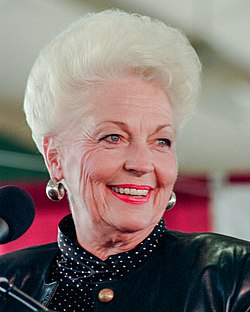 Ann RichardsDorothy Ann Willis Richards (September 1Affiliated
 Lina HidalgoLina Maria Hidalgo (born February 19Affiliated
 George W. BushGeorge Walker Bush is an American politicianAffiliated
 Tom DeLayThomas Dale DeLay (born April 8Affiliated
How the record is sourced and how the score is derived.
The score is formula-derived (Factrail formula v1, version 1.0.0), not an editorial verdict. Read the methodology.
By the Factrail desk · Method: how we source and score · Last reviewed
Dispute a fact on this pageNamed here, or represent someone who is? Request a right of reply.
People and organizations as listed in the Related section of this page; facts, drivers and the pages that name it as listed in the blocks here. Counts, not a rating.