
Hélène Hazera
Hélène Hazera (1952 – 5 October 2026) was a French journalist, radio producer, actress and transgender activist.
- Facts0
- Drivers0
- Indicators0
Hélène Hazera (1952 – 5 October 2026) was a French journalist, radio producer, actress and transgender activist. Born in Paris in 1952, she died on the morning of 5 October 2026 at the age of 74; the news was given by her friend Judith Abitbol, who had made a documentary about her. French newsrooms described her as the first openly transgender journalist in the country: she joined the daily Libération in 1978 and stayed until 1999, first as a television columnist and then as a music critic. From 2002 to 2017 she presented Chanson Boum on France Culture. Télérama called her the first transgender woman heard on a French public-radio station.
She was the daughter of parents who had taken part in the French Resistance. In a 2026 interview she said she had been raised with the idea that she could never equal what they had risked. She attended the Lycée Janson-de-Sailly, in Paris’s affluent neighborhoods, and drew on the library of her father, an organization engineer, and her mother, a civil-service administrator. Speaking in 2017 on France Culture, she recalled a serious manic-depressive crisis in adolescence and, later, turning to prostitution when she was broke. She transitioned in 1973.
In the early 1970s she joined the Front homosexuel d’action révolutionnaire and became a public face of the Gazolines, a small group in that movement’s orbit. She later said the Gazolines, formed in 1972, numbered about fifteen people, five of whom had transitioned, and that she had invented slogans including “Prolétaires de tous les pays, caressez-vous” and “Gauchistes, desserrez les fesses.” Michel Cressole, met in the FHAR, brought her into Libération because he wanted the paper to hire lesbian, gay, bisexual and transgender journalists. She also acted, including as the friend and roommate of Isabelle Huppert’s character in Jean-Luc Godard’s Sauve qui peut (la vie) (1980).
Living with HIV, she joined Act Up-Paris and set up its trans commission. In the documentary she says she had gone from street prostitution to journalism and would always defend prostitutes. Abitbol’s film Hélène Trésore Transnationale, mixing interviews, archives and testimony, opened in French cinemas on 1 April 2026. After Hazera’s death, Abitbol called her “the last situationist in France.” Giovanna Rincon, director of Acceptess-T, called the death an extremely important loss and said Hazera had stayed close to the most precarious people, including people with HIV and sex workers. Anaïs Perrin-Prevelle, director of OUTrans, said Hazera had insisted that transgender people, continually reduced to their identity, could also be something else in social life.
Hélène Hazera was born in 1952, the youngest of three children in a Catholic, bourgeois household in Paris’s 16th arrondissement. Both parents had been in the French Resistance from the start of the Second World War. Her father, later an organization engineer, went to London; her mother, later a civil-service administrator (attachée d’administration), risked her life as a liaison agent. Hazera said she had been raised to feel she could never match them. On France Culture in 2017 she put it as “J’ai toujours su que je ne pourrais jamais faire aussi bien.” She also said her mother held the Resistance Medal, one of about 25,000 recipients, and took that as proof a woman could do something other than what was expected of her.
The interviews also undercut the heroic picture. On France Culture she described a womanizing father, unfaithful from the honeymoon, and a paternal grandmother who was a lesbian and used heroin — “scandaleuse,” and finally rather inspiring. In 2018 she recalled, at about five or six, noticing two women and one bed in that grandmother’s flat. From a rich family, the grandmother had been married against her will to a Parisian banker’s son, divorced a year after Hazera’s father was born, and, Hazera said, loved him as a friend rather than as a mother, “et ça, ça fait des dégâts.” Her own mother, a “jolie madame,” used little more than powder, lipstick and scent, and sang her “Malbrough s’en va-t-en guerre.” Hazera cried when Marlborough dies in the song and asked to hear it from the start.
A 2026 profile called her a brilliant pupil at the Lycée Janson-de-Sailly and said she read early in her father’s library: Jean Genet, Arthur Rimbaud, Paul Verlaine and the situationists. She later brushed off psychoanalytic readings of childhood as cliché. Born a boy, she called herself “assez exhibitionniste” because she did not have everyone else’s gender. From seven or eight she took clothes from her mother’s closet, and she took her sister’s dolls, a true detail she found dull to repeat. In adolescence she stole scarves and lipsticks and cried because she could not fit her mother’s size-38 heels. She wore makeup to the lycée, liked mechanics as well, and said mixed classes had saved her: she made friends among the girls and was not much harassed. At 14 she demonstrated for peace in Vietnam, during the Vietnam War.
Le Monde, drawing on her 2017 account, reported that at 17 she was diagnosed with manic-depressive disorders — the condition now called bipolar disorder — and hospitalized. During the internment she asked for paper and wrote frantically. She said the poems of Omar Khayyam had saved her life; the obituary ties that reading to her getting through adolescence. Télérama described the same radio passage as a grave manic-depressive crisis, told without much insistence.
The break with her parents came as she began to live as a woman. They did not throw her out, she told Têtu in 2026, but she could no longer dine with them. Her father’s look hurt too much, and she said that was what sent her to solicit on the street. On France Culture she also spoke of leaving the bourgeois milieu in order to live as she intended, and of need (la dèche) as well as a fascination with prostitution. While still short of the age of majority she spent time among the folles of the Front homosexuel d’action révolutionnaire, where her public militancy began.
By about 15, she said, she knew a change of gender was possible. The scandal around Coccinelle — a music-hall performer who obtained a female civil status in 1959 and whose 1962 marriage was heavily publicized — had struck her as a child. She told Les Inrockuptibles in 2026 that she had begun her transition around 19, already in that milieu, and that she had been given a feminine first name, so the masculinity expected of her was already chipped (écornée). In 2017 she dated the transition itself to 1973. A change of first name in the civil registers came only at the start of the 1980s.
Around 20 she sat the entrance competition for the Institut des hautes études cinématographiques (IDHEC), the state film school later replaced by La Fémis. She said she nearly got in. After a last oral, she told Les Inrockuptibles, the president, the filmmaker Jean Delannoy, ruled that admitting her would cause too much of a scandal; in 2017 she had blamed the school’s director in the same words. Three months later, she said, she was soliciting, and she held him responsible for sending her there. She called the violence of those years social rather than mainly physical, and said she did sex work for several years, when, on her account, French society left a trans woman few places besides prostitution. Holds known as les dix heures — arrest and ten hours at a police station — were part of that work. On the street she learned that Bambi, a star of the cabaret Le Carrousel, had left the stage to teach French. That, she said, showed a trans woman could work outside the night and the street.
The Front homosexuel d’action révolutionnaire took shape in Paris in the spring of 1971, in the aftermath of May 1968. Its public beginning, as the historian Michael Sibalis reconstructs it, was the disruption on 10 March 1971 of Ménie Grégoire’s RTL broadcast at the Salle Pleyel, “Homosexuality, this painful problem.” The panel included André Baudry of Arcadie, the discreet homophile association founded in 1954; lesbian feminists and gay men interrupted it. Militants of the Mouvement de libération des femmes, among them Françoise d’Eaubonne, were central, with men such as the journalist Pierre Hahn. Guy Hocquenghem, then twenty-five, coordinated a special issue of Tout!, “Libre disposition de notre corps.” Against Arcadie’s respectability, the FHAR refused integration into the existing order. In Le désir homosexuel (1972), Hocquenghem described the shift from defending homosexuality to a “homosexual struggle” meant to transform society.
Thursday assemblies at the École des Beaux-Arts on the rue Bonaparte soon drew three or four hundred people, almost all men: argument, slogans and cruising rather than a programme. Women who had helped found the front felt dispossessed of it and, exasperated by what they experienced as misogyny, many left in the summer of 1971 for the Gouines rouges. A 2026 Têtu portrait says that Hazera, not yet of legal age, found a circle of folles inside the FHAR. She told Les Inrockuptibles that she was already there when she began a physical transition around nineteen, and that male domination had pushed the women into an annex group while she herself no longer felt represented. In February 1974 police, at the school’s request, cleared the Beaux-Arts. Hazera recalled that the meetings were banned and not reconvened, and put the FHAR at about 200 people.
The Gazolines coalesced inside that milieu in early 1972. Sibalis describes a circle made up mainly of transvestite men, first called the “Camping Gaz Girls” because they served tea heated on camping-gas stoves at the assemblies. Hazera later wrote that the tea imitated the London Gay Liberation Front, and that “Camping-Gaz girls” was shortened to “Gazolines.”
Later counts differ. She told Les Inrockuptibles in 2026, “we were about ten.” Lou Bossis, in a 2024 essay based on a master’s thesis, gives the same order of magnitude and quotes Lola Miesseroff, a friend of the circle, saying the Gazolines were never formal. The Têtu portrait says about fifteen, five of whom transitioned. On radio in 2005 she said five or six were “now girls.” Her 2003 entry in Didier Eribon’s dictionary described women “sporting a tawdry femininity” until they could be confused with their cross-dressed friends, and people who changed name within two years. To Les Inrockuptibles she insisted they “were not at all a group of trans people”: they claimed to be folles, with Jean Genet’s Notre-Dame-des-Fleurs in mind, and only gradually took to cross-dressing.
Names that recur include Maud Molyneux, Paquita Paquin, Jenny Bel’Air, Jean-François Torre, Jean-François Brianne, and Marie France, described in the press as the circle’s égérie. In Ah! Nana in 1978, a participant writing as Grizelda called them “the delirious minority of the Beaux-Arts movement” and recalled Barbès in a swimsuit, high heels and unshaven legs. Many lived together in a flat Miesseroff rented on the rue Charlemagne, in the Marais; sex work supported several of them.
The common note was derision of the post-1968 left. Hazera, who said she had been formed by reading the Situationist International, told Têtu that the members shared a hatred of “ideologies that lock you in” and a wish to mock gauchistes compromised by defence of a regime: “At the FHAR, many people had been ground down by Maoist militancy.” In “Rouge à lèvres et slogans: souvenirs gazogènes” (Gai Pied Hebdo, 1991) and the 2003 dictionary entry, she called this “a sort of psychedelic homosexual Dadaism, an ideology of derision, violently anti-authoritarian,” and Sibalis notes that they shouted down anyone who tried to direct a meeting.
That Têtu portrait states that, using laughter as a weapon, she invented the FHAR’s best-known slogan, “Prolétaires de tous les pays, caressez-vous,” and also “Gauchistes, desserrez les fesses.” Sibalis lists the first line on their banners, with lines he translates as “Sodom and Gomorrah, the struggle goes on!” and “Ah, it’s nice to be buggered!”; Françoise Travelet’s November 1972 Gulliver article already used the caress line as its title. Where the far left sang the Internationale, Bossis notes, they preferred that line and “Bites, bites, bites!” On 4 March 1972, at the funeral of the Maoist Pierre Overney, killed by a Renault security guard before a procession of some 200,000 people, they arrived cross-dressed and partly undressed, playing mourners and shouting “Liz Taylor, Pierre Overney, même combat!” On May Day marches they were part of what the Communists, in 1972, called “the rot of capitalism in its decline.”
Some critics blamed that style for hastening the FHAR’s end. Hazera’s reply, quoted by Sibalis, was “It’s flattering, but exaggerated”; he treats the Gazolines as the extreme of the front’s own provocation, not its only cause. Hazera brought Marie France, then at the Alcazar, into the FHAR. The singer told Télérama in 2017 that she attended assemblies and demonstrations “for the fun,” and with the Gazolines broke up meetings, took cloakroom furs and burst into the Café de Flore shouting “Bite!” Molyneux remained a close friend from those years. In 1991 Hazera wrote that the friendships still held twenty years on; in 2026 she said she would not want her life reduced to “a few moments when I played the folle.” With the Beaux-Arts meetings banned, both the Gazolines and the FHAR had stopped gathering by 1974.
In 1978 Hazera joined the Paris daily Libération. In a 2026 interview she described the hire as a chain: Serge July, she said, wanted gay journalists so that the paper would feel contemporary; July took on Guy Hocquenghem, who took on Michel Cressole, who put her on the television desk to write about films shown on television. Maud Molyneux, a friend from the Gazolines with whom she had acted in films by Adolfo Arrieta, came in as well. A Têtu portrait drawn from interviews the same spring put the initiative on Cressole, who wanted the newsroom to employ LGBT journalists, and presented her as the first openly trans person to write in a newspaper. She remembered the 1978 paper as still somewhat Maoist. Formed by reading the situationists, she said she saw China as an abominable dictatorship and rejected that current.
Her own account of the television job was deliberately offhand. She told Têtu that her aim had been “to write impertinent pieces on programmes I had not always watched, so that readers who had not seen them could talk about them at work.” Franceinfo and Le Parisien, in reports credited to Agence France-Presse, later described that 1978 arrival as making her the first openly trans journalist in France, a television columnist who stayed until 1999. L’Humanité used “first French transgender journalist” in its headline and, in a caption, “the first trans journalist in France.” Les Inrockuptibles called her the first trans journalist in the French press at Libération. Those are characterizations used by the outlets that printed them, not the result of a published census of every earlier newsroom.
She moved from television to francophone chanson. Introducing a 2017 episode of À voix nue titled “Une plume au service de la chanson,” France Culture said that in the paper she essentially defended French-language song. Télérama, drawing on that interview, wrote that from 1978 to 1999 she covered television first and chanson afterwards, that she had come across Les Têtes Raides “in a crochet at Bourges” — the circuit of the Printemps de Bourges — and helped bring them to notice, and that she pushed for reissues of little-known artists, including the realist singer Nitta-Jô.
In the 1980s and 1990s she also interviewed stars of the French repertoire. She told Les Inrockuptibles that she had liked Patricia Kaas very much, and that she had not felt marked out by the record business; some artists, she thought, were curious to be interviewed by her. What stayed with her was a conversation reported second-hand: “Apparently at Libé there is a transvestite who writes about music,” and the reply, “He doesn’t actually come into the office dressed as a woman?” She said that sort of reaction amused her.
While still on the paper she prefaced Brigitte Fontaine’s Genre humain, issued by C. Pirot on 19 May 1998 in its Chanson series: a 220-page paperback gathering what the trade listing calls the essential texts of Fontaine’s songs and poems. Têtu also credited her with the first articles on trans identity and on a change of civil status, linked to a 1982 initiative by the Radical senator Henri Caillavet. On 9 April 1982 Caillavet tabled Senate bill No. 260, sent to the laws commission, “to authorize medico-surgical treatments for the abnormalities of transsexuality and to recognize a change of civil status for transsexuals.” The text would have allowed surgery after a magistrate’s authorization following a “psycho-sexual” expert report, and a change of sex and forename at the town hall even without an operation, on a medical certificate. The explanatory memorandum invoked a recent Italian law and a 1979 reply from Justice Minister Alain Peyrefitte that existing court procedures were sufficient.
A biographical note published the day she died recorded that she signed pieces “HH” or “Mlle HH 007.” The byline mattered at home before it mattered as a legend. She told Têtu that her mother, in a taxi, saw a copy of Libération the driver had just put down, announced that her child wrote in the paper, and was not charged the fare. After her mother’s death, Hazera found that every article had been cut out and kept.
The colleagues she later called her two godfathers were Cressole and Hocquenghem, gay journalists whose radicalism Politis described as flamboyant, and who both died of AIDS. In October 2013, years after she had left the staff, Libération published her first-person Rebonds, “Une trans à « Libé », c’était hier” — the paper’s URL is dated 17 October; Politis, writing on 24 October, said the 18th. She wrote that not only did the media “talk rubbish about us,” they were closed to trans people, and she regretted that no young trans journalists were entering the trade. Politis presented her there as the first trans woman to have joined a French newsroom, thirty-five years earlier.
She left the staff in 1999. Obituaries in Télérama, franceinfo and Le Parisien all close her run at 1999; in the Inrockuptibles interview she said she had gone “twenty years later,” after a conflict she did not describe. At the invitation of Laure Adler she chose to make a music programme on France Culture. Quitting, she said, was “a form of mourning,” because “a daily is a hard drug,” and because Libération “was not a paper like the others.” She thought she could not have worked on any other.
Before she had a programme of her own on France Culture, Hélène Hazera was a commentator on Jean-Louis Foulquier's chanson show Pollen on France Inter. The 2020 prize brochure of the Société civile des auteurs multimédia (SCAM) says Foulquier invited her every Thursday; the Institut national de l'audiovisuel places that column in the 1990s, while she was still the francophone-song critic at Libération.
On France Culture, the late-night strand that came before Chanson Boum was Chansons dans la nuit. Published accounts do not agree on when the later title began. The SCAM brochure states that at the end of 1999 Laure Adler entrusted Hazera with Chanson Boum, a programme on which she received people from contemporary chanson and had many of them sing live. A France Culture series page later credits her with seventeen years on the station, a span that, ending in 2017, fits a start near 2000 more easily than a start in the middle of the decade.
The same brochure describes a passion for Arabic and Arab-Andalusian music and poetry, and a concert she produced in Algiers at the beginning of the 2000s. It says the concert was relayed on France Inter and on Algerian radio, and that it brought back works by Francisco Salvador-Daniel, whom it presents as a musician, translator and adapter of Algerian, Kabyle and Arabic folk song. France Musique, introducing a 2001 archive recorded at the Théâtre national algérien, says she had found an album of his Arab, Moorish and Kabyle songs transcribed for voice and piano, and that she initiated and presented the concert, with the Franco-Algerian soprano Amel Brahim-Djelloul, the pianist Claude Lavoix, the musician and singer Nacerdine Baghadadi and, unannounced, the Kabyle singer Madame Chérifa.
Radio France's own catalogue shows episodes already filed under Chanson Boum well before the middle of the 2000s. A homage to Renée Lebas is identified as the broadcast of 11 December 2002, repeated in February 2010, and an evening with Georges Moustaki and the group Quartet Buccal, which the station calls a women's group, is marked as a first broadcast on 5 March 2003. Both of those dates fell on a Wednesday. The station describes the programme as an eclectic magazine devoted to international francophone song, built around meetings with people then active in chanson.
The last episode, Florilège, was broadcast on Friday 30 June 2017. Hazera presented it as an unpublished selection of songs sung live in the studio with fewer instruments — "de l'intime", as the episode text puts it — of the kind she said she worked into the interviews. Radio France captions a photograph by Claire Poinsignon as Hazera recording that last Chanson Boum! in July 2017, the month after the dated broadcast.
The published chronologies still do not line up. In August 2017 Télérama wrote that Chanson boum! was stopping after twelve years on the station, and its 2026 obituary says the show was launched in 2005, after Chansons dans la nuit. France Culture's Journal de 18h on 5 October 2026, in a sentence also carried that day by Le Parisien and franceinfo, said she presented Chanson Boum on France Culture between 2002 and 2017. The INA's obituary likewise puts Chansons dans la nuit at the beginning of the 2000s and Chanson boum from 2002 to 2017. The December 2002 and March 2003 labels make it difficult to treat 2005 as the first use of the title. They leave room for a later change of evening — the final programme fell on a Friday — or of format, which would also help explain why a 2017 count of twelve years and the station's count of seventeen years on France Culture are not the same figure.
What she used the hour for is less disputed. Télérama, drawing on the 2017 interviews, reports that she discovered Les Têtes Raides "dans un crochet à Bourges" and then made the group known, and that she had little-known artists reissued, among them the realist singer Nitta-Jô. The INA notes that in À voix nue she also spoke about musical finds such as Les Têtes Raides, and about a hidden meaning in the programme's title, which the published accounts do not spell out.
The end of the weekly programme was marked on France Culture by À voix nue. Five episodes, under the series title Hélène Hazera, une femme de combat, were broadcast from 28 August to 1 September 2017, produced by Céline du Chéné with réalisation by Vincent Abouchar. The first, L'esprit de résistance, returned to her childhood; the fifth, "Vaccinée avec l'aiguille d'un gramophone", followed her account of radio and song from her beginnings on France Inter to Chanson Boum!. Told, in effect, that a long interview was being made because a producer was leaving, she answered — in a line Télérama later quoted — that there was no need for an À voix nue every time someone went.
In 2020 the SCAM's commission des œuvres sonores awarded her the Prix pour l'ensemble de l'œuvre in the sound repertoire. That career prize is separate from the same year's Prix de l'œuvre sonore, given to Amandine Casadamont for Chasseurs, a 59-minute France Culture documentary of 2019. The biographical note printed with Hazera's prize is the text that places the Thursday Pollen appearances, Adler's handover at the end of 1999, the live singing on Chanson Boum, and the Algiers concert. She remained a guest on France Culture after the weekly show ended: on 14 February 2019, for Le Réveil culturel, she talked through love songs she considered central to the repertoire. In March 2022 France Musique returned to the 2001 Algiers recording in Les Trésors de France Musique.
Hazera’s screen work of the 1970s belongs to the Paris underground around the Spanish filmmaker Adolfo Arrieta. The Centre Pompidou holds Les Intrigues de Sylvia Couski as a 1974 film: 16 mm, colour, sound, 90 minutes, bought in 1975 (inventory AM 1975-F0012). Its interpreter list includes “Hellene Hazera,” with Marie-France Garcia, Javier Grandes, Michelle Moretti, Howard Vernon, Severo Sarduy and Maud Molineux among others. The Cinémathèque française catalogue instead dates the film 1973, with a French release on 15 March 1975 and a length of 85 minutes, and credits Hélène Hazéra beside Michèle Moretti (Sylvia Couski), Howard Vernon, Xavier Grandès, Gaëtane Gaël, Marie-France and Michel Cressole. A synopsis it quotes describes the movements of several Parisian travestis. AlloCiné gives 1974 as the year of production and 1 hour 25 minutes as the length. The Museo Nacional Centro de Arte Reina Sofía, which also dates the film 1974, describes a variation on Pygmalion played by Moretti and Vernon with amateur performers from the transgender group Les Gazolines and with Marie France and Hélène Hazéra. It quotes Arrietta recalling a prize at the Toulon festival in 1974.
In a March 2026 interview with Trois Couleurs, Hazera called Les Intrigues de Sylvia Couski a téléfilm in which her part was mute, and “a bit my transition film.” She said she preferred Tam-Tam, where—on the magazine’s dating, not in her own sentence—she had finished her transition and found herself “a bit pretty.” The Reina Sofía presents Tam-Tam (1976), shot on 16 mm, as a film about the author of a book of that name—played by Javier Grandes—who is in New York while a Paris party waits, and names Sarduy, Vila-Matas, Panero, Molyneux and Paquita Paquin, not Hazera. Letterboxd records limited French showings on 7 September 1976 and 15 March 1977, a length of 58 minutes, and a cast list that also omits her.
The later fiction role named in obituaries is in Jean-Luc Godard’s Sauve qui peut (la vie) (1980). Franceinfo, reporting the AFP, wrote that she plays the friend and roommate of the character played by Isabelle Huppert. An editorial note in Trois Couleurs, rather than Hazera’s own wording, likens that appearance to the mute part in the Arrieta film. Télérama’s obituary of 5 October 2026 calls her an actress “chez Godard, Adolfo Arrieta ou Marguerite Duras” and names no Duras title.
The Centre national du cinéma et de l’image animée catalogues Jean Painlevé au fil de ses films as a 1988 colour documentary in eight episodes, issued as two programmes of 104 minutes; the first is specified as four episodes of 26 minutes. Denis Derrien directed. Hazera is credited with the conception, and the text calls it “the series proposed by Hélène Hazera.” Jean Painlevé (1902–1989), whom Tënk describes as a filmmaker of anarchist conviction, speaks before an aquarium or a window onto the sea while excerpts play. GMT Productions, La Sept and the Institut du cinéma scientifique produced the series, with the CNC and two ministries participating. Film-documentaire.fr dates it 1989, at 240 minutes, and credits the writing to Hazéra and Derrien.
A separate portrait concerns the singer and writer Nicole Louvier. In a column of 24 December 2008, Hazera wrote that in the early 1990s she and the visual artist Raymonde Couvreu filmed Louvier at home, a few years before Louvier’s death, and that Louvier spoke of 1950s misogyny and of hiding as a child during the Occupation. The repertoire of the Festival international de films de femmes de Créteil lists Hazera, as journalist, director and producer, for a 2001 special session, Nicole Louvier: ce soir le veilleur est une femme, co-directed with Couvreu. SensCritique catalogues a 52-minute French film of 2003 under a near-identical title and credits Couvreu, Hazéra and Louvier.
The stage piece whose title is close to Mais qui est donc cette petite blonde is filed, in the record opened here, without Hazera’s name. Les Archives du spectacle documents a 1974 creation, M. M. Maggie Moon: mais qui était donc cette petite blonde?, directed by Jean-Louis Jorge and played at the Cinéma Olympic in Paris from 19 December 1974 into 1975. Citing a Bibliothèque nationale de France record (FRBNF39478752), the fiche describes texts inspired by Arthur Miller, Norman Mailer and twenty years of Ciné-Revue, and lists Marie France as Marilyn Monroe, Jorge as Arthur Miller, and Orla Frau, Maud Molyneux and Hélène Kyruha. It states that its data are incomplete.
In the mid-1980s, as the HIV/AIDS epidemic deepened, Hazera watched friends from the Front homosexuel d'action révolutionnaire die in succession, with funerals following at Père Lachaise Cemetery. She later said it had become urgent that a community "made up of people diametrically opposed" should pull together. She was herself living with HIV. In a 2026 interview she said that when her Libération colleague Michel Cressole died in 1995 she already knew she had been infected; she went to a demonstration, told Didier Lestrade "Michel est mort. Maintenant c'est moi qui viens," and took a membership card. She said she liked Act Up's "violence" because it made it possible to be heard.
Act Up-Paris belonged to the wider ACT UP current: the New York coalition formed in March 1987 and demonstrated on Wall Street three weeks later. Paris dates its public start to a die-in of about fifteen people with HIV at the Gay Pride of 26 June 1989, in T-shirts reading "Silence = Mort"; the association was declared on 26 July 1989. Lestrade, a cofounder that year, later said the first trans person at a meeting produced a moment of unease: nobody was turned away, but "on n'a pas été à la hauteur."
A trans commission inside Act Up-Paris came only at the start of the 2000s, on Hazera's initiative. She said U.S. figures on trans people's greater exposure to AIDS had alerted her, that trans people had been left out of prevention policy, and that she wanted them to "prendre notre destin en main"; the commission began to discuss interactions between antiretrovirals and feminizing hormones. She regularly took the megaphone against the lack of prevention policy and for the rights of trans people and sex workers. In Hélène Trésore Transnationale she said she had gone from street sex work to journalism and would always defend sex workers.
In June 1999 she published in Têtu a long article, "Les sœurs du boulevard Ney," on Algerian trans sex workers, later calling it one of the pieces of which she was proudest. On 5 October 2007 France Culture broadcast her documentary L'Exil anglais des gays irakiens. Le Monde said it gave the floor to gay Iraqis in Baghdad and in British exile: Ali Hilli, a refugee in Britain who had founded a solidarity group with Outrage, described a gay nightlife under Saddam Hussein and the death threats he now received, while others recounted beatings, kidnappings and murders after that regime fell, and scant offers of refuge from the occupying powers.
She told Les Inrockuptibles that people should have the right to do sex work or not to do it, and that abolitionist discourse further precarized sex workers. She marched with the Syndicat du travail sexuel, joining the Pute Pride after first opposing it because abolitionists had so irritated her. In a June 2016 interview for Le Monde libertaire she called herself libertarian and attacked that April's law penalizing clients of people in prostitution. Prevention groups, she said, feared greater vulnerability to HIV; citing Giovanna Rincon of Acceptess-T, mostly trans migrants, she described falling incomes and clients too rushed to negotiate condoms, and she argued that a law presented as feminist endangered wives of the married men who bought sex from trans women. What hurt her most, she said, was that some anarcha-feminists had lined up with the Catholic lobbying of the Mouvement du Nid, unlike Simone de Beauvoir, who had received a delegation from the 1975 sex-worker strike.
Hazera told Têtu in 2017 that she had changed her first name in the early 1980s, before any uniform law on change of civil status, and that prosecutors did not act alike: a request refused in one region could be granted in another. She said she had been advised to move to Brittany, where one prosecutor was "cool" enough to allow a change of civil status without surgery, and she treated that patchwork as a failure of equality before the law. At Libération she wrote among the paper's first articles on trans identity and on the civil-status reform then carried by the Radical senator Henri Caillavet. On 9 April 1982 Caillavet tabled Senate bill No. 260, to authorize medical and surgical treatment "pour les anormalités de la transsexualité" and to recognize a change of civil status for trans people; it was referred to the laws committee.
The same split in administrative sex returned at retirement. In Têtu on 20 October 2017 she said that at Libération in 1978 she had used a social-security number beginning with 1, the digit then assigned to men, and that as a Radio France freelance in the 1990s she had declared one beginning with 2, the digit assigned to women, after writing to the agency and getting no answer. An earlier request to be addressed as "Madame" had drawn "On ne peut pas parce qu'on ne peut pas." On retirement, she said, only the "1" contributions were counted, though she had paid in under the "2"; the offer was a reduced pension, with a protest of uncertain length and result. She refused and, at the time of the article, was receiving nothing. The CGT at Radio France was helping, told her she was not the first, and she hoped the case would set a precedent.
20 Minutes, on 31 October, added figures and a slightly different chronology. She had left Chanson Boum that September expecting about 1,800 euros a month; the Caisse nationale d'assurance vieillesse offered 800, and she refused to sign away about 1,000 euros, so she was still unpaid. She said she had herself changed the leading digit, for discretion, on entering Radio France, and that the ignored "2" contributions ran from 2000 to 2017. The Cnav denied discrimination, said wage slips allowed numbers to be merged—a problem not confined to trans people—and that a "2" declaration concerned only 2006 and should be fixed quickly. Hazera answered that two payslips shared name, address and birth date and differed only by a digit that "unmasked" a change of gender; she had gone to the press, Têtu first, so the case would help others. A trans teacher who had changed civil status told the paper her numbers had been joined and her full pension paid; Hazera said she was considering that step but needed speed and feared a reactionary prosecutor. Neither report recorded a settlement.
The 21st Existrans, for trans and intersex people and their supporters, was set for 21 October 2017; Hazera said it would be her twentieth and called the march her Christmas, because suddenly "on n'est plus seul·e·s." Friends had offered a demonstration over the pension; she said she hardly dared accept, since nothing would be a finer gift. She linked the file to trans minors: sending a child to school under the wrong first name, she said, was "une mise en danger," and she objected to La Manif pour tous and Sens commun intervening. She recounted a 12-year-old trans boy, allowed his chosen name at school, whose classmates, asked what they would do if a trans person approached, answered that they would burn him.
Hélène Trésore Transnationale—also printed Hélène, trésore transnationale and Hélène trésore transnationale—is a 94-minute documentary directed by Judith Abitbol, dated 2025, coproduced by Godot Production, Normandie Images and Proarti and distributed by Singularis Films. The Paris LGBTQIA+ festival Chéries-Chéris entered it in the documentary competition and screened it on 15 November 2025 at 22:00 at MK2 Beaubourg, with the crew present. On screen with Hazera are Claude Chuzel, Lola Miesseroff, Marianne Alphant and Laure Adler.
Abitbol, writing as a longtime friend, said that to film Hazera was to return to the insurrectional impulses of French cultural rupture from the 1970s to the 1990s, and to contemporary Antigones who defy the city’s laws for a desire no public law can stop. The Association du cinéma indépendant pour sa diffusion described the portrait as a gesture of friendship and admiration toward a flamboyant figure of the counter-cultures of those decades, and dated the French theatrical release to 1 April 2026.
Critics at that release treated the admiration as part of the method. Clarisse Fabre, in Le Monde on 1 April 2026, called the film an “exercice d’admiration assumé” and marked it “À voir”: a headline was too short for Hazera, and the narrative overflowed, moving from archival images to interviews. Friends with whom she “n’a jamais eu peur de se disputer,” Fabre wrote, recount the counter-culture years “avec ses hauts et ses bas (résille),” while Hazera receives the director in a Paris flat; Fabre quoted her: “Une pute qui avait lu les situationnistes, ça ne court pas les rues!”
Sophie Joubert’s article in L’Humanité on 31 March 2026 said the film mixes interviews, archives and testimony and follows the journalist and activist who put francophone song back in view; the opening recalls her years at Libération from 1978 and fifteen years of Chanson Boum on France Culture. Christophe Kantcheff, the same day in Politis, wrote that the film was “aussi libre dans sa forme que la femme qui en est le centre,” and read the title as a feminist spelling—an “e” added to “trésor”—with “trans” meaning less the prefix of “nationale” than the usual shortening of “transexuelle.” Jean-Baptiste Morain, in Les Inrockuptibles on 29 March, described an homage full of affection, emotion and laughter, “toujours tourné vers l’amour et la vie,” and a reflection of a tragic and epic era. The notices agreed on that warmth and differed mainly in parsing the title. In a Trois Couleurs interview for the release, later reposted as a tribute, Hazera spoke of early queer identifications, above all “une identification très forte” with Marlene Dietrich.
Hazera died on the morning of Monday 5 October 2026, at the age of 74. Agence France-Presse reported the death after being told by Judith Abitbol, the friend of thirty years who had made the documentary in 2025. Abitbol said, “C’est la dernière situationniste de France qui s’en va.”
Giovanna Rincon, director of Acceptess-T, who had campaigned with her, said she was “extrêmement triste” and called the death “une perte extrêmement importante pour la communauté transgenre,” adding that Hazera had “toujours été proche des personnes les plus précaires,” including HIV-positive people and sex workers. Anaïs Perrin-Prevelle, director of OUTrans, said Hazera had always held an “ultramoderne” view and had shown that trans people, “sans cesse ramenées à leur identité,” could be something else in social life. Le Monde’s obituary that evening, written with AFP, carried those remarks with a short recapitulation—from the Gazolines and the Front homosexuel d’action révolutionnaire to Act Up-Paris, where she founded the trans commission, and to Chanson Boum! on France Culture from 2002 to 2017—and gave no cause of death.
Emelie De Jong, director of France Culture, said Hazera “était une femme libre” and had carried that freedom on the station “avec sa voix, son ton et sa personnalité si singulière.” Radio France’s 18:00 bulletin the same day, reported by Stanislas Vasak, called her a legendary voice of the station, a living memory of francophone song and a historical figure of revolutionary gay and trans movements from the 1970s onward, and noted that the death had been learned that morning.
Télérama, in a piece by Laurence Le Saux posted at 17:21, said Libération had announced the death and returned to Hazera’s 2017 long interview with Céline du Chéné, recorded as Chanson boum! ended. To compliments Hazera had answered, “N’en jetez plus!”; Le Saux followed the interview from resistant parents and the Gazolines to Act Up, the “hécatombe” around HIV, and Libération in 1978, and noted Abitbol’s film, released the previous April. The same day Libération published Florian Bardou’s “Mort d’Hélène Hazera, les mille vies d’une résistrans” and Éric Dahan’s “Hommage à Hélène Hazera, journaliste et artiste de sa propre vie.”
Ranked by shared high-impact facts, then explicit ties, then shared drivers.
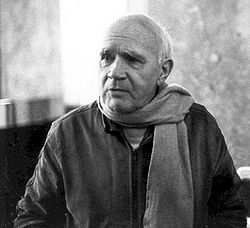 Jean GenetJean Genet (19 December 1910Affiliated
 Arthur MillerArthur Asher Miller (October 17Affiliated
 Norman MailerNorman Kingsley Mailer (January 31Affiliated
 Isabelle HuppertIsabelle Anne Madeleine Huppert (born 16 March 1953) is a…Affiliated
 Marilyn MonroeMarilyn Monroe (1926–1962)Affiliated
 Saddam HusseinSaddam Hussein Abd al-Majid al-Tikriti (28 April 1937Affiliated
How the record is sourced and how the score is derived.
The score is formula-derived (Factrail formula v1, version 1.0.0), not an editorial verdict. Read the methodology.
By the Factrail desk · Method: how we source and score · Last reviewed
Dispute a fact on this pageNamed here, or represent someone who is? Request a right of reply.
People and organizations as listed in the Related section of this page; facts, drivers and the pages that name it as listed in the blocks here. Counts, not a rating.