
Irene Mathyssen
Irene Mathyssen was a Canadian politician in the New Democratic Party who represented London, Ontario…
- Facts0
- Drivers0
- Indicators0
Irene Mathyssen was a Canadian politician in the New Democratic Party who represented London, Ontario…
Irene Mathyssen was a Canadian politician in the New Democratic Party who represented London, Ontario, in the Legislative Assembly of Ontario and later in the House of Commons of Canada. She worked as a school teacher before she entered elected politics. She died of cancer at her home in London on 12 October 2026, aged 75, with her husband, Keith, and her daughter, Lindsay, present.
She was elected member of the provincial parliament for Middlesex in 1990 and served until 1995, when Progressive Conservative Bruce Smith defeated her. She also served as Ontario’s tourism minister.
Mathyssen won the federal constituency of London—Fanshawe in 2006 and was re-elected three times before she retired from the House in 2019. Lindsay Mathyssen succeeded her, winning the seat in 2019 and again in 2021, and lost it to Conservative Kurt Holman in the 2025 election.
In Parliament she sponsored Bill C-282, a private member’s bill to amend the Excise Tax Act in respect of feminine hygiene products; the bill stayed outside the order of precedence and did not reach second reading. On 8 May 2015 she moved an opposition motion that, in the opinion of the House, the government should remove the goods and services tax from feminine hygiene products. The same month the Department of Finance, under Minister Joe Oliver, published a notice of ways and means motion zero-rating sanitary napkins, tampons, sanitary belts, menstrual cups and similar products marketed exclusively for feminine hygiene, for supplies made on or after 1 July 2015. Published obituaries credited her with leading the effort that removed the federal portion of the sales tax from menstrual products.
Lindsay Mathyssen said her mother believed that “our responsibility is to leave this world a better place than we found it.” Avi Lewis, leader of the federal New Democratic Party, said she had pressed for a housing bill of rights, a wider employment-insurance system, and women’s liberation. Conservative member of Parliament Andrew Lawton described her as a tireless advocate for her constituents, and Liberal member Peter Fragiskatos, who represents London Centre, called her a profoundly important community voice. The family said a celebration of life would be announced.
Irene Mathyssen was born and raised in London, Ontario. A profile prepared for the Cable Public Affairs Channel program Beyond Politics says that both of her parents enjoyed political discussion, and that she vividly remembered watching the founding convention of the New Democratic Party on television with them in 1961. The same account says that she graduated with a degree in English and drama and then taught high school for a number of years before seeking provincial office.
Later reporting is consistent with a birth in 1951. In August 2018, explaining a decision not to seek another term in Parliament, she told the London Free Press that if she ran and won she would be 72 by the end of that term. In April 2025 the same newspaper described her as 73, and she was 75 when she died in October 2026.
She identified the University of Western Ontario, in the north part of London, as her alma mater. In her 6 April 2006 reply to the Speech from the Throne in the House of Commons of Canada, she set the university beside Fanshawe College and argued that students at both had been left out of the government’s agenda.
A biography issued for her 2003 provincial campaign stated that she was married to Keith Mathyssen and that they had one daughter, Lindsay. Announcing in 2018 that she would leave federal politics, she described her public life as service “as a mother, as a teacher, as a community member,” and she told the Free Press she was grateful to her daughter and husband for their support. Keith and Lindsay were the family members named with her at her death.
Mathyssen taught in London high schools for more than 25 years. The London Free Press recorded in 2018 that she had taught at Clarke Road, Saunders and Banting secondary schools. A 2025 Free Press article described her, more narrowly, as having taught English at Saunders Secondary School before entering politics. Contemporary accounts place her in more than one school and back in the classroom after a political interval. In November 2006, Fanshawe College’s student newspaper, The Interrobang, called her a secondary-school English teacher who had worked at several London schools, including Clarke Road Secondary School, and who had organized and supported student clubs and activities on multiculturalism, anti-racism and equity.
By the 2003 Ontario election she was teaching English at Sir Frederick Banting Secondary School in the Thames Valley District School Board, and she was a District 11 co-branch president of the Ontario Secondary School Teachers’ Federation at Banting. Her campaign website in December 2004 still listed her as an English teacher at Banting and as an active member of the federation.
She left the classroom to run in 1990 for Bob Rae’s Ontario New Democratic Party and sat in the Legislative Assembly of Ontario until 1995. After the 1995 election she returned to teaching. She was still a secondary-school teacher immediately before her election to the Commons in January 2006; a note on her constituency site that May, about a rally for striking educational assistants, identified her as a secondary-school teacher prior to that election.
She later described the classroom in terms that mixed curriculum with equity. On 27 March 2018 she told the Commons that she had taught literature of the Holocaust in her London English classes for 25 years, because many senior students knew nothing about it, and that she wanted them able to recognize the consequences of prejudice, hatred and racism. In a December 2014 debate she said that one of the “travesties” she encountered while teaching in London was a tendency to treat the skilled trades as of lesser value to the economy. Speaking at the House of Commons Status of Women committee in May 2019, she recalled coming “from the teaching realm” and said that when the first woman vice-principal appeared at the high-school level, which she placed in the late 1980s, “it was tough for her.”
Before and between her years in elected office, Mathyssen’s public work in London was in the classroom, in her teachers’ federation, in the New Democratic Party, and in local campaigns on public services. A biography prepared for her 2003 provincial campaign is the fullest contemporary list of those roles. Later profiles in the London Free Press and on CBC News describe her as a high-school teacher and do not record a term as an elected school trustee.
She taught at three London public secondary schools: Clarke Road, Saunders, and Sir Frederick Banting Secondary School. Until a provincial reorganization in the 1990s, public education in the city was the responsibility of the London Board of Education. That change amalgamated the city board with the public boards of Elgin, Middlesex, and Oxford counties into the body that became the Thames Valley District School Board. She was away from teaching from 1990 to 1995, during her term as a provincial member. By the 2003 campaign she was again teaching English at Banting under the Thames Valley board, and CBC News still described her as an English teacher at Banting in the period before she won a federal seat in 2006.
The 2003 biography names that teaching job and a union post at the school. It does not describe any elected seat on the London Board of Education, and the London Free Press account of where she taught does not either.
In 2003 she was District 11 co-branch president of the Ontario Secondary School Teachers’ Federation at Banting, a branch office at the school rather than a district-wide or provincial post in the federation. The federation was founded in 1919. Its history page says it represents almost 60,000 public high-school teachers, occasional teachers, and other education workers.
The campaign biography said she had been a New Democratic Party member for more than sixteen years, so by the later 1980s, and that she had held several offices in her riding association before the 1990 election, when she became the member for Middlesex. After losing that seat in 1995 she returned to riding-association work as well as to teaching. At the time of the 2003 campaign she was the southwest representative on the provincial executive of the Ontario New Democratic Party, and she belonged to the party’s school teams, which had assisted the caucus and the party on an education policy titled “A Brighter Idea for Education.”
She was also a member of the Ontario Health Coalition and of the London and District Labour Council. The biography does not give her an office in either body. The coalition describes itself as a non-partisan network of more than 500 organizations concerned with protecting public health care under the principles of the Canada Health Act. The labour council was founded in 1957 and is a chartered affiliate of the Canadian Labour Congress; its members work in both the public and private sectors in the London area, including education. The same biography said she had taken part in campaigns to preserve public electricity and public education, to support affordable housing, and to increase the supply of safe, affordable child care, without describing her as the organizer of those efforts.
Irene Mathyssen was elected to the Legislative Assembly of Ontario at the general election of 6 September 1990, the polling day recorded by the Commission on Election Finances for that contest. The Ontario New Democratic Party, led by Bob Rae, won 74 of 130 seats. That was a majority, and the first New Democratic majority in the chamber: in the Elections Ontario seat tables, neither the party nor its Co-operative Commonwealth Federation predecessor had previously reached the 66 seats then required. Rae headed the Rae ministry that followed; the Executive Council order of precedence of 21 October 1994 still names him premier. The governing Ontario Liberal Party of Premier David Peterson fell to 36 seats, and the Progressive Conservative Party of Ontario won 20. Of 4,018,079 valid ballots across Ontario, the New Democrats received 1,509,506 (37.57 percent), the Liberals 1,302,134 (32.41 percent) and the Progressive Conservatives 944,564 (23.51 percent).
In Middlesex she was the New Democratic candidate. The commission’s riding return lists 56,427 electors and 38,382 valid ballots. Mathyssen received 12,522 votes (32.62 percent) and defeated the Liberal incumbent, Douglas R. Reycraft, who received 12,002 (31.27 percent of the valid ballots). The margin was 520 votes. Progressive Conservative Gordon A. Hardcastle polled 8,957 (23.34 percent) and Family Coalition candidate Bill Giesen 4,007 (10.44 percent). Freedom Party candidate Barry Malcolm took the remaining 894 (2.33 percent). She came to the race from high-school teaching; later reporting identified both that provincial seat and her federal career with London.
The assembly records her as a government whip from 7 November 1990 to 3 April 1991. A New Democratic campaign biography later described the assignment as assistant to the chief government whip, rather than as the chief whip’s post itself. On the Executive Council order of precedence dated 21 October 1994, the chief government whip is a different member, Fred Wilson, listed as a minister without portfolio.
From 3 April 1991 to 24 February 1993 she was parliamentary assistant to the minister of the environment. The party biography names the ministers she assisted as Ruth Grier and, once environment and energy had been combined, Bud Wildman. On the October 1994 council list, C.J. (Bud) Wildman is minister of environment and energy and of Native affairs, and Grier is minister of health. The assembly also lists Mathyssen as parliamentary assistant to the minister of environment and energy from 24 June 1993 to 7 June 1995, a span that overlaps her later cabinet appointment.
The same 21 October 1994 order of precedence appointed her minister without portfolio responsible for culture, tourism and recreation. Anne Swarbrick remained minister of culture, tourism and recreation; Mathyssen’s title was the junior, without-portfolio responsibility attached to that department, not the ministry itself. The New Democratic biography later called her associate minister of culture, tourism and recreation. Assembly records date the without-portfolio appointment from 21 October 1994 to 26 June 1995.
She sought re-election at the general election of 8 June 1995. Mike Harris led the Progressive Conservatives on the Common Sense Revolution platform of lower taxes and smaller government. The party, previously in opposition, won the election and Harris became premier. Elections Ontario gives the Progressive Conservatives 82 seats and 1,870,110 votes (44.97 percent), the Liberals 30 seats and 1,291,326 votes (31.05 percent), and the New Democrats 17 seats and 854,163 votes (20.54 percent), with one member elected outside a registered party, out of 4,158,370 valid ballots. Liberals under Lyn McLeod finished about ten percentage points ahead of Rae’s New Democrats.
In Middlesex, Progressive Conservative Bruce Smith won with 15,684 votes (40.34 percent). Reycraft, again the Liberal candidate, placed second with 10,448 (26.87 percent). Mathyssen finished third with 8,799 (22.63 percent). Jamie Harris of the Family Coalition Party received 3,481 (8.95 percent) and Barry Malcolm of the Freedom Party 458 (1.17 percent). Elections Ontario’s summary shows 38,870 valid ballots and a Smith plurality of 5,236 over Reycraft. CBC News later described the riding outcome as Smith’s defeat of the sitting New Democratic member. The election ended her term as member for Middlesex.
After her defeat in the 1995 Ontario election, Mathyssen returned to teaching and to work in her riding association. The London Free Press later described her as a high school teacher who had taught at Clarke Road, Saunders and Banting secondary schools in London, and CBC News, reporting her 2018 retirement, called her an English teacher at Banting before she entered federal politics. A biography issued for her 2003 campaign said she was then teaching English at Sir Frederick Banting Secondary School and was a District 11 co-branch president there for the Ontario Secondary School Teachers’ Federation. Elections Canada’s file of candidates for the 1997 and 2000 general elections listed her 1997 occupation as teacher and her residence as Ilderton.
She was the Ontario New Democratic Party candidate in London—Fanshawe at the provincial general election of 3 June 1999, which the Chief Election Officer recorded as an election in 103 districts, down from 130 in 1995. Frank Mazzilli of the Progressive Conservative Party of Ontario won with 15,295 votes. Peter Mancini of the Ontario Liberal Party received 13,912, Mathyssen 9,788, Freedom Party candidate Lloyd Walker 293, Green Party of Ontario candidate Heidi Strasser 241, and Natural Law Party candidate Wanda Beaver 172. The same report gives 39,701 as the district’s popular vote, so Mathyssen’s share was 24.7 percent, behind Mazzilli at 38.5 percent and Mancini at 35.0 percent. Elections Ontario’s archived poll-by-poll return shows 40,178 ballots cast and 72,960 electors on the list.
On 2 October 2003 she ran again and finished second in a close three-way result. Liberal Khalil Ramal won with 13,920 votes (35.87 percent). Mathyssen received 12,051 (31.05 percent) and incumbent Progressive Conservative Frank Mazzilli 11,777 (30.35 percent); Bryan Smith of the Green Party received 568 (1.46 percent) and Mike Davidson of the Freedom Party 493 (1.27 percent). Those shares are out of 38,809 valid votes, and the Chief Election Officer’s report lists 74,594 eligible voters in the district. Ramal’s margin over Mathyssen was 1,869 votes.
Mathyssen first stood for the House of Commons of Canada in London—Fanshawe at the general election of 2 June 1997, for the federal New Democratic Party. Pat O’Brien of the Liberal Party of Canada, recorded in that candidate file as the incumbent, was elected with 20,497 votes (51.2 percent). Scott Bowman of the Reform Party of Canada received 6,838 (17.08 percent), Mathyssen 6,754 (16.87 percent), Daniel E. Thrasher of the Progressive Conservative Party of Canada 5,499 (13.74 percent), and Heidi Strasser of the Green Party of Canada 442 (1.1 percent). She placed third, 84 votes behind Bowman.
She was not a candidate at the 2000 federal general election. In London—Fanshawe the New Democratic candidate was Andrew Sadler, with 4,107 votes (11.44 percent). O’Brien was re-elected with 19,677 (54.81 percent); Robert Vaughan of the Canadian Alliance received 7,998 (22.28 percent) and Derrall Bellaire of the Progressive Conservatives 4,119 (11.47 percent).
At the general election of 28 June 2004 she again finished second to O’Brien. Elections Canada’s official voting results give O’Brien 15,664 votes (38.1 percent) and Mathyssen 12,511 (30.4 percent). John Mazzilli of the Conservative Party of Canada received 10,811 (26.3 percent), Ed Moore of the Green Party 1,634 (4.0 percent), Derrall Bellaire of the Progressive Canadian Party 453 (1.1 percent), and Cameron Switzer of the Marxist-Leninist Party of Canada 65 (0.2 percent), out of 41,138 valid ballots. O’Brien’s margin over Mathyssen was 3,153 votes.
London—Fanshawe takes in eastern and southeastern London, Ontario. Created in 1996 from parts of London—Middlesex and London East, it returned Liberals in 1997, 2000 and 2004. Pat O'Brien, first elected in London—Middlesex in 1993, held it for the Liberal Party of Canada; in 2004 he defeated New Democrat Irene Mathyssen by 3,153 votes, 15,664 to 12,511.
On 6 June 2005 O'Brien left the Liberal caucus to sit as an independent. He opposed same-sex marriage and said Prime Minister Paul Martin had not honoured assurances that hearings on the legislation would be meaningful and fair, citing a 14 June deadline, short notice for witnesses, and the conduct of the sessions. That September he told The Hill Times he might not run again and would not return to the Liberals. He was not on the ballot on 23 January 2006.
Mathyssen, again the New Democratic Party candidate, won the open seat and became the riding's first New Democratic member of the House of Commons of Canada. Elections Canada recorded 16,067 votes for her (34.5 percent), 15,199 (32.6 percent) for Liberal Glen Douglas Pearson, 13,495 (29.0 percent) for Conservative Dan Mailer, and 1,803 (3.9 percent) for Green David McLaughlin. Of 46,564 valid ballots, her margin over Pearson was 868 votes.
On 14 October 2008 she received 17,672 votes (43.1 percent). Conservative Mary Lou Ambrogio had 12,659 (30.9 percent), Liberal Jacquie Gauthier 7,774 (18.9 percent), Green Daniel O'Neail 2,656 (6.5 percent), and Christian Heritage candidate Leonard Vanderhoeven 276 (0.7 percent). Valid ballots totalled 41,037, and the margin over Ambrogio was 5,013 votes.
On 2 May 2011 she took a majority of votes cast: 21,689 (50.9 percent), against 14,294 (33.5 percent) for Conservative Jim Chahbar and 4,893 (11.5 percent) for Liberal Roger Caranci. Green Matthew Peloza received 1,202 (2.8 percent) and Christian Heritage candidate G. J. Rancourt 535 (1.3 percent). Her margin on 42,613 valid ballots was 7,395 votes.
The 19 October 2015 result was closer. Mathyssen won with 20,684 votes, 37.8 percent of valid ballots. Liberal Khalil Ramal received 17,214 (31.4 percent), Conservative Suzanna Dieleman 14,891 (27.2 percent), Green Matthew Peloza 1,604 (2.9 percent), and independent Ali Hamadi 352 (0.6 percent). Elections Canada counted 54,745 valid ballots, 283 rejected ballots and 87,298 electors on the lists, and declared Mathyssen elected; her margin over Ramal was 3,470 votes.
On 27 August 2018 she said she would not seek a fifth term. She wrote that after almost 18 years serving the community of London-Fanshawe she had decided not to run again, and that she would remain the member until the next election. That service ended when Governor General Julie Payette dissolved Parliament on 11 September 2019, on the advice of the prime minister.
On 15 November 2006 she held a lunch-hour forum at Fanshawe College. She told students her aim was the most accessible constituency office the area had seen; the student paper gave that office as 1700-D Dundas Street. She said she would ask for polling stations on campus and called student debt unacceptable, pointing to proposals for more grants, tuition changes and easier loans.
London's Electro-Motive Diesel locomotive plant shut down early in her second term after a lockout. After the agreement with Canadian Auto Workers Local 27 expired at the end of 2011, Caterpillar Inc. subsidiary Progress Rail locked out more than 400 unionized workers on 1 January 2012. They had refused concessions that union officials said would cut wages from about $35 an hour to $16.50. On 3 February the company announced the plant would close. About 450 locked-out workers stayed on the picket line while the union sought a closure agreement and called for a public inquiry. On 13 March Mathyssen presented a petition from London residents and former Electro-Motive workers. It said Caterpillar had removed production equipment contrary to the collective agreement, demanded wage and benefit cuts above 50 percent, and sought a reduced pension despite what the petitioners called higher productivity and profits. They asked Parliament to investigate the sale under the Investment Canada Act and to strengthen that law.
Veterans' care was a continuing local file. In the House on 8 May 2013 she said empty long-term-care beds at Parkwood Hospital, a veterans' hospital in the riding, were closed to many former service members because of the facility's mandate, and that Ottawa was shifting responsibility to the provinces. She described Colonel Neil Russell, a 33-year veteran whose doctors, she said, tied his spinal deterioration to his service: refused a Parkwood bed, he later received a community bed for which he had to share the cost.
She also argued London's case on rapid transit. After the March 2016 federal budget set aside $1.5 billion for transit in Ontario, she told the London Free Press that a city request for roughly $375 million, toward an $880-million bus-and-light-rail plan, would consume about a quarter of that allocation. "The chances of London getting what it really needs is pretty limited," she said, and she urged city hall to keep lobbying Ottawa and Queen's Park. Liberal MP Peter Fragiskatos, of London North Centre, called that alarmist and pointed to further infrastructure money expected in 2017. Mayor Matt Brown said he would wait for a business case before choosing between the hybrid plan and a bus-only alternative then priced near $475 million, with the city proposing $125 million either way.
Critic posts in the New Democratic Party are party spokesperson assignments, not offices of the House of Commons. The Library of Parliament records Mathyssen’s portfolios separately from the House list of committee service and caucus posts.
The Standing Committee on the Status of Women, created in the 38th Parliament in 2004, may under Standing Order 108 study policies, programs, estimates and legislation related to the status of women and gender equality, including what is now Women and Gender Equality Canada. Standing Order 106(2) requires its chair, unlike most standing-committee chairs, to be a member of the official opposition.
Mathyssen sat on the committee from shortly after her 2006 election and was repeatedly elected a vice-chair between 9 May 2006 and 26 March 2011, through most of the 39th and 40th Parliaments. Those years match the Library’s listing of her as NDP critic for the Office of the Co-ordinator, Status of Women, from 14 February 2006 to 1 May 2011.
She did not hold that critic post in the 41st Parliament. At the committee’s 15 November 2011 meeting the clerk restated the official-opposition rule for the chair; Conservative member Tilly O’Neill Gordon nominated Mathyssen, and the motion carried. The House list shows her as chair from that day until 23 April 2012, and as chair of the agenda-and-procedure subcommittee from 16 November 2011 to the same date.
In December 2011 the committee published Ending Violence Against Aboriginal Women and Girls: Empowerment – A New Beginning. The study had begun in April 2009. The NDP dissent said the recommendations were vague and did not reflect testimony on missing and murdered Indigenous women and girls; the Liberals also dissented. Its second report of the session concerned the 2012–13 Main Estimates.
She returned late in the 42nd Parliament, as a member from 29 January 2019 and vice-chair from 5 February to 11 September 2019. On 30 January 2019 Jagmeet Singh named her critic for women’s equality, succeeding Sheila Malcolmson. The party said she was reprising a 2006–2011 role, would remain Canada Post critic, and would be the committee’s vice-chair.
The Library lists her as critic for public housing, under Human Resources and Skills Development, from 14 February 2006 to 26 September 2007, and as assistant critic for public safety from 17 November 2008 to 1 May 2011. After the 2011 election Jack Layton’s shadow cabinet listed her as critic for seniors. The Library dates that post from 26 May 2011 to 18 April 2012, then critic for pensions until 12 August 2013, then seniors again until dissolution on 18 October 2015. In February 2012, identified as the seniors critic, she joined pensions critic Wayne Marston on a tour opposing changes to Old Age Security. She was assistant critic for Canadian Heritage from 13 August 2013 to 22 January 2015.
The Standing Committee on Veterans Affairs examines the management and operation of the Department of Veterans Affairs and matters referred by the House. She was a member from 13 June 2011 to 13 September 2013 and from 29 January 2016 to 29 January 2018, and vice-chair from 16 February 2016 to 29 January 2018. From 23 October 2013 to 7 March 2014 she sat on the Special Committee on Violence Against Indigenous Women, charged with hearings on missing and murdered Indigenous women and girls and with proposing responses to the causes of that violence. She also sat on Canadian Heritage (22 October 2013 to 29 January 2015) and Citizenship and Immigration (29 January to 2 August 2015).
The House list records her as NDP caucus chair from 3 December 2014 to 2 August 2015, and on the Panel of Chairs—members the Speaker names under Standing Order 112 to preside at legislative committees—for 28 October 2010–26 March 2011, 28 September 2011–13 September 2013, and 6 March 2014–2 August 2015. On 12 November 2015 Tom Mulcair named her veterans-affairs critic and deputy whip. The House dates the deputy whip post from 13 November 2015 to 24 January 2018; the Library dates the veterans critic post from 12 November 2015 to 30 January 2018, then critic for the Canada Post Corporation, under Public Works and Government Services, from 31 January 2018 to 11 September 2019. On 1 June 2018, as Canada Post critic, she commented on an arbitration finding that rural and suburban mail carriers, about two-thirds of them women, did work equal to urban carriers.
On 22 November 2006 Mathyssen, the New Democratic Party member for London—Fanshawe, introduced Bill C-382 in the House of Commons, short-titled the Housing Bill of Rights. She told the House that more than 200,000 Canadians were homeless despite federal surpluses. The bill would have made secure, adequate, accessible and affordable housing a legally enforceable right from 1 January 2007, backed by financial policies, a national strategy and a conference of federal, provincial, territorial, municipal and Aboriginal representatives. Read a first time, it stayed outside the order of precedence for private members’ debate, was reintroduced on 16 October 2007, and did not become law.
A related New Democratic bill went further in procedure without passing. Libby Davies’s Bill C-304 would have required the minister responsible for the Canada Mortgage and Housing Corporation to consult provinces, territories, municipalities, Aboriginal communities, housing providers and civil-society groups in order to establish a national housing strategy. It reached report stage on 21 March 2011 and died with that Parliament. The National Housing Strategy Act, assented to on 21 June 2019 and in force on 9 July 2019, declares the right to adequate housing to be federal policy and ties a strategy to its progressive realization under the International Covenant on Economic, Social and Cultural Rights, without C-382’s enforceable individual right or fixed start date.
Taking menstrual products out of the goods and services tax was already a New Democratic proposal. Judy Wasylycia-Leis reintroduced it as Bill C-275 on 11 May 2006, calling the tax on tampons and napkins gender-based and hardest on lower-income women, and later as Bill C-341; neither got past first reading. Mathyssen’s Bill C-282, first read on 23 September 2011 and reinstated on 16 October 2013, said it would exempt feminine hygiene products from the GST by adding to Schedule VI, the zero-rated schedule, “a supply of feminine hygiene products, including sanitary napkins and tampons.” It never entered the order of precedence and did not become law, although members tabled petitions asking the House to pass it.
On 8 May 2015, on a New Democratic opposition day, Mathyssen moved: “That, in the opinion of the House, the government should remove the GST from feminine hygiene products.” She called it discriminatory for women, girls and transgender people; Mylène Freeman also urged the Conservative Party of Canada government to end it. Division No. 400 on 11 May passed 258 to 0. The Canadian Press reported that Conservative women MPs had warned they would skip the vote unless caucus backed the motion, after which New Democrats asked that the budget bill then before the House be amended at once. The motion was not legislation.
The government made the change by ways and means. On 28 May 2015 Finance Minister Joe Oliver published explanatory notes zero-rating a product marketed exclusively for feminine hygiene purposes that is a sanitary napkin, tampon, sanitary belt, menstrual cup or similar product, for supplies on or after 1 July 2015. CBC News reported that the government had said the issue would wait for a future budget, and that the unanimous motion brought the date forward. The Liberal Party of Canada government’s Budget Implementation Act, 2016, No. 1 (S.C. 2016, c. 7), assented to on 22 June 2016, enacted the addition of feminine hygiene products to the GST/HST zero-rated list. The tax outcome therefore came from an all-party motion, petitions and government legislation, not from the passage of C-282.
On 14 April 2016 Mathyssen introduced two amendments to the Canadian Forces Superannuation Act and the Royal Canadian Mounted Police Superannuation Act. Bill C-260 would have excluded a disability pension under the Canada Pension Plan, or a similar provincial plan, from the deduction applied to a contributor’s annuity. Bill C-261 would have raised the survivor and children’s allowance from 50 per cent to 70 per cent of that annuity or allowance. Neither left first reading. Costing C-261 at her request, the Parliamentary Budget Officer estimated about $6.3 billion in added liability, roughly $5 billion for the regular force and $1.3 billion for the RCMP, and noted that 70 per cent exceeded the Income Tax Act’s two-thirds lifetime survivor benefit. Mathyssen called the sum large but said survivors had waited a long time; veterans advocate Sean Bruyea said private members’ bills rarely pass and that the file lacked a broader plan.
Bill C-320, introduced on 2 November 2016, would have ended the deduction of Canada Pension Plan benefits from Canadian Forces and RCMP annuities, a change also attempted in earlier parliaments. It died at first reading. Bill C-397, introduced on 13 February 2018, would have paid a survivor under the forces, RCMP, public-service, judges’ and members-of-Parliament plans, and certain private-pension statutes, even if the relationship began after age 60 or retirement. She called that “gold-digger” rule, dating in the forces law from the early twentieth century, archaic and especially harmful to women caregivers; the bill did not proceed. An Office of the Veterans Ombudsman already existed under Order in Council P.C. 2007-530, and her Bill C-283 of 23 September 2011, which would have created a statutory office, did not advance.
Bill C-287, the Senior Consumer Price Index Act, introduced the same day as C-282, would have required the Chief Statistician to publish a monthly index of spending by people 60 and older and to index Canada Pension Plan and Old Age Security benefits to it instead of the general index from Statistics Canada. It did not become law.
Bill C-601, introduced on 8 December 2010 and followed by Bill C-254 on 23 June 2011, would have counted a one-time severance contribution toward the registered retirement savings plan limit and required severance to be ignored in setting employment insurance deductions or the start of benefits. She described it as help for someone who lost a job through no fault of their own; neither bill was debated or enacted.
When Caterpillar Inc. moved to close its Electro-Motive Diesel plant in London, Ontario, employees picketed in early February 2012. Her 9 February motion condemned that closure, stated as 450 jobs, and Papiers White Birch’s Quebec City closure, stated as 600, and demanded draft Investment Canada Act amendments within 90 days so foreign buyers would face public, enforceable “net benefit” and job commitments. On 13 February it was defeated 148 to 115, Conservatives against and New Democrats, Liberals and the Green member in favour. Bill C-256, introduced on 23 June 2011, would have made murder of a firefighter on duty first-degree murder and created an aggravated-assault offence, punishable by up to 10 years, for wounding or endangering a firefighter on duty; it also died without debate.
On 27 August 2018, Irene Mathyssen announced that she would not seek another term as the New Democratic Party member of Parliament for London—Fanshawe, in London, Ontario. She told the London Free Press that the years in office had been “an exhilarating and remarkable experience,” but that if she ran and won she would be 72 by the end of the next term. The work, she said, “requires a lot of energy,” and she wanted to hand it to someone prepared to give the community that time. In a written statement she said she would finish the term and then “remain active in a civilian capacity,” closing with lines from a letter by Jack Layton.
She said the riding association was already looking for nominees and identified her daughter, Lindsay Mathyssen, who had sought the NDP nomination in London North Centre in 2015. Lindsay, an Ottawa New Democratic staffer, said on 7 September 2018 that she would seek the London—Fanshawe nomination, citing her work with the party’s parliamentary caucus. She was the only person to file by the 21 October deadline and was acclaimed on 4 November 2018 at the Church of the Ascension on Dundas Street. Irene Mathyssen, then 67, called her “a gifted, caring young woman who will take care of the people in this community.”
In the 21 October 2019 federal election, Lindsay Mathyssen won the seat for the NDP with 22,671 votes (40.8 percent of valid ballots), ahead of Liberal Mohamed Hammoud (14,924; 26.9 percent) and Conservative Michael van Holst (13,770; 24.8 percent). She was re-elected on 20 September 2021 with 22,336 votes (43.4 percent), ahead of Conservative Mattias Vanderley (12,486; 24.3 percent) and Hammoud (11,882; 23.1 percent). In the 43rd Parliament she was NDP deputy whip from 28 November 2019 to 15 August 2021, and from 7 October 2021 deputy leader in the House of Commons until 23 March 2025./roles) On 28 April 2025, Conservative Kurt Holman won London—Fanshawe with 23,749 votes (40.6 percent). Liberal Najam Naqvi placed second with 17,863 (30.5 percent) and Mathyssen third with 16,135 (27.6 percent). It was the first Conservative win in the riding, which the NDP had held since Irene Mathyssen’s victory in 2006.
Library and Archives Canada holds the Douglas-Coldwell Foundation fonds, MG 28 I 487. A 1995 finding aid lists files from 1971 into the early 1990s on the board, research requests, scholarships, grants, conferences and membership, with separate series on M.J. Coldwell and Tommy Douglas. By 2022 the organization was publicly using the name Douglas Coldwell Layton Foundation and calling itself a charity.
On 31 March 2022 it held a fireside chat at the Broadbent Institute’s Progress Summit. Its account identified Karl Bélanger as board president and Irene Mathyssen as board vice-president, with Olivia Chow moderating a discussion of the charity’s work and how it differed from the Broadbent Institute. At a 50th-anniversary dinner in Ottawa on 15 November 2022, with British Columbia premier John Horgan as keynote speaker, the foundation listed Mathyssen among the speakers as president, Brad Lavigne as vice-president and Josh Bizjak as executive director. Its later memorial still described her as president. She died on 12 October 2026.
During the April 2025 federal campaign, Mathyssen told the London Free Press that she had been diagnosed with colon cancer the previous summer and that chemotherapy had ended in February 2025. She said she was in recovery, that her health was good, and that she was “grateful for every day.” The illness had not kept her off her daughter Lindsay’s campaign for a third term as New Democratic Party member of Parliament for London—Fanshawe: she made calls from the campaign office and put up lawn signs. “We Mathyssen women are fighters,” she said.
Mathyssen died at her home in London, Ontario, on Monday, 12 October 2026, at the age of 75, after a battle with cancer. A family spokesperson told CBC News that her husband, Keith, and Lindsay were with her. Lindsay, a former NDP MP, announced her mother’s death on social media the next day. In a written statement she called Mathyssen “someone I looked up to, someone who helped guide me through life, and someone whose strength and determination inspired me in ways words can never fully express.” She wrote that her mother believed “our responsibility is to leave this world a better place than we found it,” and that she would try to honour that belief. The statement also said that, to Londoners and Canadians, Mathyssen was known for her public service, her dedication to her community, and “her commitment to the people and causes she believed in,” and that her legacy was “in the lives she touched and the strength she gave to those fortunate enough to know her.” CBC News reported that details of a celebration of life would be announced in the coming days.
Family friend Nadine Abi Raad told CBC that Mathyssen was “not an ordinary woman or politician” but “a fierce advocate for human rights, for education, for health care, for veterans,” and that she had “changed so many lives.” Abi Raad said Mathyssen “had a lot of courage,” “was a voice for those who didn’t have a voice,” and “fought for the most vulnerable people in the community.”
A Canadian Press report carried by The Globe and Mail quoted federal NDP leader Avi Lewis, who said she would be remembered as someone “who fought relentlessly for our movement, and for a Canada that upholds the dignity of every person.” Lewis named her call for a housing bill of rights, her push to expand employment insurance, and her fight for women’s liberation as ways she “pushed to make life better for people on every front.” London-area Conservative MP Andrew Lawton said she was “a tireless advocate for her values and her constituents and was always generous with her time” when he worked in radio, and he offered his thoughts to Keith and Lindsay. Liberal MP Peter Fragiskatos, who represents London Centre, called her a “profoundly important” community voice who “spoke up for those who had been forgotten and ignored and always approached her work with kindness, humility and dedication,” and “a true public servant.”
On 14 October 2026 the London Free Press published a gallery of file photographs from her campaigns, rallies and community events, with a note that her family had announced her death. A shorter Canadian Press account, which did not include the statements from Lewis, Lawton and Fragiskatos, appeared the same day in the Lethbridge Herald.
Ranked by shared high-impact facts, then explicit ties, then shared drivers.
 Mike HarrisMichael Deane Harris (born January 23Affiliated
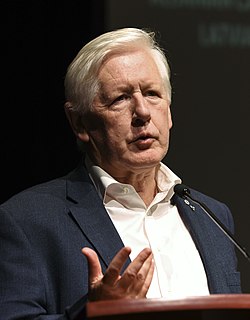 Bob RaeRobert Keith Rae (born August 2Affiliated
 Jagmeet SinghJagmeet Singh (born January 2Affiliated
 Olivia ChowOlivia Chow (born March 24Affiliated
 David PetersonDavid Robert Peterson (born December 28Affiliated
 Julie PayetteJulie Payette (born 20 October 1963) is a Canadian…Affiliated
How the record is sourced and how the score is derived.
The score is formula-derived (Factrail formula v1, version 1.0.0), not an editorial verdict. Read the methodology.
By the Factrail desk · Method: how we source and score · Last reviewed
Dispute a fact on this pageNamed here, or represent someone who is? Request a right of reply.
People and organizations as listed in the Related section of this page; facts, drivers and the pages that name it as listed in the blocks here. Counts, not a rating.