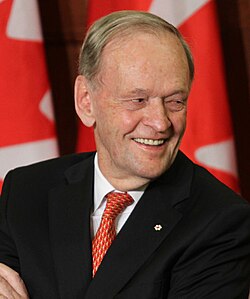
Jean Pelletier
Jean Pelletier (1935–2009) was a Canadian politician, journalist, and public servant from Quebec who served as the 37th mayor of Quebec City…
- Facts0
- Drivers0
- Indicators0
Jean Pelletier (1935–2009) was a Canadian politician, journalist, and public servant from Quebec who served as the 37th mayor of Quebec City…
Jean Pelletier (1935–2009) was a Canadian politician, journalist, and public servant from Quebec who served as the 37th mayor of Quebec City from 1977 to 1989, chief of staff to Prime Minister Jean Chrétien from 1991 to 2001, and chairman of Via Rail Canada.
Beginning his career in radio and television journalism, he became press secretary to Quebec Premier Maurice Duplessis in 1959 and later emerged as a leading organizer for the Liberal Party of Canada. Pelletier died of colon cancer in 2009 at age 73, having faced scrutiny in connection with the federal sponsorship scandal during his tenure at Via Rail.
Jean Pelletier was born on February 21, 1935, in Chicoutimi, located in Quebec's Saguenay–Lac-Saint-Jean region. The son of Burroughs and Marie (Desautels) Pelletier, he grew up in a provincial Quebec environment marked by the economic and cultural dynamics of the resource-rich Saguenay area during the Great Depression and post-war years.
At the age of four, Pelletier relocated with his family to Quebec City, where he spent the remainder of his formative years. He pursued education at the Collège des Jésuites de Québec, an institution known for its rigorous classical training that emphasized intellectual discipline and public service values prevalent in mid-20th-century Quebec society. This early exposure to urban Quebec's political and journalistic circles laid the groundwork for his later professional pursuits, culminating in a move toward journalism by the late 1950s.
Pelletier began his career in the late 1950s as a journalist based in Quebec City, working in radio and television. In 1957, he joined CFCM-TV, the local affiliate of Radio-Canada, marking his entry into broadcast media.
Drawn to politics, Pelletier entered public service in 1959 as press secretary to Quebec Premier Maurice Duplessis of the Union Nationale government. He continued in similar roles following Duplessis's death later that year, serving under successors until leaving politics in 1964 to work as a stockbroker through 1976. These early experiences honed his communication skills and political acumen, leveraging his regional roots from Chicoutimi.
After leaving provincial politics in 1964, Pelletier engaged in the private sector while serving on the boards of several organizations and non-profits in Quebec City, building connections in the civic and philanthropic communities.
From 1973 to 1977, he held positions as director and vice-president of Action Sociale Ltée, a firm focused on social initiatives, further honing his administrative experience.
In 1976, Pelletier was elected as a municipal councillor in Quebec City, marking his entry into elected office and positioning him for a successful mayoral campaign the following year.
Jean Pelletier was elected as the 37th mayor of Quebec City in November 1977, following his prior role as a municipal councillor, and served three terms until 1989 after successful re-elections.
During his tenure, Pelletier oversaw significant urban infrastructure improvements, including enhancements to rail services that bolstered connectivity for the city. He also championed cultural and public projects, such as the establishment of the Gabrielle-Roy Library in downtown Quebec City in 1983, which became a key community resource.
Pelletier's leadership earned him a reputation for pragmatic and effective municipal governance, focusing on practical developments that addressed the city's growth needs amid Quebec's evolving urban landscape.
After leaving the mayoralty of Quebec City in 1989, Pelletier became a leading organizer for the Liberal Party of Canada, focusing on rebuilding its influence in Quebec amid regional political shifts. His efforts emphasized grassroots mobilization and strategic planning to strengthen party infrastructure in the province.
In the 1993 federal election, Pelletier ran as the Liberal candidate in the Quebec City riding, leveraging his local prominence from the mayoralty—where the city had functioned as a Liberal electoral stronghold—but he was defeated by the Bloc Québécois incumbent.
Pelletier's organizational work contributed to the Liberal Party's broader strategy under Jean Chrétien's leadership, particularly in fostering loyalty among Quebec supporters and coordinating campaign readiness ahead of the election.
Jean Pelletier continued as Chief of Staff in the Prime Minister's Office (PMO) following Jean Chrétien's victory in the 1993 federal election, having been appointed to the role in 1991, serving from November 1993 until his resignation in 2001. His prior experience as a Liberal organizer in Quebec positioned him as a trusted figure to handle the PMO's operations during a period of economic recovery and political challenges.
Pelletier functioned as Chrétien's close confidant, exerting significant influence over the PMO's internal management and decision-making processes. Known as the "elegant executioner" for his discreet yet firm approach to resolving conflicts and enforcing discipline within the Prime Minister's inner circle, he streamlined party dynamics and ensured loyalty among staff.
During his tenure, Pelletier contributed to navigating federal policy amid the early 1990s recession and the 1995 Quebec sovereignty referendum, helping maintain Liberal cohesion and government stability. His oversight influenced internal party strategies that supported Chrétien's leadership through successive electoral successes in 1997 and 2000.
Following his departure from the Prime Minister's Office, Jean Pelletier was appointed Chairman of the Board of Directors of Via Rail Canada Inc. on September 1, 2001, for a five-year term by Transport Minister David Collenette. This position represented a transition from high-level political advising to leading the governance of a key Crown corporation focused on intercity passenger rail services.
In this role, Pelletier brought expertise from his municipal tenure, where he had contributed to a federal task force examining high-speed rail corridors, including the Quebec-Windsor route, to inform strategic oversight of Via Rail's operations and infrastructure priorities. His leadership emphasized board-level direction for the corporation's network maintenance and service enhancements amid ongoing fiscal and competitive pressures in Canada's rail sector.
Pelletier, as Chief of Staff to Prime Minister Jean Chrétien from 1991 to 2001, played a role in the oversight of the federal sponsorship program, which allocated funds for events and advertising in Quebec to bolster federalism amid separatist threats. The program, later scrutinized for irregularities including overpayments to advertising firms, became the focus of the Gomery Commission inquiry launched in 2004.
During his testimony before the Gomery Commission in February 2005, Pelletier defended the program's national unity objectives and denied any personal knowledge of or involvement in administrative abuses, such as kickbacks or improper contract awards. He maintained that agency selection and fund management fell under departmental responsibilities rather than direct Prime Minister's Office control. Commission counsel and subsequent reports highlighted lapses in oversight attributable to senior PMO figures like Pelletier, though Gomery's findings stopped short of accusing him of direct participation in fraud.
The scandal's exposure linked Pelletier to perceptions of Liberal Party cronyism, eroding public trust despite his denials and contributing to broader political repercussions, including the defeat of Chrétien's successor Paul Martin in the 2006 election. In 2008, a Federal Court ruling deemed Gomery biased in certain commentary on Pelletier and Chrétien, striking down adverse inferences about their leadership and ordering compensation, which affirmed that no evidence tied them to illicit gains.
In his later years, Jean Pelletier maintained a low profile following the sponsorship scandal, focusing on personal matters amid declining health. Diagnosed with colon cancer, he underwent treatment but his condition worsened progressively.
Pelletier was admitted to a hospital in Quebec City on December 31, 2008, where he continued to battle the illness. He died there on January 10, 2009, at the age of 73, succumbing to complications from the cancer.
Pelletier was appointed an Officer of the Order of Canada in 1985 for his contributions to public service and community leadership, recognizing his tenure as mayor of Quebec City and his role in federal politics. He also received the National Order of Quebec as an Officer, honoring his impact on provincial governance and cultural preservation in the province.
His service as Chief of Staff to Prime Minister Jean Chrétien earned him a lasting reputation as one of the most effective holders of that position in Canadian history, noted for his strategic acumen and loyalty.
Pelletier's legacy endures in Quebec's political landscape and within the federal Liberal Party, where his organizational efforts helped strengthen the party's presence and electoral success in the province.
Ranked by shared high-impact facts, then explicit ties, then shared drivers.
How the record is sourced and how the score is derived.
The score is formula-derived (Factrail formula v1, version 1.0.0), not an editorial verdict. Read the methodology.
By the Factrail desk · Method: how we source and score · Last reviewed
Dispute a fact on this pageNamed here, or represent someone who is? Request a right of reply.
People and organizations as listed in the Related section of this page; facts, drivers and the pages that name it as listed in the blocks here. Counts, not a rating.