
Marlene Schönberger
Marlene Schönberger (born 6 December 1990 in Landshut) is a German political scientist and a politician of Alliance 90/The Greens.
- Facts0
- Drivers0
- Indicators0
Marlene Schönberger (born 6 December 1990 in Landshut) is a German political scientist and a politician of Alliance 90/The Greens.
Marlene Schönberger (born 6 December 1990 in Landshut) is a German political scientist and a politician of Alliance 90/The Greens. She has been a member of the Bundestag since October 2021, holding a seat from the party's Bavarian state list, and has stood in the Rottal-Inn constituency in Lower Bavaria.
She passed the Abitur in 2010 at the Hans-Carossa-Gymnasium in Landshut and studied political science at the Ludwig Maximilian University of Munich, completing a bachelor's degree in 2014 and a master's degree in 2016. Before her election she managed democracy projects supported by the Federal Foreign Office, worked in 2018 on the staff of the Bavarian Landtag, and was a research associate at the university. She joined the Greens in 2010. Since 2017 she has been a councillor in Adlkofen, and since 2020 a member of the district council of Landkreis Landshut, where she chaired the Green group in 2020–21.
At the 2021 German federal election she stood for the Greens in Rottal-Inn, then numbered constituency 230. The party's first votes there came to 10,188, or 7.7 percent, and the direct mandate went to the Christian Social Union with 35.1 percent. Schönberger entered the 20th Bundestag, which held its opening sitting on 26 October 2021, through the Bavarian list. In the 2025 German federal election the district, renumbered 229, recorded 7,688 Green first votes (5.4 percent). Günter Baumgartner of the CSU won the constituency with 34.9 percent, and Schönberger again took a list seat in the 21st Bundestag.
In the 21st term she is a full member of the Interior Committee and of the Committee on Culture and Media, where she is the Green group's coordinator (Obfrau), a deputy member of the Committee on Research, Technology, Space and Technology Assessment, and one of the Bundestag's secretaries. She is deputy chair of the German-Israeli Parliamentary Group. In the 20th term she was a full member of the Committee on Education, Research and Technology Assessment and of the Committee on Internal Affairs, and a deputy member of the culture and legal committees. In a December 2023 guest essay in Der Tagesspiegel she wrote that German universities, including institutions that see themselves as progressive, had been too slow to respond to antisemitic incidents and needed to make it possible for students and researchers to work in safety.
Marlene Schönberger was born on 6 December 1990 in Landshut, in Lower Bavaria. Her curriculum vitae states that she grew up in Adlkofen, a municipality in the Landshut district. Abgeordnetenwatch, which publishes profiles of members of the Bundestag, lists the same municipality as her place of residence and gives 1990 as her year of birth. Public biographies do not record her parents or siblings.
On her own website she writes that she was politically interested as a child, that she grew up within sight of units I and II of the Isar Nuclear Power Plant, and that she founded a youth group at school concerned with environmental and climate protection. The station, also known as Ohu I and II, stands at Ohu near Landshut. A 2012 report by Bayerischer Rundfunk described the vapour plume from Isar II’s cooling tower as widely visible, including from the A 92 between Munich and Deggendorf. The same report noted that Isar I, a boiling-water reactor, had been shut down in 2011 after the Fukushima disaster, while Isar II, a pressurized-water reactor operated by E.ON with involvement of the Stadtwerke München, had gone on line in 1988.
In 2010 Schönberger passed the Abitur at the Hans-Carossa-Gymnasium in Landshut. The school, whose site dates the institution to 1629, stands at Freyung 630a and offers humanistic, modern-language, and science-and-technology courses.
She then studied political science at Ludwig Maximilian University of Munich. The Bundestag biography, which is based on members’ own statements, records a bachelor’s degree in 2014 and a master’s degree in 2016. Abgeordnetenwatch lists her qualification as Politikwissenschaftlerin (M.A.).
Both theses were submitted at the university’s Geschwister-Scholl-Institut für Politikwissenschaft and appeared in its series Münchener Beiträge zur Politikwissenschaft. The bachelor’s thesis, written under Dr. Sebastian Huhnholz in the summer semester of 2014 and released on the university repository on 27 October 2014, is titled Demoskopische Effekte sozialer Erwünschtheit auf antisemitische und islamophobe Einstellungen in der deutschen Gegenwartsbevölkerung am Beispiel der Studie „Deutsche Zustände“. It examines whether social-desirability bias leads survey items to understate antisemitic and Islamophobic attitudes, using the Deutsche Zustände studies (2002–2012) associated with a research group around Wilhelm Heitmeyer.
The master’s thesis, dated 2016 on the title page and supervised by Prof. Dr. Karsten Fischer, is Freimauertum, Zionismus und konspirative Eliten: Die Wirkung von Verschwörungstheorien auf demokratische Einstellungen (Freemasonry, Zionism and conspiratorial elites: the effect of conspiracy theories on democratic attitudes). It was placed on the open-access server on 14 February 2017. Fischer heads the institute’s chair of political theory. The thesis reviews research on conspiracy theories, follows conspiratorial motifs from the Middle Ages through the period after the attacks of 11 September 2001, and considers whether their spread weakens conditions of liberal democracy, including in connection with gains by right-wing populist parties.
In an April 2019 interview with the Bavarian branch of Alliance 90/The Greens, when she was 28 and a municipal councillor in Adlkofen, she said she was working at that chair and writing a doctoral thesis on populism and conspiracy theories. From 2010 to 2020, overlapping the Abitur and the university years, the Bundestag biography also lists her as a trainer of Icelandic horses.
Before she entered the Bundestag in October 2021, Schönberger’s disclosed occupations were democracy-project work connected with the Federal Foreign Office and a staff post in the Landtag of Bavaria. The archived biography for the 20th electoral term, based on her own information, states that from 2016 to 2019 she managed democracy projects of the Auswärtiges Amt. The biography for the 21st term uses the Bundestag’s compressed dating style and reads “2016 und 2020” for management of projects funded by the Foreign Office. A profile of the Petra-Kelly-Stiftung, the Bavarian education centre of the Heinrich Böll Foundation, says that between 2016 and 2019 she managed political youth exchanges in Tunisia under the Foreign Office’s transformation partnership on democratization and reform. The foundation’s shorter profile calls her, without dates, a Referentin for democracy projects in the Foreign Office; none of the accounts names a further employer.
From 21 to 28 July 2017 she and Theresa Eberlein organized a meeting in Zarzis, in southern Tunisia, for 23 young adults from Bavaria and Tunisia on environmental protection and climate policy. The partners were Grüne Jugend Bayern, the Bavarian youth organization of Alliance 90/The Greens, and Zarzis Al-Ghalia; the Foreign Office funded the exchange, and Green members of the Landtag were patrons. For 2018 both Bundestag biographies list her as wissenschaftliche Mitarbeiterin in the Bavarian Landtag, without naming the member or office she assisted.
From 2018 to 2021 she was a research associate in political science at the Geschwister-Scholl-Institut of Ludwig Maximilian University of Munich. The archived biography states that span as wissenschaftliche Mitarbeiterin; the current biography compresses it to “2018 und 2021” and calls her a Politikwissenschaftlerin at LMU, and the register of members’ activities names the same pre-parliamentary post. She worked on ForDemocracy subproject P 04, “Antipopulismus: Wissenstransfer und Handlungsstrategien in der politischen Bildungsarbeit,” at the institute’s chair of political theory.
Directed by Karsten Fischer and Astrid Séville and funded by the Bavarian State Ministry of Science and the Arts, P 04 ran from July 2018 to December 2022, after her university employment had ended. ForDemocracy was a four-year network of eleven projects at eight Bavarian higher-education institutions, financed by that ministry. The subproject examined how liberal democracy might answer populism and conspiracy theories, and sought to turn the findings, with practice partners, into material for political education.
The post extended two degree theses at the same institute, both published in the series Münchener Beiträge zur Politikwissenschaft. Her 2014 bachelor’s thesis, supervised by Sebastian Huhnholz, studied how social desirability affects survey measures of antisemitism and Islamophobia in Deutsche Zustände, the 2002–2012 study of group-focused enmity associated with Wilhelm Heitmeyer. Her master’s thesis, submitted in 2016 under Fischer and deposited in February 2017, is Freimauertum, Zionismus und konspirative Eliten: Die Wirkung von Verschwörungstheorien auf demokratische Einstellungen; it asks whether conspiracy theories function as an anti-democratic instrument.
In July 2019 ForDemocracy records that she presented a dissertation at a summer school on populism at the University of Haifa. Her website states that she is writing on the dangers antisemitism, conspiracy ideology and populism pose for democracy. The LMU open-access author list dated 25 October 2026 contains those two theses and no doctoral dissertation, and Bundestag biographies still give her qualification as a master’s degree in political science. In July 2020 she gave the webinar “Judenhass und Vernichtungsphantasien – Antisemitismus in Verschwörungstheorien” for Schule ohne Rassismus – Schule mit Courage in Bavaria, and another, for Grüne Jugend Bayern, on coronavirus conspiracy theories as a risk to health and democracy.
Marlene Schönberger joined Alliance 90/The Greens in 2010. She has written that she joined the party's youth organisation, the Grüne Jugend, the same year and that in 2011 she and a colleague founded the local branch in Adlkofen, in the district of Landshut, which she has continued to speak for. The Bundestag biography, drawn from members' own information, lists her as Landesschatzmeisterin of Grüne Jugend Bayern for 2013 and 2016 and as speaker of Grüne Jugend Ostbayern for 2016 and 2017.
Contemporary reports fix the youth offices more narrowly. At the 36th Landesjugendkongress in Regensburg on 9–10 May 2015, about 80 participants elected a new state executive. Schönberger, then 24 and from the city of Landshut, became treasurer and called the result a re-election; Eva Lettenbauer and Matthias Ernst were elected speakers. At the next full election, a congress of more than 80 members on the weekend before 15 May 2017, Anna-Maria Lanzinger of Erding succeeded her as treasurer and Lettenbauer was confirmed as speaker. The Ostbayern speaker's title is less consistent in the press. A Green Youth statement of 25 April 2016 quoted Mirjam Körner in that role, while a members' meeting in Regensburg on 8–9 April 2017 elected Christina Fichtner and Matthias Ernst as speakers and Schönberger, of Adlkofen, as treasurer.
In the adult party in Lower Bavaria, a district convention in Landshut on 2 May 2016 enlarged the Niederbayern executive and added Schönberger, who also represented Grüne Jugend Ostbayern there. Erhard Grundl and Mia Pöltl remained the co-chairs. A Bezirksparteitag in Deggendorf on 16 January 2018 confirmed her as a Beisitzerin. Jens Schlüter and Mia Goller were elected speakers after Grundl had entered the Bundestag; the local report also described Schönberger as a long-standing chair of the Green Youth in the Landshut area and as a member of the Adlkofen council since 2017. The Bundestag biography for the 20th electoral term, still based on her own account, listed her as a Beisitzerin in the Niederbayern association from 2016 onward; the later biography dates that executive membership to 2016 and 2022.
In the Kreisverband Landshut-Land, a members' meeting on Thursday 21 May 2015 re-elected Petra Seifert and Konrad Haberberger as chairs. Schönberger was a Beisitzerin and the association's women's-policy speaker, and was identified there as treasurer of the Green Youth. The 20th-term Bundestag biography lists her as Kreisvorsitzende from 2018. In November 2019 she and Frank Steinberger, as the association's chairs, presented the list for the 2020 district and Landrat elections, and a September 2020 annual meeting left the two of them in place as the leadership pair. The current Bundestag biography dates that Kreisvorsitz to 2018 and 2022.
Schönberger has sat on the Adlkofen municipal council since 2017. At the council election of 15 March 2020, 3,586 residents were eligible and turnout was 65.5 percent. The Green list received 283 weighted votes, 12.3 percent, and two of the 16 seats, one of them held by a woman. The municipality's proclamation of the 8 March 2026 result, pending formal adoption by the election committee, gave the Greens 4,337 votes and again two seats, with 3,638 people eligible and 2,435 voting. Hans-Jürgen Withopf was elected with 1,197 votes and Schönberger, recorded as the sitting councillor, with 850. Both appear on the council list the municipality has since published.
She entered the Kreistag of Landshut district in 2020. After the election of 15 March that year, the Landshut-Land Greens said, in a statement she gave as speaker, that their group had grown by two seats, to seven, and named her among the councillors for the following six years, with Angelika Stumpf, Wolfgang Schwimmer, Martin Schachtl, Michaela Feß, Jasmin Beinlich and Helga Kindsmüller. The comparison published with the 2026 district results records that 2020 Green share as 10.5 percent. The biography for the 20th Bundestag lists her as chair of the Green group in the Kreistag from 2020 to 2021. She has stated that she was one of the two group spokespersons until her election to the Bundestag in September 2021.
She kept the district mandate. On 8 March 2026, with 129,743 people eligible and turnout at 65.7 percent, the Greens fell to 7.9 percent and five seats, from 10.5 percent and seven. Schönberger received 11,764 personal votes, the most on the Green list, ahead of Franziska Schmidt (11,198), Michaela Feß (10,750), Angelika Stumpf (10,622) and Fritz Wenzl (9,117).
Queer in Niederbayern e.V. was founded on 18 June 2019 at a public meeting in the Weißes Bräuhaus Zum Krenkl in Landshut. About 70 people from across Lower Bavaria came, and 55 joined before the session. Anja Wessely of the regional German Trade Union Confederation chaired the assembly, which adopted statutes and elected Marlene Schönberger, from Adlkofen, and Herbert Lohmeyer, from Tiefenbach, as equal chairs. The first stated task was a Christopher Street Day in Landshut on 28 September 2019; the association also said it would build services for lesbian, gay, bisexual, trans, intersex and other queer people across the region. Schönberger called a rural CSD overdue because queer people still faced discrimination and violence. Lohmeyer said the turnout showed the need for a contact point for people who are not heterosexual.
That parade was the first CSD in Lower Bavaria. idowa reported that planning had started about 100 days earlier, that organizers had expected 200 and then 500 people, and that about 2,000 walked between Bismarckplatz and Ländtorplatz. Of roughly 70 CSD events in Germany, the paper wrote, Lower Bavaria had until that day been the only region without one.
At the first ordinary general meeting, in September 2020, Schönberger reported 135 members, up from 55, in every Lower Bavarian district, and youth groups in Landshut, Straubing, Passau and Deggendorf. She said the region had previously had neither a queer contact point nor a community, and her website calls the association the first such point at the time. The 2019 reporting shows a missing regional CSD and that demand; it does not inventory earlier informal groups. The meeting also created an autonomous youth section so the association could join federations and be recognized as an independent youth-welfare provider.
In August 2021 the association and pro familia Niederbayern presented the Landshut counseling service up2you at a kick-off of Bavaria's social-affairs ministry. Funding through March 2022 covered half a specialist post. Lohmeyer, still identified as co-chair, called the association the region's queer contact point. The Bundestag biography, drawn from members' own statements, lists Schönberger as chair from 2019 to 2021. On the fifth anniversary, 18 June 2024, idowa named Lohmeyer as chair. A Heinrich Böll Foundation profile still lists her as a member, and on Abgeordnetenwatch she has called herself the founder.
The Bundestag biography states that Schönberger has, since 2018, sat on the board of the DGB Kreisverband Dingolfing-Landau for the Gewerkschaft Erziehung und Wissenschaft (GEW), the education and science union. Her statutory disclosure of association offices lists the same board seat in Dingolfing-Landau. Abgeordnetenwatch carries it for the 2021–2025 and 2025–2029 terms, last updated on 22 September 2025. The archived 20th-period biography also named GEW membership. Published officer lists do not identify her seat: the DGB in Bavaria names Cengiz Kahya of IG Metall as chair and Bernd Vilsmeier as deputy, and a November 2025 idowa report on a new board also named Maria Holaka of the GEW as a deputy chair.
Two further affiliations are memberships rather than disclosed offices. The 20th-period biography included the Deutsch-Israelische Gesellschaft among selected memberships, and the Böll Foundation profile names it as well. The Europa-Union Deutschland lists Schönberger in its group of parliamentarians in the 21st Bundestag.
Members of the Bundestag are chosen by personalized proportional representation. Each voter has a first vote for a candidate in a single-member constituency and a second vote for a party's closed state list (Landesliste), whose order the party fixes beforehand and which voters cannot change. Through the 2021 election, the candidate with the most first votes won the constituency seat outright. Second votes decided how many seats the party received in the Land; seats not taken by constituency winners were then filled in list order, skipping anyone already elected in a constituency.
Schönberger stood for Alliance 90/The Greens in both parts of the ballot. At the party's Bavarian conference in the Augsburg congress hall on 17 April 2021, delegates put her in 15th place on the state list, with 228 votes to 101 for Beate Walter-Rosenheimer. The same report identified her as the Greens' direct candidate in constituency 230, Rottal-Inn, in Lower Bavaria. On the Federal Returning Officer's description, that constituency comprised the districts of Dingolfing-Landau and Rottal-Inn and, from the district of Landshut, the municipalities of Aham, Gerzen, Kröning, Schalkham, Postau, Weng and Wörth an der Isar.
At the election on 26 September 2021, 133,885 of 173,632 people eligible to vote cast ballots, a turnout of 77.1 percent. Of 132,447 valid first votes, the Green total—cast for Schönberger—was 10,188, or 7.7 percent, 2.8 percentage points higher than in 2017, and sixth place. Max Straubinger of the Christian Social Union in Bavaria (CSU) won the constituency seat with that party's 46,493 votes (35.1 percent). The Free Voters followed with 22,158 votes (16.7 percent), the Alternative for Germany (AfD) with 16,808 (12.7 percent), the Social Democratic Party (SPD) with 15,794 (11.9 percent) and the Free Democratic Party (FDP) with 10,210 (7.7 percent), 22 votes ahead of the Greens. Green second votes in the constituency were 9,495, or 7.1 percent.
In Bavaria as a whole the Greens received 1,067,830 second votes and 19 seats: one constituency seat and 18 filled from the state list, so list place 15 lay inside the allocation. Schönberger sat in the 20th Bundestag (2021–2025) as a list member associated with constituency 230. The chamber's constituent sitting, which opened that electoral term, was held on 26 October 2021.
A 2023 change to the federal electoral law applied at the election of 23 February 2025. A party candidate with a plurality of first votes receives the constituency seat only if that seat is covered by the party's second-vote entitlement in the Land, known as Zweitstimmendeckung. Seats that remain are assigned in the fixed order of the state list.
The Bavarian Greens adopted a list of 62 candidates at a conference in Hirschaid on 14 and 15 December 2024, with 328 delegates voting; Schönberger was placed ninth. She again stood in Rottal-Inn, renumbered 229. The Federal Returning Officer's description of the area was the same as in 2021: Dingolfing-Landau, Rottal-Inn, and the same seven municipalities of the district of Landshut.
In the official final result for constituency 229, 142,709 of 172,941 eligible voters took part, a turnout of 82.5 percent. Schönberger received 7,688 of 142,070 valid first votes, 5.4 percent, and finished fifth. Günter Baumgartner of the CSU won the constituency seat with 49,582 votes (34.9 percent) and was returned for constituency 229. Stephan Protschka of the AfD took 32,885 first votes (23.1 percent) and Hubert Aiwanger of the Free Voters 32,668 (23.0 percent); Severin Eder of the SPD had 9,947 (7.0 percent). The Greens' second votes in the constituency were 7,841, or 5.5 percent.
Across Bavaria the Greens polled 957,435 second votes, 12.0 percent of valid second votes, and were allocated 14 seats. They carried no Bavarian constituency, so all 14 seats came from list places 1 to 14. The Bavarian returning officer's roll of those elected records Marlene Edeltraud Schönberger, resident in Adlkofen, as elected from list place 9. Of the 14 Green members returned from Bavaria, she was the only one whose listed place of residence was in Lower Bavaria. The 21st Bundestag held its constituent sitting on 25 March 2025. Her Bundestag biography lists her as elected on the Bavarian state list and associated with constituency 229.
Marlene Schönberger has been a member of the Bundestag for Alliance 90/The Greens since October 2021. Biographies for the 20th electoral term (2021–2025) and the 21st (from 2025) record her as elected on the state list of Bavaria, with a candidacy in the Rottal-Inn constituency—number 230 in the 20th term and 229 in the 21st.
In the 20th term the archived biography lists her as a full member of the Committee on Education, Research and Technology Assessment (Ausschuss für Bildung, Forschung und Technikfolgenabschätzung) and of the Committee on the Interior and Homeland (Ausschuss für Inneres und Heimat), and as a deputy member of the Committee on Culture and Media and of the Committee on Legal Affairs (Rechtsausschuss). It does not list a secretaryship or an Obfrau post.
Those committees were reorganised in the 21st term. At the constitutive sitting of the Interior Committee (Innenausschuss) on 21 May 2025 she was one of six full members from the Green parliamentary group. Her biography and the committee list still record her as a full member; Lukas Benner is listed as the group’s Obmann. On the Committee on Research, Technology, Space and Technology Assessment she is a deputy member only.
Her place on the Committee on Culture and Media changed during the term. At its constitutive sitting on 21 May 2025, held under Bundestag President Julia Klöckner, the Green full members were Katrin Göring-Eckardt and Awet Tesfaiesus; Sven Lehmann, himself a deputy member, was elected chair. The committee’s later membership list and Schönberger’s biography name her instead as a full member and as the Green Obfrau, with Tesfaiesus remaining a full member and Göring-Eckardt a deputy. The Bundestag has not published the date of that substitution. An Obfrau or Obmann is a group’s principal contact with its own leadership inside one committee: the post helps set that group’s line, agendas and planning, and each group has one such member per committee.
On 22 May 2025 the Bundestag elected its Schriftführerinnen and Schriftführer without debate from the groups’ proposals in Drucksache 21/215 (neu). Schönberger was one of nine Green names. The 21st term has 64 secretaries, who rotate on sitting days. A Schriftführerin is elected to assist the presiding officer: two secretaries sit beside the chair in the Sitzungsvorstand, take requests to speak and motions, keep the speakers’ list and establish vote results. The 21st-term biography lists the office; the 20th-term archive does not.
The Bundestag also fills seats on foundation boards, and several of Schönberger’s are deputy rather than full seats. On 4 July 2024, in the 181st sitting of the 20th term, it adopted the joint SPD–Green–FDP proposal (Drucksache 20/11976) for the board of trustees of the Foundation Remembrance, Responsibility and Future (Stiftung „Erinnerung, Verantwortung und Zukunft“). The presiding officer recorded the coalition groups, the CDU/CSU and the AfD in favour, and saw no votes against and no abstentions. The proposal named Ulle Schauws as the Green member and Schönberger as deputy (Stellvertretung).
In the 21st term the Kuratorium of the Federal Agency for Civic Education has 22 Bundestag members, appointed at the start of a term by the President of the Bundestag on the groups’ proposals, in proportion to group strength, to review the agency’s effectiveness and political balance. An agency list of ordinary members dated 11 September 2025 names Schönberger for the Greens, with Lamya Kaddor and Misbah Khan.
On 25 September 2025 she was elected, against AfD votes, to the Kuratorium of the foundation for the Memorial to the Murdered Jews of Europe. Drucksache 21/1768 proposed her as a member, not a deputy. That board decides the foundation’s fundamental questions and appoints the director and the advisory board. On 6 November 2025, by show of hands and again with the AfD opposed, she was elected to the Kuratorium of the foundation of the German Historical Museum. Drucksache 21/1980 proposed her to succeed former member Erhard Grundl as personal deputy (persönliche Stellvertreterin) of Awet Tesfaiesus for the rest of the term of office.
On 9 July 2026 a ballot-card vote accepted Drucksache 21/6905, electing Tesfaiesus as an ordinary member of the foundation council (Stiftungsrat) of the Foundation for the Humboldt Forum in the Berlin Palace “with personal deputyship by the member Marlene Schönberger.” Tesfaiesus received 376 yes votes, 166 no votes, 36 abstentions and 25 invalid votes. The foundation lists Schönberger as substitute member (Ersatzmitglied) for Tesfaiesus. The election decisions and the institutions’ lists record these seats. Under other bodies, her Bundestag biography names the Israel group and not the foundation boards.
That biography lists a deputy chair (Stellvertretender Vorsitz) of the German-Israeli Parliamentary Group (Deutsch-Israelische Parlamentariergruppe). Such groups are cross-party bodies, reconstituted each term, through which members keep parliamentary relations with other countries; each group that does not hold the chair may send one deputy to the executive. The 20th-term list of executives named Sven-Christian Kindler, not Schönberger, as the Green deputy chair of that group.
Four days after the Hamas attacks of 7 October 2023, Schönberger told the Bundestag she was deeply shaken by the terror inflicted on Israel. For Alliance 90/The Greens she called for standing with Israelis, freeing more than 100 hostages from the Gaza Strip, dismantling Hamas's structures, and refusing to relativize the attacks. She would not treat the killings as a party opening. The Alternative for Germany (AfD), whose "programmatic core" she called the spread and trivialization of antisemitism, was using Israel and Jews as a screen for racism, a role she said Jewish organizations had rejected. Antisemitism, she said, had to be fought on the left, the right and in the supposed center. AfD members shouted that the government was only talking.
In a Tagesspiegel essay of 29 December 2023, "Ein progressives Selbstverständnis allein reicht nicht", she wrote that universities had too long failed to answer antisemitic incidents, above all institutions, especially art colleges, that saw themselves as progressive. They now had to let everyone study and research in safety.
On 7 November 2024 she spoke on "Nie wieder ist jetzt – Jüdisches Leben in Deutschland schützen, bewahren und stärken" (Drucksache 20/13627), from the SPD, the CDU/CSU, the Greens and the FDP. Jews in "the land of the perpetrators", she said, were asking what future they had; the moment required seriousness, not polemic. She did not find every line right, but said democrats should unite against antisemitism from the right, the left, Islamists or "the so-called middle". Fighting it was not itself right-wing; concern for Palestinian civilians fitted the text; and criticism of Israel's partly far-right government remained allowed. She called the resolution an appeal and linked it to political-historical education and a Demokratiefördergesetz, which she said the Central Council of Jews in Germany had warned must not be delayed. It passed with its sponsors and the AfD; the BSW voted against and Die Linke abstained. Gregor Gysi called it weak protection and a risk to artistic and academic freedom, while separating criticism of Benjamin Netanyahu from antisemitism; the BSW said a disputed definition was being made state doctrine. Thorsten Frei blamed the Greens for the delay. Asked how antisemitism could be fought if Annalena Baerbock invited "Israel-haters" to a meal, Schönberger said a party with antisemitism at its core should "sweep in front of its own door". AfD deputies called that a lie.
With Katrin Göring-Eckardt and Omid Nouripour she wrote in the Jüdische Allgemeine on 13 November 2025 that a ceasefire would not restore the time before 7 October. Antisemitism in the diaspora was, they said, as "normalized" as in decades, and Chancellor Friedrich Merz's hope of "a bit of domestic calm" was at best naive. Criticism of Netanyahu, and attention to Palestinian civilians, were compatible with solidarity with Jews. They read "Globalize the Intifada", as used by that mix of Islamist and anti-imperialist groups, as a call to globalize violence against Jews, and said people had to learn to recognize antisemitism.
On 30 January 2025, on AfD motions on internal security, Islamism and migration-related crime figures, Schönberger said constituents had asked her whether naturalization, a marriage of two women, or a gender entry on an identity document would survive a further shift right. She called right-wing extremism the greatest security threat, and said it was intolerable that the party embodying it posed as a defender of Jews. She cited the Central Council's warnings, Israel's refusal to receive the AfD, and a remark that Yad Vashem was "open to all, including antisemites", and she tied the party to autocrats and to right-wing terrorism. Hours after commemoration of the Holocaust, she said, the Union had sought majorities with people who relativized German mass murder. Its asylum and migration motions would not make the country safer; they would leave fear and "the applause of the extreme right". The CDU's Mechthilde Wittmann said the Greens had stayed out for electoral reasons. Marc Henrichmann said municipalities were at their limit, and that the SPD, Greens and AfD had voted down Union proposals on data retention and the intelligence services. The AfD's Volker Münz said she had not mentioned the victims of Magdeburg and Aschaffenburg.
Since 25 March 2025 she has been a full member of the Interior Committee. She was lead signatory of a written question of 24 June 2026 (Drucksache 21/6639) on right-wing youth around Die Heimat and the Junge Nationalisten, including violence against queer, left-wing, migrant, Jewish and Muslim people. She co-sponsored the Greens' motion of 8 July 2025 for a Democracy Promotion Act (Drucksache 21/791), which called right-wing extremism the main threat to an open society and cited 42,788 right-wing politically motivated offences in 2024, more than half of such offences and up almost 50 percent on the year before.
In that November 2024 debate she said Jewish and Israeli artists had long reported exclusion, and that after documenta 15 the government was finally acting. She called Claudia Roth the first culture minister to take the problem seriously, a line met with laughter from the CDU/CSU and the AfD and with Frei's "That is ridiculous." Gitta Connemann (CDU) regretted that Roth was in Brazil, said antisemitism had run through documenta 15 without real consequences, and argued that artistic freedom ends where publicly funded "Jew-hatred" begins. Since 25 March 2025 Schönberger has been the Greens' Obfrau, the faction's lead member, on the Committee on Culture and Media.
The Federal Agency for Civic Education lists her on its parliamentary Kuratorium for the 21st term. In August 2023, when a draft budget proposed cutting the agency by about 20 million euros, to 76 million, she told WEB.DE that coalition deputies would oppose "these dangerous cuts to political education", because "now is not the time". The 2024 resolution she backed also asked for Shoah remembrance, memorial-site education, and universities kept both free and safe.
In the 21st Bundestag, Schönberger is the list member associated with constituency 229, Rottal-Inn, in Lower Bavaria. At the 2021 election the same municipalities were numbered 230. The federal returning officer assigns to the seat all of Dingolfing-Landau, all of the district of Rottal-Inn, and, from rural Landshut, the Verwaltungsgemeinschaft Gerzen — Aham, Gerzen, Kröning and Schalkham — and the Verwaltungsgemeinschaft Wörth an der Isar — Postau, Weng and Wörth an der Isar. The city of Landshut, the district of Kelheim and the remaining municipalities of rural Landshut, including Adlkofen, form constituency 227. On 31 December 2023 constituency 229 comprised 53 municipalities, 2,331.4 square kilometres and 234,100 inhabitants.
She does not hold the direct seat. The Christian Social Union won it in 2021 with Max Straubinger and in 2025 with Günter Baumgartner; Schönberger was returned on the Bavarian state list of Alliance 90/The Greens. The Bundestag directory lists three constituency offices: Passauer Straße 79, 84347 Pfarrkirchen; Fischerei 8, 84130 Dingolfing; and Regierungsstraße 545, 84028 Landshut. The Green association for rural Landshut reported that she opened the Dingolfing office in September 2022. The Landshut address lies outside the constituency in which she stood, as does Adlkofen, where she has been a member of the municipal council.
On her website she states that, as the only Green member of the Bundestag from Lower Bavaria, she takes constituency work for the whole Bezirk and not only for the district in which she stood. That Bezirk comprises nine rural districts, 255 municipalities and the independent cities of Landshut, Passau and Straubing, with about 1.28 million inhabitants. In the 20th Bundestag another Green list member from Lower Bavaria was Erhard Grundl, associated with constituency 231, Straubing. The Passauer Neue Presse reported that he withdrew and would not stand again.
In July 2026 the Landshuter Rundschau carried her announcement of a monthly series, titled "Schönbergers Dörfertour durch Niederbayern", of open meetings in smaller places, with no registration required. The paper listed stops in Perlesreut (Freyung-Grafenau), Reisbach (Dingolfing-Landau), Adlkofen, Aldersbach (Passau district) and, in December, the district of Rottal-Inn, so several of the meetings were outside constituency 229. The items were marked as press releases rather than as reported accounts of the meetings.
On International Women's Day, 8 March 2021, Marlene Schönberger, then a municipal councillor in Adlkofen and a member of the Landshut district council for Alliance 90/The Greens, and district councillor Veronika Lackerbauer of Die Linke started a social-media action under the hashtag #mirreichts ("I've had enough"). On Facebook, Twitter and Instagram, women and men posted against what the initiators called deeply rooted patriarchal structures in committees, associations and voluntary office, asking those responsible in politics and honorary posts to discuss sexism in local politics.
The action drew a rebuke in Adlkofen. At the end of the council meeting on 15 March 2021, mayor Rosa-Maria Maurer and deputy mayor Bernhard Westermeier challenged Schönberger, arguing that the Facebook action had created a false impression of the council. The Abendzeitung München reported that councillors demanded she correct that impression. She told the paper that "the problem is everywhere and therefore also in Adlkofen," but that her own experiences concerned mainly the district council, where she had sat for about a year, and that she had met similar behaviour in her own party. She said the aim was awareness, not an attack on the municipal council. The exchange stayed contentious.
At the district council on 22 March, Peter Dreier of the Free Voters, the district administrator, rejected any general suspicion of the body: there was, he said, "absolutely no reason for a blanket condemnation." He said he took the subject seriously and asked that concrete incidents go to him or the district equality officer, but he would not see the council "pilloried." Neither Schönberger nor Lackerbauer spoke. Green councillor Martin Schachtl, co-chair of the faction with Schönberger, called the appeal cross-party and aimed at structural sexism in society, not at those committees, adding that it occurred unconsciously, including in his own case.
In October 2022 Bayerischer Rundfunk reported hostile messages that Schönberger, then 31 and a new member of the Bundestag from Rottal-Inn, received on Facebook and by email and letter. She said the volume had risen after she entered parliament, that sexualized violence was almost always involved, including rape wishes and some graphic letters, and that men did not receive that content. She dated heavier threats to 2015, when as a local politician she argued for receiving refugees; the broadcast gave that episode only as her account. She said criminal complaints, filed outside Bavaria's online portal, had mixed results: some comments she saw as less severe were pursued, while in cases she considered more serious she was told nothing could be done because the material was part of political debate. The same report included Martin Wagle of the Christian Social Union in Bavaria, a state legislator from Rottal-Inn, who described hate mail at his home and a hostile call to his mother after he urged vaccination.
From the turn of 2019/2020 the Bavarian justice ministry has had a hate-speech commissioner at the Munich general prosecutor's central office against extremism and terrorism, plus special departments at all 22 prosecutors' offices. Local politicians and Bavarian Bundestag members can complain through that commissioner's online procedure; journalists have had a related route since June 2020.
In July 2025 Schönberger told Der Tagesspiegel, as reported by watson, of growing hostility in the Bundestag from members of the Alternative for Germany, then the second-largest group: heckling and insults when young women spoke, and disparaging looks and comments in the lift. She said the party treated her as a target because she was young and queer. The interview concerned parliamentary conduct, not the 2022 messages, and named no criminal threat by an AfD member.
These accounts fit a wider pattern that does not measure her own caseload. For 2024 the Federal Criminal Police Office recorded 3,541 politically motivated offences against mandate-holders, up from 2,710 in 2023, and 6,059 against office-holders, mandate-holders, or both, including 3,635 insults and 515 cases of coercion or threats. A non-representative EAF Berlin study of 27 May 2026, based on interviews with sitting and former female Bundestag members, found that every woman interviewed had received hateful online comments or threats in office, often sexualized and aimed at gender, appearance or age, which the authors called a risk to women's political participation.
Marlene Edeltraud Schönberger was born on 6 December 1990 in Landshut. The Bundestag biography, based on members’ own statements, records her as unmarried. The Bavarian returning officer’s roll of members elected in 2025 lists that full name, the birth year 1990, and Adlkofen as her place of residence. Adlkofen lies in the Landshut district of Lower Bavaria. The state statistical office’s register of 2025 candidates gives the same residence and names Landshut as her place of birth. Her curriculum vitae states that she grew up in Adlkofen.
In December 2022 Watson reported that, during the 20th Bundestag, she shared a flat in Berlin with Emilia Fester and Saskia Weishaupt, two other first-term members of Alliance 90/The Greens. The report said members often keep a base in the capital for sitting weeks as well as a home elsewhere, and that the three had taken the flat so as not to be alone there; Fester, marking one year, described mutual support. That account belongs to the 20th term and does not establish a Berlin address in the 21st Bundestag.
The Bundestag biography lists her as a trainer of Icelandic horses in 2010 and 2020; her curriculum vitae dates that work from 2010 to 2020.
Members must file the notices required by §§ 45 ff. of the Members of the Bundestag Act (Abgeordnetengesetz) within three months of taking their seats, and must report later changes within three months. The administration publishes an entry after checking that publication is required. Schönberger’s published list states no income. The entries are local public offices and one union post, not private business holdings: member of the municipal council (Gemeinderat) of Adlkofen; member of the administrative board (Verwaltungsrat) of LAKUMED Kliniken, the Landshuter Kommunalunternehmen für medizinische Versorgung; member of the district council (Kreistag) of Landkreis Landshut; member of the Verwaltungsrat of Klinikplattform Landshut gKU from 1 July 2025; and member of the board of the Dingolfing-Landau district association of the German Trade Union Confederation (DGB). Abgeordnetenwatch carries the same functions for the 2021–2025 and 2025–2029 terms, with the Klinikplattform seat dated 22 September 2025, and likewise shows no remuneration.
Separately, the biography states that the DGB board seat has been held since 2018 for the Gewerkschaft Erziehung und Wissenschaft (GEW). It also records her pre-mandate post as a research associate at Ludwig Maximilian University of Munich, filed as employment before membership rather than as a current paid sideline.
Ranked by shared high-impact facts, then explicit ties, then shared drivers.
 Omid NouripourOmid Nouripour (born 18 June 1975) is a German politician…Affiliated
 Friedrich MerzFriedrich Merz has been Chancellor of Germany since May…Affiliated
 Katrin Göring-EckardtKatrin Dagmar Göring-Eckardt is a German politician of the…Affiliated
 Julia KlöcknerJulia Klöckner (born 16 December 1972 in Bad Kreuznach) is…Affiliated
 Claudia RothClaudia Benedikta Roth (born 15 May 1955) is a German…Affiliated
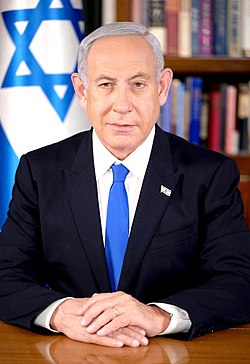 Benjamin NetanyahuBenjamin Netanyahu is Prime Minister of IsraelAffiliated
How the record is sourced and how the score is derived.
The score is formula-derived (Factrail formula v1, version 1.0.0), not an editorial verdict. Read the methodology.
By the Factrail desk · Method: how we source and score · Last reviewed
Dispute a fact on this pageNamed here, or represent someone who is? Request a right of reply.
People and organizations as listed in the Related section of this page; facts, drivers and the pages that name it as listed in the blocks here. Counts, not a rating.