
Mirco Hanker
Mirco Hanker (born 2 February 1966 in Braunschweig) is a German politician of the Alternative for Germany (AfD) and a member of the Bundestag.
- Facts0
- Drivers0
- Indicators0
Mirco Hanker (born 2 February 1966 in Braunschweig) is a German politician of the Alternative for Germany (AfD) and a member of the Bundestag.
Mirco Hanker (born 2 February 1966 in Braunschweig) is a German politician of the Alternative for Germany (AfD) and a member of the Bundestag. He sits in the 21st Bundestag, which was elected on 23 February 2025 and held its constitutive sitting on 25 March 2025. His seat comes from the state list of Lower Saxony; he was also the AfD candidate in constituency 50, Braunschweig. The Bundestag lists his occupation as Diplom-Kaufmann, a graduate qualification in business administration.
The biography published by the Bundestag, which the parliament notes is based on the member's own disclosures, says he passed the Abitur in 1986, served in the armed forces from 1986 to 1987, and studied business administration in Braunschweig and Lüneburg. The same account describes fifteen years of self-employment in internet and personnel services, then work as a real-estate broker and area manager, a branch manager in personnel placement and leasing, a marketing manager, a lecturer in vocational training for marketing and sales, and a real-estate appraiser. Before entering parliament he was a constituency staffer for the AfD member Dirk Brandes in Garbsen.
The biography he supplied to the Bundestag says he was business manager of the AfD group on the Braunschweig city council from 2016 to 2021, and that he has chaired the AfD district association in Braunschweig since December 2024. The city's official return for 12 September 2021 lists him as elected to district council 130 (Mitte) on the AfD list, with 400 votes, while the AfD took 13,512 votes (4.3 percent) and two of 54 seats on the city council. On 13 September 2026 the city recorded his election to the council itself, as AfD list place 1 in electoral area 13 (Innenstadt/Südlicher Ring), with 813 votes; the AfD received 43,089 votes (11.8 percent) and seven of 56 seats. At the 2025 federal election he received 20,472 first votes (13.3 percent), 7.5 points above the AfD share in the constituency in 2021; the Bundestag page records him as that constituency's AfD candidate. The direct mandate went to Christos Pantazis of the Social Democratic Party of Germany with 33.4 percent, ahead of Carsten Müller of the Christian Democratic Union of Germany on 24.7 percent and the Alliance 90/The Greens candidate on 14.3 percent. He entered the Bundestag from tenth place on the AfD list in Lower Saxony.
In the 21st Bundestag he is a full member of the Budget Committee and of its subcommittee on European Union questions, and a deputy member of the Defence Committee. His published constituency office is at Goethestraße 46 in Wolfsburg. He has continued to sit, in an honorary capacity, on Braunschweig's Mitte district council. In the Braunschweig mayoral election of 13 September 2026 he received 11.2 percent of the vote and finished fourth, behind Thorsten Kornblum of the SPD (43.3 percent), Maximilian Pohler of the CDU (17.2 percent) and Michael Walther of the Greens (14.3 percent).
The Federal Returning Officer’s list of members elected to the Bundestag in 2025 names him Mirco Karsten Hanker, born in 1966. The Bundestag biography gives the date and place as 2 February 1966 in Braunschweig, and its editors note that such biographical entries rest on the members’ own statements. That text records an Abitur in 1986 and does not name a school or say where the examination was taken. The authority file of the German National Library records the preferred name Mirco Hanker, the birth year 1966, Braunschweig as the place of birth, and Diplomkaufmann as an occupation; the parliamentary-monitoring project abgeordnetenwatch likewise lists 1966 and the qualification Diplom-Kaufmann.
The Bundestag biography states that Wehrdienst followed in 1986 and 1987, without a branch of service, a unit, a garrison, or the number of months served. That service was performed under conscription (Wehrpflicht) in the Bundeswehr. In the army’s official historical account, basic service then lasted 15 months: in April 1986 the Bundestag voted to lengthen it from 15 to 18 months, but only for those called up from 1 June 1989, and from 1990 the term was cut from 15 to 12 months. A cut from 18 to 15 months had been made in the 1970s, under the government of Willy Brandt, so that a larger share of each birth cohort could be called up. Hanker’s disclosures do not say whether his own service ran for that statutory term.
He then studied business administration (Betriebswirtschaftslehre) in Braunschweig and in Lüneburg and graduated as a Diplom-Kaufmann. The biography gives no dates, no specialist subject, and no indication of which institution conferred the degree.
Diplom-Kaufmann was the university diploma in that subject. Framework rules for the Diplomprüfung, adopted on 22 February 1994 by the Conference of Rectors and Presidents and on 17 June 1994 by the Kultusministerkonferenz, and revised in 2000 and 2001, set a standard course of eight semesters: four in a foundation phase ending with a Diplom-Vorprüfung, and a main phase ending with the Diplomprüfung, including a Diplomarbeit. The same text notes that a 1981 framework had already been built around eight semesters, with a heavier load of taught hours, and that passing the examination conferred the degree Diplom-Kaufmann or Diplom-Kauffrau (Dipl.-Kfm. or Dipl.-Kfr.), with the field of study stated on the diploma. Those rules describe the national degree; they are not a timetable of Hanker’s studies, whose examination date has not been published.
The institution in Lüneburg, now Leuphana University of Lüneburg, records that in the 1980s it extended its subjects to economics, the social sciences and cultural studies, and that in 1989 the Landtag of Lower Saxony made the Hochschule Lüneburg a university. It took the name Leuphana in 2007. At the Technische Universität Braunschweig, a 1998 examination regulation for the faculty of philosophy, economics and social sciences governed a separate Wirtschaftswissenschaftliches Aufbaustudium: normally four semesters, open to holders of a university Diplom in engineering, natural science or mathematics, and leading to a compound degree such as Diplom-Wirtschaftsingenieur rather than Diplom-Kaufmann. The university stopped admitting students to that programme in the winter semester 2011/12; teach-out ended on 30 September 2015. The published biography does not state that Hanker took this postgraduate course or that he already held a technical degree.
The Bundestag lists Mirco Hanker’s occupation as Diplom-Kaufmann. Its biography, which the parliament states is drawn from members’ own disclosures, places his commercial work after studies in business administration in Braunschweig and Lüneburg. The same text summarises fifteen years of self-employment, roles in personnel services and real estate, marketing and vocational teaching, and property valuation, without naming employers or dating the individual posts. A 2026 candidate sketch by the Braunschweig news site regionalHeute.de gives a shorter version of the same period: after those studies he worked, among other things, on a self-employed basis and in personnel services and real estate.
According to the Bundestag biography, Hanker was self-employed for fifteen years in internet-related activity and in personnel services (Personaldienstleistungen). The biography also describes him as a branch manager in personnel services, staff placement and the leasing of temporary workers (Personalvermittlung und Personalüberlassung). It does not say whether that management post was part of the self-employment or a separate employment, and no company name appears in the official text or in the local profiles that repeat the outline.
In July 2021, as a candidate for mayor of Braunschweig, he told regionalHeute.de that he had previously, as branch manager of what he called a “large company”, been responsible for about 1,000 employees, and he presented that as experience useful for judging a city administration. The article reports the remark as his own account and does not identify the firm; the headcount is therefore not an independently published workforce figure. In a staffing business a branch manager can be associated with a large number of placed or leased workers rather than with permanent staff of one plant, which is consistent with the personnel-services roles in the later Bundestag text, but the 2021 interview does not make that link explicit.
The disclosed biography lists him as a real-estate broker and area manager (Makler und Gebietsleiter für Immobilien) and as a marketing manager. It further describes him as a lecturer in vocational further training for marketing and sales, and as a real-estate appraiser engaged by a valuation firm (Immobiliensachverständiger für ein Bewertungsunternehmen). As with the personnel-services posts, the valuation firm, the brokerage and the training provider are not named.
Reporting from the start of his time in the Alternative for Germany is more limited. On 26 May 2017 regionalHeute.de wrote that the AfD organisation in Braunschweig had unanimously selected the Diplom-Kaufmann as its direct Bundestag candidate, and described the then 51-year-old as working as an Honorardozent, the usual term for an externally engaged lecturer. The item does not name an institution or a subject. The Bundestag’s later wording, vocational further training in marketing and sales, is the only published specification of what he taught.
The job the Bundestag publishes under the rules on members’ interests, as Hanker’s professional activity before he took his seat, is that of constituency staffer (Wahlkreismitarbeiter) to Dirk Brandes, another AfD member, in Garbsen. Brandes has sat in the Bundestag since October 2021, returned on the Lower Saxony state list and a candidate in the constituency Hannover-Land I. Hanker’s own membership is dated from 25 March 2025 on the parliament’s biography page, so the staff post lies between those dates, although neither disclosure gives its start or end.
The transparency site abgeordnetenwatch.de records the same prior post, with Garbsen as the place, in an entry captured on 16 June 2025 and last changed the following day, and attaches no income figure. It classifies the role as work before membership rather than as paid activity alongside the mandate. On that filing, and on the Bundestag disclosure, the only other published function is an unpaid seat on Braunschweig’s Mitte district council; neither source lists a remunerated secondary occupation for the current electoral term.
Mirco Hanker was a member of the Alternative for Germany (AfD) from 2016. At the municipal election in Braunschweig on 11 September 2016 the party stood for the city council for the first time, took 29,257 votes (8.9 percent) and won five of 54 seats; turnout was 55.6 percent. The AfD councillors returned on the lists were Frank Weber, Dr. Hans Müller, Anneke vom Hofe, Gunnar Scherf and Stefan Wirtz. Hanker was not among them.
The new group constituted itself in September 2016. A party account reported by regionalHeute on 21 October 2016 named Scherf as chairman, vom Hofe and Weber as deputy chairs, and also named Wirtz and Müller; Hanker was not mentioned. In a text the Braunschweig AfD published on 8 January 2025, he wrote that from 2016 to 2021 he had been a substitute councillor (Nachrücker) and business manager (Fraktionsgeschäftsführer) of the group. A July 2021 profile already described him as the AfD's business manager in the council. On 13 September 2021 regionalHeute reported that the group, previously five members, would be reduced to Wirtz and vom Hofe, and called Hanker its most prominent loss because he would not return to the council.
Braunschweig is a kreisfreie Stadt, a city with district status, under Lower Saxony's municipal constitution. Under the city's Hauptsatzung, council members are styled Ratsfrau or Ratsherr, the directly elected Oberbürgermeister represents the city, and an administrative committee (Verwaltungsausschuss) sits beside the council; public sittings are livestreamed. The 20th council period began on 1 November 2021, after the election of 12 September 2021, with a statutory membership of 54.
The council chamber in Braunschweig town hall during a sitting of the city council, with members at their desks and remote participants on a screen.
District councils (Stadtbezirksräte) are elected with the city council and handle local matters that do not cross the district boundary. For the period from 1 November 2021 the council cut the number of districts from 19 to 12 by mergers; each district council has 13 to 19 voting members, depending on population. One district is 130, Mitte. Sections 93 and 94 of the Lower Saxony Municipal Constitution Act give district councils hearing and decision rights on their own area, for example the upkeep and use of local schools, libraries and youth facilities whose significance stays inside the district, and a right to raise proposals on any district matter. The Hauptsatzung adds further local decisions, a budget fixed in the municipal budget by-law, and an advisory seat for city councillors whose home or electoral area is the district unless they are already voting members.
On 12 September 2021 turnout for the council was 55.4 percent. The AfD received 13,512 votes (4.3 percent) and two seats, down from five, in a council that remained at 54 members; the SPD took 16 seats, the Greens 12 and the CDU 12. The AfD councillors elected were vom Hofe and Wirtz, not Hanker. A city seating list current as of February 2026 still showed only those two, with Wirtz as group chairman. The same election did place Hanker on the Mitte district council: a city list updated to 9 July 2025 still records him as the AfD list candidate with 400 votes and the party's single seat. The Bundestag biography says he was the group's business manager from 2016 to 2021 and, separately, a city councillor in 2021. The 2021 result and the seating list current in February 2026 do not show him as a member of the city council in that term.
The council was elected again on 13 September 2026. Of 194,218 eligible voters, 125,304 voted (64.5 percent), and the council grew to 56 seats. The AfD received 43,089 votes (11.8 percent) and seven seats, five more than in 2021; the SPD won 15, the Greens 11, the CDU 10 and the Left six. Hanker was elected as AfD list place 1 in electoral area 13, Innenstadt/Südlicher Ring, with 813 votes, together with Michael Friedenstab, Klaus Willner, Artur König, Stefan Walkemeyer, Michael Siemers and Tobias Hinz. regionalHeute described a new AfD group in which vom Hofe and Wirtz, councillors for ten years, were not returned, and named Hanker, by then a Bundestag member, as the best-known of the seven. In Mitte that day the AfD won 3,271 votes and two of 19 district-council seats; the official notice records 631 votes for Hanker on the party's personal ballot, more than for the other AfD candidates listed in that district.
On 13 December 2020 a meeting of the AfD Kreisverband Braunschweig, reported by regionalHeute from a party press release, sat for nearly eight hours and elected a new executive. Frank Weber returned as chairman after a two-year break; Hanker and Rabea Shahini became deputy chairs, Gunnar Scherf treasurer, Michael Siemers secretary and Bernhard Rack an assessor. The party said the board would serve two years, through the Bundestag and municipal campaigns, and that state chairman Jens Kestner attended.
The Bundestag biography dates Hanker's chairmanship of the Braunschweig AfD from December 2024. On 17 December 2024 the Kreisverband unanimously nominated him as its direct candidate for Bundestag constituency 50. Its article of 8 January 2025, issued in his name, called him the current local chairman and a member of the Mitte district council, and again placed the substitute council seat and the business-manager role in 2016–2021.
Mirco Hanker has been an Alternative for Germany (AfD) candidate at three elections to the Bundestag connected with Braunschweig. Only the election of 23 February 2025 returned him, and it did so through the Lower Saxony state list rather than the constituency. Statewide the AfD took 894,540 second votes, 17.8 percent, a gain of 10.4 percentage points on 2021, and was allocated 13 seats. All 13 were list seats: the party won none of the state's constituencies. Hanker stood in list place 10 and was among those elected. The Bundestag's own biography records him as elected on the Lower Saxony list and associated with constituency 50, Braunschweig.
Statewide party vote shares in Lower Saxony at the 2025 Bundestag election.
Seat allocation is personalized proportional representation. Each voter has a first vote for a constituency candidate and a second vote for a party's closed state list; the second vote decides how many seats the party receives. From the 2025 election, 630 seats are apportioned by the Sainte-Laguë method (Sainte-Laguë/Schepers): first among parties with at least 5 percent of second votes, subject to the exceptions set in 2024 by the Federal Constitutional Court and for parties of national minorities, and then among each party's state lists. A constituency candidate who finishes first takes that seat only if the party's second-vote entitlement in the state covers it. Seats still open are filled in the order of the closed list. In Lower Saxony in 2025 the AfD's entire entitlement was filled from the list, so places 1 to 13 were elected.
In Braunschweig, where Hanker was the direct candidate, he received 20,472 first votes, 13.3 percent of the valid vote and 7.5 points more than the AfD candidate there in 2021. Christos Pantazis of the Social Democratic Party of Germany (SPD) won the seat with 33.4 percent. Carsten Müller of the Christian Democratic Union of Germany (CDU) was second on 24.7 percent, and the candidate of Alliance 90/The Greens third on 14.3 percent. The AfD's second votes in the constituency were 20,624, also 13.3 percent, up 7.4 points. Turnout was 83.4 percent.
The two earlier federal candidacies fell short of a seat. At the 2017 election he was both the Braunschweig candidate and number 20 on the AfD state list. He polled 11,377 first votes, 7.8 percent. Carola Reimann (SPD) won the constituency with 38.0 percent, ahead of Müller on 31.4 percent. Across Lower Saxony the AfD took 9.1 percent of second votes; the federal returning officer's register for the next election records that result as seven state-list seats, so place 20 was not reached.
On 26 September 2021 he was not a constituency candidate. The official register lists him only at place 10 on the state list. The AfD candidate in Braunschweig was Frank Markus Weber, who received 8,045 first votes, 5.8 percent, while Pantazis held the seat with 36.7 percent. The AfD's second-vote share in Lower Saxony was 7.4 percent, 336,434 votes. The final calculation gave the party six seats in the state, none of them constituency seats, so all six came from the list and place 10 was not elected. Under the law then in force, overhang and compensatory seats could enlarge the Bundestag, but list order still decided who filled seats not taken by a constituency winner.
Hanker has twice been a candidate for directly elected mayor of Braunschweig. On 12 September 2021 he received 4,704 votes, 4.3 percent of the valid ballots, fourth of eight candidates. Thorsten Kornblum (SPD) led with 41,734 votes (38.4 percent), Kaspar Haller (CDU) had 29,011 (26.7 percent) and the Greens' candidate, Dr. Schneider, 24,802 (22.8 percent). Turnout was 55.4 percent. No one had more than half the valid votes, so Kornblum and Haller went to a runoff on 26 September. Kornblum won it with 79,861 votes (65.9 percent) to Haller's 41,401 (34.1 percent), on a turnout of 62.6 percent.
He stood again on 13 September 2026. The municipal election committee recorded 13,999 votes for him, 11.2 percent of 124,723 valid votes, and again fourth. Kornblum, the incumbent, had 53,976 (43.3 percent), Maximilian Pohler (CDU) 21,438 (17.2 percent) and Michael Walther of the Greens 17,837 (14.3 percent). Of 194,218 people entitled to vote, 125,304 voted, a turnout of 64.5 percent. Because nobody received more than half the valid votes, the Lower Saxony local-election rules required a runoff, held on 27 September between Kornblum and Pohler. Kornblum was re-elected with 57,182 votes (75.6 percent) against Pohler's 18,457 (24.4 percent). Turnout fell to 39.3 percent, with 76,194 ballots cast out of 194,071 eligible voters.
For the election to the Landtag of Lower Saxony on 9 October 2022, the Braunschweig AfD nominated Hanker in constituency 1, Braunschweig-Nord. The Braunschweiger Zeitung reported that the city's three direct candidates, Hanker among them, were not placed on the state list the party had drawn up. In the constituency he received 2,329 first votes, 5.6 percent of 41,402 valid first votes, fourth behind Julia Retzlaff (SPD) on 13,698 (33.1 percent), who won the seat. Turnout was 64.5 percent of 64,636 eligible voters. The AfD's second votes in Braunschweig-Nord were 2,452, 5.9 percent. The constituency result did not elect him, and without a place on the state list there was no list seat to allocate to him.
At the 2024 election to the European Parliament he was number 32 on the AfD's single federal list, the register of the federal returning officer listing him as Mirco Karsten Hanker of Braunschweig. Germany filled 96 of the Parliament's seats. The AfD won 15.9 percent of the German vote, up from 11.0 percent in 2019, and 15 seats, up from 11. A list place in the thirties was outside that allocation, and he was not elected.
Mirco Hanker entered the Bundestag for its 21st electoral term when the new parliament met for its constitutive sitting on 25 March 2025. Under section 45 of the Federal Elections Act, a candidate acquires membership, after the Federal Electoral Committee has finally determined the result for the electoral area, with the opening of the first sitting following the election, unless the seat has been declined in writing beforehand. The sitting began at 11:00 in the plenary chamber of the Reichstag building in Berlin. It fell on the 30th day after the federal election, the latest date allowed by Article 39 of the Basic Law. The election itself had been held on 23 February 2025.
He did not win the constituency. In constituency 050 Braunschweig, the direct mandate went to Christos Pantazis of the Social Democratic Party, with 33.4 percent of the first votes (51,553). Carsten Müller of the CDU was second with 24.7 percent (38,158). The Greens received 14.3 percent of the first votes (21,984) and the Alternative for Germany 13.3 percent (20,472), 7.5 percentage points more than in 2021. Hanker was the AfD candidate in the constituency, so that AfD first-vote total is his. Turnout was 83.4 percent of 186,358 eligible voters. On the second vote the SPD and the CDU were level at 22.6 percent, the Greens took 18.0 percent, the AfD 13.3 percent (20,624 votes, up 7.4 points) and The Left 11.6 percent.
The 2025 contest was a personalized proportional election for a Bundestag fixed at 630 seats. Second votes are turned into seats by the Sainte-Laguë/Schepers divisor method, first among parties and then among each party's state lists, and a candidate who leads a constituency receives that seat only if the party's second votes in the Land cover it. In Lower Saxony the AfD polled 17.8 percent of the second votes (894,540) and was allocated 13 seats. It finished first in none of the state's constituencies, so all 13 of those seats were filled from the state list. Hanker was in tenth place on the AfD list for Lower Saxony and is recorded by the Bundestag as elected on that list, with a candidacy in constituency 050 Braunschweig rather than as the member returned by the constituency.
The Bundestag's biography of Hanker, dated 31 October 2026, lists three committee roles. He is an ordinary member of the Budget Committee (Haushaltsausschuss) and of that committee's Subcommittee on European Union Affairs (Unterausschuss zu Fragen der Europäischen Union), and a deputy member of the Defence Committee (Verteidigungsausschuss). The same page does not list any further Bundestag office or committee. On the Budget Committee's published membership he appears among the ordinary members.
In the Bundestag's account of committee practice, each ordinary member has one vote. Deputy members may attend sittings but may vote only when they stand in for an absent ordinary member of their own parliamentary group. Places are distributed among the groups in proportion to their strength in the plenary, and the groups decide which of their members sit on which committee. The stated aim is that a member should, if possible, be an ordinary member of only one committee.
The Budget Committee has 42 members. In the Bundestag's description, the federal government receives no money from the federal treasury without the consent of the Bundestag; the committee considers, in the annual budget procedure, how much the Federation spends and on what, and its members continuously examine budget execution and financial assistance connected with stabilization of the euro. The Subcommittee on European Union Affairs is a subcommittee of the Budget Committee. Its members prepare the European items referred to the Budget Committee from the Council, the European Parliament and the European Commission, and its work includes meetings with members of the European Court of Auditors, members of the European Parliament and members of the European Commission.
The Defence Committee is required by Article 45a (1) of the Basic Law. In the 21st electoral term it has 38 ordinary members — 13 from the CDU/CSU, nine from the AfD, seven from the SPD, five from the Greens and four from the Left — and an equal number of deputies. It prepares plenary decisions on bills and other items and is the Bundestag body facing the Federal Ministry of Defence, the Bundeswehr and the defence administration. It is the only Bundestag committee that may constitute itself as a committee of inquiry. It also takes part in scrutiny of the defence budget: the ministry must submit procurement projects of particular security or military-policy importance, and every procurement of at least 25 million euro, to the committee for consultation.
The address given for his parliamentary office in Berlin is Deutscher Bundestag, Platz der Republik 1, 11011 Berlin. The address given for his constituency office is Goethestraße 46, 38440 Wolfsburg. Wolfsburg is not the city of the constituency he contested; constituency 051, the next constituency in the official numbering, is Helmstedt–Wolfsburg. The biography's list of memberships and offices inside the Bundestag stops at the three committee roles above.
In the Bundestag he sits with the other AfD members returned from Lower Saxony. That contingent is 13 strong, all elected on the state list. Dirk Brandes, the candidate in constituency 043 Hannover-Land I, occupied the first place on the list; Jörn König, the candidate in the city of Hannover, occupied the second. Hanker, in tenth place and attached to the Braunschweig candidacy, is one of that group of 13 rather than the holder of a separate group office recorded on his Bundestag biography.
Hanker’s first speech in the Bundestag, on 22 May 2025, opposed a draft by Die Linke to amend the Basic Law on municipal debt. For the Alternative for Germany he blamed breaches of the Konnexitätsprinzip and of Article 28, rejected new borrowing, and contrasted liquidity credits of about 30 billion euros with municipal debt he put at about 170 billion.
On 18 September 2025, in the second reading of Einzelplan 07 for 2025, he put justice and consumer protection at 1.16 billion euros and called it misdirected: grants to HateAid, which he described as backing politicians’ lawsuits over online comments, and the Stiftung Forum Recht, which he said had about 22 staff and new buildings in Karlsruhe and Leipzig at about 140 million euros. Citing the Deutscher Richterbund, he said about 950,000 cases had remained unfinished in 2024 before the President cut him off for exceeding his time.
On 25 September 2025 he cited a 2026 draft of 1.163 billion euros and quoted the coalition’s “handlungsfähigen Staat”, saying the AfD had wanted that longer. In the second reading on 27 November he welcomed the electronic file and consumer protection’s return to the ministry, but said proceedings still favoured offender assessments over victims. He attacked Forum Recht’s 4.45 million euro grant and two buildings he put at about 140 million euros for about 30 staff, and cited 76,600 new asylum and residence actions in the first half of 2025, with durations of 14.4 months in North Rhine-Westphalia, and costs he put at 500 million to 1 billion euros a year. A Christian Democratic interjection noted that those court costs fall on the Länder.
On 10 September 2026 he cited police figures of a 9 percent rise in recorded rapes over the previous year and 72 percent since 2018, with non-German suspects at 38.5 percent, and a Berlin court release he linked to a later attack. He sought an end to about 200,000 euros for the Fachverband Deutsche Bewährungshilfe and to 600,000 euros a year for HateAid, while praising digital files and consumer advice; applause is recorded from the AfD.
On 9 July 2025, in the first reading of Einzelplan 14, he put Bundeswehr spending at about 63 billion euros, enough in his account to exhaust the special fund, and called planned outlays through 2029 of more than 600 billion euros a “gigantische Wette”. He argued for cuts to climate, foreign and migration spending, and for drones developed in Germany.
In the second reading on 17 September 2025 he noted procurement from Einzelplan 14 and the special fund rising to 31.3 billion euros, about 33 percent, inside a defence budget he put at about 86 billion. He asked for simpler procurement and a larger German industrial role, and named the Future Combat Air System as unaffordable. The AfD then voted against the chapter, with Alliance 90/The Greens and Die Linke; the CDU/CSU and the SPD voted for it.
On 26 November 2025 he called the F126 frigate a “Desaster”: a 2020 award to the Dutch yard Damen, nearly 10 billion euros instead of 5.3 billion, and a first ship in 2031 rather than 2028. He said ThyssenKrupp Marine Systems could supply six MEKO A-400 ships from 2029 for 7 to 8 billion euros. On 5 December 2025 he voted against modernising military service.
On 9 September 2026, in the first reading for 2027, he said the government wanted about 3 percent of gross domestic product for the military and 3.5 percent for core tasks by 2035. He put chapter 1405 above 30 billion euros, plus 29.95 billion from the special fund, and contrasted about 7,400 German procurement posts with about 400 in Poland, citing Polish spending of about 46.8 billion US dollars and South Korea’s of 47.8 billion. Quoting Admiral Kaack against “goldgeränderte” solutions, he said Germany should buy what is available, preferably at home, put the failed F126 contracts above 2.3 billion euros, and described 204 billion euros of new borrowing as a reason to pause and buy more narrowly.
The same July 2025 sitting included Einzelplan 23. He called Finance Minister Lars Klingbeil a “Praktikant der Finanzen” and said the development ministry used 2 percent of the federal budget, against an AfD interim aim of about 0.7 percent and fewer payments to foundations and non-governmental organisations.
On 17 September 2025 the chair named him, with Inge Gräßle, Felix Döring, Jamila Schäfer and Sascha Wagner, as a rapporteur for the chapter, set above 10 billion euros. He called it misallocation, citing nearly 37 million euros for Engagement Global, about 300 million for political foundations, almost 284 million for the churches and more than 700 million for international climate programmes, and questioned electric-mobility projects in India. He invoked Article 106(3) of the Basic Law.
On 26 November 2025, again as rapporteur, he put growth at about 0.3 percent and called the chapter “ein Mahnmal der Intransparenz und Naivität”. He put GIZ above 2 billion euros and said related funds implied 20 to 30 billion rather than 10 billion, proposed using much of the money to cut municipal debt, and cited a DEval finding that about 1.7 billion euros in Afghanistan from 2013 to 2021 had not built durable institutions.
On 9 September 2026 he said millions had been embezzled in Yemen and that Chancellor Friedrich Merz had called the case an “Einzelfall”. He said a Budget Committee item he wanted had been dropped before the summer recess, cited a Die Welt report on GIZ and KfW, and objected that the ministry did not want the Bundesrechnungshof at informal talks and had dropped a duty to report new special initiatives.
Roll-calls republished by abgeordnetenwatch do not show one line. He voted against the 2025 budget act on 18 September 2025 and against the 2026 budget act on 28 November 2025. On missions the record is mixed: yes on 16 October 2025 to the United Nations Mission in South Sudan and EUNAVFOR Aspides; no on 26 June 2025 to a further Kosovo Force mandate, and not participating that day off Lebanon; no in November 2025 to Irini and Sea Guardian, in January 2026 to the Iraq mission, and in June 2026 to KFOR and EUFOR Althea; yes on 25 June 2026 to the division listed as the last Lebanon extension; and not participating on 15 October 2026 on South Sudan — up to 50 soldiers, about 900,000 euros — or Aspides. On 8 October 2026 he voted for the Finance Committee’s recommendation to reject a Greens motion ending an inheritance-tax concession for firms with more than 300 rented homes; it passed by 445 votes to 132.
On the evening of the 2017 federal election, at a candidates' round in Braunschweig town hall, a spectator called Mirco Hanker, the Alternative for Germany (AfD) constituency candidate, a fascist and an arsonist. Hanker said from the stage that he would file a criminal complaint, then dropped it after the man denied having meant him personally and called the wording wrong. He criticised the administration for not intervening under a recent council resolution against hate, which the AfD had introduced, and said the heckler should have been barred from the building.
On 29 August 2021 a studio kult TV discussion of the mayoral candidates collapsed shortly before recording after four refused to appear with him. Thorsten Kornblum of the Social Democratic Party of Germany (SPD), Tatjana Schneider (supported by Alliance 90/The Greens and the Pirate Party Germany), Anke Schneider of Die Linke and Birgit Huvendieck of the Bürgerinitiative Braunschweig said they would not give "right-wing slogans" a platform and that a factual discussion would not have been possible. Organiser Tonio Vakalopoulos said invitees had been told in May who else was invited; the same format that day in Salzgitter and Wolfsburg, each with an AfD candidate, went ahead. Independent candidate Kaspar Haller, backed by the Christian Democratic Union of Germany (CDU), would have taken part, but wrote that cancelling would hand the AfD a victim role. Carsten Müller, then the CDU's Bundestag candidate and Braunschweig district chair, said, "We need a clear line against the AfD and no running away," and ruled out cooperation with it. Hanker called the walkout childish—"If it is too hot in the kitchen, one should not become a cook"—and said anyone who disregarded the Basic Law should not stand for mayor.
The intelligence file around Hanker's offices concerns the Lower Saxony AfD as an organisation; court and ministry statements do not record a separate classification of him. The Office for the Protection of the Constitution of Lower Saxony had listed the Land association as a suspected case (Verdachtsobjekt) from 11 May 2022. On 17 February 2026 it announced an upgrade to an "observation object of considerable importance" (Beobachtungsobjekt von erheblicher Bedeutung), on a 212-page assessment from public sources. The Hanover Administrative Court later noted that the statute does not use the words "confirmed right-wing extremist," though the assessment matches that description in substance. Interior minister Daniela Behrens (SPD) used the phrase, assigning the association to right-wing extremism, which she called society's greatest danger. She said it held democratic institutions in contempt and propagated the "remigration" of millions. The step allows informants and telecommunications surveillance. Norddeutscher Rundfunk reported that active members who publicly advance relevant statements can come under scrutiny. Hanker has chaired the Braunschweig district association of that Land party since December 2024.
The association sued the same day. On 1 June 2026 the Hanover court refused interim relief. It found sufficient facts for efforts against human dignity, democracy and the rule of law, including a völkisch concept of the people and the claim that parties, government and courts meant to harm the people, and said moderate currents were no longer discernible. The order lasted only until judgment on the merits. On 29 October 2026 the Higher Administrative Court in Lüneburg dismissed the complaint. The interior ministry said the interim case was closed and that more intrusive surveillance could continue while the main proceedings remained open in Hanover. NDR reported the Lüneburg court's reference to an ethnic-cultural understanding of the people paired with racism. State chair Ansgar Schledde rejected the accusations, said the association stood on the Basic Law, and suspected political calculation by the SPD minister. Stephan Bothe called the February step unlawful. As deputy state chair, he later spoke of "speculations pulled out of thin air."
In February 2025 the Braunschweiger Zeitung quoted Hanker, under the headline "The only liberal party at the moment is ours," calling the AfD the only liberal party he could identify. He called himself "perhaps a very small corrective," said the party was "framed as radical to extreme," and described the Lower Saxony association as "completely moderate." Of intelligence observation he said, "Only observed. That is the Verfassungsschutz's job." He put its potential at 25 to 30 percent and said any coalition with the CDU would leave the CDU the junior partner. The paper's standfirst asked why, in his view, he was liberal "but may also be right-wing radical." After the election it reported that tenth place on the state list was enough for a Bundestag seat.
Before the September 2026 mayoral election the paper portrayed him as a "man of numbers" who wanted the town hall, saw little realistic chance, and was not standing only for fun. With 11.2 percent he finished fourth, more than double the 4.3 percent regionalheute.de recorded for 2021, behind Kornblum, CDU candidate Maximilian Pohler and Green candidate Michael Walther. He said voters wanted a policy change, "but I cannot recognise any of that in the results," and that the city's high debt seemed irrelevant to 50 to 60 percent. He missed the runoff, which Kornblum later won against Pohler.
Members of the Bundestag notify outside interests under the code of conduct in sections 45 and following of the Members of the Bundestag Act (Abgeordnetengesetz). A notice is due within three months of taking a seat, and a change during the term within three months; an entry is published only after a check of whether publication is required. Since the amendment of 8 October 2021, notifiable income has been published to the euro and cent, and side-activity income is publishable above 1,000 euro in a month or 3,000 euro in a calendar year. Only categories that contain an entry are shown, and an activity may be marked honorary, at the member's request, if it brings no income or only reimbursement of expenses.
Hanker's biography page, dated 31 October 2026, listed two entries and no sums: the occupation before membership was constituency assistant to Dirk Brandes, a member of the Bundestag, in Garbsen, and the only public-law post was honorary membership of the Mitte district council of Braunschweig. Nothing appeared for paid work alongside the mandate, company or association office, future benefits, shareholdings or donations. abgeordnetenwatch.de reproduced the same two records, captured on 16 June 2025 and last changed on 17 June 2025, with the income field empty.
The profile stated a response rate of none of five questions during current candidacies and mandates, and it excludes questions from earlier ones. Five were marked answer pending: amending Article 3 of the Basic Law in relation to sexual identity (5 September 2026); linking the retirement age to life expectancy (4 July 2026); Alternative for Germany proposals on fuel prices (7 April 2026); the 27 January memorial day (27 January 2026); and how he would vote on a recount of the 2025 Bundestag election, asked with reference to the Sahra Wagenknecht Alliance (7 October 2025). A question of 12 February 2025, during the 2025 candidacy, on why he had called a minimum-wage rise "neutral", had a reply dated 21 February 2025 and lay outside that count.
The Bundestag biography, which the parliament notes rests on the member's own information, records birth on 2 February 1966 in Braunschweig and a summary of schooling, military service, the Diplom-Kaufmann and later work. It does not state a marital status, children or private interests. abgeordnetenwatch gives the same birth year and qualification. The parliament lists a Bundestag office at Platz der Republik 1 in Berlin and a constituency office at Goethestraße 46 in Wolfsburg.
His site mircohanker.de states no family status and no leisure activities; the homepage quotes Voltaire on the right to say and print what one thinks and presents that right as Article 5 of the Basic Law. A questions page heads his political stance, in his own words, "klar, pragmatisch, präzise". On abgeordnetenwatch he writes that he had not really wanted to become a politician, cites what he calls massive breaches of law by the government, and offers voters incorruptibility ("Unbestechlichkeit"); the same text asks for a first vote on 24 September 2017. That passage is a campaign self-description still shown on the profile, and neither it nor the Bundestag biography records a spouse, children or hobbies.
Ranked by shared high-impact facts, then explicit ties, then shared drivers.
 Lars KlingbeilLars Klingbeil is a German politician who has been serving…Affiliated
 Jörn KönigJörn König (born 29 October 1967 in Berlin) is a German…Affiliated
 Friedrich MerzFriedrich Merz has been Chancellor of Germany since May…Affiliated
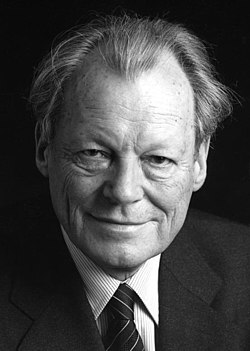 Willy BrandtWilly Brandt (born Herbert Ernst Karl FrahmAffiliated
 Dirk BrandesDirk Brandes (born 25 May 1974 in Langenhagen) is a…Affiliated
 Christos PantazisChristos Pantazis (born 9 October 1975 in Hanover) is a…Affiliated
How the record is sourced and how the score is derived.
The score is formula-derived (Factrail formula v1, version 1.0.0), not an editorial verdict. Read the methodology.
By the Factrail desk · Method: how we source and score · Last reviewed
Dispute a fact on this pageNamed here, or represent someone who is? Request a right of reply.
People and organizations as listed in the Related section of this page; facts, drivers and the pages that name it as listed in the blocks here. Counts, not a rating.