
Salmon P. Chase
- Facts0
- Drivers0
- Indicators0
Senator from Ohio from 1849 to 1855, the 25th Governor of Ohio from 1856 to 1860, the 25th U.S. Secretary of the Treasury from 1861 to 1864, and Chief Justice of the United States from 1864 until his death.
His tenure involved tensions with Lincoln over policy and patronage, leading to his resignation in 1864, after which Lincoln appointed him Chief Justice to harness his influence during Reconstruction.
Ithamar and Janette raised a large family, with Salmon as one of at least ten children remaining after Ithamar's death in 1817, which left the household in financial hardship. The family's modest circumstances reflected the agrarian life of rural New Hampshire, where Ithamar supplemented farming with local enterprises before his early passing at age 55.
He graduated in 1826 with Phi Beta Kappa honors, excelling in the classical liberal arts curriculum typical of the institution, which emphasized rhetoric, logic, and moral philosophy.
During this period, he began studying law under the mentorship of William Wirt, the former U.S. Attorney General (1817–1829), who provided informal apprenticeship guidance in the traditional read-law system prevalent before formalized legal education.
In late 1829, he applied for admission to the bar of the U.S. Circuit Court for the District of Columbia; his oral examination proceeded favorably until the judges questioned the brevity of his formal training, prompting a defense of his rigorous preparation. He was ultimately admitted to the D.C. bar that year, marking the completion of his apprenticeship without attendance at a formal law school.
This apprenticeship path, common in the early 19th century, equipped him with foundational skills in common law principles, equity, and advocacy, setting the stage for his independent practice amid Cincinnati's commercial and abolitionist circles.
In 1830, following his admission to the bar in Washington, D.C., the previous year, Salmon P. He established his office at the corner of Third and Main streets, a central location that facilitated access to commercial clients in the growing river city.
Caswell, enhancing his visibility and workload in areas such as commercial litigation and banking law. During this period, he undertook the revision and publication of The Statutes of Ohio and of the Northwestern Territory (1833–1835), a comprehensive three-volume compilation that standardized state laws and earned him recognition among local attorneys and legislators. This scholarly effort, undertaken without direct compensation from the state, demonstrated his diligence and positioned him as an authority on Ohio jurisprudence.
His practice emphasized precision in statutory interpretation and contract disputes, contributing to a moderate but respected standing in a city known for its mercantile expansion and proximity to slave-holding territories. These early years laid the groundwork for his later prominence, as Cincinnati's economic vibrancy provided opportunities for a young attorney versed in federal and state legal frameworks.
In the mid-1830s, Salmon P. His involvement began notably in 1836 when he represented Matilda Lawrence, a mulatto woman claimed as a slave by Larkin Lawrence of Missouri; Matilda had been brought to Ohio by her owner and subsequently seized under the Fugitive Slave Act of 1793.
A landmark effort came in the 1842–1847 litigation of Jones v. Van Zandt, where he co-counseled with William H. Seward to represent John Van Zandt, an Ohio farmer sued for damages after unwittingly transporting nine fugitive slaves in his wagon; the plaintiffs sought $2,000 in compensation under the 1793 act. Before the U.S.
His approach influenced antislavery jurisprudence by testing the act's boundaries through appeals and writs, though successes were limited by prevailing pro-Southern judicial biases; for instance, local commissioners often ruled against fugitives to avoid mob violence from slave catchers.
He maintained that the Constitution's clause on persons "held to service or labor" (Article IV, Section 2) facilitated interstate rendition but did not recognize property rights in humans, thereby rejecting any national sanction for slavery.
His 1837 speech in the case of Matilda, a formerly enslaved woman in Ohio, argued that state laws automatically conferred freedom upon fugitives entering free territory, rendering reclamation unlawful without due process aligned with natural rights. A decade later, in the 1847 Supreme Court brief Reclamation of Fugitives from Service for Jones v. Van Zandt, he assailed the Fugitive Slave Act of 1793 as unconstitutional overreach, asserting it improperly federalized a state matter and violated free states' sovereignty by compelling participation in slave recovery. The brief, published as a pamphlet, contended that no constitutional provision implied perpetual ownership in slaves, framing rendition as a limited comity obligation rather than a property right.
As a leader in the Liberty and Free Soil parties, he opposed the 1840s Texas annexation drive in essays and resolutions, warning it would entrench slave power indefinitely by adding slave states. The pinnacle was his primary authorship and editing of the 1854 Appeal of the Independent Democrats in Congress to the People of the United States, a manifesto decrying the Kansas-Nebraska Act's repeal of the Missouri Compromise as a betrayal of the Northwest Ordinance's free-soil precedent and the framers' anti-slavery trajectory.
As a leader of Ohio's anti-slavery coalition, he organized state-level efforts to form the Ohio Free Soil Party, focusing on prohibiting slavery's extension into western territories acquired through the war, while deliberately eschewing broader abolitionist calls for emancipation to broaden electoral appeal.
He drafted the convention's 16-point platform, which prioritized "free soil" principles by demanding congressional exclusion of slavery from federal territories, repeal of laws enabling slave trade in the District of Columbia, and rejection of slavery as a violation of free labor ideals, without endorsing immediate national abolition.
Senate on January 23, 1849—the first such victory for the nascent party nationwide.
Salmon P. His term spanned the 31st through 33rd Congresses, during which he positioned himself as a staunch opponent of slavery's territorial expansion, aligning with the party's core slogan of "Free Soil, Free Labor, Free Men," which he helped formulate.
Douglas to organize those territories under popular sovereignty, effectively repealing the Missouri Compromise's ban on slavery north of 36°30' latitude. On January 24, 1854, he co-authored and signed the "Appeal of the Independent Democrats," a public letter circulated to over 100,000 copies nationwide, branding the bill "a gross violation of a sacred pledge" and "an atrocious plot to exclude from a vast unoccupied region" free white labor in favor of slave power. This document, endorsed by figures like Charles Sumner and Gerrit Smith, unified disparate anti-slavery factions and amplified northern resistance.
He engaged in debates with pro-slavery senators, including James M. Mason of Virginia, highlighting the act's potential to extend slavery indefinitely westward.
Throughout his Senate tenure, he introduced resolutions and petitions against polygamy in Utah Territory and for states' rights to exclude slavery, though these garnered limited support amid partisan divides. His principled stands, rooted in legal defenses of fugitives and writings like the 1849 "Revolution" tract, underscored a commitment to containing slavery without immediate emancipation, prioritizing constitutional fidelity over compromise.
Salmon P. He took office on January 14, 1856, for a two-year term, and was reelected in 1857 against Democrat William Dennison by a narrower margin of about 1,500 votes, serving until January 9, 1860.
Ohio's governorship under the 1851 state constitution granted limited executive authority, confining the office largely to ceremonial and legislative influence roles, with the legislature holding primary policymaking power. He opposed the nativist Know-Nothing movement, vetoing measures that aligned with anti-immigrant fervor and urging legislative rejection of such influences to maintain focus on moral and economic reforms.
A state bureau of statistics was also formed to compile data on agriculture, industry, and population, aiding informed policymaking. These initiatives aligned with his broader vision of state progress rooted in free labor principles, though constrained by partisan divisions and the office's veto-limited powers.
Frémont's 1856 presidential bid and positioning himself as a leading anti-slavery voice, which bolstered Republican unity in Ohio but drew criticism from Democrats for exacerbating sectional divides. His administration navigated economic growth from canal and rail projects while avoiding major fiscal crises, though infrastructure debts persisted from prior decades. Senate ambitions, securing election that year for a term beginning in 1860.
Following the 1860 Republican National Convention, where Salmon P. Senate for the 37th Congress, resigned his seat shortly after the Senate convened on March 4, 1861, to accept the appointment.
As Secretary of the Treasury from March 7, 1861, to June 30, 1864, Salmon P. He pursued a multifaceted strategy, issuing bonds marketed by financier Jay Cooke, which raised over $1 billion by leveraging patriotic appeals and innovative sales networks to domestic and foreign investors.
This innovation stabilized liquidity but sparked debates over constitutional authority, later challenged in cases like Hepburn v.
These laws established federally chartered national banks authorized to issue notes backed by U.S. government bonds, capped at $300 million initially, supplanting the chaotic state banknote system and integrating greenbacks into a national network to finance the war while laying groundwork for postwar monetary stability. coins starting in 1864, proposing it in correspondence with Mint Director James Pollock on December 9, 1863, as a symbol of national reliance on divine providence amid crisis, formalized by Congress on March 3, 1865.
Cisco with Maunsell B. Field, a politically connected but unqualified ally whose nomination Lincoln vetoed amid opposition from senators like Edwin D. Morgan and Ira Harris, who cited Field's lack of fiscal expertise and ties to corrupt cotton trading schemes. Fessenden as successor after David Tod declined.
Following the death of Chief Justice Roger B. Taney on October 12, 1864, President Abraham Lincoln sought a successor who aligned with Republican principles, particularly opposition to the Dred Scott decision authored by Taney, which had denied citizenship to African Americans and bolstered pro-slavery arguments. Taney's vacancy created an opportunity to appoint a jurist committed to emancipation and Union preservation amid the ongoing Civil War. Salmon P.
The U.S. He received his commission that day and was sworn in as Chief Justice on December 15, 1864, by Justice Robert C. Grier, marking the formal commencement of his tenure on the nation's highest court. This swift process, occurring post-Lincoln's reelection, avoided election-year controversies and ensured continuity in judicial leadership during a pivotal wartime phase.
During Salmon P.
In Ex parte Milligan (71 U.S. 2, decided April 3, 1866), the Court ruled 9-0 that military commissions lacked jurisdiction to try civilians like Lambdin P. Milligan in Indiana, where civil courts remained operational during the war. Justice David Davis wrote the majority opinion, emphasizing that suspension of habeas corpus did not authorize such tribunals absent congressional authorization and necessity.
Missouri* (71 U.S. 277, decided January 14, 1867), a 5-4 decision invalidating Missouri's constitutional test oath requirement for priests, lawyers, and voters who had supported the Confederacy. The Court held the oath constituted a bill of attainder and ex post facto punishment, prohibited by Article I, Section 9 of the Constitution, as it imposed penalties based on past associations without judicial trial. This ruling, paired with Ex parte Garland on the same day, struck down similar federal and state measures, limiting Reconstruction-era efforts to exclude ex-Confederates from public life but affirming protections against legislative punishments.
In Texas v. White (74 U.S. The case, involving disputed U.S. bonds sold by Texas during the war, upheld the state's continued membership in the Union, subject to congressional readmission processes under the Reconstruction Acts, and rejected revolutionary theories of state sovereignty. This decision provided judicial endorsement for the Union's permanence and Reconstruction's framework for reintegrating Southern states.
This avoided a potential ruling against the Reconstruction Acts, preserving congressional dominance over Southern military governance while affirming Article III's grant of jurisdiction regulation to Congress.
Following the House of Representatives' impeachment of President Andrew Johnson on February 24, 1868, for violating the Tenure of Office Act by dismissing Secretary of War Edwin Stanton, the Senate convened as a court of impeachment on March 5, 1868. As Chief Justice of the United States, Salmon P.
He broke a tie vote on April 8, 1868, in favor of extending the trial's duration, allowing more time for deliberation and witness examination, which benefited the defense by enabling further political maneuvering. His decisions emphasized strict evidentiary standards and procedural fairness, drawing criticism from Radical Republicans who accused him of undue leniency toward Johnson.
The trial spanned from March 5 to May 26, 1868, with eleven articles of impeachment, primarily centering on Johnson's removal of Stanton and alleged inflammatory speeches. On May 16, 1868, the Senate voted first on Article XI, resulting in a 35-19 tally in favor of conviction—one vote short of the two-thirds majority (36 of 54 senators) required for removal. Subsequent votes on other articles were suspended after this failure, effectively acquitting Johnson.
President" rather than "Chief Justice" to underscore partisan divides.
He publicly endorsed universal male suffrage, issuing statements and engaging in correspondence that urged ratification and implementation of constitutional protections for freedmen's voting rights, even as party divisions deepened over the pace of reform.
Conservative Democrats in the East initially backed him as a potential compromise candidate, viewing his anti-slavery credentials and administrative experience as assets amid postwar divisions. However, his earlier Republican affiliations and rulings perceived as insufficiently punitive toward the South alienated key delegates, leading to his withdrawal before the convention nominated Horatio Seymour on July 9, 1868.
Grant's administration amid corruption scandals like the Crédit Mobilier affair. His campaign emphasized fiscal restraint and civil service reform, drawing on his Treasury tenure, but party fractures favored Horace Greeley, who secured the nomination on May 1, 1872, after multiple ballots.
In 1870, he suffered a paralytic stroke that impaired his mobility and speech, followed shortly by a heart attack, confining him to limited public engagements and reliance on aides for Court correspondence. These episodes forced intermittent absences from the Supreme Court bench, where he delegated administrative tasks, though he continued selective participation in cases until early 1873, reflecting a progressive decline that curtailed his once-vigorous schedule. Medical observers attributed the worsening to chronic stress and age-related vulnerabilities, common in mid-19th-century figures lacking modern interventions.
In early May 1873, Salmon P. This event followed partial recovery from a prior stroke in 1871 that had impaired his health and limited his judicial duties, though he had resumed some court participation.
Paul's Episcopal Church in Washington, D.C., after his remains were transported from New York; the event drew notable attendees including Supreme Court justices and government officials, with public viewing at the residence where his body lay prior to the ceremony. The Supreme Court marked his passing by draping its bench in black crêpe as a sign of mourning.
The gravesite in Spring Grove, a designated national historic landmark cemetery, features a monument honoring his public service.
President [Ulysses S. Senator from Ohio (1849–1855), Governor of Ohio (1856–1860), Secretary of the Treasury (1861–1864), and Chief Justice (1864–1873), characterizing his career as one of "exalted stations."
Funeral services at Grace Episcopal Church in New York drew dignitaries, with remains later transported to Washington, D.C., for burial at Oak Hill Cemetery. The New York Times reported widespread telegrams of condolence, including from Governor John A.
[William M.
Official tributes, however, prioritized his substantive achievements over personal rivalries.
As Secretary of the Treasury from March 1861 to June 1864, Salmon P. He projected a need for $320 million in the fiscal year 1861-1862, relying on a mix of taxation, borrowing, and innovative currency measures to sustain the government without immediate collapse.
He supported tariff increases, building on the Morrill Tariff of 1861, to protect Northern industries and bolster customs duties, which rose significantly during the war. These measures marked the largest expansion of federal taxation in U.S. history up to that point, improving collection efficiency and funding roughly 20-30% of war costs directly.
war bond campaign, appealing to patriotic investors and foreign lenders.
bonds as reserves, and created the Office of the Comptroller of the Currency. This system unified banking, expanded the money supply through bond-backed notes, and facilitated war financing by channeling private capital into government securities, laying groundwork for a centralized federal financial structure.
Salmon P.
In *Texas v. This 5-3 decision, argued February 9, 1869, and decided April 12, 1869, protected Union bondholders' claims against repudiated state debts and established a doctrinal foundation for Reconstruction by denying states the right to dissolve federal ties, influencing subsequent validations of congressional readmission policies.
The Court's ruling in Ex parte Milligan (1866) curtailed executive wartime powers, holding that military commissions could not try civilians in areas where civil courts functioned, a unanimous stance on constitutional principle though divided on statutory grounds. Milligan's detention lacked statutory authorization under the Habeas Corpus Act of 1863, reinforcing due process protections and limiting martial law's scope post-Appomattox, even as it critiqued broader presidential overreach. This decision, handed down April 3, 1866, signaled a judicial check on emergency powers, prioritizing civilian judicial processes over military tribunals in non-theater zones.
Field and Joseph P. Bradley against the 5-4 majority's narrow reading of the Fourteenth Amendment's Privileges or Immunities Clause, which confined it to national citizenship rights rather than incorporating broad civil liberties against state infringement.
Other decisions, such as *Hepburn v.
He earned the moniker "attorney general for fugitive slaves" for representing over two dozen such cases, including the 1847 Supreme Court argument in Jones v. Van Zandt, where he contended that the Fugitive Slave Act of 1793 violated constitutional principles by overriding states' rights to regulate slavery. His legal briefs emphasized originalist interpretations of the Constitution, arguing that slavery lacked explicit federal sanction and that the Northwest Ordinance of 1787 prohibited its extension into free territories.
As a U.S. His most influential stand came against the Kansas-Nebraska Act of 1854, which he co-authored the "Appeal of the Independent Democrats" to decry as "a scheme to exclude Freedom from Kansas and Nebraska and open both to Slavery" by repealing the Missouri Compromise line. During his governorship of Ohio (1856–1860), he signed laws repealing the state's Black Laws, which had restricted free blacks' migration and rights, marking a pragmatic step toward racial equality within state policy.
He supported the Confiscation Acts of 1861 and 1862, which authorized seizure of Confederate property including slaves, and influenced the department's employment of free blacks, challenging prevailing racial exclusions in federal service.
Rock as the first African American to argue before the Supreme Court in February 1865, symbolizing judicial openness to black legal participation. In In re Turner (1867), he ruled that the Civil Rights Act of 1866 protected freedmen's rights against state discrimination, applying federal law to enforce equality in civil capacities. His opinion in Texas v. White (1869) affirmed the Union's indissolubility while upholding congressional Reconstruction powers, indirectly bolstering protections for newly freed populations.
Ranked by shared high-impact facts, then explicit ties, then shared drivers.
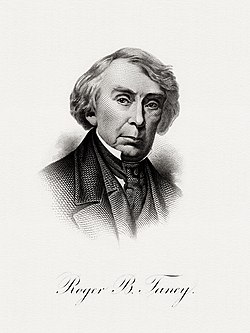 Roger B. TaneyRoger Brooke Taney (March 17Affiliated
 Benjamin WadeBenjamin Franklin Wade (October 27Affiliated
 Jefferson DavisJefferson Finis Davis (June 3Affiliated
 Thurlow WeedThurlow Weed (November 15Affiliated
 Horatio SeymourHoratio Seymour (May 31Affiliated
 William P. FessendenWilliam Pitt Fessenden (October 16Affiliated
How the record is sourced and how the score is derived.
The score is formula-derived (Factrail formula v1, version 1.0.0), not an editorial verdict. Read the methodology.
By the Factrail desk · Method: how we source and score · Last reviewed
Dispute a fact on this pageNamed here, or represent someone who is? Request a right of reply.
People and organizations as listed in the Related section of this page; facts, drivers and the pages that name it as listed in the blocks here. Counts, not a rating.