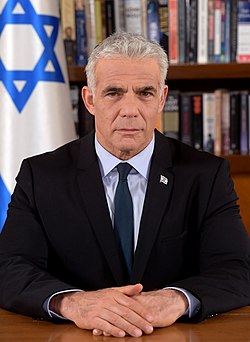
Yuval Steinitz
Yuval Steinitz (born April 10, 1958) is an Israeli politician who served as a member of the Knesset for the Likud party from 1999 to 2022 and held several…
- Facts0
- Drivers0
- Indicators0
Yuval Steinitz (born April 10, 1958) is an Israeli politician who served as a member of the Knesset for the Likud party from 1999 to 2022 and held several…
Yuval Steinitz (born April 10, 1958) is an Israeli politician who served as a member of the Knesset for the Likud party from 1999 to 2022 and held several senior ministerial roles, including Minister of Finance from 2009 to 2013, Minister of Strategic Affairs from 2013 to 2021 (overseeing intelligence matters from 2013 to 2015), and Minister of Energy from 2015 to 2021. Originally active in the Peace Now movement, Steinitz opposed the Oslo Accords, transitioned to Likud, and became known for his hawkish security stance and economic reforms, notably as the first Finance Minister to implement a two-year national budget.
Steinitz, who holds a Ph.D. in philosophy from Tel Aviv University and received the Alon Prize for outstanding Ph.D. students in 1993, began his career as a senior lecturer at the University of Haifa and president of the Association for the Public's Right to Know from 1999 to 2004. In the Knesset, he chaired the Foreign Affairs and Defense Committee and led inquiries into intelligence services and security events, while co-chairing a joint U.S.-Israel security committee with Senator John Kyl from 2003 to 2006. After leaving politics, he was appointed chairman of Rafael Advanced Defense Systems in 2023.
Yuval Steinitz was born on April 10, 1958, on Moshav Ramot HaShavim, a cooperative agricultural community in central Israel.
Raised in this rural setting approximately 20 kilometers north of Tel Aviv, Steinitz's early environment reflected the cooperative ethos and agricultural self-reliance typical of Israeli moshavim during the mid-20th century.
Steinitz completed his mandatory service in the Israel Defense Forces as an infantry soldier in the Golani Brigade. Following his discharge from active duty, he served as a reservist in the Alexandroni Brigade. He was wounded while fighting in Lebanon during the 1982 Operation Peace for the Galilee.
Steinitz earned a B.A. and M.A. with honors in Philosophy from the Hebrew University of Jerusalem. He subsequently obtained a Ph.D. in Philosophy from Tel Aviv University. In 1993, during his doctoral studies, he received the Alon Prize, awarded to outstanding Ph.D. students in Israel.
Steinitz served as a senior lecturer in the Philosophy Department at the University of Haifa from 1992 to 1999. During this period, he was recognized as a distinguished lecturer for two consecutive years.
In 1993, shortly after completing his Ph.D., Steinitz received the Alon Scholarship, awarded to outstanding early-career doctoral recipients in Israel. This prestigious recognition supported his transition into academic teaching and professional development in philosophy.
Steinitz was an active member of the Peace Now movement during the 1980s, participating in demonstrations advocating for peace initiatives as a young philosophy student. He initially supported aspects of the peace process aligned with the movement's goals.
However, Steinitz objected to the Oslo Accords, viewing them as a significant misstep after initially giving the process a chance, which prompted a reevaluation of his positions. This disagreement marked an ideological pivot, leading him to leave Peace Now and eventually join the Likud party.
From 1999 to 2004, Steinitz served as president of the Association for the Public's Right to Know, an organization dedicated to advancing transparency and public access to government-held information in Israel. In this leadership role, he focused on efforts to strengthen mechanisms for freedom of information.
Originally affiliated with the Peace Now movement, Steinitz objected to the Oslo Accords and shifted his political stance to the right in 1994, ultimately joining the Likud party. In the 1999 Knesset elections, he was placed 20th on Likud's electoral list. Although Likud secured only 19 seats, Steinitz entered the Knesset following Benjamin Netanyahu's resignation from his position.
Steinitz first entered the Knesset in 1999 after receiving a placement on the Likud list following Benjamin Netanyahu's resignation. He was reelected on the Likud ticket in the 2003 elections, securing one of the party's seats in the 16th Knesset. Steinitz continued his parliamentary service through reelection in 2006 for the 17th Knesset, followed by successful bids in 2009 for the 18th Knesset, in 2013 for the 19th Knesset, in 2015 for the 20th Knesset, and in subsequent elections, maintaining continuous tenure as a Likud representative until 2022.
Steinitz served as a member of the Knesset's Foreign Affairs and Defense Committee and chaired it from 2003 to 2006.
In this capacity, he established and chaired a subcommittee to examine the performance of Israeli intelligence services regarding Iraq in the lead-up to the 2003 war, highlighting deficiencies in assessing Iraq's missile capabilities and overall threat evaluation.
Additionally, Steinitz chaired the Parliamentary Inquiry Committee into the events at Amona in 2006, which investigated the violent eviction of Jewish settlers from the unauthorized outpost in the West Bank.
Steinitz served as a member of the Knesset's Constitution, Law and Justice Committee. He was also a member of the Science and Technology Committee during his tenure. Additionally, from 2003 to 2006, he co-chaired the Joint Congress-Knesset Security Committee alongside U.S. Senator John Kyl (R-AZ), fostering bipartisan dialogue on defense matters between the Israeli legislature and the U.S. Congress.
Steinitz was appointed Minister of Finance by Prime Minister Benjamin Netanyahu in March 2009, marking his entry into the executive branch following years in the Knesset.
During his tenure from 2009 to 2013, Steinitz introduced a significant policy shift by becoming the first Finance Minister to submit a two-year budget, departing from the traditional annual cycle to enhance economic stability amid the global financial crisis. This biennial approach, which Steinitz credited with playing a key role in Israel's recovery, later influenced legislation mandating future multi-year budgets.
Steinitz's term ended following the January 2013 elections, after which he was replaced by Yair Lapid in the new coalition government.
Following the January 2013 Knesset elections, Yuval Steinitz was appointed Minister of Strategic and Intelligence Affairs in Israel's 33rd government formed in March 2013. In this capacity, he held responsibility for international relations, serving as a key liaison on strategic matters including oversight of intelligence coordination. The role positioned him to address national security challenges through diplomatic engagement with global powers, particularly amid negotiations over Iran's nuclear program. Steinitz's tenure in the position lasted through the 19th Knesset until 2015, focusing on integrating intelligence insights into broader foreign policy objectives.
In May 2015, Yuval Steinitz was appointed Minister of National Infrastructure, Energy and Water Resources in Israel's 34th government. In this role, he advanced policies to accelerate the development of offshore natural gas reserves, including opening maritime areas for exploration to enhance energy independence.
Steinitz also served as the minister responsible for the Israel Atomic Energy Commission during this period, overseeing nuclear policy and research initiatives from 2015 to 2021. His tenure emphasized strategic energy infrastructure projects amid regional security considerations.
Ranked by shared high-impact facts, then explicit ties, then shared drivers.
How the record is sourced and how the score is derived.
The score is formula-derived (Factrail formula v1, version 1.0.0), not an editorial verdict. Read the methodology.
By the Factrail desk · Method: how we source and score · Last reviewed
Dispute a fact on this pageNamed here, or represent someone who is? Request a right of reply.
People and organizations as listed in the Related section of this page; facts, drivers and the pages that name it as listed in the blocks here. Counts, not a rating.