Election-Night Doubt: Who Gains Before Votes Are Certified?
By the Factrail desk · Method: how we source and score · Last reviewed
TL;DR
Election-night uncertainty can fuel certification fights and false claims. Learn who gains from doubt, what recount laws require and how foreign actors exploit it.
Key graph impact
The article explains graph entities; the causal edges belong to the facts and drivers it links to.
- ArticleElection-Night Doubt: Who Gains Before Votes Are Certified?
- mentionsDriverDemocratic Resilience
- strengthensIndicators (3)Having a say in government
- ArticleElection-Night Doubt: Who Gains Before Votes Are Certified?
- mentionsDriver2020 election, January 6 and election-legitimacy crisis
Strengthens · 70% impact strength
Observed
29.8% of population aged 16-65 years · 8.13 below the normal line (2023)
Worse than normalTwo readings: 30.2% of population aged 16-65 years (2021) and 29.8% of population aged 16-65 years (2023).
20212023 Above normal = better · Lag ~6 mo
Strengthens · 45% impact strength
Observed
0.53 score from 0 to 1 · 0.34 below the normal line (2024)
Worse than normal125 readings, 1900–2024: rose from 0.17 score from 0 to 1 to 0.53 score from 0 to 1.
Above normal = better · Lag ~6 mo
Strengthens · 45% impact strength
Observed
0.55 index score (0-1) · 0.26 below the normal line (2024)
Worse than normalAbove normal = better · Lag ~12 mo
Article

The opening vulnerability is a gap between votes and certainty
The United States votes on November 3, 2026, but many congressional and state contests will not receive final legal certification on election night. That gap is ordinary, not evidence of cheating. It also offers political actors an opportunity to claim victory before the legal process finishes and to recast administrative delays as deliberate theft. Candidates benefit in the short term if doubt preserves their options or mobilizes supporters, while election workers, voters and local institutions pay through threats, legal costs and lost confidence. Foreign influence operations can amplify the uncertainty without changing a single ballot. Russia, China and Iran are relevant because US intelligence previously identified efforts to exacerbate American divisions, not because any of them has been shown to alter the 2026 count. As of this pre-election analysis, an unfolding nationwide certification fight is a scenario rather than an established event. The core test is whether a specific claim identifies verifiable records, a lawful remedy and an effect large enough to matter.
What actually happens after polls close
According to the Election Assistance Commission, unofficial totals may be published rapidly, including reports that all precincts have sent information, while the official process remains unfinished. Officials must reconcile ballots from mail, early and election-day voting, resolve provisional-ballot eligibility and complete the canvass under state law. Some jurisdictions publish results in batches. A lead can narrow or reverse as different kinds of ballots are counted without that pattern revealing misconduct. Television networks project winners using statistical and reporting methods; only designated election authorities issue official outcomes. It is therefore wrong to treat a media call as legal certification or to treat every subsequent change as an unexplained anomaly. The serious journalist asks which ballots remain, what the deadlines are, which official controls each stage, and how the public can check reports against certified documents. Process literacy is a direct defense against a manufactured crisis.
Why the certification clock varies by state
The National Conference of State Legislatures maintains separate statutory tables for county canvasses and state certifications. California can take weeks to finalize results, while other states have earlier deadlines. In Georgia, counties generally have a Monday-after-election certification deadline, subject to specified audit provisions, while state certification of nonpresidential races follows its own statutory timetable. The dates also change by office and state law. There is no single nationwide midnight deadline that applies to all congressional contests. A delayed California update cannot be assessed under an Oklahoma timetable. Moreover a missed expected announcement does not prove that an official defied the law; a court order, recount or statutory exception may affect the timetable. Responsible reporting should quote the actual election rule, identify the responsible board and explain which outstanding ballots remain before describing a delay as unlawful. A countdown without its legal basis can itself manufacture distrust.
Recounts are part of normal verification
NCSL's October 2026 review says 26 states and Washington, DC have automatic recount provisions when margins meet specified rules; many other states permit requested recounts. The threshold frequently centers on a fraction of one percentage point, but it is not nationally uniform. In Georgia, for example, a losing candidate can seek a recount when the difference is within 0.5 percent of ballots cast for that office. These provisions exist precisely because close results deserve additional checking. An automatic recount should not be labeled a finding of fraud. Neither should refusal to conduct a recount outside legal eligibility be advertised as proof of concealment. A legitimate complaint identifies the relevant statute, the applicable margin, any filing deadline, the tribunal or election authority and the requested remedy. Without those elements, dramatic allegations are campaign rhetoric, not a demonstrated defect. The distinction matters most where chamber control turns on a small number of seats.
Audits measure discrepancies instead of assuming them
The Election Assistance Commission's research describes post-election audits as checks on systems, procedures and vote tabulation, while stressing that audit methods differ among states. The 2024 Election Administration and Voting Survey reported that nearly all reporting jurisdictions conducted logic-and-accuracy testing and about two-thirds reported some form of post-election tabulation audit; those statistics refer to 2024 practice, not 2026 performance. An audit may find a minor discrepancy and correct it without altering the winning candidate. Where a meaningful error is identified, officials must explain its scope and the corrective procedure. Treating an audit as synonymous with a fraud investigation discourages public understanding and gives opportunists a pretext to attack the safeguards they claim to demand. Conversely, dismissing a properly documented discrepancy without inspection would also damage trust. Confidence comes from publicly testable procedures, records and transparent corrections, not from requiring citizens to believe political spokespeople.
The foreign-influence distinction
US intelligence described Russia, China and Iran as significant actors in election-influence activity during the 2024 cycle. It assessed that foreign actors could exploit post-voting tensions with narratives, cyber activity and threats, while manipulation of official vote outcomes would be more difficult. This was an assessment about 2024 threats and behavior. It should inform risk models in 2026 but cannot be silently repackaged as proof of a current foreign operation. An influence effort aims to shape beliefs, sow confusion or weaken legitimacy; interference may target administration or infrastructure. A fabricated video alleging misconduct can cause real public harm even if every official vote record remains intact. Investigators must establish provenance through platform data, intelligence assessments or forensic evidence before assigning responsibility to a state. A viral clip that resembles an earlier campaign is not sufficient attribution. The most important distinction for readers is between manipulated information about votes and manipulation of votes themselves.
Who would benefit from an unresolved result
A candidate trailing in unofficial returns might gain time to contest ballots, raise funds or pressure officials, though contesting legally is not itself improper. A party could benefit from a narrative that delegitimizes opponents even if a challenge fails. Media personalities and online accounts can profit from attention generated by accusations that do not survive scrutiny. Foreign governments seeking to weaken US cohesion may gain from wider distrust without needing a preferred congressional winner. The people who pay are election officials facing intimidation, voters whose ballots become rhetorical weapons, communities absorbing polarization and taxpayers funding avoidable litigation or security. These are potential incentives, not evidence that a named candidate committed wrongdoing. A proper accountability story requires a dated statement, decision or threat and a documented consequence. The question is not whether doubt can be politically useful; it is which actors actually chose to manufacture it and what the record supports.
Local officials hold powers national celebrities do not
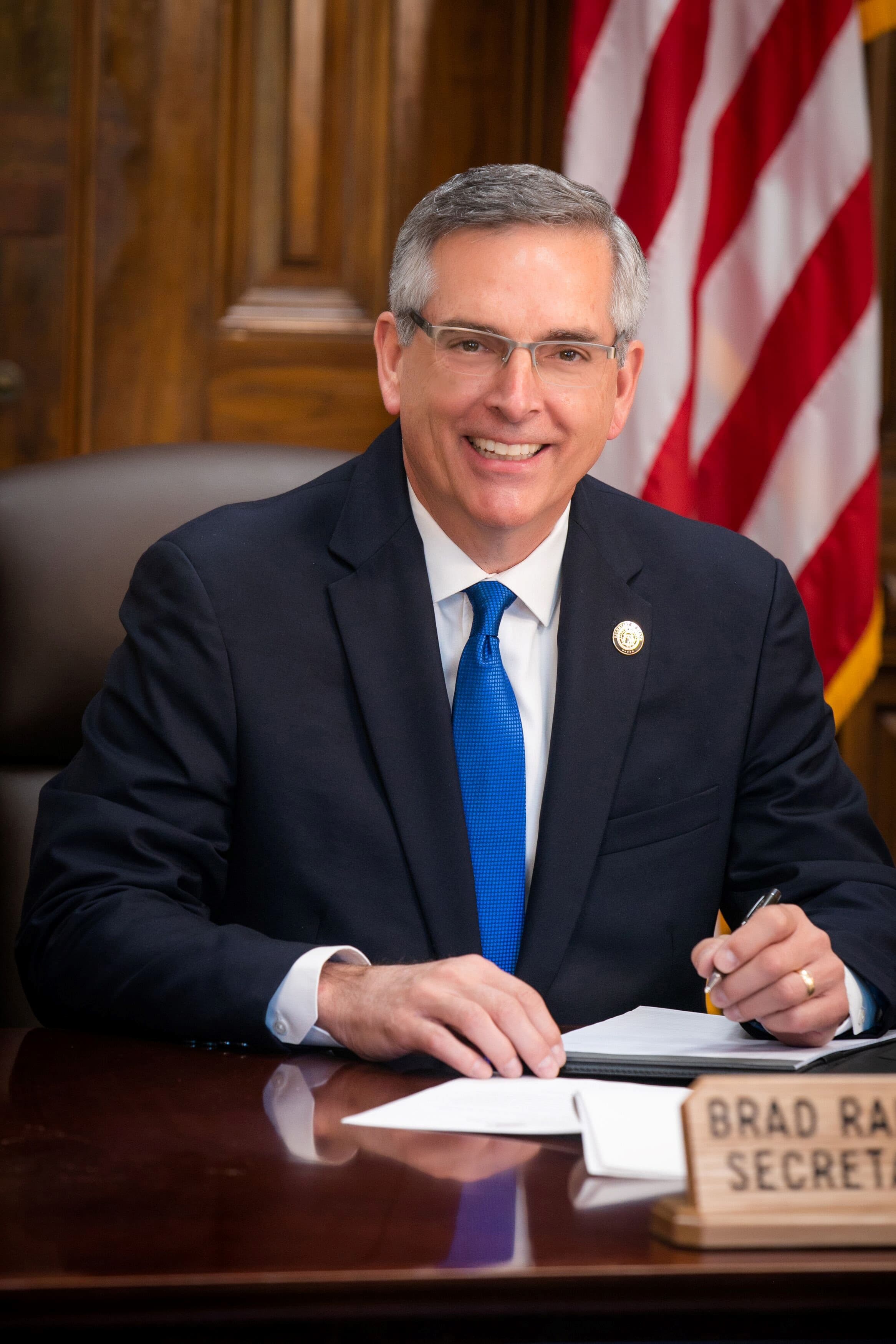
County boards and state election authorities apply ballots rules, canvass returns and certify within governing statutes. National party leaders can speak, fund litigation and exert political pressure, but that does not make them the lawful certifying authority. A president's statement does not replace a county record. A secretary of state's signature does not by itself make an unsupported number valid: the underlying process and review matter. Brad Raffensperger, whose 2024 portrait accompanies this piece, is a visible example from Georgia's previous election debates; his photograph is historical editorial context, not a claim that he administers every 2026 contest. The analysis must name the current official when discussing an actual administrative action. Conflating political influence with legal authority obscures who could correct a problem, who refused a lawful duty and whom voters should hold accountable. Readers need a chain of responsibility, not a nationalized spectacle.
The legal path of a serious challenge
A genuine election challenge should state which ballots, registration rules, counting procedures or certification actions are disputed, the legal provision supposedly violated and the requested remedy. Courts assess standing, timeliness, admissible evidence and the applicable statutory framework. Some claims challenge counting methods; others concern access, intimidation or record preservation. A court filing is not itself proof the allegation is true. A judicial finding about one county does not automatically invalidate a statewide race. Likewise an administrative error may require correction without affecting the winner. A journalist should identify the precise posture: allegation, preliminary order, appeal, final ruling or certified outcome. Each step can change what can responsibly be reported. Narrative certainty frequently outruns this sequence, especially when the unresolved contest could determine congressional control. The public deserves the legal stage and evidentiary threshold before a headline says an election has been stolen.
Threats are a measurable cost
Election workers face potential harassment and threats when public figures portray ordinary duties as conspiracy. The Department of Justice's October 29, 2026 New Hampshire announcement named a district election officer to handle complaints involving voting rights, violence threats and federal election crimes. A similar October announcement in New York described designated election officers for the federal Election Day program. These releases prove preparation and assigned responsibilities; they do not demonstrate that widespread crimes have occurred. The relevant measures are validated threat reports, investigations, charges, worker vacancies and operational disruption, with attention to legal standards and differences between criticism and a criminal threat. Officials must tolerate robust scrutiny, but voters should not have to accept intimidation as a substitute for evidence. The social cost reaches beyond one election: experienced staff may leave, recruitment becomes harder and public confidence depends on systems exposed to additional stress.
How a false claim scales faster than a correction
A short clip stripped of date, location or provenance can travel across platforms before a county election director finishes reconciling an official report. The first account may claim a machine changed votes; later accounts can recycle the same clip as evidence of a national conspiracy. Foreign and domestic propagators may amplify the material for different reasons. Attribution requires more than repetition. A strong response gives the timestamp, location, equipment or ballot procedure, the original source and the election authority's record, then explains what remains unknown. Simply labeling criticism false without disclosing verification can backfire. Platforms, reporters and civic organizations should also distinguish a suspicious question from a demonstrated coordinated campaign. The objective is not to suppress debate but to ensure that the most visible claim is held to a comparable evidentiary standard as the slower official explanation. Speed is part of the mechanism of harm.
Scenario one: ordinary close counts, November–December
The most routine scenario is that television projections remain incomplete while election offices continue lawful counting. Multiple narrow races could leave chamber control uncertain for several days. Automatic or requested recounts may happen under published state rules. The tests are whether outstanding ballot totals and deadlines are disclosed, whether recounts are conducted according to law, and whether officials explain numerical revisions. The beneficiary is the voter whose valid ballot is counted even if it arrives within a lawful later window. The cost is inconvenience and information uncertainty rather than a proven legitimacy crisis. Over three months, a fully certified result should replace provisional tallies as the reference point for congressional organization. A campaign can criticize procedures while accepting the lawful process. Calling every late-counted ballot suspicious would punish the normal safeguards that protect both parties. This scenario needs accurate clocks and transparent administration, not emergency rhetoric.
Scenario two: procedural obstruction or a court fight
A more serious scenario involves a local board declining a duty, a dispute over ballot eligibility or an emergency court order affecting certification. The legal severity depends on the specific statute, the scope of the alleged failure and the response of courts and higher authorities. It cannot be assessed from an isolated dramatic video. In a consequential contest, delayed certification could affect which party claims a majority or how lawmakers organize, but it would not independently rewrite the election's underlying voter choices. Watch the docket, official vote reconciliation, certificates, sworn evidence and enforceable remedies. The likely payers include taxpayers funding litigation, local administrators responding under pressure and voters waiting for representation. A candidate who wins a lawful challenge gains an appropriately corrected outcome; a person manufacturing allegations without evidence may gain attention but impose institutional costs. Distinguishing the two requires evidence, not ideological preference.
Scenario three: amplified foreign influence
The third scenario is that coordinated accounts or content networks exploit a close count, forging messages from election officials or distributing manipulated recordings. Previous US intelligence assessments provide examples and warnings, particularly about attacks on trust after voting concludes. They do not establish that a specific 2026 rumor is directed by Moscow, Beijing or Tehran. A robust investigation should compare language, account behavior, infrastructure, original media and authoritative agency findings. The relevant outcome is not only whether a false claim changed a vote count; it is whether threats increased, voters stopped trusting corrections, or officials faced delays. The strategy may succeed even when factual claims are quickly disproved because suspicion persists. Conversely, American political actors can invent false claims independently; attributing every domestic dispute to a foreign government can disguise internal responsibility. Over six to twelve months, transparent attribution and accountability are more important than one-night declarations.
What it moves: indicators and denominators
The first numerical benchmark is NCSL's 26 states plus Washington, DC with automatic recount provisions, rather than a claim that every state mandates one. The EAC's 2024 administration survey reported more than 158 million ballots counted in that presidential election and nearly 65 percent citizen voting-age participation; neither is a 2026 turnout estimate. For November 2026 track the number of uncertified contests, lawful deadlines missed, ballots awaiting processing, recount petitions filed and resolved, audit discrepancies, judicial findings and verified threats to election workers. If a disputed contest affects congressional control, the relevant political indicator is the number of seats required for a majority, not an unsourced fraud percentage. For welfare consequences, monitor documented intimidation, administrative spending, public trust surveys and interruptions in representation. Crime rates, prices and migration do not directly shift because a rumor circulated; specific downstream decisions would need separate evidence.
The strongest argument for persistent scrutiny
The strongest counterargument to simply trusting election institutions is that genuine mistakes and misconduct can occur, and citizens must be able to investigate them. That is precisely why audit procedures, recount laws, public records, litigation and professional reporting matter. Dismissing every question as disinformation would be irresponsible, just as treating every unverified allegation as a fact is irresponsible. An independent reporter should use the same standards whether the leading candidate is Republican or Democratic. Ask for the ballot universe, numerical discrepancy, applicable rule, chain of custody, sworn testimony and documented remedy. A statistically close result can justify rigorous review without showing a plot. The correct democratic outcome is one that can survive examination, not one that requires uncritical loyalty to an institution. The difference between accountability and conspiracy is the evidence that remains after claims are tested.
What to watch next
During election night, prioritize official election office releases over social-media claims about finality. In the next forty-eight hours, track ballots outstanding, state-specific canvass schedules and disputed statements that can be checked. Through November, follow automatic recount triggers, petitions, audits and court filings, treating them as processes rather than guilty verdicts. By December, compare certifications with the deadlines and exceptions published by state authorities. In the first three months, assess whether alleged misconduct produced documented findings or was abandoned after political fundraising. In six to twelve months, examine verified threats, litigation costs, changes to election administration and credible investigations into coordinated influence operations. A count that changes as lawful ballots arrive is not a scandal by itself; a proven attempt to obstruct lawful certification is. The real beneficiary of evidence-led scrutiny is the voter, while manufactured doubt benefits actors seeking power without accepting the burdens of proof.
Related Factrail context: Donald Trump (opens in a new tab), Chuck Schumer (opens in a new tab), 2020 election and January 6 legitimacy crisis (opens in a new tab), democratic resilience (opens in a new tab).
| Potential winner | Potential payer | Condition |
|---|---|---|
| Voters and lawful winners | Local election budgets | Transparent count, audit and lawful review |
| Political attention entrepreneurs | Election workers and voters | Unsupported claims spread |
| Foreign influence networks | Democratic trust | Authenticated influence campaign exploits doubts |
| Valid legal challengers | Administrative and litigation budgets | Evidence supports a narrowly tailored remedy |
Sources
- Election Assistance Commission: Results, Canvass and Certification (opens in a new tab)
- NCSL: State Canvass Deadlines (opens in a new tab)
- NCSL: Election Certification Deadlines (opens in a new tab)
- NCSL: Election Recounts, October 2026 (opens in a new tab)
- Election Assistance Commission: Election Audits Across the United States (opens in a new tab)
- Election Assistance Commission: 2024 Election Administration and Voting Survey (opens in a new tab)
- Office of the Director of National Intelligence: July 2024 Election Security Update (opens in a new tab)
- Office of the Director of National Intelligence: October 2024 Foreign Threats After Voting Ends (opens in a new tab)
- Office of the Director of National Intelligence: Late October 2024 Election Security Update (opens in a new tab)
- Department of Justice: New Hampshire Election Integrity Preparation, October 2026 (opens in a new tab)
- Department of Justice: New York Election Complaint Officers, October 2026 (opens in a new tab)
Evidence
The sources this article cites, claim-bearing material first.
- eac.gov · eac.gov/election-officials/election-results-canvass-and-certification
- eac.gov · eac.gov/election-officials/election-audits-across-united-states
- eac.gov · eac.gov/news/2025/06/30/us-election-assistance-commission-releases-2024-election-administration-and-voting
- odni.gov · odni.gov/files/FMIC/documents/ODNI-Election-Security-Update-20240709.pdf
- odni.gov · odni.gov/files/ODNI/documents/assessments/NICM-Declassified-Foreign-Threats-to-US-Elections-After-Voting-Ends-in-2024.pdf
- odni.gov · odni.gov/files/FMIC/documents/ODNI-Election-Security-Update-20241021.pdf
- justice.gov · justice.gov/usao-nh/pr/us-attorneys-office-announces-steps-protect-integrity-new-hampshire-november-3-2026
- justice.gov · justice.gov/usao-sdny/pr/united-states-attorneys-available-receive-election-complaints-6
More analysis
Ranked by shared facts, drivers and people — never by publication date alone.
Articles12
- Trump's Budget Office Wants to Retire the Federal IT DashboaShares the driver: Democratic Resilience · 2 November 2026
- A Democratic House Could Put Trump's Spending on TrialShares the driver: Democratic Resilience · 3 November 2026
- Trump Alleges Abdul El-Sayed Is Muslim Brotherhood; What Evidence Exists?Shares the driver: Democratic Resilience · 19 October 2026
- No Kings Organizers Turn 17 October Rallies Into a Call for Early VotingShares the driver: Democratic Resilience · 18 October 2026