The Black Sea's 2027 Security Bill: Ports, Grain and Gas
By the Factrail desk · Method: how we source and score · Last reviewed
TL;DR
Bulgarians voted in a presidential runoff on November 1 as commercial shipping off their coast faced attacks. Reuters and Associated Press described a series of strikes on merchant vessels, fears for crew safety and the sinking of a Greek container ship.
Key graph impact
The article explains graph entities; the causal edges belong to the facts and drivers it links to.
- ArticleThe Black Sea's 2027 Security Bill: Ports, Grain and Gas
- mentionsDriverEnergy-Price Volatility
- strengthensIndicators (2)Difficulty making ends meet
- ArticleThe Black Sea's 2027 Security Bill: Ports, Grain and Gas
- mentionsDriverEnergy Security
- strengthensIndicators (4)Poverty headcount ratio at $3.00 a day (2021 PPP) (% of population)
- ArticleThe Black Sea's 2027 Security Bill: Ports, Grain and Gas
- mentionsDriverNATO Deterrence Capacity
Strengthens · 77% impact strength
Observed
18.4% of population aged 16 years or over · 8.35 above the normal line (2025)
Worse than normal8 readings, 2018–2025: fell from 21.5% of population aged 16 years or over to 18.4% of population aged 16 years or over.
Above normal = worse
Strengthens · 62% impact strength
Observed
10.4% · 10.2 above the normal line (2024)
Worse than normal7 readings, 2018–2024: fell from 11.1% to 10.4%.
Above normal = worse
Weakens · 60% impact strength
Observed
7.97% of population aged 16 years or over · 5.2 above the normal line (2025)
Worse than normal8 readings, 2018–2025: rose from 7.77% of population aged 16 years or over to 7.97% of population aged 16 years or over.
Above normal = worse · Lag ~3 mo
Strengthens · 52% impact strength
Observed
0.74 hours · 0.74 above the normal line (2025)
Worse than normal8 readings, 2018–2025: fell from 1.25 hours to 0.74 hours.
Above normal = worse
Article
The ballot and the actual security decision
Bulgarians voted in a presidential runoff on November 1 as commercial shipping off their coast faced attacks. Reuters and Associated Press described a series of strikes on merchant vessels, fears for crew safety and the sinking of a Greek container ship. Exit polls suggested incumbent Iliana Yotova was ahead of Andrey Gyurov. Such projections must not be presented as certified results. Both campaigns condemned maritime attacks, although their approaches to relations with Russia and support for Ukraine differ.
The presidency matters to public debate, military leadership and certain appointments, but the practical protection of shipping also depends on cabinet decisions, parliamentary funding, defence procurement and cooperation with neighbouring states. A reassuring speech does not deliver a mine hunter, repair a harbour or give an insurer a reason to reduce its rate. Even a political victory promising more diplomacy cannot make civilian traffic safe without concrete arrangements.
This distinction should govern scrutiny in 2027. The decisive documents will be spending approvals, contracts, deployment reports and functioning systems for sharing warnings. An opposition accusation of weak resolve is not evidence of physical vulnerability by itself. Equally, a government declaration that navigation is safe does not establish that claim in the absence of commercial traffic, incident and insurance data.
The immediate election may change the tone of Bulgarian policy. The larger question is whether three Black Sea NATO members can sustain a joint maritime effort while accommodating differences over Russia and Ukraine. That requires institutional continuity beyond a single election cycle.
Why Bulgaria, Romania and Türkiye cannot act alone
Bulgaria holds coastal access and ports important for commercial shipping and allied operations. Romania has Constanța, Danube connections and expanding offshore energy infrastructure. Türkiye controls the Turkish Straits under the Montreux Convention. The Turkish foreign ministry describes freedom of passage for merchant vessels alongside restrictions on naval vessels, particularly those from countries without a Black Sea coastline.
Carnegie Europe's July 2026 study explains why Ankara's decision to restrict naval passages after the invasion in 2022 affected the balance of forces. It also explains why Türkiye remains a necessary participant in efforts to stabilise navigation. None of this establishes a general right for a foreign navy to operate anywhere in the region without limits. Likewise, the convention does not guarantee that a commercial captain reaching the Black Sea will encounter no mines or drones.
The three states have complementary assets and unavoidable gaps. A Bulgarian coastal radar can contribute information, but it cannot by itself identify every hazard near a Romanian gas installation. A Romanian mine hunter can help clear hazards, but cannot replace maritime traffic monitoring across the entire basin. Turkish legal authority over the straits is not authority to insure every voyage.
American and European allies can supply equipment, intelligence, training and financing, but their responsibilities must remain explicit. The United States bears an interest in allied readiness and cargo mobility. The UK shares naval, commercial and European security stakes. Canadian and Australian exposure mostly travels through global shipping prices, grain supplies and allied budgets rather than direct authority over the sea. Treating all five audiences as if they face identical losses would misstate the distribution.
The mine group expanded its mission
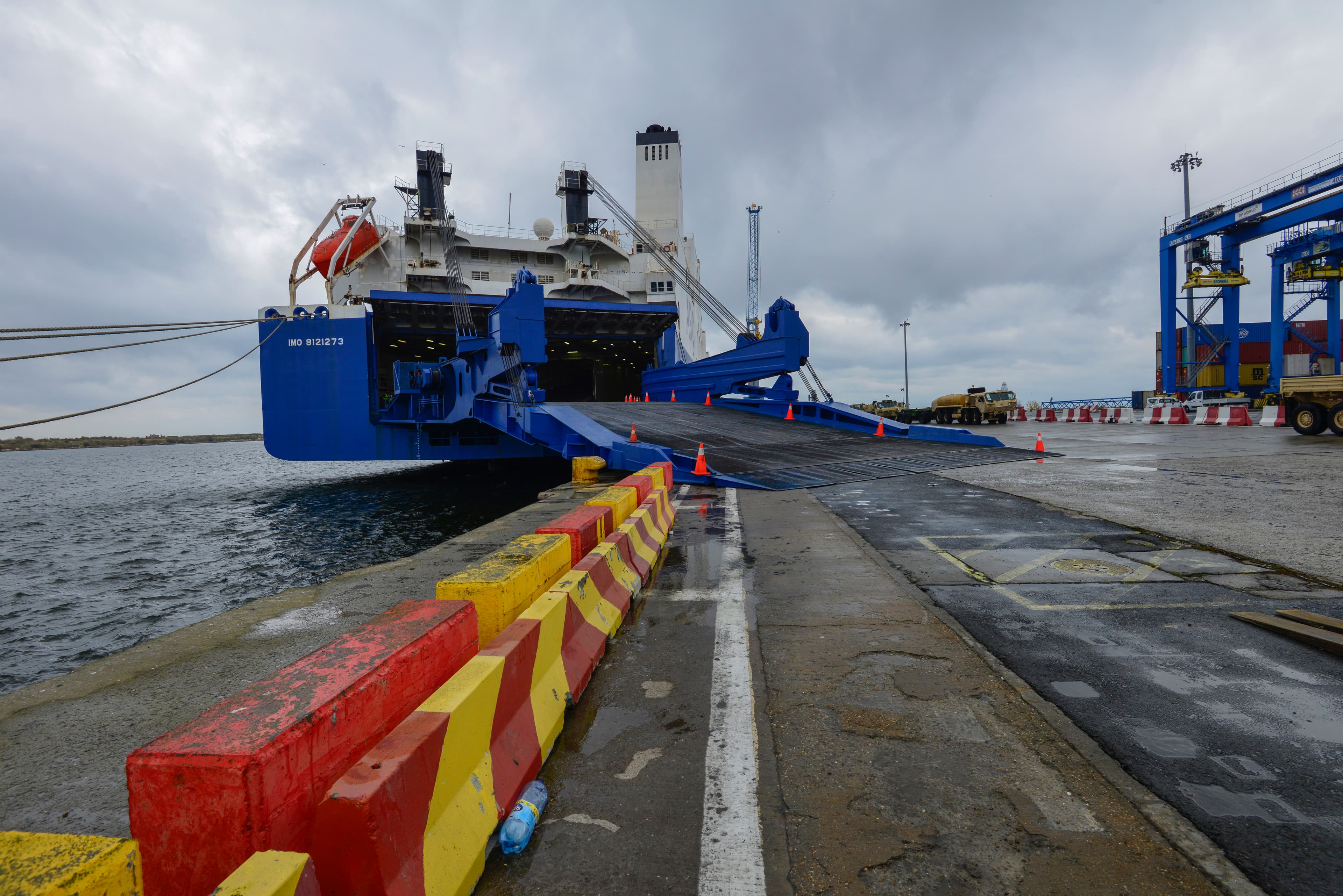
Türkiye, Bulgaria and Romania operate a Mine Countermeasures Black Sea Task Group. Türkiye's defence ministry documented an activation and port visit in Burgas in January 2026. Romania's defence ministry announced in July that the group had expanded its mission to protection of critical undersea infrastructure. That is a substantive change because risk is no longer confined to drifting explosive devices.
Mine clearance, protection against sea drones and monitoring of submarine installations require different tools. Mine hunters need specialist crews and detection systems. Commercial vessel warning requires rapid information flow, not merely a ship nearby. Offshore infrastructure security can demand seabed monitoring, surface patrols and an agreed process for responding to a suspicious contact.
An expanded mandate is not evidence that all these capabilities have been funded and deployed. No single all-in operating figure appears in the cited ministry statements. Governments should therefore separate approved funding, signed contracts, delivered assets and operational readiness. Otherwise an impressive mission description may conceal a staffing or equipment shortage.
Measures worth reporting publicly include mine incidents, patrol days, emergency warnings, response times and the share of designated facilities under regular observation. Highly sensitive tactics need not be disclosed. Aggregated performance figures would still allow parliaments to distinguish work accomplished from work announced.
If protection fails, maritime costs can be imposed on people far beyond the attacked vessel. Insurers and shipping companies may charge more to operate nearby, while freight providers alter sailing schedules. Those market responses need not wait for a formal change in government policy.
The EU hub is an opportunity, not a finished shield
In May 2025 the European Commission proposed a wider Black Sea strategy, including a maritime security hub and stronger transport and energy links. A 2026 EU joint communication describes Bulgaria and Romania developing a civilian-led, regionally owned maritime security network with EU support and possible cooperation with Türkiye, Ukraine and Moldova.
The attraction is clear: port authorities, coastal services, shipping operators and energy companies all need timely information. A warning held in one agency and delivered after a merchant ship has departed has limited value. A shared operating picture can lower duplicated effort and help decision-makers distinguish a real hazard from rumour. This can complement NATO military activity without pretending the two institutions are interchangeable.
The gaps are financial and administrative. Who pays for sensors and data connections? Who maintains them at night? Which national authority can share a sensitive observation with civilian operators, and who is responsible for protecting commercial information? Can systems already purchased by different governments communicate with one another? The EU's published strategy describes aims; it does not by itself document a fully funded 2027 service.
Accountability requires evidence of implemented links and useful warnings, not simply an endorsed concept. Ursula von der Leyen (opens in a new tab) can advocate EU coordination while Mark Rutte (opens in a new tab) represents a separate alliance framework. Neither office can replace the budget authority of national governments or solve port security by public messaging alone.
The grain trade shows what failure costs
The Council of the EU reports that Ukraine's maritime grain corridor carried most agricultural exports until the summer of 2026. Escalating attacks on commercial ships and port facilities brought traffic close to a halt, and by August an estimated 90 percent of Ukrainian agricultural exports were moving through EU Solidarity Lanes. Its figures also indicate the land and river network accounted for 95 percent of non-agricultural exports in that month.
These are figures for a particular period, not a prediction of permanent transport patterns. The Commission's earlier account of December 2025 showed a far larger share of grain exports travelling through the Black Sea. The contrast demonstrates how quickly firms can be forced to change transport arrangements.
Rail, river and road alternatives keep commerce alive, but their economic cost depends on capacity, transfer facilities, border procedures, fuel expenses and travel distance. More handling steps can reduce what a Ukrainian farmer receives while raising the total cost paid by a distant buyer. The size of the effect cannot be established from the shipping shares alone. Grain prices also respond to harvests, stocks, currency movements and worldwide demand.
Romania may gain handling business through Constanța and the Danube while experiencing congestion and infrastructure pressure. Bulgaria's logistics providers can seek new opportunities, but exposure to maritime attacks remains. Türkiye has an interest in merchant navigation through its straits. Each country can benefit commercially from safer shipping while also paying for security.
For US, UK, Canadian, Australian and European readers, the meaningful indicators are freight rates per tonne, agricultural export volumes, port waiting times, crop prices and food inflation. A higher global grain price does not automatically prove one attack caused it. Causal claims require comparisons against harvest and market conditions.
Romania's gas platform raises the stakes for 2027
OMV Petrom's September 2026 update says its Neptun Deep project, undertaken with Romgaz, targets first gas in the first half of 2027. The company expects annual output at plateau of roughly eight billion cubic metres, with development expenditure of about four billion euros. It said the platform installation and other work had advanced, but commissioning and remaining development tasks were still required.
This is a major investment in a region with maritime threats. Offshore wells, a production platform and an undersea pipeline create assets that need operational safety and continuity. Disruption could delay commissioning, increase repair costs or interrupt output after production begins. Yet the company forecast is not a promise by NATO, and the development budget is not a defence expenditure.
Romania and neighbouring markets may gain more diverse gas supply if the project succeeds. The potential reduction in dependence on distant supply is economically important, but a new source cannot guarantee lower retail bills across Europe. Gas prices depend on storage, weather, global LNG demand, national tariffs and the cost of other available supply.
Operators should pay for the security and insurance obligations that properly belong to their business. Governments may still justify common maritime monitoring where many users benefit. Conflating these two forms of spending would exaggerate the public bill. Energy security depends on a functioning supply system, while energy price volatility (opens in a new tab) reflects the uncertainty facing users and investors.
The real question is how much disruption risk remains after sensible preventive spending. Without evidence on incident probabilities, repair scenarios and available protection, no credible analyst can give an exact avoided-loss figure. That uncertainty is a reason to publish assumptions and outcomes, not a reason to pretend the risk is zero.
Who benefits and who pays
Seafarers benefit first if accidents and attacks become less likely. Ukrainian farmers and exporters benefit when ships can operate at sustainable cost, and importers benefit from reliable deliveries. Romanian port workers, logistics companies and gas-sector employees can gain from steady operations. Defence suppliers may win lawful contracts for specialist vessels, monitoring equipment or communications systems.
National taxpayers pay for public military and coastguard capacity. EU taxpayers may support regional information sharing and infrastructure projects where approved funds are allocated. US and other allied budgets can pay for equipment, training and intelligence work. Shipping firms pay for insurance, additional fuel, protective arrangements and delays. Some of those costs may later appear in prices faced by customers.
These are not all the same type of payment. A public operating budget is cash allocated by government. A private gas investment is commercial capital at risk. An insurance premium is a contract price. Lost export volume represents unrealised economic activity, not an amount that should simply be added to a defence appropriation. A credible 2027 fiscal account must keep these categories separate.
Some commercial players benefit from alternative transport when sea shipping becomes unsafe. That is not proof they caused the disruption. Similarly, a contractor that sells detection systems may gain revenue from increased spending without any evidence of improper influence. The relevant test is procurement transparency, delivered capability and whether public authorities bought the right service at a reasonable cost.
The strongest opposing case is that protection cannot eliminate every asymmetric maritime threat and unlimited spending could divert funds from social needs. That concern supports prioritising high-value infrastructure, inexpensive early warnings, better coordination and measured procurement. It does not establish that doing nothing is cheaper, since interruptions can impose costs that are both broader and harder to reverse.
NATO deterrence capacity (opens in a new tab) should be judged by useful readiness, not only a budget total. If spending rises while warnings remain late and cargo traffic continues to fall, officials need to explain why.
What it moves
Shipping: persistent attacks tend to push insurance premiums, freight charges and time costs upward. Fewer incidents and faster warnings should move those costs down relative to a comparable threat environment. Track war-risk quotes, average sailing delays, cancelled voyages and delivered freight prices rather than one quoted insurance rate.
Food and jobs: disruption can push Ukrainian export costs higher and farm receipts lower, while temporary logistics activity can create jobs at alternative ports. A return of safer navigation could help maritime trade recover. Track export tonnage by route, grain prices, processing jobs and port throughput. Direction will vary by location.
Gas and household prices: successful Neptun Deep commissioning should increase regional supply and potentially ease pressure compared with a scenario without new output. Delays or physical damage pull the opposite way. Observe Romanian production, regional gas flows, storage and benchmarks, without claiming a fixed household price reduction.
Inflation and rates: freight and gas shocks can add upward pressure to consumer prices. If sustained, this may complicate monetary policy and sovereign financing, although central banks consider a much wider set of factors. Neither the European Central Bank (opens in a new tab) nor the Bank of England (opens in a new tab) changes rates mechanically after a single incident. Watch inflation releases, policy expectations and government bond yields.
Security: effective mine patrols and shared warnings should reduce avoidable losses, while new successful attacks indicate deterioration. Count incidents, vessel damage, casualties, readiness and alert speed. Do not use the number of press statements as a measure of improved protection.
Migration: prolonged disruption can reduce local employment and income and may add to movement pressure, especially in exposed communities. The effect is indirect and cannot be isolated from war, wages, family ties and national policy. A stable commercial environment should support retention of workers, but claims of particular migration numbers would need evidence.
The decisions to examine in 2027
Start with Bulgaria's actual post-election appointments and decisions rather than treating a runoff exit poll as a defence contract. Then inspect the three coastal states' procurement and operating plans. The July 2026 mine-group announcement offers a clear audit question: has expanded undersea protection produced new equipment, patrols and procedures?
The next test is the EU maritime security hub. Has it connected useful national systems, shortened warning times and helped civilian operators respond? Third, watch Neptun Deep's commissioning against the operator's stated first-half 2027 target. Fourth, monitor monthly cargo flows and shipping costs to see whether the Black Sea trade corridor recovers or exporters remain dependent on emergency land and river alternatives.
The policy choice is not simply military spending versus peace. It is paying for effective, accountable prevention while pursuing diplomatic risk reduction, and comparing those expenses with the costs of repeated commercial interruptions. The United States and European governments should state what they fund; shipowners and energy developers should state what they cover privately. Readers should demand outcomes before accepting claims that the sea is secure.
Sources
- Reuters — Bulgaria votes in presidential runoff after tight first round (opens in a new tab)
- AP — Exit polls suggest Yotova wins Bulgarian runoff (opens in a new tab)
- Romanian Defence Ministry — MCM Black Sea task group expands missions (opens in a new tab)
- Turkish Defence Ministry — Mine countermeasures vessels visit Burgas (opens in a new tab)
- European Commission — New strategy for a resilient Black Sea (opens in a new tab)
- EU Joint Communication — Black Sea maritime security (opens in a new tab)
- Council of the EU — Supporting Ukraine's trade (opens in a new tab)
- European Commission — Solidarity Lanes latest figures (opens in a new tab)
- OMV Petrom — Neptun Deep advances toward first gas in 2027 (opens in a new tab)
- Türkiye Foreign Ministry — Implementation of Montreux Convention (opens in a new tab)
- Carnegie Europe — Managing Montreux and the Russia-Ukraine war (opens in a new tab)
- OMV Petrom — Offshore production platform installed (opens in a new tab)
Evidence
The sources this article cites, claim-bearing material first.
- reuters.com · reuters.com/world/bulgaria-votes-presidential-runoff-after-tight-first-round-2026-11-01
- enlargement.ec.europa.eu · enlargement.ec.europa.eu/news/new-eu-strategy-secure-prosperous-and-resilient-black-sea-region-2025-05-28_en
- transport.ec.europa.eu · transport.ec.europa.eu/news-events/news/solidarity-lanes-latest-figures-december-2025-2026-02-02_en
- mfa.gov.tr · mfa.gov.tr/implementation-of-the-montreux-convention.en.mfa
More analysis
Ranked by shared facts, drivers and people — never by publication date alone.
Articles12
- Brussels Picked 77 Climate Projects for €3.4bn. Its Auditors Had Found a €332m Payment Record—and Unproven Emissions Gains.Shares the driver: Energy Security · 1 November 2026
- Europe's Drone Threat Comes With a Civilian BillShares the driver: Energy Security · 31 October 2026
- Europe’s Ukraine Funding Gap Tests Bonds and NATO ReadinessShares the driver: Energy Security · 31 October 2026
- NATO's Contract Test: Why Spending Is Not ReadinessShares the driver: NATO Deterrence Capacity · 31 October 2026