Brussels Picked 77 Climate Projects for €3.4bn. Its Auditors Had Found a €332m Payment Record—and Unproven Emissions Gains.
By the Factrail desk · Method: how we source and score · Last reviewed
TL;DR
The Commission's allocation priorities sit within Ursula von der Leyen's political leadership. The European Commission selected 77 industrial projects on 19 October 2026 for approximately €3.4 billion in potential Innovation Fund support.
Key graph impact
The article explains graph entities; the causal edges belong to the facts and drivers it links to.
- ArticleBrussels Picked 77 Climate Projects for €3.4bn. Its Auditors Had Found a €332m Payment Record—and Unproven Emissions Gains.
- mentionsDriverEnergy-Price Volatility
- strengthensIndicators (2)Difficulty making ends meet
- ArticleBrussels Picked 77 Climate Projects for €3.4bn. Its Auditors Had Found a €332m Payment Record—and Unproven Emissions Gains.
- mentionsDriverEnergy Security
- strengthensIndicators (4)Poverty headcount ratio at $3.00 a day (2021 PPP) (% of population)
Strengthens · 77% impact strength
Observed
18.4% of population aged 16 years or over · 8.35 above the normal line (2025)
Worse than normal8 readings, 2018–2025: fell from 21.5% of population aged 16 years or over to 18.4% of population aged 16 years or over.
Above normal = worse
Strengthens · 62% impact strength
Observed
10.4% · 10.2 above the normal line (2024)
Worse than normal7 readings, 2018–2024: fell from 11.1% to 10.4%.
Above normal = worse
Weakens · 60% impact strength
Observed
7.97% of population aged 16 years or over · 5.2 above the normal line (2025)
Worse than normal8 readings, 2018–2025: rose from 7.77% of population aged 16 years or over to 7.97% of population aged 16 years or over.
Above normal = worse · Lag ~3 mo
Strengthens · 52% impact strength
Observed
0.74 hours · 0.74 above the normal line (2025)
Worse than normal8 readings, 2018–2025: fell from 1.25 hours to 0.74 hours.
Above normal = worse
Article
The Commission's allocation priorities sit within Ursula von der Leyen's political leadership (opens in a new tab). The measurable outcomes also intersect with energy security and energy-price volatility (opens in a new tab), but selection alone does not show a change in either indicator.
Factrail investigation | Brussels | 1 November 2026 | Status: draft pending independent QA
The finding. The European Commission selected 77 industrial projects on 19 October 2026 for approximately €3.4 billion in potential Innovation Fund support. That is a political allocation decision, not €3.4 billion already transferred or 290 million tonnes of emissions already avoided. A March European Court of Auditors report found that, at its earlier June 2025 checkpoint, the fund had paid just €331.8 million to projects, while many projects faced delays or cancellation and its allocation strategy lacked a structured forward-looking analysis. The Commission disputes the implication that these early results predict the whole portfolio, and it accepted the auditors’ recommendations. The documentary test now is whether the 2026 selected companies can turn conditional grant preparation into signed agreements, actual production and independently verified emissions reductions. The selection identifies prospective corporate beneficiaries; it does not establish favouritism, illicit lobbying or a final financial gain.
What is new: compare the 2026 award announcement with the older audit's payment accounting record
The Commission's 19 October selection announcement (opens in a new tab) names a new decision: 77 projects across 23 European Economic Area countries were invited to prepare agreements worth around €3.4 billion. The Commission estimates that they could avoid around 290 million tonnes of greenhouse-gas emissions in their first ten operating years. The public can check the selected companies in the Commission's 16-page project description register (opens in a new tab). This is a more precise accountability object than a generic claim that Europe is investing in green industry: the selected entities, proposed facilities, stage of approval and intended outputs can be tracked separately.
But the new selection has to be read against the European Court of Auditors' Special Report 11/2026 (opens in a new tab), issued in March. The auditors' historical checkpoint was 30 June 2025, not October 2026. They found approximately €12.3 billion available for projects, of which €11.6 billion had been assigned through grant agreements, while actual payments to project beneficiaries were €331.8 million. The €331.8 million figure must not be passed off as the current cumulative amount paid after the October 2026 announcement. The Commission's newer selection has no published disbursement outcome yet: the next contract-preparation stage is expected to be reported in the first quarter of 2027.
The original cross-document finding is the separation of four stages that political announcements often collapse: carbon-market revenue, project selection, legal grant signature, and cash disbursement conditional on milestones. A fifth stage—verified emissions avoided—is the actual environmental test. A project may be a credible recipient of a selection decision without having received its full grant or delivered the estimated climate benefit. That distinction protects both taxpayers and the successful firms from inaccurate claims.
The documentary timeline and who made each decision
The Innovation Fund began operating in 2020, funded by auctioning EU Emissions Trading System allowances. Under the EU's programme framework (opens in a new tab), its purpose is to bridge the difficult financing gap between promising industrial demonstrations and viable commercial-scale deployment. Its predecessor had suffered from a payment model that made project financing hard to secure. The present fund can pay a portion earlier, but retains milestones and verified emissions conditions. Those conditions explain part of the time lag; they do not automatically excuse every delay.
In 2023, changes to the emissions-trading framework enabled more flexible planning and front-loading of future auction resources. In 2024 and 2025, the Commission steered separate calls toward battery manufacturing, hydrogen and other clean technologies. The auditors' March 2026 report (opens in a new tab) found the selection process generally timely and documented, but said the Commission had not established a structured analysis underpinning the distribution of budgets among emerging technological priorities. This is a criticism of how policy categories were chosen, not a finding that independent experts were bribed or that individual awards were unlawful.
On 4 December 2025, the Commission launched the IF25 net-zero technologies call. When it closed on 23 April 2026, 358 applications sought €17.5 billion against an initially advertised €2.9 billion call budget, according to the Commission's May application summary (opens in a new tab). The demand was about six times the initial envelope, a measure of applicants' interest rather than proof that all projects would have been economically viable.
On 19 October 2026, the Commission selected 77 proposals with aggregate indicated support of approximately €3.4 billion. The total is higher than the initial €2.9 billion envelope; the accessible announcement does not provide a sufficiently granular reconciliation of the additional funding for this article to assign it to a specific revenue, rollover or budget adjustment. That reconciliation should be requested before presenting the difference as either an accounting error or a windfall. The selected promoters were invited to negotiate and prepare agreements with CINEA; the Commission expects the results of that process in the first quarter of 2027. Neither an invitation nor a press release is proof of a signed final contract.
The power map: politicians set priorities; evaluators score; the agency signs
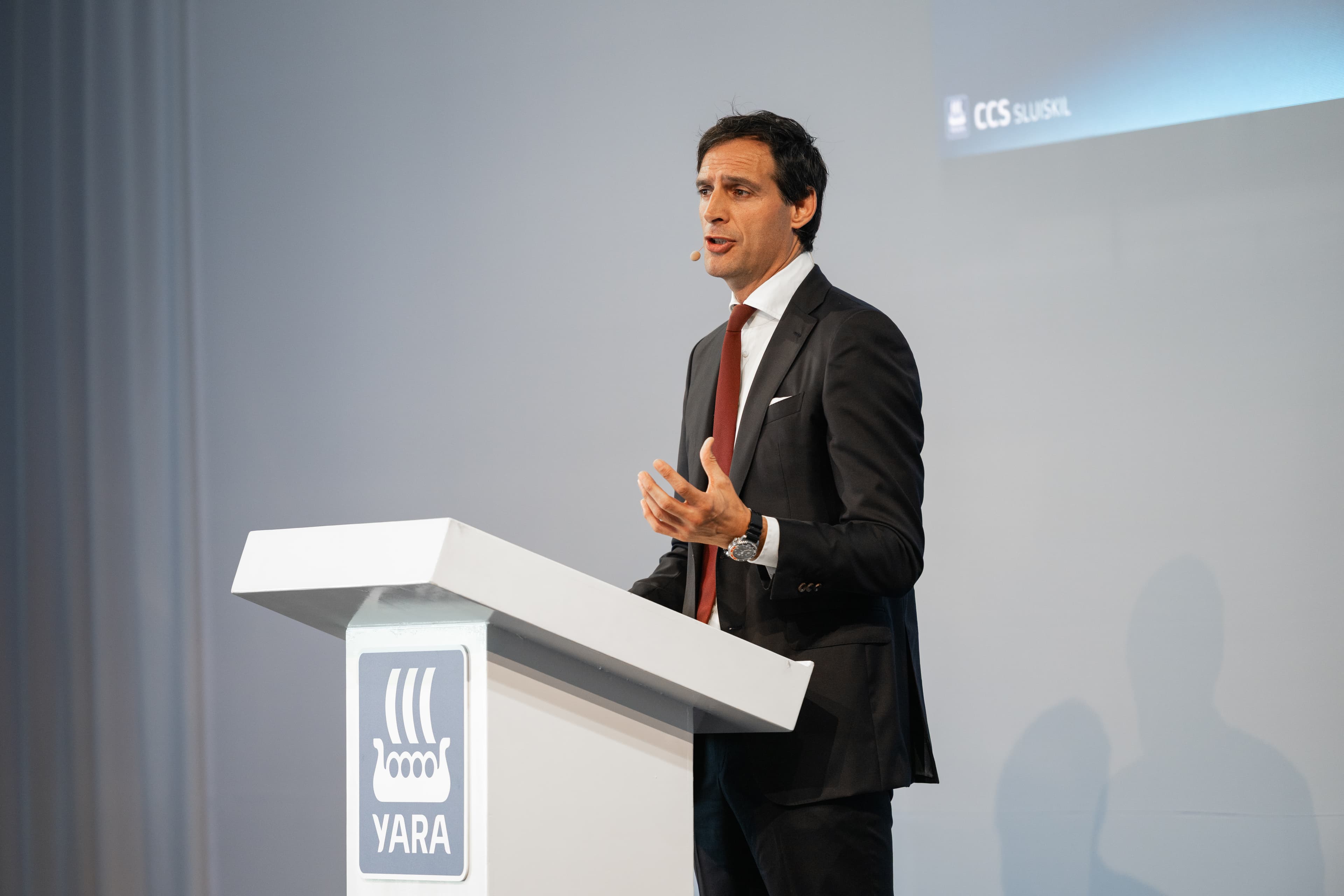
Commission President Ursula von der Leyen leads the College responsible for the political agenda, while Commissioner Wopke Hoekstra publicly defended the October selection as a way to turn emissions-trading revenues into European industrial competitiveness. His endorsement is an identifiable political position, not evidence that he personally chose each recipient. The Commission announcement (opens in a new tab) says proposals were evaluated by independent experts against emissions-avoidance potential, innovation, project maturity, replicability and cost efficiency.
The institutional control chain is clearer in the ECA audit (opens in a new tab). The Commission's Directorate-General for Climate Action controls overall implementation and financing-policy decisions. CINEA organises calls and administers grant agreements. The European Investment Bank handles the sale of allowances, fund assets and project-development assistance. DG Budget records the relevant revenue and performs treasury-management functions. EU legislators define the legal boundaries of eligible technologies, permissible support and financial-close conditions. The Commission can steer the categories and envelopes within that framework, but cannot simply waive statutory safeguards at will.
This division matters for accountability. A question about why a manufacturing category received a particular budget belongs principally with the Commission's policy decision-makers. A question about whether a particular proposal met the published scoring criteria belongs with the evaluation and selection record. A question about a delayed signature or payment belongs with CINEA, the promoter and the milestone documentation. A question about the ultimate environmental return requires measured output and verification, not merely the selection list. The power to influence a funding theme is not proof of direct control over a beneficiary's final award.
There are vetoes at each stage. A proposal can fail eligibility or expert evaluation. A selected promoter can fail to complete financing or contractual conditions. Permits, off-take contracts, grid access, private lenders and industrial construction costs can stop a project without a politician revoking the selection. The Commission's formal response to the auditors (opens in a new tab) points to these market and regulatory barriers. They are real constraints, but they also make a credible public delivery accounting record essential.
Follow the money: €40bn projected, €17bn committed, €3.4bn selected, not paid
The Commission estimates that emissions allowance sales could produce around €40 billion for the Innovation Fund across 2020–2030, depending on the carbon price. This is an estimate over a decade, not a cash balance available today. The ECA found that allowances auctioned through June 2025 had generated €18.7 billion in value, with €6.7 billion transferred to the Recovery and Resilience Facility for REPowerEU and €12.0 billion left for the Innovation Fund. Those amounts are not interchangeable with the Commission's October 2026 statement that the programme's overall portfolio reached roughly 320 projects and nearly €17 billion in grants committed.
The audit's historical cash-versus-commitment contrast is stark. At June 2025, €11.6 billion was already assigned through agreements, but only €331.8 million had been paid to beneficiaries. The auditors calculated this as 2.7% of the approximately €12.3 billion available for projects. The percentage should not be extrapolated mechanically to 2026: many grants are designed to pay after financial close, construction, operation and verified performance. The Commission's formal response (opens in a new tab) stresses that the overwhelming majority of projects were large, complex and not yet operational.
The October 2026 selection is a different financial cohort. The Commission's five-category breakdown (opens in a new tab) lists 12 large projects seeking about €1.58 billion, 17 medium projects about €458 million, 20 small projects about €124 million, 12 clean-tech manufacturing projects nearly €895 million, and 16 pilots about €394 million. The figures are rounded and should not be forced to sum exactly to the headline amount. The categories expose a political allocation choice: capital-intensive industrial transformation and component manufacturing receive large prospective envelopes, while smaller demonstrations receive smaller amounts.
The direct financial beneficiaries are selected companies if they reach signed agreements and satisfy the terms. Carbon-market allowance buyers supply the underlying revenue through the ETS mechanism; this is not the same as a direct taxpayer transfer to each company. Workers, suppliers and host communities could benefit if factories and storage facilities are built, but employment and local-price gains in the project descriptions remain forecasts until independently measured. Competing projects that passed evaluation without funding bear an opportunity cost, though the programme cannot be presumed able to fund every eligible applicant.
Named prospective recipients, not invented payout figures
The official project list (opens in a new tab) identifies ERAMET SA as coordinator of Ageli, a proposed geothermal lithium-extraction facility in France; Aker BP ASA for ASTOR, a proposed offshore CO₂-storage system in Norway; ENI SPA for Ravenna CCS Phase 2 in Italy; and Cementos Molins Industrial SA for a carbon-capture project in Spain. These are identified prospective beneficiaries of selection, not proven recipients of an individual October 2026 cash payment. The list provides planned technical outputs, but not a verified company-by-company disbursement table.
It also identifies Vaeridion GmbH for CAROLUS, a proposed nine-seat electric aircraft project in Germany; EDF Renouvelables for BESS-4-C, a grid-congestion battery project in France; and AGC Glass Europe SA for CALYPSO, a glass-furnace carbon-capture proposal in Belgium. The document names other coordinators across cement, chemicals, fuels, shipping and raw materials. This is the concrete answer to who stands to benefit from access to the next negotiation stage. Whether any particular corporate shareholder benefits financially, and by how much, requires later signed grants, capital contributions, milestones, receipts and audited company accounts.
One cannot infer personal political ties from these corporate names. The records reviewed for this investigation do not establish that Hoekstra, von der Leyen or any other named politician owns an interest in the selected companies, received a donation tied to this selection, instructed evaluators to favour them, or committed a crime. A corporate grant selection is a material policy outcome that deserves scrutiny without converting corporate eligibility into a corruption accusation. The relevant next test is a transparent recipient register that distinguishes the coordinator from subsidiaries, partners, ultimate controlling owners, contractual grant amounts and amounts actually disbursed.
The independent S&P Global account of the 19 October decision (opens in a new tab) corroborates the sectoral breakdown and the pending grant-agreement stage. An independent Romanian project-level review (opens in a new tab) examines TERRA-Q and Bosch-led FLOW4EVE, showing why national benefits should not be inferred from the location of a cross-border project. A location listed in an application does not reveal how much money will be spent in that jurisdiction.
The auditors' stronger criticism: allocation without a structured analysis
The ECA's concern was not simply that projects take time. It found the Commission shifted resources toward emerging priorities without a structured, forward-looking analysis of the technologies' relative emissions-abatement and industrial potential. The auditors cited hydrogen calls where applications fell from 132 in 2023 to 61 in 2024, and clean-tech manufacturing rounds where only a fraction of applications cleared minimum scores. For one battery-manufacturing call, only six proposals passed the minimum threshold, and the audit said 15% of the allocated budget remained unused. These examples are historical, not proof that the October 2026 round was under-subscribed: all five categories in the new call attracted more demand than their budgets.
A second finding concerned delivery. In the audit sample and portfolio, delays and cancellations were common; some projects had been selected as mature but later failed to secure finance or meet deadlines. The report found that by December 2024, the portfolio had achieved only 5% of the emissions reductions expected by that checkpoint. It also warned that methods for calculating potential avoidance could be optimistic. That 5% figure is a specific historical shortfall against an early scheduled target, not evidence that 95% of the October 2026 projects will fail.
A third concern was the comparison of future promise with observed outcomes. The Commission now projects 290 million tonnes avoided over the new cohort's first decade of operation. That estimate may be useful for ranking proposals, but it is not a verified result and cannot be added to emissions already avoided. For projects that never reach operation, the forecast will never become realised reductions. For those that do, emissions savings must be assessed against a defensible counterfactual, including whether activity or pollution merely moves elsewhere.
The strongest counter-case is substantial, not a footnote
The Commission's official reply (opens in a new tab) argues that an early-stage demonstration fund should not be judged as if it were a portfolio of mature power stations. As of June 2025, 208 projects had signed agreements and only 16 had entered operation. The Commission says those operating projects were still in initial monitoring years and that the five projects inspected by the ECA had delivered 73.6% of their planned avoidance for their respective monitored periods, a different denominator from the ECA's 5% of the earlier portfolio-wide scheduled reduction by December 2024. Both figures can be accurate without one cancelling the other.
The Commission also cites inflation, supply-chain disruption, the war in Ukraine, difficult demand for new clean products and permitting obstacles. It argues that innovative projects are funded precisely because commercial investors will not absorb their full risk. Some failure is a feature of a risk-taking programme, not proof that its objective is illegitimate. It further points to a documented selection process, expert scoring and payment tied to results. The ECA itself recognized that the selection process was generally timely and well documented. A criticism that ignores these safeguards would be incomplete.
Most importantly, the Commission accepted all three auditor recommendations: a structured resource-allocation analysis by 2027, measures to speed fund deployment by 2030, and improved project assessment and flexibility by 2028. Acceptance is a governance commitment, not evidence of implementation. The October 2026 selection should be judged by whether the promised methodology, revised controls and updated performance records exist and are publicly testable. A fresh round of oversubscribed proposals supports the claim of demand, but does not settle the auditors' challenge about realised emissions or the quality of category-level allocation.
The public consequences and the decision still open
Europe's industrial policy is trying to accomplish two things at once: reduce emissions and prevent strategic production from moving outside the bloc. The Innovation Fund gives companies a reason to build first-of-a-kind facilities in Europe, while exposing the public to project-delivery and carbon-market revenue risk. It can also encourage competition among technologies. Yet a system that celebrates selected project counts without tracking operating plants risks confusing industrial aspiration with industrial output. Conversely, demanding full emissions reductions before a first-of-a-kind factory is built would defeat the purpose of early demonstration support.
There are distributional choices in the new cohort. Industrial carbon capture, alternative aviation fuels, batteries, lithium processing, heat pumps and nuclear demonstration are not interchangeable. Each serves different firms, supply chains and regions; each has different permitting, energy-price, storage, market and counterfactual risks. Some technologies could reduce import dependence, while others may need costly infrastructure or a guaranteed buyer. The Commission's allocation power deserves scrutiny precisely because it determines which risks the public helps private developers overcome.
The next policy decision is already visible. On 24 September 2026 the Commission published terms (opens in a new tab) for a planned €1 billion industrial-heat auction, including for the first time certain nuclear heat technologies, with payments intended to be linked to verified CO₂ abatement. This future call is separate from the 77 projects. Its design illustrates the continuing power to set technology categories before beneficiaries are chosen, and it provides another opportunity to test whether the structured-analysis recommendation is being acted on.
What would change the conclusion
Four records could materially strengthen or overturn this assessment. First, CINEA's signed agreements for the 77 projects, including actual contractual sums, cancellations and conditions, would establish who obtained enforceable rights rather than a selection invitation. Second, a reconciled financial accounting record would separate ETS revenue, programme commitments, signed grants, disbursements and clawbacks by cohort and date. Third, independent monitoring of construction, output and greenhouse-gas reductions would test the 290-million-tonne forecast against verified baselines. Fourth, Commission documentation of the technology-priority analysis and expert scoring safeguards would show whether the March audit's principal governance criticism has been addressed.
The publicly available sources do not establish the full ultimate beneficial-ownership chain for all 77 project promoters, individual grant payments for this selection, political donations tied to the decision, final permitting outcomes, or measured emissions reductions for facilities not yet operating. No direct right-of-reply request was sent for this article. The Commission's published response is represented, but it is not a substitute for a fresh response to these specific cross-document questions. No illegality or improper personal benefit is established by the evidence presented here.
Bottom line: On 19 October, Brussels made a consequential, traceable choice about which companies may negotiate access to €3.4 billion of climate funding. Its auditors had already shown why an award announcement cannot be treated as a receipt or a climate result. The central accountability question is not whether industrial innovation deserves public support; it is whether the Commission can show, project by project and euro by euro, that its selection priorities become signed contracts, functioning facilities and emissions reductions that withstand independent measurement.
Source trail
- European Commission — 19 October 2026 selection of 77 projects (opens in a new tab).
- European Commission — official descriptions and coordinators of the 77 projects (opens in a new tab).
- European Court of Auditors — Special Report 11/2026, Innovation Fund (opens in a new tab).
- European Commission — formal replies to Special Report 11/2026 (opens in a new tab).
- European Commission — IF25 applications and requested funding, 29 May 2026 (opens in a new tab).
- S&P Global — EU commits €3.4bn to 77 projects, 19 October 2026 (opens in a new tab).
- 2eu.brussels — Romanian project-level beneficiaries, 20 October 2026 (opens in a new tab).
- European Commission — industrial heat auction terms, 24 September 2026 (opens in a new tab).
- European Commission — Innovation Fund legislative and financing overview (opens in a new tab).
- European Commission — IF24 grant agreements and selection history (opens in a new tab).
- Bursa — independent coverage of the March 2026 audit (opens in a new tab).
Verification boundary: sources above were located and inspected through public research. No unpublished correspondence, confidential grant contracts, bank-level transfers or authenticated Factrail canonical internal pages were inspected.
Evidence
The sources this article cites, claim-bearing material first.
- luxembourg.representation.ec.europa.eu · luxembourg.representation.ec.europa.eu/actualites-et-evenements/actualites/commission-invests-eur34-billion-net-zero-technology-projects-2026-10-19_en
- climate.ec.europa.eu · climate.ec.europa.eu/document/download/b2ab263b-0a5b-4293-bb8e-49aa828ff1ee_en
- eca.europa.eu · eca.europa.eu/ECAPublications/SR-2026-11/SR-2026-11_EN.pdf
- climate.ec.europa.eu · climate.ec.europa.eu/eu-action/eu-funding-climate-action/innovation-fund_en
- climate.ec.europa.eu · climate.ec.europa.eu/news-other-reads/news/2025-innovation-fund-net-zero-technologies-call-attracted-strong-interest-european-industry-over-350-2026-05-29_en
- eca.europa.eu · eca.europa.eu/Lists/ECAReplies/COM-Replies-SR-2026-11/COM-Replies-SR-2026-11_EN.pdf
- climate.ec.europa.eu · climate.ec.europa.eu/news-other-reads/news/commission-publishes-terms-and-conditions-eur1-billion-industrial-heat-decarbonisation-auction-2026-09-24_en
- climate.ec.europa.eu · climate.ec.europa.eu/areas-action/eu-funding-climate-action/innovation-fund/calls-proposals/if24-call_en
More analysis
Ranked by shared facts, drivers and people — never by publication date alone.
Articles12
- The Black Sea's 2027 Security Bill: Ports, Grain and GasShares the driver: Energy Security · 1 November 2026
- Germany Entered Winter With Gas Storage at 61%. Reiche Ordered a Late Refill—Who Bears the Risk?Shares the driver: Energy Security · 1 November 2026
- Ukraine’s 2027 Funding Test: Europe After the US MidtermsShares the driver: Energy Security · 1 November 2026
- Europe's Diesel Winter: Who Pays for the Reserve Release?Shares the driver: Energy Security · 1 November 2026