Ukraine’s 2027 Funding Test: Europe After the US Midterms
By the Factrail desk · Method: how we source and score · Last reviewed
TL;DR
The November 3 US midterm elections could change the pace of future American appropriations, but a divided Congress would not automatically end assistance already authorized.
Key graph impact
The article explains graph entities; the causal edges belong to the facts and drivers it links to.
- ArticleUkraine’s 2027 Funding Test: Europe After the US Midterms
- mentionsDriverUkraine war (Crimea–Donbas–2022+)
- strengthensIndicators (5)Global deaths from organized violence (UCDP)
- ArticleUkraine’s 2027 Funding Test: Europe After the US Midterms
- mentionsDriverEnergy Security
- strengthensIndicators (4)Poverty headcount ratio at $3.00 a day (2021 PPP) (% of population)
- ArticleUkraine’s 2027 Funding Test: Europe After the US Midterms
- mentionsDriverFiscal-Policy Sustainability
Strengthens · 85% impact strength
Observed
245k deaths per year · 195k above the normal line (2025)
Worse than normalAbove normal = worse
- Worse
Strengthens · 80% impact strength
Observed
69M people (stock, end-of-year) · 28M above the normal line (2025)
Worse than normal3 readings, 2023–2025: rose from 68M people (stock, end-of-year) to 69M people (stock, end-of-year).
Above normal = worse · Lag ~30 d
Strengthens · 62% impact strength
Observed
10.4% · 10.2 above the normal line (2024)
Worse than normal7 readings, 2018–2024: fell from 11.1% to 10.4%.
Above normal = worse
Weakens · 60% impact strength
Observed
7.97% of population aged 16 years or over · 5.2 above the normal line (2025)
Worse than normal8 readings, 2018–2025: rose from 7.77% of population aged 16 years or over to 7.97% of population aged 16 years or over.
Above normal = worse · Lag ~3 mo
Article
The November 3 US midterm elections could change the pace of future American appropriations, but a divided Congress would not automatically end assistance already authorized. Ukraine's immediate problem is timing: air-defence interceptors, artillery ammunition and monthly treasury support cannot be replaced by announcements that have not become shipments or cash. Europe has adopted a €90 billion support loan for 2026–27, yet Ukraine's government estimated in September that about $32.6 billion of its 2027 external financing requirement remained uncovered. Berlin, Warsaw, Paris, London and Rome must therefore decide not only how much to contribute, but how to divide costs, production and borrowing risk before a possible Washington delay becomes a battlefield shortage.
The election is a scenario, not a funding decision
Americans vote in the midterms on November 3, 2026. A divided Congress is one possible outcome, not a known result as of November 1. Congressional control shapes future appropriations and oversight, but it cannot be equated with immediate cancellation of equipment already funded or delivered. New American funds could face greater negotiation even if a bipartisan majority still favors selected assistance. The key variable is the interval between Ukraine requesting equipment and the point when suppliers are paid, authorized to export and able to deliver. An appropriations delay matters if inventories are depleted faster than factories replace them. It matters less where funding and production capacity are already secure. An evidence-based assessment therefore separates political uncertainty from actual missing equipment, rather than predicting an American cutoff before voters have chosen the next Congress. European officials have time to plan contingencies, but not unlimited time to build new missile production lines.
Europe has already legislated a substantial response
The EU's €90 billion Ukraine Support Loan covers 2026 and 2027, with €60 billion assigned to defence capabilities and industrial capacity and €30 billion to budget support. A Council decision in April made up to €45 billion accessible for 2026, including €28.3 billion for defence industry and €16.7 billion in financial assistance. On October 30 the Commission announced a further step intended to enable payments in early 2027. These are important commitments, yet authorized ceilings should not be treated as identical to cash disbursed or equipment on the front. The Commission reported €19.8 billion disbursed against the 2026 allocation. Financing is arranged through EU borrowing supported by budget capacity, not a claim that national governments have already paid the entire headline amount. The structure improves predictability while leaving delivery schedules, procurement choices and eventual repayment exposure open for scrutiny.
The uncovered Ukrainian requirement is not a simple subtraction
Ukraine's finance ministry told international donors in September that the country required $52.6 billion in external financing in 2027. It identified around $20 billion with expected sources and approximately $32.6 billion still uncovered. These are dollars, whereas most EU assistance announcements use euros. They refer to financing need over a defined budget period, not simply the cost of buying additional missiles. The IMF's earlier 2026 program review used a different baseline, projecting a $43.4 billion 2027 financing gap within a multi-year framework and various expected contributions. Neither figure should be casually added to the €90 billion support loan or described as money already lost. Assumptions, exchange rates, grant-versus-loan treatment and the timing of expected payments differ. Officials need a reconciled monthly cash plan that shows which commitments are real, conditional or still to be negotiated. Without that, public totals obscure the actual financing risk.
Interceptors have a physical production limit
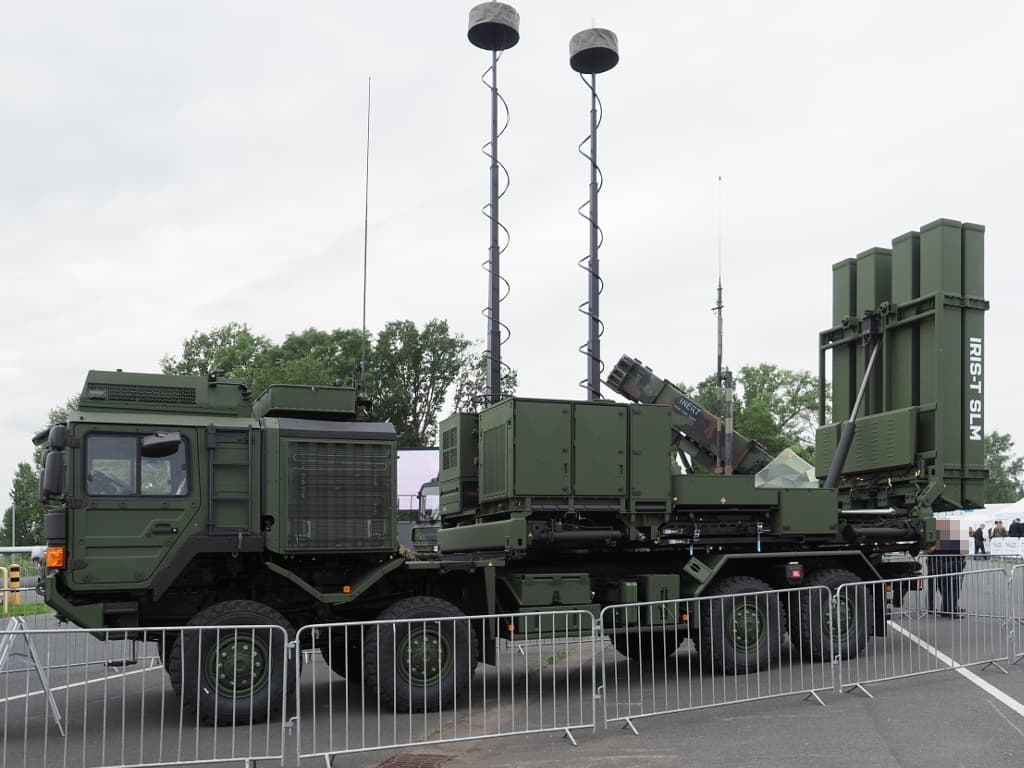
A defence minister can sign a cheque much faster than a factory can manufacture high-end interceptors. Ukraine must counter different forms of attack, from inexpensive drones to missiles that require advanced radar and interception capabilities. Patriot equipment remains especially sensitive to American production and supply decisions, while European systems such as IRIS-T can provide important complementary layers. They are not perfect substitutes for every threat. Kiel's August assessment found that European aid allocations had risen but American weapons still played a critical role in military assistance. European countries therefore need arrangements for both finance and assured access to scarce military components. The measure of success is not the nominal cost of a launcher but available missiles, trained crews, maintenance, radars and real deployment. A photograph of equipment at a trade exhibition is evidence that a type exists, not that a unit was delivered for Ukrainian operations.
The ammunition problem is industrial rather than ceremonial
Artillery ammunition depends on explosive materials, propellants, metal production, fuzes, safety approvals and specialist workers. Increasing output requires production capacity that firms may not build without reliable long-term orders. Short contracts can drain inventories without creating the throughput necessary for another year of war. Governments should disclose separately ammunition transferred from military stores, new production delivered directly to Ukraine and replacements purchased for their own forces. Counting these as one category makes an announcement appear larger while concealing whether Ukrainian units have more rounds available. Joint purchasing can expand demand and reduce fragmented contracts, but industrial bargaining and technical specifications can also delay agreements. The relevant yardstick is actual usable rounds available when a unit needs defensive fire. Spare parts, training, transport and repair facilities are equally relevant because equipment without a functioning support chain cannot deliver its intended protection.
Budget assistance protects civilian capacity
Most people encounter a funding crisis not through bond-market headlines but through interrupted services, wages and energy repairs. Ukrainian tax collection and domestic borrowing must help fund defence, while international financial assistance underpins other essential state functions. An irregular transfer can force difficult decisions between current spending, additional taxes and domestic debt issuance. The Ukraine Facility, designed for up to €50 billion over 2024–27, is intended to help ensure economic stability and service continuity alongside reforms. Its financing overlaps in policy purpose with newer mechanisms, so officials must distinguish instruments and prevent double counting of individual disbursements. Conditions and oversight can deter misuse, but timing is central when hospitals, local authorities and basic infrastructure face continuing damage. Europe's best fiscal contribution is predictable support accompanied by independently measured outcomes. It is not enough to announce a large future amount if its disbursement slips beyond the point of immediate need.
Berlin must separate refugee spending from transfers
Germany has major fiscal and manufacturing capacity, but its political accounting needs examination. Kiel's October 8 analysis found that only approximately €41.7 billion of the €100 billion Germany publicly described as bilateral Ukraine aid qualified as actual bilateral aid in its framework. Around €35.9 billion had been spent inside Germany, largely on refugees, and €22 billion represented future military commitments. These may be legitimate expenditures, yet they are not equivalent to weapons already delivered to Kyiv. Chancellor Friedrich Merz (opens in a new tab) must choose between expanding direct procurement, maintaining national readiness and contributing through EU finance. German equipment producers could gain orders, workers could gain industrial employment and the treasury would carry obligations. The public deserves separate numbers for domestic refugee support, promised purchases, paid invoices and physical deliveries. Otherwise the largest total may be the least informative for 2027 military planning.
Warsaw's geography changes its share of risk
Poland's proximity to Ukraine makes this question particularly immediate. Prime Minister Donald Tusk (opens in a new tab) must balance assistance to Kyiv with substantial investment in Poland's own defence and logistics. A simple equal-share payment formula would ignore differences in population, income, existing military spending and exposure to potential escalation. Polish transit, training, repair and maintenance capabilities are valuable even where the nominal euro amount is smaller than Berlin's. But a logistics corridor does not manufacture the missing interceptor, just as a larger military budget does not automatically create timely Ukrainian deliveries. Warsaw should disclose fresh support separately from spending already planned for its own forces. If attacks on Ukrainian civilian infrastructure intensify, Polish public services may also bear renewed displacement costs. A fair arrangement must account for this risk without pretending that hosting expenditures directly substitute for combat supplies.
Paris must test industrial ambition against fiscal space
President Emmanuel Macron (opens in a new tab) has a powerful political rationale for building European production autonomy. French aerospace and missile companies can win multi-year orders, and closer European procurement could improve future resilience. Yet national industrial preferences can conflict with the immediate need to buy whichever system can arrive soon enough to protect cities. Expanding plants and training workers is a medium-term investment; transferring equipment today is a near-term operational choice. France also faces a fiscal calculation: new spending financed through borrowing may increase future interest costs, although yields depend on many factors beyond one defence announcement. It would be unsound to forecast a precise movement in French sovereign borrowing rates from this assistance decision alone. A transparent procurement plan would state how much is for new industrial capacity, how much for near-term Ukrainian deliveries and how much for French replacement inventories. These categories should remain distinct.
London's £10 billion headline contains unlike instruments
The UK Treasury announced more than £10 billion of additional support capacity on October 28. Its package includes up to £7 billion in economic support over three years, World Bank guarantees, £500 million for winter air defence and £3 billion more in UK Export Finance credit capacity. Britain also maintains a military assistance commitment of at least £3 billion annually through 2030–31 or for as long as necessary. Prime Minister Keir Starmer (opens in a new tab) and Chancellor Rachel Reeves (opens in a new tab) are accountable for converting this mixture into useful support. A guarantee is a contingent liability rather than the same thing as a grant paid today. An export finance limit is capacity to support transactions, not proof every pound has been drawn. These distinctions matter for British taxpayers and borrowing policy. The policy can create business for defence producers, but its measured value must be judged by actual equipment, financing and risk exposure.
Rome confronts an uncomfortable distribution question
Prime Minister Giorgia Meloni (opens in a new tab) faces simultaneous demands for alliance solidarity, defence readiness and fiscal restraint. Italy may prefer participation in common EU financing to a rapid increase in equivalent national bilateral cash spending. Joint borrowing can smooth payment schedules and distribute risk, but neither interest charges nor repayment obligations disappear. Italy's industrial suppliers could gain contracts from common procurement while its treasury remains exposed through European commitments. The challenge is political as much as financial: governments can support a general statement about security while resisting the detailed appropriations needed to make it effective. If energy costs rise or economic growth softens, domestic opposition to additional spending may strengthen. This makes clear allocation rules important. Contributions should be judged relative to the size of national economies, previous obligations, industrial delivery and exposure, rather than a competition over which leader announces the largest round number.
Brussels cannot borrow an interceptor into existence
Commission President Ursula von der Leyen (opens in a new tab) can coordinate common finance and procurement frameworks, but borrowing capacity is not identical to ammunition supply. The EU support loan gives Ukraine a large prospective source of funds while requiring carefully sequenced implementing decisions and payments. EU issuance competes for investor attention alongside national sovereign debt. The European Central Bank (opens in a new tab) determines the monetary environment rather than the content of national military orders; changes in inflation and benchmark interest rates also affect financing costs. Public accountability should follow each euro through approval, borrowing, contracting, disbursement, delivery and audited use. If a procurement program counts an authorization and the resulting contract as two independent contributions, its headline impact can be exaggerated. The central coordination test is whether common action shortens the time needed for equipment and cash to reach their intended recipients.
The war line cannot be reduced to a spreadsheet
The importance of additional deliveries is obvious but their exact battlefield effect cannot be predicted from money alone. Outcomes depend on Russian attack rates, Ukrainian stock levels, force deployment, weather, training and adaptation on both sides. Better protection for power stations and transport can sustain civilian services and military logistics. Sustained artillery supply can improve defensive endurance when matched to operational needs. But more funding does not automatically mean territory changes hands in a particular direction. Analysts should compare scenarios: continued American material flows; slower new American approvals with European money but scarce supplies; or a stronger European industrial response with steady scheduled deliveries. These scenarios describe mechanisms, not forecasts of specific cities falling or surviving. Operationally sensitive information should be safeguarded while governments still publish enough aggregated delivery evidence for democratic oversight. The right unit of analysis is usable capability at the right time.
Bond yields are conditional, not a guaranteed reaction
More public borrowing can add to the supply of bonds and potentially push yields higher at the margin. Yet a credible defence program might reduce geopolitical risk, and weaker economic conditions can pull interest-rate expectations in another direction. French, Italian, German, British and EU bonds differ in credit risk, liquidity and maturity structure. Claiming that an announced assistance figure mechanically raises every yield by a fixed amount is therefore unjustified. Track issuance schedules, ten-year yields, spreads, inflation expectations and central-bank guidance. Also distinguish new borrowing from redeployment within an existing budget. The fiscal effect of export guarantees differs from that of an immediate cash grant, even when both are described as support. The most serious accountability question is not simply whether yields rise this week but whether debt service eventually crowds out other essential public spending or whether security gains prevent greater costs.
Defence shares may rise before deliveries do
Weapons manufacturers may receive new orders for missiles, ammunition, radar, electronics and support services, with associated jobs in plants and subcontractors. Markets can revalue these companies as soon as investors expect higher future profits, well before a unit reaches Ukraine. Such share-price increases are not evidence that a procurement program succeeded. Manufacturing margins, working capital requirements, component shortages and contract penalties can all alter the result. Policymakers should monitor production capacity, order backlog conversion and actual deliveries rather than treating equity performance as a proxy for Ukrainian protection. There is also a distributional issue: shareholders benefit from profitable contracts, while households pay through taxes and potentially higher debt service. The case for spending therefore rests on public security outcomes and future deterrence, not on the investment returns of a small number of listed suppliers.
What it moves
Security: a sustained increase in suitable interceptors, ammunition and maintenance capacity should improve defensive endurance relative to a no-increase scenario; delivery delays push in the opposite direction. Prices: renewed infrastructure damage and regional instability could increase upward pressure on power, logistics and insurance costs, while a more stable security environment could reduce some of that premium. Rates: additional net issuance may place upward pressure on selected sovereign yields, though inflation, demand and monetary policy can dominate. Migration: heavier civilian infrastructure losses could add to outward displacement, increasing hosting costs in European countries; better protection could reduce that pressure. Jobs: long production contracts can increase manufacturing employment and investment over time, although labour and supply shortages can delay hiring. Track real physical deliveries, civilian infrastructure outages, ten-year yields, refugee registrations, manufacturing output and actual public spending. The Ukraine war (opens in a new tab), energy security and fiscal policy sustainability (opens in a new tab) mechanisms explain why these categories interact.
Who benefits and who pays
Ukrainians benefit when public services remain funded and defensive supplies arrive in time to protect lives and infrastructure. European residents benefit if continued Ukrainian resistance reduces the probability of a wider security crisis. Defence suppliers with genuine production capacity may gain revenue and employment, but not every contract creates an immediate military result. European taxpayers absorb grant costs, national procurement appropriations and some loan or guarantee risks. Sovereign borrowers may face additional interest expense if financing conditions deteriorate. Ukrainian civilians suffer directly when help is delayed. Russia could gain tactical opportunities from supply interruption, although the military effect depends on Ukrainian adaptation and other factors. The strongest counterargument is that Europe has already assembled unusually substantial financing and Washington could maintain aid irrespective of congressional control. Both are true possibilities; neither makes the $32.6 billion uncovered requirement or specific production bottlenecks disappear. Public debate must compare incremental money with delivered value.
The next accountability test
The immediate milestones are the November 3 American vote, the subsequent congressional appropriations process, implementation of the Commission's October 30 financing step and the actual 2027 disbursement timetable. Governments should publish the source and legal stage of every major commitment, then reconcile amounts with independent research and Ukraine's treasury requirements. For procurement, reporting should identify broad categories and delivery progress without exposing information that puts service members at risk. For loans, identify who borrows, who may repay, what guarantees mean and whether the loan is already reflected in the Ukrainian financing plan. The unresolved decision is how to finance any remaining shortfall without treating inflated totals or contingent facilities as cash in hand. The central conclusion is conditional but concrete: a divided US Congress may amplify Europe's existing burden, and the critical European choice is whether money, equipment and cash-flow support arrive before shortages undermine security and public services.
Sources
- European Commission, 2027 financial support decision, 30 October 2026 (opens in a new tab)
- Ukraine Cabinet, 2027 financing needs, 29 September 2026 (opens in a new tab)
- European Commission, Ukraine macro-financial assistance (opens in a new tab)
- Council of the EU, €90 billion support loan, 23 April 2026 (opens in a new tab)
- IMF, Ukraine 2026 Article IV and Extended Fund Facility review (opens in a new tab)
- Kiel Institute, Ukraine Support Tracker, 8 October 2026 (opens in a new tab)
- Kiel Institute, Europe leads on aid but US weapons remain key, 13 August 2026 (opens in a new tab)
- NATO, Defence investment and 5% commitment, 29 June 2026 (opens in a new tab)
- UK Treasury, Budget 2026, Ukraine section, 28 October 2026 (opens in a new tab)
- UK Treasury, Further support for Ukraine, 28 October 2026 (opens in a new tab)
- European Commission, The Ukraine Facility (opens in a new tab)
- Council of the EU, Financial assistance to Ukraine (opens in a new tab)
Evidence
The sources this article cites, claim-bearing material first.
- enlargement.ec.europa.eu · enlargement.ec.europa.eu/news/commission-takes-key-step-forward-2027-financial-support-ukraine-2026-10-30_en
- kmu.gov.ua · kmu.gov.ua/en/news/ukrainska-platforma-donoriv-ukraina-ta-mizhnarodni-partnery-obhovoryly-shliakhy-pokryttia-finansovykh-potreb-na-2027-rik
- economy-finance.ec.europa.eu · economy-finance.ec.europa.eu/international-economic-relations/candidate-and-neighbouring-countries/ukraine_en
- NATO · Defence expenditures and NATO's five-percent commitment · 29 Jun 2026
- gov.uk · gov.uk/government/publications/budget-2026-document/budget-2026-html
- gov.uk · gov.uk/government/news/further-support-for-ukraine
- Independent reporting · Commission — Ukraine Facility
More analysis
Ranked by shared facts, drivers and people — never by publication date alone.
Articles12
- Europe's Drone Shield: The €500m Baltic Funding FightShares the driver: Ukraine war (Crimea–Donbas–2022+) · 2 November 2026
- Europe’s Ukraine Funding Gap Tests Bonds and NATO ReadinessShares the driver: Ukraine war (Crimea–Donbas–2022+) · 31 October 2026
- Ukraine's Blackouts Could Become Europe's Housing TestShares the driver: Ukraine war (Crimea–Donbas–2022+) · 2 November 2026
- Poland's €91m Ukraine Generator Case: The Contracts, the Political Chain and the Bill Nobody Has Yet SettledShares the driver: Ukraine war (Crimea–Donbas–2022+) · 31 October 2026