Ukraine's Blackouts Could Become Europe's Housing Test
By the Factrail desk · Method: how we source and score · Last reviewed
TL;DR
The Russian strikes that interrupted electricity in several Ukrainian regions on November 1 have renewed the prospect of winter displacement, although no reliable count yet shows a new mass refugee wave.
Key graph impact
The article explains graph entities; the causal edges belong to the facts and drivers it links to.
- ArticleUkraine's Blackouts Could Become Europe's Housing Test
- mentionsDriverUkraine war (Crimea–Donbas–2022+)
- strengthensIndicators (5)Global deaths from organized violence (UCDP)
- ArticleUkraine's Blackouts Could Become Europe's Housing Test
- mentionsDriverEnergy-Price Volatility
- strengthensIndicators (2)Difficulty making ends meet
- ArticleUkraine's Blackouts Could Become Europe's Housing Test
- mentionsDriverEnergy Security
- strengthensIndicators (4)Poverty headcount ratio at $3.00 a day (2021 PPP) (% of population)
Strengthens · 85% impact strength
Observed
245k deaths per year · 195k above the normal line (2025)
Worse than normalAbove normal = worse
- Worse
Strengthens · 80% impact strength
Observed
69M people (stock, end-of-year) · 28M above the normal line (2025)
Worse than normal3 readings, 2023–2025: rose from 68M people (stock, end-of-year) to 69M people (stock, end-of-year).
Above normal = worse · Lag ~30 d
Strengthens · 77% impact strength
Observed
18.4% of population aged 16 years or over · 8.35 above the normal line (2025)
Worse than normal8 readings, 2018–2025: fell from 21.5% of population aged 16 years or over to 18.4% of population aged 16 years or over.
Above normal = worse
Strengthens · 62% impact strength
Observed
10.4% · 10.2 above the normal line (2024)
Worse than normal7 readings, 2018–2024: fell from 11.1% to 10.4%.
Above normal = worse
Article
The Russian strikes that interrupted electricity in several Ukrainian regions on November 1 have renewed the prospect of winter displacement, although no reliable count yet shows a new mass refugee wave. Poland and Germany already accommodate the largest EU temporary-protection populations, and any new arrivals would place immediate demands on housing, schools and municipal budgets before generating employment and tax revenue. The UK faces a related but distinct challenge through its visa and sponsorship programmes. European energy prices are already elevated for wider global reasons, so governments must distinguish the cost of Ukraine's power emergency from the broader gas market and invest in both repairs and reception readiness.
The decision that begins in Ukraine
A household does not immediately leave the country when the lights go out. Parents ask whether electricity will return, whether the building has heat, whether the water pump works, whether a child can attend school and whether wages will continue. Families with savings and relatives may find shelter nearby. Others may move west within Ukraine. A cross-border departure becomes more probable when these problems accumulate, especially during severe cold. This distinction is fundamental: a risk of displacement is not evidence that a large new international flow has already begun.
Reuters reported on November 1 that Russian attacks hit power infrastructure in four Ukrainian regions and interrupted service for many households. The consequences may worsen if later strikes damage the same facilities while technicians are still restoring them. The UN's human-rights monitors documented repeated attacks on power generation and transmission during the preceding winter. The Council of the EU reports that Ukraine lost nine gigawatts of generating capacity during winter 2025–26. That accumulated loss helps explain why the timing of fresh attacks matters.
The Russian forces conducting the attacks bear responsibility for the direct destruction. European capitals nevertheless make decisions about repair equipment, air defence, backup power, humanitarian finance and emergency reception. Fast assistance can keep schools, hospitals and apartment blocks functioning. It cannot guarantee that no one leaves. The sensible objective is to reduce involuntary displacement and prepare for the cases in which staying is unsafe.
The population already under protection
Eurostat counted 4.43 million temporary-protection beneficiaries in the EU at the end of August 2026. Germany hosted 1,294,555, Poland 939,395 and Czechia 398,360. These are substantial existing communities with jobs, children in schools and demand for homes. They are not new November arrivals. A headline that presents the whole protection population as newly displaced by autumn strikes would be materially misleading.
UNHCR separately estimated nearly 5.2 million Ukrainian refugees across Europe. That measure covers a different population and geography from the EU temporary-protection figures; adding the two numbers would double-count many people. UNHCR reported more than 136,000 evacuees moving through supported transit centres inside Ukraine since January, about 70 percent more than in the preceding year. These figures are important evidence of stress, but internal evacuations do not automatically translate into international arrivals.
A reliable early warning system would therefore track new border crossings, fresh registrations, family composition, destination municipalities and actual accommodation requests. It would distinguish a new household from a person renewing a permit or moving between host cities. European governments need this level of precision to assess schools and housing rather than treating every administrative transaction as a migration shock.
Poland faces the fastest possible demand
Poland is an obvious destination for many Ukrainians because of its proximity, transport connections, language familiarity and existing family networks. New arrivals may need transport, translation, immediate medical support, emergency accommodation, childcare and school places. Municipal officials often pay for initial services before any employment income appears. A national budget can ultimately benefit from more workers while a specific municipality struggles with temporary accommodation bills. Both observations can be true simultaneously.
An October 2026 analysis hosted by UNHCR estimated that Ukrainian refugees increased Polish GDP in 2025 by an amount equivalent to 2.4 percent, about PLN 94 billion. Their employment rate reached 76 percent, compared with 69 percent in 2024. The analysis did not find damage to the wages or employment of Polish workers. But an estimate of additional GDP must not be represented as an equal amount of tax collected or a net fiscal surplus.
Newcomers can help employers fill vacancies and start businesses. They also need homes near jobs and access to transport. When affordable housing is scarce, the pressure falls on existing low-income renters, including earlier refugees. Local housing supply, interest rates and family size complicate any causal claim about rents. Governments should finance reception transparently and encourage employment rather than turn newcomers into permanent recipients of temporary support.
Germany's municipal challenge
Germany accommodates the largest EU protection population, giving it considerable administrative experience but not unlimited room in schools and rental markets. The cost of a family in emergency accommodation is very different from the cost of a working couple who can live with relatives. Some arrivals are elderly, disabled or caring for children. Others can work rapidly if qualifications are recognised. A single cost per refugee conceals these differences and cannot support a credible winter budget forecast.
Housing is particularly important. Sending people to areas with cheaper accommodation may reduce immediate spending but create long commutes or limited job opportunities. Cities with vacancies may lack low-rent apartments. Local governments need flexible housing programmes, access to schools and support for transitions to ordinary rentals. The objective is stability, not simply a low first-month expenditure.
Employers may eventually benefit from additional workers, but language instruction, childcare, credentials and health needs decide how quickly this occurs. Germany and other states also decide the scale of aid sent to repair Ukrainian generation and transmission. Effective support allows people to retain livelihoods in Ukraine and reduces potential pressure abroad. See Friedrich Merz (opens in a new tab) for political context, and the Ukraine-war driver (opens in a new tab) for the conflict mechanism.
The British route is different
The UK is outside the EU temporary-protection count. It has national visa arrangements, including sponsorship and permission extensions. Home Office statistics for the year ending June 2026 recorded 15,595 overseas Ukraine-scheme grants and 78,638 in-country extensions. The extensions largely concern people already in Britain. Counting them as fresh entries would exaggerate the scale of any migration change.
The House of Commons Library describes the rights of people on Ukrainian schemes to work and access relevant services, but also their time-limited permission. A new period of displacement could place additional demand on sponsors and local councils. Not every host can provide accommodation indefinitely, and some families eventually need private rentals. These transitions can create homelessness-service costs even when people are legally entitled to remain.
The British budget issue is therefore not just a question of visas issued. It requires actual arrival counts, local vacancies, housing costs and employment outcomes. The UK's separate energy and housing pressures should not be attributed to Ukrainians without evidence. See the Keir Starmer dossier (opens in a new tab) and Factrail's cost-of-living driver (opens in a new tab). Canada and Australia are more distant destinations; their direct exposure is smaller, but allied spending and world commodity prices still affect their taxpayers.
Gas markets were already under strain
Ukraine's power emergency coincides with a difficult European winter gas market. ACER reported that EU storage was about 75 percent full on October 21, below customary levels. It described supply pressure from disruption associated with the Middle East conflict, lower storage and competition for LNG cargoes. Its estimates put the upper-bound cost of 2026 storage refilling at €27 billion, and the additional European gas import bill associated with Middle East disruption at €18 billion to €33 billion.
Reuters reported that Dutch TTF benchmark gas prices briefly touched €100 per megawatt hour in late October. These developments predate the November 1 attacks. It would be incorrect to claim that Ukraine's new outages caused the full European price increase. Gas-fired generators can pass higher fuel costs into electricity markets, though retail customers see different timing depending on regulation and contract terms.
The Ukraine-specific channel is narrower: damage may require additional cross-border electricity imports, backup generation and equipment purchases. The quantity depends on repair times, interconnector capacity, weather and demand. No robust public estimate yet establishes the exact marginal gas-price effect of the latest strikes. The broader energy-security driver (opens in a new tab) and energy-price volatility driver (opens in a new tab) represent related but distinct pressures.
Money for repair, money for reception
The European Commission has described a package worth approximately €922 million to help Ukraine's power system through winter 2026–27. Announcing assistance is not the same as installing equipment. Public accountability should measure how much was disbursed, what was delivered, when the equipment became operational and how long services were restored. The distinction is particularly important when civilian heating systems are under repeated attack.
The choice is sometimes presented as spending on Ukraine versus spending on national households. In reality, both may be required. Grid restoration can prevent some people from being forced to travel and protects health services, schools and businesses. Reception funding remains essential for those who leave despite repairs. A direct comparison would require credible estimates of service restoration, avoided disruption and actual municipal costs. No sourced material establishes a reliable one-to-one saving from each euro of grid assistance.
Companies supplying generators, transformers and energy services may benefit from legitimate contracts. Host employers may benefit from additional skills, and countries can eventually receive more taxes as refugees work. Ukrainian families pay the immediate human price of lost heating and livelihoods. European households and factories may face higher fuel bills, while municipal taxpayers may initially finance shelter. The people gaining financially from a contract should not automatically be treated as responsible for the attacks.
What it moves
Migration: repeated long outages create upward risk for additional departures from Ukraine. This remains a scenario until fresh registrations and crossings show a sustained change. Domestic evacuations must be counted separately.
Housing: demand for emergency accommodation and low-cost rentals may rise in specific German and Polish cities. The direction of national rent levels is uncertain. Monitor occupancy, local vacancies and spending rather than assuming a uniform effect.
Jobs: lost electricity can reduce Ukrainian production and hours worked. Host labour supply may increase later, once arrivals secure housing and enter employment. Measure earnings, job placements and tax receipts, not simply new permits.
Prices: European gas and wholesale electricity prices already face upward pressure from tight global conditions. Additional Ukrainian import demand might contribute, but its magnitude is unverified. Watch storage withdrawals, Dutch TTF prices and power imports independently.
Rates: lasting energy inflation could make monetary authorities more cautious about rate reductions. This is a conditional scenario, not an announced policy. Track central-bank decisions, particularly the European Central Bank (opens in a new tab), alongside household inflation and industrial energy costs.
Security: prolonged outages weaken access to heating, water and health services. Reliable repairs, backup power and protection reduce the risk. Track actual outage duration, infrastructure restoration and functionality of vital services.
Counterarguments and the winter test
The strongest objection is that Ukrainians have endured repeated outages before without another movement on the scale of early 2022. Families have strong ties to their homes and may find ways to cope, while crews restore electricity. Much new displacement may remain internal. These possibilities are serious; the present evidence does not justify a precise forecast of hundreds of thousands of international departures.
The second objection is that migration responds to frontline safety, economic prospects and family networks as well as energy. A family can leave a functioning city for security reasons or remain in a darkened home because travel is unaffordable. Neither a drone count nor the loss of one substation gives a reliable measure of future border movement.
The decisive evidence will arrive over time: days without power, heating failures, restored generation, new temporary-protection applications, school enrolments, real arrivals in Britain, municipal accommodation demand and employment. Those series can confirm or weaken the case for a new migration shock. Policymakers must make decisions under uncertainty, but that does not permit invented migration figures.
The core judgement is therefore modest but urgent. Europe should help protect Ukrainian electricity and heating now, maintain contingency reception capacity and measure costs and benefits with transparent data. Reliable power lets people stay in their communities when that is their choice. Where leaving becomes necessary, legal access, adequate housing and work opportunities can convert an emergency into a sustainable settlement rather than a prolonged social crisis.
Sources
- Reuters: Russian strikes cut power to thousands in Ukraine (opens in a new tab)
- Eurostat: Temporary protection for 4.43 million in August (opens in a new tab)
- UNHCR: As attacks intensify, support for Ukrainians (opens in a new tab)
- European Commission: Support for Ukraine energy security (opens in a new tab)
- Council of the EU: Ukraine energy infrastructure (opens in a new tab)
- ACER: EU gas storage is 75 percent filled (opens in a new tab)
- Reuters: European gas touches 100 euros per MWh (opens in a new tab)
- UK Home Office: Humanitarian routes to the UK (opens in a new tab)
- House of Commons Library: Special visa schemes for Ukrainians (opens in a new tab)
- UNHCR: Economic impact of Ukrainian refugees in Poland (opens in a new tab)
- European Commission: Welcoming displaced people from Ukraine (opens in a new tab)
- OHCHR: Attacks against Ukraine energy infrastructure (opens in a new tab)
- European Commission: Poland migrant integration research (opens in a new tab)
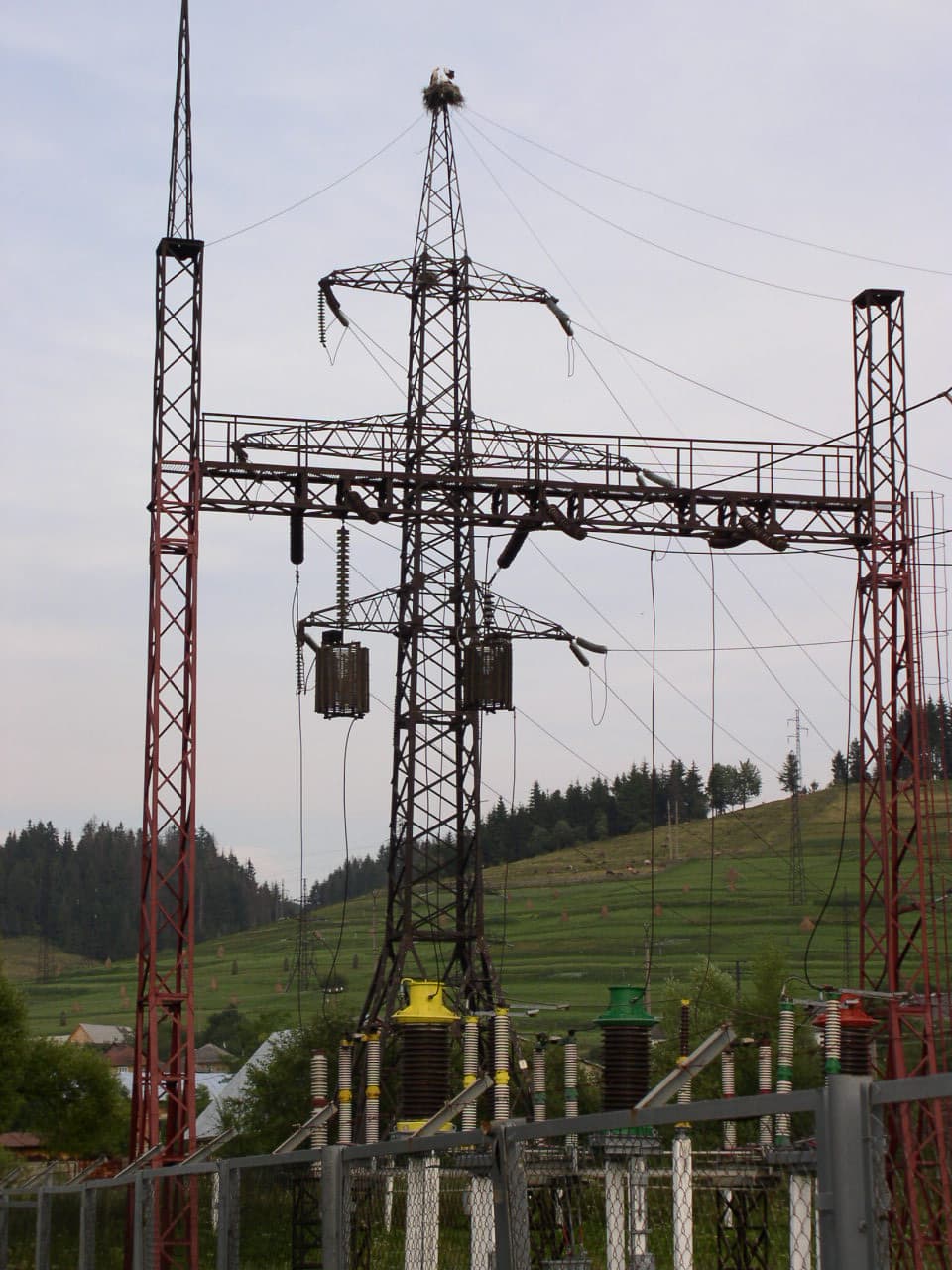
Cover attribution: Alex Zelenko, high-voltage substation in Volovets, Ukraine, 2006, CC BY-SA 4.0. Archival illustration, not an image of the November 2026 attacks.
Evidence
The sources this article cites, claim-bearing material first.
- reuters.com · reuters.com/world/europe/russian-strikes-cut-power-thousands-ukraine-drones-damage-russian-facility-2026-11-01
- ec.europa.eu · ec.europa.eu/eurostat/en/web/products-eurostat-news/w/ddn-20261012-1
- commission.europa.eu · commission.europa.eu/topics/eu-solidarity-ukraine/eu-assistance-ukraine/energy-security_en
- acer.europa.eu · acer.europa.eu/news/eu-gas-storage-75-filled
- reuters.com · reuters.com/business/energy/european-benchmark-gas-price-touches-100-first-time-since-december-2022-2026-10-28
- gov.uk · gov.uk/government/statistics/immigration-system-statistics-year-ending-june-2026/how-many-people-come-to-the-uk-via-safe-and-legal-humanitarian-routes
- home-affairs.ec.europa.eu · home-affairs.ec.europa.eu/policies/migration-and-asylum/migration-management-eu-member-states/welcoming-displaced-people-ukraine_en
- home-affairs.ec.europa.eu · home-affairs.ec.europa.eu/news/poland-sees-new-research-and-changes-policies-migrant-integration-2026-07-10_en
More analysis
Ranked by shared facts, drivers and people — never by publication date alone.
Articles12
- Ukraine’s 2027 Funding Test: Europe After the US MidtermsShares the driver: Ukraine war (Crimea–Donbas–2022+) · 1 November 2026
- Winter Gas Security: Europe, Britain and Australia's PriceShares the driver: Ukraine war (Crimea–Donbas–2022+) · 31 October 2026
- Winter Energy Bills: Why Britain, Germany and America Pay DifferentlyShares the driver: Cost-of-Living Pressure · 31 October 2026
- The Boiler Upgrade Rule Opens a Door, Not a SubsidyShares the driver: Cost-of-Living Pressure · 28 October 2026