Ukraine war (Crimea–Donbas–2022+)
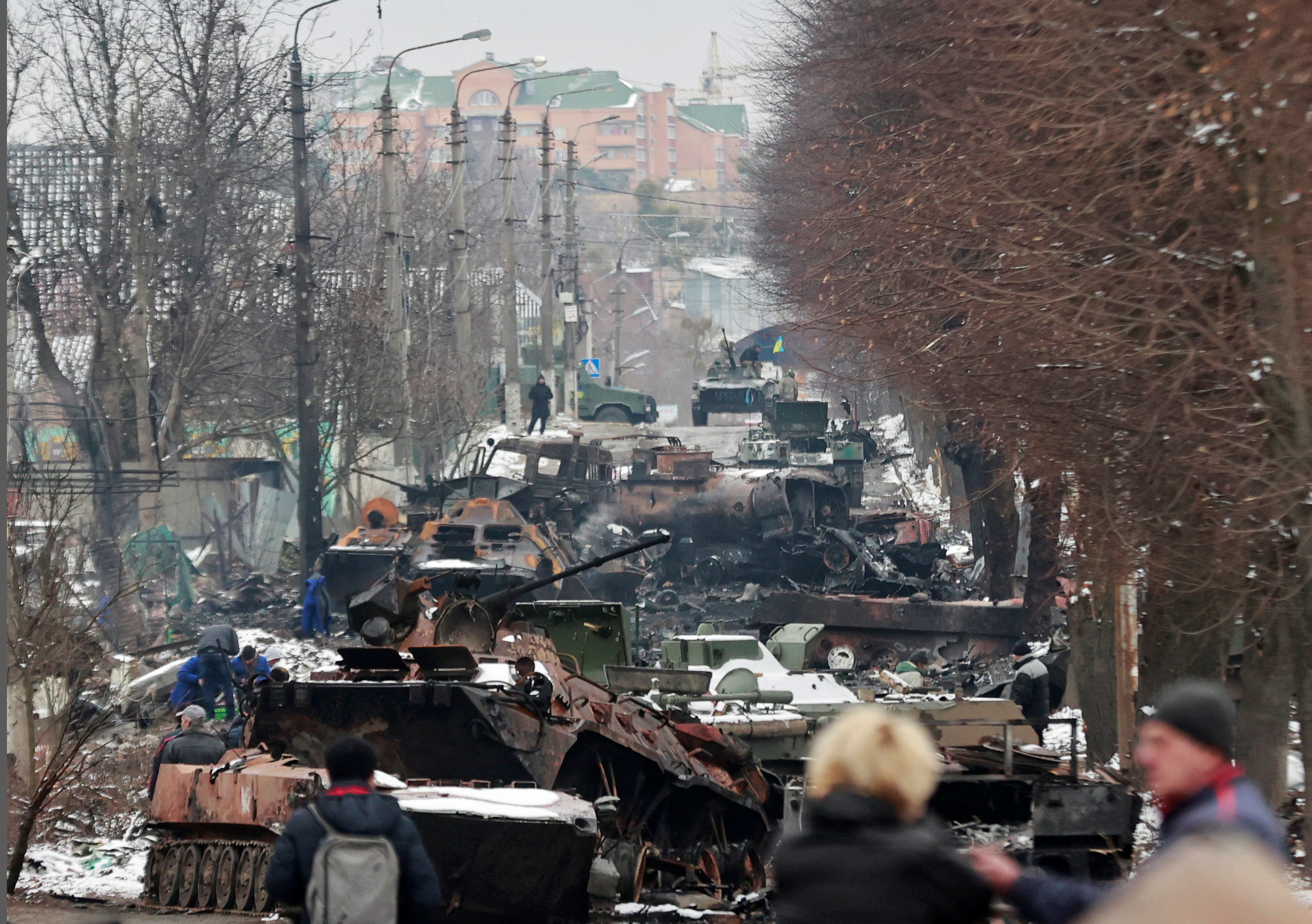
The Ukraine war is one continuing interstate war of aggression by the Russian Federation against Ukraine, running from the 2014 seizure of Crimea and the hybrid war in Donbas through the failed Minsk freeze and into the 24 February 2022 full-scale invasion and the later annexation claims. It is a mechanism, not a headline and not three separate “crises.” Its strongest welfare pathway: it strengthens Global deaths from organized violence (UCDP), a worse welfare reading.
Read the full background
What this driver is
The Ukraine war is one continuing interstate war of aggression by the Russian Federation against Ukraine, running from the 2014 seizure of Crimea and the hybrid war in Donbas through the failed Minsk freeze and into the 24 February 2022 full-scale invasion and the later annexation claims. It is a mechanism, not a headline and not three separate “crises.” Crimea, Donbas, and 2022+ are phases of the same war. They are not competing drivers.
The driver is not “NATO expansion” as a mood, not “civil war in Ukraine,” and not a gas-price spike. Neighbouring mechanisms — energy-price volatility, food-price pressure, democratic-resilience inside Russia, humanitarian access in a siege — can move with this war or against it. They do not replace it. A pipeline halt is an energy file. A censorship statute is a civic file. This node is the war: organised violence, occupation, and forced revision of a neighbour’s borders.
It applies to the territory of Ukraine (including Crimea, Donetsk, Luhansk, Kherson, and Zaporizhzhia oblasts) and to the Russian command that ordered the operations, from 2014 to the present. It is not the 2008 Georgia war and not the 2015 Syria air campaign. Those remain separate uses of force.
The legal core is the UN Charter prohibition on the use of force against the territorial integrity of a state, the Budapest Memorandum’s security assurances of 1994, and the later UN General Assembly texts that rejected the Crimea annexation and the 2022 aggression. A presidential television address that calls the war a “special military operation” does not change the mechanism.
Mechanism
The war moves welfare through named channels.
First, organised killing. Artillery, missiles, siege, and later drone and glide-bomb campaigns raise battle-related and civilian deaths. Uppsala Conflict Data Program (UCDP) records the Russia–Ukraine interstate conflict as the world’s deadliest in 2023–2025. The World Bank’s battle-related deaths series for Ukraine (VC.BTL.DETH, UCDP source) jumps from hundreds in 2021 to 91,478 in 2022. That is a change in intensity of the same war, not a new driver.
Second, occupation and border revision. Seizing a peninsula, holding a land corridor, staging occupation “referendums,” and signing accession texts impose Russian law on people who did not freely choose it. The 2014 Crimea treaty and the 30 September 2022 four-oblast ceremony are the same class of act.
Third, displacement. Civilians flee bombardment and filtration. UNHCR and IDMC record millions of refugees and internal displacements from 2022; 2014 already produced displacement from Crimea and Donbas. Forced displacement is an effect of this war, not a substitute driver that can be scored as if the war were something else.
Fourth, the freeze-and-break cycle. Minsk II (12 February 2015) paused the 2014–15 phase without reversing the land grab. The 21 February 2022 recognition of the Donetsk and Luhansk proxies and the 24 February invasion ended the freeze. Treating Minsk as a separate “peacebuilding” success is a category error on this node.
Fifth, command. Under the Russian constitution the president is commander-in-chief. Proxy militias, contractors, and later a partial mobilisation are instruments of that command. Sharing execution with a general staff or a Chechen auxiliary does not move authorship off the order.
Sixth, extra-theatre force on the same war. On 6 August 2024 Ukrainian regular units crossed into Russia’s Kursk oblast. That is a new front of this war, not a split of Crimea from 2022. On 19 June 2024 Moscow and Pyongyang signed a Comprehensive Strategic Partnership including mutual assistance; in October 2024 US, ROK, and NATO officials reported DPRK combat units on Russian territory. Russian denial framing is contested. Those instruments attach here.
Seventh, neighbouring sanctions and grain-corridor instruments. On 2 March 2022 the Council banned specialised financial messaging to named Russian banks (Council Regulation (EU) 2022/345), in force 12 March. On 22 July 2022 the UN–Türkiye Black Sea Grain Initiative was signed in Istanbul; Russia did not renew after 17 July 2023. Those dated acts sit on sanctions-pressure and food-price-pressure as neighbours. They do not mint a second ukraine-war.
Timing is immediate for a missile and multi-year for occupation, filtration, and depopulated cities. A later ceasefire would be a different dated fact; it would not rewrite 2014–2022 or split this driver.
Evidence base
The best evidence is official instruments plus independently counted deaths.
Kremlin texts record the 18 March 2014 Crimea claim, the 21 February 2022 proxy recognition, the 24 February 2022 invasion address, the 21 September 2022 mobilisation, and the 30 September 2022 accession ceremony (https://en.kremlin.ru/ (opens in a new tab)). The UN General Assembly deplored the 2022 aggression (ES-11/1) and had already rejected the Crimea annexation (68/262). The OSCE published the Minsk Protocol (5 September 2014) and the Minsk II package (https://www.osce.org/cio/140156 (opens in a new tab)). The ICC issued warrants on 17 March 2023 over unlawful deportation of children. The Russian foreign ministry published draft US and NATO security treaties on 17 December 2021. Council Regulation (EU) 2022/345 records the SWIFT cut of named banks (https://eur-lex.europa.eu/eli/reg/2022/345/oj (opens in a new tab)). The UN Joint Coordination Centre records the 22 July 2022 grain initiative and the 17 July 2023 non-renewal (https://www.un.org/en/black-sea-grain-initiative (opens in a new tab)). OSW records the 6 August 2024 Kursk crossing (https://www.osw.waw.pl/en/publikacje/analyses/2024-08-07/ukrainian-military-action-kursk-oblast (opens in a new tab)).
Deaths are counted, not guessed here. The World Bank publishes Ukraine battle-related deaths from UCDP (https://api.worldbank.org/v2/country/UKR/indicator/VC.BTL.DETH?format=json&date=2013:2024&per_page=100 (opens in a new tab)): 4,894 (2014), 1,890 (2015), then a low-intensity Donbas years, then 91,478 (2022), 75,080 (2023), 68,097 (2024). UCDP’s 2024/2025 yearbooks in the Journal of Peace Research record the same conflict as the world’s deadliest, about 59 percent of state-based fatalities in 2024 and about 62 percent in 2025 (https://academic.oup.com/jpr/article/62/4/1223/8324565 (opens in a new tab)). Those percentages corroborate intensity; they are not copied onto this driver’s meter.
The meter on this driver is the Ukraine VC.BTL.DETH series scaled by its own 2022 peak (91,478): 2014 is 0.0535, 2022 is 1.0, 2024 is 0.7444. OHCHR civilian-casualty running totals are a neighbouring official record, not a unique Factrail coefficient.
Evidence is strongest for a signed decree, a UCDP annual count, and a UN vote. It is weaker for any unique first-day death coefficient. It is weakest where a television adjective is asked to replace an instrument.
Effect on welfare indicators
This driver, when it actually runs, is a first-order channel into survival and displacement series.
- Global deaths from organized violence (UCDP): direction higher deaths when the war intensifies, which is worse because the series is lower-is-better. Horizon: same year for battle deaths, longer for delayed identification. Confidence: high that the 2022 intensification moved this global series; the live Factrail observation for 2025 is 245,464 against a normal line of 50,000. A tax-code change in 2001 is not this channel.
- People internally displaced by conflict and violence (IDMC): direction higher displacement when cities are besieged and oblasts occupied. Horizon: days to years. Confidence: high for 2022; medium for the smaller 2014 Crimea and Donbas waves. The live observation (68,600,000 against a normal line of 41,000,000) is a global stock, not a Ukraine-only census.
Missing coefficients stay missing.
The welfare sign of the driver on those two indicators is negative: strengthening the war increases a lower-is-better death count and a lower-is-better displacement stock. That is the opposite of treating a wartime president as a mild fiscal hero.
Interactions and contested points
The war interacts with energy cutoffs, grain-corridor disruption, wartime censorship, and sanctions. Reinforcement is obvious when a mobilisation decree and a pipeline halt hit in the same season. Offsetting is the claim that 2000s tax reform, IMF prepayment, or a vaccine registration rebates the war. Those are different mechanisms on different dates. They do not cancel 24 February 2022.
The strongest competing view is that 2014 and 2022 are distinct wars, or that Donbas was a civil war Russia later joined. The competing defence of this node is the record: the same commander, the same neighbour, the same rejected annexations, and UCDP’s single interstate conflict once regular forces were openly in.
A second competing view is that Minsk was a European peace success later “betrayed by Kyiv.” What the OSCE text established is a package of measures. What it did not establish is a completed peace or a reversal of Crimea. Putin’s later recognition of the proxies and the invasion address are the dated end of that freeze.
Established: one war from 2014 through the full-scale invasion; Kremlin instruments; UCDP/World Bank death counts; UN rejection of the annexations. A later peace treaty with a date would be a new fact. It would not split this driver in three.
What it changes
Indicators this driver moves, strongest relation first. Relation strength is separate from the observed state.
Strengthens · 85% impact strength
Observed
245k deaths per year · 195k above the normal line (2025)
Worse than normalAbove normal = worse · Relation verified
Strengthens · 80% impact strength
Observed
69M people (stock, end-of-year) · 28M above the normal line (2025)
Worse than normal3 readings, 2023–2025: rose from 68M people (stock, end-of-year) to 69M people (stock, end-of-year).
Above normal = worse · Lag ~30 d · Relation verified
Strengthens · 40% impact strength
Observed
11% of primary-school-age children · 11 above the normal line (2023)
Worse than normalAbove normal = worse · Relation verified
Weakens · 40% impact strength
Observed
73.7% · 1.92 above the normal line (2024)
Better than normal7 readings, 2018–2024: rose from 69.4% to 73.7%.
Above normal = better · Relation verified
Weakens · 40% impact strength
Observed
58.5% · 1.08 above the normal line (2024)
Better than normal7 readings, 2018–2024: rose from 52.8% to 58.5%.
Above normal = better · Relation verified
Key facts moving this driver
Ranked by impact weight, then verification, then recency.
- US Treasury lists Dodik’s patronage network and a 2024 RS secession working group17 January 2025 · Strengthening · impact weight 1
- The Russia–DPRK comprehensive strategic partnership enters into force4 December 2024 · Strengthening · impact weight 1
- US, ROK and NATO officials report DPRK combat units in the Russian Federation18 October 2024 · Strengthening · impact weight 1
- Kim and Putin sign a comprehensive strategic partnership including Article 4 mutual assistance19 June 2024 · Strengthening · impact weight 1
- NATO confirms North Korean military units deployed to Russia's Kursk region28 October 2024 · Weakening · provisional weight
- Ukraine launches a cross-border military operation in Russia's Kursk region6 August 2024 · Weakening · provisional weight
- International Criminal Court issues arrest warrants for Vladimir Putin and Maria Lvova-Belova17 March 2023 · Weakening · provisional weight
- Minsk II package of measures signed12 February 2015 · Weakening · provisional weight
Accountability & contradictions
A view of the graph: opposing facts, the actors behind them, and what is disputed.
What strengthened it
What weakened it
Driver over time
Observed driver weight, with the facts that moved it.
Causal path
Facts move the driver; the driver moves indicators. Open the full network to inspect each link.
- Facts56 recorded
- moveDriverUkraine war (Crimea–Donbas–2022+)
- strengthensIndicators (5)Global deaths from organized violence (UCDP)
Evidence
Review status of the facts behind this driver.
Documented Feb 2014 – Oct 2026
How Factrail grades evidenceBy the Factrail desk · Method: how we source and score · Last reviewed · Sources: 40
Questions
Who is responsible for Ukraine war (Crimea–Donbas–2022+)?
Factrail's graph links Sergey Lavrov, Vladimir Putin, and Kim Jong-un to Ukraine war (Crimea–Donbas–2022+) through sourced facts.
When did Ukraine war (Crimea–Donbas–2022+) start?
22 February 2014: Yanukovych leaves Kyiv after signing the 21 February 2014 settlement agreement.
How does Ukraine war (Crimea–Donbas–2022+) affect people?
It is linked to Global deaths from organized violence (UCDP), People Internally Displaced by Conflict and Violence (IDMC), Out-of-School Rate, Primary School Age (global), and Proportion of population using safely managed drinking water services, by urban/rural (%) in Factrail's graph.