Europe's Drone Shield: The €500m Baltic Funding Fight
By the Factrail desk · Method: how we source and score · Last reviewed
TL;DR
Europe is ordering weapons to make its eastern border harder to attack, and the immediate winners are manufacturers able to deliver sensors, launchers, missiles and affordable ways to destroy drones. The bill falls first on Polish, Baltic, German and British public budgets.
Key graph impact
The article explains graph entities; the causal edges belong to the facts and drivers it links to.
- ArticleEurope's Drone Shield: The €500m Baltic Funding Fight
- mentionsDriverUkraine war (Crimea–Donbas–2022+)
- strengthensIndicators (5)Global deaths from organized violence (UCDP)
- ArticleEurope's Drone Shield: The €500m Baltic Funding Fight
- mentionsDriverNATO Deterrence Capacity
- ArticleEurope's Drone Shield: The €500m Baltic Funding Fight
- mentionsDriverFiscal-Policy Sustainability
Strengthens · 85% impact strength
Observed
245k deaths per year · 195k above the normal line (2025)
Worse than normalAbove normal = worse
- Worse
Strengthens · 80% impact strength
Observed
69M people (stock, end-of-year) · 28M above the normal line (2025)
Worse than normal3 readings, 2023–2025: rose from 68M people (stock, end-of-year) to 69M people (stock, end-of-year).
Above normal = worse · Lag ~30 d
Strengthens · 40% impact strength
Observed
11% of primary-school-age children · 11 above the normal line (2023)
Worse than normalAbove normal = worse
Weakens · 40% impact strength
Observed
73.7% · 1.92 above the normal line (2024)
Better than normal7 readings, 2018–2024: rose from 69.4% to 73.7%.
Above normal = better
Article
Europe is ordering weapons to make its eastern border harder to attack, and the immediate winners are manufacturers able to deliver sensors, launchers, missiles and affordable ways to destroy drones. The bill falls first on Polish, Baltic, German and British public budgets. Residents near the frontier may receive better protection, but citizens elsewhere pay through taxes, borrowing or spending displaced from other priorities. The central dispute is not whether air defence matters. It is whether governments can finance an integrated network quickly enough without spending expensive missiles against cheap unmanned aircraft.
The sharpest new evidence is an October 29 report by Estonia's ERR: the European Commission declined a request by the Baltic defence ministers for an additional €500 million for drone defence. The Commission instead pointed toward borrowing under the EU's SAFE instrument. That distinction changes the politics of deterrence. A grant shares costs among European taxpayers; a loan leaves the borrowing government responsible for repayment, even if the equipment helps defend a much wider European airspace. There is no credible basis to describe the €500 million as a contract already won or money already spent. It was an additional funding request, not an appropriation.
A border bill, not one wall
The phrase drone wall suggests one continuous object. The actual requirement is a chain of detection, identification, communication, decisions and interception across different jurisdictions. An aircraft that enters Lithuanian airspace may pose a risk to Latvia or Poland within minutes. A detection radar is not an interceptor. A fighter patrol is not a substitute for equipment that can address numerous small targets at manageable cost. A missile battery cannot defend every energy installation, airport, railway junction and town simultaneously.
NATO says its Eastern Sentry activity began after airspace incursions in September 2025, including Russian drones entering Poland and Russian aircraft entering Estonia. It combines aircraft and other assets supplied by allies rather than promising an impenetrable barrier. Its value is partly political: commanders need to demonstrate that an intrusion can be detected, assessed and met collectively rather than becoming an argument over whose responsibility it was. Yet readiness is measurable only if equipment, crews, ammunition and communications actually function together in exercises.
This is the causal chain shaping the investment. Repeated airspace violations increase the perceived probability of future incidents. Governments raise defence appropriations and pursue collaborative EU funding. Procurement authorities choose a mixture of local, European and American systems. Contractors expand production where orders are credible. Governments then face operating bills for maintenance, ammunition stocks, training and upgrades. The security payoff depends not only on the initial purchase but also on whether those assets can be supplied and operated through a long confrontation.
Poland: procurement turns into industrial policy
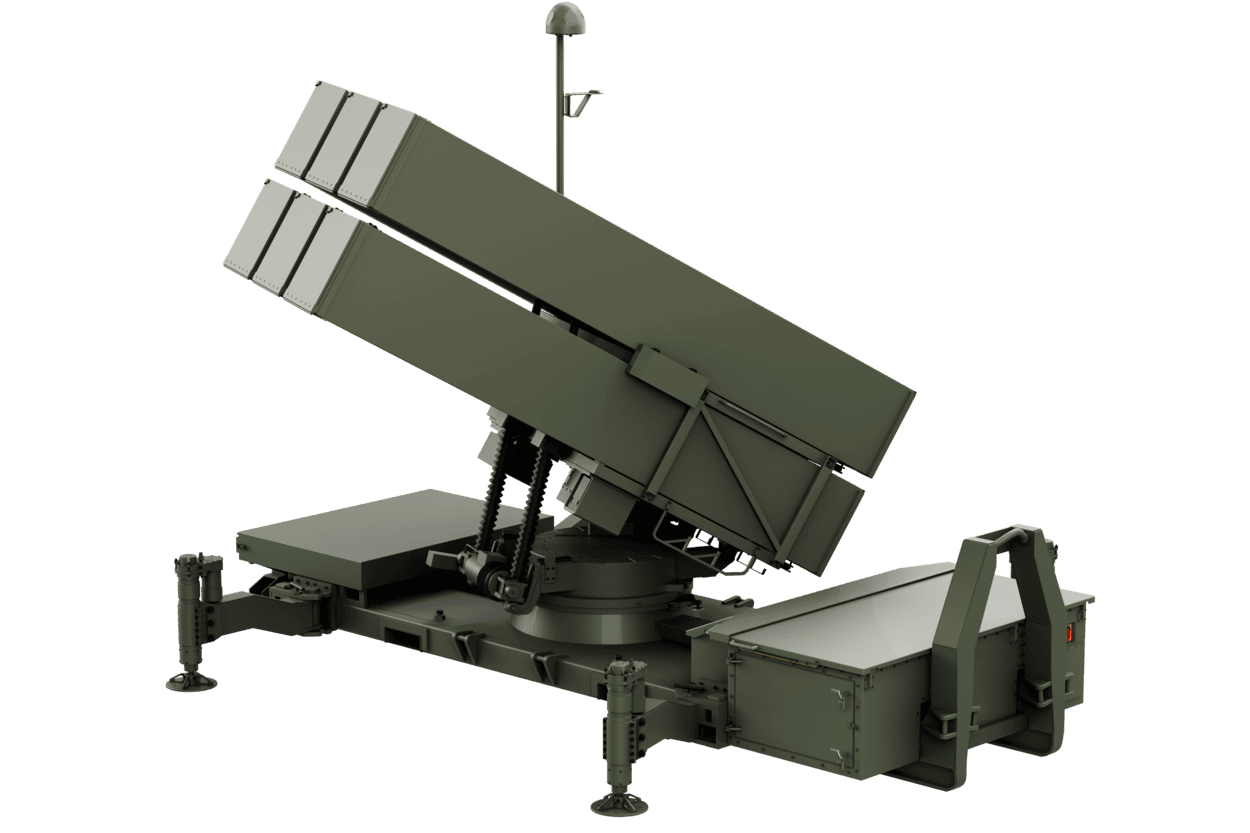
Poland is building a broad Eastern Shield programme with barriers, reconnaissance and communications alongside air defence. That programme should not be mistaken for one anti-drone contract. On January 30, 2026, Warsaw signed contracts for the SAN counter-drone system. The Polish Armaments Agency describes eighteen battery modules, each consisting of three fire platoons and one support platoon, with the ability to detect, track, identify and engage airborne threats. It put the order at about PLN 15 billion net.
The supplier structure is revealing. Polska Grupa Zbrojeniowa leads a consortium with Norway's Kongsberg Defence & Aerospace; Poland's Advanced Protection Systems is a major subcontractor. That makes the immediate manufacturing and integration benefit substantially European, although components and future purchases can still cross borders. The SAN figure is the value of this defined order, not Poland's entire Eastern Shield or its total NATO defence contribution. The government says first elements are expected in service during 2026. Initial deliveries, full deployment and operational maturity are three different milestones.
Poland also intends to use the European SAFE borrowing framework. Its government has discussed an Eastern Shield undertaking involving Poland and its northern neighbours and an approximately €10 billion planning figure. The framework is not evidence that every proposed euro is already disbursed. Polish officials separately describe large 2026 SAFE-financed contracting, including the SAN modules. To audit that claim properly, one should distinguish signed orders, state borrowing, delivered equipment, invoices paid and actual readiness. Those categories can move on very different calendars.
For Warsaw, the upside is production and engineering work at domestic suppliers as well as military protection. The downside is a larger long-term stock of contracts that requires replacement parts and ammunition. If procurement stays geographically concentrated, border communities might benefit from military infrastructure while other regions see fewer direct industrial gains. If the systems are not compatible with allies' command networks, the country could pay for hardware without receiving the promised collective defence effect.
The Baltic financing dispute
Estonia, Latvia and Lithuania have the most immediate argument about geographic fairness. An integrated Baltic detection and interception network would protect their own populations, but it could also give neighbouring NATO states earlier warning of a moving threat. According to ERR's October 29 account, their ministers asked for another €500 million. European Defence Commissioner Andrius Kubilius pointed toward a prospective SAFE call instead, saying €21 billion remained after the first one. SAFE is a €150 billion loan-based instrument, not a €150 billion pool of unconditional grants.
This does not mean Brussels has allocated nothing to border drones. On October 5 the Commission announced another €130 million in its Border Management and Visa Instrument for surveillance and counter-drone capability. The announcement explicitly covers sixteen EU member states plus Norway and sits beside €250 million announced in December 2025 and €169 million for Frontex and member-state equipment earlier in 2026. The Commission describes more than half a billion euros available under those home-affairs lines. Those totals are not exclusively for the three Baltic states, not exclusively military air defence, and not equivalent to the rejected additional request.
The accounting distinction matters. A border-police sensor purchased under a home-affairs grant, a military interceptor purchased through national borrowing and a fighter sortie paid for by an ally can all contribute to early warning. But they answer to different ministries, procurement rules and budgets. The risk is a patchwork: one institution buys detection while another has yet to pay for secure data exchange, trained crews or interception authority. A procurement announcement alone does not show that an incident can be handled end to end.
The Baltic ministers' request may reappear in another funding channel. For taxpayers, that is not a trivial administrative transfer. Grants reduce national debt pressure in the near term; loans can be financially attractive relative to other borrowing but still add liabilities. Small economies have less fiscal room than Germany to absorb a sudden costly renewal cycle, especially when energy infrastructure and civilian resilience require investment too.
Germany: the large buyer and the industrial supplier
Germany has a different balance sheet and a different industrial role. A Bundestag briefing dated September 9 says the government's draft 2027 defence expenditure would reach €139.6 billion, compared with €108.2 billion planned for 2026. The proposed 2027 figure includes €109.7 billion in the regular defence budget and €29.9 billion from the armed forces special fund. That is a planned spending envelope, not an air-defence allocation. More than €60 billion of the draft is earmarked for procurement broadly, so it would be inaccurate to attribute the entire increase to the eastern flank.
Within that broad commitment, German manufacturers have a claim on growing demand. Diehl Defence's IRIS-T SLM system is a European medium-range air-defence option. In September, Germany's parliamentary budget committee approved a maritime adaptation for F125 frigates, according to Janes. That approval is evidence of technology adaptation and procurement momentum, not proof of a new eastern-border battery order of a particular value. Germany also uses a wider mix of multinational systems and depends on allied integration.
Berlin therefore faces a double test. It wants systems that can be supplied quickly to soldiers, but it also wants European manufacturing capacity that can replenish inventories over years. The two goals are not always identical. An available imported system can fill a gap sooner; a European system can support regional jobs and supplier control but may need time to scale. A sensible procurement evaluation records delivery dates, production bottlenecks, missile unit costs and interoperability rather than treating the vendor's nationality as a substitute for performance.
The wider fiscal question is whether increased security expenditure crowds out civilian investment or eventually raises financing costs. It need not do either automatically. If extra manufacturing capacity raises output and wages, tax revenue partly offsets spending. If procurement runs into shortages of specialist labour, electronics and production facilities, prices can rise without a matching gain in delivered equipment. The result depends on bottlenecks, not merely on the size of the announced budget.
Britain's role: sorties, training and industrial choices
Britain participates even though the immediate frontier is hundreds of miles away. The Ministry of Defence announced RAF Typhoon participation in NATO's Eastern Sentry in September 2025, and confirmed the first patrols over Poland later that month. A sortie requires aircraft availability, crews, fuel, maintenance and supporting tankers. These are real operating costs, but there is no basis for inventing a per-sortie total from the public statements.
On January 13, 2026, London and Warsaw announced closer missile-defence training and exploration of future procurement and European manufacturing. That language describes cooperation, not a signed production order of unspecified value. The UK's separate £100 million September 2026 package for Ukraine includes air-defence support; it should not be misreported as money spent exclusively on protecting NATO member territory. Supporting Ukrainian air defence may reduce some regional danger, but the money, recipient and budget purpose remain distinct.
The British Defence Investment Plan funding table commits £15 billion of additional funding over four financial years and lists a total Ministry of Defence budget of £68.3 billion for 2026-27, rising to £79.1 billion in 2029-30. The House of Commons Library separately puts £27.8 billion of planned expenditure in the air domain over four years, with large sums for combat aircraft. Neither figure is the invoice for Eastern Sentry. Fiscal transparency requires separating a multinational deployment, Ukraine support, new interceptors and aircraft development.
For British firms, production contracts and joint development may create export opportunities. But British taxpayers should ask whether the defence commitment delivers near-term eastern-flank readiness or only distant aircraft programmes. The credible answer needs a public inventory of operationally available assets and supported deployments, while protecting details whose disclosure would genuinely endanger forces.
Who builds the shield, and who receives the return?
| Participant | Evidenced role | Likely benefit | Public question |
|---|---|---|---|
| PGZ, Kongsberg and Advanced Protection Systems | Poland's SAN consortium and subcontractor | Orders, manufacturing and integration | When are the eighteen modules operational? |
| Diehl Defence | IRIS-T SLM supplier and German naval adaptation | Expanded industrial demand | How fast can missiles and support be delivered? |
| US missile and air-defence suppliers | Existing transatlantic supplier base, with procurement depending on national choices | Potential exports and recurring support | What share of each new order is made locally? |
| Baltic governments | Requested €500m additional support | Better early warning and interception | Grant, loan or national tax funding? |
| NATO and air forces | Eastern Sentry coordination and patrols | Shared awareness and deterrence | Can separate systems respond together? |
| Households and businesses | Ultimately fund public borrowing and taxes | Reduced disruption if protection works | What other spending is forgone? |
There is no public basis to calculate a comprehensive US-versus-European market share for this specific network from these announcements. The Polish SAN order gives a concrete European consortium; the US share must be established contract by contract. Some equipment described as European can contain components from abroad, while American systems can have local service work. Nationality is therefore best measured by contract value, production location, intellectual-property control and lifecycle maintenance obligations, not simply the flag on a prime contractor's headquarters.
What it moves: measurable indicators
First, public borrowing and bond yields. The Lithuanian, Latvian and Estonian financing question centres on a €500 million unfilled grant request, not an equal amount of new debt already issued. If states draw SAFE loans, their repayment obligations rise relative to a grant-funded alternative. German plans show a proposed €31.4 billion rise in overall defence spending from 2026 to 2027. The direction of sovereign yields cannot be predicted from these announcements alone because inflation, monetary policy, growth and market risk all matter. Track borrowing authorisations, debt issuance and spreads over comparable euro-area bonds.
Second, employment and industrial prices. Poland's approximately PLN 15 billion SAN order supports work through a named European-led supply chain. Germany's planned procurement expansion is a demand signal. That should support specialised engineering and manufacturing jobs if factories can hire and deliver. It can also raise procurement prices when capacity is scarce. No sourced total is available for net jobs created by the eastern shield; presenting one would be false precision.
Third, household prices and mortgages. No credible source establishes a direct mechanical change to consumer prices or home-loan rates from the Baltic request. A higher government borrowing need could add to market pressure at the margin, while investment-driven output may offset it. For euro-area households, monetary policy and energy prices are much larger near-term forces than any one defence contract. The appropriate indicator is the path of national bond spreads and mortgage benchmark rates, not a made-up percentage increase.
Fourth, energy and security. Better protection of electricity interconnectors, transport hubs and energy infrastructure could reduce the probability or duration of disruptions. That is an economic benefit even when not visible in annual defence spending. Yet no public evidence allows a quantified reduction in energy bills from the procurement announcements. Measure actual incidents, outage minutes, insurance conditions and cross-border grid reliability instead.
Fifth, migration and confidence. Sustained security fears can influence investment and household decisions near exposed borders. Better deterrence might reduce the risk of displacement during a future crisis, but current acquisitions cannot honestly be assigned a number of migrants prevented. Track border-region business investment, residential vacancies and any actual displacement after incidents. Avoid converting a scenario into a forecast presented as fact.
Sixth, military readiness. The most direct indicators are coverage of relevant airspace, sensor-to-shooter response time, available interceptor inventory, successful joint exercises and the ratio of defensive cost to the threat being defeated. Much of this is not publicly disclosed. Political leaders can nevertheless report whether promised batteries are delivered, whether crews are trained and whether multinational command links have been tested.
Three to six months: decisions rather than prophecies
The first scenario, through February to April 2027, is gradual network integration. Baltic governments identify a mix of SAFE loans, existing grants and national allocations, while Poland delivers initial SAN equipment and NATO expands interoperable exercises. Industrial suppliers benefit; national debt and recurring support costs still need scrutiny. This is a plausible planning path, not a confirmed timetable.
The second scenario is a funding bottleneck. The Baltic request is not replaced by grants, ministries delay commitments while negotiating loan terms, and separate police and military investments arrive at different times. NATO continues fighter patrols, but low-cost drone defence remains uneven. The headline defence budgets grow without immediate proportional readiness. The warning sign would be procurement deferrals or incomplete command connections.
The third is an accelerated threat response after further airspace incidents. Governments may rush toward systems with available inventories and existing support contracts even if domestic manufacturing benefits become smaller. Emergency orders could push prices up and force parliamentary budget revisions. The strongest policy response would not necessarily be the largest missile purchase; it would be a mix that conserves costly interceptors for the targets that justify them.
Each scenario can be falsified. Look for the Commission's next SAFE call, Baltic loan and grant decisions, actual SAN delivery milestones, Bundestag budget approval, British deployment updates and joint interception exercises. Compare public promises with signed contracts and verified operational availability. The largest mistake would be to count every euro announced as a euro of protection already delivered.
Why NATO deterrence is the real test
Deterrence relies on an opponent believing that an intrusion will fail or cost more than it gains. A country can announce a spectacular procurement budget while leaving expensive gaps in training, logistics or low-cost interception. Conversely, an integrated sensor network and a credible response protocol can improve security before the final missile battery is installed. NATO's Eastern Sentry is a coordination answer to a collective problem, not an alternative to national procurement.
The financing choice also communicates solidarity. A Baltic taxpayer can reasonably ask why the earliest-warning system for several allies should be financed entirely by small frontier economies. A German or British taxpayer can ask why joint funds should subsidise projects without transparent milestones. Those positions are not mutually exclusive. Shared grants for genuinely shared assets, national borrowing for nationally controlled equipment and clearly attributed industrial returns would make the bargain easier to defend.
The European Union's September 28 selection of five projects of common interest and the Commission's earlier €325 million programme allocation establish a potential route for collaborative development. Eligibility does not guarantee that each project receives a particular sum or that deployed equipment appears this winter. That distinction is the core accountability test. Europe is buying more defence capability, but no minister should be allowed to turn a headline spending envelope into a claim of airspace safety without showing what was delivered, where it works and who pays to keep it operating.
For related Factrail context, see the profiles of Donald Tusk (opens in a new tab), Friedrich Merz (opens in a new tab) and Mark Rutte (opens in a new tab), and the drivers NATO deterrence capacity (opens in a new tab), fiscal policy sustainability (opens in a new tab) and Ukraine war (opens in a new tab). These links describe relevant actors and mechanisms; they do not imply that a named individual alone determined every procurement or financing outcome.
Sources
- European Commission rejects Baltics' €500 million anti-drone request — ERR, 29 October 2026 (opens in a new tab)
- Commission boosts Member States' drone and counter-drone capabilities with €130 million top-up — European Commission, 5 October 2026 (opens in a new tab)
- System SAN — Polish Ministry of National Defence, 30 January 2026 (opens in a new tab)
- Securing counter-drone capabilities of the Polish Armed Forces — Polish Armaments Agency, 30 January 2026 (opens in a new tab)
- SAFE: Poland's blueprint for European security and domestic defence growth — Polish Prime Minister's Office, 2026 (opens in a new tab)
- Marked increase in defence expenditure — German Bundestag, 9 September 2026 (opens in a new tab)
- Germany approves IRIS-T SLM adaptation for F125 frigates — Janes, September 2026 (opens in a new tab)
- Strengthening NATO's eastern flank — NATO, 2026 (opens in a new tab)
- UK fighter jets begin NATO air defence missions — UK Ministry of Defence, 20 September 2025 (opens in a new tab)
- UK and Poland agree enhanced missile defence and helicopter training cooperation — UK Ministry of Defence, 13 January 2026 (opens in a new tab)
- The Defence Investment Plan Funding explainer — UK Government, 30 June 2026 (opens in a new tab)
- The Strategic Defence Review and spending plans for the RAF — House of Commons Library, 8 September 2026 (opens in a new tab)
- European defence industry: Council identifies the first five projects of common interest — Council of the EU, 28 September 2026 (opens in a new tab)
- Commission proposes five joint defence projects — European Commission, 3 July 2026 (opens in a new tab)
Evidence
The sources this article cites, claim-bearing material first.
- digital-strategy.ec.europa.eu · digital-strategy.ec.europa.eu/en/news/commission-boosts-member-states-drone-and-counter-drone-capabilities-eu130-million-top-strengthen
- gov.pl · gov.pl/web/obrona-narodowa/system-san
- gov.pl · gov.pl/web/primeminister/safe-polands-blueprint-for-european-security-and-domestic-defence-growth
- bundestag.de · bundestag.de/dokumente/textarchiv/2026/kw37-de-verteidigung-1194766
- nato.int · NATO's official account
- gov.uk · gov.uk/government/news/uk-fighter-jets-begin-nato-air-defence-missions-to-bolster-european-security
- gov.uk · gov.uk/government/news/uk-and-poland-agree-enhanced-missile-defence-and-helicopter-training-cooperation
- gov.uk · gov.uk/government/publications/the-defence-investment-plan/the-defence-investment-plan-funding-explainer
- defence-industry-space.ec.europa.eu · defence-industry-space.ec.europa.eu/commission-proposes-five-joint-defence-projects-strengthen-europes-industrial-capabilities-2026-07-03_en
More analysis
Ranked by shared facts, drivers and people — never by publication date alone.
Articles12
- Ukraine’s 2027 Funding Test: Europe After the US MidtermsShares the driver: Fiscal-Policy Sustainability · 1 November 2026
- Europe's Defence Bill: Taxes, Debt and Public Service CutsShares the driver: NATO Deterrence Capacity · 31 October 2026
- Europe’s Ukraine Funding Gap Tests Bonds and NATO ReadinessShares the driver: NATO Deterrence Capacity · 31 October 2026
- Europe pays for Patriot missiles; Ukraine may wait yearsShares the driver: NATO Deterrence Capacity · 31 October 2026