MINUSCA’s map is changing; the protection obligation is not
TL;DR
A field reconfiguration in the Central African Republic shifts peacekeepers toward higher-risk corridors. The accountability test is whether fewer fixed deployments produce better protection or simply move insecurity outside the frame.
By the Factrail desk · Method: how we source and score · Last reviewed
Key graph impact
The article explains graph entities; the causal edges belong to the facts and drivers it links to.
- ArticleMINUSCA’s map is changing; the protection obligation is not
- mentionsDriverTouadéra Wagner CAR
- weakensIndicatorHaving a say in government
Weakens · 80% impact strength
Observed
29.8% of population aged 16-65 years · 8.13 below the normal line (2023)
Worse than normalTwo readings: 30.2% of population aged 16-65 years (2021) and 29.8% of population aged 16-65 years (2023).
20212023 Above normal = better · Lag ~30 d
Article
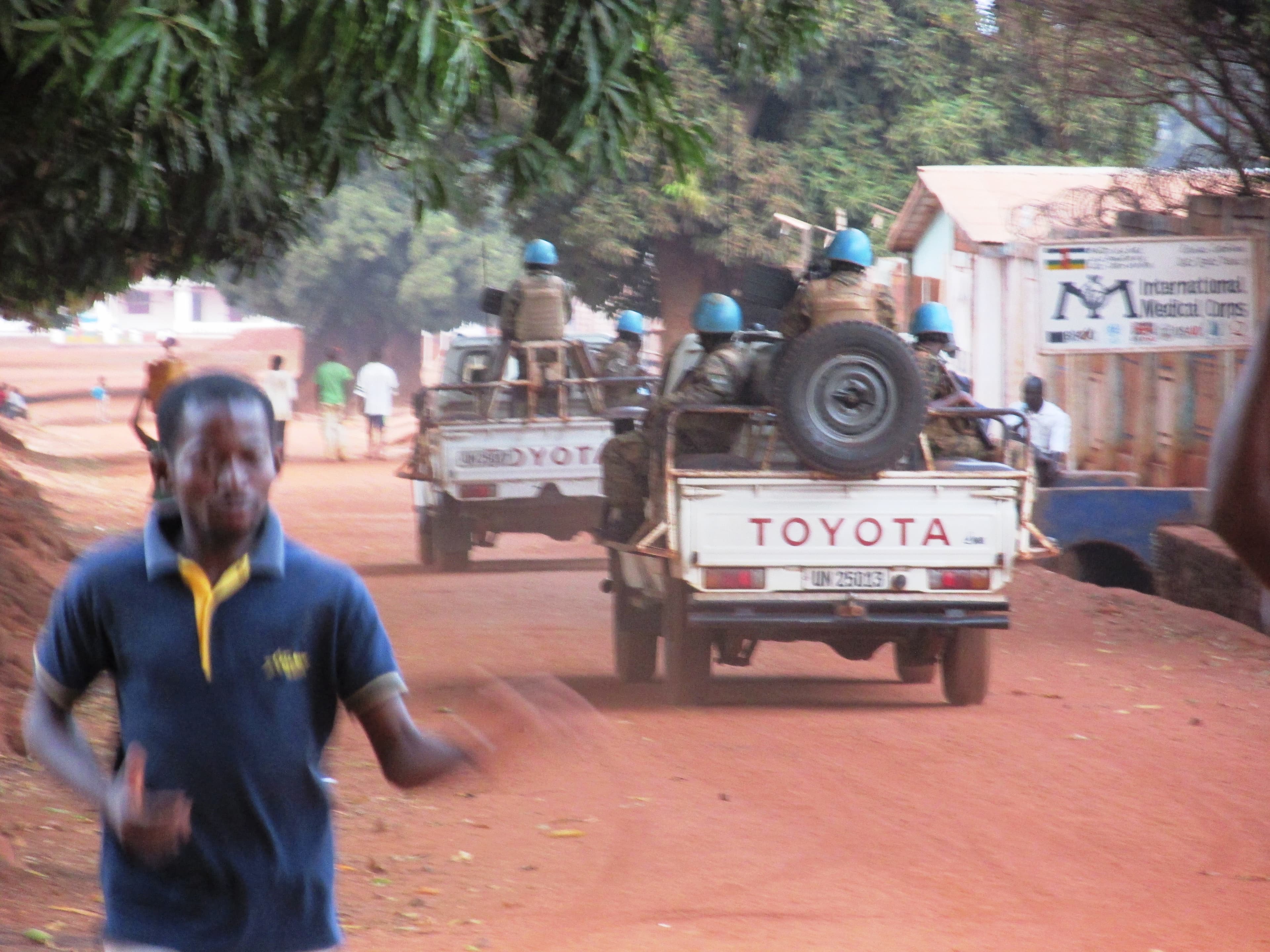
The latest development in the Central African Republic is easy to misread as a story about where United Nations vehicles and personnel will be stationed. It is more consequential than that. MINUSCA is changing the geography through which an international institution attempts to convert a limited peacekeeping force into civilian protection, conflict prevention and access to the state.
During an October 1 visit to Paoua, UN Special Representative Valentine Rugwabiza described the mission’s territorial reorganisation as an adaptation rather than a drawdown. APA reported that the logic is to reduce emphasis on areas considered more stable and concentrate resources on border zones, transhumance routes and other corridors where violence is judged more likely.
That distinction matters because headcount is a poor proxy for protection. A peacekeeping mission can keep the same number of personnel and still alter the distribution of risk by changing where patrols, bases, early-warning capacity and political attention are located.
There is a plausible case for concentrating scarce resources. Security conditions in 2026 are not identical to those that existed when MINUSCA was established in 2014. A mission that mechanically preserves an old deployment map can waste personnel guarding places where risk has fallen while communities in emerging hotspots remain exposed.
But redistribution creates its own accountability question: who bears the cost when a locality classified as sufficiently stable turns out not to be?
The answer cannot be supplied by the phrase “reconfiguration.” It requires measurable outputs. Do attacks rise after a permanent presence is reduced? Are local authorities actually capable of filling the gap? Can civilians still reach courts, police and health services? Does warning of an approaching armed group still reach a force able to respond? Are roads safe enough for humanitarian movement?
The UK’s October 2 statement at the Human Rights Council underscores why those questions matter. London welcomed some institutional progress in the Central African Republic but said insecurity, human-rights abuses, restrictions on civic space and weak access to justice remain concerns. Those are not separate from the peacekeeping map. They are the conditions against which the map should be judged.
Factrail’s existing Touadéra–Wagner CAR driver (opens in a new tab) describes a broader security system in which formal state authority, foreign security assistance and armed coercion intersect. The Paoua visit itself was not a Wagner event, and it should not be presented as one. The relevance of that driver is structural: MINUSCA operates inside a security environment where the state is not the only organised provider of armed power.
That makes the mission’s allocation decisions more important, not less. Where state protection is weak or uneven, withdrawing a visible international presence can alter civilians’ choices before any shooting occurs. Families may decide whether to return home. Traders may decide whether a road is usable. Witnesses may decide whether it is safe to report abuse. Local officials may decide how much authority they can exercise without armed backing.
Those are welfare effects that rarely appear in a troop-deployment headline.
The accountability lever therefore sits in the gap between planning and outcomes. MINUSCA can argue that concentrating personnel on higher-risk corridors is more efficient. Governments represented at the UN can support that judgement. The evidence comes later: whether people in both the newly prioritised and de-prioritised areas actually become safer.
Calling the change a reconfiguration rather than a drawdown is useful clarification. It is not a substitute for showing that the new map works.
Evidence
The sources this article cites, claim-bearing material first.
- Human Rights Watch · World Report 2025: Central African Republic