Europe's Ukraine Force Without America: Who Pays?
By the Factrail desk · Method: how we source and score · Last reviewed
TL;DR

Europe's Ukraine Force Without America: Who Pays?
00 Verdict
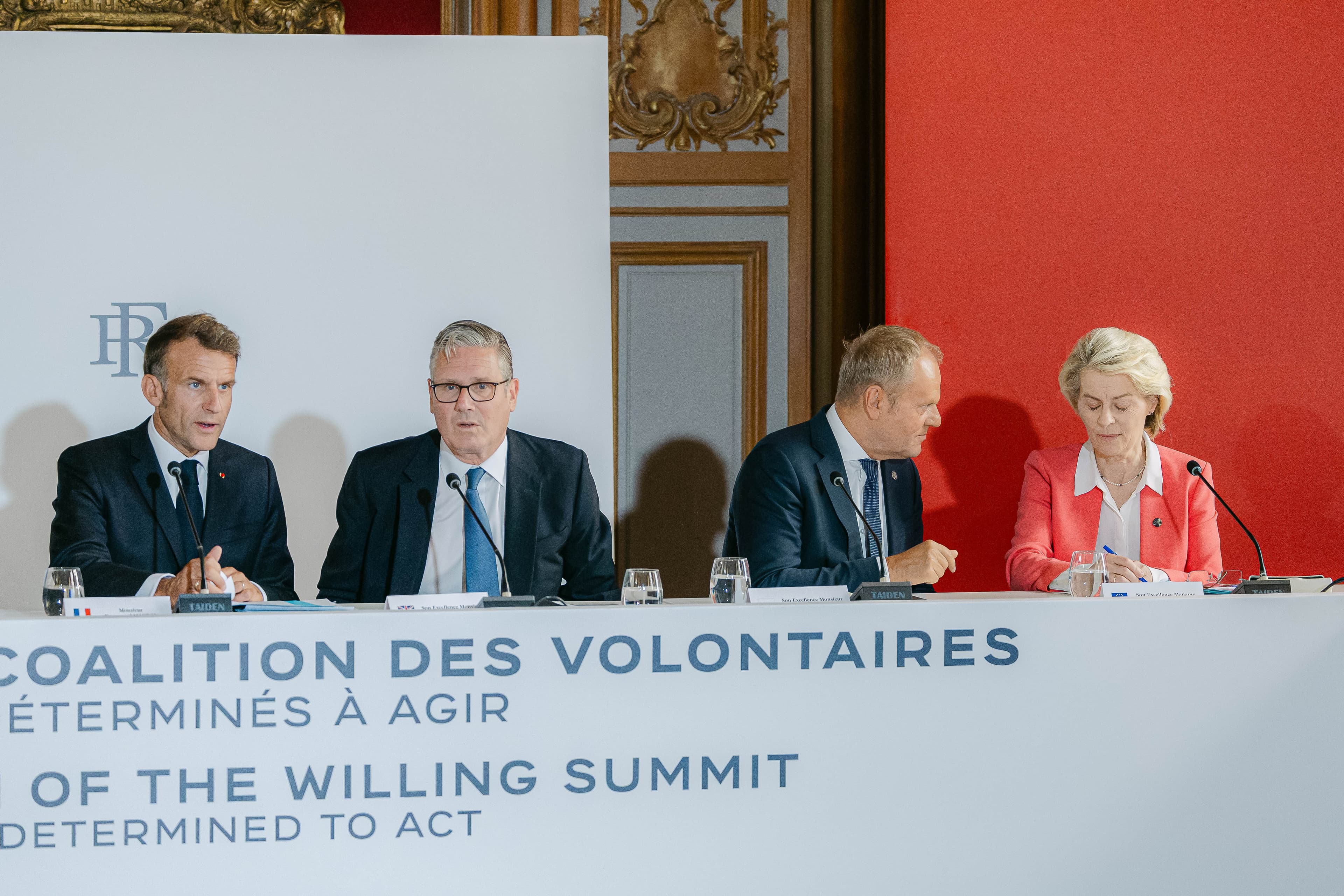
Exercise Koalicja is a test of whether European governments can do more than promise security to Ukraine. The UK Ministry of Defence says about 2,800 personnel from 11 nations will train in Poland on 9–22 November to prepare a possible post-ceasefire support force. The ambition is consequential: British and French leaders want to demonstrate that a coalition can move, supply and protect its personnel without depending on American systems. The strongest interpretation is that Europe is preparing a credible option, not that the option is already operational or that a peace agreement has been signed.
The primary beneficiary is Ukraine, whose armed forces could receive greater support in the event of a cessation of hostilities. Keir Starmer (opens in a new tab) and Emmanuel Macron (opens in a new tab) also gain visible leadership positions in European defence. The costs are borne by taxpayers financing the exercise and any later deployments, and by personnel whose exposure would rise if the mission moved from rehearsal to reality. European security cannot be priced solely by the number of uniforms at a training ground: the value depends on a functioning mandate, protected logistics and the ability to withstand renewed Russian pressure.
01 Hidden finding
The hidden test inside Koalicja is not simply troop strength; it is the removal of single points of dependence. Foreign forces may own tanks and aircraft but still rely on Washington for intelligence, air defence, refuelling, strategic airlift, communications, targeting support and critical software. A European formation that cannot function without permission to use American systems may be vulnerable to political changes in the US. The Guardian reports that planners are preparing not to depend on US technology such as Starlink. That is an operational design claim to be tested, not a published audit demonstrating independence.
Britain's official announcement identifies 300 British troops, RAF Typhoons and a Voyager aircraft within the wider 2,800-person exercise. It describes movements of forces and supplies, integration between contingents and protection of the operation. The combination matters because integrated logistics can be more decisive than a headline troop count. A small force that moves quickly and stays supplied might be more useful for a defined support mission than a larger coalition unable to agree on command.
The Polish location also puts the drill near a more immediate security problem. On 2 November, police announced heightened measures around the Kaliningrad border after warnings about potential sabotage. These alerts are evidence of preventive security activity, not proof that a specific plot was carried out or that the exercise itself was targeted. The two stories together show the practical burden of defending infrastructure while preparing future guarantees.
02 Who holds the levers
The UK and France jointly lead the proposed Multinational Force Ukraine, but the political and legal levers remain distributed. A multinational headquarters cannot independently commit all participating states to combat. Each government must authorize the tasks, rules, funding and conditions for its forces. The official British statement is explicit that movement into Ukraine would occur only after fighting ends and at the request of Kyiv. That requirement gives Ukraine a clear consent role and establishes an important boundary against describing the November drill as a present military intervention.
Poland, with Donald Tusk (opens in a new tab) leading its government and Karol Nawrocki occupying the presidency, holds host-nation responsibilities. Those include territory, civilian security and coordination with the police and military. NATO (opens in a new tab) is central to Poland's general defence environment, but the Koalicja force is described as non-NATO. Readers should not assume Article 5 obligations automatically extend to every operation of this separate coalition.
Russia's leadership under Vladimir Putin (opens in a new tab) retains immense influence over whether fighting stops or resumes. The American administration under Donald Trump (opens in a new tab) influences the political availability of US enablers. Diplomacy led in part by Steve Witkoff is relevant: talks are scheduled for Abu Dhabi on 10–11 November. A scheduled meeting, however, is not an agreement on foreign security forces.
03 Document trail
The UK's official 3 November release is the anchor for the exercise's dates, participating countries, 2,800-person scale, British contingent and stated mission. It says the multinational force would help Ukraine regenerate its armed forces and support safer skies and maritime access after the fighting ends. It specifically does not describe the mission as formal ceasefire monitoring or peacekeeping. That distinction constrains the claims officials and journalists can reasonably make before a mandate exists.
The Guardian's reporting supplies the important detail that troops could defend themselves if attacked by Russian forces during a later deployment, and that the proposed coalition is designed to avoid US-system dependence. This reports planning intentions from officials, not written rules of engagement published for public inspection. Euronews and Le Monde describe the broader coalition's preparations, with variations in participation counts reflecting different measures of the exercise and wider willingness to contribute. The narrower official roster should govern a statement about the November exercise.
A separate Notes From Poland report (opens in a new tab) attributes border security measures to Polish police leadership and explains the warning's intelligence basis. Reuters separately reports Witkoff's Abu Dhabi schedule and planned consultations with European governments. These records establish overlapping operations and diplomacy, not a secretly coordinated threat. Existing Factrail context includes Russia's invasion of Ukraine, Poland's eastern NATO security record and the recent Starshield disruption.
04 How it was done
A multinational force has to solve a sequence of practical problems before it can make a security promise meaningful. Troops must be assembled, transported through allied territory, integrated into command, supplied with food and fuel, protected against drones and missiles, treated medically and rotated. Equipment from different nations must communicate reliably, and the chain of command must establish what happens when a threat appears. Koalicja is meant to rehearse many of those functions. Training can reveal deficiencies; it cannot by itself guarantee that a later deployment would have sufficient munitions or political backing.
The air component rehearses support for an eventual return of commercial aviation to Ukraine. British fighter aircraft and a refuelling plane are included in the drill. Turkey is preparing the maritime element, including mine-clearance arrangements relevant to resuming merchant shipping from Ukrainian ports. These are post-war objectives, not claims that Ukrainian skies and waterways have already become safe. The potential civilian benefit is substantial: an operational airport and functioning port can affect trade, jobs, evacuation routes and reconstruction costs.
Technology independence is more demanding than removing one satellite-service name from a planning chart. Communications need resilience against jamming and hacking. Aircraft need data links and maintenance. Commanders need timely information, while cyber and electronic-warfare disruptions must be handled without delays that expose soldiers. The defence-industrial capacity driver (opens in a new tab) therefore matters alongside the deterrence-capacity driver (opens in a new tab). A realistic post-exercise assessment should identify which systems worked without American support and which remain dependent on it.
05 Money, access and intermediaries
The fiscal cost begins before any foreign deployment. Training requires transport, accommodation, exercises with live equipment, aircraft flight hours, fuel, maintenance and personnel support. A future multinational force would add rotations, force protection, medical evacuation, satellite and intelligence services, air defence and replacement inventories. The UK announcement does not establish a final total cost for such a mission. A calculation presenting a precise bill per British or French taxpayer today would be an invention unless backed by a government budget and the number of participating forces over time.
There are plausible economic beneficiaries. Military transport firms, communications suppliers, aviation maintainers and defence manufacturers may obtain demand if governments invest in independent capabilities. However, no cited document awards a particular company a specific contract merely because Koalicja is scheduled. The economic benefits must not be confused with public value: more procurement expenditure can create domestic jobs, yet poorly designed contracts could produce inadequate capabilities or crowd out other priorities.
For UK and French voters, the trade-off is concrete. Money devoted to long-term military guarantees competes with debt service, domestic services and other security needs. For Poland, hosting raises direct infrastructure and security responsibilities while also strengthening allied presence. The defence expenditure driver (opens in a new tab) tracks this resource allocation, but spending more is not itself the same as improving welfare. Compare the mission's purpose with the existing analysis of US troop reductions in Europe, which identifies replacement costs for capabilities rather than only personnel.
06 Narrative vs record
The optimistic narrative is that Europeans are finally preparing to protect their security without assuming Washington will always step in. The exercise announcement supports the narrower claim that a multinational training operation has dates, a roster and stated logistics objectives. It does not establish that the coalition could defeat an attack, monitor a ceasefire or operate indefinitely without American assets. An ambition to become more autonomous should be tested against demonstrated capability, not treated as proof of independence.
The opposing narrative says the plan is provocative or pointless because Moscow would reject foreign troops. Russia's position is a significant obstacle to diplomacy, and an operation that lacks consent, protection or a clear mission could create new risks. But planning a contingent force is not equivalent to deploying it into combat. The British release limits the proposed move to a post-hostilities situation requested by Ukraine. That distinction is essential for public understanding of whether leaders are making commitments they can legitimately implement.
There is another oversimplification: claiming that the United States excludes all Europeans from diplomatic contact. Reuters reports planned Brussels discussions with France, Germany, Britain, the EU and NATO before the Abu Dhabi round. Consultation is not the same as having a final veto over a settlement. The credible accountability question is whether European states that may fund a guarantee are empowered to shape its obligations. The existing Abu Dhabi negotiation analysis should therefore be read with this distinction. Neither planning conference nor military drill proves that peace is near.
07 Who profits / who pays
| Actor | Gains / loses | Evidence | Label |
|---|---|---|---|
| Ukraine and its armed forces | Gain a rehearsed option for future post-ceasefire support | UK Ministry of Defence objectives and exercise program | |
| UK and French governments | Gain operational leadership and political visibility, but reputational exposure | Official joint leadership and participation | |
| Defence suppliers | May gain future orders for missing European capabilities | Procurement mechanism; no contract awards established | |
| British, French and Polish taxpayers | Bear near-term exercise costs and potentially larger deployment bills | State participation; final cost remains undisclosed | |
| Military personnel | Would be at risk if a later authorized deployment comes under attack | Guardian reporting on proposed self-defence rules | |
| Moscow | Could gain leverage if European unity fractures, or lose deterrence advantage if it holds | Scenario-based inference, no measured outcome |
The measurable indicator link goes from defence expenditure and industrial preparedness through alliance cohesion (opens in a new tab) toward security outcomes. Increased commitments would tend to raise France's defence-spending share, Poland's NATO expenditure share and EU defence expenditure (opens in a new tab) relative to no new spending, though these historical series do not yet measure 2027 outcomes.
For welfare, successful deterrence could reduce displacement and support economic recovery; failed deterrence or escalation could worsen the global armed-conflict deaths indicator. Those are competing future directions, not a calculated moral score. Any evaluation of political responsibility requires a sourced sequence of decision, contribution, operational change and measurable human consequence.
08 Strongest countercase
The strongest argument against the initiative is strategic scale. Fewer than three thousand exercise participants are not the same as a long-term force capable of confronting Russian military pressure. Without US intelligence, long-range logistics, sophisticated air defence and high-end communications, a European formation might become a lightly protected tripwire. Even if troops have authority to fire in self-defence, their survival and the wider escalation consequences depend on rules, support and political decisions not yet fully public.
There is also a budget alternative. Instead of preparing a hypothetical post-war mission, governments could buy more interceptors and defensive equipment for Ukraine now. This claim deserves a transparent opportunity-cost comparison rather than dismissal. Training may complement immediate military assistance, but one cannot assume both will be funded without trade-offs. NATO members already face higher defence-spending pressure, making the timing and nature of the commitment politically difficult.
Finally, the reported security alerts around Poland's Kaliningrad frontier should not be inflated into a completed Russian sabotage attack. Police say they are responding to warnings and protecting potential targets. The absence of a public arrest or verified specific plot is an evidentiary limit. A serious analysis can argue that Poland faces elevated defensive demands without treating every warning as proof of a successful operation. The government should publish accountable outcomes when classification and investigations permit.
09 What would change the verdict
The immediate next test is Koalicja itself. Following 22 November, participating states should provide non-sensitive information about how rapidly forces moved, whether command relationships functioned, how logistics held under simulated disruption and which dependencies on US systems remained. A glossy photograph of troops does not supply that evidence. Independent parliamentary scrutiny could verify readiness indicators without publishing sensitive vulnerabilities.
The second test is the mission's legal and political mandate. A ceasefire, if achieved, must define what the force is authorized to do, where it can operate, how it handles armed incidents, who controls escalation decisions and whether Ukraine has formally requested deployment. The UK has stated a post-hostilities condition; any actual authorization should be recorded separately. A proposal is not an announcement that soldiers are crossing the border.
The third test is financial. Governments should specify committed spending, funding sources, sustainment costs and whether additional orders arrive at defence factories or merely shift current budgets. Readers should track the costs borne by households alongside potential security improvements. The fourth test is diplomacy: Abu Dhabi meetings on 10–11 November may clarify political terms, but a negotiating timetable cannot substitute for a signed accord. Evidence of renewed attacks or more secure conditions would change the welfare assessment sharply.
10 Evidence file
- UK Ministry of Defence — Koalicja official announcement, 3 Nov 2026 (opens in a new tab) — dates, exercise goals, participating nations and post-ceasefire conditions; official record.
- The Guardian — European support force may fire back, 3 Nov (opens in a new tab) — reported self-defence planning and technology independence; of planned intent.
- Euronews — Thousands rehearse post-war deployment, 3 Nov (opens in a new tab) — multinational context; reporting record.
- Notes From Poland — Police border operation, 2 Nov (opens in a new tab) — officially attributed preventative response; operation, not a proven attack.
- Le Monde — Coalition military exercise, 3 Nov (opens in a new tab) — coalition scope and national differences; .
- Reuters — Witkoff outlines Abu Dhabi talks, 2 Nov (opens in a new tab) — scheduled talks and Brussels consultations; reported schedule.
- Kyiv Independent — Witkoff peace-talk announcement, 3 Nov (opens in a new tab) — additional corroboration of schedule; reporting record.
Evidence
The sources this article cites, claim-bearing material first.
- notesfrompoland.com · Notes From Poland report
- gov.uk · UK Ministry of Defence — Koalicja official announcement, 3 Nov 2026
- theguardian.com · The Guardian — European support force may fire back, 3 Nov
- euronews.com · Euronews — Thousands rehearse post-war deployment, 3 Nov
- lemonde.fr · Le Monde — Coalition military exercise, 3 Nov
- reuters.com · reuters.com/world/europe/us-hold-trilateral-talks-with-ukraine-russia-abu-dhabi-next-week-us-official-2026-11-02
- kyivindependent.com · Kyiv Independent — Witkoff peace-talk announcement, 3 Nov
More analysis
Ranked by shared facts, drivers and people — never by publication date alone.
Articles12
- Ukraine Ceasefire: Europe's Bill After Abu Dhabi TalksShares the driver: NATO Deterrence Capacity · 3 November 2026
- Europe pays for Patriot missiles; Ukraine may wait yearsShares the driver: NATO Deterrence Capacity · 31 October 2026
- NHS Queues or Rearmament: Britain's £35bn TestShares the driver: Defence-Industrial Production Capacity · 3 November 2026
- Ajax Procurement: The Costs of DelayShares the driver: Defence-Industrial Production Capacity · 3 November 2026