Libya's unity bargain collides with allegations that Haftar's network attacked the infrastructure it seeks to govern
TL;DR
Allegations linking Saddam Haftar to drone attacks on fuel and power infrastructure expose the contradiction at the centre of Libya's latest unity effort: actors seeking a greater share of national power are accused of using civilian systems as leverage against the government they may eventually join.
By the Factrail desk · Method: how we source and score · Last reviewed
Article
Allegations linking Saddam Haftar to drone attacks on fuel and power infrastructure expose the contradiction at the centre of Libya's latest unity effort: actors seeking a greater share of national power are accused of using civilian systems as leverage against the government they may eventually join.
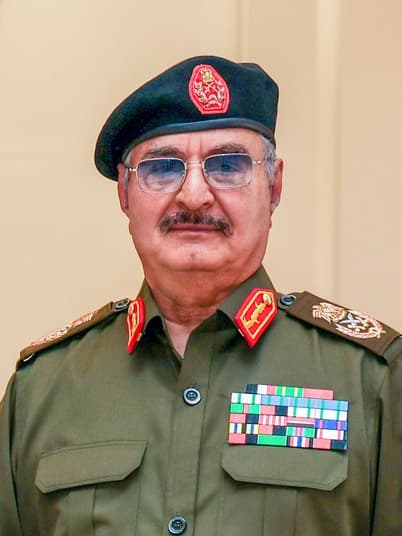
The Guardian reported allegations that Saddam Haftar, a senior figure in the eastern military structure led by his father Khalifa Haftar (opens in a new tab), was connected to drone attacks affecting western Libya's fuel and electricity infrastructure. The reporting described damage around Zawiya and political fallout that disrupted attempts to bring rival Libyan power centres into a new governing arrangement.
Saddam Haftar does not have a live Factrail person page in the supplied allowlist and should therefore remain prose rather than be converted into a false graph node. Khalifa Haftar does have a live page, making the relevant Factrail connection the broader command and political network around Libya's eastern military power.
The accountability issue is not simply whether one faction embarrassed another. Fuel depots and electrical systems are civilian dependencies. Attacking them creates losses that move outward: blackouts, disrupted economic activity, reduced access to services and increased insecurity for people with no role in elite bargaining.
That makes infrastructure coercion especially corrosive in a country already divided between competing institutions. A faction can gain negotiating leverage by demonstrating military reach, but the price of that leverage is often paid by the public whose state those factions claim they are trying to reunify.
The allegations also change how unity negotiations should be evaluated. A political merger cannot be judged only by whether offices are distributed between rival camps. It has to answer whether coercive structures become accountable to common institutions or whether armed networks simply receive formal state positions without surrendering independent leverage.
Khalifa Haftar's relevance therefore extends beyond family association. His political project has accumulated authority through a military structure whose command relationships and succession dynamics affect the wider Libyan state.
If actors associated with that structure can attack infrastructure during negotiations and then return to the table as prospective national leaders, the incentive system rewards coercion.
Libya's welfare ledger is electricity, fuel access, institutional predictability and the possibility that national authority becomes something other than an agreement among armed elites. Unity that leaves coercive power untouched can reproduce fragmentation under a new administrative label.
Unity talks that coexist with alleged attacks on fuel and power systems are bargaining under civilian duress. Khalifa Haftar's eastern military network is the live Factrail parent; Saddam Haftar remains prose only — no invented graph node. Infrastructure coercion redistributes negotiating leverage onto households that need electricity and fuel, not onto the elites carving offices.
If armed networks can disrupt civilian systems mid-negotiation and then reclaim seats at the table, the incentive system rewards coercion. Libya's welfare test is whether national authority becomes more than an administrative label for competing guns.
Evidence
The sources this article cites, claim-bearing material first.
The one cited source is a general profile page; it identifies the subject but does not document the specific claims in this article.
- National Oil Corporation of Libya · National Oil Corporation of Libya — January 2020 shutdown neighbourhood attributed to LNA-commanded forces
More analysis
Ranked by shared facts, drivers and people — never by publication date alone.