In Libya, the denial matters more than the rumour
TL;DR
A reported Netanyahu–Saddam Haftar meeting has not been substantiated, while documented east–west negotiations are moving through harder questions of budgets, security institutions and elections.
By the Factrail desk · Method: how we source and score · Last reviewed
Article
A claimed secret meeting between Israeli Prime Minister Benjamin Netanyahu (opens in a new tab) and Saddam Haftar generated a politically combustible story this week. Israeli media cited by EU Reporter subsequently said the meeting did not take place.
The distinction should survive publication intact.
The original claim, attributed to the Italian newspaper Il Foglio, relied partly on flight-tracking evidence showing an aircraft associated with Saddam Haftar arriving in Abu Dhabi shortly after Netanyahu. That can establish proximity in time and place. It does not establish that two people met.
EU Reporter said i24NEWS and Maariv, citing Israeli sources, reported that no such meeting occurred. Israel, Libya and the United Arab Emirates had not officially confirmed one. On the available evidence, Factrail should therefore treat the Netanyahu–Haftar encounter as an unsubstantiated report followed by a denial, not as a diplomatic event.
That evidentiary discipline matters precisely because the underlying Libyan story is more important.
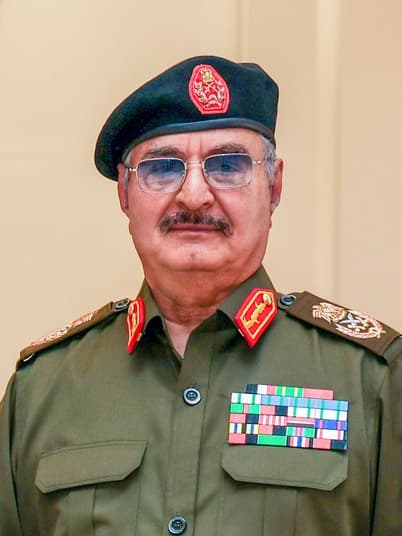
Saddam Haftar is the son of eastern Libyan military leader Khalifa Haftar (opens in a new tab). During the Abu Dhabi visit, reporting says Saddam met Abdul Salam al-Zoubi, a deputy defence minister in Libya’s internationally recognised Government of National Unity. Those contacts form part of an effort to narrow the division between eastern and western institutions after years of rival administrations, armed formations and competing claims to national authority.
That is where the accountability lever sits.
Libya’s institutional fragmentation allows actors who control territory, armed forces, revenues or administrative systems to exercise national influence without the discipline of a single accountable state structure. Reunification talks can therefore matter more than a dramatic bilateral rumour because they concern who will control budgets, security forces and any eventual electoral framework.
A unified budget, for example, sounds technocratic. It is actually an accountability mechanism. Oil revenue converted into public expenditure must pass through institutions that decide which regions receive funds, which salaries are paid and which security organisations are financed. Rival budgets allow rival power centres to maintain patronage networks with weaker national scrutiny.
Security coordination is even more sensitive. Combining institutions on paper does not automatically establish a monopoly on legitimate force. The critical questions are who commands units, who can appoint or remove commanders, how detention systems are supervised, and whether civilians have remedies when armed personnel abuse power.
This is why an unverified Netanyahu meeting can be more than harmless gossip. Libya’s political system is fragmented enough that rumours of secret foreign alignments can affect trust among negotiating parties even without being true. The cost is not simply reputational. A false claim can become an argument used by opponents of compromise, particularly where foreign sponsorship has historically shaped domestic alignments.
None of this establishes that the reported east–west talks will succeed, nor should they be described as an inevitable path toward unification. The source itself contains supportive commentary about US diplomatic efforts that should be distinguished from the underlying reported events.
The sounder Factrail interpretation is narrower.
One alleged meeting lacks confirmation and has been denied. A documented channel between eastern and western Libyan officials is more consequential because it concerns institutions capable of allocating money and force. The first story is about evidence standards. The second is about state capacity.
Conflating them rewards the rumour over the mechanism.
Evidence
The sources this article cites, claim-bearing material first.
The one cited source is a general profile page; it identifies the subject but does not document the specific claims in this article.
- National Oil Corporation of Libya · National Oil Corporation of Libya — January 2020 shutdown neighbourhood attributed to LNA-commanded forces
More analysis
Ranked by shared facts, drivers and people — never by publication date alone.
Articles12
- A Gaza City apartment strike tests what a ceasefire means on the groundAlso covers Benjamin Netanyahu · 3 October 2026
- A cockpit attack becomes political evidence before the investigation is finishedAlso covers Benjamin Netanyahu · 3 October 2026
- The October 7 Accountability Fight Is About Who Knew What — and WhenAlso covers Benjamin Netanyahu · 4 October 2026
- A named Hamas target does not erase the civilian bill from an Israeli strikeAlso covers Benjamin Netanyahu · 4 October 2026