Iran Executions 2026: Who Was Ali-Sina Mostafavi?
TL;DR
Iran executed 38-year-old musician and mountaineer Ali-Sina Mostafavi in Kerman on October 14 after a Revolutionary Court conviction for moharebeh was upheld by the Supreme Court. The case sits inside a broader 2026 rise in executions and renewed scrutiny of the judiciary led by Gholam-Hossein Mohseni-Eje'i.
By the Factrail desk · Method: how we source and score · Last reviewed
Key graph impact
The article explains graph entities; the causal edges belong to the facts and drivers it links to.
- ArticleIran Executions 2026: Who Was Ali-Sina Mostafavi?
- explainsDriverState Repression
- strengthensIndicators (5)Number of victims of intentional homicide per 100,000 population, by sex (victims per 100,000 population)
- ArticleIran Executions 2026: Who Was Ali-Sina Mostafavi?
- explainsDriverJudicial independence erosion (court capture)
- strengthensIndicators (4)Rule of Law Gap from the Highest Governance Score
- Worse
Number of victims of intentional homicide per 100,000 population, by sex (victims per 100,000 population)
via State Repression
Strengthens · 84% impact strength
Observed
5.14 PER_100000_POP · 0.13 below the normal line (2024)
Better than normal7 readings, 2018–2024: fell from 5.65 PER_100000_POP to 5.14 PER_100000_POP.
Above normal = worse
- Worse
Number of cases of killings of human rights defenders, journalists and trade unionists
via State Repression
Strengthens · 83% impact strength
Observed
550 · 550 above the normal line (2025)
Worse than normal8 readings, 2018–2025: rose from 487 to 550.
Normal is zero · any amount = worse
- Worse
Number of cases of enforced disappearance of human rights defenders, journalists and trade unionists (Number)
via State Repression
Strengthens · 78% impact strength
Observed
123 · 123 above the normal line (2025)
Worse than normal8 readings, 2018–2025: rose from 32 to 123.
Normal is zero · any amount = worse
- Worse
Strengthens · 72% impact strength
Observed
43.9 Score · 43.9 above the normal line (2024)
Worse than normal26 readings, 1996–2024: rose from 43 Score to 43.9 Score.
Normal is zero · any amount = worse
Article
Iran executed Ali-Sina Mostafavi in Kerman on October 14 (opens in a new tab) after a Revolutionary Court convicted him of moharebeh, or "enmity against God," and the Supreme Court upheld the death sentence (opens in a new tab). Rudaw identified him as a 38-year-old musician and professional mountaineer. Iran's judiciary accused him of carrying out armed attacks in Kerman during the war involving the United States and Israel and of acting in support of exiled opposition figure Reza Pahlavi and Israel.
Those are the judiciary's accusations. Published reporting establishes what the judiciary alleged and that a court convicted Mostafavi; it does not independently prove every element of the state's narrative. HRANA, citing the Judiciary Media Center, said authorities accused him of shootings on March 24 and April 21 that injured several people, including a young girl, and of additional attacks toward police on the Kerman-Mahan road. The execution was announced after the Supreme Court review.
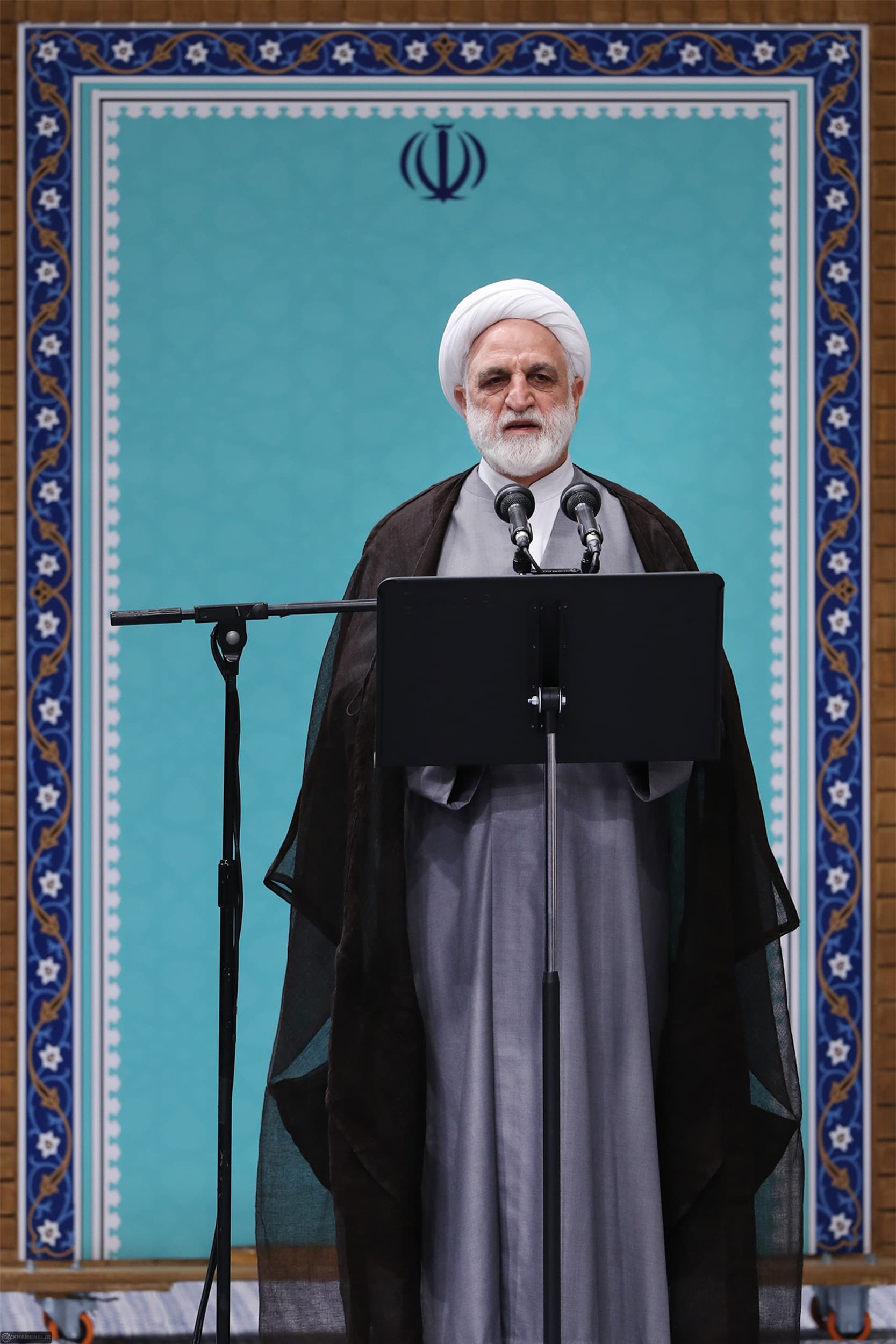
The institutional accountability line runs through the judiciary headed by Gholam-Hossein Mohseni-Eje'i (opens in a new tab). The sources do not show that Mohseni-Eje'i personally signed Mostafavi's death warrant. They do show that the conviction, appeal and execution were carried out by the judicial system he leads. That distinction is important: responsibility can be institutional without inventing a personal order that has not been documented.
The case also sits inside a much larger use of capital punishment in 2026. Iran Human Rights reported 604 executions in the first nine months of the year. HRANA, using a different methodology and data set, said it had documented approximately 854 executions by the end of July. The totals differ substantially and rest on different methods. What both sources support is the direction: executions have remained at an exceptionally high level, including cases connected to protests, security allegations and wartime accusations.
That wider pattern links the case to state repression (opens in a new tab) and concerns about judicial independence (opens in a new tab). Human Rights Watch and UN investigators have separately raised due-process concerns in capital cases connected to protest activity, including access to counsel and the use of broadly framed national-security charges. Those systemic findings do not automatically establish a specific procedural violation in Mostafavi's case; they are the context in which the execution is being scrutinized.
The Iranian government's strongest defence is that Mostafavi was convicted of violent armed offences rather than peaceful dissent and that his sentence was reviewed by the Supreme Court. The counterweight is the severity and irreversibility of execution in a system that rights monitors say has used capital punishment at scale during periods of political unrest and war.
What comes next is less about Mostafavi, whose sentence has been carried out, than about the cases still moving through the same system. The questions are whether courts publish evidence and reasoning, whether defendants receive meaningful representation and whether the government narrows or expands capital punishment as wartime security cases continue under the current leadership, including Mojtaba Khamenei (opens in a new tab).
Key facts
Mostafavi, a 38-year-old musician and mountaineer from Kerman according to Rudaw, was convicted of moharebeh by a Revolutionary Court. The Supreme Court upheld the sentence, and he was executed on October 14. Iran Human Rights counted 604 executions in the first nine months of 2026.
Questions people ask
Why is Iran executing protesters?
Iranian authorities use capital charges in some cases connected to protests, alleged violence, espionage or national-security offences. Rights groups and UN investigators argue that several such cases have involved serious due-process concerns.
Who was Ali-Sina Mostafavi?
Rudaw described Mostafavi as a 38-year-old musician and professional mountaineer from Kerman. Iran's judiciary said he was convicted of armed attacks and executed on October 14 after Supreme Court review.
Who is Gholam-Hossein Mohseni-Eje'i?
He is Iran's chief justice and head of the judiciary. Published reporting does not show that he personally ordered Mostafavi's execution, but the courts that convicted, reviewed and enforced the sentence operate within the institution he leads.
Evidence
The sources this article cites, claim-bearing material first.
- Euronews · Iran executes man accused of armed attacks during US-Israeli strikes · 14 Oct 2026
- HRANA · Ali-Sina Mostafavi · 14 Oct 2026
- Rudaw · Iran executes January protester Ali Mostafavi on charges of waging war against god · 14 Oct 2026
More analysis
Ranked by shared facts, drivers and people — never by publication date alone.
Articles12
- India Voter List 2026: Why 130M Names Were CutShares the driver: State Repression · 15 October 2026
- Why Did Trump Sanction the ICC? Rubio's MoveShares the driver: Judicial independence erosion (court capture) · 13 October 2026
- Why Did New York Reject 16,000 ICE Detainers?Shares the driver: State Repression · 13 October 2026
- Why 254 IDF Investigations Still Have No Public OutcomeShares the driver: State Repression · 15 October 2026