Noncitizen Voting Charges and the ICE-at-Polls Fight
TL;DR
On 5 October 2026, Attorney General Todd Blanche's Justice Department announced election-crime charges involving 16 lawful permanent residents in four states, days after a federal judge struck down the noncitizen-voting statute in a separate case. The cases now sit beside a second midterm fight over whether armed federal agents, including ICE, could appear at polling places on 3 November.
By the Factrail desk · Method: how we source and score · Last reviewed
Key graph impact
The article explains graph entities; the causal edges belong to the facts and drivers it links to.
- ArticleNoncitizen Voting Charges and the ICE-at-Polls Fight
- explainsDriverElectoral Integrity and Competitiveness
- strengthensIndicators (3)Having a say in government
- ArticleNoncitizen Voting Charges and the ICE-at-Polls Fight
- explainsFactJustice Department announces election-crime charges against 16 lawful permanent residents
5 October 2026 · verified
- ArticleNoncitizen Voting Charges and the ICE-at-Polls Fight
- explainsFactFederal judge rules noncitizen-voting criminal statute unconstitutional in Chelsea Cox case
1 October 2026 · verified
Strengthens · 80% impact strength
Observed
29.8% of population aged 16-65 years · 8.13 below the normal line (2023)
Worse than normalTwo readings: 30.2% of population aged 16-65 years (2021) and 29.8% of population aged 16-65 years (2023).
20212023 Above normal = better
Strengthens · 68% impact strength
Observed
0.53 score from 0 to 1 · 0.34 below the normal line (2024)
Worse than normal125 readings, 1900–2024: rose from 0.17 score from 0 to 1 to 0.53 score from 0 to 1.
Above normal = better
Weakens · 51% impact strength
Observed
45 Score · 45 above the normal line (2024)
Worse than normal7 readings, 2018–2024: rose from 43.8 Score to 45 Score.
Normal is zero · any amount = worse
Article
Sixteen lawful permanent residents were charged with election crimes on 5 October 2026, even as a federal judge had just ruled the federal noncitizen-voting statute unconstitutional in a separate Florida case. Attorney General Todd Blanche's Justice Department announced the prosecutions while Democrats were pressing the administration to promise that armed federal agents, including ICE, would stay away from polling places before the 3 November midterms.
As of 6 October 2026, the prosecutions, the constitutional appeal and the polling-place dispute were all unresolved. Together they test both electoral integrity (opens in a new tab) and the limits of federal election enforcement.
How many noncitizens were charged, and what do the cases allege?
DOJ said the 5 October announcement covered 16 lawful permanent residents: two in Florida, three in Louisiana, one in Wisconsin and ten in Minnesota. Fifteen cases concerned alleged voting in the 2024 election and one concerned 2022. The defendants are charged, not convicted.
The DOJ charging fact (opens in a new tab) is real but narrow. The Washington Times counted 13 comparable federal cases during Joe Biden's four years, while CBS noted that President Donald Trump (opens in a new tab) has long alleged widespread noncitizen voting without evidence establishing it as a common national phenomenon. That produces the core contradiction: Trump's rhetoric describes a pervasive election threat, while the administration's headline enforcement announcement identified 16 people across four states.
The administration's strongest defence is that even rare illegal votes are unlawful and can justify prosecution. The evidence does not require minimizing those cases; it requires keeping their scale separate from a national prevalence claim.
Why did a federal judge strike down the voting statute?
In the Chelsea Cox case, U.S. District Judge David Leibowitz dismissed the charge and ruled the federal criminal provision unconstitutional as applied. DOJ appealed, leaving the 11th Circuit to decide whether the district court was right.
That court ruling (opens in a new tab) did not make noncitizen voting generally lawful. It created a live constitutional challenge to the federal statute being used in at least one prosecution while the department was expanding its enforcement campaign.
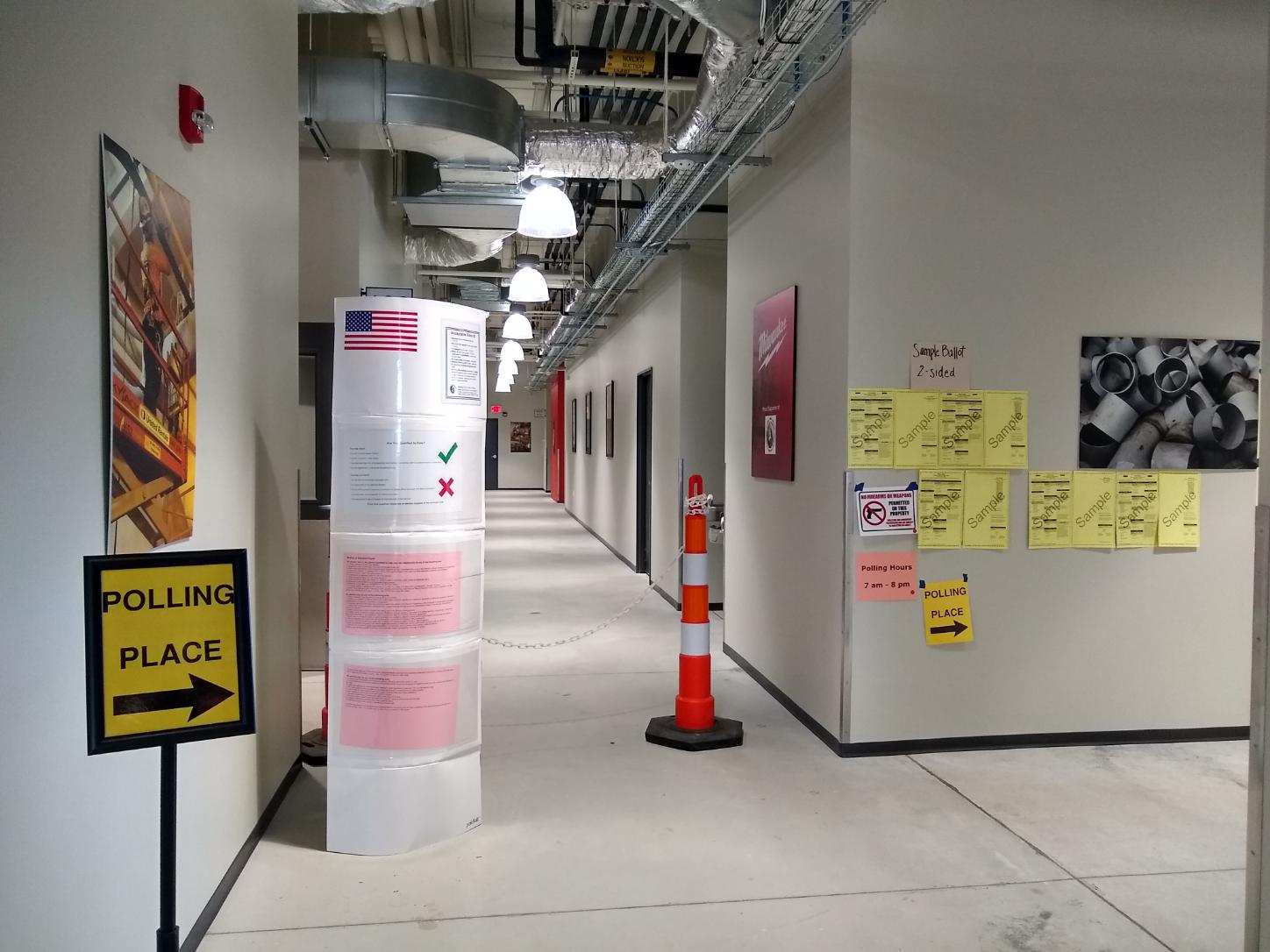
Will ICE or other armed federal agents be at polling places?
Sen. Elissa Slotkin asked Blanche, Homeland Security Secretary Markwayne Mullin, FBI Director Kash Patel and National Guard chief Steven Nordhaus for written assurances that armed federal agents would not be sent to polls or unlawfully seize election material. Mullin had left open a "specific threat" exception. Gen. Dan Caine, by contrast, gave Slotkin a written assurance that troops would not be sent to polling places.
Slotkin also led the Protect Our Polls Act, which would tighten restrictions on military or federal-law-enforcement interference with elections. The debate intersects with the administration's broader immigration enforcement agenda (opens in a new tab) because ICE officers are federal immigration agents and their presence could deter voters even if the stated mission were unrelated to eligibility checks.
What does this mean for the 3 November midterms?
The election-security argument now has two separate tracks. Prosecutors are pursuing discrete alleged crimes, while lawmakers are arguing over whether federal enforcement bodies can appear around polling sites and under what exception. Trump's $5,000 dividend pledge (opens in a new tab) is part of the wider midterm political environment, but it does not change the legal standards in the voting cases.
The next legal step is the 11th Circuit appeal in the Cox case. The next political deadline is 3 November 2026, when the practical question becomes whether the administration gives the categorical no-agents-at-polls assurance Slotkin sought or relies on the specific-threat caveat.
Questions people ask
How many noncitizens were charged with voting?
DOJ announced charges involving 16 lawful permanent residents on 5 October 2026: two in Florida, three in Louisiana, one in Wisconsin and ten in Minnesota.
Will ICE be at polling places?
The administration had not given the unconditional assurance Slotkin requested. Mullin left open a specific-threat exception, while Gen. Dan Caine said troops would not be sent to polling places.
Is the noncitizen voting law unconstitutional?
A federal judge ruled the statute unconstitutional in the Chelsea Cox case, but DOJ appealed, so the issue remains before the courts.
Evidence
The sources this article cites, claim-bearing material first.
- CBS News · Judge says federal law banning noncitizen voting is unconstitutional · 1 Oct 2026
- slotkin.senate.gov · slotkin.senate.gov — www.slotkin.senate.gov
- theguardian.com · theguardian.com — www.theguardian.com
- AP · AP — apnews.com
- padilla.senate.gov · padilla.senate.gov — www.padilla.senate.gov
- Office of Sen. Elissa Slotkin · After top general says no troops at polls, Slotkin seeks same assurances · 2 Sept 2026
- slotkin.senate.gov · slotkin.senate.gov — www.slotkin.senate.gov
- The Washington Times · DOJ charges 16 noncitizens in election cases · 5 Oct 2026
More analysis
Ranked by shared facts, drivers and people — never by publication date alone.
Articles12
- Trump's $5,000 Dividend: Who Gets Paid and What Has to Happen?Shares the driver: Electoral Integrity and Competitiveness · 14 October 2026
- DOJ Ultimatum: California Must Review Alleged Noncitizen VotersShares the driver: Electoral Integrity and Competitiveness · 14 October 2026
- Will Israel Strike Iran Before Its October Election?Shares the driver: Electoral Integrity and Competitiveness · 14 October 2026
- Are Republicans Distancing From Trump Before the Midterms?Shares the driver: Electoral Integrity and Competitiveness · 14 October 2026