2014 New Zealand general election
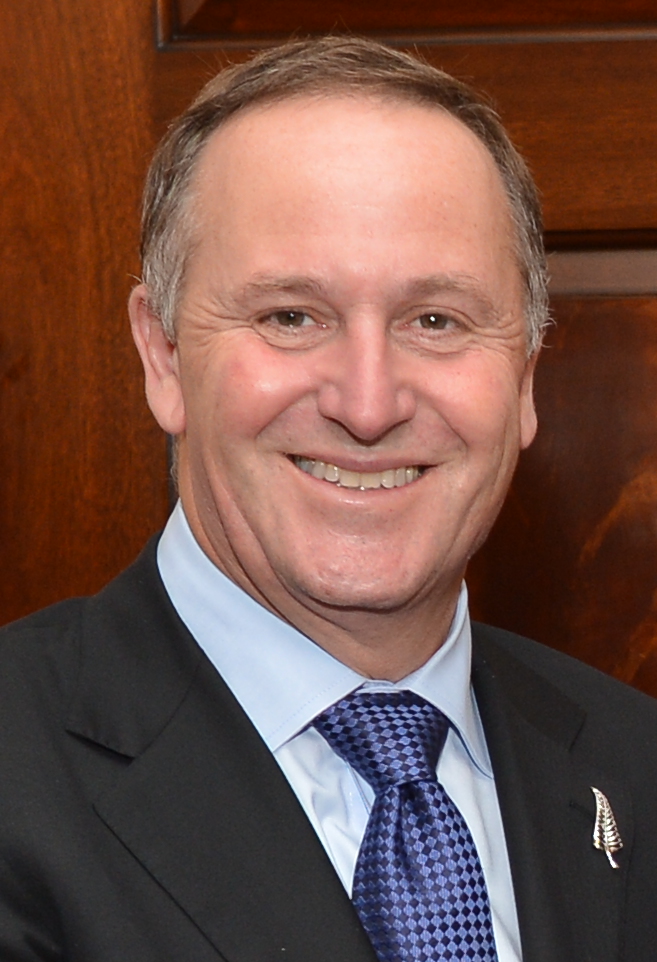
Summary
The 2014 New Zealand general election was held on 20 September 2014 to elect the 120 members of the House of Representatives for the 51st New Zealand Parliament, though the final allocation resulted in 121 seats due to overhang provisions in the mixed-member proportional system.
Expert article
The 2014 New Zealand general election was held on 20 September 2014 to elect the 120 members of the House of Representatives for the 51st New Zealand Parliament, though the final allocation resulted in 121 seats due to overhang provisions in the mixed-member proportional system. The incumbent National Party, led by Prime Minister John Key, secured a third consecutive term by winning 47.04% of the party vote and 60 seats, forming a minority government with confidence-and-supply agreements from ACT New Zealand and United Future. Voter turnout reached 77.9% of enrolled electors, higher than the 74.2% in 2011, reflecting sustained public engagement amid economic stability under National's policies. The opposition Labour Party, under David Cunliffe, suffered a significant defeat with only 25.13% of the vote and 32 seats, undermining prospects for a centre-left coalition with the Green Party, which gained 14 seats on 10.70% support. New Zealand First, led by Winston Peters, increased its representation to 11 seats with 8.66% of the vote, positioning it as a potential influencer in future parliamentary dynamics, while smaller parties like the Māori Party, ACT, and United Future retained limited but pivotal roles.
Background
Economic Recovery and Policy Achievements from 2008-2014
The National-led government, formed after the November 2008 election under Prime Minister John Key, inherited an economy entering recession amid the global financial crisis, with projections indicating net government debt rising from 5% of GDP to around 40% within a decade due to falling revenues and increased spending needs. Initial fiscal responses included targeted stimulus measures, but the emphasis shifted to consolidation through restrained spending growth rather than broad packages, avoiding the banking failures seen in other nations. This approach, combined with monetary policy support from the Reserve Bank, facilitated recovery without resorting to unconventional interventions like quantitative easing on a large scale.
Economic indicators reflected steady improvement by 2014. Real GDP contracted by 0.3% in 2009 before rebounding with annual growth averaging around 2.5% from 2010 to 2013, accelerating to 3.5% in the year ending June 2014, outperforming many OECD peers. Unemployment peaked at 6.9% in early 2012, declining to 5.6% by mid-2014, with employment growth reaching 3.0% annually by late 2013. Government debt stabilized, with net core Crown debt at 25.8% of GDP by June 2014, down from higher post-crisis projections, as revenues recovered to $89.4 billion against $92.2 billion in expenses, yielding an operating deficit of $2.9 billion—narrower than anticipated. The Christchurch earthquakes of 2010-2011 added fiscal strain, estimated at over 10% of GDP in reconstruction costs, yet the economy absorbed this through insurance inflows and private sector-led rebuild efforts.
Key policy achievements included 2010 tax reforms that reduced the top personal income tax rate from 38% to 33%, corporate rate to 28%, and raised GST from 12.5% to 15% to broaden the base and incentivize work and investment, contributing to deficit reduction without stifling growth. Fiscal consolidation focused on capping expense growth below nominal GDP increases, lowering expenses-to-GDP from post-crisis highs and enabling a return to operating surplus in 2015. Export sectors, particularly dairy, drove external balances, with terms of trade peaking in 2011 supporting current account recovery. These measures, alongside welfare reforms targeting long-term dependency, were credited for fostering a "rock star" economy by 2014, with low inflation and interest rates aiding household finances despite rising housing pressures. Official Treasury assessments highlight the role of prudent spending restraint in averting deeper indebtedness, though critics from left-leaning outlets argued inequality widened, a claim countered by wage growth outpacing inflation for many households.
MMP System Evolution and 2012 Review Outcomes
The Mixed Member Proportional (MMP) electoral system was introduced in New Zealand following a 1993 binding referendum, where 53.9% of voters endorsed replacing the first-past-the-post system with MMP, which was first used in the 1996 general election. Under MMP, voters submit two votes: one for a local electorate member of Parliament (MP) and one for a party list, with seats allocated to achieve proportionality based on the party vote share, typically totaling 120 MPs. The system includes a 5% nationwide party vote threshold for eligibility to win list seats, unless a party secures at least one electorate seat, allowing it to claim proportional list seats—a mechanism termed "coat-tailing" that has enabled minor parties such as ACT New Zealand and the Māori Party to exceed their vote share in seats. From 1996 to 2014, the core MMP framework remained largely unchanged, though the number of electorate seats grew from 65 to 71 by 2014 to account for population increases, with list seats adjusting accordingly to maintain the 120-seat target, excluding occasional overhangs from electorate wins by low-vote parties.
Debates over MMP's thresholds and coat-tailing provisions persisted, as critics contended they permitted small parties to wield disproportionate influence in coalition governments, potentially complicating stable majorities. The Electoral Act 1993 required an independent review of MMP after its retention in referenda, prompting a 2011 referendum alongside the general election, where 57.77% of participating voters opted to keep MMP over reverting to first-past-the-post, with a turnout of 74.2%. This outcome activated the mandated review process, led by the Electoral Commission, which solicited public input through written submissions, meetings, and an online survey from March to June 2012, receiving 6,139 submissions and additional feedback from 119 organized groups.
The Commission's final report, released on 27 October 2012 and tabled in Parliament on 6 November 2012 by Justice Minister Judith Collins, proposed a single 4% party vote threshold without the one-electorate-seat exemption, asserting this would reduce the number of viable minor parties, minimize coat-tailing distortions, and improve government formation efficiency while preserving broad representation. Additional recommendations included retaining the 120-seat structure, permitting overhang seats only if they did not exceed four to avoid excessive Parliament size, enhancing transparency in party list rankings, and banning convicted criminals from candidacy, but no alterations to voter education or dual-candidacy rules. The government acknowledged the report but declined to enact reforms before the 2014 election, citing a lack of cross-party consensus and the need for further deliberation, thereby ensuring the election operated under the pre-existing 5% threshold and coat-tailing provisions.
Performance of the 49th Parliament (2011-2014)
headed by Prime Minister John Key, supported by the Māori Party, ACT, United Future, and an outside agreement with the Green Party on certain issues. During this term, the government prioritized fiscal consolidation amid recovery from the global financial crisis and the 2010-2011 Canterbury earthquakes, achieving average annual GDP growth of approximately 2.2% from 2011 to 2013, with a forecast of 2.7% for 2014. Unemployment rose to a peak of 7.2% in 2012 before declining to 6.2% by 2013, outperforming many OECD peers, supported by reconstruction activity in Canterbury and strong dairy exports.
Fiscal policy focused on reducing operating deficits, with the operating balance improving from -7.2% of GDP in 2011/12 to a forecasted surplus of 0.7% in 2013/14, alongside efforts to cap net core Crown debt at around 26% of GDP by 2014. Key legislative achievements included the Canterbury Earthquake Recovery Act 2011, which empowered the Crown to override local planning laws for rebuilding, facilitating infrastructure repair and economic stimulus in the region. Welfare reforms enacted in 2013 consolidated benefits into three main categories—Jobseeker Support, Sole Parent Support, and Supported Living Support—introducing stricter work-testing obligations and future-focused incentives to curb long-term dependency, amid claims of reducing welfare costs by enhancing employment pathways.
The government's mixed-ownership model proceeded with partial floats of state assets, including Mighty River Power in May 2013 and Meridian Energy in October 2013, raising approximately NZ$4 billion for infrastructure investment despite a 2013 citizens-initiated referendum rejecting the sales by 67.5%. The Government Communications Security Bureau Amendment Act 2013 expanded surveillance powers for cybersecurity and foreign intelligence, responding to evolving threats but drawing criticism for insufficient oversight and privacy risks. Overall, the term saw 300+ government bills passed, emphasizing economic stabilization and regulatory efficiency, though detractors highlighted persistent regional disparities and slow productivity gains.
Electoral Mechanics
Key Dates and Administrative Timeline
The Prime Minister announced on 10 March 2014 that the general election would be held on Saturday, 20 September 2014.
The regulated period for election-related spending by candidates and parties, during which expenses must be reported, commenced on 20 June 2014 and concluded at the close of 19 September 2014.
The 49th Parliament was dissolved on 14 August 2014, pursuant to a proclamation by the Governor-General effective the following day.
Writs for the election were issued by the Governor-General on 20 August 2014, directing the Electoral Commission to conduct the poll and requiring the return of writs within six weeks of polling day.
Nominations for electorate candidates closed at noon on Tuesday, 26 August 2014, with registered parties able to submit bulk nominations to the Electoral Commission.
Advance (early) voting opened nationwide on Wednesday, 3 September 2014, allowing enrolled electors to cast ballots before polling day at designated locations.
Polling stations operated from 9 a.m. to 7 p.m. on 20 September 2014, with special votes accepted up to two weeks post-election for those unable to vote on the day or overseas.
The Electoral Commission released preliminary results shortly after polls closed and declared official results, including party vote tallies and electorate outcomes, on 4 October 2014, confirming all preliminary electorate winners.
The writs were returned to the Governor-General on or about 4 October 2014, formalizing the election of 71 electorate MPs and enabling the allocation of the 50 list seats under the mixed-member proportional system.
The 51st Parliament convened for its first sitting on 20 October 2014, with MPs sworn in and the Speaker elected, followed by the state opening on 21 October 2014.
Electorate Redistricting and Boundary Adjustments
The Representation Commission initiated a review of New Zealand's electorate boundaries in October 2013, prompted by the 2013 census data showing population shifts, particularly growth in urban areas like Auckland. This periodic redistribution, mandated under the Electoral Act 1993, sought to maintain electorate populations within approximately 5% of the national quotient for equal representation.
Proposed boundaries were released for public consultation on 21 November 2013, affecting 43 of the existing electorates through adjustments to achieve demographic balance. The review culminated in the finalization of boundaries on 17 April 2014 via gazette notice, establishing 64 general electorates and 7 Māori electorates for a total of 71—up from 70 in the prior configuration—primarily to accommodate a net increase of one general seat in the upper North Island.
Key alterations included the creation of the Upper Harbour general electorate, carved mainly from portions of the East Coast Bays and Albany electorates to address overcrowding in Auckland's northern suburbs. Additional boundary refinements occurred across regions, such as extensions in Northland's Te Tai Tokerau and contractions in Wellington's urban seats, with Māori electorate boundaries realigned based on the Māori electoral option and roll numbers to preserve community interests. These changes applied to both the 2014 and 2017 general elections, reflecting the Commission's mandate for stability alongside responsiveness to population dynamics.
MP Retirements and Candidate Field
In the lead-up to the 2014 general election, several sitting Members of Parliament (MPs) from major parties announced their retirements, creating vacancies in electorates and list positions that influenced candidate selections. These decisions were often attributed to factors such as length of service, personal circumstances, or shifts in party dynamics, with National experiencing the most notable outflows among governing coalition partners.
The National Party saw at least four MPs step down: Phil Heatley, who held the Whangārei electorate since 2002 and cited a desire to pursue other opportunities after five terms; Paul Hutchison, the Hunua electorate MP since 1996 and a senior health spokesperson; Cam Calder, a list MP since 2011 focused on disability issues; and Tau Henare, a list MP with a long career spanning Labour and National affiliations. These retirements prompted National to refresh its list with new entrants, including figures like Alfred Ngaro and Parmjeet Parmar, emphasizing a blend of experience and emerging talent in their July 2014 rankings.
Labour faced fewer voluntary retirements but included Dr. Rajen Prasad, the list MP and immigration spokesperson who retired after three terms, highlighting his contributions to ethnic communities before departing in May 2014. The party's candidate field reflected internal challenges, with selections often contested amid leadership transitions under David Cunliffe.
The Māori Party experienced significant leadership change with the retirements of co-leaders Tariana Turia, who had represented Te Tai Hauāuru since 2005 and announced her exit in December 2012 after co-founding the party, and Pita Sharples, the Tāmaki Makaurau MP since 2005, who stepped down to allow generational renewal. These moves elevated Te Ururoa Flavell and positioned Marama Fox as a new list MP and co-leader post-election.
Overall, the candidate field comprised 554 nominees from 15 registered parties, contesting 71 general and Māori electorates alongside party lists, as finalized by the Electoral Commission on 27 August 2014. This broad field included established figures recontesting seats, rising party insiders, and independents or minor party challengers, fostering competition particularly in vacated electorates like Whangārei and Hunua.
| Party | Retiring MP | Electorate/List | Announced Date | Notes |
|---|---|---|---|---|
| National | Phil Heatley | Whangārei | November 2013 | Five-term MP, health and fisheries roles. |
| National | Paul Hutchison | Hunua | October 2013 | Long-serving, focused on health policy. |
| National | Cam Calder | List | October 2013 | Disability advocate. |
| National | Tau Henare | List | Pre-election | Cross-party veteran. |
| Labour | Rajen Prasad | List | May 2014 | Ethnic communities spokesperson. |
| Māori | Tariana Turia | Te Tai Hauāuru | December 2012 | Party co-founder, health reforms advocate. |
| Māori | Pita Sharples | Tāmaki Makaurau | Pre-2014 | Co-leader, education focus. |
Political Parties and Platforms
Major Parties: National, Labour, and Greens
The New Zealand National Party, under the leadership of Prime Minister John Key, entered the 2014 election as the incumbent government seeking a third term. The party's platform emphasized sustained economic growth, fiscal prudence, and building on post-2008 recovery achievements, including low unemployment and returning to surplus budgets. Key policy commitments included proceeding with partial privatization of state-owned assets like MightyRiverPower and Meridian Energy to generate funds for infrastructure such as schools and hospitals, while opposing further sales. On housing, National promised to accelerate supply through public-private partnerships and infrastructure investments to address affordability pressures in Auckland. Welfare policies focused on work-testing obligations and supporting transitions to employment rather than expansions. Environmentally, the approach balanced resource extraction, such as dairy farming expansion, with targeted conservation efforts.
National's campaign highlighted stability and competence amid opposition attacks, though it faced scrutiny from the "Dirty Politics" book by Nicky Hager, which alleged coordinated smear tactics involving party operatives and government figures; Key denied personal involvement and the scandal did not derail voter support. The party positioned itself against Labour-Greens policy shifts, warning of tax hikes and economic risks from reversing asset sales or introducing new levies.
The Labour Party, led by David Cunliffe who assumed leadership in September 2013 following internal contests, campaigned on restoring fairness and public investment after six years in opposition. Core platform elements opposed National's asset sales program, pledging to halt further privatizations and potentially repurchase stakes, alongside introducing a capital gains tax on property investments (excluding the family home) to fund social programs and reduce inequality. Housing policy targeted constructing 100,000 affordable homes over 10 years via a state-led initiative, coupled with raising the minimum wage to $15 per hour and strengthening tenant rights. Welfare reforms proposed increasing benefits, abolishing some work sanctions, and boosting child poverty alleviation through family support packages. On the environment, Labour advocated stronger emissions trading scheme enforcement and renewable energy incentives.
Cunliffe's tenure was marked by caucus divisions and gaffes, contributing to perceptions of disunity; the party sought to form a left-wing bloc with the Greens but struggled to convince voters of its economic credentials amid National's incumbency advantage.
The Green Party, co-led by Russel Norman and Metiria Turei, positioned itself as the progressive alternative emphasizing sustainability and social equity. Policies centered on transitioning to a green economy through investments in public transport, insulation retrofits, and conservation, while opposing asset sales and the Trans-Pacific Partnership for environmental and sovereignty risks. Housing commitments included expanding state housing stock, curbing speculation via taxes, and rent controls. Welfare priorities involved lifting benefits to match living costs, targeting child poverty reduction, and exploring universal income pilots. Environmental pledges demanded aggressive climate action, including 100% renewable electricity by 2030 and protecting native forests from logging.
The Greens maintained a cooperative stance with Labour for potential coalition but critiqued National's growth model as unsustainable; despite high hopes, their campaign focused on moral imperatives over broad appeal, resulting in steady but not expanded parliamentary representation.
Minor Parties: NZ First, Maori, ACT, United Future, and Others
New Zealand First, led by Winston Peters, campaigned on a platform emphasizing reduced immigration, protection of elderly superannuation benefits, and economic nationalism to address housing affordability and foreign investment concerns. The party secured 8.66% of the party vote, an increase from 6.59% in 2011, resulting in 11 seats under the MMP system, comprising one electorate seat and ten list seats. This performance positioned NZ First as a potential kingmaker, though it ultimately supported the opposition in confidence and supply arrangements post-election.
The Māori Party, co-led by Te Ururoa Flavell and Marama Fox after Tariana Turia's retirement, focused on advancing Māori self-determination, constitutional recognition, and resource rights, while critiquing mainstream parties' approaches to Treaty of Waitangi obligations. It received 1.45% of the party vote but retained two Māori electorate seats—Waiariki won by Flavell and Tāmaki Makaurau by Flavell narrowly over Labour—yielding two MPs total. This outcome reflected ongoing voter preference for dedicated Māori representation despite low party-wide support.
The ACT Party, under leader Jamie Whyte, advocated classical liberal policies including reduced government spending, deregulation, and opposition to race-based policies, though Whyte's comments on Māori privilege sparked controversy. ACT gained 0.69% of the party vote, below the 5% threshold, but David Seymour won the Epsom electorate through National Party voters' strategic preference, securing one seat and enabling list allocation. Whyte resigned post-election amid internal strife.
United Future, led by Peter Dunne, positioned itself as a moderate centrist force supporting welfare reforms and environmental pragmatism, but struggled with visibility. It polled 0.22% party-wide, failing the threshold, yet Dunne retained the Ōhāriu electorate with 12.55% of the vote in a multi-candidate field, preserving one seat via personal incumbency advantage.
Other minor parties included the Conservative Party, which emphasized traditional values, opposition to abortion and euthanasia, and fiscal conservatism, achieving 3.82% of the party vote but no seats due to the threshold. The Internet MANA alliance, formed by Mana Party's Hone Harawira and Internet Party backed by Kim Dotcom, targeted youth and Māori voters with pledges for internet freedom, poverty alleviation, and anti-TPPA stance, but garnered 1.24% and lost Harawira's Te Tai Tokerau seat, yielding zero representation. Smaller entities like Aotearoa Legalise Cannabis (0.38%) and the Focus New Zealand Party also contested without success.
| Party | Party Vote (%) | Electorate Seats | List Seats | Total Seats |
|---|---|---|---|---|
| New Zealand First | 8.66 | 1 | 10 | 11 |
| Māori Party | 1.45 | 2 | 0 | 2 |
| ACT | 0.69 | 1 | 0 | 1 |
| United Future | 0.22 | 1 | 0 | 1 |
| Conservative | 3.82 | 0 | 0 | 0 |
| Internet MANA | 1.24 | 0 | 0 | 0 |
Emerging Players: Internet-MANA and Conservative
The Internet Party, established in January 2014 by German-born internet entrepreneur Kim Dotcom, allied with the Mana Movement in May 2014 to form the Internet-MANA coalition, aiming to leverage Dotcom's financial resources and digital savvy alongside Mana's Māori nationalist base. The alliance was led by Laila Harré as Internet Party president and Hone Harawira as Mana co-leader, with a platform emphasizing internet freedom, opposition to government surveillance laws like the GCSB Act, wealth redistribution, universal basic income, and Māori self-determination. Internet-MANA pursued an aggressive digital campaign strategy, including viral videos and social media targeting youth voters, but faced backlash over Dotcom's ongoing extradition battle on copyright infringement charges, which Harawira later cited as a factor alienating moderate supporters. In the election on 20 September 2014, the party secured 34,095 party votes, or 1.42% of the total, falling well short of the 5% threshold for list seats; Harawira also lost his Te Tai Tokerau electorate seat to Labour's Kelvin Davis by 632 votes, resulting in zero parliamentary representation and the alliance's dissolution shortly thereafter.
The Conservative Party, founded in 2011 and led by businessman Colin Craig, positioned itself as a right-wing alternative emphasizing traditional family values, fiscal conservatism, and social issues. Its 2014 platform advocated retaining the partial defence of reasonable parental chastisement (post-2009 smacking law referendum), opposing euthanasia and liberalized abortion, promoting three-strikes sentencing for crime, and policies on housing affordability and resource management that drew criticism for similarities to New Zealand First's positions, prompting plagiarism accusations against Craig. The party targeted conservative voters disillusioned with National's centrist shifts, with Craig contesting the East Coast Bays electorate against Foreign Minister Murray McCully. Despite pre-election polls showing support around 4.6-4.7%, the Conservatives received 95,598 party votes, equating to 3.97%, insufficient for list seats and with no electorate wins, including Craig's loss in East Coast Bays; internal tensions and Craig's public gaffes, such as on science denialism, were attributed by analysts as undermining broader appeal.
Campaign Landscape
Core Policy Debates: Economy, Housing, and Welfare
The economy emerged as a central battleground in the 2014 election, with the incumbent National Party under John Key emphasizing sustained post-global financial crisis recovery through restrained government spending, export-led growth, and infrastructure investment. National highlighted a 12% rise in exports to $51 billion in the year to June 2014, driven by dairy and manufacturing sectors comprising 8% of exports, and committed to modest income tax cuts once a budget surplus was achieved, projected for 2015, while prioritizing skills training, high-tech graduates, and research and development to foster a high-wage economy. In contrast, Labour leader David Cunliffe advocated for interventionist measures to address inequality, including raising the minimum wage by $2 to $15 per hour, increasing the top income tax rate to 36%, and introducing a capital gains tax excluding the family home to curb speculation and redirect funds toward productive investment, alongside compulsory KiwiSaver contributions to boost savings. The Greens reinforced Labour's stance with proposals for a 40% top tax rate, a $15 minimum wage by 2015, and a carbon emissions tax to align growth with environmental sustainability, framing National's approach as insufficient for reducing child poverty and wage stagnation.
Housing affordability, particularly in Auckland where prices had surged amid supply shortages, divided parties on market-driven versus state-led solutions. National pursued supply-side reforms via the Housing Accords and Special Housing Areas legislation enacted in 2013, enabling fast-tracked consents in high-demand zones like Auckland and Christchurch to expedite construction and ease resource management act bottlenecks, aiming to deliver thousands of additional homes without new taxes. Labour countered with a pledge to construct 100,000 affordable homes over 10 years through public-private partnerships and extend state housing provisions, coupled with capital gains tax to dampen investor demand and speculation. The Greens proposed banning foreign property speculators and investing in state housing insulation and retrofits to improve quality and accessibility, critiquing National's reforms as favoring developers over long-term affordability.
Welfare debates pitted National's work-focused reforms against Labour and Greens' emphasis on support expansion. National enforced stricter obligations, requiring sole parents to seek part-time work when their youngest child turned five (full-time at 14), assigning 80,900 beneficiaries to personalized case managers, directing under-18 youth to private agencies, and planning payment cards for 18-19-year-olds, alongside six-month childcare grants to encourage employment; these measures correlated with faster-than-forecast declines in sole-parent and jobseeker benefit rolls. Labour promised a "Best Start" payment of $60 weekly for the first year of a child's life (income-tested to $50,000 until age three for families under $150,000), 25 hours of free early childhood education weekly, and reinstatement of the training incentive allowance averaging $2,124 in 2008, aiming to reduce punitive elements. Greens sought to extend $60 in-work credits to beneficiaries and subsidize employers $174 weekly to hire long-term youth beneficiaries as apprentices, opposing sanctions in favor of universal benefit increases.
Broadcasting Allocations, Spending Limits, and Media Coverage
The Electoral Commission allocated a total of $3,283,250 (including GST) to registered political parties for the production of election programmes, to be broadcast on television and radio during the regulated period from 11 August to 17 September 2014. Allocations were determined using a formula incorporating parties' performance in the 2011 election (party and electorate votes), by-elections since, number of sitting MPs, declared alliances (such as Internet MANA), and current opinion polls. A final variation decision was released on 29 August 2014, adjusting for parties failing deadlines like party list registration. Parties also received allocated time for opening and closing addresses, totaling 60 minutes each across all parties, aired on Television New Zealand (TVNZ) and Radio New Zealand (RNZ).
The following table summarizes the monetary allocations for election programmes and time for addresses per party:
| Party | Monetary Allocation (GST incl.) | Opening Address | Closing Address |
|---|---|---|---|
| National Party | $1,087,902 | 15m 30s | 16m 15s |
| Labour Party | $949,756 | 13m 30s | 14m 10s |
| Green Party | $414,439 | 7m 30s | 7m 55s |
| New Zealand First | $207,220 | 4m 30s | 4m 45s |
| Māori Party | $103,610 | 2m 30s | 2m 40s |
| ACT New Zealand | $76,930 | 2m | 2m |
| Internet MANA | $79,433 | 2m | 2m 5s |
| United Future | $79,433 | 2m | 2m 5s |
| NZ Independent Coalition | $79,433 | 2m | 2m 5s |
| Conservative Party | $62,166 | 1m 30s | 1m 40s |
| Aotearoa Legalise Cannabis | $34,729 | 1m | 1m 5s |
| The Civilian Party | $34,729 | 1m | 1m 5s |
| Focus NZ | $34,729 | 1m | 1m 5s |
| Democrats for Social Credit | $34,729 | 1m | 1m 5s |
Additional time was allocated for TVNZ election advertising, with major parties like National and Labour receiving the largest shares based on similar criteria, though specific per-party minutes were not publicly itemized beyond programmes.
Election expenses for parties contesting the party vote were capped at $1,091,000 (including GST) for base advertising, plus $25,700 per electorate contested with candidates. Individual electorate candidates faced spending limits of approximately $28,700 each, excluding certain exemptions like volunteer labor, to promote equity under the Electoral Act 1993. These caps applied to promotion of the party vote by candidates and party-wide advertising from 20 June to election day on 20 September 2014.
Media coverage emphasized major parties, with National and Labour dominating airtime and print space due to their polling leads and incumbency. Televised leaders' debates on TVNZ and TV3, including multi-party forums, provided structured exposure, though minor parties received limited slots. The release of Nicky Hager's book Dirty Politics on 22 August 2014 shifted focus to allegations of National Party-linked scandals, prompting extensive reporting on leaked emails and blogger interactions, which Labour and Greens leveraged but National dismissed as timed opposition smears. Analyses of visual coverage found disproportionate positive imagery for Prime Minister John Key in major newspapers, potentially favoring National, though such studies from academic sources warrant scrutiny for methodological assumptions favoring interpretive bias over raw data. Overall, mainstream outlets like the NZ Herald and TVNZ prioritized economy, housing, and child poverty debates, with digital platforms emerging but secondary to traditional broadcast.
Chronological Campaign Phases and Turning Points
The campaign commenced informally in early 2014 following Prime Minister John Key's announcement of the election date on 10 March, with parties focusing on policy development and candidate selections amid a backdrop of economic recovery narratives from National and critiques of inequality from Labour. Preparatory phases saw Labour leader David Cunliffe emphasizing child poverty reduction pledges, while National highlighted fiscal prudence and infrastructure investments.
A pivotal early turning point occurred on 13 August 2014 with the release of Nicky Hager's book Dirty Politics, which alleged systematic smear campaigns coordinated through blogger Cameron Slater and links to National Party figures, including Justice Minister Judith Collins' resignation on 30 August amid related Oravida conflicts. Despite dominating media coverage and prompting opposition attacks, the scandal failed to erode National's poll lead significantly, with Finance Minister Bill English asserting it would consolidate support by portraying critics as desperate. Hager later attributed National's victory to the efficacy of such tactics in mobilizing bases.
The official campaign phase began with the writ's issuance on 20 August 2014, triggering regulated spending and broadcasting allocations, during which leaders' debates intensified scrutiny. On 2 September, Key and Cunliffe debated in Christchurch, focusing on economic management and trust issues, with Key defending steady governance against Cunliffe's accusations of cronyism. Subsequent televised clashes on 11 September saw Key maintaining composure, while Cunliffe's aggressive style drew mixed reviews but highlighted policy divergences on housing affordability.
The late campaign featured a dramatic turning point on 15 September at Kim Dotcom's "Moment of Truth" event in Auckland, where Dotcom, alongside Edward Snowden, Julian Assange, and Glenn Greenwald, accused Key of misleading the public on GCSB surveillance expansions; however, lacking new verifiable evidence, the spectacle was widely critiqued as theatrical and backfired, contributing to Internet-MANA's electoral collapse from pre-election hype to zero seats. In the closing days, National refocused on Key's personal popularity and post-GFC achievements, culminating in a strengthened mandate on 20 September despite opposition efforts to leverage scandals.
Pre-Election Dynamics
Opinion Polling Aggregates and Trends
Throughout the campaign period from March to September 2014, opinion polls conducted by major firms such as Colmar Brunton, DigiPoll, and Roy Morgan consistently showed the National Party holding a commanding lead, with support levels stabilizing between 47% and 50% in the latter stages. Labour's support, in contrast, averaged around 28-30% in these aggregates, reflecting internal party challenges and policy missteps that failed to resonate with voters. The combined Labour-Greens vote typically polled at 38-42%, insufficient under the mixed-member proportional system to challenge National's projected seat tally without additional minor party support.
A notable trend was the widening of National's lead following the release of the "Dirty Politics" book in August, which alleged scandals involving National-aligned figures but did not significantly erode the party's polling numbers; Roy Morgan's mid-August survey, for instance, recorded National at 48% against a Labour-Greens bloc at 39%. Earlier in the year, polls showed a narrower gap, with National at 45-47% and Labour occasionally approaching 32%, buoyed by policy announcements on housing and child poverty. However, these gains proved transient, as voter preference reverted toward National's economic management record amid recovering growth indicators. NZ First's support fluctuated between 4% and 5.5% in most polls, underestimating its eventual 8.7% result, while the Greens held steady at 10-12%.
| Pollster | Fieldwork Dates | National | Labour | Greens | NZ First |
|---|---|---|---|---|---|
| Herald-DigiPoll | 22-28 Aug 2014 | 50.4% | 29.1% | 10.7% | 5.2% |
| Colmar Brunton | 7-17 Aug 2014 | 48% | 31% | 12% | 4% |
| Roy Morgan | 4-17 Aug 2014 | 48% | 27.5% | 11.5% | 5% |
The Herald-DigiPoll proved the most accurate final predictor, closely aligning with actual party vote shares, though systematic underestimation of NZ First across pollsters highlighted challenges in capturing late swings among older and rural demographics. Aggregates from these firms indicated National could secure a near-majority of seats independently, a projection borne out by the results.
Voter Turnout Factors and Historical Comparisons
Voter turnout in the 2014 New Zealand general election reached 77.04% of enrolled electors, marking an increase of approximately 7.5 percentage points from the 69.57% recorded in 2011. This figure equated to roughly 2.36 million valid party votes cast out of 3.06 million enrolled voters. The uptick was driven primarily by a surge in advance voting, which accounted for 29.3% of all votes—more than double the 14.7% share in 2011—and was cited by 77% of advance voters as motivated by convenience or scheduling needs.
Demographic patterns revealed persistent disparities, with turnout among 18- to 24-year-olds at 73.2% and rising to 91.2% for those aged 70 and over. Māori voters on both general and Māori rolls exhibited lower participation rates than non-Māori, at around 65% in Māori electorates compared to 79% in general ones, while electorates with high proportions of Pasifika or Asian residents also showed subdued engagement. Post-election surveys of non-voters identified lack of interest (27%), personal reasons such as health or travel (22%), uncertainty over candidates (11%), and competing commitments (10%) as primary barriers, though apathy-related excuses like "can't be bothered" declined from 14% in 2011 to 11%. Enrolment campaigns contributed marginally, processing over 141,000 updates in the lead-up, but youth enrolment (18- to 39-year-olds) remained below 80% of eligible, perpetuating lifelong non-participation trends.
Historically, the 2014 turnout, while improved from the 2011 nadir—the lowest since 1938—lagged behind pre-1980s levels exceeding 80% and reflected a broader downward trajectory amid voluntary voting since the 19th century. This rebound aligned with intensified Electoral Commission efforts, including targeted youth outreach and tools like Vote Compass, which correlated with reduced "difficulty deciding" non-voting (from 11% to 5%). Nonetheless, the second-lowest participation relative to eligible voting-age population (72.14%) since 1893 underscored ongoing challenges in reversing disengagement among under-50s and ethnic minorities, patterns consistent with global declines in advanced democracies.
Election Results and Analysis
Aggregate Vote Shares and Seat Allocations Under MMP
The 2014 New Zealand general election, held on 20 September 2014, produced results under the Mixed Member Proportional (MMP) system where the nationwide party vote determined proportional seat entitlements, supplemented by 71 electorate seats won directly by candidates. Qualifying parties—those receiving at least 5% of the party vote or winning an electorate seat—received list seats via the Sainte-Laguë method to achieve proportionality, resulting in a total of 121 seats due to one overhang from United Future's electorate win despite insufficient party vote for a seat. The National Party dominated with 47.04% of the party vote, securing 60 seats overall, enabling a third-term government.
Non-qualifying parties like the Conservative Party (3.97%) and Internet MANA (1.42%) received no seats despite notable vote shares, as they failed the 5% threshold and won no electorates. The Māori Party, reserved for Māori electorate voters, qualified via its single electorate win and gained one list seat for 1.32% party vote. Special votes, comprising 13.5% of total votes cast, were incorporated into final tallies, slightly adjusting provisional results (e.g., National lost one list seat, Greens gained one).
|--------------------|--------------|------------------|------------|-------------| | National | 47.04 | 41 | 19 | 60 | | Labour | 25.13 | 27 | 5 | 32 | | Green | 10.70 | 0 | 14 | 14 | | New Zealand First | 8.66 | 0 | 11 | 11 | | Māori | 1.32 | 1 | 1 | 2 | | ACT | 0.69 | 1 | 0 | 1 | | United Future | 0.22 | 1 | 0 | 1 | | Conservative | 3.97 | 0 | 0 | 0 | | Internet MANA | 1.42 | 0 | 0 | 0 | | Others | <1 | 0 | 0 | 0 |
This allocation reflected National's broad appeal, with Labour and Greens forming the main opposition bloc at 46 seats combined, while smaller parties like ACT and United Future provided coalition support despite minimal vote shares.
Electorate-Specific Outcomes and Surprises
.jpg) In the Epsom electorate, ACT New Zealand's David Seymour won the seat with 15,966 votes against National Party candidate Paul Goldsmith's 11,716, securing a majority of 4,250. This outcome resulted from coordinated tactical voting among National supporters, who prioritized ACT's electorate win to enable an additional list seat for the right-wing bloc under the mixed-member proportional system, despite National's stronger party vote in the area.
The Te Tai Tokerau Māori electorate saw a significant upset when Labour's Kelvin Davis defeated incumbent Internet-MANA candidate Hone Harawira, who had held the seat since 2005. Following a judicial recount ordered due to the initial narrow margin, Davis was confirmed victorious with a final majority of 1,119 votes, denying Internet-MANA an electorate foothold and impacting potential left-wing coalition dynamics.
In Tauranga, National's Simon Bridges retained the seat against a strong challenge from New Zealand First leader Winston Peters, winning approximately 51% of the vote to Peters' 22%, with a majority exceeding 10,000 votes. Peters' respectable second place highlighted NZ First's regional appeal but fell short of overturning the incumbent. Meanwhile, in Ōhāriu, United Future's Peter Dunne held on narrowly against Labour, winning by about 1,200 votes through split voting patterns favoring the incumbent in this bellwether seat. These results underscored the role of strategic voter behavior and personal incumbency advantages in key contests.
List Vote Patterns and Non-Parliamentary Minor Parties
The party list vote, determining proportional seat allocation under New Zealand's Mixed Member Proportional (MMP) system, totaled 2,446,314 valid votes in the 2014 election, with an overall turnout of 77.04% of enrolled electors. National received the largest share at 47.04%, reflecting broad support in suburban and rural areas, while Labour garnered 25.13% with stronger urban concentrations, particularly in Auckland and Wellington electorates. The Green Party secured 10.70%, appealing primarily to younger voters in inner-city seats, and New Zealand First obtained 8.66%, drawing from provincial and older demographics outside major centers. These patterns aligned with historical MMP trends, where major parties dominated but minor ones fragmented the remainder, with list votes varying by electorate—e.g., Greens exceeding 15% in urban strongholds like Wellington Central, contrasted by National's over 50% in rural South Island seats.
Non-parliamentary minor parties, those failing the 5% national threshold or an electorate win, collectively received about 8.5% of the list vote but gained no seats, underscoring the MMP barrier to representation for niche platforms.
| Party | Party Votes | Percentage |
|---|---|---|
| Conservative Party | 90,210 | 3.69% |
| Internet MANA | 34,085 | 1.42% |
| Aotearoa Legalise Cannabis Party | 11,995 | 0.49% |
| Māori Party (list vote outside Māori electorates) | 24,447 | 1.00% |
| ACT New Zealand (beyond its electorate) | 16,890 | 0.69% |
| United Future | 5,312 | 0.22% |
| Focus New Zealand | 4,506 | 0.19% |
| Civilian Party | 4,302 | 0.18% |
| Democrats for Social Credit | 1,883 | 0.08% |
| Others (including Ban 1080, Independent Coalition, etc.) | ~20,000 combined | <1% |
The Conservative Party, emphasizing traditional values and opposition to social liberalism, achieved its peak performance at 3.69%—up from 2.65% in 2011—but remained geographically limited to pockets in Auckland and the South Island, insufficient for threshold clearance. Internet MANA, a short-lived alliance of Mana's Māori-focused activism and the Internet Party's digital privacy push funded by entrepreneur Kim Dotcom, polled 1.42% nationally, with temporary spikes in Māori electorates (e.g., 7-10% in some) but collapsed post-election due to internal discord and failure to retain even Mana's sole prior seat. The Aotearoa Legalise Cannabis Party, advocating drug policy reform, held steady at 0.49%, consistent with prior elections but marginalized by lack of mainstream traction. Smaller entities like Focus New Zealand (Christian conservative) and the Civilian Party (anti-corruption) drew under 0.2% each, reflecting fragmented protest votes without viable organization or broad resonance. These outcomes highlighted how MMP's threshold deterred splintering while minor parties' specialized agendas—ranging from environmental extremism (e.g., Ban 1080 Party at 0.06%) to libertarianism—struggled against established blocs amid high voter strategic voting for proportionality.
Shifts in Representation: Gains, Losses, and Demographic Profiles
The National Party secured 60 seats in the 51st Parliament, an increase of one from its 59 seats in the previous term, reflecting modest gains in electorate contests particularly among Māori voters in general seats. The Labour Party experienced losses, dropping from 34 to 32 seats, with defeats in several urban and provincial electorates amid voter shifts toward National. New Zealand First gained three seats, rising from 8 to 11, primarily through list allocations bolstered by its 8.66% party vote share. The Green Party held steady at 14 seats, while the Māori Party lost one electorate seat, falling from 3 to 2, resulting in a single overhang seat that expanded the total chamber size to 121 members. ACT New Zealand and United Future each retained their single seat via electorate wins in Epsom and Ōhariu, respectively.
| Party | 2011 Seats | 2014 Seats | Change |
|---|---|---|---|
| National | 59 | 60 | +1 |
| Labour | 34 | 32 | -2 |
| Green | 14 | 14 | 0 |
| New Zealand First | 8 | 11 | +3 |
| Māori | 3 | 2 | -1 |
| ACT | 1 | 1 | 0 |
| United Future | 1 | 1 | 0 |
| Total | 120 | 121 | +1 |
Demographic profiles in the 51st Parliament showed incremental shifts toward greater ethnic diversity, particularly Māori representation, which rose to 22 MPs (about 18% of the chamber), up from 20 in the prior term, driven by National's nine Māori candidates winning general electorate seats—a strategy emphasizing broad appeal over dedicated Māori seats. Women comprised 38 MPs, or 31.4% of the 121 members, a marginal increase from 29.2% (35 of 120) in the 50th Parliament, with gains concentrated in list placements by Labour and the Greens offsetting some electorate losses. Age demographics remained broadly stable, with the average MP age around 50, though newer entrants from New Zealand First introduced slightly younger profiles in regional representation. These changes underscored MMP's role in amplifying minority voices via party lists, though electorate dynamics favored established parties with targeted demographic outreach.
Post-Election Developments
Government Formation and Coalition Agreements
The 2014 general election occurred on 20 September, resulting in the National Party winning 60 seats in the 121-seat Parliament, falling one short of the 62 required for an absolute majority due to overhang from the Māori electorates. Prime Minister John Key, leader of National, promptly initiated negotiations with smaller parties that had previously supported his government, seeking confidence and supply agreements rather than pursuing a formal coalition to maintain flexibility.
By early October, National secured the necessary backing through agreements with the ACT Party (one seat), United Future (one seat), and the Māori Party (two seats). These arrangements ensured supply for budgetary measures and confidence on key votes, enabling National to form a minority government without conceding cabinet positions. The ACT and United Future pacts emphasized shared commitments to economic liberalization and regulatory restraint, while the Māori Party deal extended the prior relationship accord, incorporating priorities such as continued funding for the Whānau Ora family support program, initiatives to reduce child poverty among Māori, and promotion of Māori economic development through asset sales and fisheries quotas.
Negotiations with New Zealand First, which secured 11 seats, proved unsuccessful as its leader Winston Peters rejected overtures from National, citing policy divergences on housing affordability and immigration. The opposition Labour-Greens bloc, holding 54 seats combined, lacked viable partners to challenge the right-leaning majority. With agreements in place, Key and his cabinet were sworn in by the Governor-General on 8 October 2014, marking the commencement of National's third consecutive term. This swift formation reflected National's electoral dominance and the pragmatic alignments fostered under the mixed-member proportional system.
Immediate Reactions: Markets, Leadership Transitions, and By-Elections
Financial markets exhibited a positive response to the National Party's decisive victory in the 20 September 2014 general election, signaling investor preference for policy stability under continued centre-right governance. On 22 September, the NZX 50 index climbed 1.1%, gaining 55 points to close at 5236, building on pre-election momentum. The New Zealand dollar appreciated against major currencies, with money markets pricing in reduced political uncertainty compared to scenarios involving coalition instability. Analysts attributed the uptick to expectations of sustained economic reforms, including fiscal conservatism and trade liberalization, avoiding disruptions from a potential Labour-Greens alliance.
Leadership transitions within opposition ranks unfolded rapidly amid Labour's electoral setback, which secured just 25.0% of the party vote—its lowest share since 1922. David Cunliffe, who had assumed the Labour leadership in 2013, resigned on 27 September, acknowledging caucus discontent and the need for renewal after failing to capitalize on pre-election polls suggesting a tighter race. Despite expressing confidence in his abilities and intending to contest the position again, Cunliffe's support had eroded to fewer than six caucus members. The Labour Party initiated a leadership contest involving caucus, member, and affiliate votes, culminating in Andrew Little's selection on 18 October; Little, a former union official, emphasized rebuilding through policy overhaul rather than personnel shifts alone. Prime Minister John Key, by contrast, faced no internal challenges, securing endorsement for a third term and overseeing cabinet formation by early October, with National relying on confidence-and-supply agreements from the Māori Party, ACT, and United Future to govern without a formal coalition.
No by-elections materialized in the immediate post-election period, as the 20 September results confirmed all 71 electorate seats without disputes leading to vacancies, and preliminary special vote tallies finalized on 4 October upheld the outcomes. The absence of resignations or legal challenges delayed any such events until later in the parliamentary term, with the next by-election occurring in Northland in March 2015 following John Key's decision to reassign a senior National MP. This stability contrasted with prior cycles where post-election overhangs or defections had prompted earlier polls, underscoring the 2014 outcome's decisiveness in seat allocations under the mixed-member proportional system.
Legal and Ethical Issues: Election Offences and Audits
The Electoral Commission referred 126 cases of potential personation under section 215 of the Electoral Act 1993 to the police, compared to 63 such referrals following the 2011 election. These involved allegations of individuals attempting to vote in the name of another, often linked to dual voting attempts. Additionally, 24 social media incidents were referred for breaching section 197, which prohibits influencing voters on election day; this included 13 cases of sharing a National Party campaign video and seven posts by high-profile sports figures. Two further referrals addressed intent to vote more than once, one concerned a radio broadcast violating sections 197 and 80, and five pre-election day matters included broadcasting breaches and failures to include promoter statements.
In total, the Commission referred approximately 113 to 142 alleged electoral breaches to the police, encompassing these categories. Post-election scrutiny also identified 10 candidates and two parties for failing to file expense returns by deadlines of 20 January and 18 February 2015, prompting additional referrals. No prosecutions resulted from any referrals, as confirmed by police via official information requests, indicating that investigations found insufficient evidence for charges or that offences were minor. The Commission handled 73 pre-election complaints, including seven on "treating" (providing inducements to voters under section 217), but recommended parliamentary review of the provision due to its archaic nature and enforcement challenges.
Audits of the election process affirmed high integrity. An independent enrolment accuracy survey, conducted as of writ day on 20 August 2014, estimated that 96.9% of enrolled electors were correctly registered. The Electronic Roll Scrutiny Application processed nearly three million roll pages, enhancing accuracy over prior manual methods. Official results, declared on 4 October 2014, confirmed all preliminary electorate winners with no changes, and no formal recounts were requested or required despite a petition with 9,300 signatures alleging irregularities. Party expense and donation returns underwent audits by chartered accountants, though the Commission noted ambiguities in standards and recommended alignment with professional guidelines under Parts 6A and 6B of the Electoral Act. Overall, these processes upheld compliance, with 544 advisory opinions issued on advertising to ensure legal adherence.
Controversies and Critiques
Dirty Politics Scandal and Media Influence
The Dirty Politics scandal centered on the August 13, 2014, release of Nicky Hager's book Dirty Politics: How attack politics is poisoning New Zealand's political environment, which drew on over 1.5 million hacked emails from right-wing blogger Cameron Slater's accounts to allege a network of National Party operatives coordinating smear campaigns against opponents. The book detailed interactions between Slater's Whale Oil website, National Party staffer Jason Ede, and figures like Justice Minister Judith Collins, claiming they leaked sensitive information—such as from the Electoral Enrolment Centre database—to discredit Labour and Green politicians, including fabricated stories on figures like Jan Fitzgerald and attacks on Phil Goff during the 2011 election. Hager portrayed this as a systematic undermining of democratic norms, with involvement from Prime Minister John Key's office, though Key publicly denied directing or knowing the details of such operations, describing Slater as an independent actor whose views did not reflect party policy.
Government responses included Collins' demotion from Cabinet on August 24, 2014, amid book-highlighted conflicts over her promotion of Oravida—a dairy exporter tied to her husband—during an official trip to China, and Police Minister Maurice Williamson's resignation on May 8, 2014 (pre-book but linked in coverage), after he contacted police about a journalist's personal matters at Slater's behest. National rejected claims of a Beehive-orchestrated "dirty tricks unit," arguing the emails showed routine political advocacy rather than illegal activity, and Finance Minister Bill English contended the revelations would rally voters against negative campaigning. Despite the timing—seven weeks before the September 20 poll—National increased its party vote to 47.04% from 44.28% in 2011, securing 60 seats and a governing majority with ACT, United Future, and Māori Party support, indicating limited electoral damage, potentially as voters viewed reciprocal tactics from opposition parties or dismissed Hager's sourcing from criminal hacks.
Media coverage amplified the scandal's visibility, with outlets like RNZ, TVNZ, and the New Zealand Herald devoting extensive airtime and column inches to the allegations in August and early September, often framing it as a threat to political integrity, though balanced segments included National's rebuttals and critiques of Hager's methods. Analyses of campaign reporting noted a surge in "scandal" stories post-release, comprising up to 20% of political coverage in major dailies, but observed that mainstream media's emphasis on verifiable email excerpts lent credibility to core claims while underplaying broader context, such as Slater's documented history of aggressive blogging against both sides or Labour's own use of union-linked attacks. The Herald, perceived by some as National-leaning due to ownership ties, faced accusations of downplaying implications, yet its investigative follow-ups substantiated elements like Ede's database access; conversely, public broadcasters like RNZ were upheld in bias complaints for providing "Dirty Politics" airtime without undue favoritism to Hager's narrative. Hager later credited media dissemination for public awareness, though the shift toward Key's policy-focused "brighter future" messaging and rival scandals like Kim Dotcom's "Moment of Truth" diluted sustained impact.
Credibility concerns persisted, as Hager's reliance on anonymously sourced, illegally obtained material—later subject to a police raid on his home post-election—raised ethical questions about journalistic standards, with no prosecutions against him but indictments of hackers like Rawshark's associates. Empirical polling data showed an initial 3-5% drop in National support immediately after release, recovering by election day, suggesting media amplification created short-term noise but failed to alter voter calculus amid economic stability and opposition disunity. The episode highlighted tensions in New Zealand's media ecosystem, where concentrated ownership (e.g., APN/Fairfax duopoly) and declining ad revenues incentivized sensationalism, yet regulatory bodies like the Broadcasting Standards Authority found coverage generally fair, underscoring that while the scandal exposed verifiable coordination, its portrayal often amplified partisan framing over causal analysis of mutual political incentives for negativity.
Internet-MANA Alliance Collapse and Foreign Influence Claims
The Internet-MANA Alliance, a coalition between Kim Dotcom's Internet Party and Hone Harawira's MANA Movement, secured only 1.42% of the party vote in the September 20, 2014, general election, falling short of the 5% threshold for proportional representation and winning no electorate seats. Harawira's defeat in the Te Tai Tokerau electorate by Labour's Kelvin Davis by 689 votes eliminated any path to parliamentary entry under New Zealand's mixed-member proportional system. Internal factors, including campaign ill-discipline, candidate scandals, and Dotcom's perceived lack of engagement during the pre-election "Moment of Truth" event, contributed to the underwhelming performance, as acknowledged by Internet Party leader Laila Harré. Dotcom himself attributed the failure to his "poisoned" public image, stemming from ongoing U.S. extradition proceedings over Megaupload copyright infringement allegations.
Following the election loss, the alliance rapidly unraveled due to its lack of parliamentary leverage and irreconcilable strategic differences. MANA, which had allied with the Internet Party to pool resources and boost threshold chances via Dotcom's NZ$3 million funding, saw no benefit from continuation without seats. The formal dissolution occurred on December 15, 2014, when a letter was sent to the Electoral Commission terminating the agreement, leading to the deregistration of both parties by December 18. Harré indicated a shift toward independent rebuilding for the Internet Party, while MANA refocused on Māori advocacy, highlighting the opportunistic nature of the pact that prioritized short-term electoral tactics over long-term ideological alignment.
Claims of foreign influence centered on Dotcom's role as a German-born financier with U.S. legal entanglements, who critics argued used the alliance to advance personal interests against New Zealand's intelligence laws and extradition treaty. Opponents, including the National Party, portrayed the heavy reliance on Dotcom's donations—unprecedented for a new entrant—as an external bid to disrupt domestic politics, particularly amid his opposition to the GCSB spy agency expansions. The "Moment of Truth" press conference on September 15, 2014, featuring U.S. whistleblower Edward Snowden and WikiLeaks founder Julian Assange via video, amplified accusations of imported agendas, with Snowden alleging undisclosed New Zealand mass surveillance tied to Five Eyes alliances. While Dotcom's New Zealand residency and citizenship since 2010 permitted legal participation, skeptics questioned the impartiality of a campaign funded by an individual facing foreign criminal charges, viewing it as causal leverage rather than genuine democratic engagement. No evidence of illegal foreign donations emerged, but the episode underscored debates over donor influence in MMP systems.
Broader Critiques: Systemic Biases in MMP and Voter Apathy
The MMP system's "coat-tailing" rule drew significant criticism in the context of the 2014 election for enabling minor parties to secure list seats disproportionate to their party vote share through single electorate victories, thereby biasing representation toward localized strategic mobilization over national support. ACT garnered 0.69% of the party vote yet qualified for two seats via its Epsom win, United Future's 0.22% sufficed for one seat in Ōhāriu, and the Māori Party's 1.01% party vote, paired with three electorate successes, yielded two MPs. Opponents contended this exemption from the 5% threshold undermines MMP's proportionality by incentivizing tactical voting—such as National supporters backing ACT in Epsom to bolster coalition partners without shifting party votes—and allows small parties undue leverage as potential kingmakers.
Following the election, reform efforts targeted these biases; Labour MP Iain Lees-Galloway's 2015 bill sought to eliminate coat-tailing and reduce the threshold to 4% to better align seats with party vote proportionality, but it failed its first reading by one vote amid opposition from National and minor parties benefiting from the status quo. Such dynamics were labeled "rorts" that erode trust in the system's fairness, as they permit parties with minimal broad appeal to influence outcomes via electorate "donkey votes" or pacts, potentially fragmenting parliaments and complicating governance.
These perceived inequities contributed to voter apathy, reflected in the election's 77.0% turnout among enrolled voters, stagnant relative to prior MMP contests and lower than pre-1996 first-past-the-post levels exceeding 85%. Demographic disparities underscored disengagement: Māori youth aged 18-24 voted at 61.2%, versus 68.9% for non-Māori peers, with overall participation rising modestly from 2011's 74.2% but remaining subdued among under-30s. Research attributes this to diminished senses of efficacy under MMP, where electorate and list dualities, overhang seats from minor parties, and post-election bargaining dilute individual impact, fostering perceptions that votes yield unstable coalitions rather than direct accountability.
Who was responsible
Contribution type and responsibility level for each recorded actor — not sole-author shorthand.
No public contributors are listed for this fact.
What changed
Fact → Driver → Indicator. Relationship strength orders the paths; it is not the observed indicator movement.
No public driver impacts are listed for this fact.
Causal path
How this event connects to drivers and indicators in the graph.
No causal path is recorded: this fact is not linked to a driver.
Cite this page
Factrail. (2026). 2014 New Zealand general election. Factrail. https://factrail.ai/facts/2014-new-zealand-general-election
https://factrail.ai/facts/2014-new-zealand-general-election
Accessed 11 November 2026.
By the Factrail desk · Method: how we source and score · Last reviewed
Dispute this factNamed here, or represent someone who is? Request a right of reply.