AOC's Late Maine Donation Adds to Senate Money Fight
Published Factrail
Summary
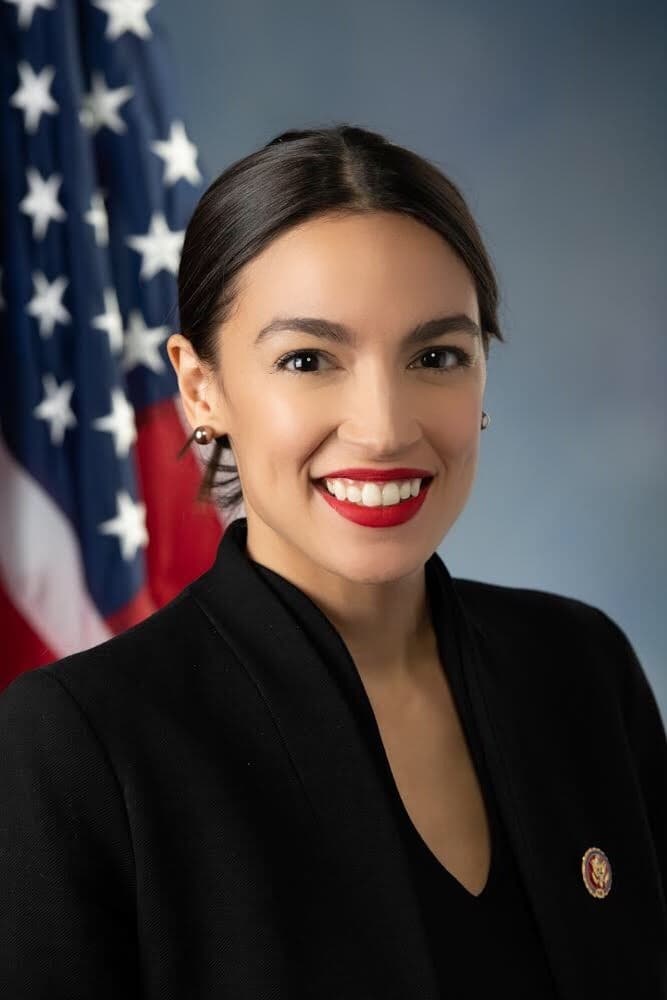
Alexandria Ocasio-Cortez transferred $150,000 to Maine Democratic Senate candidate Troy Jackson on Friday, October 30, according to an Axios account of her final-week campaign support.
Report
A late infusion, not a result
Alexandria Ocasio-Cortez transferred $150,000 to Maine Democratic Senate candidate Troy Jackson on Friday, October 30, according to an Axios account of her final-week campaign support. She also directed $150,000 apiece to Democratic Senate candidates in Alaska and Florida, for a combined $450,000. The transactions arrive as Maine voters prepare to decide whether Republican incumbent Susan Collins keeps her seat for a sixth term. An endorsement and campaign transfer can help buy communications, pay staff and support turnout operations, but neither proves that a candidate will win. This is one measurable act inside an election shaped by much larger spending, voter perceptions and the state's unusual ranked-choice process. The key public interest lies in who influences the contest, who funds persuasion and what congressional power changes after the votes are counted.
Why Jackson is the recipient
Jackson became the Democratic nominee after Graham Platner, the winner of the party primary, withdrew during the summer. The Associated Press's October 30 election guide identifies Jackson and Collins as the central Senate candidates. This sequence matters because the late-campaign transfer supports a candidate chosen after a disrupted nomination, rather than the original primary winner. Jackson's policy profile differs from Collins's record as a Republican incumbent. Ocasio-Cortez told Axios she sees Jackson and the other recipients as representatives of working people; that is an endorsement argument, not a verified measure of how they would govern. Campaigns may use such a transfer to reach voters who are less familiar with a replacement nominee. The extent to which a donor's national prominence helps or hurts in Maine remains an electoral question, not something a press statement can settle.
The price of political persuasion
PaidForPolitics, using federal spending disclosures, reported roughly $139.5 million in independent spending around the Maine Senate race through October 29, of which around $132.5 million related to the general election. The tracker attributed $36.4 million of general-election spending to WinSenate, its largest named outside spender. This scale dwarfs the new $150,000 campaign transfer. The categories are not directly interchangeable. The donation goes to a campaign organisation, while independent expenditures are purchases made by outside groups under different rules. Aggregated outside spending may include advertisements supporting one contender and advertisements attacking another. A reported dollar is not the same as a persuaded voter, and a paid message does not establish that its claims are true. For the public, transparency over the payer, purpose and accuracy of an advertisement matters more than the sheer quantity of communications.
What campaign accounts do and do not show
The same tracker lists Jackson's campaign as raising about $26.9 million and spending $25.3 million through its specified reporting window, compared with around $25.2 million raised and $23.8 million spent by Collins. These numbers have cut-off dates, and a late transfer will not necessarily be reflected in older campaign totals. Combining candidate receipts with outside spending as though both went into the same account would misrepresent the finance rules. An outsider can pay to support a candidate without the candidate controlling that expenditure. A campaign can receive a contribution but delay spending it. Financial disclosures help voters identify the organisations purchasing access to their attention. They cannot on their own prove a reciprocal policy promise, corruption or control over an officeholder. The better test after an election is whether subsequent conduct matches public commitments and disclosed financial interests.
How a ranked-choice Senate election works
Maine applies ranked-choice voting to this federal Senate contest, rather than simply awarding it to the candidate with the largest first-choice share in all circumstances. The state's Secretary of State explains that if no candidate receives a majority of first choices in a qualifying ranked-choice race, election officials can eliminate the last-place contender and reallocate ballots to the next remaining preference. This repeats under the applicable rules until a winner is established. State law does not apply the same method to the November governor's race. The AP notes declared write-in candidates can affect which federal races qualify under the state's rules. A voter should rank only according to their actual preferences and follow the official ballot instructions. Describing the procedure accurately before results arrive is especially important if a candidate initially leads but the final count changes after transfers.
Turnout is the second major variable
An October 31 Associated Press account said early voting nationally was substantially ahead of its 2022 midterm pace, with Maine's early participation up by about 44% against its comparable earlier point. That is a measure of timing, not a proof that total turnout will rise by the same percentage or that either party has gained. Voters who would otherwise cast ballots on Tuesday may simply have voted sooner. The AP decision guide notes a substantial early and absentee share in Maine in 2022. Campaigns may use final-week donations to contact people who have not yet participated, but the possible benefit depends on accurate lists, operational execution and the voter's choice. Participation should be assessed through certified results and by geography, not through a partial national or state headline divorced from its denominator.
What is at stake beyond Maine
Republicans entered the final phase of the midterms with a Senate majority, and Democrats need gains in several competitive states to change control. Collins's defeat would assist that effort; retention would protect a Republican-held seat in a state with a record of ticket splitting and statewide differences between presidential and Senate voting. The result may affect the confirmation of nominees, committee leadership and whether the president faces stronger legislative constraints. President Donald Trump's (opens in a new tab) agenda could be easier or harder to advance depending on the overall chamber composition, not just one Maine race. A senator also exercises influence over federal appropriations, oversight and trade policy. Those powers ultimately matter to public programmes and household costs, although no election-night result changes an individual bill automatically. Governing consequences must be traced through subsequent votes and decisions.
Who gains and who pays
The immediate beneficiary of Ocasio-Cortez's transfer is Jackson's campaign, which gets additional funds to spend within legal rules. Donors gain an opportunity to communicate political priorities; they do not thereby gain ownership of the recipient's public office. Advertising firms, consultants and communication vendors are commercial beneficiaries when campaigns and outside groups purchase services. Voters pay in time and attention as competing messages proliferate. Taxpayers may later pay or benefit from enacted policies on healthcare, taxes, energy, housing and defence. But assigning future costs to today's contributor would require a demonstrated causal sequence: donor interest, policy decision, legal instrument, affected population and measured impact. It is reasonable to scrutinise influence without substituting insinuation for documents. The election gives Maine voters, not any contributor, the final authority to select their senator.
What it moves
The direct measurable effect is a $150,000 increase in campaign resources reported by Axios, subject to the relevant reporting and accounting dates. A separate measure is total outside spending and its distribution among groups and candidates. The main political indicator is Maine's certified Senate result after any required ranked-choice tabulation. The wider indicator is the partisan balance of the Senate, which shapes future fiscal sustainability (opens in a new tab) decisions, appointments and oversight. Household outcomes to follow are cost-of-living pressure (opens in a new tab), healthcare access and employment, evaluated only after concrete policies are adopted. There is no defensible numerical claim that this one contribution changes votes by a specified amount. Watch the final spending disclosures, turnout, first-choice counts and any subsequent ballot transfers.
What readers should watch
Voters have until the November 3 election to decide among the listed choices, following Maine's official instructions. The initial count may not answer the winner question in a race that requires ranked-choice tabulation. Election administrators will release official figures and instructions for any later stages. A close result should lead to careful scrutiny of canvass and recount procedures, not instant assumptions about wrongdoing. Campaign-finance reports filed after the final weekend will clarify how the late donor transfer was reflected in receipts and spending. In Washington, the more meaningful long-term test is the new senator's legislative behaviour and the policy consequences that follow. A campaign contribution is an observable political act; the public interest lies in measuring its context and refusing to confuse purchased attention with an electoral mandate.
Sources
- Axios — AOC gives late boost to Senate candidates (opens in a new tab)
- Associated Press — What to expect in Maine on Election Day (opens in a new tab)
- Associated Press — Early voting jumps across Senate battlegrounds (opens in a new tab)
- Maine Secretary of State — Ranked choice voting information and rules (opens in a new tab)
- Maine Secretary of State — Upcoming elections (opens in a new tab)
- PaidForPolitics — Maine Senate campaign and independent spending (opens in a new tab)
- Reuters — The races that will decide Senate control (opens in a new tab)
Sources & evidence
| Source | Publisher | Type |
|---|---|---|
| www3.maine.gov/sos/elections-voting/upcoming-elections | — | government |
| reuters.com/legal/government/races-that-will-decide-control-us-senate-2026-10-26 | — | news_article |