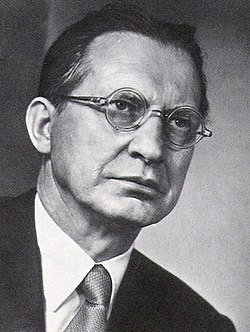
Christian Democracy
Christian Democracy (Italian: Democrazia Cristiana, DC) was a centrist Christian democratic political party in Italy…
Expert article
Christian Democracy (Italian: Democrazia Cristiana, DC) was a centrist Christian democratic political party in Italy, founded clandestinely in 1943 amid World War II and dissolved in 1994 after corruption scandals dismantled its power base. Rooted in Catholic social doctrine, the DC emphasized subsidiarity, family values, and anti-communism, positioning itself as a bulwark against Marxist influence in a nation divided by ideological conflict. From 1945 onward, it anchored every Italian government through coalition leadership, securing consistent vote shares around 35-40 percent in national elections and enabling postwar stability. Under founding figure Alcide De Gasperi, the party guided Italy's NATO accession in 1949 and European Economic Community entry in 1957, while fostering the 1950s-1960s "economic miracle" of annualized GDP growth exceeding 5 percent through state-directed industrialization and agrarian reform. Leaders like Amintore Fanfani advanced center-left openings with social welfare expansions, Aldo Moro pursued historic compromises with socialists, and Giulio Andreotti managed seven terms as prime minister amid factional infighting. Yet, chronic internal correnti (factions) bred clientelism and opacity, culminating in the 1992-1994 Tangentopoli probes that exposed bribe networks linking DC elites to business and organized crime, eroding public trust and electoral viability. Despite its flaws, the DC's tenure empirically correlated with Italy's transition from agrarian poverty to industrialized prosperity, averting leftist radicalism through pragmatic governance rather than ideological purity.
Origins and Early History
Catholic Political Precedents Before Fascism
Following the unification of Italy in 1861 and the capture of Rome in 1870, the Catholic Church under Pope Pius IX adopted the non expedit policy, prohibiting clergy and laity from participating in national elections to protest the loss of papal temporal power and the liberal state's anticlerical measures. This abstention limited Catholic political influence until the late 19th century, though local electoral participation increased sporadically, particularly in rural areas where Catholic voters supported conservative candidates against socialists.
Pope Leo XIII, elected in 1878, shifted toward pragmatic engagement by emphasizing Catholic social teaching to counter rising socialism and liberalism, culminating in the 1891 encyclical Rerum Novarum, which advocated workers' rights, private property, and subsidiarity while rejecting class conflict. This framework spurred organizational efforts, including the Opera dei Congressi e dei Comitati Cattolici, founded in 1874 as a network of parish-level committees to defend ecclesiastical interests, promote Catholic cooperatives, and mobilize against secular policies; by the 1890s, it coordinated peasant leagues and mutual aid societies, achieving influence in northern and central Italian agriculture. Tensions arose over its growing autonomy, leading Pope Pius X to dissolve it in 1904 amid fears of political radicalism and modernist infiltration, redirecting energies toward Azione Cattolica for nonpartisan social action.
Catholic political activism evolved through economic associations like the Unione Economico-Sociale (formed post-1904) and federations of rural banks, which by 1914 encompassed over 1,000 cooperatives serving 500,000 members, fostering a base for broader involvement. Prime Minister Giovanni Giolitti's 1913 electoral reforms and tacit pacts with Catholic groups enabled limited national participation, with Catholics securing about 15% of seats in the 1913 elections despite ongoing Vatican reservations.
The decisive precedent emerged in 1919 amid post-World War I turmoil, when Sicilian priest Luigi Sturzo founded the Partito Popolare Italiano (PPI) on January 18 in Rome, with papal approval from Benedict XV to form a centrist alternative to socialism and liberalism. The PPI's program emphasized Christian democratic principles—decentralization, family welfare, agrarian reform, and opposition to both atheistic communism and unchecked capitalism—drawing 1.6 million votes (20.5%) in the November 1919 elections to claim 100 of 508 Chamber seats, primarily from Veneto, Lombardy, and Emilia-Romagna. It joined coalitions under Ivanoe Bonomi and Francesco Nitti but resisted Fascist overtures; Sturzo resigned as secretary in 1923 under Vatican pressure to avoid conflict with Mussolini, and the party dissolved after the 1926 Fascist laws banned opposition groups, though its cadres preserved networks for future revival. These movements established Catholic politics as a moderate, confessional force rooted in social doctrine rather than intransigent clericalism, influencing the ideological and organizational foundations of post-war Christian Democracy.
Formation in the Anti-Fascist Resistance (1942-1945)
In late 1942, amid mounting military defeats and internal fascist crises, Italian Catholic intellectuals and politicians began distancing themselves from Benito Mussolini's regime, viewing fascism as incompatible with Christian principles of human dignity and social justice. This shift marked the inception of organized Catholic anti-fascism, with groups like Catholic Action serving as hubs for clandestine discussions on post-fascist reconstruction.
Following Mussolini's ouster on July 25, 1943, and the Italian armistice with the Allies on September 8, 1943, which prompted German occupation of northern and central Italy and the establishment of the Italian Social Republic, former members of the pre-fascist Italian People's Party (PPI) reconvened in semi-clandestine settings to revive Catholic political organization. Alcide De Gasperi, a prominent PPI deputy and librarian at the Vatican, authored "Reconstructive Ideas of Christian Democracy" in July 1943, outlining a program emphasizing democratic governance, anti-communism, and Catholic social teachings. The Democrazia Cristiana (DC) was formally founded on December 15, 1943, in Nazi-occupied territory as the successor to the PPI, positioning itself within the anti-fascist National Liberation Committee (CLN) established on September 9, 1943.
Catholic participation in the resistance, though smaller than communist efforts, involved around 4% of partisan forces in formally Catholic formations like the Fiamme Verdi brigades, which operated primarily in northern Italy and coordinated with the CLN against German and Republican Fascist forces. De Gasperi assumed leadership of the DC's provisional committee, advocating collaboration with other anti-fascist parties while safeguarding Catholic interests against Marxist dominance. By 1945, as Allied forces liberated Italy, the DC had solidified its role in the resistance, emerging as a moderate force committed to monarchy referendum and republican constitutional debates, with De Gasperi briefly heading the CLN's northern delegation in April 1945.
Post-War Development and Governance
De Gasperi's Leadership and Reconstruction (1945-1954)
Alcide De Gasperi, as leader of Democrazia Cristiana, assumed the role of Prime Minister in December 1945, initiating a period of centrist governance aimed at stabilizing the nascent Italian Republic amid post-war devastation. His administrations prioritized the exclusion of communist influence from government, culminating in the May 1947 decision to form a minority cabinet without the Italian Communist Party (PCI) or Italian Socialist Party (PSI), a move reinforced by emerging Cold War dynamics and U.S. support under the Truman Doctrine. This anti-communist orientation was bolstered by Vatican directives, including Pope Pius XII's excommunication of PCI members in 1949, which mobilized Catholic voters against perceived threats to democratic order and religious values.
In the June 1946 general election for the Constituent Assembly, Democrazia Cristiana secured the largest share of seats, enabling De Gasperi to lead coalition efforts in drafting the 1948 Constitution while navigating territorial losses stipulated by the 1947 Treaty of Paris. The pivotal April 1948 parliamentary elections saw DC achieve a decisive victory over the Popular Democratic Front (PCI-PSI alliance), capturing approximately 48% of the vote through intensive campaigning emphasizing economic recovery and anti-communist resilience, amid substantial U.S. diplomatic and financial backing to avert a PCI-led government. This triumph solidified DC's dominance, with De Gasperi forming successive coalitions that marginalized leftist parties and fostered internal party unity under his pragmatic leadership.
De Gasperi's tenure facilitated Italy's integration into Western institutions, including adherence to the Marshall Plan in 1948, through which the country received over $1.5 billion in U.S. aid by 1952 to rebuild infrastructure, industry, and agriculture ravaged by war. Policies emphasized state-guided industrialization, agrarian reforms to address land inequality, and fiscal stabilization, laying groundwork for subsequent growth despite initial hyperinflation and unemployment exceeding 20% in 1945-1946. Italy's 1949 entry into NATO under De Gasperi aligned the nation with Atlanticist security, countering Soviet expansionism and PCI sympathies, while early European cooperation initiatives, such as the Council of Europe, reflected his vision for supranational stability to prevent future conflicts. By 1953, these efforts had restored pre-war production levels, though De Gasperi's resignation that year amid party factionalism marked the transition from reconstruction to consolidation, with his influence persisting until his death in 1954.
Centrist Consolidation and Economic Boom (1954-1962)
Following Alcide De Gasperi's resignation in 1953, the Christian Democrats (DC) under new secretary Amintore Fanfani, elected in July 1954, pursued centrist coalitions to maintain governance stability, forming alliances with the Italian Liberal Party (PLI), Italian Republican Party (PRI), and Italian Democratic Socialist Party (PSDI). These partnerships excluded both the Italian Communist Party (PCI) and Italian Socialist Party (PSI), preserving anti-communist containment amid Cold War tensions. Key governments included Mario Scelba's from February 1954 to July 1955, Antonio Segni's from July 1955 to May 1957, Adone Zoli's from May 1957 to February 1959, and Fanfani's first term from January 1959 to March 1960, all relying on centrist majorities to enact reconstruction policies.
The 1958 general election reinforced DC dominance, securing 42.4% of the vote and 214 seats in the Chamber of Deputies, up from 40.1% and 263 seats in 1953, reflecting voter support for stability and moderate reforms. Fanfani's leadership emphasized party modernization, expanding membership and grassroots organization while advocating European integration, including Italy's entry into the European Economic Community on January 1, 1958. Subsequent cabinets, such as Fernando Tambroni's brief April-to-July 1960 term backed controversially by the Italian Social Movement (MSI), and Segni's 1960-1962 government, navigated parliamentary fragility but upheld centrist orientation until Fanfani's return in 1962.
Parallel to political consolidation, Italy's economy surged in the "economic miracle" phase, with industrial output growing over 8% annually from 1958 to 1963, peaking above 10% in some years, driven by state-led investments via entities like IRI and ENI. Overall GDP expanded at an average 5.8% yearly from 1951 to 1963, fueled by low labor costs, internal migration to industrial north, and export booms in sectors like automobiles and appliances. DC governments supported agrarian reforms, such as the 1950 land redistribution laws extended into the 1950s, and infrastructure projects, contributing to household ownership rises—televisions from 12% to 49%, washing machines from 3% to 23% between 1958 and 1965—while regional disparities persisted, with growth concentrated in the north. This prosperity bolstered DC's electoral base among middle-class and rural voters, affirming its role in fostering post-war recovery without radical shifts.
Center-Left Shift and Social Reforms (1963-1976)
The center-left shift in Italian politics commenced with the "organic" apertura a sinistra, formalized in December 1963 when Aldo Moro, secretary of the Christian Democracy (DC), formed the first government incorporating ministers from the Italian Socialist Party (PSI), alongside the Italian Democratic Socialist Party (PSDI) and the Italian Republican Party (PRI). This alliance marked a departure from the previous centrist coalitions, driven by DC's progressive factions under leaders like Moro and Amintore Fanfani, who sought to modernize the state, address Southern underdevelopment, and preempt communist influence by co-opting moderate socialists into governance.
Moro's three consecutive governments (1963–1968) laid the foundation for social reforms, emphasizing structural interventions in key sectors. Notable legislation included the extension of compulsory unified middle schooling to age 14 (implemented following the 1962 law but advanced under center-left programming), which aimed to equalize educational opportunities and foster a skilled workforce. Additional measures encompassed the 1962 nationalization of the electric industry via the creation of ENEL, consolidating private utilities into a state monopoly to direct investments toward public needs, though this predated the full coalition, it symbolized the reformist impetus. Housing initiatives, such as Law 167 of April 1962, promoted affordable public residences, while the 1967 "bridge law" on urban planning introduced regulations for land use and building standards to curb speculative development.
Subsequent DC-led administrations under Mariano Rumor (1968–1970), Emilio Colombo (1970–1972), and later Andreotti and Moro again (1972–1976) sustained the formula amid growing economic strains and social unrest. Reforms expanded to include the 1967 Piano Giolitti (Law 48), targeting 5% annual growth and job creation in the Mezzogiorno through infrastructure and industrialization incentives; hospital restructuring (1966–1968) to improve healthcare access; and pension reforms (1968–1969) establishing a uniform social pension for low-income elderly over 65. The 1970 Workers' Statute enhanced labor rights, including protections against unfair dismissal, reflecting PSI influence within the coalition.
Despite these advances, the center-left era faced internal DC factional disputes—between reformist morotei and conservative dorotei—and external pressures, resulting in diluted implementations and unmet programming goals. Economic slowdowns post-1963 boom, coupled with rising inflation and the 1968–1969 "Hot Autumn" strikes, eroded coalition cohesion, while reforms often prioritized public enterprise expansion over deep structural changes, diverting funds from social priorities. By 1976, amid terrorism and fiscal crisis, the model faltered, paving the way for DC's pivot toward broader compromises.
National Solidarity and Compromise Politics (1976-1981)
Following the June 20, 1976, general election, in which the Christian Democrats (DC) obtained 38.7% of the vote and 329 seats in the Chamber of Deputies while the Italian Communist Party (PCI) achieved 34.4% and 227 seats, DC leader Aldo Moro pursued a strategy known as the "historic compromise" to incorporate PCI parliamentary support into DC-led governments. This approach aimed to isolate extremist groups amid the "Years of Lead" terrorism wave, including Red Brigades attacks, by fostering national solidarity against violence and economic instability. Moro argued that excluding the PCI, Italy's second-largest party, risked polarization and collapse of the political system, prioritizing pragmatic cooperation over ideological purity.
On July 29, 1976, Giulio Andreotti formed his third cabinet, a minority DC government that governed until January 16, 1978, with PCI abstentions enabling passage of austerity budgets and anti-terrorism laws, such as the 1977 extension of police powers and emergency decrees. This "national solidarity" formula marked a departure from prior center-left coalitions, as the PCI provided external backing without cabinet posts, allowing DC to retain control while addressing the 1975-1976 economic crisis involving 20% inflation and rising unemployment. Internal DC factions debated the risks, with hardliners like Andreotti viewing PCI support as temporary tactical necessity, while Moro saw it as a path to systemic reform.
The kidnapping of Aldo Moro on March 16, 1978, en route to a confidence vote integrating PCI more formally, and his execution by the Red Brigades on May 9, 1978, after failed negotiations, shattered the compromise's momentum. The Red Brigades explicitly targeted Moro to derail DC-PCI convergence, which they deemed a betrayal of class struggle. DC leadership, under pressure from allies and U.S. influence wary of Eurocommunism, refused ransom payments and rejected Moro's pleas for negotiation from captivity, leading to his death and a backlash against deeper PCI involvement.
Post-Moro, interim governments maintained solidarity on a reduced scale; Andreotti's resignation in January 1978 preceded Moro's aborted attempt, followed by 1979 elections where DC fell to 38.3% and PCI to 30.2%. Francesco Cossiga formed his first cabinet on August 4, 1979, another DC minority relying on PCI tolerance until March 1980, focusing on counterterrorism successes like the arrest of over 1,000 suspects via special laws. Cossiga's second term ended amid PCI withdrawal, paving the way for Arnaldo Forlani's October 18, 1980, government, which incorporated Socialist abstentions and marked the gradual erosion of national solidarity by mid-1981 as pentapartite coalitions excluding PCI emerged. This phase stabilized Italy temporarily but exposed DC's vulnerabilities, as PCI leverage waned and factional strains intensified without resolving underlying corruption or ideological divides.
Pentapartito Era and Systemic Strain (1981-1992)
The Pentapartito coalition emerged in June 1981 after the resignation of Arnaldo Forlani's Christian Democratic (DC) government amid a banking scandal, marking a shift from the prior national solidarity formula that had included external PCI support. Comprising the DC, PSI, PRI, PSDI, and PLI, this five-party alliance aimed to consolidate centrist-liberal governance while isolating the PCI, enabling 11 governments over the next decade despite Italy's chronic ministerial instability. The DC retained dominance as the largest partner, supplying most ministers and alternating prime ministerships with allies, but the arrangement diluted its unilateral control compared to earlier decades.
Key governments included Giovanni Spadolini's PRI-led cabinets (1981–1982), the first non-DC premierships since 1945; Bettino Craxi's PSI-led administrations (1983–1987), which pursued privatization and labor market reforms amid economic recovery from the 1970s stagflation; and DC-led terms under Giovanni Goria (1987), Amintore Fanfani (1987–1988), Ciriaco De Mita (1988–1989), and Giulio Andreotti (1989–1992). These coalitions managed fiscal consolidation, with public debt stabilizing around 90–100% of GDP by mid-decade before rising to 105% by 1992, but relied on inflationary financing and state interventionism that entrenched inefficiency. The DC's internal factions, including dorotei and fanfaniani currents, negotiated power-sharing via "lottizzazione" of public enterprises and media, fostering clientelistic networks that prioritized patronage over structural reforms.
Ciriaco De Mita's tenure as DC secretary (1982–1989) represented an attempt at ideological renewal, emphasizing ethical governance and outreach to progressive Catholics while criticizing entrenched corruption within the party. De Mita's leadership yielded modest electoral gains, with the DC securing 34.3% in the 1987 general election, but his push for transparency clashed with factional barons, culminating in his ouster at the 1989 party congress in favor of Arnaldo Forlani's more consensual approach. This internal strife exacerbated the party's vulnerability, as voter disillusionment grew amid scandals like the 1981 Banco Ambrosiano collapse implicating DC figures and ongoing "tangenti" (kickbacks) in public procurement, estimated at 10–15% of contract values across sectors.
By the early 1990s, systemic strains intensified: Italy's public debt exceeded 100% of GDP, youth unemployment hovered at 20%, and the end of Cold War bipolarity eroded the DC's anti-communist rationale for coalitions. The 1992 general election saw the DC's vote share fall to 29.7%, its lowest since 1948, signaling eroding Catholic subcultural loyalty amid secularization and regional disparities. The onset of Mani Pulite investigations in February 1992, triggered by Milan magistrate Antonio Di Pietro's probes into bribery networks, arrested over 5,000 officials by 1993, including DC leaders like Forlani and Claudio Martelli's associates, exposing the party's reliance on illicit funding and mafia ties in southern strongholds. These revelations, rooted in decades of partitocrazia where DC controlled 70% of parliamentary seats via proportional representation, precipitated the party's fragmentation and the First Republic's collapse, as empirical evidence of graft—such as 4,000 km of unbuilt highways despite billions allocated—undermined its moral authority derived from Catholic social teaching.
Ideological Foundations
Core Principles from Catholic Social Teaching
The ideological foundations of Italian Christian Democracy were deeply rooted in Catholic Social Teaching (CST), a body of doctrine developed through papal encyclicals beginning with Rerum Novarum in 1891 and elaborated in subsequent documents such as Quadragesimo Anno (1931). This teaching provided the party with a framework for reconciling personal freedom, social responsibility, and state authority, emphasizing a "third way" between liberal individualism and collectivist ideologies like socialism. The 1943 Codice di Camaldoli, drafted by Catholic intellectuals, synthesized these principles into a blueprint for post-fascist reconstruction, directly influencing Democrazia Cristiana's (DC) founding program and Italy's 1948 Constitution by prioritizing human dignity within ordered social structures.
Central to DC's adoption of CST was the principle of human dignity, positing that every person, created in God's image, possesses inherent worth that demands respect in economic, political, and social spheres, including protections for life, family, and labor rights. This underpinned DC policies favoring the family as society's foundational unit and opposing atheistic materialism, as seen in resistance to communist expansion during the Cold War. Closely linked was the common good, defined as the set of conditions enabling all individuals and groups to flourish through access to essential goods like education, healthcare, and fair wages, pursued via cooperative rather than coercive means. DC leaders, such as Alcide De Gasperi, invoked this to justify centrist governance that balanced market initiatives with state safeguards against poverty, reflecting Camaldoli's vision of societal harmony over class conflict.
Subsidiarity emerged as a cornerstone, mandating that decisions be handled at the lowest competent level—family, community, or local entity—with higher authorities intervening only subsidiarily to support, not supplant, these bodies, thereby preserving initiative and preventing bureaucratic overreach. In DC's application, this principle guided economic policies in the Camaldoli Code, allowing state correction of market failures while affirming private property's social function and workers' associations, fostering Italy's post-war "social market" model. Complementing it was solidarity, a virtue of mutual interdependence that binds individuals and nations in pursuit of justice, countering egoism through voluntary cooperation and global equity. DC integrated this into anti-communist alliances and domestic reforms, promoting worker protections and regional development without endorsing state ownership of production.
Finally, social justice required equitable resource distribution and defense of the vulnerable, rooted in charity and rights, including a living wage and opposition to exploitation, while critiquing both unchecked capitalism and totalitarian control. Though DC pragmatically adapted these amid Italy's pluralistic democracy, they formed the ethical core distinguishing the party from secular alternatives, enabling governance that aligned faith with modern pluralism until systemic challenges eroded its dominance by 1994.
Anti-Communist Stance and Geopolitical Alignment
The Christian Democracy (DC) adopted a firm anti-communist position from its inception, viewing Marxism as incompatible with Catholic social doctrine due to its atheistic materialism and advocacy for class struggle, which contradicted the party's emphasis on human dignity, subsidiarity, and organic social harmony. This stance was operationalized under Alcide De Gasperi, who in May 1947 expelled the Italian Communist Party (PCI) and Socialist Party from the government coalition, marking a decisive break from the post-war unity governments and committing Italy to Western democratic norms amid rising Soviet influence. The move was prompted by PCI efforts to undermine reconstruction efforts and align with Soviet policies, such as opposition to the Marshall Plan, which De Gasperi's administration embraced to secure economic aid totaling approximately $1.5 billion between 1948 and 1952.
In the April 18, 1948, general elections, DC campaigned explicitly against the PCI-led Popular Democratic Front, framing the contest as a battle between Christian civilization and communist totalitarianism; DC secured 48.5% of the vote in the Chamber of Deputies and 52.8% in the Senate, achieving an absolute majority and preventing a communist takeover despite PCI's organizational strength in industrial north and rural south. United States assistance, including covert funding channeled through intermediaries, bolstered DC's campaign logistics and propaganda, reflecting Washington's priority to contain communism in Western Europe. This victory entrenched DC's dominance, enabling exclusionary centrist coalitions that marginalized PCI from executive power for decades.
Geopolitically, DC aligned Italy with the Atlantic alliance, with De Gasperi signing the North Atlantic Treaty on behalf of Italy on April 4, 1949, despite PCI and socialist opposition advocating neutralism or Soviet rapprochement. This commitment integrated Italy into NATO's collective defense framework, positioning it as a frontline state against potential Warsaw Pact aggression and facilitating military basing rights for U.S. forces. DC governments further pursued European supranationalism, contributing to the European Coal and Steel Community in 1951 and the European Economic Community via the 1957 Treaty of Rome, viewing integration as a bulwark against ideological extremism and a means to embed Italy in a stable Western order. Throughout the Cold War, this orientation prioritized transatlantic solidarity over domestic PCI overtures, even as internal factions occasionally explored "opening to the left" in the 1960s, ensuring Italy's steadfast opposition to Soviet expansionism.
Internal Factions and Pragmatic Adaptations
The Democrazia Cristiana (DC) developed a multifaceted internal structure dominated by correnti (factions), which crystallized after Alcide De Gasperi's death in 1954 and persisted until the party's dissolution in 1994. These factions embodied varying emphases within the party's centrist, Catholic-inspired ideology, from progressive inclinations toward social reforms and state intervention to conservative priorities on anti-communism and fiscal restraint. The Fanfaniani, led by Amintore Fanfani, represented the party's left wing, promoting "neo-centrism" with active public economic planning and advocating the apertura a sinistra (opening to the left) to incorporate the Italian Socialist Party (PSI) into coalitions starting in 1962. In contrast, the Dorotei faction, formed in 1959 by a split from Fanfani's group at the Convent of Sant'Dorotea in Rome and led by figures like Mariano Rumor and initially Aldo Moro, adopted a moderate centrist stance, endorsing gradual reforms but resisting rapid ideological shifts to preserve party unity. Conservative-oriented groups, such as those aligned with Giulio Andreotti (often termed Andreottiani), emphasized geopolitical alignment with NATO and caution toward leftist alliances, while smaller currents like Primavera (later Centrismo Popolare) reinforced right-leaning elements.
Factional dynamics facilitated pragmatic adaptations by functioning as semi-autonomous bargaining units within the DC, enabling the party to navigate Italy's fragmented political landscape and form successive coalitions despite internal divisions. Factions negotiated cabinet portfolios proportionally to their parliamentary strength, treating themselves akin to coalition partners and minimizing defection risks through power-sharing; empirical analysis of post-1948 governments shows this mechanism allocated ministries to reward factional loyalty, sustaining DC dominance in 44 of 47 cabinets from 1946 to 1992. This internal pluralism allowed tactical shifts, such as the Dorotei-Fanfaniani compromise enabling Moro's center-left governments (1963–1968), which implemented reforms like nationalization of electricity in 1962 while excluding the communists. Later, Moro's breakaway Morotei faction (emerging around 1968) prioritized compromise, underpinning the "national solidarity" formula (1976–1981) that tolerated external PCI support without formal inclusion, adapting to economic crises and terrorism amid 1970s instability.
By the 1980s, factional pragmatism manifested in the pentapartito coalitions (1981–1992), where DC allied with PSI, PRI, PSDI, and PLI, rotating leadership among factions—e.g., Fanfani (1980–1982), Rumor (Dorotei influence), and Andreotti (multiple terms)—to address fiscal strains and corruption scandals while upholding anti-communist barriers. However, this system often prioritized factional vetoes over bold policy, contributing to governmental instability; between 1976 and 1981, eight cabinets collapsed largely due to intra-DC disputes rather than external allies. Faction control effectively equated to national influence, as dominant groups like the Dorotei (peaking at over 40% of DC MPs in the 1960s) dictated coalition terms, but mounting clientelism eroded credibility, exacerbating the party's collapse amid 1992–1994 judicial probes.
Electoral Performance and Societal Base
National and Parliamentary Election Results
The Democrazia Cristiana (DC) first contested national elections in the June 2, 1946, vote for the Constituent Assembly, obtaining 8,101,004 votes or 35.21% of the valid ballots and securing 207 seats out of 556, establishing itself as the largest single party amid post-war reconstruction and anti-communist sentiment. In the inaugural parliamentary elections of April 18, 1948, the DC achieved its historical peak, garnering 12,740,042 votes (48.51%) and an absolute majority of 305 seats in the Chamber of Deputies out of 574, reflecting widespread Catholic mobilization against the Popular Democratic Front led by communists and socialists.
Subsequent elections demonstrated electoral resilience, with the DC consistently placing first despite vote share fluctuations tied to economic conditions, coalition strategies, and ideological shifts. The 1953 vote saw a decline to 10,862,073 votes (40.10%) and 263 Chamber seats, partly due to the failed "swindle law" attempt for a majority premium. Recovery occurred in 1958 with 12,520,207 votes (42.35%) and 273 seats, coinciding with the economic boom. The 1963 center-left opening correlated with 11,773,182 votes (38.28%) and 260 seats, followed by stabilization around 38-39% in 1968 (12,437,848 votes, 266 seats) and 1972 (12,912,466 votes, 266 seats).
Vote shares held steady in the 1970s amid national solidarity governments, with 14,209,519 votes (38.71%, 262 seats) in 1976 and 14,046,290 (38.30%, 262 seats) in 1979. A sharper decline began in the 1980s, dropping to 12,153,081 votes (32.93%, 225 seats) in 1983, recovering modestly to 13,233,620 (34.31%, 234 seats) in 1987, before collapsing to 11,640,265 (29.66%, 206 seats) in the April 5-6, 1992, elections, signaling the party's terminal crisis amid corruption scandals. Throughout, the DC's proportional representation system outcomes ensured it remained the pivotal force in coalition governments, though never regaining an absolute majority after 1948.
| Election Year | Votes | Vote Share (%) | Chamber Seats |
|---|---|---|---|
| 1946 (Constituent Assembly) | 8,101,004 | 35.21 | 207 |
| 1948 | 12,740,042 | 48.51 | 305 |
| 1953 | 10,862,073 | 40.10 | 263 |
| 1958 | 12,520,207 | 42.35 | 273 |
| 1963 | 11,773,182 | 38.28 | 260 |
| 1968 | 12,437,848 | 39.12 | 266 |
| 1972 | 12,912,466 | 38.66 | 266 |
| 1976 | 14,209,519 | 38.71 | 262 |
| 1979 | 14,046,290 | 38.30 | 262 |
| 1983 | 12,153,081 | 32.93 | 225 |
| 1987 | 13,233,620 | 34.31 | 234 |
| 1992 | 11,640,265 | 29.66 | 206 |
Results sourced from official Ministry of the Interior records; Senate outcomes followed parallel trends with proportionally fewer seats due to the chamber's smaller size (initially 237-250 seats, expanding later).
Regional Support Patterns and Voter Demographics
DC's electoral support displayed pronounced regional variations, rooted in historical Catholic subcultures and socioeconomic structures. Strongest backing emerged in the "White North," encompassing Trentino-Alto Adige, Veneto, and Friuli-Venezia Giulia, where deep religious traditions and rural agrarian economies sustained high vote shares, often surpassing 50% in national elections from 1948 through the 1970s, such as 62.6% in Trentino-Alto Adige in 1948. In these areas, DC benefited from organized Catholic associations like Coldiretti and ACLI, which mobilized peasant and worker voters against communist influence.
Support weakened in the industrialized "Secular North," including Lombardy and Piedmont, where urbanization and secularization accelerated voter erosion post-1960s, with DC shares dropping below national averages earlier than elsewhere, reflecting diminished religious cleavage amid economic modernization. Central regions like Marche, Umbria, and Abruzzo showed consistent mid-to-high support (40-55%), buoyed by moderate Catholic networks, while southern Italy presented a fragmented pattern: DC led as the plurality party (typically 35-50% nationally aggregated but varying locally), yet competed with monarchists, socialists, and clientelist practices, yielding lower per-region peaks compared to the north-east. Overall, DC's national homogenization of support persisted until the late 1970s, after which territorial divergences intensified due to secular trends.
Voter demographics underscored DC's reliance on Italy's Catholic majority, capturing the absolute majority of practicing Catholic votes across ideological spectrums, though not exclusively so. The base skewed toward rural residents, women (influenced by church mobilization), older individuals, and lower-to-middle education levels, including small farmers, artisans, and family-oriented middle classes aligned with subsidiarity principles. Urban industrial workers and youth proved less receptive, with DC underperforming among secular, proletarian, or highly educated urbanites, where communist or socialist appeals held sway; national polls from the 1950s-1970s confirmed this profile, with rural overrepresentation and gender gaps favoring DC by 10-15 points among women. This sociological foundation enabled resilience via cross-class Catholic networks but exposed vulnerabilities to modernization and declining religiosity by the 1980s.
Mechanisms of Electoral Resilience
The Democrazia Cristiana (DC) sustained electoral support averaging 38-40% of the national vote from the 1950s through the 1980s, positioning it as the pivotal force in Italy's fragmented party system and enabling continuous participation in governing coalitions. This resilience stemmed from the party's deep embedding in Italy's Catholic subculture, where regular church attendance correlated strongly with DC voting; practicing Catholics provided a reliable base, with turnout mobilization efforts yielding vote shares exceeding 90% among devout rural and small-town voters in central and northern regions. The Catholic Church's hierarchy, including bishops and local clergy, reinforced this through pulpit endorsements and organizational networks, particularly evident in the 1948 election where DC secured 48.5% amid explicit Vatican-backed anti-communist campaigns.
Geopolitical alignment against communism further bolstered DC's appeal, framing it as the defender of democratic stability during the Cold War. In the immediate postwar period, fears of a Popular Democratic Front victory—polling near 31% in 1948—drove centrist and moderate socialist voters toward DC as a bulwark, supported by U.S. aid and propaganda emphasizing the risks of Soviet influence. This stance persisted, allowing DC to absorb anti-communist sentiment even as the Italian Communist Party (PCI) hovered at 25-30% through the 1970s, with DC's consistent plurality ensuring its indispensability in coalition arithmetic despite ideological polarization.
Patronage networks and clientelist practices extended this durability, particularly in southern Italy where DC controlled access to public sector employment, infrastructure subsidies, and agrarian reforms, fostering reciprocal voter loyalty among agrarian and dependent constituencies. By the 1960s, DC-affiliated organizations like Coldiretti mobilized rural clients, while urban brokers distributed favors through state enterprises, sustaining support in regions with weak civil society alternatives; this system, though criticized for inefficiency, underpinned electoral stability until systemic exposures in the early 1990s.
Internal factionalism, while fractious, enhanced adaptability by accommodating regional and ideological diversity—from social-reformist Dorotei in the north to conservative bases in the south—preventing schisms and enabling policy pivots without alienating core voters. Factions competed via internal primaries, balancing centrist pragmatism with Catholic integralism, which allowed DC to navigate economic booms and social upheavals, maintaining a broad tent that outlasted more rigid competitors. This structure, combined with grassroots Catholic associations like ACLI, ensured localized mobilization, with DC outperforming expectations in provincial elections even amid national scandals.
Organizational Framework
Party Structure and Internal Dynamics
The Democrazia Cristiana (DC) maintained a formal organizational hierarchy typical of mass parties, with the National Congress as the supreme body, convening every few years to set broad policy lines, elect delegates to the National Council, and approve leadership proposals. The National Council, comprising around 200-300 members including regional representatives and faction leaders, handled interim decisions, elected the party secretary, and oversaw the Central Directorate, a smaller executive body of 40-50 members responsible for daily political strategy. The Executive Committee, or Giunta Esecutiva, managed administrative functions under the secretary's guidance, while local federations and sections at provincial and communal levels mobilized grassroots support through membership drives and affiliated Catholic organizations.
In practice, this structure was overshadowed by internal factions, or correnti, which operated as semi-independent power centers, often tracing roots to pre-war Catholic groups coalesced around figures like Alcide De Gasperi and evolving into distinct ideological clusters by the 1950s. These factions—spanning center-left tendencies favoring social reforms to center-right groups emphasizing anti-communism and traditional values—bargained for control of key positions, such as the secretaryship, which rotated among leaders to preserve equilibrium, as seen in the 1959 schism that birthed the Dorotei faction from Amintore Fanfani's supporters. Factional leaders commanded personal followings, influencing candidate slates via preferential voting and distributing patronage through party networks, which sustained the DC's electoral machine but fostered inefficiency and veto-prone decision-making.
The correnti system enabled pragmatic adaptations, such as the center-left opening in 1963 under Aldo Moro's Iniziativa Democratica faction, but also entrenched clientelism, with factions leveraging state resources for constituency favors, contributing to the party's resilience amid ideological diversity—membership peaked at 1,470,923 in 1960—yet ultimately exacerbating corruption vulnerabilities exposed in the 1990s. Efforts at centralization, like Fanfani's "parallel hierarchies" in the 1950s, largely failed, reinforcing the DC's character as a "federation of factions" rather than a monolithic entity.
Key Leadership Figures and Transitions
Alcide De Gasperi served as the foundational leader of Democrazia Cristiana (DC), acting as its first secretary-general from the party's establishment on December 15, 1943, until 1954. As prime minister from December 1945 to August 1953, De Gasperi guided Italy's post-war reconstruction, emphasizing anti-communism and alignment with Western democracies, which solidified DC's dominance in the 1948 elections. His death on August 19, 1954, marked the end of an era centered on personal authority and Catholic integralism.
The transition to Amintore Fanfani as secretary-general in July 1954 introduced a more professionalized party structure, with Fanfani serving until 1959. Fanfani focused on mass mobilization and organizational reforms, increasing membership and adapting DC to modern electoral demands, though his "opening to the center-left" faced internal resistance from conservative factions. Aldo Moro succeeded Fanfani as secretary from March 1959 to January 1964, steering the party toward pragmatic alliances, including the 1963 center-left coalition with socialists, which expanded DC's policy influence but deepened factional divides.
Giulio Andreotti, while not a long-term secretary, emerged as a pivotal figure through seven premierships (1972–1973, 1976–1979, 1989–1992) and influence over DC's "doric" conservative current, maintaining power amid shifting coalitions. Subsequent secretaries included Arnaldo Forlani (1969–1973 and 1989–1992), who navigated the "pentapartito" alliances but was implicated in corruption scandals eroding public trust, and Flaminio Piccoli (circa 1976–1980), a conservative who resisted Moro's "historic compromise" with communists. By the late 1980s, leadership fragmentation contributed to DC's vulnerability to the Tangentopoli scandals.
Mino Martinazzoli, as the final secretary from 1991 until the party's dissolution on January 16, 1994, attempted reforms including a name change to Italian People's Party to distance from corruption, but failed to stem fragmentation into splinter groups like the Christian Democratic Centre. These transitions reflected DC's evolution from De Gasperi's unitary vision to factional pluralism, ultimately undermining cohesion amid judicial investigations and voter disillusionment.
Symbols, Identity, and Mass Mobilization
The Democrazia Cristiana (DC) employed the scudo crociato, a crusader shield emblem, as its primary symbol, representing the defense of Christian values and Italian sovereignty against ideological threats like communism. This symbol, inherited from the party's predecessor, the Italian People's Party, appeared on party flags, which typically featured the Italian tricolor with the shield centered, often accompanied by the motto "Libertas" to evoke themes of freedom rooted in Catholic tradition. In propaganda materials, such as election posters from the late 1940s and 1950s, the shield was depicted actively blocking communist symbols like the hammer and sickle, portraying the DC as a bulwark protecting families and the nation from Bolshevik encroachment.
The party's identity was deeply intertwined with Italian Catholicism, positioning itself as the embodiment of Christian democracy—a political philosophy drawing from papal encyclicals like Rerum Novarum (1891) and emphasizing subsidiarity, social justice, and anti-totalitarianism without direct clerical control. DC leaders, including Alcide De Gasperi, framed the party as a centrist force uniting diverse Catholic factions against both fascist remnants and Marxist atheism, fostering a sense of communal belonging among voters through appeals to moral order and national reconstruction. This identity was reinforced by close ties to the Vatican, though formally independent, allowing the DC to claim legitimacy as the guardian of Italy's Christian heritage amid post-war secular pressures.
Mass mobilization relied heavily on the organizational infrastructure of Azione Cattolica, a lay Catholic association with over 2.5 million members by the mid-1940s, which coordinated grassroots efforts including voter education, parish-based canvassing, and anti-communist rallies without overt partisan branding to maintain ecclesiastical neutrality. The 1948 general election exemplified this strategy: facing a united communist-socialist front, the Catholic hierarchy, under Pope Pius XII, implicitly endorsed the DC through sermons, publications, and threats of denying sacraments to communist sympathizers, contributing to the party's vote share surging from 35.2% in 1946 to 48.5% on April 18, 1948. Subsequent campaigns sustained this model, leveraging Catholic networks for turnout in rural strongholds, where DC support often exceeded 50%, ensuring electoral dominance until the 1990s despite internal divisions.
Policy Achievements and Impacts
Economic Policies Driving the Italian Miracle
Christian Democratic governments, dominant in Italy from 1948 onward, implemented a series of economic policies that contributed to the post-World War II boom known as the Italian economic miracle, spanning roughly 1950 to 1963, during which annual GDP growth averaged approximately 5.8 percent. Under Prime Minister Alcide De Gasperi, whose administrations from 1945 to 1953 laid foundational stability, policies emphasized currency reform and fiscal discipline, including a 1947 devaluation of the lira and balanced budgets that curbed hyperinflation from over 50 percent in 1946 to under 5 percent by 1948, restoring investor confidence and facilitating the absorption of Marshall Plan aid totaling $1.5 billion. These measures, aligned with partial adoption of liberal economic advice, enabled private sector recovery and export-led growth in sectors like textiles and machinery.
A key initiative was the agrarian reform enacted through the 1950 Land Reform Law, primarily targeting the underdeveloped southern regions (Mezzogiorno), where large latifundia dominated. This legislation, building on earlier provisional measures like the 1950 Sila Law and extended by the Stralcio Law, expropriated around 700,000 hectares of land and redistributed it to over 100,000 peasant families, aiming to modernize agriculture, reduce rural poverty, and counter communist influence among landless laborers. While the reform boosted smallholder farming and electoral support for the Christian Democrats in reformed areas, its impact on overall productivity remained modest due to inadequate infrastructure support and persistent fragmentation, with agricultural output growing at only 2-3 percent annually during the decade.
Industrialization policies under Christian Democratic leadership expanded state intervention through entities like the Industrial Reconstruction Institute (IRI), which by the 1950s controlled major sectors including steel, shipbuilding, and telecommunications, accounting for about 25 percent of manufacturing output. Complementary efforts included tax incentives for small and medium-sized enterprises (SMEs), which drove much of the northern industrial surge, and public infrastructure projects such as highways and hydroelectric dams that enhanced connectivity and energy supply. The 1950 establishment of the Cassa per il Mezzogiorno development fund channeled over 20 trillion lire (equivalent to billions in aid) into southern irrigation, roads, and nascent industries, integrating peripheral regions into national markets despite criticisms of inefficiency and clientelistic allocation.
Christian Democratic advocacy for European integration culminated in Italy's founding membership in the European Economic Community (EEC) via the 1957 Treaty of Rome, which dismantled trade barriers and boosted exports by over 15 percent annually in the early 1960s, fueling industrial growth rates exceeding 8 percent from 1958 to 1963. Influenced by Catholic social teaching on equitable wealth distribution, these policies balanced market liberalization with targeted interventions, providing the political continuity that underpinned private investment and labor mobility, though underlying structural issues like regional disparities persisted.
Social and Family-Centric Reforms
The Christian Democrats, drawing from Catholic social teaching's emphasis on subsidiarity and the family as society's primary cell, enacted policies aimed at bolstering traditional family units through direct economic supports and protections for parenthood. Under DC-led governments dominant from 1948 onward, early post-war reforms focused on integrating working women into the labor market without undermining maternal roles, as evidenced by the passage of Law 860 on December 11, 1950, which guaranteed paid maternity leave of two months pre- and post-childbirth, daily nursing intervals, and job security against dismissal during pregnancy and the first postpartum year. This measure, advanced amid parliamentary debates on reconciling employment with family duties, extended protections previously limited under fascist-era provisions and reflected the DC's causal prioritization of demographic renewal to counter Italy's low birth rates, which hovered around 2.0 children per woman in the early 1950s.
Building on this foundation, DC administrations in the 1950s expanded family allowances (assegni familiari), originally instituted in 1934 but significantly scaled up through social security nationalization via INPS reforms, providing income supplements graduated by family size—e.g., base amounts rising from 5,000 lire monthly per child in the mid-1950s to higher tiers for multiple dependents—to incentivize larger households and mitigate poverty among agrarian and urban working-class families. These benefits, tied to employment contributions, covered over 20% of Italian households by the late 1950s and were explicitly designed to reinforce marriage-based nuclear families, aligning with the 1948 Constitution's Article 29 declaration of the family as "the foundation of society." Empirical data from the era show these policies correlated with stabilized fertility rates during the Italian economic miracle, though long-term declines persisted due to broader industrialization effects.
In defending family integrity against secular pressures, the DC mobilized against liberalizing measures, spearheading the 1970 abrogative referendum campaign to repeal the Fortuna-Baslini divorce law, framing dissolution as eroding social cohesion; although 59.3% voted to retain divorce on May 12, 1974, the effort garnered 17 million signatures and highlighted the party's empirical argument that intact families reduced welfare dependency, with divorce rates pre-legalization near zero. Similarly, DC leaders under Aldo Moro opposed the 1978 Law 194 legalizing abortion up to 90 days, advocating instead for expanded prenatal aid and adoption; while the law passed amid coalition compromises, DC amendments incorporated family counseling mandates, reflecting a realist preference for causal interventions supporting birth over termination, as Italy's abortion rate reached 14.6 per 1,000 women by 1982 yet prompted ongoing DC pushes for alternatives like increased child credits. These stances, rooted in observable links between family stability and societal metrics like juvenile delinquency and economic productivity, distinguished DC reforms from leftist individualism, though critics noted insufficient adaptation to dual-earner realities.
Foreign Policy, Atlanticism, and European Role
Christian Democracy (DC) pursued a foreign policy firmly anchored in Atlanticism, prioritizing Italy's alignment with the United States and NATO to counter communist threats during the Cold War. Under Alcide De Gasperi, DC's founding leader and prime minister from 1945 to 1953, Italy joined the North Atlantic Treaty on April 4, 1949, integrating into the Western defense framework just months after the treaty's signing. De Gasperi's government also participated in the Marshall Plan starting in 1948, securing economic aid that bolstered Italy's reconstruction and democratic stability against Soviet influence. This pro-Western orientation reflected DC's anti-communist ideology, which viewed NATO membership as essential for national security amid fears of internal subversion by the Italian Communist Party.
DC governments consistently supported NATO's objectives, maintaining Italy's military contributions and hosting key alliance infrastructure, such as Allied Force Command in Naples. While DC-led coalitions occasionally asserted greater autonomy—particularly in the Mediterranean during the 1970s and 1980s under leaders like Giulio Andreotti—the party's policy remained committed to the transatlantic alliance without challenging its core tenets. For instance, Andreotti, prime minister in multiple terms including 1976–1979 and 1989–1992, reinforced Italy's role in NATO while advocating for European political cooperation to complement rather than supplant the alliance. This balance ensured Italy's strategic importance in the alliance, deterring potential communist advances and fostering economic ties with the West.
In the European sphere, DC played a pivotal role in integration efforts, with De Gasperi instrumental in establishing the European Coal and Steel Community (ECSC) in 1951 and the Council of Europe in 1949, viewing supranational structures as a means to prevent future conflicts and promote Christian democratic values across borders. Subsequent DC administrations advanced the Treaty of Rome in 1957, founding the European Economic Community (EEC), and prioritized EEC enlargement and democratization from the late 1950s onward. Leaders like Amintore Fanfani and Andreotti further embedded Italy in European institutions, supporting monetary union and common foreign policy initiatives while subordinating these to Atlantic priorities. DC's European engagement stemmed from a federalist vision rooted in Catholic social teaching, emphasizing reconciliation between former adversaries like France and Germany. This dual commitment to Atlanticism and Europe positioned Italy as a bridge between the two, contributing to the stability of the Western bloc despite domestic political fragmentation.
Controversies and Criticisms
Corruption Scandals and Clientelism
The Italian Christian Democracy (DC) party sustained its electoral dominance through extensive clientelistic networks, particularly in southern Italy, where it exchanged public sector jobs, subsidies, and infrastructure projects for voter loyalty. This practice, characteristic of the "mass clientelism party," involved leveraging control over state-owned enterprises such as IRI (Istituto per la Ricostruzione Industriale) and ENI (Ente Nazionale Idrocarburi) to distribute patronage, bloating public employment and fostering inefficiency. By the 1970s and 1980s, clientelism had permeated the bureaucracy, with an estimated 70-80% of public administration hires influenced by party affiliations, prioritizing loyalty over merit and contributing to fiscal strain amid rising deficits.
DC's internal factionalism (correnti) intensified clientelistic practices and malfeasance, as competing groups vied for leadership by accusing rivals of corruption while engaging in similar behaviors to secure resources for their networks. Empirical analysis of postwar DC leadership contests shows spikes in formal malfeasance charges during intense intra-party rivalries, indicating that factional competition institutionalized corrupt exchanges rather than isolated incidents. This dynamic, rooted in the party's decentralized structure, prioritized short-term patronage over policy coherence, undermining administrative effectiveness and public trust.
Prominent pre-1992 scandals exemplified these patterns, notably the Lockheed bribery affair uncovered in 1976, where the U.S. firm paid approximately $1.6 million in commissions to Italian officials to secure military aircraft contracts. DC figures, including former Prime Minister Mariano Rumor and Defense Minister Luigi Gui, faced parliamentary inquiries and trial recommendations for receiving illicit funds funneled through intermediaries. President Giovanni Leone, a DC leader, resigned in 1978 amid the scandal's fallout, though he was later acquitted; the episode highlighted vulnerabilities in procurement processes dominated by party insiders.
Such cases, while not always resulting in convictions, eroded the DC's moral authority and fueled perceptions of systemic graft, with clientelism serving as both a stabilizing mechanism in Italy's polarized polity and a vector for abuse. Independent judicial probes, less politicized than later Mani Pulite efforts, revealed patterns of kickbacks in public works and energy sectors, often tied to factional bids for influence.
Ideological Compromises and Power Monopolization
The Democrazia Cristiana (DC) initially adhered to a staunch anti-communist and anti-socialist stance post-World War II, excluding the Italian Communist Party (PCI) and Italian Socialist Party (PSI) from governments between 1947 and 1962 to safeguard democratic institutions amid Cold War tensions and fears of Soviet influence. This exclusion reflected the party's foundational commitment to Atlanticist alignment and Catholic social teaching, which viewed Marxist ideologies as incompatible with human dignity and private property. However, sustaining power in a fragmented parliament necessitated ideological flexibility, as the DC's consistent 35-40% electoral share required coalitions that diluted its doctrinal purity.
A pivotal compromise emerged with the apertura a sinistra (opening to the left) in 1963, when DC leader Aldo Moro orchestrated the inclusion of the PSI—historically aligned with Marxist principles—into a center-left coalition government under Giovanni Leone. This shift, advocated by reformist factions within the DC to modernize reforms in education, housing, and nationalization, marked a departure from the party's earlier rejection of socialist materialism, prioritizing governmental stability over ideological consistency. Critics, including conservative DC elements and Vatican observers, contended that allying with a party influenced by class-struggle rhetoric undermined the Christian democratic emphasis on subsidiarity and anti-statism, effectively trading principled isolation of the left for broader power consolidation.
Further erosion occurred in the 1970s amid domestic terrorism and economic strain, culminating in Moro's proposed compromesso storico (historic compromise), an attempted pact between the DC and PCI to secure parliamentary support from Europe's largest communist party. Envisioned as a grand coalition to isolate extremists, this initiative—formalized in PCI abstention from confidence votes in 1976—stretched DC ideology toward accommodation with avowedly Leninist forces, as the PCI retained doctrinal commitments to proletarian revolution despite Eurocommunist moderation. Moro's assassination by the Red Brigades in 1978 halted full implementation, but the episode highlighted how existential threats prompted the DC to subordinate anti-communist tenets to survival, fostering perceptions of opportunism over conviction.
This pattern of adaptive centrism enabled the DC's monopolization of executive power from 1946 to 1994, as the party positioned itself as the indispensable pivot in Italy's polarized system, forming over 40 governments while rarely yielding the premiership. By entrenching a "centripetal" strategy that marginalized ideological flanks, the DC inhibited governmental alternation, with power sustained through intra-party factions (correntizie) that brokered compromises internally and externally, often at the expense of coherent policy or reform momentum. Such dynamics engendered immobilismo—political paralysis—where ideological vagueness preserved dominance but stifled structural changes, as evidenced by stalled administrative reforms and reliance on short-lived coalitions averaging 1.5 years in duration. While defenders attribute this longevity to stabilizing bipolar tensions, empirical analyses underscore how it entrenched patronage networks, prioritizing power retention over doctrinal fidelity.
Relations with Organized Crime and Institutional Failures
The Democrazia Cristiana (DC) maintained symbiotic relationships with organized crime groups, particularly Cosa Nostra in Sicily, to secure electoral dominance in southern Italy from the late 1940s onward. Electoral analyses of national elections between 1946 and 1992 demonstrate that municipalities with higher Mafia presence exhibited disproportionately strong support for DC candidates, with the Mafia providing intimidation, vote-rigging, and logistical aid to counter leftist parties like the Italian Communist Party. In the 1948 general elections, for instance, Cosa Nostra operatives in Sicily reportedly coerced voters and disrupted opposition rallies on behalf of DC, contributing to the party's landslide victory in the region, where it garnered over 60% of votes amid documented threats and ballot tampering. These ties were facilitated by DC's clientelist networks, which distributed state jobs, public contracts, and subsidies in exchange for loyalty, often overlapping with Mafia control over local economies like construction and agriculture.
Prominent DC figures exemplified these connections. Salvo Lima, a longtime DC mayor of Palermo and European Parliament member allied with party leader Giulio Andreotti, allegedly served as a mediator between Cosa Nostra and national politics, shielding Mafia interests during the 1980s Maxi Trial that convicted over 300 members. Mafia turncoats, including Tommaso Buscetta, testified that Lima and Andreotti received financial support and electoral assistance from bosses like Stefano Bontate and the Salvo cousins (Ignazio and Antonino), wealthy DC financiers with deep Mafia ties who collected protection rackets. Lima's assassination on March 12, 1992, by the Corleonesi faction under Salvatore Riina marked the rupture of this pact, as the Mafia deemed DC unable or unwilling to overturn the trial's European Court affirmations, leading to heightened violence including the murders of judges Giovanni Falcone and Paolo Borsellino in May and July 1992.
Institutionally, DC-led governments exhibited persistent failures in combating organized crime, prioritizing political stability over aggressive enforcement. Despite Mafia violence peaking in the 1970s–1980s with over 1,000 homicides annually in some years, anti-Mafia legislation like Article 416-bis (defining Mafia association as a crime) was only enacted in 1982 following public outrage over assassinations, including that of DC prefect Carlo Alberto dalla Chiesa in 1982. Earlier initiatives, such as the 1950s "svolta di Agrigento" reform attempts, faltered due to internal DC resistance from southern factions infiltrated by criminal elements, allowing Cosa Nostra to embed in public administration and judiciary. This inertia stemmed from electoral dependencies and corruption, with DC administrations allocating billions in lire for southern infrastructure that Mafia groups siphoned through rigged bids, perpetuating economic stagnation and institutional capture until the Tangentopoli scandals exposed the scale in 1992–1993. Prosecutorial efforts in the 1990s relied heavily on pentiti (repentant mafiosi) testimonies to unravel these networks, underscoring prior state complicity under DC hegemony.
Dissolution and Fragmentation
Tangentopoli Crisis and Party Collapse (1992-1994)
The Mani pulite ("clean hands") investigations, which uncovered the Tangentopoli corruption network, commenced on February 17, 1992, with the arrest of Mario Chiesa, a Socialist Party official in Milan caught accepting a bribe, triggering a cascade of confessions that exposed systemic bribery involving politicians across parties, including the Christian Democrats (DC). The probe, led by prosecutors such as Antonio Di Pietro, revealed a practice known as the tangente, whereby contractors routinely paid kickbacks—estimated to total billions of lire annually in the 1980s—to secure public contracts, with funds funneled to parties as an informal "tax" sustaining clientelist networks. DC officials, dominant in government for decades, were central to this system, as the party's control over ministries and local administrations facilitated widespread allocation of favors in exchange for contributions, implicating mid- and high-level figures in provinces like Lombardy and Lazio.
By mid-1992, the scandal had escalated nationally, leading to over 500 parliamentary investigations and the indictment of six former prime ministers, many affiliated with the DC, alongside thousands of local administrators and businessmen; notable DC resignations included party secretary Arnaldo Forlani in June 1992 amid bribery allegations. The DC's April 5, 1992, general election victory, securing 29.7% of the vote despite a decline from 34.3% in 1987, proved pyrrhic as subsequent arrests eroded public trust and internal cohesion, with the party's long incumbency—governing uninterrupted since 1946—amplifying perceptions of entrenched malfeasance. Clientelism, whereby DC factions distributed patronage to maintain voter loyalty, unraveled under judicial scrutiny, prompting defections and a leadership vacuum; former DC prime minister Giulio Andreotti faced accusations of receiving illicit funds, though he avoided immediate arrest, symbolizing the elite's exposure.
The crisis culminated in the DC's effective collapse by 1993-1994, as ongoing probes—resulting in hundreds of convictions and suicides among implicated officials—destroyed its organizational integrity and electoral viability. On January 16, 1994, the party formally dissolved, fragmenting into successors like the Italian People's Party (PPI), which garnered only about 11% in the March 1994 elections under proportional representation, a sharp fall from the DC's historical dominance. This disintegration marked the end of the First Republic's pentapartito coalition era, driven not merely by judicial action but by the DC's structural reliance on corrupt practices that, once revealed, proved unsustainable amid public outrage and demands for systemic reform. The scandal's causal chain—initial arrests yielding plea bargains that implicated higher echelons—exposed how the DC's power monopolization had fostered a culture of impunity, ultimately rendering the party obsolete.
Immediate Successor Formations
The Democrazia Cristiana formally dissolved on 18 January 1994 amid the Tangentopoli investigations, prompting the rapid formation of successor entities to salvage its voter base and organizational remnants. The largest immediate successor, the Italian People's Party (Partito Popolare Italiano, PPI), emerged on the same day under the leadership of Mino Martinazzoli, its last DC secretary-general, incorporating the majority of DC parliamentarians—over 200 deputies and senators—and positioning itself as the direct legal heir with a centrist, moderately progressive orientation influenced by social-Christian principles but adapted to post-scandal reforms. The PPI retained the historical shield symbol of the pre-fascist Popolari party, signaling continuity with Catholic democratic traditions while emphasizing ethical renewal and distancing from DC-era clientelism.
Parallel to the PPI, conservative factions within the DC rejected Martinazzoli's left-leaning pivot and splintered to form the Christian Democratic Centre (Centro Cristiano Democratico, CCD) on 23 January 1994, led by Pier Ferdinando Casini, Clemente Mastella, and Francesco D'Onofrio, who advocated a more Atlanticist and market-oriented Christian democracy aligned with Silvio Berlusconi's emerging Forza Italia. The CCD, numbering around 30 former DC deputies, emphasized anti-communism and pro-European conservatism, securing 32 parliamentary seats in the fragmented 1994 elections through alliances in the center-right Pact for Italy. This formation reflected internal DC tensions between centrists favoring dialogue with the left and right-wing elements prioritizing opposition to post-communist forces.
A further conservative offshoot, the United Christian Democrats (Cristiani Democratici Uniti, CDU), coalesced in April 1994 under Roberto Formigoni and Gianfranco Rotondi, drawing from northern DC strongholds and Lombardy-based networks to uphold traditional family values and subsidiarity against perceived PPI secularization. The CDU positioned itself as a bridge between PPI moderates and CCD hardliners, achieving modest representation in regional assemblies but struggling for national viability amid the bipolarizing electoral landscape. These immediate successors collectively captured fragments of the DC's 29.7% vote share from 1992, yet their divisions—exacerbated by differing stances on alliances with Berlusconi or the center-left—hastened further fragmentation by mid-decade.
Enduring Legacy
Influence on Post-DC Italian Politics
Following the dissolution of Democrazia Cristiana (DC) in early 1994 amid the Tangentopoli scandals, its parliamentary delegation fragmented into multiple successor entities, including the centrist Italian People's Party (PPI), the right-leaning Christian Democratic Centre (CCD), and the Christian Democratic Union for the Centre (CDU). These groups retained elements of DC's Catholic-inspired centrism, social conservatism, and pro-European orientation, but operated on a diminished scale, collectively securing around 15-20% of the vote in the March 1994 general election compared to DC's historical peaks above 38%. The PPI positioned itself as the primary ideological heir, emphasizing continuity with DC's moderate reformism, while the CCD and CDU aligned more closely with emerging center-right coalitions.
A significant portion of former DC personnel and voters migrated to Silvio Berlusconi's newly founded Forza Italia (FI), which absorbed ex-DC figures into its leadership and policy framework, blending DC's anti-communist Atlanticism and family-centric values with liberal-economic reforms. By the 1994-1996 Berlusconi government, CCD and PPI splinters provided crucial support to FI-led coalitions, enabling the center-right to govern despite lacking a DC-like mass organization. This integration perpetuated DC's influence in maintaining Italy's pro-NATO and pro-EU stances, as seen in the 1996-2001 center-left governments where PPI evolved into the Democracy is Freedom – The Daisy alliance, yet retained veto power on bioethical issues like stem-cell research aligned with Catholic doctrine.
In the 2000s, the merger of CCD and CDU into the Union of Christian and Centre Democrats (UDC) in 2002 formalized a centrist bulwark, participating in Berlusconi's 2001-2006 and 2008-2011 cabinets while critiquing FI's secular libertarianism on social issues such as civil unions. UDC's 5-6% electoral share in this period reflected DC's enduring appeal among conservative Catholics, particularly in central and southern Italy, where clientelist networks from the DC era facilitated local influence. By the 2010s, as UDC declined, its remnants and ex-DC elements reinforced FI's role in center-right unity, evident in the 2018-2021 governments under Giuseppe Conte where FI bridged populist Lega and moderate positions.
DC's legacy persisted into the 2020s through FI's participation in Giorgia Meloni's Brothers of Italy-led coalition since October 2022, where policies on family subsidies and opposition to euthanasia echoed DC's subsidiarity and pro-life commitments, though tempered by fiscal austerity. Former DC strongholds in Abruzzo, Umbria, and Sicily continue to yield higher support for center-right parties with Christian democratic undertones, with FI garnering 8-10% nationally in 2022 elections partly from this base. However, the absorption diluted DC's distinct confessional identity, contributing to a broader depolarization where Catholic voters split between center-right pragmatism and emerging populist conservatism, as analyzed in post-2000 Catholic political realignments.
Balanced Historical Assessments: Stability vs. Stagnation
The Christian Democracy (DC) played a pivotal role in ensuring political stability in post-World War II Italy, serving as the dominant force in government coalitions from 1946 until 1994 and preventing the ascent of communist or extremist regimes. Under leaders like Alcide de Gasperi, who served as prime minister from December 1945 to July 1953, the DC facilitated Italy's integration into Western institutions such as NATO in 1949 and the European Economic Community's precursor in 1957, while winning decisive electoral victories, including 48% of the vote in the 1948 general election to counter communist threats.
This stability underpinned Italy's "economic miracle" of the 1950s and early 1960s, with annual GDP growth averaging over 5% driven by industrial expansion, agricultural modernization, and migration from south to north, policies supported by DC-led governments that promoted market-oriented reforms while maintaining social welfare elements. The party's centripetal strategy in fragmented parliaments, forming over 60 governments yet retaining core power, is credited by some analysts with consolidating democracy amid ideological polarization and events like the Years of Lead terrorism from the late 1960s to early 1980s.
However, DC's emphasis on consensus-building across ideological lines fostered immobilismo, a policy of inertia that prioritized short-term coalition preservation over structural reforms, leading to administrative inefficiencies and delayed modernization in sectors like labor markets and public administration. By the 1970s, this contributed to economic stagnation, with productivity growth slowing to under 2% annually and public debt-to-GDP ratio climbing from around 40% in the early 1970s to over 90% by the late 1980s, exacerbated by expansive welfare spending without corresponding fiscal discipline. Critics argue that the DC's clientelistic networks and resistance to deregulation entrenched regional disparities and corruption, undermining long-term competitiveness.
Historians offer a balanced view, acknowledging the DC's success in anchoring Italy's transition from fascism to liberal democracy—evident in its role as the most enduring governing party in Western Europe—but faulting its governance style for sowing seeds of the 1990s crisis through reform aversion, as the system's rigidity amplified external shocks like oil crises. While empirical data shows sustained democratic continuity under DC hegemony, causal analyses link its power monopolization to institutional sclerosis, where stability masked underlying stagnation until exposed by the Tangentopoli scandals. This duality reflects the trade-offs of consensus politics in a polarized society, where short-term equilibrium deferred necessary disruptions for renewal.
Contemporary Reappraisals and Relevance (2000s-2025)
In the 2000s and 2010s, academic analyses shifted toward reevaluating the Democrazia Cristiana's (DC) collapse not merely as a product of the 1992–1994 Tangentopoli scandals, but as intertwined with long-term cultural secularization, the end of the Cold War, and internal organizational failures such as generational divides and resistance to reform. The Endream research initiative, culminating in publications around 2024, emphasized the perspectives of DC militants and elites, portraying the party's end as leaving an "empty place of power" that fragmented Italy's centrist political tradition and contributed to the instability of the so-called Second Republic. This reappraisal countered earlier narratives dominated by corruption-focused accounts, attributing greater causal weight to 1980s socioeconomic modernization and Vatican-DC tensions dating back to the 1962 Naples Congress.
By the 2020s, public and scholarly discourse highlighted DC's legacy as a dual-edged inheritance: instrumental in post-war democratization through broad Catholic consensus and national stabilization, yet marred by clientelism and ideological dilution that fostered stagnation. A September 2024 analysis described DC as a "party of anti-revolutionary guarantee," enabling societal evolution via internal pluralism between conservatives and reformers for roughly three decades, but ultimately succumbing to power's corrosive effects and globalization's individualism. Nostalgia for DC's "grande politica"—evident in 2024 reflections on its 80th anniversary and leaders like Alcide De Gasperi—contrasted with critiques of its "difficult heritage," as politicians vied to claim figures like Aldo Moro amid contemporary fragmentation, underscoring unresolved tensions between stability and reform.
DC's relevance endures marginally through successor entities like the Unione dei Democratici Cristiani e Democratici di Centro (UDC), founded in 2002 as a centrist heir emphasizing Christian democratic values in coalition governments, including support for Mario Monti's 2011 technocratic cabinet. Revival attempts persisted into 2025, with figures such as Lorenzo Cesa, Gianfranco Rotondi, and Salvatore Cuffaro announcing a "Biancofiore" reunion in January, aiming to reclaim DC's patrimony and centrism against populist extremes, though electoral impact remained negligible (UDC garnered under 1% in 2022 polls). Broader Catholic influence on politics, rearticulated post-DC, manifests in center-right dynamics, with studies positing a "Christian democratization" via diffused lay involvement rather than party monopoly, potentially buffering against polarization in the 2020s.
By the Factrail desk · Method: how we source and score · Last reviewed