
Ala Nemerenco
Ala Mihail Nemerenco (born 21 August 1959) is a Moldovan physician and public-health academic who served twice in the government of Moldova.
- Facts0
- Drivers0
- Indicators0
Ala Mihail Nemerenco (born 21 August 1959) is a Moldovan physician and public-health academic who served twice in the government of Moldova.
Ala Mihail Nemerenco (born 21 August 1959) is a Moldovan physician and public-health academic who served twice in the government of Moldova. She was born in the village of Soloneț, in Soroca District. From June to November 2019 she was minister of health, labour and social protection in the cabinet of Maia Sandu. She advised President Sandu on health from December 2020 until 6 August 2021, and from that date until 1 November 2025 was minister of health in the cabinets of Natalia Gavrilița and Dorin Recean.
Between 1976 and 1982 she studied medicine at the Chișinău state medical institute, now Nicolae Testemițanu State University of Medicine and Pharmacy, and from 2003 to 2007 she completed a doctorate in social medicine and management there. After graduating she worked as an internist at a Chișinău municipal hospital, later headed a polyclinic department, and served as deputy medical director of the Centru territorial medical association. From 2000 she took part in founding the university clinic of primary medical care, which the health ministry’s biography says she directed for 16 years. That biography also records more than 50 publications, courses at the Harvard School of Public Health, the Braun School of Public Health in Jerusalem, the Dutch school of public health, Tokyo’s national institute of public health and Eastern Virginia Medical School, and consulting for the World Health Organization, including coordination from 2012 to 2015 of a European Union project on the health workforce and the migration of medical staff. In 2016 she was personal adviser to Romania’s health minister through the World Bank office in Bucharest.
She sat on the Chișinău Municipal Council from July 2015 to July 2019, elected second on the list of the European People’s Platform of Moldova–Iurie Leancă bloc, and chaired the commission covering social protection, health, education, culture and the media. She was a member of the European People’s Party of Moldova and, from September 2015 to July 2016, one of its vice-presidents; the later ministerial posts were held on the nomination of the Party of Action and Solidarity. In December 2022 she said she would name doctors who demanded informal payments, after a mother in Soroca District reported being charged for a consultation for a disabled child.
On 20 October 2025 she gave a four-year account of the ministry that highlighted renovated and re-equipped hospitals, village pharmacies, a longer list of compensated medicines and higher pay for medical staff, and she said any decision on keeping her in the next government belonged to politicians. The next day she wrote that she was not on the list of the new cabinet. Earlier that month President Sandu conferred on her the Order of the Republic, which Radio Free Europe/Radio Liberty described as Moldova’s highest state decoration. On 1 November 2025 the cabinet of Alexandru Munteanu was sworn in, with Emil Ceban as minister of health. In 2010 interim president Mihai Ghimpu had awarded her the Order of Work Glory (Gloria Muncii).
Ala Mihail Nemerenco was born on 21 August 1959 in the village of Soloneț, Soroca District, then in the Moldavian Soviet Socialist Republic. Electoral biographies give that full name, date and birthplace, and a curriculum vitae circulated while she was health adviser to the presidency repeats the date 21 August 1959.
She has distinguished Soloneț from the village where she grew up. In a 2020 interview she said she had lived from an early age in Domulgeni, on the rocky bank of the Răut in Florești District, and that she regarded it as almost her native place even though it was not where her ancestors’ roots lay. She said she returned often because her mother lived there.
A biographical profile published when she entered the cabinet in 2019 described her as coming from a family of intellectuals and stated that she finished Secondary School No. 2 in Fălești with a gold medal before medical studies. That secondary schooling does not appear on the curriculum vitae later posted by the Government of Moldova, which begins with the medical faculty.
From 1976 to 1982 she studied medicine in Chișinău, at what was then the Chișinău State Medical Institute, and qualified in general medicine in 1982. The institute was given the name of Nicolae Testemițanu in 1990, reorganized as a university by a government decision of 25 July 1991, and in 1996 became the Nicolae Testemițanu State University of Medicine and Pharmacy, the name used on her later official biographies. A 2015 note for a European health-workforce meeting described her as a general practitioner by education.
Between 2003 and 2007 she undertook doctoral study at the same university in social medicine and management. On 25 September 2008 she defended the thesis Optimizarea serviciilor de asistență medicală primară prin implementarea metodelor manageriale contemporane (“Optimization of primary health care services through the implementation of contemporary managerial methods”), supervised by Dumitru Tintiuc, in specialty 14.00.33; Moldova’s National Council for Accreditation and Attestation approved the degree of doctor of medicine on 23 October 2008. The dissertation, 153 pages, examined family medicine teams in primary care and argued that appointment systems, a consultation of about 20 minutes and pre-consultation triage by the nurse could raise access and patient satisfaction.
Electoral biographies also list the university’s School of Public Health Management for 2006–2007 and describe her as holding a master’s degree in management and public health. In January 2021 the school’s director, Oleg Lozan, said she had not attended its courses as a student. He said the people who received such diplomas had been sent for training abroad, including in Israel, France and Romania, that this study had been recognized by equivalence, and that the master’s diploma had been issued lawfully, while declining to say whether a master’s thesis had been written. Nemerenco said she had taught at the school rather than enrolled on the master’s programme.
Her government curriculum vitae lists further short courses: the Braun School of Public Health at the Hebrew University of Jerusalem in 2007 and 2012; the National Institute of Public Health in Tokyo in 2007; the Harvard School of Public Health and a school of public health in The Hague, both in 2008; and Eastern Virginia Medical School in 2001, 2002 and 2016. The 2019 profile adds a 2003 course at Lund University.
After the faculty of medicine (1976–1982), Nemerenco began hospital and outpatient work in Chișinău. A Ministry of Health biography says she started in internal medicine at Municipal Hospital No. 2, later headed a polyclinic department, and then was deputy medical director of the Centru Territorial Medical Association. A June 2019 profile instead begins with the Republican Clinical Hospital, then general practice at Municipal Polyclinic No. 8 (1985–1995), head of its general-medicine department (1995–1998), and deputy director of the Centru territorial doctors’ association (1998–2000). RISE Moldova likewise places the start of her career in 1982 at the Republican Clinical Hospital, then as an internist and department head in several public institutions in the capital.
In 2000 she moved to the university, where RISE records her as deputy head of the section for organizing university clinical activity. The ministry biography says that from that year she worked on founding the University Clinic of Primary Medical Assistance—the legal framework, reconstruction, equipment and standards—and then directed it for 16 years. The clinic’s history states that it was created in an American International Health Alliance partnership between Eastern Virginia Medical School, in Norfolk and Portsmouth, and the Testemițanu university, under Government Decision No. 177 of 28 February 2001, with reconstruction financed by the Government of Moldova and the World Bank.
It was meant to train students, residents, physicians and nurses in primary health care, including family medicine, and to provide family-doctor care in Chișinău; from 2004 it was an autonomous public institution in the compulsory insurance system. A 2019 profile dates her directorship to 2002–2012 and 2015–2016. She called herself director of a medical institution in November 2015, and in June 2019 she was still identified as the clinic’s director and as associate professor (conferențiar universitar) at the School of Public Health Management.
In 2023 the ministry reported care for about 23,000 people and training for students, residents, doctors and nurses. With the clinic’s history, it says triage, confidential consultations, visit scheduling and health schools for chronic disease were introduced there first in the country, and that protocols, including for hypertension and diabetes, preceded national ones. A Centre for Traditional Chinese Medicine opened in June 2011, which the ministry called the first of its kind in South-Eastern Europe; the ministry biography lists her as team leader for that centre, a simulation centre (2011–2012) and a university rehabilitation centre (2017), and the 2023 note calls the clinic the region’s only member of the European Forum for Primary Care.
Doctoral studies ran from 2003 to 2007. On 25 September 2008 she defended, and on 23 October 2008 the National Council for Accreditation and Attestation approved, a doctorate in specialty 14.00.33, social medicine and management, supervised by Dumitru Tintiuc: “Optimizarea serviciilor de asistenţă medicală primară prin implementarea metodelor manageriale contemporane.” The abstract reported that scheduling, 20-minute consultations, a five-hour office day, nurse triage and separation of physician and nurse tasks were associated in the study with access to primary care rising by a factor of 1.6. RISE says that from 2005 she taught at the School of Public Health Management. Official biographies add short programmes at the Braun School of Public Health in Jerusalem (2007, 2012), The Hague (2008), the Harvard School of Public Health (2008), Tokyo (2007) and Eastern Virginia Medical School (2001, 2002, 2016).
The ministry biography says she helped draft health strategies, policies, guides and protocols and has more than 50 publications, including manuals, guides and articles abroad; the government page counts 11 of about 50 works as manuals, guides and methodological instructions. Repository papers include 2009 studies of quality measurement in primary care and of Dutch primary care, where she described the family physician as a gatekeeper, and a 2011 paper with Oleg Lozan on electronic records. A 2019 profile states that she was the Ministry of Health’s principal specialist in family medicine in 2006–2010 and in 2011, sat on the family doctors’ attestation commission, and was a member of the university senate, a specialist post Unimedia also recorded in June 2019.
From 2012 to 2015 Ala Nemerenco was team leader at the World Health Organization country office in Moldova for the European Union-funded project “Better managing the mobility of health professionals in the Republic of Moldova.” The project ran from 1 February 2011 to 31 December 2015, with WHO coordinating it alongside the Ministry of Health. It aimed to manage health-worker migration, support legal and circular movement with EU countries, limit losses from exits, and ease returns. The EU description of the project stated that about 40 percent of the health workforce had left the sector or the country over the previous 20 years.
Her project note described studies of migration trends, recruitment and working conditions, and support for a human-resources strategy and recruitment rules under the WHO Global Code of Practice on the International Recruitment of Health Personnel. The SEE Health Network later reported the SIERUSS mobility database, training of about 800 people, changes to rules and curricula, and a closing conference in March 2015. She co-authored the 2015 WHO paper Health workers from the Republic of Moldova: changing professions, with Oleg Lozan, Rodica Gramma and Larisa Spinei.
In 2017 UNICEF contracted her in Moldova for vaccination-communication training and for the health chapter of a 2011–2015 analysis of children’s and women’s rights. From 2017 to 2019 she consulted for WHO, the Swiss Tropical and Public Health Institute and Germany’s GFA Consulting Group. Declarations with her public profile record a 2018 salary from GFA in Hamburg, further GFA fees in 2019, WHO pay in both years, and a 2019 fee from the French firm Conseil Santé.
WHO Regional Committee document EUR/RC71/13 Add.1, her 2021 Executive Board nomination, lists the work abroad. In 2016 she was adviser to the minister of health of Romania, on the staff of the World Bank office in Bucharest. The health ministry’s biography called this a personal adviser role.
For 2017–2018 it names her as key expert on a feasibility assessment of primary health care reform for the WHO office in Albania. A WHO mission from 15 to 18 January 2018, led by Hans Kluge, reviewed urban and rural primary care at the request of Albania’s health minister. The report lists Nemerenco, of the School of Public Health in Chișinău, as a WHO consultant, and finds that preventive check-ups had expanded while barriers to family medicine remained.
In Kyrgyzstan the vita records two projects of the Swiss Agency for Development and Cooperation: consultant, through GFA, on governance in the primary-health sector (2017–2019), and expert, through the Swiss institute, on autonomy of health facilities (2017–2018). It also lists her in 2018 as a senior public-health expert in Astana for Conseil Santé. A letter with the nomination described her as a senior adviser on WHO, UNICEF and World Bank projects in Moldova, Albania, Kyrgyzstan, Kazakhstan and Romania. The ministry biography also named Georgia among countries where, before she became minister, she advised for WHO and for Swiss, French and German firms, without naming a Georgian project.
Ala Nemerenco entered elected office at the local elections of 14 June 2015 in Chișinău, capital of Moldova. She was second, after Oazu Nantoi, on the list of the bloc “Platforma Populară Europeană din Moldova — Iurie Leancă,” made up of the Liberal Reformist Party and the Democratic Action Party. It won 33,511 votes (11.55 percent) and six of 51 seats. The largest groups were the Party of Socialists of the Republic of Moldova, with 19 seats, and the Liberal Party, with 17.
At the constitutive sitting on 28 July 2015, 47 councillors took their credentials and formed factions. Nantoi led the bloc’s six-member faction, which included Nemerenco. Decision No. 2/3 of 3 September 2015 fixed the standing commissions. Its annex listed her first on the commission for social protection, health care, education, culture, mass media and interethnic relations, an 11-member body that also included Lutenco and councillors from the Liberal, Socialist, Our Party and Communist factions. The list passed unanimously after the Socialists had asked for a postponement. In June 2019 Ziarul de Gardă described her as the commission’s chair since 2015.
She gave up the seat after her appointment in June 2019 as minister of health, labour and social protection. By Decision No. 2533 of 3 July 2019, the Central Electoral Commission of Moldova lifted the mandate at her request and assigned it to the next alternate on the same list, Victor Chironda. Council Decision No. 3/5-3 of 4 July 2019 recorded the change and placed him on the same commission.
Nemerenco had been in Leancă’s team since the European People’s Party of Moldova (Partidul Popular European din Moldova, PPEM) was launched in March 2015. The party adopted its statute at a congress on 26 July 2015, after the local vote, so her mandate came from the bloc rather than a registered party list. On 19 September 2015 the first PPEM National Council elected her one of four vice-presidents, with Nantoi, Ruslan Codreanu and Eugen Sturza.
On 24 July 2016, the day Leancă said PPEM would seek a partnership with the parliamentary majority, the National Political Council was told she had resigned as vice-president and as a member. She told Sănătate Info that the resignation, filed weeks earlier, concerned international health work, and that she would stay on the council “as a member of the PPEM — Iurie Leancă electoral platform, as we were voted in.” She told Ziarul de Gardă she had left four weeks earlier, “and not for these reasons.” The party called the step strictly professional and said she still represented PPEM on the council.
She announced no other party membership during the rest of the term. As health minister in governments formed by the Party of Action and Solidarity (PAS), she said she still had none. On Jurnal TV on 16 December 2022, asked about politicized hospital directors, she said: “I personally am not a party member, so that this may serve as an example for my colleagues in medicine.” Left out of the post-election cabinet in 2025, she told Europa Liberă on 10 December, in words reported by Cotidianul, “I was not a party member and I did not hold offices in the party.” Europa Liberă summarized the interview as her having done politics as a minister without being a PAS member.
On 8 June 2019 the Parliament of Moldova invested a cabinet led by Maia Sandu, leader of the Party of Action and Solidarity. Sixty-one deputies from ACUM, a pro-European Union bloc, and the Party of Socialists of the Republic of Moldova voted for the government after signing an agreement on temporary political cooperation. The ministers, including Ala Nemerenco as minister of health, labour and social protection, took the oath in the parliament chamber in Chișinău. The same sitting adopted a resolution describing Moldova as a captured state. President Igor Dodon had signed the decree naming Sandu prime minister-designate.
The vote ended a deadlock after inconclusive February elections. On 7 June the Constitutional Court of Moldova held that the deadline to form a government had expired, counting 90 days rather than three calendar months. On 8 June it ruled unconstitutional the election of Socialist Zinaida Greceanîi as speaker and treated later decisions of that parliament as invalid. On 9 June the court declared Sandu's government unconstitutional, suspended Dodon and made outgoing prime minister Pavel Filip interim president; Filip dissolved parliament and called a 6 September election. Critics said the court answered to Democratic Party leader Vladimir Plahotniuc. On 14 June the party announced Filip's resignation, ending the standoff with the ACUM–Socialist coalition.
The ministry combined health care with labour and social protection. On 28 July 2019 she told Ziarul de Gardă that she had found poorly applied reforms, fewer staff and suspect procurement. Informal payments were a priority, she said. She would start with salaries and intended to raise the rural allowance from 45,000 to 120,000 lei for doctors and from 36,000 to 96,000 lei for mid-level staff. Bucharest talks, she added, covered joint medicine purchases with Romania and training abroad for doctors who would return.
On 25 June she ended the "Un doctor pentru tine" campaign, begun under Filip in August 2018, in which mobile teams including residents gave free village consultations. She called it an electoral caravan and sent the residents back to work. On 11 September the cabinet set a night-duty supplement, from 22:00 to 06:00, of up to 1,000 lei a shift, aligned narcology pay with psychiatry, and regulated bonuses for scientific degrees and honorary titles. Nemerenco called earlier rises of 100–200 lei inadequate and described this as a first increase where shortages were sharpest. She later told IPN that she had suspended an ambulance tender: more than €1 million had already gone to the only winning bidder, a ministry commission found the vehicles below standard, and she had asked the National Anticorruption Centre to review a contest she would not endorse.
The cabinet fell over the prosecutor general. On 12 November 2019, 63 of 101 deputies voted no confidence. The Socialists had filed the motion on 8 November after the government let the prime minister nominate candidates. Sandu offered a later review by the Venice Commission of the Council of Europe; the Socialists refused, and Democratic Party deputies voted with them. The coalition had already strained after a Socialist beat ACUM's Andrei Năstase in the Chișinău mayoral runoff on 4 November. EU spokeswoman Maja Kocijancic said the vote sent worrying signals for reform.
Dodon nominated Ion Chicu, a former finance minister and presidential adviser, on 13 November. Parliament approved him and his ministers on 14 November by 62 votes, with ACUM boycotting. Chicu called the cabinet technocratic and transitional; more than half its members had advised Dodon. Nemerenco left with the Sandu government. On 15 November Chicu presented Viorica Dumbrăveanu, previously a deputy labour minister and a state secretary in the same ministry, as her successor.
On 30 November 2020, president-elect Maia Sandu said Ala Nemerenco, health minister in her 2019 cabinet, would advise her on social issues, with Olesea Stamate on justice and Veaceslav Negruța on the economy. IPN reported health as part of that brief. Decree No. 2-IX of 24 December 2020, Sandu’s inauguration day, appointed her from that date adviser to the President of Moldova on health.
In early 2021 she used the post to press the Ministry of Health, Labour and Social Protection, still under the previous government, over COVID-19 vaccine supply. She returned to the ministry with the next cabinet: on 6 August 2021 Parliament invested Natalia Gavrilița’s government by 61 votes, with Nemerenco as health minister, and the ministers were sworn in that day. On 13 August Sandu released her and advisers Natalia Davidovici and Liliana Nicolaescu-Onofrei after the 11 July election; IPN reported the release as effective from 9 August, on their resignations.
On 18 January 2021, on ProTV Chișinău’s În profunzime, Nemerenco said the ministry was not ready, logistically or on paper, to receive COVID-19 vaccines. Required letters, certification and manufacturers’ export standards were missing, she said, and a national immunization plan approved about a week earlier still needed translation into English. She showed a form she said had come by official mail, marked “no” on preferential prices, and said Moldova had told COVAX it did not want the Pfizer–BioNTech vaccine for lack of storage, which had left the country at the back of the queue. “The whole European Union is vaccinating with Pfizer, and we do not want to sweat and to work,” she said.
She described the Moderna product as more practical, moved at about −20 °C and kept up to 8 °C, against about −70 °C for Pfizer–BioNTech. A donation under discussion with Romania had therefore shifted from Pfizer to Moderna, she said, and the papers had been sent to the manufacturer. Viorica Dumbrăveanu, who signed the December documents, had on 25 December 2020 already called Pfizer “an unrealizable dream” for that cold-chain reason.
The ministry answered the next day that the statements distorted both readiness and the work to obtain vaccine; Dumbrăveanu called them false information. Its communiqué said specialists had consulted Gavi, the World Health Organization and CEPI on 20–21 July 2020, sent WHO a letter of intent, and received COVAX eligibility on 30 July. Part A, prepared with WHO and UNICEF, went on 7 December, and the full request, also signed by the finance ministry, on 30 December, for 50 percent of the population—20 percent free and 30 percent by cost-sharing. It said the National Agency for Public Health could store 140,000 doses at −70 °C, with room for at least another 400,000 from late January. On 15 January, it added, Moldova had specifically asked COVAX for Pfizer–BioNTech.
ProTV noted that Dumbrăveanu’s published form was marked “yes” on cost-sharing, the opposite of Nemerenco’s copy, and that it could not say which was authentic. Acting minister Tatiana Zatic did not appear, and the written reply largely repeated a 31 December note.
Snap elections on 11 July 2021 gave the Party of Action and Solidarity (PAS), founded by President Maia Sandu, 63 of 101 seats in the Parliament of Moldova. On 6 August parliament backed, by 61 votes, the programme and full list of a cabinet under Natalia Gavrilița. Health was split from labour and social protection: Ala Nemerenco became minister of health and Marcel Spatari minister of labour and social protection. That day Gavrilița presented both to the staff of the former combined ministry, and the cabinet took the oath before Sandu.
Nemerenco was named again after Gavrilița resigned on 10 February 2023, saying no one could have expected the cabinet “to manage so many crises caused by Russian aggression.” Sandu accepted the resignation. Moldova, of about 2.5 million people, had faced high inflation, refugees from Ukraine, and power cuts after Russian gas supplies were reduced. Sandu chose her security adviser, Dorin Recean, as the next prime minister. On 16 February parliament approved his cabinet by 62 votes while deputies of the Bloc of Communists and Socialists boycotted the sitting and blocked the rostrum; Nemerenco remained minister of health. Most ministers from the Gavrilița cabinet stayed, with changes at justice, finance and infrastructure and a new energy ministry.
Russia’s full-scale invasion of Ukraine on 24 February 2022 made Moldova both a refuge and a transit country. The World Health Organization reported that by 2 March more than 112,000 people from Ukraine had sought refuge there and more than 51,000, including 19,450 children, were being accommodated. The Ministry of Health said refugees would receive free vaccination, including against COVID-19, and free access to health care, and that day it set up an inter-agency refugee-health group co-chaired by WHO.
By the morning of 19 March, UNHCR recorded 359,056 arrivals through official crossings, 325,448 of them Ukrainian nationals; 102,175 Ukrainians and 4,117 nationals of other countries remained. On 22 March in Chișinău, at a press conference with WHO Regional Director for Europe Hans Kluge, Nemerenco called the burden on the health system unprecedented. More than 1,300 refugees had been treated in Moldovan institutions, about 400, including children, were hospitalized, and 14 refugee mothers had given birth. Some patients needing dialysis, cancer treatment or transplantation were transferred to Romania, but most refused and preferred to stay. She asked international partners, including WHO, for help with capacity and cost.
After elections on 28 September 2025, PAS proposed Alexandru Munteanu for prime minister. On 20 October Nemerenco reviewed the 2021–2025 term and said whether she stayed was for the politicians to decide. The next morning she wrote that she was not on the new government list. She later told Europa Liberă Moldova that she had not been offered a continuation and had received no clear explanation from the party or the presidency; the interview also reported that she was not a PAS member.
On 10 October Sandu signed a decree conferring the Order of the Republic on Nemerenco, former president Nicolae Timofti and MP Oazu Nantoi, among 118 people. The presidency said the awards recognized exceptional work, including in medicine, and long service to the state. Nemerenco said she had learned before the elections that she would be decorated, although she had asked Sandu not to give her a distinction because such honours were outside her scale of values. “If a distinction comes, it is somehow a sign of departure,” she said, adding that things were not always said directly. She said she had been thanked for results that served politicians in elections, not only the public, and that she had not clung to the job.
Emil Ceban succeeded her when the Munteanu government, supported by 55 deputies of the PAS majority, took the oath on 1 November 2025 before Sandu and Parliament Speaker Igor Grosu. Europa Liberă reported that she knew Ceban well and had twice signed his appointment as rector of the Nicolae Testemițanu State University of Medicine and Pharmacy, and that she asked her successor for continuity.
Immunisation against COVID-19 in Moldova began on 2 March 2021, before Nemerenco returned as minister, after Romania shipped AstraZeneca doses on 27 February for frontline health workers. On 4 March Moldova became the first country in the World Health Organization European Region to receive vaccine through COVAX: 14,400 AstraZeneca doses.
COVID-19 vaccine doses shipped through COVAX arrive in Moldova.
She took the ministry on 6 August 2021, while the campaign still depended on donations and later purchases. The ministry told Radio Chișinău that 2,407,870 doses entered the country in 2021, including free COVAX shipments of AstraZeneca, Pfizer/BioNTech, Janssen and Moderna, 506,220 doses from Romania, 202,000 Sputnik V doses from Russia (82,000 of them for Transnistria), other bilateral gifts, and budgetary purchases of Sinovac and Pfizer/BioNTech. By 28 December, 978,292 people had completed a primary course. For 12–19 December it reported coverage above 29 percent with one dose and above 28 percent with a full scheme, from 42 percent in Chișinău to 17 percent in Gagauzia.
On 12 August, after 232 of 256 infections the previous day were in unvaccinated people, she wrote that the wave “will be the war of the unvaccinated.” In early November she set routine childhood coverage at 92 percent and asked why, if the fear was “chipping,” such chips would not be given to children for life—a remark she aimed at stories that “unfortunately make us smile,” and that critics later cited as conspiracy talk.
In early September, on Jurnal TV, Nemerenco said an internal inquiry had found “thousands of suspects” entered as vaccinated without receiving a dose. She said the ministry had names of patients, registrars, doctors, nurses and centres, that some schemes involved the criminal underworld, and that the file had gone to the National Anticorruption Centre, the Anticorruption Prosecutor’s Office and the Intelligence and Security Service, while the centre had “rather slowed down.” Ziarul de Gardă reported that a reporter was registered for a Johnson & Johnson dose, priced at 4,000 lei, which was not given; on 1 September police opened five criminal cases over certificates with obvious signs of falsification.
The centre called the charge of inaction speculative and defamatory. It said that before the ministry’s referral of 1 September it had twice asked for lists of immunised people and been refused on personal-data grounds, and that only at the start of the month did the minister send lists, for investigations it said were already open.
On 16 December the Court of Accounts said about 2 million doses had been received and more than 1.6 million used, over 1.5 million of them humanitarian aid worth 188.4 million lei, with coverage above 27 percent. The documents, it reported, showed about 7,000 expired doses used, about 11,000 expired doses worth 1.6 million lei discarded, and some 71,200 certificates likely false. A sample of about 527,000 records produced “reasonable suspicions” of 6,800 administrations after expiry and more than 70,000 doubtful certificates; the court also cited defective management and weak controls.
Nemerenco replied the same day that expired vials are removed from vaccination rooms, so none could have been injected, and that the findings were errors of data entry rather than of administration. A ministry commission then reviewed 1,967 of the 6,804 flagged records at 12 institutions. On 29 December she wrote that staff had chosen a series from a menu listing every batch received in the country, including exhausted ones, under the pressure of summer vaccination marathons, and that mixing up “registration” with “injection” was inadmissible. She advised people to ask to see the vial.
On 11 November the Bloc of Communists and Socialists sought a vote of no confidence in Parliament, citing medicine prices up 20–30 percent, nearly 50 COVID-19 deaths a day and shortages. On 18 November the motion fell, 6 votes to 52, with 8 not voting. She said she had inherited 81 million lei in hospital drug debts on 6 August and that the opposition was “throwing the dead cat into our yard.”
On 21 December a group from the Alliance for the Union of Romanians, led by Vlad Bilețchi, protested outside the ministry and demanded her resignation, calling her probably the weakest health minister in 30 years. The grievances included delayed medical pay, a rule that families of health workers who died of COVID-19 could not receive 100,000 lei if the worker had been unvaccinated, her public remarks, and the audit. The ministry said it would respond later; she remained in office.
In late 2022 Ala Nemerenco and deputies of the governing Party of Action and Solidarity proposed moving Moldova's district hospitals from rayon councils to the Ministry of Health. Early in 2023 the Parliament of Moldova amended the health-protection law. After district presidents said a transfer of property would breach ownership rights, buildings and land stayed with the councils and the ministry became the manager. The government said councils were not investing.
By mid-2024 she told the Court of Accounts that the handover was unfinished: some councils refused loan-for-use contracts, and the 2023 local elections had slowed talks. The Public Property Agency said the contracts were unlawful for local property. Auditors found that 40.6 million lei allocated in 2023 to 31 hospitals for their technical base was not in the hospitals' accounts, and Europa Liberă reported that much of the new equipment was donations or grant purchases rather than state-budget spending. In March 2024 Soroca District Hospital opened a renovated intensive-care ward and a computed-tomography scanner for a stroke center. Hospitals in Ungheni and Cimișlia reported new equipment and oxygen stations, while Fălești and Glodeni, led by opposition figures including the Party of Socialists of the Republic of Moldova, had not registered a new founder.
The ministry's 2023 review reported about 387 million lei for district-hospital repairs and equipment, including 40 oxygen stations, 127 generators, 12 computed-tomography scanners and the first four of 13 planned stroke centers. It reported an average 15 percent pay rise from 1 October for more than 48,000 staff, and 120,000 lei once for young doctors posted outside Chișinău. About 950 million lei that year came from the budget, the insurer, the Council of Europe Development Bank, the World Bank Group and the World Health Organization, alongside a loan for a regional hospital in Bălți and design work for one in Cahul. In October 2025 both were still described as work ahead. Another 15 percent took effect on 1 January 2025, when a family doctor with 10 to 20 years' service was listed at 18,170 lei, after a 10 percent rise in 2022.
On 1 January 2025 Moldova had 1,589 family doctors and was short about 259. An order signed by Nemerenco, later reported as suspended, said an autonomous primary-care center needed at least 7,500 registered people and four family doctors, or it would be absorbed by a larger center. Doctors at small rural centers said they would lose their budgets; the ministry said laboratories would be checked for quality, not closed automatically.
The 2023 review said a family-doctor referral was no longer required to see a specialist, and that compensated medicines covered 164 international nonproprietary names, with spending up 20.2 percent, to about 671 million lei in nine months. In October 2025 Nemerenco said the sum per compensated patient had risen from 867 lei in 2021 to more than 1,500 lei in 2024. For a pharmacy in a village that had none, the state offered a free license and 10,000 to 20,000 lei a month. The ministry counted 50 by December 2024; she later said more than 120 had opened.
A Court of Accounts audit found that in 2022 and the first nine months of 2023, 112 people waited 25 to 60 days for admission to the Oncology Institute. Nemerenco said those queues were for benign tumors and did no harm. She later said simpler cases would move to district centers, starting with Florești and Sîngerei, and that more than 17,000 people had colorectal screening in 2024. She called a fall in maternal deaths to two or three a year, which she compared with European standards, a main result of the term; the reported briefing gave no rate per 100,000 live births.
From 1 April 2024 compensated medicines and devices were prescribed only through eRețeta, piloted in Hîncești. Specialists and emergency, community and palliative doctors could prescribe as well as family doctors, and patients collected the products with an identity card. On the first day about 1,300 patients received products worth more than 550,000 lei.
On 3 September 2025 the government approved a digital-health program for 2025–2030, aimed at an electronic record, online appointments and telemedicine—targets, not a system already in general use. State secretary Corneliu Ciorici said 150 million lei, with European Union support, had been identified for the record, with a goal of half the insured population by 2027. From 1 March 2026 sick-leave certificates were to be digital only. Nemerenco said about 420,000 were issued a year and that paper forms cost more than 1 million lei.
On 2 February 2021 deputies of the Party of Socialists of the Republic of Moldova, Alla Darovannaia and Vladimir Odnostalco, said in the Parliament of Moldova that Ala Nemerenco, then a presidential health adviser, and six others had received a master's diploma from the Nicolae Testemițanu State University of Medicine and Pharmacy without an entrance examination, classes or a thesis. They asked the Ministry of Health to cancel the order behind it and urged her to resign.
Nemerenco said it had gone to nine lecturers, herself included, who founded the School of Public Health Management and whose foreign courses, taken to design the curriculum, the diploma recognized; they had taught there since 2005. The university said ministry and university orders had authorized it. In 2025 she called it an unneeded moral distinction for professors who already held doctorates, and said issuing it had been unwise.
She sued Darovannaia, Odnostalco and Nichita Țurcanu over her dignity and professional reputation. On 27 July 2021 the Chișinău Court, Centru seat, ordered Darovannaia to retract. On 7 December 2022 the Chișinău Court of Appeal upheld an order to retract, at a press conference and on Facebook, the claim that the diploma was illegal, to delete the posts, and to pay 20,000 lei in moral damages. The Supreme Court of Justice rejected her further appeal on 1 October 2025 and left the damages and costs in force. On 6 October Darovannaia posted the retraction and apology. Nemerenco said the 20,000 lei would go to two orphaned children.
On 25 November 2022 the Chișinău Court, Centru seat, ordered Odnostalco to apologize for claims of false diplomas and of a corrupt circle around Vlad Filat. The ruling could be appealed.
On 3 February 2021 Țurcanu said she had not declared all of her family's property. A Chișinău Court judgment reported in February 2023, still open to appeal, ordered a public retraction, deletion of the posts and a 100-lei state fee. She said she owned no guesthouse and no undeclared assets in Moldova or Romania. On 20 June 2023 the court partly upheld a claim against Timpul de Dimineață over a 30 June 2022 article saying her family had built a Romanian guesthouse with European funds for private use. It ordered a retraction, removal of the article, and 10,000 lei plus 700 lei in costs; an appeal was open.
In December 2022, after a mother near Soroca said a doctor had asked for a further 90 lei without a receipt, Nemerenco said she would name doctors who demanded or conditioned informal payments. The same month Socialist secretary Vlad Batrîncea called the planned transfer of district hospitals to the ministry illegal centralization, while deputy Diana Caraman quoted Nemerenco's 2017 warning that a similar step would be a black page. Party of Action and Solidarity deputies said it would bring more investment. A December 2021 protest demanding her resignation over COVID-19 is treated with the pandemic response.
She was left out of the cabinet of Alexandru Munteanu, invested on 31 October 2025. In a 10 December interview with the Moldovan service of Radio Free Europe/Radio Liberty, she said she had not been offered another term and had received no clear explanation from the party or the presidency, only thanks for results useful to politicians and to elections. She had asked Maia Sandu not to confer the Order of the Republic, which she said lay outside her values, and took news of it before the election as "a sign of departure," with some things said between the lines. She said she was not a party member and that Munteanu had probably followed others' advice.
On 5 February 2026 Sandu told TV8 that remaining outside state institutions had been Nemerenco's choice. Sandu said that, after a conversation she would not detail, Nemerenco had decided state institutions were not for her for the moment.
Nemerenco is married to Anatolie Nemerenco and has two children, Ion and Daniela. In February 2021, answering reports that a guesthouse in Romania was an undeclared family asset, she said the property was not hers. Her son, she said, had left Moldova in 1999, lived in Romania, and was the beneficiary of a small four-room business developed under a European project; her husband administered it, and she had declared his places of work. She said the rules did not require her to list the assets of adult children.
A curriculum vitae used while she was the president’s health adviser, archived by RISE Moldova, lists Romanian as her mother tongue, Russian and English as fluent, and French at an intermediate level. The biography on the government website instead lists English as fluent and both Russian and French as intermediate.
By decree No. 607 of 21 October 2010, interim president Mihai Ghimpu conferred the Order “Gloria Muncii” on Nemerenco, then chief physician of the University Clinic of Primary Health Care at the Nicolae Testemițanu State University of Medicine and Pharmacy, and on two other medical workers, Victor Cernat and Didina Nistreanu. The decree cited long service in health care, a contribution to curative and preventive practice, and professionalism. The Ministry of Health’s biographical note records the decoration.
On 10 October 2025, President Maia Sandu signed a decree conferring state distinctions on 118 people in culture, sport, education, public administration, medicine, the economy and science. Four received the Order of the Republic, Moldova’s highest state decoration: Nemerenco, then minister of health; former president Nicolae Timofti; deputy Oazu Nantoi; and winemaker Ion Luca. The presidency described the awards as recognition of merits toward the state and people; IPN quoted the decree’s grounds as contributions to strengthening the state, long activity, professionalism, civic spirit and devotion to national values.
In 2005 her name was included in the list of 1,000 women assembled by the Swiss project “1000 Women for the Nobel Peace Prize,” later continued as PeaceWomen Across the Globe. Launched in 2003 by Swiss parliamentarian Ruth-Gaby Vermot-Mangold, the project selected those names to make women’s peace work visible around that year’s Nobel Peace Prize, awarded to Mohammed el-Baradei and the International Atomic Energy Agency. The listing was the project’s own selection, not a nomination by the Norwegian Nobel Committee and not a committee shortlist. Organizers told The Independent that a thousand names could not be entered formally, so the campaign, which had UNESCO patronage, submitted three unnamed representatives on behalf of the group. Its profile of Nemerenco, written when she directed the university primary-care clinic, quotes her: “Life is short, but it is long enough to at least try to do what is right.”
Ranked by shared high-impact facts, then explicit ties, then shared drivers.
 Vlad FilatVladimir Filat (born 6 May 1969) is a Moldovan businessman…Affiliated
 Dorin ReceanDorin Recean is a Moldovan economist and politicianAffiliated
 Igor DodonIgor Dodon is a Moldovan economist and politician who…Affiliated
 Maia SanduMaia Sandu has been president of Moldova since 24 December…Affiliated
 Zinaida GreceanîiZinaida Greceanîi (born 7 February 1956) is a Moldovan…Affiliated
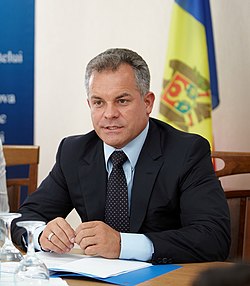 Vladimir PlahotniucVladimir PlahotniucAffiliated
How the record is sourced and how the score is derived.
The score is formula-derived (Factrail formula v1, version 1.0.0), not an editorial verdict. Read the methodology.
By the Factrail desk · Method: how we source and score · Last reviewed
Dispute a fact on this pageNamed here, or represent someone who is? Request a right of reply.
People and organizations as listed in the Related section of this page; facts, drivers and the pages that name it as listed in the blocks here. Counts, not a rating.