
Carmen Wegge
Carmen Wegge (born 24 September 1989 in Hattingen) is a German lawyer and a politician of the Social Democratic Party of Germany (SPD).
- Facts0
- Drivers0
- Indicators0
Carmen Wegge (born 24 September 1989 in Hattingen) is a German lawyer and a politician of the Social Democratic Party of Germany (SPD).
Carmen Wegge (born 24 September 1989 in Hattingen) is a German lawyer and a politician of the Social Democratic Party of Germany (SPD). She has been a member of the Bundestag in its 20th electoral term (2021–2025) and its 21st term. The 20th Bundestag held its constitutive sitting on 26 October 2021. She sits for Bavaria on the SPD state list and is associated with the constituency of Starnberg – Landsberg am Lech.
The Bundestag biography, which the parliament states is based on members' own disclosures, records that she took the Abitur at the Gymnasium Gröbenzell in 2009, studied law at the Ludwig Maximilian University of Munich, began her legal traineeship in Munich in 2016, and in 2018 became a government councillor (Regierungsrätin) in the inclusion office for Upper Bavaria. The same account states that she is married and has one child. In the archived biography for the 20th term she is listed as deputy state chair of the Jusos in Bavaria, a member of the Bavarian SPD executive, and co-spokesperson of the SPD working group on secularism and humanism. The current biography lists her as co-federal chair of SPD Women.
At the 2021 federal election she was the SPD candidate in Starnberg – Landsberg am Lech, then constituency 224, and received 23,985 first votes (13.3 percent). The Christian Social Union in Bavaria won the constituency with 38.2 percent of the first votes, and Wegge entered parliament on the Bavarian SPD list in position 20. She stood in the same constituency again in 2025, by then numbered 223. Michael Kießling of the CSU won the direct seat with 42.9 percent of the first votes; the SPD list there received 24,177 first votes (12.9 percent). Wegge returned via the Bavarian state list, this time in position 12.
Since 21 May 2025 she has been spokesperson of the SPD Bundestag group's working group on legal affairs and consumer protection, a role the group also describes as that of Obfrau for the corresponding committee, and a member of the Bundestag Committee on Legal Affairs and Consumer Protection. The SPD group page also lists her, from the same date, as a member of the committee that elects judges of the federal supreme courts and as a deputy member of the Interior Committee. In the previous term the SPD parliamentary group identified her as its rapporteur for the repeal of section 219a of the Criminal Code, the ban on advertising abortion; the group announced the repeal on 24 June 2022. On 3 June 2022 she told the Bundestag in a written explanation that she had voted for the constitutional amendment on a special fund for the Bundeswehr and against the statute establishing that fund, citing nuclear sharing through F-35 aircraft, the arming of drones, and what she called a one-dimensional idea of security. In 2025 the Frankfurter Allgemeine Zeitung reported that she expected a new motion to ban the Alternative for Germany and that the Christian Democratic–SPD coalition would have to discuss the consequences of the domestic intelligence service's classification of the party as confirmed right-wing extremist.
Carmen Wegge was born on 24 September 1989. The biography published by the German Bundestag, drawn from information supplied by the member, gives her birthplace as Hattingen, a town in the Ennepe-Ruhr-Kreis in North Rhine-Westphalia, in the Ruhr. A September 2021 profile in the Süddeutsche Zeitung instead reported that she was born in 1989 in Sprockhövel, another municipality in the same district, and described her as the child of a working-class family in which social-democratic ideas were present from the start. On her own website she has used the same place, calling Sprockhövel the "cradle of the Ruhr" and the town where she was born.
The 2021 profile dated the family's move to Olching, in the district of Fürstenfeldbruck in Upper Bavaria, to 2006. Wegge has written that she was 15 at the time and that she spent the rest of her youth in Olching; a February 2025 Süddeutsche Zeitung portrait repeats that she was 15 and that the remainder of her youth was spent there. Those accounts do not match exactly: with a birthday of 24 September 1989, she was 16 for most of 2006 and turned 17 that September. A Merkur report during the 2021 campaign, which described her as a 31-year-old lawyer, said that she had spent a large part of her youth in Olching, without dating the move from the Ruhr. The September birthday is corroborated apart from the Bundestag entry: the 2021 profile noted that she would turn 32 on 24 September 2021.
She finished secondary school in the Fürstenfeldbruck district. In 2009 she passed the Abitur at the Gymnasium Gröbenzell, a Gymnasium in Gröbenzell.
The Bundestag biography records that in the same year she began studying law at the Ludwig Maximilian University of Munich. In 2016 she started the Referendariat in Munich, the preparatory service that under section 5b of the German Judiciary Act (Deutsches Richtergesetz) lasts two years and follows university study and the first state examination in law. In 2018 she passed the second state examination in law.
From 2018 she worked as a Regierungsrätin at the Inklusionsamt for Upper Bavaria. That office belongs to the Zentrum Bayern Familie und Soziales, the Bavaria state authority whose inclusion service promotes and secures the employment of people with severe disabilities. A February 2025 Süddeutsche Zeitung profile placed her work in the special protection against dismissal of severely disabled employees and in equal participation in working life, and described her as a civil servant. The Bundestag disclosures, and the parallel record on Abgeordnetenwatch, list the Munich post at the Zentrum Bayern Familie und Soziales as her occupation before she entered parliament and note a right of return (Rückkehrrecht). A BayernSPD candidate form for a state-executive vote on 24 April 2021 likewise gave her profession as lawyer, her then post as Regierungsrätin and her age as 31.
Before the 2021 federal election she told the Süddeutsche Zeitung that, if voters did not send her to Berlin, she wanted to become a judge at a labour court.
Carmen Wegge began performing poetry slam in the mid-2000s, at about 15, after encountering it in the youth programme of the Schauburg in Munich. By November 2015 she had been on stage for about ten years and was organising the "Bless-The-Mic" slam at the Glockenbachwerkstatt and the Schauburg workshops, which the Süddeutsche Zeitung described as Germany's largest scheme for developing young slammers.
While studying law she said she gave about 20 performances a month for roughly two and a half years. In 2021 she put the figure as high as 25 and said workshops had paid for much of the degree. The Süddeutsche Zeitung reported appearances as a slam poet in England, Togo and Côte d'Ivoire, and, separately, three months' work in Barbados. An early text, she said in 2015, was a morbid story about a boy trapped in a computer game; later work turned to women's rights, discrimination, security and data protection. By the 2021 Bundestag campaign a profile described the texts as political throughout and quoted her on slam prose as a way of making politics "human". The 2017 anthology Lautstärke ist weiblich, introduced by Nora Gomringer, lists her among its authors.
In October 2019, in a report on sexual violence that the paper likened to #MeToo, she was quoted as a member of a "Vertrauensgruppe" founded in 2016; active since 2005, she recalled rape jokes backstage and being told, often as the only woman there, not to make a fuss.
She has said that, after moving to Olching, she wrote for the Süddeutsche Zeitung youth page, edited the "Nie Wieder" magazine of the association for international youth encounters and memorial-site work in Dachau, was press spokesperson and later chair of TROJA Olching e.V., which sought a youth café run by young people, and during her studies began moderating for the Munich training channel afk TV.
The 2015 Schauburg programme still had three strands—prose storytelling, lyric and performance poetry, and rap. In school workshops, she said, pupils with a failing mark in German often wrote stronger texts than top students; performance could be learned, and the point was to put pictures in the listener's head. In October 2015 she performed for about 120 upper-secondary pupils at the Gymnasium Neubiberg, with Philipp Potthast and Ko Bylanzky, so that the culture office and German teachers could encourage students to write and perform; a local workshop was planned for later that year. She has said she gave creative-writing workshops at numerous schools in Upper Bavaria.
For her 2021 Bundestag campaign for the Social Democratic Party of Germany she ran a "PolitSlam" tour under the motto "Mutig sein!". Vorwärts reported an opening on 12 August at the Seebad in Starnberg, with the 2018 German-speaking under-20 vice-champion Julius Althoetmar and an SPD district councillor reading, after a writing workshop the weekend before. She said awkward subjects, among them a wealth tax in a district the paper called Germany's richest, worked in a slam text—she called slam "the democratisation of art"—but noted that a lyrical "I" stands between performer and audience, whereas every word of a political speech is weighed.
Wegge has been a member of the Social Democratic Party of Germany (SPD) since 2013. On a candidacy sheet for the Bavarian state executive, dated for the election of 24 April 2021, she gave her district association as Munich, said she had sat on the state executive of the Young Socialists in the SPD (Jusos) in Bavaria since 2018, and stood as the Jusos' nominee for their seat on that body. The Jusos are the SPD's youth organisation. In Bavaria the party magazine describes them as the working group of young socialists and states that SPD members belong until the age of 35.
By February 2021 the Bavarian Jusos identified her as deputy state chair, quoting her on the organisation's constitutional complaint against the state's police-tasks law. The Bundestag biography for the 20th electoral term, drawn from her own disclosure, records that she was latterly deputy state chair of the Bavarian Jusos and a member of the BayernSPD state executive.
At the 74th ordinary state congress in Augsburg on 13 and 14 May 2023, delegates elected a new executive that listed her as a Beisitzerin for Upper Bavaria; the Jusos' designated representative was named separately. The 75th congress, in Landshut on 27 and 28 September 2025, chose the executive again. In the published tally she received 78.97 percent in the Beisitzer ballot, the highest share among those elected, and the BayernSPD leadership page still lists her in that role.
The Parlamentarische Linke (Parliamentary Left) describes itself as the organised wing of left-wing deputies in the SPD Bundestag group. It dates its present form to 1980, when it emerged from the Leverkusen Circle, and says it develops political ideas inside the group and beyond it.
On 22 February 2024 the grouping reported that members had elected Wiebke Esdar, Tim Klüssendorf and Matthias Miersch as spokespersons, with Elisabeth Kaiser remaining treasurer, and a 16-member extended board that included Wegge. On 11 July 2025 she announced that she had been elected a spokesperson. At a summer reception on 23 September 2025, Klüssendorf, by then SPD general secretary, was formally farewelled as a spokesperson; Dagmar Schmidt and Esdar were referred to as spokespersons and Hakan Demir as treasurer, and Wegge, also described as a spokesperson, moderated a quiz. The organisation's website lists Wegge, Esdar and Schmidt as its three spokespersons.
The SPD parliamentary group separately elected her to its 25-member extended executive on 26 September 2023 and again on 3 June 2025. From 15 October 2025 the Bundestag register, based on her disclosure, lists her as unpaid first chair of the Verein zur Förderung der Parlamentarischen Linken in der SPD-Bundestagsfraktion.
In December 2021 the Forum Demokratische Linke 21 named her among its members who had just entered the Bundestag. Founded in 2000, the forum describes itself as an association that seeks to bundle left-wing forces inside the SPD and says membership is open to non-members of the party.
SPD Frauen is the name of the Arbeitsgemeinschaft Sozialdemokratischer Frauen, an SPD working group whose stated purpose is equality of women and men in the party and in society. Female SPD members belong automatically; the organisation puts that figure at about 150,000 women and adopts its own resolutions.
On 15 November 2025 a federal conference of 157 delegates elected Ulrike Häfner and Wegge as federal chairs. Maria Noichl left after eight years, a tenure the party said had begun at the head of the ASF and continued after it was styled SPD Frauen. Häfner and Noichl had been chosen in July 2021 as the ASF's first dual leadership. In a Vorwärts interview later that November, Häfner was introduced as the longer-serving co-chair and Wegge as her partner in the office from 15 November.
The Arbeitskreis Säkularität und Humanismus is an SPD working group for non-religious and humanist members. The party executive decided in April 2022 to establish it, and a founding assembly met at the Willy Brandt House in Berlin, chaired by then general secretary Kevin Kühnert and Katarina Barley. The Humanist Press Service reported that Wegge and Sabine Smentek were elected there as joint spokespersons. In December 2022 they said the group would represent people without a religious affiliation and take up church–state questions, including church employment law, abortion and end-of-life decisions. Vorwärts described it in January 2023 as the SPD's fifth such working group, beside those for Christians, Muslims and Jews. At a federal meeting in Bonn on 14 September 2024, diesseits reported that Wegge and Smentek were re-elected unanimously. The current Bundestag biography, again her own disclosure, lists engagement with the Jusos, membership of that working group's board, and the co-federal chair of SPD Frauen.
At the Bundestag election of 26 September 2021, Carmen Wegge was the candidate of the Social Democratic Party of Germany (SPD) in constituency 224, Starnberg – Landsberg am Lech, and stood 20th on the SPD state list in Bavaria. The Bavarian state election committee approved the lists on 30 July 2021, and the state returning officer’s announcement of 9 August 2021 placed Wegge, a Regierungsrätin living in Munich, at SPD list place 20. Constituency 224 comprised the districts of Landsberg am Lech and Starnberg and, within the district of Fürstenfeldbruck, the municipality of Germering.
Of 214,828 eligible voters, 84.2 percent cast ballots. Michael Kießling of the Christian Social Union in Bavaria (CSU) won the direct seat with 68,617 first votes (38.2 percent, 3.9 percentage points below 2017). Martina Neubauer of Alliance 90/The Greens was the runner-up; the Greens received 35,809 first votes (19.9 percent, up 8.0 points). The SPD took 23,985 first votes (13.3 percent, down 3.3 points) and 28,584 second votes (15.9 percent, up 3.2 points). In Bavaria the SPD polled 1,361,242 second votes (18.0 percent). The final results named 23 SPD candidates as elected from that state list, from place 1 through place 23, including Wegge at place 20, and recorded that she had also stood in constituency 224.
The Bundestag election of 23 February 2025 used the same territory, renumbered as constituency 223, Starnberg – Landsberg am Lech: the districts of Landsberg am Lech and Starnberg, plus Germering. Wegge was again the SPD constituency candidate, and she stood 12th on the Bavarian SPD state list. The state statistical office’s register of nominations, published in February 2025 for the state returning officer, lists her as a former Regierungsrätin and sitting member, resident in Munich, with constituency 223 as her additional candidacy.
Turnout was 87.3 percent of 215,624 eligible voters. Kießling won the direct mandate with 80,441 first votes (42.9 percent, up 4.7 points on 2021). Petra Verena Machnik of the Greens finished second, with 31,311 first votes (16.7 percent). Wegge received 24,177 first votes (12.9 percent, down 0.4 points). Alternative for Germany also took 12.9 percent of the first votes, on 24,187 ballots. SPD second votes in the constituency were 21,606 (11.5 percent, down 4.3 points). Statewide, the SPD’s final second-vote result in Bavaria was 920,675 (11.5 percent, down 6.4 points). The Federal Returning Officer’s publication of preliminary results listed Wegge as elected from Bavarian SPD list place 12, as re-elected, and as a candidate in constituency 223. The 21st Bundestag constituted itself on 25 March 2025.
Wegge did not lead the constituency field in either election, so the seat she took was a list mandate rather than the direct mandate, which Kießling held in both years. For the 20th Bundestag the final results recorded her election from Bavarian SPD list place 20, alongside her candidacy in constituency 224. For the 21st Bundestag, the preliminary results likewise showed a list election at place 12, and the Bundestag’s biography records her as elected via the Bavarian state list, with a constituency candidacy in 223, Starnberg – Landsberg am Lech. That biography lists three constituency offices: Hauptstraße 22 in Starnberg, Hinterer Anger 298 in Landsberg am Lech, and Eugen-Papst-Str. 4 in Germering. From 2021 to 2025 the constituency’s territory—the two districts plus Germering—was unchanged and was only renumbered, from 224 to 223.
From 26 October 2021 to 25 March 2025, in the 20th Bundestag, Carmen Wegge was a full member of the Committee on the Interior and Community and of the Legal Affairs Committee, and a deputy member of the Committee on Culture and Media and of the Subcommittee on European Law. The SPD parliamentary group dates the full seats and the culture-committee deputyship from 13 December 2021, and the European-law deputyship from 15 March 2022.
On 27 January 2022 the Bundestag elected the Richterwahlausschuss, which with the competent federal minister selects judges of the federal supreme courts other than the Federal Constitutional Court. The SPD list received six seats, filled in the order of its motion; Wegge was fifth and was therefore a full member. She was also a secretary of the House (Schriftführerin): her name was on the SPD slate of 26 January 2022, the group records the office from 25 January 2022, and the archived biography lists it for the term. From 5 July 2022 the group places her on the body under Article 13(6) of the Basic Law, which is informed about acoustic surveillance of homes; the biography records full membership.
In the SPD group she was deputy spokesperson for legal affairs from 13 December 2021 and deputy spokesperson of the working group on strategies against right-wing extremism from 14 February 2022. From 26 September 2023 she sat on the group executive and was deputy chair of its Bavarian Landesgruppe.
The current biography records Wegge as a member from 25 March 2025 and as a full member and Obfrau of the Committee on Legal Affairs and Consumer Protection. On 20 May 2025 the SPD group elected her spokesperson of its working group on legal affairs and consumer protection; the group dates that post from 21 May 2025.
On 21 May 2025 the plenary elected her, with Sonja Eichwede and Johannes Fechner, as one of the SPD’s three full members of the Richterwahlausschuss. The SPD substitutes declared elected were Esther Dilcher, Daniel Rinkert and Nina Scheer. The same sitting gave the SPD only two seats on the Wahlausschuss that proposes the Bundestag’s candidates for the Federal Constitutional Court. Those seats went to Eichwede and Dirk Wiese, the first two names on a motion that also listed Wegge. The chamber’s biography nevertheless lists her as a deputy member of that committee.
Her seat on the Committee on Election Scrutiny, Immunity and Rules of Procedure changed during the term. At its constituent meeting on 21 May 2025 she was named, with Fechner and Macit Karaahmetoğlu, as one of three SPD full members on a committee of 14. The SPD group records full membership from 21 May until 9 September 2025 and a deputy membership from 9 September 2025. The biography, last modified on 29 September 2026, lists only the deputy seat, together with deputy seats on the Interior Committee and the Subcommittee on European Law. The group dates the interior deputyship from 21 May 2025 and the European-law deputyship from 16 October 2025.
A separate Wahlprüfungsausschuss examines objections to Bundestag elections. In the factions’ motion reported on 26 June 2025 the SPD deputies were Fechner and Wegge, and the group dates her deputyship from 25 June 2025. The group also lists her, from 4 June 2025, on the Council of Elders commission on the legal status of members, and from 3 June 2025 on the group executive. The 21st-term biography does not list her as a secretary.
Posts outside the chamber are published from members’ own disclosures. The biography states that in 2018 she became a Regierungsrätin, a higher-civil-service grade, in the Inclusion Office for Upper Bavaria; the disclosure names the Zentrum Bayern Familie und Soziales in Munich, with a right of return, as the pre-parliamentary employer. The 20th-term file also recorded self-employed moderation and workshops in Munich.
She is a deputy member of the board of trustees of the Federal Foundation for Equality in Berlin, dated from 8 August 2022 in the archive and still listed. Since 25 April 2022 she has been a member of the advisory board of the Schlichtungsstelle der Rechtsanwaltschaft in Berlin. From 25 June 2025 she has been a trustee of the Federal Foundation Magnus Hirschfeld, and the disclosure lists her as auditor of Planet Slam e.V. in Munich. She sat on the advisory board of the Stiftung Datenschutz in Leipzig from 31 May 2022 until 13 November 2025. The SPD group’s list instead records a deputy seat on that board from 11 November 2025, which does not match the disclosure’s end date. Since 15 October 2025 she has been unpaid first chair of the association supporting the Parliamentary Left in the SPD Bundestag group.
Wegge, a lawyer for the Social Democratic Party of Germany (SPD), spoke for the group in the Bundestag on 24 June 2022, the 45th sitting of the 20th term, on the bill to repeal section 219a of the Criminal Code, which had criminalised public information about abortion. The SPD, Alliance 90/The Greens, the Free Democratic Party and Die Linke voted in favour; the CDU/CSU and the Alternative for Germany voted against, with no abstentions. The bill also amended the Heilmittelwerbegesetz and the Pregnancy Conflict Act.
Wegge said doctors would no longer be criminalised for informing patients. Lurid advertising, she said, was already forbidden, and the Federal Constitutional Court had not mentioned section 219a in its two judgments on the protection of unborn life. The Conflict Act was amended so Länder could not restore a ban by medical-chamber rules, and so clinics and doctors could state method, medication and side effects, including online. AfD member Carolin Bachmann asked why Wegge, a mother, was "euphoric" and spoke of "100,000 babies" aborted; Wegge said her motherhood was irrelevant. CDU/CSU deputy Dorothee Bär said women needed "a factual, a calm, a helpful hand and no party cannons", and that for her, "as a self-determined woman and as a mother of three children", it was not a happy day.
A commission of 18 experts, meeting from 31 March 2023, reported on 15 April 2024 to ministers Lisa Paus, Karl Lauterbach and Marco Buschmann. Early abortions, it said, should be lawful, not merely exempt from punishment; parliament should keep discretion later in pregnancy; exceptions, including danger to the woman's health, should remain. A group bill the Deutsches Ärzteblatt called Wegge's initiative, with 327 signatories, had its first reading on 5 December 2024. She said women and doctors would be decriminalised and that liability after the twelfth week would stay. CDU legal-committee chair Elisabeth Winkelmeier-Becker said the existing rules already joined "free access" to protection of unborn life. AfD deputy Beatrix von Storch said the sponsors wanted to "burn down" the compromise "for purely ideological reasons", and Bär said that "with us, protection of life is not negotiable." The FDP, including Gyde Jensen, would not force a vote before the early election, and none was taken.
The 2025 CDU/CSU–SPD agreement left abortion in the Criminal Code. It promised help for women with an unwanted pregnancy "in order to protect unborn life as well as possible", safer local care, wider statutory-insurance coverage and more medical training. In November 2025 Wegge still called abortion "a question of self-determination, not of criminal law", and said decriminalisation was required if clinics and doctors were to have a secure legal framework.
Wegge negotiated the Cannabis Act for the SPD; it passed on 23 February 2024. Dirk Heidenblut was the SPD rapporteur in the health committee and Wegge in the legal committee. From 1 April 2024 adults could keep up to 25 grams in public and grow three plants; from 1 July they could cultivate in non-commercial associations. Use under 18, and near schools and playgrounds, stayed banned. Bundesrat consent was not required. Commercial pilot shops, a second pillar announced by Lauterbach and agriculture minister Cem Özdemir, had still not been introduced as a bill by September 2024.
Wegge told Legal Tribune Online that warnings of more than 100,000 amnesty files were "massively exaggerated". Edgar Pinkowski, president of the Hessian medical chamber, called the vote a "black day for addiction prevention" and a trivialisation of a drug linked to dependence, cognitive deficits, psychoses and depression in the young. Alexander Poitz of the police union called it a "stimulus programme for organised crime" and said a ban on use "within sight" of schools could not be policed. The 2025 coalition agreement did not authorise commercial retail; it set an open-ended evaluation for autumn 2025.
Draft 21/3061 would then tighten medical cannabis. Imports of flowers rose 170 percent from the first to the second half of 2024, against a 9 percent rise in statutory-insurance prescriptions, which the draft tied to telemedicine and private scripts. Prescribing flowers would need an in-person visit, repeated at least every four quarters, and mail order would end, though pharmacy couriers would remain. On 13 October 2025 Wegge wrote that the SPD would not carry that text: the rules, she said, breached professional and patient freedom and EU free movement, and would hit chronically ill and less mobile patients. The group would seek fundamental changes in committee.
As legal-policy rapporteur, Wegge handled the second amendment of the Pregnancy Conflict Act, passed on 5 July 2024, limiting harassment outside clinics and counselling centres. Within 100 metres of an entrance, defined conduct can be fined by up to 5,000 euro; staff are covered as well as pregnant women. She said it blocked women's rights, disturbed open-ended counselling, and led doctors to stop offering abortions. The ban also covers pressing a view against a woman's will, heavy pressure and false claims. Minister Lisa Paus called that a compromise with freedom of opinion and assembly. The Bundesrat agreed on 27 September 2024.
On 8 May 2026, with Wegge the SPD Obfrau of the Committee for Legal Affairs and Consumer Protection, the Bundestag allowed family courts to order electronic ankle monitoring in domestic-violence cases. The CDU/CSU, SPD, AfD and Greens voted yes; Die Linke abstained. Justice minister Stefanie Hubig cited Spain, in use since 2009, where she said no user of the warning system had since been killed. CDU deputy Günther Krings said women often feared harm "in their own home". Left deputy Aaron Valent called the monitor alone "authoritarian symbolic politics". Courts may also order anti-violence courses, and the maximum for breaching a protection order rises from two years to three.
On 26 June 2025 the Bundestag extended the Mietpreisbremse, the cap on new-lease rents in tight markets named by the Länder, to the end of 2029, the four years in the coalition agreement. The CDU/CSU, SPD and Greens voted in favour, the AfD against, and Die Linke abstained. CDU/CSU spokesman Jan-Marco Luczak called it only "an instrument for the transition". Kai Warnecke of Haus & Grund said it meant less and worse housing; AfD member Rainer Galla said it had created not one dwelling, "rather the opposite."
On 3 June 2022 the Bundestag voted on financing the Bundeswehr after Russia's war against Ukraine. An amendment to Article 87a of the Basic Law, allowing credit for a special fund outside the debt brake, passed with 568 votes in favour and 96 against, out of 684 cast. Carmen Wegge voted yes. Eight members of the Social Democratic Party voted no: Jan Dieren, Axel Echeverria, Erik von Malottki, Jessica Rosenthal, Tina Rudolph, Nadja Sthamer, Ruppert Stüwe and Carolin Wagner. The statute creating the "Sondervermögen Bundeswehr", with a credit authorization of up to €100 billion, then passed by 590 to 80, with seven abstentions, out of 677 votes cast. Wegge was one of nine SPD votes against, with Dieren, Martin Kröber, von Malottki, Rosenthal, Rudolph, Sthamer, Stüwe and Wagner; Echeverria abstained.
In a written explanation under the rules of procedure she said she backed the constitutional change because, with no majority to abolish the debt brake, the fund was the only way to re-equip forces she considered unable to defend the country without cutting social or climate spending. She rejected the statute because its F-35 purchase committed Germany to nuclear sharing; because it would finance armed drones, which she said lowered the threshold for war and endangered civilians, citing Living under Drones; and because a focus on the Bundeswehr alone left out diplomacy and development cooperation.
Only the Federal Constitutional Court may find a party unconstitutional under Article 21 of the Basic Law, on an application by the Bundestag, the Bundesrat or the federal government; exclusion from state funding is a lesser alternative. In January 2017 the court refused to ban the National Democratic Party of Germany for lack of concrete indications that it could succeed, abandoning the view in the Communist Party of Germany judgment that poor prospects were no bar, and treating that ban and the ban of the Socialist Reich Party as the precedents (BVerfGE 5, 85 and 2, 1).
On 13 November 2024 Wegge was a lead signatory, with Marco Wanderwitz (Christian Democratic Union), Till Steffen (Alliance 90/The Greens), Martina Renner (Die Linke) and Stefan Seidler (South Schleswig Voters' Association), of group motion 20/13750. The text, signed by 124 members and not moved by any parliamentary group, asked the Bundestag to seek a finding that the Alternative for Germany (AfD) is unconstitutional, with confiscation of its assets for charitable purposes or, alternatively, exclusion from state funding, and to have informants withdrawn before counsel was instructed. The Frankfurter Allgemeine Zeitung recorded on 21 January 2025 that she had wanted a vote only if a majority looked likely.
On 30 January 2025 the Bundestag debated it alongside printed paper 20/14105, from 43 Green members who wanted an opinion on the chances of success first, and referred both texts to the interior committee without a vote. Wegge invoked 1933 and Article 21; Wanderwitz spoke of opening "the door to Karlsruhe". Konstantin Kuhle of the Free Democratic Party warned against cutting off voters with legitimate concerns, and Ansgar Heveling (CDU) said the evidence and official cooperation the court required were missing, so a brief would lapse with the term. Jessica Tatti of the Sahra Wagenknecht Alliance called the debate an election gift to the AfD; Peter Boehringer (AfD) said a case would fail. Tagesschau reported on 27 February that 124 signatures were not a majority and the sponsors had to start again.
In early May 2025 the Federal Office for the Protection of the Constitution classified the AfD as confirmed right-wing extremist, citing party-wide disregard of human dignity; the AfD sued, and public use of the label was paused. Chancellor Friedrich Merz said a procedure "from the middle of the Bundestag" smelled of "the political elimination of competitors". In December 2025 Wegge said the youth organisation Generation Deutschland, more radical than its predecessor and attributable to the party, had improved the chances of success. On 26 February 2026 the Cologne Administrative Court temporarily barred treating the AfD as confirmed right-wing extremist, finding efforts that did not dominate its character; Wegge still wanted a Karlsruhe examination. Wolfgang Schroeder warned that failure would mark the party as democratically compatible, and Uwe Volkmann told the Frankfurter Allgemeine in October 2026 that defeat would upgrade it and rule out a later case. That month unknowns published what they called about 421,000 hacked AfD emails; the party confirmed a September attack on mostly unused accounts at a hosting provider, said current federal-office mail was untouched, and disputed authenticity. Wegge told the Augsburger Allgemeine the material should be evaluated for a ban case, while the Frankfurter Allgemeine reported forgeries, including screenshots not in the leaked set.
On 20 March 2024 Wegge asked Interior Minister Nancy Faeser how to stop right-wing extremists holding weapons legally. Faeser said a draft had not reached cabinet and that an evaluation supported weapon-ban zones and a ban on certain war-weapon-like long guns, as well as tighter fitness checks. Wegge was an SPD rapporteur, with Helge Lindh, at the 23 September 2024 hearing on the coalition's internal-security and asylum bill (printed paper 20/12805). Introduced after the Solingen attack of 23 August 2024, the bill named weapons law as one of three fields and said the extremist threat was not confined to Islamism.
The Süddeutsche Zeitung has given the fullest account of Carmen Wegge as a lawyer in the SPD Bundestag group, with a poetry-slam past and a place on the party's left. On 2 March 2022 its podcast "Von Starnberg nach Berlin" reported her cannabis campaign, a divided reaction to that slogan, a first joint at 14, the phrase "wesentlich leckerer als eine Zigarette", and her claim that cannabis instead of beer at the Oktoberfest would mean no brawls and no sexual assaults. It later reported her election, on 21 May 2025, as spokesperson for legal affairs and consumer protection and, on 13 July 2025, as a spokesperson of the Parlamentarische Linke, the group's left wing of more than 50 members, succeeding Tim Klüssendorf.
The Frankfurter Allgemeine Zeitung interviewed her on 21 January 2025 on an AfD ban motion before the federal election ("Jetzt ist der Moment erreicht") and on 2 May 2025 reported that she expected a new motion after the party was classified "gesichert rechtsextremistisch", saying the Federal Constitutional Court had to examine the AfD. Der Spiegel quoted her in September 2025 calling partial legalization "der richtige und längst überfällige" step. In October 2026 ARD's tagesschau.de reported her remark, as federal chair of the SPD women, that the Union feared "starke SPD-Frauen".
That reporting records disagreement over those files, not a separate personal scandal.
On 24 June 2022 the Bundestag repealed section 219a, with Wegge among the speakers; the CDU/CSU and the AfD voted against. The Union called the advertising ban a "red line" for unborn life that professional rules could not replace; AfD motions said repeal would weaken that protection and could banalize abortion as an ordinary medical service. After a 2025 evaluation found cultivation associations had supplied under 0.1 percent of estimated cannabis demand, Health Minister Nina Warken (CDU) spoke of "bedenkliche Tendenzen", while Wegge defended decriminalization.
On the ban motion she filed with Marco Wanderwitz (CDU) and others, the Süddeutsche Zeitung reported in February 2025 that CSU member Katrin Staffler preferred to "wegregieren" rather than "wegverbieten" the AfD, that SPD colleague Michael Schrodi called the timing not useful until a planned assault on the free democratic basic order was proved, and that Green member Beate Walter-Rosenheimer warned of a "rechtliches und politisches Fiasko". In November 2025 it reported Wegge refusing to share a platform with AfD functionaries and asking whether failing with a ban application was worse than never filing one. A Frankfurter Allgemeine commentary on 19 October 2026 called her charge that the Union had "Angst vor starken Frauen", made in defence of Manuela Schwesig in the dispute over Bärbel Bas, a "Totschlagargument" and "umgekehrter Sexismus".
On abgeordnetenwatch.de, which counts only questions during current candidacies and mandates, her profile showed a 95 percent response rate (109 of 115) and her pledges on corporate donations, an independent transparency audit, an effective lobby register, and publication of her income, expenditure and lobby contacts.
Sections 45 and 47 of the Members of the Bundestag Act require notice of the last occupation, specified offices, paid outside work and shareholdings above 5 percent, and of income above 1,000 euro a month or 3,000 euro a year; the Bundestag publishes those facts. Her entry of 25 October 2026 lists a return right as Regierungsrätin at the Zentrum Bayern Familie und Soziales, offices at the equality, Magnus Hirschfeld and (until 13 November 2025) data-protection foundations, the lawyers' arbitration board and Planet Slam, and an honorary chairmanship, with no income amounts. The Lobby Register Act requires interest representatives, not members, to register identity, subjects and banded finances, and does not list meetings with named members. On her own site she states that she has no side income or shareholdings and posts a meeting log, while writing that voluntary commitments do not replace stricter rules.
The biography published by the Bundestag, drawn from Wegge's own statements, records that she was born on 24 September 1989 in Hattingen, that she is married and that she has one child. On her website she writes that she married in 2019 and that she and her spouse became parents of a daughter at the end of 2020, without naming either relative, and introduces herself as a "Juristin, Künstlerin, Antifaschistin und junge Mutter" (jurist, artist, antifascist and young mother). A Münchner Merkur profile of 13 February 2025 likewise listed her as married with one child, gave her occupation as jurist and named poetry slam as a hobby. The Bundestag page states no private home address. It lists a parliamentary office in Berlin and constituency offices in Starnberg, Landsberg am Lech and Germering.
The same biography lists membership of Planet Slam e.V. in Munich, where a separate notice of outside offices names her as Revisorin (auditor); Slam Alphas; the Willy Brandt Center; the Arbeiterwohlfahrt (AWO); ver.di; the Sozialistische Jugend Deutschlands – Die Falken; the Kulturforum der Sozialdemokratie in Munich e.V.; Endstation Rechts.; the Institut für Information und Dokumentation e.V.; the Trägerverein der Georg-von-Vollmar-Akademie e.V.; and LEAP Deutschland e.V. The Willy Brandt Center describes itself as a meeting place in Jerusalem, founded in 1996 on the initiative of the Jusos, for young people from Israel, Palestine and elsewhere. The AWO federal association presents the Arbeiterwohlfahrt as a welfare organization that for more than a century has stood for freedom, equality, justice, solidarity and tolerance, and that represents its regional associations. ver.di, the Vereinte Dienstleistungsgewerkschaft, states that it organizes about 1.8 million people in roughly 1,000 occupations in services and related industries. Die Falken describe themselves as an independent, self-organized political and educational children's and youth association in the workers' youth movement, aiming at a socialist society based on freedom, equality and solidarity. Endstation Rechts. is an online portal on right-wing extremism formed in 2022 by merging a project begun in 2005 by the Jusos in Mecklenburg-Vorpommern with the service "blick nach rechts"; its publisher is the Institut für Information und Dokumentation e.V., also on Wegge's list. LEAP Deutschland e.V., the German association of Law Enforcement Against Prohibition, says it was founded in Berlin in 2015 to publicize the harms of drug prohibition and to promote education and crime prevention.
Ranked by shared high-impact facts, then explicit ties, then shared drivers.
 Bärbel BasBärbel Bas (born 3 May 1968) is a German politician of the…Affiliated
 Tim KlüssendorfTim Klüssendorf (born 16 August 1991 in Lübeck) is a…Affiliated
 Carolin WagnerDrAffiliated
 Friedrich MerzFriedrich Merz has been Chancellor of Germany since May…Affiliated
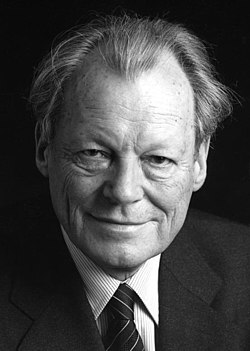 Willy BrandtWilly Brandt (born Herbert Ernst Karl FrahmAffiliated
 Katarina BarleyKatarina Barley (born 19 November 1968 in Cologne) is a…Affiliated
How the record is sourced and how the score is derived.
The score is formula-derived (Factrail formula v1, version 1.0.0), not an editorial verdict. Read the methodology.
By the Factrail desk · Method: how we source and score · Last reviewed
Dispute a fact on this pageNamed here, or represent someone who is? Request a right of reply.
People and organizations as listed in the Related section of this page; facts, drivers and the pages that name it as listed in the blocks here. Counts, not a rating.