
Conrad Clemens
Conrad Clemens (born 4 January 1983 in Schönebeck (Elbe); the 2024 constituency ballot listed him as Christian Conrad Clemens) is a German politician…
- Facts0
- Drivers0
- Indicators0
Conrad Clemens (born 4 January 1983 in Schönebeck (Elbe); the 2024 constituency ballot listed him as Christian Conrad Clemens) is a German politician…
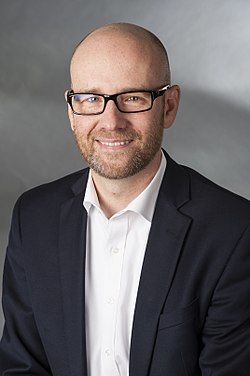
Official portrait of Conrad Clemens, Saxon Minister of Education.
Conrad Clemens (born 4 January 1983 in Schönebeck (Elbe); the 2024 constituency ballot listed him as Christian Conrad Clemens) is a German politician of the Christian Democratic Union (CDU). Since 19 December 2024 he has been Saxony’s state minister for education (Staatsminister für Kultus) in the third cabinet of Minister-President Michael Kretschmer. He has sat in the Landtag of Saxony since October 2024 on a party-list mandate and, since December 2024, has been a deputy member of the German Bundesrat and a member of its committee for cultural affairs. The Landtag lists him as married and Protestant, with his home in Herrnhut.
He studied international business administration at the European University Viadrina in Frankfurt (Oder) and in Maastricht from 2002 to 2005, and took a master’s degree in Vancouver from 2005 to 2007. He then enrolled for a doctorate at the Otto-Suhr-Institut of the Free University of Berlin; the education ministry dates that study to 2008–2010, while the Landtag biography dates it to 2007–2011, and neither record states that a doctorate was awarded. From 2011 to 2012 he was a consultant at the audit firm PwC, and from 2013 to 2014 an office manager in the Bundestag. A CDU member since 2001, he was federal managing director of the Young Union (Junge Union) from 2014 to 2018, a period in which the ministry says he directed the CDU’s mobilisation and door-to-door campaign for the 2017 federal election, and state managing director of the CDU in Saxony from 2018 to 2019, when he organised the campaign for that year’s Landtag election.
In 2019 he became a state secretary in the Saxon State Chancellery and the Free State’s plenipotentiary to the federal government, heading Saxony’s representation in Berlin. In July 2024 he was appointed head of the State Chancellery and state minister for federal affairs and the media, offices he left at the December 2024 reshuffle. At the Landtag election of 1 September 2024 he stood for the CDU in Görlitz 3 and received 36.1 percent of the constituency votes (12,726), behind Roman Golombek of the Alternative for Germany on 43.0 percent (15,138); he entered the Landtag on the party list.
As education minister he has called the civil-service status of teachers “aus der Zeit gefallen” and has argued that Saxony cannot afford wide use of that status indefinitely, while seeking a common line among the Länder rather than a Saxon decision on its own. Saxony began making teachers civil servants only in 2019, the practice is time-limited until 2030, and the ministry has put the share at about 40 percent of roughly 32,000 teachers in public schools. Separately, on 7 July 2026 the Amtsgericht Weißwasser found him guilty of an illegal motor-vehicle race after a September 2023 camera recorded 81 km/h in a 30 km/h zone at a retirement residence in Krauschwitz, when he still headed Saxony’s Berlin office. The court issued a warning with a reserved penalty of 60 daily rates of 400 euro (24,000 euro) on two years’ probation, plus 8,500 euro to the Weißer Ring and 20 driving lessons; the prosecution and the defence had both sought an acquittal or a discontinuance, the judgment was not final, and Clemens said he would appeal. The Landtag had lifted his parliamentary immunity in May 2025 so that the criminal case could go ahead.
Conrad Clemens was born on 4 January 1983 in Schönebeck (Elbe), then in the German Democratic Republic. The Saxon Landtag records the same year and town. In a profile for the project Wir sind der Osten he said that he was born and grew up in Schönebeck and attended a GDR primary school. He has written that his family's home is Upper Lusatia, and in particular Herrnhut in Saxony, where a small terraced house already belonged to his grandfather, and that, because his father is pastor of the Herrnhut congregation, he fits "almost all the clichés of a pastor's child."
The family is connected to the Moravian Church (Herrnhuter Brüdergemeine), the Protestant church whose founding settlement is Herrnhut. The Saxon government has described Clemens as a member of the Brüdergemeine, and the Landtag lists his confession as Protestant. He has said that his parents were not allowed to take the Abitur: in one interview he linked that bar to their being Christians outside the ruling party, and in another to their not belonging to the Free German Youth, adding that they later completed the qualification in evening classes after work. He has also said that they were taken aback when, at 18, he joined the Christian Democratic Union; the Landtag dates that membership from 2001.
After German reunification his parents wanted to work abroad. In the 1990s the family lived for several years in Suriname, where they were employed; he has written that he saw "bitter poverty and impressive cultural diversity" there. Munzinger records that part of his childhood was spent in Suriname and that his father later served as pastor in the Böhmisches Dorf (Bohemian Village) in Berlin-Neukölln, a Moravian enclave, so that Clemens spent part of his youth there. In the same Osten profile he said the family was in Neukölln for a long time and that he took his Abitur there before returning east for university.
From 2002 Clemens studied international business administration. The education ministry and the Bundesrat place a first phase, at the European University Viadrina in Frankfurt (Oder) and in Maastricht, in 2002–2005, and a master's degree taken in Vancouver in 2005–2007. The Landtag instead groups Viadrina, Maastricht and Vancouver in one entry for 2002–2007 and lists his qualification as an M.A. and a B.A. in business administration. He has written that he studied business at the Viadrina, completed a bachelor's and a master's degree, and spent periods of study in Maastricht and Vancouver. Neither the ministry nor the Bundesrat names the Canadian university.
He then began doctoral studies in political science at the Otto-Suhr-Institut of the Free University of Berlin. The dates are not uniform: the Landtag and the Bundesrat give 2007–2011, the education ministry 2008–2010, and Munzinger 2008–2011. Munzinger states that the doctorate was not completed. No official biography records a doctoral degree, and the Landtag's occupational line remains the two business degrees. After that period he worked briefly as a consultant at the audit firm PwC and in the Bundestag before moving into full-time party management and, later, senior offices in the Saxon government.
Clemens joined the Christian Democratic Union of Germany (CDU) in 2001. He has placed his first party work at age 18, staffing an information stand for the Junge Union, the CDU's youth organization, in Berlin, where he took his Abitur in the borough of Neukölln. In a later interview he described that local Junge Union as occupied with practical district questions, including temporary use of empty shops, new higher-education sites and tickets for apprentices.
From 2006 to 2011 he was a Bezirksverordneter, a member of Neukölln's Bezirksverordnetenversammlung, the elected borough assembly. The mandate overlapped doctoral study at the Otto-Suhr-Institut of the Free University of Berlin, which the Munzinger biographical archive dates to 2008–2011 and records as unfinished. After the 2006 borough election the Social Democratic Party (SPD), the Linkspartei and Alliance 90/The Greens formed a Zählgemeinschaft, or counting alliance, with 30 of the assembly's 55 seats and kept the SPD's Heinz Buschkowsky as Bezirksbürgermeister. Their agreement emphasized education, youth work, integration and the redevelopment of northern Neukölln, a borough then of about 305,900 residents, with an unemployment rate of 22.4 percent against a Berlin average of 17.4 percent. Clemens's seat ended with that legislative period in 2011.
In 2009 Clemens became Landesvorsitzender, state chairman, of the Junge Union Berlin, and he held the office for three years. On 2 June 2012, at the organization's Berlin-Brandenburg congress in Potsdam, the lawyer Christoph Brzezinski, then 25, was elected successor with 82 percent of the delegate vote. The Junge Union said Brzezinski put the economy and education at the center of his opening speech; the same congress discussed Berlin's internet start-up scene with the city's economy senator, Sybille von Obernitz.
Two campaigns drew wider notice while Clemens chaired the Berlin organization. In September 2009 he and fellow activist David Cywinski, then 26 and 21, carried about 500 numbered table-tennis balls into the Abgeordnetenhaus of Berlin and sent them down a foyer staircase. The action opposed the "Schülerlotto" in the school plans of the SPD–Left state government. Education senator Jürgen Zöllner (SPD) proposed that, where a Gymnasium or the planned Sekundarschule had more applicants than places, head teachers would assign 60 percent, 10 percent would be kept for hardship cases, and 30 percent would be drawn by lot. Police took the pair's details on suspicion of trespass. Clemens said that nobody wanted the student lottery, and that even supporters of the SPD and the Left rejected parts of the reform.
In July 2010 the Berlin Junge Union issued a release headed "Stoppt die Generation Porno! Wir fordern ein Pornografieverbot im Internet!" It demanded blocking of child-sexual-abuse imagery, workable age limits against what it called a wave of pornography, and education programs for parents and children, with the aim of an effective ban on pornography for minors online. Clemens told the taz that pornography was "always misogynistic," that pages without age labeling should be blocked, and that talk of censorship was "complete nonsense" because Germany was a Rechtsstaat. The release, as reported at the time, invoked the Institute for Sexual Science and Sexual Medicine at the Charité on harm to young people's sexual development and named commercial pornographic websites. The line conflicted with a decision, taken days earlier by the federal Junge Union's Deutschlandrat, in favor of "deletion instead of blocking." Clemens said he knew that resolution and largely shared it, but treated minors' access to pornography as a separate subject. The Berlin text was then removed from the organization's website.
Official biographies next list him as a consultant at the audit and advisory network PwC in 2011–2012 and as an office manager in the German Bundestag in 2013–2014. Reporting his move, on 1 December 2014, to head the federal office of the Junge Union Deutschlands, the magazine politik&kommunikation identified the Bundestag job as office manager to the CDU deputy Roderich Kiesewetter and the job before it as consultant at PricewaterhouseCoopers.
On 1 December 2014 Conrad Clemens, then 31, became federal managing director (Bundesgeschäftsführer) of the Junge Union Deutschlands, the joint youth organization of the Christian Democratic Union (CDU) and the Christian Social Union. politik&kommunikation reported that he succeeded Alexander Humbert, who had directed the federal office since 2010, and that Clemens had immediately before been office manager to the CDU member of the Bundestag Roderich Kiesewetter and a consultant at PricewaterhouseCoopers. The Konrad Adenauer Foundation's list of JU federal executives dates the term 2014–2018 and records that he served until 17 March 2018, when Philipp Müller took the post the next day. That foundation roster of the executive chosen at the Deutschlandtag of 19–21 September 2014 in Inzell still names Humbert, which fits a handover after the congress rather than at it; a 2019 personnel note still described Müller as federal managing director since 2018.
The post is the association's full-time administration, separate from the elected chairman. In the statutes dated 22 October 2023, the federal managing director runs the federal association's business in agreement with the chairman, heads the federal office and sits in an advisory capacity on every federal organ. The federal executive appoints and dismisses the managing director on the chairman's proposal. The holder represents the association, on the chairman's instructions, as a special representative under section 30 of the Civil Code and is the superior of its employees. Throughout Clemens's term the chairman was Paul Ziemiak, elected at Inzell in 2014 and listed by the foundation for 2014–2019.
The office put him inside the CDU's 2017 federal campaign, but not at its political head. In April 2017 Die Welt described a "Connect 17" group at party headquarters in Berlin: activists around Clemens used half a floor given by general secretary Peter Tauber, with a dummy front door for rehearsing doorstep canvassing, and the unit was presented as the model for campaigning for Chancellor Angela Merkel. The paper reported that in the Saarland state election, supporters working with the state CDU had called at 75,000 doors, almost a fifth of households, using a constituency analysis to choose addresses and an app to log issues and reactions. It traced the method to Mario Voigt, with campaign director Stefan Hennewig and federal manager Klaus Schüler also involved, and cast Clemens as supplying the JU rank and file; Tauber, it wrote, had adopted the plan about eighteen months earlier against resistance in some large state associations. On 20 September 2017 Der Tagesspiegel reported that the Connect17 app directed volunteers to streets thought to hold CDU-inclined voters, and quoted Tauber that voters took a doorstep conversation as a mark of regard. An April 2018 personnel note said Clemens had led the Connect17 mobilization team in 2017. The Saxon education ministry later states more broadly that in 2014–2018 he was responsible for the CDU's mobilization and door-to-door campaign for that election; the Landtag of Saxony records the JU years without assigning him the campaign.
The vote on 24 September 2017 left the CDU the largest single party but well below its previous share. In the federal returning officer's final result the CDU took 26.8 percent of valid second votes, against 34.1 percent in 2013, and the CSU 6.2 percent, against 7.4 percent; turnout was 76.2 percent, up from 71.5 percent.
On 13 April 2018 the CDU state executive in Saxony elected Clemens, then 35, Landesgeschäftsführer on the proposal of state chairman and minister-president Michael Kretschmer, to whom he was to report. The same account called him the central campaign manager for the municipal, European and Landtag elections in the state in 2019. The Konrad Adenauer Foundation's table of the state association's business managers lists him for 2018–2019, after Stephan Lechner (2005–2017) and before Rainer Burgold (May to October 2020), and keeps that salaried office apart from the general secretary, where Alexander Dierks is listed from 2017. The Landtag biography gives 2018 to 2019 as state managing director of the CDU in Saxony. The education ministry, which calls the association the Sächsische Union, states that he organized the 2019 Landtag campaign; Sächsische Zeitung wrote the same in a 2024 profile.
The Landtag election was held on 1 September 2019. In the final results published by the state statistical office, the CDU received 695,560 list votes, 32.1 percent, and 32.5 percent of constituency votes. Its list share in 2014 had been 39.4 percent. On list votes in 2019 the Alternative for Germany was next with 27.5 percent, then Die Linke with 10.4 percent, Alliance 90/The Greens with 8.6 percent and the Social Democratic Party with 7.7 percent; the Free Democratic Party received 4.5 percent. Turnout was 66.5 percent, compared with 49.1 percent in 2014. The party appointment ended as the new government was formed. On 20 December 2019 Kretschmer presented his cabinet, and the state government's notice named Clemens as state secretary to the head of the state chancellery, working from Saxony's representation in Berlin.
On 20 December 2019, presenting the new cabinet of the Christian Democratic Union, Alliance 90/The Greens and the Social Democratic Party in Dresden, Minister-President Michael Kretschmer named Conrad Clemens state secretary in the Saxon State Chancellery, to support chancellery chief Oliver Schenk from the Free State of Saxony's representation in Berlin. A personnel note of 6 January 2020 reported that Kretschmer had that day made him state secretary and plenipotentiary to the Federation (Bevollmächtigter des Freistaates Sachsen beim Bund), succeeding Erhard Weimann, after Clemens had run the CDU's 2019 Landtag campaign as state managing director. The State Chancellery later dated the plenipotentiary appointment to 2019, as did the cabinet release of 19 December 2024. The Landtag biography instead gives "2020 bis 2024", the first full calendar year after 20 December 2019 through the end of the post.
The representation belongs to the State Chancellery and is the state's link between federal and Land politics. It represents Saxony in the Bundesrat, the Bundestag and before the federal government; the plenipotentiary's staff tracks federal bills for their effect on Saxony and works with the Dresden ministries to insert the state's line. The office prepares how Saxony's four votes, of 69 in the Bundesrat, are cast as one bloc, and the sixteen plenipotentiaries sit on the Bundesrat's permanent advisory council.
A profile written while he was state secretary, and while it listed him as living in Berlin, quoted him as constantly between Saxony and the capital in that representative role. He described the job as working, day to day, on remaining east–west gaps in pensions, infrastructure and the siting of federal authorities, centred on Saxony and often with the other eastern states. On 11 February 2022 the Bundesrat named him to the administrative board of the Filmförderungsanstalt for two years, again filling the "B" Länder seat; Hamburg culture senator Carsten Brosda was named for the "A" side, with the formal call made by the federal culture commissioner. That board settles questions of principle and the agency's budget; the agency funds German film and is meant to align federal and state support.
In the night before Sunday 5 June 2022, unknown people smashed several windows of the representation and sprayed the facade black. Clemens, as its head, then drew attention to a claim of responsibility from the far-left scene and said that using raw violence in political argument leaves the democratic spectrum, that the letter showed a deliberate attack on the state and the judiciary, and that nothing excused it. Welt, citing dpa, reported that the letter tied the attack to the Dresden Higher Regional Court trial of alleged members of a militant far-left group, demanding solidarity with the principal defendant, and that Berlin's state-security police had taken the investigation.
On 21 June 2024 in Dresden, Kretschmer gave Clemens a certificate appointing him, from 16 July 2024, head of the State Chancellery (Chef der Staatskanzlei) and state minister for federal affairs and the media. He replaced Oliver Schenk, chancellery chief since 2017 and until then state minister for federal and European affairs, who resigned as of 15 July 2024 after election to the European Parliament. Kretschmer pointed to Clemens's record in political steering, coordination and planning, and to his lobbying for Saxony in Berlin; of Schenk he stressed the coordination of government business. The Bundesrat lists Clemens as a full member from 6 August 2024 to 19 December 2024, and as a deputy member after that.
The media brief put him into the Länder talks on public broadcasting. On 24 October 2024, during the Minister-Presidents' Conference in Leipzig, Deutschlandfunk reported that the states hoped to settle a reform treaty for public broadcasting by the end of the week, and quoted Clemens telling newspapers of the Mediengruppe Bayern that agreement already existed to drop 20 radio stations. He said directors' pay should follow the public service, so that the federal chancellor's salary would be the ceiling, and that he was optimistic sports-rights spending would not rise further as a share of programme costs. For that period the Landtag register lists him as an unpaid member of the supervisory board of Mitteldeutsche Medienförderung GmbH.
Both offices ended with the third Kretschmer cabinet. On 19 December 2024 Kretschmer presented a CDU–SPD government and appointed Clemens state minister for education; the release notes that the chancellery and media appointment had come in July. The Landtag dates those posts until 19 December 2024. Andreas Handschuh, state secretary in the science ministry since July 2022, was named head of the State Chancellery and state secretary for federal and European affairs, sitting as a member of the state government.
Conrad Clemens stood for the Christian Democratic Union of Germany (CDU) in constituency 59, Görlitz 3, at the 2024 Saxony state election on 1 September 2024, the poll that returned the 120 members of the eighth Landtag of Saxony. The annex to the Saxon electoral law places that constituency in the district of Görlitz and assigns it the municipalities of Beiersdorf, Bernstadt auf dem Eigen, Dürrhennersdorf, Ebersbach-Neugersdorf, Großschweidnitz, Herrnhut, Kottmar, Lawalde, Löbau, Neusalza-Spremberg, Oppach, Ostritz, Rosenbach, Schönau-Berzdorf auf dem Eigen and Schönbach; the city of Görlitz itself is in constituency 58. Voters cast a direct vote for a constituency candidate and a separate list vote for a statewide party list.
The final result published by the state returning officer names him on the ballot as Christian Conrad Clemens. He received 12,726 direct votes, 36.1 percent of the 35,234 valid direct votes, and finished second. Roman Golombek of Alternative for Germany won the direct mandate with 15,138 votes (43.0 percent). Carsten Henning Berg of the Sahra Wagenknecht Alliance was third, with 3,177 votes (9.0 percent); no other candidate reached 3 percent. Of 48,159 people entitled to vote, 35,654 cast a ballot, a turnout of 74.0 percent. On the list vote the CDU took 11,731 votes (33.2 percent), behind the AfD on 14,468 (41.0 percent) and ahead of the Wagenknecht alliance on 3,597 (10.2 percent). Against 2019 the CDU direct share rose by 2.0 percentage points and its list share fell by 2.5, while the AfD's direct and list shares rose by 4.5 and 3.8 points; turnout was 4.4 points higher and the electorate 5.0 percent smaller.
Because Golombek held the constituency, Clemens entered through the CDU state list rather than a direct seat. The Statistical Office of the Free State of Saxony lists him at place 19 among the CDU candidates elected from that list to the eighth Landtag. The party had fixed a state list of 78 candidates on 20 January 2024 at a delegate assembly in Dresden, with Minister-President Michael Kretschmer in first place. Its record of that ballot puts Clemens 19th, as the nominee of the Görlitz district association for constituency 59, with 90.5 percent of the votes cast for that place.
The Landtag's member profile records Clemens as a CDU deputy on a list mandate, resident in Herrnhut, and a member of the Landtag since October 2024. The eighth Landtag was constituted on 1 October 2024 in Dresden, when the senior member summoned all 120 deputies; under Article 44 of the Saxon constitution that first sitting had to be held within 30 days of the election, and 1 October was the last such day. The CDU parliamentary group also dates his membership from October 2024 and lists a constituency office in Löbau, inside Görlitz 3, as well as an office at the Landtag in Dresden. The Landtag profile names no committee of the Landtag among his offices. He remained a deputy after joining the state government: the same profile records that from December 2024 he was Saxon state minister for education (Staatsminister für Kultus), having until 19 December 2024 been head of the State Chancellery and state minister for federal affairs and the media.
His place in the German Bundesrat follows from those government offices, not from the Landtag seat. The Bundesrat states that he was a full member from 6 August 2024 to 19 December 2024, the interval in which he was head of the State Chancellery, state minister for federal affairs and the media, and Saxony's plenipotentiary to the Federation, and that he has been a deputy member since 19 December 2024. From December 2024 both the Landtag profile and the Bundesrat list him as a member of the Bundesrat's committee for cultural affairs (Ausschuss für Kulturfragen). The committee considers federal bills on schools, higher education, research, the media and cultural policy.
On 19 December 2024 Minister-President Michael Kretschmer of the Christian Democratic Union (CDU) presented a new cabinet, a CDU–Social Democratic Party (SPD) government without its own majority in the Landtag of Saxony. Christian Piwarz moved from education to finance, and Conrad Clemens, head of the state chancellery, succeeded him as Saxon state minister for education (Sächsischer Staatsminister für Kultus). The ministers were to be sworn in that morning; Kretschmer said majorities would have to be built proposal by proposal.
The Saxon State Ministry for Education (Sächsisches Staatsministerium für Kultus) is at Carolaplatz 1 in Dresden. It is Saxony's supreme school authority, covering early-childhood education, general and vocational schools, curricula, teacher supply and training; the State Office for Schools and Education reports to it. The minister works under guidelines set by the minister-president. Wilfried Kühner, in the education administration since 1993, became state secretary the same day and coordinates the ministry's four departments.
The ministry said Saxony lacked at least 1,400 full-time teachers. In the first half of 2024/25, 9.4 percent of lessons were cancelled, and some rural areas covered only 70 to 80 percent of the timetable. On 11 March 2025 Clemens proposed 21 measures to halve cancellations, strengthen Oberschulen (non-gymnasium secondary schools) and cut bureaucracy, saying civil-service status, primary-teacher pay, assistants and extra training places had not been enough.
The package, revised in May 2025, was to lapse on 31 July 2030 and then be evaluated. Age relief, first proposed only from 63, became one reduced hour from 60 and further hours at 62, 64 and 66, replacing three hours from 58. Hours credited for extra duties were cut by about 10 percent; written tests were reduced, digital and cross-subject teaching expanded, and preparatory classes for children from migrant families tightened. Clemens called the steps unpopular but necessary, and expected the shortage to end within a few years as primary rolls fell by about 2,500. The Education and Science Union (GEW) accused him of sham consultation; chair Burkhard Naumann said the package would damage schooling. The Saxon Teachers' Association called the target missed and warned of more illness and more exits at 63, and the philologists' association said colleagues would be burdened, not relieved.
In March 2026 he reported the first fall in a decade in lessons that could not be taught: 3.3 percent in the first half-year, from 3.7 percent. Planned cancellations at Oberschulen fell from 8 to 5.9 percent, but rose from 0.9 to 1.4 percent at primary schools and vocational centres. He cited more than 5,000 secondments to Oberschulen and saw no need to change course. GEW chair Claudia Maaß said the drop was bought with extra work and cuts, while unplanned absence stayed high; the teachers' association said primary schools were left with split classes and supervision counted as lessons. For 2026/27 the ministry again planned more than 5,000 secondments and 905 new hires. Clemens called fair distribution the harder problem—51 percent of applications were for Leipzig—while Naumann said staff were teaching at several schools, often outside subject and school type, and that 905 appointments were too few.
On 19 May 2026 he linked future staffing to demography. About 440,000 pupils were enrolled; the statistical office expected roughly 80,000 fewer by 2040/41, between 337,450 and 367,500. The 2040 requirement was put at about 25,600 teachers, some 4,600 posts below a level to be held until 2031/32, after which cuts would be gradual and not match a projected pupil decline of about 20 percent. He ruled out a repeat of the closures around 2000, though individual closures were not excluded and were left to local authorities. Planned extras were another general-studies lesson in year 3, a third sports lesson in year 4 from 2027/28, and from 2028/29 a language-support hour and a class hour.
He also wanted teacher civil-service status to end. Saxony had introduced it only in 2019, to stop new teachers leaving for states that offered it; the rule runs to 2030, and about 40 percent of roughly 32,000 public-school teachers were civil servants. On 23 March 2026 he called it out of date, excluded a Saxon solo move, and said that, given teacher demand, "we cannot afford wide-scale civil-service employment in the long run." He asked the Standing Conference of the Ministers of Education and Cultural Affairs, meeting in Berlin, to take it up at least in passing. Brandenburg's Gordon Hoffmann (CDU) was open only if every state moved together; Berlin, which restored the status in 2023 after 18 years, was not. Susanne Lin-Klitzing of the German Philologists' Association called the status "a protective shield for teachers and thus for our children and our future." On 26 March conference chair Anna Stolz of Bavaria, of the Free Voters, said a "truly overwhelming majority" still saw the status as central to quality, stability and recruitment, and that Saxony had "quite clearly failed." Clemens said good teaching did not depend on the contract and that he would return to the subject later.
In July 2026 Clemens said pupils still lagged in mathematics, German, sport and concentration, and that teaching should shift from frontal instruction toward competencies and independent thinking. He wanted the school law to allow records of each pupil's development and a nationwide pupil identifier; the GEW and data-protection critics opposed that. For 2026/27 every curriculum was to be renewed by 2030, with more media literacy, a change the GEW welcomed.
Private phones were banned in state primary schools from February 2026, and from 2026/27 through year 8 at state secondary schools. The state pupils' council said phones carried timetables, marks and notices, and wanted media education instead; the GEW called the ban political profiling and asked who would enforce it amid shortages and cancelled lessons.
About 8,900 truancy proceedings were opened in 2024/25, against about 7,200 the year before, with fines in more than 6,000 cases. Parents are told after a second unexcused day, visited after a third and face proceedings after a fifth; fines can reach €1,250. Clemens said the totals were far too high but had moved with rising rolls, and paired prevention with harder penalties in 2026.
On 18 August 2026 the government issued a 15-point plan against extremism in schools. The interior ministry counted 335 politically motivated offences at schools the previous year, 214 of them right-wing and mostly propaganda, with a high dark figure. Clemens said extremism had "no place in our schools." The plan added training on unconstitutional symbols, compulsory civics in year 10 at Oberschulen, and a class hour from year 1. About 527,300 pupils were enrolled for 2026/27.
On 28 September 2023 a speed camera in Krauschwitz, in Saxony's Görlitz district, recorded Conrad Clemens, a Christian Democratic Union politician, at 81 km/h in a 30 km/h zone in front of a retirement home. He was then state secretary and Saxony's plenipotentiary to the Federation, heading the state's representation in Berlin, not yet education minister. The car belonged to the State Chancellery and carried a covered plate, a Tarnkennzeichen of the kind used on chancellery vehicles, including the minister-president's, so that they attract less attention. Clemens told the Lausitzer Rundschau that he had been doing about 80 km/h on the B115, near the home and a leisure-pool car park, where 30 km/h applied by day.
The case began as an administrative fine. Later agency and Spiegel accounts put the notice at 560 euro and a two-month driving ban; Clemens described it to the Lausitzer Rundschau as 500 euro with the same ban. He objected, then sought to withdraw the objection and said he had enrolled in a driver-fitness seminar. The local court in Weißwasser treated a withdrawal received on 13 March 2025 as not ending the case; several 2024 dates had already been cancelled by his lawyer.
After learning of earlier speeding matters—Judge Alex Theile later spoke of 15 listed offences—the court turned the fine file into a criminal case for a prohibited motor-vehicle race under section 315d of the Strafgesetzbuch and for misuse of a registration plate. Section 315d is not limited to a contest between drivers: it also covers a driver who, in traffic, moves at a speed not adapted to the conditions, in a grossly unlawful and reckless way, in order to reach the highest possible speed, and it carries up to two years' imprisonment or a fine. The court's director, Christoph Pietryka, said a covered plate is issued so the driver is not easily identified, and that the hearing would have to establish whether the trip was official or private and whether Clemens knew of the plate. A witness said drivers of such cars could be traced through logbooks.
As a member of the Landtag of Saxony, Clemens had parliamentary immunity. In early April 2025 the committee on procedure and immunity recommended lifting it, while an accompanying resolution criticised the court for indicating, before any waiver, that the speeding might be a criminal race; the Weißwasser court disputed that reading of its powers. One deputy objected, so the full Landtag had to vote, and on 21 May 2025 it lifted the immunity without a debate. For traffic offences the Landtag's practice is to lift immunity, which opens the way to proceedings.
At a preliminary hearing Theile proposed ending the case for 10,000 euro, a traffic seminar and at least 20 hours of traffic instruction in schools. Neither the Görlitz prosecution nor the defence agreed. The trial opened in June 2026 with Clemens ordered to appear. Lawyer Lukas Schefer sought a discontinuance, arguing that the conversion into a criminal case before the immunity waiver was flawed, and said Clemens had paid the fine and surrendered his licence. Clemens admitted the speeding and denied a criminal race; the prosecution said earlier offences could not be used for this charge and that it would not oppose dropping the case. An expert reconstructed the drive on a closed stretch of the zone, with runs at about 100 km/h, and a DEKRA opinion cited by the defence found that up to 123 km/h would have been possible at the camera, so that 81 km/h was well short of that.
On 7 July 2026 Theile found Clemens guilty of a prohibited motor-vehicle race and imposed a Verwarnung mit Strafvorbehalt, a warning with the punishment reserved. He fixed 60 daily rates of 400 euro, 24,000 euro in all, over two years' probation, ordered 8,500 euro to the victim-support group Weißer Ring, required at least 20 hours of traffic instruction within a year, and made Clemens pay the costs. Spiegel and the Deutsche Presse-Agentur reported that the warning meant he was not treated as previously convicted. Under section 59 of the Criminal Code, where a fine of up to 180 daily rates has been incurred, the court may combine a finding of guilt with a warning, set the penalty and reserve the formal conviction to it. The Federal Agency for Civic Education describes the result as equivalent to a suspended fine: probation is not set above two years, conditions may be added, and if the period is completed the fine is remitted.
Prosecution and defence had both sought an acquittal or a discontinuance, and both said they would challenge the judgment. Prosecutor Esther Aenderl said the facts had been clear before the evidence, that the file had arrived only as an objection to a fine, and that the findings for a conviction were missing; Schefer called the proceedings unlawful and unworthy of the rule of law. Theile said transferring the case was disputed among lawyers, that the offences were minor ones with dramatic statutory names, and that Clemens, though alone, had crossed the criminal threshold by his speed. Clemens said he took responsibility for the speeding, denied the other allegations and would appeal, so the judgment was not final.
Theile's local offices were reported with the criticism of his conduct of the trial. MDR noted in 2025 that he was a city councillor in Kamenz, in the group Miteinander für Kamenz, and chair of the Links-Grün alliance on the Bautzen district council. After the verdict the Freie Presse reported that he intended to give up those municipal honorary offices, describing a public backlash, hostility and calls from the justice ministry, and an unusually personal tone in his reasons.
The Landtag of Saxony gives Conrad Clemens's residence as 02747 Herrnhut, in Upper Lusatia in eastern Saxony. The same entry lists him as married and as Protestant (evangelisch) and does not name a spouse.
The prayer hall of the Moravian congregation in Herrnhut.
Herrnhut is the origin of the renewed Moravian Church (Herrnhuter Brüdergemeine): Protestant refugees from Moravia founded the town in 1722 after Count Nicolaus Zinzendorf made land available. Reporting from the UNESCO session, the German press agency described Clemens as the son of a pastor of that evangelical free church and as a member from birth.
On 26 July 2024, as head of the Saxon state chancellery, he followed the 46th session of the World Heritage Committee in New Delhi, where UNESCO inscribed Herrnhut within the Moravian Church Settlements. Decision 46 COM 8B.28 extended the 2015 listing of Christiansfeld in Denmark to Herrnhut, Gracehill in Northern Ireland and Bethlehem in Pennsylvania. Clemens told the agency that the Herrnhut decision was unanimous and that the joint application with the United States and Northern Ireland showed the church's worldwide network.
The Landtag lists two church-related offices for him: member of the foundation council (Stiftungsrat) of the Internationales Begegnungszentrum St. Marienthal, and member of the board of trustees (Kuratorium) of the Zinzendorf-Stiftung.
The abbey of St. Marienthal in Ostritz.
The Cistercian abbey of St. Marienthal in Ostritz founded that meeting-centre foundation in 1992, using former estate buildings for education and encounters; activity in the renovated St. Hedwig guest house began in 1994. The council supervises the executive board, and the foundation states that both bodies serve without pay. Its published membership includes Clemens as Saxon minister of education, with the abbey's prioress and other church, parliamentary and environmental representatives.
The Graf-Zinzendorf-Stiftung, a church foundation under civil law, was set up in Herrnhut in 2012 by the Evangelische Brüder-Unität and is supervised by a Kuratorium. Its purposes include the Unity's church work, care of the young and the elderly, education, culture, international understanding and the Herrnhut mission. The foundation's Kuratorium list names Clemens, as does the Landtag disclosure.
That disclosure also records that, as head of the state chancellery and state minister for federal affairs and media until 19 December 2024, he sat without pay on the supervisory board of Mitteldeutsche Medienförderung GmbH (MDM). MDM supports film and media projects in Saxony, Saxony-Anhalt and Thuringia. Its shareholders are those three states, Mitteldeutscher Rundfunk and ZDF. The board published by MDM is chaired by State Secretary Dr. Andreas Handschuh, head of the Saxon state chancellery, and does not include Clemens.
Under sections 4a to 4e of the Saxon Members' Act, the Landtag publishes earnings in ten bands rather than exact sums. For employment the figure is gross pay, including compensation and benefits in kind, and the parliament states that the bands show financial relationships rather than income available for private living. Both the chancellery and media post, until 19 December 2024, and the education ministry from that date are entered as monthly band 4: more than 12,700 euro and up to 25,000 euro a month. The Marienthal and Zinzendorf offices are absent from that remunerated list, and the MDM seat is marked honorary (ehrenamtlich).
Ranked by shared high-impact facts, then explicit ties, then shared drivers.
 Paul ZiemiakPaul Ziemiak (born 6 September 1985 in StettinAffiliated
 Peter TauberPeter Michael Tauber (born 22 August 1974) is a German…Affiliated
 Angela MerkelAngela Merkel is a German physicist and CDU politician who…Affiliated
 Michael KretschmerMichael Kretschmer (born 7 May 1975) is a German…Affiliated
 Mario VoigtMario Voigt (born 8 February 1977 in JenaAffiliated
How the record is sourced and how the score is derived.
The score is formula-derived (Factrail formula v1, version 1.0.0), not an editorial verdict. Read the methodology.
By the Factrail desk · Method: how we source and score · Last reviewed
Dispute a fact on this pageNamed here, or represent someone who is? Request a right of reply.
People and organizations as listed in the Related section of this page; facts, drivers and the pages that name it as listed in the blocks here. Counts, not a rating.