
Görel Thurdin
Görel Thurdin, born in Västerås on 26 May 1942, the daughter of the municipal treasurer Bror Myrnäs…
- Facts0
- Drivers0
- Indicators0
Görel Thurdin, born in Västerås on 26 May 1942, the daughter of the municipal treasurer Bror Myrnäs…
Görel Thurdin, born in Västerås on 26 May 1942, the daughter of the municipal treasurer Bror Myrnäs, is a Swedish Centre Party politician and an economist by profession. The Riksdag biography names her parents as the municipal treasurer Bror Myrnäs and Nanna Björklund and gives Själevad as her place of residence. She took a filosofie kandidat in 1967 and a politices magister in 1969, taught in an upper-secondary school from 1968 to 1972, and completed an economics degree at Umeå University in 1975. Before national office she sat on the municipal council of Örnsköldsvik from 1979 to 1991.
She was a member of the Riksdag from 1986 to 1998. Assignment records show a leave of absence from October 1991 to October 1994, during which Tage Påhlsson held the seat. From 1987 she was a member of the Centre Party executive and the party's second vice chair until 1992.
In the cabinet of Carl Bildt she was a minister at the Ministry of the Environment and Natural Resources from 4 October 1991 to 16 June 1994, and head of that ministry from 16 June 1994 to 3 October 1994. Nationalencyklopedin describes the first appointment as deputy environment minister in Bildt's four-party government and the second as environment minister for a few months. Environment minister Olof Johansson, leader of one of the four coalition parties, resigned on 16 June 1994 after the government decided to build a bridge and tunnel from Malmö to Copenhagen. He had argued that the link could disturb the ecological balance of the Baltic Sea, and he said that his deputy, Thurdin, would succeed him while the other Centre Party ministers remained in the government.
She was second deputy speaker of the Riksdag from 1994 to 1998. She chaired Rädda Barnen from 1995 to 2001 and the Swedish National Commission for UNESCO from 2007 to 2010. In March 2001, as chair of Rädda Barnen, she published an open letter asking Prime Minister Göran Persson to put the situation of vulnerable children in the European Union on the agenda of a meeting focused on employment and growth; Persson answered that jobs and the social agenda were themselves about children.
In 2019 Aftonbladet described Thurdin, then 76, as a former environment minister and a member of parliament from 1986 to 1998 who was arguing for modest rental housing for older residents beside Vågsfjärden in Nordingrå. She said the homes, which Riksbyggen wanted to build as rentals, would need an exemption because they were planned next to the water, and that the rents should be within reach of women in the area living on a guarantee pension.
Görel M. Thurdin was born in Västerås on 26 May 1942, the daughter of the municipal treasurer (kommunalkamrer) Bror Myrnäs and Nanna M., according to the handbook Vem är det. The 1997 and 2001 editions repeat that birth entry. The Riksdag biography, drawn from information she supplied for Fakta om folkvalda, gives the birth year 1942 and names her parents as the municipal treasurer Bror Myrnäs and Nanna Björklund. Nationalencyklopedin records the birth name Myrnäs and the year 1942, and describes her as a Centre Party politician.
Neither Vem är det nor the Riksdag biography names a school, a studentexamen, or a childhood parish beyond the birth entry for Västerås. A 2026 episode of the Västernorrland podcast Länet! is presented as following her from Njurunda through Örnsköldsvik, Bönhamn and Nordingrå, and as the account of someone who had not expected to become either a teacher or a politician. In 1968 she married Ernst Thurdin, born in 1938, and the biographical handbooks thereafter list her under the surname Thurdin.
The chronology she filed for the Riksdag places her formal qualifications between the mid-1960s and the mid-1970s. She was an amanuens at Riksrevisionsverket in 1966–67, took a filosofie kandidatexamen in 1967, worked as an upper-secondary teacher (gymnasielärare) in 1968–72, took a politices magisterexamen in 1969, and took an ekonomexamen at Umeå University in 1975. Vem är det records the same degrees and adds that she taught higher courses in business economics (företagsekonomi) for Tjänstemännens Bildningsverksamhet, without giving dates for that teaching. In the Riksdag list her title is pol.mag. Nationalencyklopedin describes her profession as that of an economist.
The 1966–67 post was a junior appointment at Riksrevisionsverket, the government audit agency that existed from 1961 until 2003, when it was merged with the Riksdag’s auditors to form Riksrevisionen. The biographies do not name the university that awarded the filosofie kandidat of 1967, or the subjects included in it.
The politices magister of 1969 belonged to the order set out in the 1958 statute on legal and social-science examinations. Its filosofisk-samhällsvetenskaplig examen, formally the filosofie-politices magisterexamen, required seven grade-units (betygsenheter). Statistics, political science (statskunskap) and economics (nationalekonomi) were fixed subjects; history, economic history, sociology, business economics, general jurisprudence and mathematics could be added, and the course of study was reckoned at four years. Handbook entries shorten that title to politices magister or pol. mag. and do not say at which university she took the degree, or which combination of those subjects she offered. The year 1969 fell inside her spell as an upper-secondary teacher, so the politices magister was completed while she was already teaching rather than before she entered a school post.
The ekonomexamen of 1975 is the qualification the Riksdag biography attaches to a named university, Umeå. The Riksdag approved the university in 1963, and it was inaugurated in 1965 as Sweden’s fifth university. The economics degree came after she had already spent 1968–72 as an upper-secondary teacher, so the Umeå qualification followed that period of schoolteaching rather than preceding it.
Before national office, Thurdin worked in central-government audit, upper-secondary teaching and the tax administration connected with Örnsköldsvik. Nationalencyklopedin describes her occupation as that of an economist. The Riksdag biography, drawn from information she supplied to the publication Fakta om folkvalda, lists her as an amanuens at Riksrevisionsverket in 1966–1967. That agency, formed in 1961, was responsible for auditing and accounting for central-government activity until 1 July 2003, when it was merged with the Riksdag's own auditors into the Swedish National Audit Office (Riksrevisionen), which answers to parliament.
She took a filosofie kandidat in 1967 and a politices magister in 1969, and was a gymnasielärare (upper-secondary teacher) from 1968 to 1972. In 1975 she received an ekonomexamen from Umeå University. The same biography records her as a teacher of business economics for Tjänstemännens Bildningsverksamhet, without dating that work. The organisation was a study association founded in 1935 by the white-collar employees' movement; in 2004 it was absorbed into Sensus studieförbund.
From 1976 to 1983 she was a fritidsgranskande taxeringsordförande, a part-time chair of a local tax assessment board (taxeringsnämnd). Boards of that kind decided income assessments. Examination of returns was either part of the chair's, or another specially appointed person's, spare-time assignment—called fritidsgranskning—or was done by officials in the course of their duties. A 1985 official inquiry found that a little over 40 per cent of returns were still examined by part-time functionaries, although the political authorities had already decided in principle, following an inquiry into rationalising the tax administration, that officials should examine every return and that spare-time review should end. Shortage of staff had delayed that change. From the 1991 assessment year the boards were abolished. In the same reorganisation, known as SOL-90, the county tax authorities and the local tax authorities were merged into one tax authority in each county, and that authority decided assessments at first instance.
The local service she entered had already been reshaped. The 1947 collection reform placed local tax authorities inside the fögderi structure; in 1967 the remaining municipal collection offices were taken over by the state, the number of fögderier was cut to 122, and the old split between rural häradsskrivare and urban offices ended. In 1987, 24 freestanding county tax authorities were created from the county administrative boards' tax departments, and the local tax authorities were subordinated to them. From 1984 the parliamentary biography lists Thurdin as landskanslist at the local tax authority in Örnsköldsvik—a staff post at that office, recorded without an end date, and distinct from the lay chairmanship she left in 1983.
Her party work before and alongside the start of her parliamentary years was in the Centre Party in Örnsköldsvik, in Västernorrland County. The parliamentary record gives Själevad as her place of residence. She sat on the municipal council from 1979 to 1991, on the municipal executive board from 1983 to 1985, on the school board from 1977 to 1986 and as its vice chair from 1979 to 1986, and on a municipal body recorded as demokratigruppen from 1983 to 1986.
The council has 61 seats, so one party needs 31 for an absolute majority. Örnsköldsviks Allehanda, reviewing elections since the enlarged municipality's first council, reported that the Social Democrats fell short of that figure only in 1973, 1976 and 1979, each time with 30 seats, and that the Centre Party was the largest non-socialist party, reaching 18 seats at its peak in the 1970s and early 1980s.
From 1983 to 1985 she was a member of the Västernorrland county branch of Svenska Kommunförbundet, the association of Sweden's municipalities. The two previous primary municipal associations had been merged into that body on 1 July 1968; its statutes carried over their negotiating role, and a negotiating delegation represented it in talks with employee organisations. From 1982 to 1988 she also sat on the county school board (länsskolnämnden) for Västernorrland. In the government bill on responsibility for the schools (proposition 1990/91:18), the Riksdag approved the winding-up of the National Board of Education (Skolöverstyrelsen), the county school boards, the in-service-training boards and the state institute for teaching materials.
In the Centre Party's women's organisation she chaired the Själevad branch of Centerns kvinnoförbund from 1983 to 1986 and was vice chair of the national federation in 1986–1987. The organisation, now Centerkvinnorna, states that it has existed since 1932. The council seat and several of the other municipal and county assignments continued after she took her seat in the Riksdag on 30 September 1986.
Görel Thurdin entered the Riksdag for the Centre Party in the Västernorrland County constituency by succeeding Thorbjörn Fälldin. On 15 January 1986 the Election Review Board (Valprövningsnämnden) recorded that Thurdin, of Själevad, had been appointed a member from 10 January 1986 after Fälldin resigned, and that Gunvor Norberg of Torpshammar and Martin Alback of Näsåker had been named substitutes. The Riksdag's present assignment register lists her as an ordinary member from 30 September 1986. She was on leave from 13 November to 13 December 1987, when the Centre group named Norberg as her substitute on the Finance Committee and the Committee on the Labour Market, and she took her seat again on 14 December. She remained an ordinary member after the Riksdag election of 18 September 1988 and into the term that opened in autumn 1991, until 3 October 1991. From 4 October 1991 the register marks her on leave, the date on which she became a minister, and that leave ran until 2 October 1994.
Within weeks of taking the seat she was already filing private members' motions from the county. With Martin Olsson she moved, on 24 January 1986, for measures for Västernorrland County, and on the same day she moved on her own for more audit staff in the tax administration. From 6 October 1986 to 1 October 1988 she was a substitute member of the Committee on the Labour Market, the Committee on Foreign Affairs and the Finance Committee, sitting when an ordinary member of her party was absent.
On 10 October 1988 she became an ordinary member of the Tax Committee (Skatteutskottet), which prepares the chamber's decisions on state and municipal taxes, and she remained there until 29 September 1991. Over almost the same span she was a substitute on the Committee on Education, from 7 November 1988 to 29 September 1991, and a member of the War Delegation (Krigsdelegationen), from 17 October 1988 to 29 September 1991. The War Delegation consists of the Speaker and 50 members elected for each parliamentary term, and it can assume the Riksdag's powers if Sweden is at war or in danger of war. From 17 October 1988 to 30 June 1989 she was also a substitute on the Riksdag-elected board of the Swedish National Debt Office.
Two government inquiries ran parallel to that committee work and concerned the tax reform then being prepared. From 14 November 1986 to 29 June 1987 she was the Centre Party member of the 1980 Corporate Tax Committee, set up in 1979 to review the tax rules for family businesses. From 8 July 1987 she sat on a separate parliamentary committee, Fi 1987:07, appointed under directives of 11 June 1987 by Finance Minister Kjell-Olof Feldt to review personal income tax apart from corporate tax: lower state rates, a broader base through fewer deductions, and more uniform taxation of capital income, with the change fully financed so that it would not weaken public saving or the state budget balance. State Secretary Erik Åsbrink chaired the committee, whose main report was SOU 1989:33, Reformerad inkomstbeskattning. The Riksdag biography, based on what Thurdin supplied to Fakta om folkvalda, dates her membership of the income-tax inquiry to 1987–1989, and the government's 1989/90 committee report still listed her among the members. The same biography records outside seats in these years on the board of the Swedish Road Administration (1989–1991), the joint board of the Swedish National Heritage Board and the National Historical Museums (1990–1991), and Forskningsrådsnämnden, the coordinating board of the research councils (1989–1991).
Before the party-wide post, Thurdin was vice-chair in 1986–1987 of Centerkvinnorna, the Centre Party's women's organisation. In 1987 she joined the party board and was elected its second vice-chair, holding that office until 1992. The same year Olof Johansson became party chairman, a position he kept until 1998, so her term as second vice-chair fell entirely under his leadership. Johansson followed Karin Söder, whose chairmanship after Fälldin left the post in 1985 was short because of illness.
From 1987 to 1991 Thurdin was also a member of the Centre Party Riksdag group's trust council (förtroenderåd). That group assignment ended as she went on ministerial leave in October 1991, while the second vice-chairmanship of the party board continued into 1992. The biography records her as remaining on the party board after the vice-chairmanship ended.
In the Carl Bildt cabinet, which took office on 4 October 1991, Görel Thurdin of the Centre Party became a minister (statsråd) in the Ministry of the Environment and Natural Resources. She held that post, without being head of the ministry, until 16 June 1994. A later Svenska Dagbladet account of the 1991 lineup calls her minister for land and planning (mark- och planminister) and Olof Johansson, also of the Centre Party, minister for the environment and energy. Directives described her as the minister who presented matters of planning, land use and building; campaigners called her planminister. Her Riksdag biography records that she was vice-chair of the Environmental Advisory Council (Miljövårdsberedningen) in 1991–94 and its chair in 1994, and lists a 1993 publication, Planering för en god livsmiljö.
On 26 November 1992 the government, on Thurdin’s proposal, decided to review the Planning and Building Act. The 1987 reforms had already made physical planning mainly municipal, with the state limited chiefly to national interests, cross-municipal issues, and health and safety. The new terms required greater environmental consideration, stronger public participation, deregulation and simplification, and regard for obligations toward the European Community. Municipalities would remain responsible for planning land and water. The investigator was also to follow up the 1992 United Nations Conference on Environment and Development and to consider a statutory aim of a sustainable living environment, wider use of environmental impact assessment, and stronger protection of the cultural heritage.
The Planning and Building Inquiry (Plan- och byggutredningen, M 1992:03) began in January 1993 under that directive. Its first report, Anpassad kontroll av byggandet (SOU 1993:94), presented in October 1993, underpinned Proposition 1993/94:178, submitted on 18 March 1994 and signed by Prime Minister Carl Bildt and Thurdin. It proposed separating control of technical requirements from the building permit, limiting the permit to location, siting and design, and letting a municipality waive a separate permit where building followed a detailed plan. Entry into force was proposed for 1 January 1995. A further report, Miljö och fysisk planering (SOU 1994:36), was still out for comment.
The sharpest conflict was the royal landscape of Ulriksdal Palace, Haga, Brunnsviken and Djurgården, from north of central Stockholm through Solna and, at the Fjäderholmarna, into Lidingö.
The World Wide Fund for Nature in Sweden started Projekt Ekoparken in 1991, led by Henrik Waldenström, under the motto värna, vårda, visa (protect, care for, show). Twenty-two associations appealed for the area in May 1991, and Förbundet för Ekoparken was formed early in 1992. On motions from January 1991, the Riksdag’s agriculture committee held that natural, cultural and townscape values should override exploitation. After a November 1991 letter from the National Board of Housing, Building and Planning and the National Heritage Board, the government used the Natural Resources Act to require Stockholm and Solna to show how their plans would safeguard nature conservation, the cultural heritage and outdoor recreation. Solna adopted a joint programme, with additions, on 25 January 1993, and Stockholm approved it in substance on 6 September 1993. The County Administrative Board then called for permanent statutory protection.
At a press meeting at Fiskartorpet on 14 October 1993, Thurdin discussed a new instrument, a nationalstadspark, described as a national park in the city. A ministry memorandum, Förslag till skydd för området Ulriksdal-Haga-Brunnsviken-Djurgården (Ds 1994:3), drew 53 responses. Projekt Ekoparken and Förbundet för Ekoparken supported stronger protection; the WWF project wanted the name Stockholms Ekopark, while the government kept nationalstadspark.
Proposition 1994/95:3, dated 23 June 1994 and signed by Bildt and Thurdin, followed a referral to the Council on Legislation on 7 June. A national urban park would be a national interest for the cultural heritage, the ecology of an urban region and recreation. New buildings and other measures would be allowed only without intrusion into park landscape or natural environment and without otherwise damaging the historic landscape’s natural and cultural values; existing use could continue. Ulriksdal–Haga–Brunnsviken–Djurgården would be the country’s first, the Northern Link (Norra länken) would have to be designed with particular regard to it, and the amendment would take effect on 1 January 1995.
On 7 December 1994 the Riksdag adopted the bill. Reservations, mainly from the Left Party and the Green Party, were rejected in recorded votes; the one on the boundary fell by 262 votes to 35. The County Administrative Board later described the area as Sweden’s first and still only national urban park. WWF gives its extent as about 27 square kilometres, about 19 of them land, and records that Carl XVI Gustaf inaugurated it on 19 May 1995 at Ulriksdal.
On 24 June 1993 the government adopted a directive, presented by Thurdin after consultation with statsrådet Svensson, for preparations for the second United Nations Conference on Human Settlements (Habitat II). The General Assembly had decided in December 1992 to hold it in Turkey from 3 to 14 June 1996, twenty years after the first conference, in Vancouver. The directive cited estimates that one fifth of the world’s population lacked adequate housing, and a projection of 23 megacities of more than 10 million people by 2000, 17 of them in developing countries. It linked the meeting to Agenda 21 and to the United Nations Centre for Human Settlements in Nairobi, and said Sweden should take an active part.
Chaired by the minister for planning, land use and building, the group was to shape Swedish positions and to take part in preparatory meetings in Geneva in April 1994 and Nairobi in 1995. Membership was to include the Riksdag, the Ministry for Foreign Affairs, other ministries, agencies and the Swedish Association of Local Authorities, alongside preparations for the 1994 population conference, the 1995 conference on women and the 1995 World Summit for Social Development. International costs were charged to the development-assistance budget. Registered as Boplats 96 (M 1993:14), with members and experts from 23 November 1993, it was chaired by Thurdin until 2 October 1994 and then by Jörgen Andersson from 28 October 1994. Its publications include a 1994 national progress report and, after her chairmanship, Shaping Sustainable Homes in an Urbanizing World (SOU 1996:48).
On 16 June 1994 Prime Minister Carl Bildt relieved Olof Johansson as head of the Ministry of the Environment and Natural Resources and the same day appointed Görel Thurdin to the post. She had been a minister in that department, but not its head, since 4 October 1991. Johansson, head of the Centre Party and of one of the four parties in the centre-right coalition, resigned after the government decided to build a fixed link from Malmö to Copenhagen: a bridge and tunnel across the Öresund. He said it could disturb the ecological balance of the Baltic Sea. Ecologists argued that the strait, connecting the North Sea with the Baltic, was shallow enough that bridge foundations might cut the inflow of salt water into the brackish sea. Sweden and Denmark had discussed a link for about thirty years; exporters wanted it instead of ferries, and work had already started on the Danish side, where concern was limited. The governments signed the agreement in 1991, under Prime Minister Ingvar Carlsson. Johansson later said he had not opposed a fixed connection itself: the Centre Party had wanted a bored rail tunnel between Helsingborg and Helsingør, not a road link that would add car traffic.
The quarrel had threatened the coalition, but three other Centre ministers stayed, and Johansson said his deputy would replace him. Bildt assigned minister Reidunn Laurén, not the environment minister, to present the Öresund Consortium's applications under the Water Act and the Natural Resources Act. On 16 June the government granted them subject to conditions. Thurdin, Börje Hörnlund and Karl Erik Olsson dissented: the environmental examination had not shown that the link could be designed to meet the requirements, and it should not be built. Laurén kept the related rail and road cases. On 20 July the government asked the County Administrative Board of Malmöhus County and the Swedish Environmental Protection Agency to coordinate Swedish supervision of the Swedish part of the works.
Thurdin was already the countersigning minister on chemicals before she headed the department. A bill of 17 February 1994, signed by Bildt and Thurdin, set guidelines for closed material cycles and for reducing chemical risks. The Agriculture Committee, following the bill, stated that dental amalgam should be phased out by 1997 and other mercury use by 2000, and the Riksdag agreed. The committee put the mercury already held in teeth in Sweden at about 40 to 60 tonnes.
Export was treated separately. A Social Democratic motion of 17 March 1994 said mercury waste could no longer be exported and was stored at SAKAB, while pure mercury counted as a commodity and could be sold abroad. It cited official statistics of up to about 60 tonnes exported in 1992, and a closed chlor-alkali plant about to ship 20 tonnes that could not be used in Sweden, probably outside Europe and including artisanal gold mining. The committee rejected calls for an immediate ban. It said Sweden should press internationally for an end to global mercury use and trade, and that the government should consider whether a Swedish export ban would help. On 5 April 1994, before Thurdin became department head, Dagens Nyheter headlined mercury as a new, profitable and legal export which, the headline said, she thought should be stopped; the headline already called her environment minister.
Her main bill as department head was an Environmental Code, dated 18 August 1994 and submitted on 5 September, again signed by Bildt and Thurdin. It proposed one code for the basic environmental statutes, among them the Natural Resources Act, the Environmental Protection Act, the Nature Conservation Act, the Chemical Products Act, the Sanitation Act, the Health Protection Act and the Environmental Damage Act.
The Riksdag election was on 18 September 1994. Statistics Sweden records turnout of 86.8 percent. The Swedish Social Democratic Party took 45.3 percent of valid votes, against 37.7 percent in 1991. The Moderate Party took 22.4 percent, the Centre Party 7.7 percent, the Liberals 7.2 percent and the Christian Democrats 4.1 percent.
On the morning of 19 September Bildt asked Speaker Ingegerd Troedsson to be relieved. She relieved him and the other ministers at once, noting that a relieved cabinet stays until a new government takes over. On 3 October the new Riksdag elected Birgitta Dahl speaker. The same day Bildt relieved Thurdin and Defence Minister Anders Björck, elected that day as second and first deputy speaker, and appointed Agriculture Minister Karl Erik Olsson to act as head of the environment ministry until a new government took office. Thurdin's Riksdag biography dates her time as minister and department head from 16 June to 3 October 1994. On 4 October Dahl proposed Carlsson, and the Riksdag approved him. On 7 October he presented his ministers and the government declaration, and a cabinet council met the same day. On 13 October the new government withdrew the Environmental Code bill, with four other bills from the outgoing cabinet, as incompatible with that declaration and because the motion period was about to close.
The Riksdag lists Görel Thurdin, a Centre Party member for Västernorrland County, as an ordinary member from 2 October 1994 to 5 October 1998, after leave while she was a minister. On 3 October 1994, the day the chamber was told that the prime minister had relieved her of the environment portfolio, the new Riksdag elected its presiding officers.
The Riksdagsordning then in force had the speaker and the first, second and third deputy speakers elected separately, in that order, at the first sitting of an electoral period, to serve until the period ended. Sven Hulterström nominated Birgitta Dahl of the Swedish Social Democratic Party as speaker; Lars Tobisson nominated Anders Björck of the Moderate Party as first deputy speaker; Per-Ola Eriksson, for the Centre group, nominated Thurdin as second deputy speaker; and Lars Leijonborg nominated Christer Eirefelt of the Liberal People's Party as third deputy speaker. Each was elected by acclamation.
Statistics Sweden's table for that election gives 161 seats to the Social Democrats, 80 to the Moderates, 27 to the Centre Party and 26 to the Liberal People's Party, ahead of the Left Party (22), the Green Party (18) and the Christian Democrats (15), in a Riksdag of 349. The presiding posts went to the four largest parties.
The speaker led the Riksdag's work, and a deputy speaker did so if the speaker was absent. Whoever chaired the chamber could not speak to the substance of an item on the order paper. In a roll-call the deputy speakers were called first. The Riksdag's account of the office adds that a deputy speaker, unlike the speaker, may vote while presiding but may not debate, and otherwise sits as an ordinary member.
The Speaker's Conference (talmanskonferensen) deliberated, in private, on the orderly planning of business. It consisted of the speaker, the deputy speakers, one representative of each party group above the 4 percent threshold, the committee chairs and the vice-chair of the administrative board. The register drawn from Fakta om folkvalda lists Thurdin as a member and vice-chair for 1994/95–1997/98. A deputy speaker was the speaker's substitute on the Advisory Council on Foreign Affairs; she held that substitute place from 17 October 1994 to 5 October 1998, and was a substitute on the delegation to the Inter-Parliamentary Union from 8 December 1994 to 20 October 1998.
She was a member of the Justice Committee from 10 October 1994 to 9 October 1995 and from 1 May to 4 October 1998, and a substitute from 10 October 1995 to 30 April 1998.
With Marianne Andersson she moved in 1994/95 on dental amalgam, arguing that the health and social-insurance authorities had set aside earlier decisions on replacing fillings where symptoms might indicate mercury poisoning. In April 1998, on the dental-subsidy bill, they asked for a ban on amalgam from 1 January 1999, a right of appeal and a competence centre at the Metal Biology Centre in Uppsala, and said that ending the subsidy would still leave amalgam cheaper unless it carried its environmental cost.
On the police-data bill she and other Centre members opposed a criminal-intelligence register that could record persons not suspected of any offence, including relatives or colleagues of a suspect. On the prisons bill, a motion in her name called children of imprisoned parents often forgotten victims, thousands of them each year, and said the bill had no clear child perspective because the law spoke only of relatives. Citing article 9(3) of the Convention on the Rights of the Child, it asked that placement, leave for a school closing or a birthday, and family support follow the child's contact with the parent. Her chairmanship of Rädda Barnen from 1995 is treated separately.
Her motion on the 1998 regional-growth bill said Västernorrland had, with rare exceptions, lost jobs and population for about forty years, and that every municipality had lost population since 1980. Sundsvall and Örnsköldsvik were, it said, two of the three cities above 50,000 inhabitants to have done so. A table in the motion, qualified by a 1993 change in the employment definition, showed county employment down 8.0 percent from 1980 to 1995 against 4.4 percent nationally, and 15.8 percent from 1990 to 1995 against 13.9 percent. She opposed ending reduced social contributions for agriculture, forestry and certain services in 1999, before a decision running through 2000, and had already moved on the county's development in 1994/95 and 1997/98.
On the bill on state administration in the service of the citizen, Centre members in her name accepted aims of quality and openness but opposed a new agency for them as added bureaucracy that would shift responsibility from ministers and agency heads. They asked for lay boards beside directors, especially for agencies with a broad remit or a large budget, and for electronic access to regulations and municipal documents, in principle free of charge.
In written questions she asked, in 1995/96, about legal security for minors in organ donation and about titanium dioxide (E 171) in food, which she wrote could carry mercury under old evaluations, and in 1997/98 about patients refused compensation and agencies that appealed at the last moment.
Görel Thurdin chaired Rädda Barnen, the Swedish organisation in the Save the Children movement, from 1995 to 2001. On 29 May 1995 Dagens Nyheter reported that, after a closely contested vote the previous Sunday, the organisation had elected the Centre Party politician as its new chair. The biography she supplied to the Riksdag's register of members lists her as a board member and as chair for 1995–2001, overlapping her final years as a member of parliament and second deputy speaker.
The role also reached the movement's international body. A joint overview by the United Nations High Commissioner for Refugees (UNHCR) and the International Save the Children Alliance, preserved in a PDF created on 17 October 2000, identifies Thurdin as chair of the Alliance. The document says that Action for the Rights of Children (ARC), a training programme for staff working with refugee children and adolescents, was started by UNHCR's Refugee Children's Unit together with Rädda Barnen, in response to Graça Machel's United Nations study on children in armed conflict. ARC was run by a steering committee of the Alliance and UNHCR, with support from Denmark, Norway, Sweden and the United States, and held regional pilot courses in 1998. Its modules take the Convention on the Rights of the Child as part of their legal frame and deal with separated children, child soldiers and exploitation. Thurdin wrote that work with UNHCR mattered only when policy became concrete action, and that ARC should answer Machel's call to turn good intentions into change for children.
While she was chair, Rädda Barnen also put conditions in Sweden before the public. On 18 October 1999 Dagens Nyheter's debate page carried a Rädda Barnen investigation reporting that child soldiers were being recruited in Sweden and that refugee children from Sweden were forced to fight in Turkey and Iran. On 9 November the paper reported another Rädda Barnen study finding that children had become worse off in the 1990s, that inequality had widened and cuts had hit hard, and that children of single parents were particularly affected.
In March 1999, still chair, Thurdin stood for the European Parliament. In an article of 9 March headlined as a victory for Centerkvinnorna, Dagens Nyheter's Mats Carlbom reported that she had displaced the Centre Party's sitting members and that none of those incumbents would head the ballot in the June election to the European Union assembly. The University of Gothenburg election study later recorded that she was placed first on the list.
The election was held on 13 June 1999. On the Swedish Election Authority's results page the Centre Party received 6 percent of the vote and one seat. Personal votes decided who filled it. In EuropaOpinionen, Sören Holmberg, using Riksskatteverket's protocol, reports that 15.2 percent of the party's voters marked Thurdin—above the 5 percent personal-vote threshold, but behind Karl-Erik Olsson, listed second, on 29.7 percent, and Hans Lindqvist, listed third, on 25.4 percent. Olsson, with the most marks, took the only seat. Holmberg notes that Thurdin was one of two highly placed women—the other was the Christian Democrats' Ingrid Näslund—who would have been elected on party ranking alone, and who were passed over because candidates placed lower received more personal votes.
Her most direct appeal to the government on children's rights inside the Union came in 2001, while she was still chair. Prime Minister Göran Persson, recorded by the European Commission as President of the Council, chaired the European Council in Stockholm on 23 and 24 March. The Commission's bulletin calls the meeting the first annual spring European Council on economic and social issues, following the decision taken in Lisbon a year earlier, and says its central business was to review the Lisbon Strategy: jobs, economic reform, the European social model, new technologies and an ageing population.
On 23 March, the opening day, Aftonbladet published an open letter from Rädda Barnen to Persson. Thurdin said the paper's series on what it called the forgotten children of the EU had affected her strongly, and she asked him to see that delegates took responsibility for vulnerable children inside the Union. Social policy that only claimed to include children was not enough, she said; there had to be an explicit focus on children, and although the question was not on the agenda the prime minister could raise it from the chair. The letter warned that if he did not in Stockholm convince the other heads of state and government that children's rights must be secured, another half-year would probably pass without Europe's 90 million children becoming visible, and that the Union could not credibly criticise conditions for children outside its borders if it neglected children inside them. Persson replied that she was mistaken: he would take responsibility for children at a meeting concerned above all with employment and growth, since people in work were better placed to be secure parents and the whole social agenda was ultimately about children. The Commission's account of the summit's central topic does not record a separate decision on children's rights.
While she was still a Centre Party member of the Riksdag, Thurdin sat on inquiries appointed by the Government of Sweden. Her Riksdag biography, drawn from Fakta om folkvalda, lists a 1995 tax-evasion committee and what it calls the 1995 labour-law committee. The committee register is narrower: she was a member of Skatteflyktskommittén (Fi 1995:04), under the Ministry of Finance and chaired by Claes Ljungh, only from 1 May to 5 June 1995, although that inquiry, under directives 1995:11 and 1995:165, ran until 1997. It places her instead on 1995 års arbetstidskommitté (A 1995:02), the working-time committee, from 27 March to 31 December 1995. Ulrica Messing chaired it until March 1996. The register lists an interim report, SOU 1995:92, on an EC directive and its regulatory consequences, and a final report, SOU 1996:145, Arbetstid – längd, förläggning och inflytande.
From 15 September 1999 to 1 August 2001 she was a member of the national committee preparing and carrying out the seventh European conference on the social economy (Ku 1999:07), again under the Ministry of Enterprise and chaired by Messing. Overlapping that appointment, she chaired Rådet för jämställdhetsfrågor som rör transport- och IT-tjänster (N 1999:11), known as Jämit, from 22 October 1999 to 19 June 2001. Its final report was SOU 2001:44, Jämställdhet – transporter och IT. Aftonbladet reported her argument, as chair, that women were losing out in the IT economy and that the industry showed little interest in equality: only two of about 70 listed IT companies had answered a referral of the council's interim report, and women held about 4 percent of those companies' board seats.
In March 2007 she became chair of Svenska Unescorådet, Sweden's national commission for UNESCO, for 2007–2010. Its 2008 yearbook says the government appoints at most twelve members for four years; the council meets about six times a year to advise the government and to publicize UNESCO's work, with a secretariat at the Ministry of Education. Introduced over her signature, the yearbook noted that a Swedish UNESCO strategy was launched in early 2008 and tied the programme to the United Nations Millennium Development Goals and education for sustainable development. In September 2010, still described as chair, she co-signed a Göteborgs-Posten article, republished by the commission, before the UN Millennium Summit, with the Nordic office of UNDP, the Swedish UN Association, Swedish UNICEF and the Swedish national committee of UNIFEM. Nationalencyklopedin gives the same 2007–2010 dates.
Helsingborgs Dagblad, on her 65th birthday in May 2007, reported that after leaving the Riksdag in 1998 she said she would apply locally what she had learned nationally, and went home to Bönhamn on the High Coast in Ångermanland. The High Coast and Finland's Kvarken Archipelago are a transboundary UNESCO World Heritage site; the Swedish commission quotes the World Heritage Committee on a post-glacial uplift of 294 metres.
In February 2019, aged 76, she told Aftonbladet she wanted rental housing beside Vågsfjärden in Nordingrå, in Kramfors Municipality, so that people on lower pensions, including women living alone on a guarantee pension, could stay, and so that older residents moving would free houses for younger households. She said Riksbyggen was willing to build the rentals, but that a shoreline exemption was required because the flats were planned next to the water, and that local services depended on people remaining and newcomers arriving.
On 3 March 2020 Örnsköldsviks Allehanda reported that Thurdin had become chair of the foundation behind Mannaminne, succeeding Helén Lundqvist Dahlén. The foundation owns and develops the site and its art at Häggvik, with support from Kramfors Municipality and Region Västernorrland. On 22 February 2023 the paper reported that she had stepped aside for Jan Sahlén, a former Social Democratic municipal commissioner in Kramfors, and remained an alternate; it called Mannaminne one of the High Coast's most popular visitor destinations.
In June 2021 SVT reported that Thurdin, a former minister and former chair of Rädda Barnen (1995–2001), was legal representative for a single mother and her children facing removal from Sweden. She said repeated attempts to overturn the Swedish Migration Agency's withdrawal of the woman's residence and work permits had failed in the Migration Court. The permit was not extended, she said, because a job advertisement was two days too short on the required European Union website, a gap she blamed on the agency's late dispatch of the formal requirements. She also cited the child's best interests under the Convention on the Rights of the Child, a death threat against the woman, and a risk that citizenships in different European countries would separate her from the children or return them to violence.
Ranked by shared high-impact facts, then explicit ties, then shared drivers.
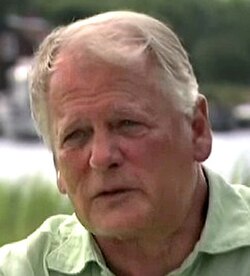 Olof JohanssonSten Olof Håkan Johansson (born 31 July 1937) is a Swedish…Affiliated
 Thorbjörn FälldinNils Olof Thorbjörn Fälldin (24 April 1926Affiliated
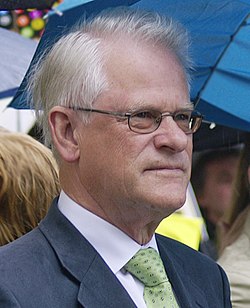 Ingvar CarlssonGösta Ingvar Carlsson (born 9 November 1934) is a retired…Affiliated
 Carl BildtNils Daniel Carl Bildt (born 15 July 1949) is a Swedish…Affiliated
 Anders BjörckAnders Per-Arne Björck (born 19 September 1944 in NässjöAffiliated
How the record is sourced and how the score is derived.
The score is formula-derived (Factrail formula v1, version 1.0.0), not an editorial verdict. Read the methodology.
By the Factrail desk · Method: how we source and score · Last reviewed
Dispute a fact on this pageNamed here, or represent someone who is? Request a right of reply.
People and organizations as listed in the Related section of this page; facts, drivers and the pages that name it as listed in the blocks here. Counts, not a rating.