
J. Robert Oppenheimer
J. Robert Oppenheimer (born Julius Robert Oppenheimer; April 22, 1904 – February 18, 1967) was an American theoretical physicist who directed…
- Facts0
- Drivers0
- Indicators0
J. Robert Oppenheimer (born Julius Robert Oppenheimer; April 22, 1904 – February 18, 1967) was an American theoretical physicist who directed…
J. Robert Oppenheimer (born Julius Robert Oppenheimer; April 22, 1904 – February 18, 1967) was an American theoretical physicist who directed the Los Alamos Laboratory during the Manhattan Project, overseeing the research and design that produced the first nuclear weapons during World War II. Earlier in his career, he built prominent theoretical physics programs at the University of California, Berkeley, and the California Institute of Technology, and he later directed the Institute for Advanced Study from 1947 to 1966. In 1954, an Atomic Energy Commission hearing revoked his security clearance amid scrutiny of his prewar associations with communist circles and postwar nuclear policy disputes; the U.S. Department of Energy formally vacated that ruling in 2022 as procedurally flawed.
J. Robert Oppenheimer was born on April 22, 1904, in New York City to Julius Oppenheimer, a German Jewish immigrant who arrived in the United States in 1888 at age 17 and became a successful textile importer, and Ella Friedman Oppenheimer, an artist of German Jewish descent from Baltimore. The family's prosperity supported an upper-class lifestyle, including a spacious apartment at 155 Riverside Drive in Manhattan with an extensive art collection featuring works by Vincent van Gogh and Paul Cézanne.
The Oppenheimers observed a secular Jewish identity, emphasizing ethical and cultural values over ritual, which encouraged intellectual exploration. Oppenheimer had a younger brother, Frank, born in 1912, who later studied physics. Their upbringing promoted self-reliance and curiosity, with Julius supporting cultural institutions, blending his business acumen and Ella's artistic sensibility to foster interdisciplinary interests in Oppenheimer despite his introspective nature.
Oppenheimer attended the Ethical Culture School, entering formally in 1911. Founded by Felix Adler, the school promoted ethical humanism, moral reasoning, social justice, and scientific inquiry without supernatural beliefs, aligning with the family's views. Its curriculum built Oppenheimer's ethical framework and academic skills, leading to his graduation at the top of his class in 1921.
As a child, Oppenheimer showed precocious intellect, developing a passion for mineralogy after receiving a collection from his paternal grandfather, Benjamin Pinhas Oppenheimer (1836–c. 1911), a German-Jewish grain trader in Hanau, Germany. This led to correspondence with geologists and, at age 12 in 1916, a lecture to the New York Mineralogical Club, earning him honorary membership. Solitary by nature, he enjoyed poetry and rock collecting, reflecting scientific curiosity and literary sensitivity nurtured by family resources and ethical education, forming a worldview based on empirical observation and humanism.
Oppenheimer enrolled at Harvard University in September 1922, aged 18, after graduating from the Ethical Culture School in New York. He completed an accelerated three-year undergraduate program, overloading courses in physics, chemistry, mathematics, philosophy, and languages such as Greek and Latin. Although officially majoring in chemistry, he pursued extensive physics studies, including graduate-level coursework, and earned his A.B. degree summa cum laude in June 1925, ranking among the top students despite the demanding curriculum.
At Harvard, Oppenheimer attended lectures by visiting physicists, including Niels Bohr's October 1923 presentations on atomic constitution and spectra.
The university's rigorous general education requirements, alongside Oppenheimer's self-directed focus on quantum mechanics from European advancements, prepared him for research abroad, though he pursued no formal graduate degree in the United States before departing for Cambridge in 1925.
After graduating from Harvard with a summa cum laude degree in chemistry in June 1925, Oppenheimer traveled to England for postgraduate research in experimental physics at Cambridge's Cavendish Laboratory under J. J. Thomson. Assigned as a research assistant, he took a basic laboratory course despite his theoretical interests and scant experimental background, which he found frustrating. From 1925 to 1926, affiliated with Christ's College for two terms, he produced minimal original work amid dissatisfaction with the empirical approach and personal challenges, including mental health issues that led to suicidal thoughts.
In 1926, Oppenheimer moved to the University of Göttingen in Germany, a hub for theoretical physics where quantum mechanics advanced under Max Born. Arriving in September, he joined quantum theory seminars with Werner Heisenberg, Pascual Jordan, and Wolfgang Pauli, quickly grasping the matrix mechanics of Born and Heisenberg. He collaborated with Born on molecular structure, co-authoring the 1927 Born–Oppenheimer approximation, which separates nuclear and electronic motions to simplify quantum calculations—a technique fundamental to quantum chemistry.
Oppenheimer earned his PhD under Born with the dissertation "Zur Quantentheorie kontinuierlicher Spektren" (On the Quantum Theory of Continuous Spectra), defended on May 11, 1927, at age 23. It explored continuous spectra via Born's statistical wave function interpretation. During this time, he published over a dozen papers on subjects like the hydrogen molecule ion and quantum perturbations, gaining recognition among European theorists. This period shifted him from experimental inexperience to theoretical proficiency, prioritizing mathematical formalism over empirical testing.
In 1929, J. Robert Oppenheimer accepted assistant professorships in physics at the University of California, Berkeley, and the California Institute of Technology (Caltech). He divided his time between the campuses, basing himself primarily at Berkeley while teaching at Caltech at least one term annually from 1930 to 1942. This dual arrangement enabled contributions to theoretical physics programs at both institutions amid rapid quantum theory advancements.
Oppenheimer was promoted to full professor at Berkeley in 1936; the university adjusted his schedule to reduce Caltech time in exchange for the advancement, with a full professorship at Caltech following soon after. At Berkeley, he helped establish a leading center for theoretical physics, mentoring graduate students and fostering research integrating quantum mechanics with nuclear physics. His courses covered introductory and advanced quantum mechanics, electromagnetic theory, and field theory in well-prepared, brisk lectures often accompanied by chain-smoking.
Oppenheimer's teaching emphasized rigorous problem-solving over formal examinations, assigning non-routine homework that he personally graded to challenge and hone students' analytical skills. He responded to thoughtful questions but caustically to those he deemed uninformed, reflecting his high standards and intellectual intensity. Notable students included Edward Gerjuoy, whose Ph.D. work from 1938 to 1942 benefited from Oppenheimer's demanding yet instructive approach.
After World War II, Oppenheimer briefly resumed teaching at Caltech in 1946 before resigning both positions in 1947 to direct the Institute for Advanced Study in Princeton, New Jersey. His academic career at these institutions thus spanned 1929 to 1947, interrupted only by wartime service.
Oppenheimer's doctoral research at the University of Göttingen under Max Born led to the 1927 paper "Zur Quantentheorie der Molekeln," co-authored with Born, introducing the Born–Oppenheimer approximation. This method leverages the mass difference between electrons and nuclei—electrons are about 1/1836 the mass of a proton—to separate their motions in the molecular Schrödinger equation. It treats nuclei as fixed for initial electronic wavefunction calculations, then adds nuclear vibrations and rotations as perturbations, enabling computations of molecular spectra and structures central to quantum chemistry. The approximation holds for states with separated electronic and nuclear timescales but fails near conical intersections or in highly anharmonic systems.
After earning his Ph.D. in March 1927, Oppenheimer returned to the U.S., holding positions at Harvard and Caltech as a National Research Council fellow, followed by postdoctoral work in Leiden and Zurich, before faculty roles at UC Berkeley and Caltech in 1929. In 1928, he analyzed quantum mechanics of continuous spectra, calculating particle transmission through potential barriers and anticipating George Gamow's alpha decay model via quantum tunneling. This work explained decay rates' exponential dependence on barrier width and energy, matching observations without classical mechanisms, and influenced nuclear physics and field emission.
In the early 1930s, Oppenheimer contributed to relativistic quantum mechanics and quantum electrodynamics. His 1930 paper "Note on the Theory of the Interaction of Field and Matter" developed methods for the relativistic wave equations coupling electrons and protons to the electromagnetic field, showing that self-energy infinities could not be eliminated and that the theory produced infinite displacements of atomic energy levels and spectral-line frequencies. In the companion paper "On the Theory of Electrons and Protons," he examined Dirac's hole interpretation of negative-energy states and demonstrated that identifying the holes with protons would imply unacceptably rapid annihilation of ordinary matter (on timescales of order 10^{-10} s), so the holes must instead correspond to particles of electron mass. These calculations identified divergences in quantum electrodynamics that persisted until renormalization techniques were developed in the late 1940s and helped clarify electron-positron pair processes.
J. Robert Oppenheimer began a romantic relationship with Jean Tatlock, a medical student at Stanford University and Communist Party member, in 1936. Their affair, marked by intellectual compatibility and political discussions, lasted intermittently until around 1939, though they maintained contact thereafter; Tatlock's influence exposed Oppenheimer to leftist circles and figures. Tatlock died by suicide on January 4, 1944, in San Francisco, an event that affected Oppenheimer amid his Manhattan Project responsibilities.
Oppenheimer met Katherine "Kitty" Puening, a botanist with prior marriages to Frank Ramseyer (annulled 1933), Joseph Dallet Jr. (killed fighting in the Spanish Civil War in 1937), and Richard Harrison (divorced November 1940), at a 1939 party in Pasadena, California. He and Puening wed on November 1, 1940, in a civil ceremony in Virginia City, Nevada. The marriage faced strains from Oppenheimer's work demands and Kitty's personal challenges, including alcoholism, but endured until his death.
The couple had two children: son Peter, born May 12, 1941, in Pasadena, and daughter Katherine "Toni," born December 7, 1944, at Los Alamos Laboratory. Peter pursued carpentry and lived privately, avoiding public association with his father's legacy, while Toni struggled with depression and died by suicide in 1977 at age 32 on St. John in the U.S. Virgin Islands. The family resided in Berkeley before relocating to Los Alamos in 1943, where domestic life adapted to wartime secrecy and isolation.
Kitty managed the household amid the project's secrecy, but her alcoholism contributed to family tensions, including parenting challenges and frequent injuries from intoxication.
Peter experienced pressures from his mother's expectations and alcoholism, which strained their relationship and contributed to his anxiety and developmental challenges. In 1955, at age 14, he was sent to George School, a Quaker boarding school in Pennsylvania, rather than remaining at home; he did not graduate from there and later finished at Princeton High School. He rejected academia linked to his father's legacy, pursued carpentry, and lives reclusively in New Mexico with three children: Dorothy, Charles, and Ella. Toni contracted polio in 1951 as a child; the family took a recuperative trip to St. John in the U.S. Virgin Islands, where she recovered and formed an attachment to the island. The family began regular visits and built a cottage there around 1955, continuing after the 1954 security clearance revocation. After graduating from Oberlin College in 1966 and training as a translator, she was denied a U.S. security clearance in 1969 for a United Nations role due to her father's associations, prompting professional frustration and withdrawal into reclusiveness at the family's St. John cottage. She died by suicide via hanging in January 1977, at age 32.
Oppenheimer developed an interest in Eastern philosophy early in his career at the University of California, Berkeley, studying Sanskrit in 1933 under linguist Arthur W. Ryder to read ancient Indian texts directly. This reflected a quest for philosophical insight, not religious commitment; his brother Frank noted that Robert appreciated the Bhagavad Gita's "charm and general wisdom" but remained uninvolved religiously with Hinduism.
The Bhagavad Gita, a 700-verse Hindu dialogue from the Mahabharata, influenced Oppenheimer's worldview through themes of duty (dharma), detached action, and existential unity. He applied its advice against outcome attachment to ethical challenges in scientific leadership, framing personal responsibility amid cosmic forces. This rational approach suited his agnosticism, emphasizing ethical and metaphysical reasoning over mysticism or theism.
In postwar lectures and writings, Oppenheimer drew on ideas from the Bhagavad Gita and Vedanta to address ethical, metaphysical, and knowledge-related questions arising from scientific work, while rejecting mystical or theistic readings in favor of a rational, empirical approach consistent with his agnosticism.
In a May 19, 1950, letter to Eleanor Roosevelt, Oppenheimer expressed skepticism about unidentified flying objects (UFOs), or "flying saucers." Responding to her inquiry prompted by claims from the Borderland Sciences Research Associates that they were piloted by interdimensional "Etherians," he stated he knew nothing about the group and found the explanations unconvincing. To illustrate the pitfalls of such observations, he recounted a 1940s incident at Los Alamos where scientists and military personnel mistook the planet Venus for a mysterious bright object in the sky, prompting an astronomer to quip about ceasing attempts to "shoot down Venus." Oppenheimer concluded that "even a group of scientists is not proof against the errors of suggestion and hysteria," emphasizing that "arriving at the truth can often be a more difficult and troublesome thing than we like to think." No reliable sources indicate Oppenheimer expressed views on extraterrestrial life, aliens, or the Fermi paradox.
In the mid-1930s, amid the rise of fascism in Europe, J. Robert Oppenheimer shifted toward left-wing causes, influenced by his relationship with Jean Tatlock and connections to Bay Area radicals like physician Thomas Addis. He attended leftist group meetings at the University of California, Berkeley, where he taught, but never joined the Communist Party USA.
After the Spanish Civil War began in 1936, Oppenheimer supported the Republican Loyalists against Francisco Franco's Nationalists through fundraising events at his Berkeley home and personal donations of about $1,000 annually—over $20,000 in today's terms—to relief efforts, including those via communist-affiliated groups like the Medical Bureau to Aid Spanish Democracy. In his 1954 testimony, he confirmed aiding "various organizations for Spanish relief" with parties and bazaars, even post-1939, citing humanitarian reasons.
His efforts also included anti-fascist support in San Francisco for political refugees. Federal probes alleged pre-1942 monthly contributions of $150 to communist-linked entities, which he contested as informal aid to associates rather than party funds. These activities fit popular front alliances against fascism but attracted scrutiny for Soviet network overlaps, though without evidence of espionage or membership.
Oppenheimer's younger brother, Frank, joined the Communist Party of the United States (CPUSA) in 1937 with his wife Jackie and remained a member until around 1940; he later admitted this during 1949 testimony before the House Un-American Activities Committee. While a graduate student at the California Institute of Technology, Frank participated in party activities in the Pasadena area.
Oppenheimer's wife, Katherine "Kitty" Oppenheimer (née Puening), had earlier communist ties: she married CPUSA member Joseph Dallet in 1934, joined the Communist Party USA herself, and lived with him in Youngstown, Ohio, where she participated in party activities including distributing the Daily Worker; Dallet was killed fighting in the Spanish Civil War in 1937. Kitty, who left the party in the late 1930s, faced scrutiny in Oppenheimer's 1954 security hearing, where she testified about her past membership, distinguished U.S. from Soviet communism, and affirmed her loyalty to the United States.
Oppenheimer associated closely with CPUSA affiliates, including his former girlfriend Jean Tatlock, an active member who introduced him to San Francisco's communist and sympathizer circles in the mid-1930s. His friend Haakon Chevalier, a University of California literature professor with left-wing views and possible CPUSA ties, hosted gatherings of senior communists in 1940 and in early 1943 approached Oppenheimer relaying an offer from George Eltenton, a British physicist at the Shell Development Company, to pass nuclear research details to Soviet contacts—an offer Oppenheimer initially withheld from authorities.
In the late 1930s, Oppenheimer attended meetings of a small Berkeley faculty group that included CPUSA members such as Chevalier. Historians, drawing on declassified FBI files and testimonies from ex-party members, have inferred Oppenheimer's membership in a covert CPUSA "closed unit" for Berkeley professionals from 1937 to early 1942, based on his attendance, financial contributions to party causes, and evasive responses to membership queries under oath. While denying formal membership, Oppenheimer admitted broader movement associations and donations to related fronts. These connections extended into the early 1940s, attracting security scrutiny despite his wartime role.
Before the United States entered World War II, Oppenheimer associated with communist sympathizers and supported leftist causes, including donations to Communist Party USA-aligned organizations. Oppenheimer's 1942 recruitment into the Manhattan Project, with his October appointment as Los Alamos director under General Leslie Groves, prompted reevaluation of these ties amid security concerns. Groves, informed by FBI reports, ordered Oppenheimer's security clearance on July 20, 1943, prioritizing his expertise against Nazi threats over ideological issues. This reflected Oppenheimer's focus on the Allied effort, driven by fears of German atomic advances and his Jewish background's opposition to fascism.
By early 1943, as Los Alamos director, Oppenheimer reduced support for communist causes amid project demands. He assisted Army security in identifying scientists with communist ties to protect secrecy. This pragmatic change addressed the operation's expansion to over 6,000 personnel by 1945 and risks from divided loyalties. In the winter of 1942–43, he rejected an espionage approach from colleague Haakon Chevalier relaying a Soviet request for nuclear data; though he delayed reporting until August 1943, he opposed it as conflicting with war priorities.
Oppenheimer's alignment evolved from prewar sympathy for Marxism as antifascism to loyalty to U.S. military goals, demonstrated by the project's success and the Trinity test on July 16, 1945. Declassified records indicate no Soviet recruitment, emphasizing American priorities over residual ideologies. While his leftist views endured, wartime alignment with government presaged postwar conflicts.
In June 1942, Arthur Compton appointed Oppenheimer to coordinate fast-neutron research. After General Leslie Groves took charge of the Manhattan Project in September 1942, he selected Oppenheimer in October as director of the planned centralized weapons laboratory, valuing his theoretical expertise despite Oppenheimer's limited administrative background and past left-wing associations. On November 16, 1942, Groves and Oppenheimer surveyed sites and chose a remote mesa near Los Alamos, New Mexico, for Project Y, citing its isolation for secrecy. Oppenheimer sent Groves a November 9 letter enclosing personnel lists and documents for the new laboratory and hoping to meet in New Mexico to discuss the centralized facility.
Oppenheimer's formal role as scientific director awaited mid-July 1943 security clearance amid concerns over his communist contacts, yet Groves advanced the choice for Oppenheimer's enthusiasm and talent at assembling scientists. Though controversial—given Oppenheimer's inexperience in large projects—Groves favored his physics network and drive for swift bomb progress. Oppenheimer secured greater civilian control at the initially military-planned lab, easing conflicts between Army security and scientific collaboration needs.
Oppenheimer led Los Alamos's growth from 30 scientists in early 1943 to over 6,000 by 1945, recruiting experts like Hans Bethe, Enrico Fermi, and Edward Teller for implosion and fission work. He built an interdisciplinary setting linking theorists and experimentalists, resolving early chaos via delegation and inspiration that spurred plutonium bomb advances, as peers noted. Secrecy rules isolated families and tested morale, while Groves's timelines clashed with rigor; Oppenheimer countered with seminars to sustain intellectual drive.
His merit-focused, adaptive style honed administrative skills amid challenges, shielding the team from red tape while navigating weapon debates and ethics. By October 1945, upon resigning, Los Alamos had produced uranium and plutonium bomb designs, affirming Groves's trust in Oppenheimer's unconventional command.
Oppenheimer began recruiting scientists for the Los Alamos Laboratory in fall 1942, urging "unscrupulous recruiting" to attract elite talent such as Robert Bacher and Hans Bethe, whom he secured by February 1943 for leadership in experimental and theoretical physics divisions, respectively. He spent early 1943 traveling across the United States to assemble the team, addressing challenges including the project's secrecy, the site's isolation in New Mexico, and initial spartan conditions like temporary housing and limited amenities. By mid-March 1943, recruits began arriving from universities such as MIT, Stanford, and Columbia; British scientists like Rudolf Peierls arrived in early 1944.
Upon the laboratory's formal opening in April 1943, Oppenheimer structured teams through a governing board of division leaders and a coordinating council of about 50 group leaders to enable technical information sharing and decision-making. He delegated authority to these leaders, instituted weekly colloquia for the approximately 300 scientists to promote open discussion and counter General Groves' compartmentalization preferences, and fostered collaboration amid diverse egos and high-pressure deadlines. These measures sustained morale and productivity, with staff growing from an initial estimate of 100 to 1,500–8,200 personnel by the war's end, despite tensions from military oversight and security surveillance.
Oppenheimer negotiated with Groves to maintain civilian status for the staff, preventing mandatory army enlistment and allowing flexible schedules that enhanced efficiency. For resources, he oversaw procurement of specialized equipment including two Van de Graaff generators, a Cockcroft-Walton accelerator, and a cyclotron, while the Army Corps of Engineers upgraded facilities amid ongoing construction. Allocation prioritized high-caliber personnel and pivotal innovations, such as redirecting efforts toward implosion design after April 1943 lectures, balancing scientific needs with military constraints to meet project timelines.
Under Oppenheimer's direction from 1943, the Los Alamos Laboratory developed two fission bomb designs to overcome Manhattan Project material limits: a gun-type assembly for uranium-235 and an implosion-type for plutonium-239. The gun-type design propelled one subcritical uranium mass into another using conventional explosives to achieve supercriticality via simple mechanical means; it required little theoretical innovation but suited only uranium due to its low spontaneous fission rate. Plutonium from Hanford reactors contained impurities like plutonium-240, which emitted neutrons prematurely and risked fizzles in gun designs, prompting a mid-1944 shift to implosion after tests confirmed the plutonium gun-type's unreliability.
Implosion compressed a subcritical plutonium "pit" to supercritical density using converging shock waves from timed high-explosive charges, a concept proposed by Seth Neddermeyer in April 1943 and advanced under Oppenheimer despite its complexity. Explosive lens systems shaped spherical wavefronts with fast- and slow-detonating materials like Composition B and Baratol to prevent instabilities such as jetting; John von Neumann's hydrodynamical models refined these for uniform compression. Oppenheimer led interdisciplinary teams—including Hans Bethe and experimentalists—to evolve from test assemblies to a 32-point detonation system that doubled the pit's density within a tamper.
Precision timing was essential. Luis Alvarez's exploding bridgewire detonators (EBW) vaporized wires with electrical pulses to ignite explosives simultaneously across points, paired with spark gap switches for capacitor discharge. Neutron initiators using polonium-210 and beryllium released neutrons at peak compression to start the chain reaction, while a natural uranium tamper reflected neutrons back into the core, minimizing the amount of fissile material needed. Oppenheimer viewed implosion as the project's toughest challenge, directing resources like an explosives division to resolve hydrotest issues and finalize the plutonium device by early 1945 for the Trinity test.
The Trinity test, the world's first nuclear detonation, occurred on July 16, 1945, at 5:29 a.m. local time in the Jornada del Muerto desert, 35 miles southeast of Socorro, New Mexico. As Los Alamos director, J. Robert Oppenheimer selected the code name "Trinity," inspired by John Donne's poetry. The test featured the "Gadget," a plutonium implosion device atop a 100-foot steel tower, to validate the implosion mechanism for the plutonium bomb. Directed by Kenneth Bainbridge under Oppenheimer's leadership, it released energy equivalent to 21 kilotons of TNT, fissioning about 15% of its 6 kilograms of plutonium core.
The blast formed a fireball expanding to over 2,000 feet in diameter, followed by a mushroom cloud rising 12 kilometers. Observers, including Oppenheimer at the 10,000-yard south control bunker, experienced intense light, heat, and shock waves that shattered windows 120 miles away. The explosion fused desert sand into trinitite, a green glass-like substance, and generated radioactive fallout affecting nearby areas; initial public reports attributed it to an ammunition magazine blast. Oppenheimer later evoked the Bhagavad Gita: "Now I am become Death, the destroyer of worlds."
Oppenheimer and General Leslie Groves later inspected the site, confirming success despite blast-damaged instruments. The implosion validated the Nagasaki bomb design, affirming the Manhattan Project's progress under Oppenheimer's direction.
J. Robert Oppenheimer became the third director of the Institute for Advanced Study (IAS) in Princeton, New Jersey, in 1947, succeeding Frank Aydelotte; he assumed the position in September 1947 and served until his retirement on June 30, 1966—the longest tenure of any IAS director. Residing on the institute's grounds, he promoted advanced theoretical research without teaching duties, as IAS had no formal students or degree programs. Oppenheimer fostered discussions among scholars on quantum field theory, astrophysics, and science's philosophical implications, convening figures like Albert Einstein, an IAS member since 1933. Oppenheimer first met Einstein in the early 1930s at Caltech, where Einstein visited as a lecturer. Their scientific views diverged: Einstein rejected quantum mechanics, which was central to Oppenheimer's work, and in 1939 published "On a Stationary System With Spherical Symmetry Consisting of Many Gravitating Masses," concluding that Schwarzschild singularities could not exist in nature, contemporaneous with Oppenheimer and Snyder's paper demonstrating gravitational collapse to a black hole. At the IAS from 1947, they became close colleagues. In 1948, Oppenheimer had an antenna secretly installed on Einstein's home and gifted him a radio on his birthday to allow listening to Carnegie Hall concerts from New York; Einstein was delighted. Oppenheimer later recalled in a 1965 lecture that they were "close colleagues and something of friends" only in Einstein's last decade. Oppenheimer and Einstein maintained a complex professional and personal relationship during their overlapping tenures at the Institute for Advanced Study. They engaged in frequent conversations on scientific topics and the ethical dilemmas posed by the atomic bomb and nuclear policy.
Privately, Oppenheimer could be dismissive of Einstein. In a January 1935 letter to his brother after visiting Princeton, he described it as a "madhouse" with "solipsistic luminaries shining in separate & helpless desolation," calling Einstein "completely cuckoo." He later criticized Einstein's skepticism toward quantum field theory, his isolated working style, and his pursuit of unifying gravity and electromagnetism, which Oppenheimer viewed as unproductive and disconnected from modern physics.
Publicly, Oppenheimer expressed great admiration. After Einstein's death in 1955, Oppenheimer wrote a eulogy published in the Princeton Packet that praised Einstein's unparalleled contributions to general relativity and his deep faith in the natural order of the universe.
In the wake of Oppenheimer's 1954 security clearance revocation, Einstein publicly supported him and visited him in Princeton. Privately, Einstein had referred to Oppenheimer as a "narr" (Yiddish for "fool") for agreeing to participate in the AEC investigation rather than rejecting the process outright, arguing that Oppenheimer had no obligation to subject himself to it.
He broadened IAS's interdisciplinary reach by incorporating humanities and social sciences, drawing from his progressive New York education. Weekly seminars and colloquia drew young scholars and encouraged cross-disciplinary collaboration, while occasional lectures at Princeton University, such as in McCosh Hall, connected IAS to wider academia. Under his direction, IAS advanced particle physics and cosmology via faculty and visitors, though Oppenheimer focused on interpretive writings about science's societal role rather than original research.
The 1954 Atomic Energy Commission revocation of his security clearance, due to past associations, did not affect his leadership, as IAS's independence from federal funding insulated it from such pressures. Amid McCarthy-era scrutiny, he prioritized intellectual work, hosted international visitors, and upheld the institute's prestige. He announced his retirement in April 1965 (effective June 30, 1966) in order to pursue physics and a philosophical understanding of science unencumbered by administrative duties; after a subsequent diagnosis of throat cancer he remained at the Institute as a senior professor until his death on February 18, 1967.
In 1947, following the establishment of the United States Atomic Energy Commission (AEC) under the Atomic Energy Act, J. Robert Oppenheimer joined its General Advisory Committee (GAC), a nine-member panel of scientists advising on atomic energy research, development, production, and policy. Elected chairman by his peers, he served until 1952. The GAC met several times annually to review classified programs, evaluate projects such as reactor designs and isotope separation, and recommend priorities for national security and civilian applications. Its statutory independence from AEC commissioners allowed candid, non-binding advice, though recommendations were sometimes overruled.
Under Oppenheimer's leadership, the GAC balanced military needs with scientific and ethical concerns. This included deliberations on expanding fissile material production and tactical nuclear uses, together with opposition to a crash hydrogen-bomb program on the grounds that such a weapon risked becoming an instrument of genocide and that forgoing it could set an example for limiting the totality of war. The committee issued numerous reports on classified programs, including production facilities, drawing on data from laboratories such as Los Alamos and Oak Ridge. These efforts elevated Oppenheimer's role in early Cold War nuclear strategy, serving as a key link between scientists and policymakers.
In 1952, amid rising U.S.-Soviet tensions, Oppenheimer chaired the State Department's Panel of Consultants on Disarmament. This group, comprising experts in science, education, diplomacy, and government, examined pathways for nuclear arms control, including mutual inspections and phased stockpile reductions. It addressed technical and political obstacles, such as verification for long-range systems, and offered recommendations that shaped later talks, despite mutual distrust often sidelining them. The role reflected Oppenheimer's broad advisory influence across atomic energy and foreign policy.
Following the Soviet Union's first atomic bomb test on August 29, 1949, the U.S. Atomic Energy Commission (AEC) consulted experts on developing a thermonuclear weapon, or "Super," with yields 100 to 1,000 times greater than fission bombs. As chairman of the AEC's General Advisory Committee (GAC) since 1947, Oppenheimer led discussions resulting in the committee's October 30, 1949, majority report, which unanimously opposed an "all-out, urgent crash program." Signed by Oppenheimer and five others, including James B. Conant and Lee A. DuBridge, the report argued that the weapon's risks to humanity exceeded its military benefits, labeling it a potential "weapon of genocide" without limits to its destructiveness.
The GAC's rationale covered technical uncertainties, including unproven feasibility and diversion of fissionable materials from atomic enhancements; military sufficiency of existing stockpiles for retaliation without assured superiority; political dangers of accelerating arms races and hindering control agreements; and moral concerns over mass civilian deaths, fallout, and ethical erosion. A minority statement by Enrico Fermi and I.I. Rabi, supported by the committee, urged renouncing such weapons via U.S. declaration and global pledges, warning of uninhabitable areas and dignity violations. Oppenheimer endorsed these views, favoring tactical fission weapons and diplomacy over escalation, deeming the Super destabilizing to security frameworks.
President Truman overruled the GAC on January 31, 1950, ordering full development. Oppenheimer refrained from public opposition but privately advocated restraint, testifying in 1954 that he opposed only the crash effort—not basic research—and supported delaying tests like Ivy Mike for disarmament. His position emphasized verifiable atomic superiority and agreements to curb thermonuclear spread.
Oppenheimer's ties to communist circles began in the 1930s during the Great Depression. As a professor at the University of California, Berkeley, he engaged in left-wing intellectual and political activities, hosting discussion groups with communist philosophers and activists at his home. He formed close friendships with Communist Party USA (CPUSA) members, including his companion Jean Tatlock, a psychiatrist and dedicated party affiliate. These connections mirrored trends among Berkeley's academic elite. Oppenheimer sympathized with radical causes but never joined the CPUSA formally, though he admitted donating to aligned groups.
Family links reinforced these associations. His brother, Frank Friedman Oppenheimer, joined the CPUSA in 1937 with his wife Jackie, remaining until about 1940; Frank later testified to his involvement, stating they had joined seeking answers to unemployment and left disillusioned. Oppenheimer's wife, Katherine "Kitty" Puening, had married CPUSA organizer Joe Dallet in 1934; Dallet died in the Spanish Civil War in 1937, after which Kitty retained party contacts before marrying Oppenheimer in 1940. Oppenheimer denied CPUSA membership during security interrogations, linking his activities to humanitarian efforts like aid for Spanish Republicans. These familial and personal ties sustained suspicions of ideological sympathy.
From late 1937 to early 1942, Oppenheimer made contributions totaling $500 to $1,000 per year to Spanish Civil War relief through CPUSA-linked channels in San Francisco, stopping around the time of U.S. entry into World War II. He also joined communist-front organizations promoting labor rights and anti-fascism, which faced later scrutiny for Soviet ties. While he viewed these as secondary to his science, declassified records and witnesses indicated greater involvement; some historians, citing 1939 CPUSA reports, claim he joined an underground Berkeley cell—a charge he denied under oath.
The FBI began surveilling Oppenheimer in March 1941, amid early atomic research and espionage concerns. It built a file on his leftist network using informants and mail intercepts. Director J. Edgar Hoover sought continued monitoring despite Oppenheimer's 1943 provisional clearance for the Manhattan Project, drawing from patterns of Soviet recruitment among scientists. No evidence of espionage by Oppenheimer surfaced. This scrutiny, based on documented associations, foreshadowed postwar loyalty challenges, balancing his administrative successes against persistent doubts.
The Atomic Energy Commission's Personnel Security Board held hearings from April 12 to May 6, 1954, to review 24 charges against Oppenheimer after suspending his Q clearance on December 23, 1953. Twenty-three charges focused on communist associations, including cash contributions to the Communist Party from 1937 to at least 1942, ongoing contacts with members like Haakon Chevalier into December 1953, and being responsible for the employment of former communists such as Giovanni Rossi Lomanitz on the atomic bomb project despite knowing their ties. The 24th charge involved alleged misconduct in hydrogen bomb efforts, such as discouraging scientists and adjusting feasibility estimates to oppose the program after President Truman's January 1950 approval.
Key evidence centered on the 1943 Chevalier incident, where Oppenheimer's friend Haakon Chevalier relayed a Soviet agent's approach through George Eltenton to share atomic secrets. Oppenheimer misled Army investigators by claiming multiple approaches, later admitting the deception in 1946 to shield Chevalier, a known communist sympathizer. Additional records noted his relationship with Communist Party member Jean Tatlock, his brother Frank's party membership, and his wife Kitty's prior marriage to a communist. The board examined over 3,000 pages of testimony and files, highlighting inconsistencies in Oppenheimer's accounts, including downplaying Joseph Weinberg's involvement and omitting Glenn Seaborg's input in a 1949 thermonuclear report.
Opposing testimonies included Edward Teller's on April 28, who endorsed Oppenheimer's loyalty but criticized his judgment, saying he would feel "personally more secure if public matters would rest in other hands" due to risks in handling vital interests. AEC counsel Roger Robb introduced FBI records and witnesses showing Oppenheimer's evasions, which hindered investigations.
Supportive witnesses stressed Oppenheimer's loyalty. General Leslie Groves testified on April 15 that he would be "amazed" by any disloyalty, blaming inconsistencies on a protective "schoolboy attitude." Security officer John Lansdale called the process hysterical yet affirmed Oppenheimer's patriotism; Vannevar Bush viewed it as punishing policy dissent. Oppenheimer testified for 27 hours, denying party membership but admitting associations; the board deemed his answers evasive on critical issues.
The three-member board, led by Gordon Gray, recommended 2-1 on May 27 against restoring clearance, finding 20 of the 24 charges true or substantially true and citing disregard for the security system, susceptibility to influence, and lack of candor regarding associations including the Chevalier incident. The AEC upheld this 4-1 on June 29, citing fundamental defects of character and imprudent associations.
On May 27, 1954, the Personnel Security Board voted 2–1 against reinstating Oppenheimer's security clearance. Chairman Gordon Gray and member Thomas A. Morgan formed the majority, while Ward V. Evans dissented. The majority cited his disregard for security requirements, susceptibility to influence, opposition to the hydrogen bomb on moral and political grounds, and lack of candor in testimony, including on the Chevalier incident. Though no evidence showed disloyalty or espionage, the board deemed him unreliable for classified information.
The Atomic Energy Commission (AEC) affirmed this on June 29, 1954, by a 4–1 vote, with Commissioners Lewis Strauss, Thomas E. Murray, Eugene M. Zuckert, and Joseph Campbell in the majority and Henry D. Smyth dissenting. The AEC highlighted defects in his character, imprudent communist associations, misleading statements (such as minimizing Chevalier contacts), and repeated security lapses, concluding he failed standards of trustworthiness for atomic secrets. This barred him permanently from classified work, without criminal charges.
The revocation ended his access to restricted data as an AEC consultant, curtailing his nuclear policy influence amid accelerating thermonuclear efforts. He retained the Institute for Advanced Study directorship until 1966 and pursued unclassified work, but isolation from atomic projects reduced his stature and caused personal humiliation. Scientific protests decried it as political, with petitions from figures like Enrico Fermi and Hans Bethe, yet the stigma limited advisory roles and framed his postwar career as martyrdom.
The revocation of Oppenheimer's security clearance on June 29, 1954, by a 4-1 vote of the Atomic Energy Commission (AEC) commissioners—following a 2-1 recommendation from the Personnel Security Board to revoke it—ignited prolonged debates over its justification and implications. Supporters, including prominent scientists who submitted affidavits on his behalf, contended that the decision exemplified McCarthy-era overreach, targeting Oppenheimer primarily for his reluctance to endorse rapid development of the hydrogen bomb and for past associations with individuals sympathetic to communism, rather than evidence of disloyalty or espionage.
Critics within government and security circles, however, maintained that Oppenheimer's documented delays in pursuing thermonuclear research—such as his initial skepticism toward Edward Teller's designs—and his evasive responses during the hearing about contacts like the 1943 Chevalier incident, where he was approached to transmit classified information to Soviet agents, raised legitimate doubts about his reliability in advising on nuclear matters during the early Cold War. These debates persisted in historical analyses, with some attributing the outcome to personal animus from AEC Chairman Lewis Strauss, whose role in the 1954 hearing was a significant factor in the Senate's rejection of his 1959 nomination as Secretary of Commerce.
Over subsequent decades, the episode fueled broader discussions on the balance between individual rights and national security, particularly as declassified FBI files revealed Oppenheimer's extensive pre-war ties to Communist Party members—including his wife Kitty, brother Frank, and colleagues like Haakon Chevalier. No evidence emerged of Oppenheimer passing secrets, and he denied Communist Party membership, but subsequent research using memoirs, FBI wiretaps, and Soviet archives has indicated he participated in a closed Communist Party unit at Berkeley circa 1937–1942.
Academic and media narratives often framed the revocation as politically motivated suppression of dissent against weapons escalation, influencing portrayals in biographies and documentaries that emphasized procedural unfairness, such as limited access to evidence and reliance on anonymous informants. Counterarguments highlighted causal links between Oppenheimer's influence and perceived setbacks in U.S. thermonuclear progress, noting that his advisory role had amplified voices skeptical of the Super after the 1949 Soviet atomic test, which some argued delayed the American program relative to the Soviet Union's August 1953 thermonuclear test (nine months after the U.S. Ivy Mike shot).
On December 16, 2022, U.S. Department of Energy (DOE) Secretary Jennifer Granholm issued an order vacating the 1954 AEC decision, stating that the Atomic Energy Commission revoked Oppenheimer’s security clearance through a flawed process that violated the Commission’s own regulations, with more evidence having come to light of the bias and unfairness of the process while evidence of his loyalty and love of country had been further affirmed. The order indicated that historical evidence suggests the decision to review the clearance had less to do with a bona fide concern for the security of restricted data and more to do with a desire on the part of the political leadership of the AEC to discredit Oppenheimer in public debates over nuclear weapons policy.
The action, praised by historians as correcting a historical injustice, did not constitute a full exoneration of the underlying concerns but nullified the revocation as a "black mark" on Oppenheimer's record. Detractors of the reversal, including some security analysts, argued it overlooked enduring evidentiary issues from the hearing—such as inconsistencies in Oppenheimer's accounts and Teller's testimony on his "total lack of enthusiasm" for H-bomb work—potentially downplaying real risks in a high-stakes era, though such views received limited mainstream coverage amid the DOE's emphasis on procedural defects.
After the 1954 revocation of his security clearance, Oppenheimer continued as director of the Institute for Advanced Study in Princeton, New Jersey—a position he held since 1947—until retiring in June 1966. There, he oversaw pure theoretical research, fostering seminars and discussions among scholars in physics, mathematics, and related fields. Despite restricted access to classified information, he maintained an active intellectual role by engaging interdisciplinary thinkers on the societal implications of science.
Oppenheimer delivered lectures linking technical physics to philosophical inquiry, including the January 1962 three-part series "The Flying Trapeze: Three Crises for Physicists" at McMaster University, which addressed space and time, atom and field, and war and the nations. These reflected his interest in foundational interpretive challenges over experimental work. He also published essays, such as the 1955 collection The Open Mind, addressing atomic energy's ethics and the boundaries of scientific knowledge. The volume reprints his February 1949 Atlantic essay of the same title, in which he wrote: "The problem of doing justice to the implicit, the imponderable, and the unknown is of course not unique to politics. [...] It is above all style through which power defers to reason."
In the 1950s and 1960s, Oppenheimer emphasized public discourse through international lectures and correspondence—such as with Albert Einstein on quantum mechanics and cosmology—while his original theoretical contributions diminished amid security constraints. No major new papers emerged, marking his shift from wartime leadership to contemplative analysis of science's place in human affairs.
Oppenheimer was awarded the Medal for Merit by President Harry S. Truman on January 12, 1946, recognizing his leadership of the Manhattan Project during World War II. This award, the nation's highest civilian honor for achievement in the war effort, highlighted his role in developing the atomic bomb.
In the postwar period, Oppenheimer was granted multiple honorary doctorates from academic institutions, including one from Harvard University in 1947. These degrees acknowledged his contributions to physics and theoretical research, despite ongoing political scrutiny.
The most significant late-career honor came on December 2, 1963, when President Lyndon B. Johnson presented Oppenheimer with the Enrico Fermi Award from the Atomic Energy Commission. This prize, including a $50,000 cash award and gold medal, cited his work as a teacher and originator of ideas in theoretical physics, as well as his direction of the Los Alamos Laboratory. The presentation at the White House marked a notable restoration of official recognition following the 1954 security clearance revocation.
In late 1965, Oppenheimer began experiencing symptoms consistent with throat cancer, which was diagnosed in 1966 following decades of heavy cigarette smoking. He underwent treatment but his condition deteriorated progressively, confining him to his residence at the Institute for Advanced Study in Princeton, New Jersey.
Oppenheimer died on February 18, 1967, at approximately 8:00 p.m., at age 62, from complications of the throat cancer. His body was cremated shortly thereafter. A memorial service attended by approximately 600 people was held a week later at Princeton University.
In the immediate aftermath, Oppenheimer's widow, Katherine "Kitty" Oppenheimer, scattered his ashes at sea near Carvel Rock off St. John in the U.S. Virgin Islands, a site he favored during family vacations. This private disposition reflected his preference for minimal commemoration, amid ongoing divisions in public and scientific opinion regarding his legacy from the Manhattan Project and security clearance revocation. Kitty Oppenheimer herself died of a pulmonary embolism in 1972, with her ashes similarly scattered at the same location by their children.
During his doctoral studies under Max Born at the University of Göttingen, Oppenheimer coauthored the 1927 Born–Oppenheimer approximation, which separates electronic and nuclear motions in molecules due to their mass difference, simplifying solutions to the Schrödinger equation for electronic structure. This method underpins modern quantum chemistry by isolating fast electronic dynamics from slower nuclear vibrations, enabling standard computations of molecular spectra and potential energy surfaces. In 1926, he provided a more complete quantum mechanical treatment of the two-body problem than those published by Dirac, Pauli, and Schrödinger.
In his 1930 paper "On the Theory of Electrons and Protons," Oppenheimer applied an argument now known as crossing symmetry to show that Dirac's positively charged particle must have the same mass as the electron (rather than being the proton), implicitly predicting the positron later observed by Carl Anderson in 1932. This bridged non-relativistic quantum mechanics and relativistic field theories, emphasizing particle-antiparticle symmetries that shaped quantum field theory.
Oppenheimer then turned to nuclear theory, collaborating with Melba Phillips in 1935 on the Oppenheimer–Phillips mechanism. This explains deuteron-induced reactions, such as (d,p) stripping, where the neutron binds to the target nucleus and the proton emits, matching cross-sections without full compound nucleus formation. The semi-classical model offered an early framework for direct reactions, guiding 1930s accelerator experiments and nuclear force theories. His pre-war studies of cosmic ray showers and neutron-proton interactions integrated quantum principles into nuclear dynamics, providing foundational insights rather than major breakthroughs.
In 1939, Oppenheimer collaborated with Hartland Snyder to publish "On Continued Gravitational Contraction" in Physical Review. Their work used exact solutions to Einstein's general relativity field equations to show that a homogeneous spherical dust cloud in pressureless collapse forms a singularity enclosed by an event horizon, where escape velocity exceeds the speed of light. The Oppenheimer–Snyder model provided the first realistic depiction of irreversible stellar collapse, predating black hole observations and terminology by decades. It demonstrated collapsing matter detaching from external spacetime as the Schwarzschild radius grows with increasing mass concentration, establishing mathematical foundations for astrophysical singularities.
That same year, Oppenheimer and George M. Volkoff derived the Tolman–Oppenheimer–Volkoff equation, extending Newtonian hydrostatic equilibrium to relativistic regimes for spherically symmetric degenerate matter, such as neutron stars. This equation balances gravitational compression against neutron degeneracy pressure and predicts collapse for core remnants exceeding approximately 0.7 solar masses. Their analysis highlighted relativistic effects that impose an upper mass limit on neutron stars (the Tolman–Oppenheimer–Volkoff limit), distinct from the earlier Chandrasekhar limit for white dwarfs.
These contributions advanced astrophysical modeling into general relativistic frameworks, enabling predictions of supernova progenitors and massive star endpoints. Wartime priorities and skepticism of relativity's applications delayed recognition until the 1960s. Oppenheimer's models influenced later refinements, including John Wheeler's 1967 coining of "black hole" and numerical collapse simulations, which link stellar remnants to galaxy evolution. Though Oppenheimer shifted to nuclear physics, these papers endure as canonical in gravitational physics, illustrating collapse inevitability under sufficient mass density absent quantum corrections.
Oppenheimer's most enduring original contribution to theoretical physics was the Born-Oppenheimer approximation, co-developed with Max Born in 1927. It separates the faster electron motion from slower atomic nuclei motion in molecules, enabling practical quantum mechanical calculations of molecular structure and spectra. This framework established foundations for quantum chemistry and remains a cornerstone for computational modeling, owing to its separation of timescales in multi-body quantum systems.
In the 1930s, Oppenheimer advanced quantum electrodynamics through studies of electron-positron interactions, cosmic ray showers, and neutron-proton capture, including the Oppenheimer-Phillips mechanism. This mechanism explained low-energy nuclear reactions via quantum tunneling, bypassing full Coulomb barriers in deuteron formation. These works aided early quantum field theory by tackling infinities and renormalization, though they extended Dirac's and Heisenberg's frameworks incrementally without independently resolving core issues.
Oppenheimer's astrophysics contributions included a 1939 collaboration with George Volkoff on the neutron star mass limit (about 0.7 solar masses under simplified models), beyond which collapse occurs due to insufficient quantum degeneracy pressure. Concurrently, the Oppenheimer-Snyder model showed general relativistic collapse of dust clouds forming event horizons, anticipating black holes from stellar remnants. These integrated quantum and relativistic effects into stellar evolution precursors, though overlooked until the 1960s amid doubts about singularities.
Oppenheimer published around 73 papers in quantum mechanics, nuclear physics, and astrophysics, excelling in synthesizing phenomena but without paradigm-shifting advances like those of Dirac or Fermi. His strengths involved rigorous applications yielding testable predictions from established principles, rather than new axioms, with influence enhanced by mentoring talents such as Bethe and Serber at Berkeley and Caltech. Overall, his competent insights supplied essential tools for later empirical progress in quantum chemistry and gravitational collapse, despite lacking isolated transformative impact.
Following World War II, Oppenheimer chaired the Atomic Energy Commission's General Advisory Committee (GAC) from October 1947 to June 1952, advising on nuclear policy during rising Cold War tensions. He pushed for international cooperation to prevent an uncontrolled arms race, favoring a strong U.S. deterrent with existing atomic weapons over more destructive options. Oppenheimer helped draft proposals for global atomic control, influencing the 1946 Acheson-Lilienthal Report and the Baruch Plan, which proposed an international authority for oversight, phased U.S. disarmament, and sanctions without Security Council veto. He supported its aim to avert proliferation through shared control, but Soviet rejection in 1946, followed by their 1949 atomic test, doomed the plan and spurred bilateral escalation.
The Soviet test intensified thermonuclear debates, leading to the GAC's October 1949 majority report under Oppenheimer, which opposed a crash H-bomb program. The panel, including Fermi and Rabi, argued it would not bolster security, risked moral fallout from its power, and could spur Soviet advances. Instead, they urged more fission bombs and tactical nuclear weapons for integration with conventional forces. Fermi and Rabi added a minority annex urging the President to declare the weapon's development ethically wrong, but Truman overruled the GAC on January 31, 1950, ordering H-bomb development.
Oppenheimer's views shaped U.S. doctrine toward low-yield tactical weapons, influencing NATO strategies against European threats. Critics like Lewis Strauss claimed his opposition delayed U.S. progress amid Soviet gains and espionage cases, such as Fuchs's 1950 confession. Yet Soviet H-bomb tests in 1953 proceeded independently, driven by their own programs. Oppenheimer's efforts underscored clashes between scientific restraint and geopolitical demands, but could not halt the rapid growth of superpower arsenals by the mid-1950s.
Oppenheimer's judgment and potential national security risks came under intense scrutiny during a 1954 Atomic Energy Commission (AEC) security hearing, prompted by concerns over his past associations and policy stances amid escalating Cold War tensions. The hearing, held from April 12 to May 6, 1954, followed the suspension of his clearance in December 1953, and resulted in a 4-1 AEC decision on June 29, 1954, to revoke it, citing him as an unacceptable risk despite no proven disloyalty or espionage. The Personnel Security Board highlighted a pattern of conduct reflecting "serious disregard for the requirements of the security system," including associations that raised doubts about his vulnerability to influence.
Oppenheimer maintained associations with communists and communist-front organizations from the mid-1930s to the early 1940s, including memberships in groups such as the Friends of the Chinese People and the American Committee for Democracy and Intellectual Freedom, as well as close ties to individuals like Jean Tatlock, a communist Party member, until 1943. Family members, including his wife Kitty (prior to 1936), brother Frank, and sister-in-law, held Communist Party USA memberships, and he associated with figures such as Isaac Folkoff and Steve Nelson until at least 1942, making substantial cash contributions to the Party during this period. Post-war, he continued some contacts, such as with Chevalier in Paris in 1953, which the board viewed as reflecting poor judgment in a high-security context.
A pivotal incident involved Haakon Chevalier in early 1943, when the Berkeley professor and longtime associate approached Oppenheimer during a private conversation, proposing to transmit restricted technical information to Soviet scientists via George Eltenton, a British physicist at the Shell Development Company who had been approached by a Soviet consular official. Oppenheimer rejected the overture but delayed reporting it, initially providing investigators with a fabricated account of three separate approaches by unnamed individuals, which the board described as a "cock-and-bull story" that impeded the probe until he named Chevalier under orders in December 1943. This evasiveness, coupled with his admission of lying to Army counterintelligence, was cited as evidence of unreliability and untrustworthiness.
Oppenheimer's opposition to the hydrogen bomb further fueled criticisms of his strategic judgment. As chair of the AEC's General Advisory Committee (GAC), he endorsed its October 30, 1949, majority report against pursuing the weapon on moral, political, and technical grounds, estimating only a "better than even chance" of success within five years despite internal estimates suggesting feasibility. Following President Truman's January 1950 directive to proceed, the board found his subsequent lack of enthusiastic support "sufficiently disturbing," noting his intellectual influence deterred scientists from the program and potentially delayed progress amid Soviet advances. Edward Teller, a leading thermonuclear advocate, testified that Oppenheimer's "strong influence... has been, on the whole, an unfortunate one, because it has been in the direction of preventing the development of the hydrogen bomb," and stated, "I would feel personally more secure if public matters would rest in other hands than his."
Additional concerns arose from Oppenheimer's recommendations of personnel with communist ties for sensitive roles, such as urging the retention of Rossi Lomanitz, a known sympathizer, on the Manhattan Project despite security flags, and assisting David Bohm after his own clearance denial. The board concluded these actions, alongside a history of less-than-candid testimony and susceptibility to external pressures, warranted denying clearance, as his "future participation... would not be clearly consistent with the best interests of security." Critics, including AEC General Manager K. D. Nichols, emphasized that such patterns posed ongoing risks in an era of confirmed Soviet infiltration of U.S. atomic programs.
Notably, the film features a fictional scene depicting a conversation between Oppenheimer and Einstein on a lake bench, where Oppenheimer expresses the belief that their work has triggered a metaphorical chain reaction that could lead to the world's destruction through an uncontrolled nuclear arms race. When Einstein asks "What of it?", Oppenheimer responds "I believe we did." This exchange is not historical—no verbatim record of such a specific conversation exists—but it draws on the real fears both scientists harbored during the Manhattan Project (such as atmospheric ignition risks) and in the postwar period regarding nuclear proliferation and the arms race. Oppenheimer has appeared in various cultural works, often as a tragic figure confronting the moral consequences of atomic weapons. The 1981 documentary The Day After Trinity, directed by Jon Else, covers his Manhattan Project leadership and later remorse. It includes interviews with participants and was nominated for an Academy Award for Best Documentary Feature. The film highlights his post-Trinity reflections, including his quote from the Bhagavad Gita.
In 2005, John Adams's opera Doctor Atomic, with libretto by Peter Sellars, premiered at the San Francisco Opera. It focuses on Oppenheimer's preparations for the Trinity test, incorporating texts from the Bhagavad Gita and John Donne's poetry to depict his psychological strain. The opera has been performed internationally, including at the Metropolitan Opera in 2008 and revivals in 2018.
The 2005 biography American Prometheus: The Triumph and Tragedy of J. Robert Oppenheimer by Kai Bird and Martin J. Sherwin won the 2006 Pulitzer Prize for Biography. It details his bomb development role, hydrogen bomb opposition, and 1954 security clearance loss amid suspicions of communist ties. The book shaped later depictions by emphasizing his intellectual achievements and political challenges.
Christopher Nolan's 2023 film Oppenheimer, starring Cillian Murphy and based on American Prometheus, portrays his career from quantum physics to bomb creation and postwar scrutiny. It grossed over $900 million worldwide and won seven Academy Awards, including Best Picture. Nolan presented Oppenheimer as historically pivotal yet optimistic about nuclear containment. These works have spurred reinterpretations framing him as a cautionary figure for technological risks, echoing his 1947 warnings on unchecked science in contexts like AI ethics. Analyses in nuclear policy literature recast his legacy from "father of the bomb" to arms escalation opponent, despite ongoing debates over his prewar associations.
Ranked by shared high-impact facts, then explicit ties, then shared drivers.
 Roger RobbRoger Robb (July 7Affiliated
 Mark OliphantSir Marcus Laurence Elwin Oliphant (8 October 1901Affiliated
 Lewis StraussLewis Lichtenstein Strauss (January 31Affiliated
 Wilhelm KeitelWilhelm Keitel (22 September 1882Affiliated
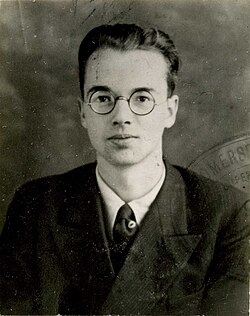 Klaus FuchsKlaus Emil Julius Fuchs (29 December 1911Affiliated
 Freeman DysonFreeman John Dyson (December 15Affiliated
How the record is sourced and how the score is derived.
The score is formula-derived (Factrail formula v1, version 1.0.0), not an editorial verdict. Read the methodology.
By the Factrail desk · Method: how we source and score · Last reviewed
Dispute a fact on this pageNamed here, or represent someone who is? Request a right of reply.
People and organizations as listed in the Related section of this page; facts, drivers and the pages that name it as listed in the blocks here. Counts, not a rating.