
Jonathan Kreiss-Tomkins
Jonathan Kreiss-Tomkins is an American politician from Sitka, Alaska, and the governor-elect of Alaska.
- Facts0
- Drivers0
- Indicators0
Jonathan Kreiss-Tomkins is an American politician from Sitka, Alaska, and the governor-elect of Alaska.
Jonathan Kreiss-Tomkins is an American politician from Sitka, Alaska, and the governor-elect of Alaska. A Democrat, he won the November 3, 2026, gubernatorial election with a majority of first-choice votes under the state’s ranked-choice system, and news organizations including CNN and the Associated Press called the race on November 12 and 13. The Anchorage Daily News (opens in a new tab) reported that, as of the Saturday after the call, he had about 51 percent of first-choice votes counted, ahead of Republicans Bernadette Wilson (28.1 percent), Dave Bronson (13.7 percent), and Treg Taylor (7.2 percent), with several thousand ballots still out. The Alaska Division of Elections was not scheduled to certify the result until November 25.
He was born in Sitka and, according to the Alaska Legislature’s biography, has lived there since 1989. That biography lists Sitka High School (2003–2007) and Yale University (2008–2012). He served in the Alaska House of Representatives from 2013 through 2022, the 28th through 32nd legislatures, representing Sitka and other rural communities in Southeast Alaska. In 2014 he was the lead House sponsor of a law, signed that October, adding 20 Alaska Native languages as official languages of the state.
Kreiss-Tomkins entered the 2026 governor’s race in February, in a field the Alaska Beacon counted as 17 primary candidates. He finished first in the August primary; fellow Democrat Tom Begich, who placed second, then withdrew and endorsed him. The Anchorage Daily News reported that his campaign raised more than $5 million, more than his general-election opponents combined, and that the Democratic Governors Association far outspent the Republican Governors Association in the race. His campaign said he visited 62 communities. Late endorsements included U.S. senator Lisa Murkowski and, according to NPR, three former governors of different party affiliations. The state Republican Party did not endorse any of the Republican candidates.
At 37, he is set to be the youngest person elected governor of Alaska and the first Democrat to hold the office since Tony Knowles left it in 2002. He succeeds term-limited Republican Mike Dunleavy. The state constitution requires the new governor to be sworn in at noon on December 7, 2026; independent Anchorage Assembly member Zac Johnson, his running mate, is lieutenant governor-elect. Kreiss-Tomkins has described the administration he wants as one that works across party lines, and he told the Anchorage Daily News he would name a Democrat, a Republican, and an independent as transition co-chairs.
Jonathan S. Kreiss-Tomkins was born in Sitka, Alaska, in 1989. A legislative biography lists Sitka as his birthplace and as his home from 1989, and the Alaska Division of Elections’ 2026 pamphlet, using a statement he supplied, again gives Sitka as his birthplace and lists his schooling as Sitka High School and Yale College, which he left without a degree.
Sitka is an island town of about 8,000 people, set between the Baranof Mountains and the North Pacific and shaped by Tlingit residents, fishing families, and a Russian colonial past still marked by the Orthodox cathedral on Lincoln Street. His parents are Connie Kreiss and Floyd Tomkins, and he has an older brother, David. He has described his mother, a tribal health doctor, and his father, a commercial fisherman, as “anti-helicopter parents,” and his own childhood as “feral.” He grew up fishing with the family and ran the woods behind the house, including a trail he broke to high school. Track meets, cello concerts, and debate competitions took him by ferry and bush plane, often to sleep on strangers’ couches, and a childhood music teacher said he and friends explored the town’s stormwater drains for fun. Linda Behnken, who knew him from high school, later said that as a teenager he obtained maps of that drainage system so he could ride the pipes out into the ocean.
In Boy Scouts he went by Johnny and became an Eagle Scout. Merit-badge counselor Charles Horan recalled a Scout project in which Kreiss-Tomkins devised a storage system for canoes at Medvejie Lake so they would not splinter as the water rose, fell, and froze, calling it “a wise, simple solution to a persistent problem.” Kindergarten teacher Karen Jones remembered him as a “creative thinker, and fairly quiet.” The legislative biography places him at Sitka High School from 2003 to 2007. In drama, debate, and forensics, coach Stacey Wayne said, he arrived with a detailed grasp of domestic and foreign events and could argue either side of a question because he listened.
After graduating in 2007 he spent a year in South America, then entered Yale University in New Haven, Connecticut, in 2008. He was working toward a bachelor’s degree in political science. A leave in the fall of 2011 for a writing project in Sitka deferred graduation by a semester; by August 2012, the Yale Daily News reported, one course credit remained. As a rising senior he had asked journalism instructor Mark Oppenheimer to advise a political-science thesis, and he had also weighed a White House internship or a return to campus that fall. He instead filed for a seat in the Alaska House of Representatives and did not go back to finish. Oppenheimer later said he had thought the choice “a bit foolish” and had expected Kreiss-Tomkins to lose and reappear in the spring. The Anchorage Daily News wrote that he dropped out soon before graduation to make the race and won the seat at age 23. In August 2012 he told the campus paper he planned to complete the degree within a year. He did not: a 2014 candidate questionnaire listed “Attended Yale College 2008-2012 (left early, without a degree, to run for Alaska Legislature),” and his 2026 election statement said the same. On campus he was not involved in city politics; he played music, ran, and said the range of people he met at Yale was what had prepared him for politics.
From Sitka, Kreiss-Tomkins began volunteering in December 2002 for former Vermont governor Howard Dean’s presidential campaign. In a guest post dated October 4, 2003, republished from the campaign blog, he wrote that he compiled databases of computer-skilled volunteers and of people running Yahoo groups or websites, and that he coordinated an “Alaskans for Dean” Yahoo group. The post called him the top “DeanLinker” and was signed as a volunteer in Sitka.
A DeanLink page archived on October 6, 2003—the campaign’s supporter directory, then in an August beta—ranked him first, with 437 introductions from Sitka. On November 9, 2003, Steve Inskeep interviewed him on NPR’s All Things Considered. The segment called him a 14-year-old state organizer for the campaign in Alaska and the top DeanLinker, credited with connecting 464 people to the campaign website. It noted that he could not vote and that his parents did not support Dean. NPR spelled his name Kreiss-Thomkins.
Later accounts widened that description. Alaska Public Media reported in 2022 that he had been “statewide chair” of the Dean campaign at age 12. A 2026 New York Times profile said that at 13 he became a state organizer, “his age concealed by the internet.” The 2003 record is narrower: a Sitka teenager who led the referral list, ran an Alaska supporter group, and was described on national radio as the state’s organizer, with his age stated rather than hidden.
On his 2012 House campaign site he listed substitute teaching, deckhand work on a troller, policy work for the City of Sitka, and help running the city’s recycling program, plus time on the Sitka Fine Arts Camp and the reuse of the Sheldon Jackson campus. In a 2026 interview he said he had spent a few summers deckhanding on trollers.
As a Yale University undergraduate he started Bulldogs on Baranof in summer 2011, which he later called an “alternative to Wall Street.” The Associated Press, drawing on the Sitka Sentinel, reported that 17 Yale students came that year to help the fine-arts camp and renovate the Sheldon Jackson campus in Alaska Arts Southeast’s first year operating it. The next summer, after he interviewed roughly 80 to 90 applicants, 31 Yale students came. By 2015, Jeanine Dames, Yale’s career-office director, told the Sentinel that more students interned in Sitka than in London, and the AP called Sitka the college’s most popular summer internship site.
With camp director Roger Schmidt, he also devised the Sitka Fellows residency for young artists, writers, and academics on the 20-acre campus transferred to Alaska Arts Southeast in 2011. The Daily Sitka Sentinel reported in August 2012 that eight fellows were there for seven weeks. In 2017, the program’s sixth year, the AP described six-week stays with community workshops; Kreiss-Tomkins said the point was to give people time at a critical stage of their careers.
The legislature’s biographical page from his first term listed him as a freelance journalist for the Alaska Public Radio Network and as coordinator of Sitka Fellows, TEDxSitka, and a Baranof Island glaciology project. TED’s listing for the July 21, 2012, TEDxSitka event, at Allen Hall, names Elena Gustafson as organizer.
Jonathan Kreiss-Tomkins, a Sitka Democrat, won five general elections to the Alaska House of Representatives from 2012 through 2020, representing Southeast Alaska coastal and island communities. The interim plan used in 2012 put him in House District 34, which paired Sitka and Haines for the first time and also included Klukwan, Hoonah, Kake, Angoon, Port Alexander, Pelican, Elfin Cove, Craig, and Metlakatla. Courts rejected that plan. The Alaska Redistricting Board's 2013 proclamation, used from 2014 through 2020, moved Haines into a Juneau-area district with downtown Juneau, Douglas, and Skagway, and joined Sitka with Petersburg and smaller communities as House District 35. Kreiss-Tomkins said he would run again so long as the district stayed in Southeast.
Southeast Alaska House districts in the Alaska Redistricting Board's 2013 proclamation plan, the map used for Kreiss-Tomkins's elections from 2014 through 2020.
On November 6, 2012, he challenged eight-year Republican incumbent Bill Thomas of Haines, a former co-chair of the House Finance Committee. Kreiss-Tomkins, then 23, stressed early voting and door-to-door campaigning; both sides advertised heavily, and Sitka Republican senator Bert Stedman backed Thomas. With every precinct in, he led by 44 votes and absentee ballots still uncounted. The lead then flipped: he trailed by two votes, the race tied, and he led by 28 before certification settled at 34 votes. Official results dated November 28 gave him 4,125 votes (50.11 percent) to Thomas's 4,091 (49.70 percent), with 16 write-ins, out of 8,232 votes cast. A margin under 0.5 percent entitled the trailing candidate to a state-paid recount, and Thomas requested one, held in Juneau on December 3. It added five votes for Kreiss-Tomkins and seven for Thomas, leaving a 32-vote margin, 4,130 to 4,098. Thomas said he would not contest it further.
In District 35 he won the next four generals. Official counts were 4,630 to Steven A. Samuelson's 3,189 in 2014 (24 write-ins; 7,843 votes); 5,068 to Sheila Finkenbinder's 3,486 in 2016 (34 write-ins; 8,588 votes); and 4,480 to Richard J. Wein's 3,367 in 2018 (32 write-ins; 7,879 votes). In 2020 the certified District 35 total was 5,682 for Kreiss-Tomkins (58.67 percent), 3,972 for Kenny Skaflestad (41.01 percent), and 31 write-ins, out of 9,685 votes. Those statements of votes cast list precincts for Angoon, Craig, Hoonah, Kake, Kasaan, Klawock, northern Prince of Wales Island, Pelican and Elfin Cove, Petersburg and Kupreanof, Port Alexander, Sitka, Tenakee Springs, and Thorne Bay.
He served in the 28th through 32nd legislatures: District 34 in 2013–2014 and District 35 from 2015 through 2022. Republicans organized the House when he took office and still did at the end of the 29th Legislature, whose roster placed him in the minority caucus. Speaker Mike Chenault, a Nikiski Republican, was the presiding officer that organization replaced after the 2016 election. In those two legislatures his assignments included State Affairs and Fisheries throughout, Transportation in the 28th, Judiciary and Rules in the 29th, and several finance subcommittees.
The post-2016 majority was a 22-member coalition of 17 Democrats, independents Dan Ortiz of Ketchikan and Jason Grenn of Anchorage, and Republicans Gabrielle LeDoux, Paul Seaton, and Louise Stutes, ending more than two decades of Republican control. Bryce Edgmon of Dillingham, a Democrat who had earlier joined Republican majorities, became speaker; Chris Tuck was majority leader, LeDoux chaired Rules, Seaton and Neal Foster co-chaired Finance, and Stutes was majority whip. The coalition described its program as spending cuts, restructuring of the Alaska Permanent Fund, and a broad-based tax. The Senate stayed under a more conservative Republican majority. In the 30th Legislature Kreiss-Tomkins chaired State Affairs, was vice chair of Judiciary, and served on Community and Regional Affairs, Fisheries, and finance subcommittees.
The House elected in November 2018—23 Republicans, 16 Democrats, and one independent—failed to organize for the first 31 days of the 2019 session. On February 14 it voted 21–18 to make Edgmon speaker again after he changed his registration to undeclared. The coalition then forming included Democrats, independents, and Republicans, among them Anchorage Republicans Chuck Kopp, named majority leader, and Jennifer Johnston, plus LeDoux and Stutes. Anchorage Democrat Ivy Spohnholz cast it as a check on Governor Mike Dunleavy's proposal to cut services in order to pay a larger dividend without new taxes. Kreiss-Tomkins co-chaired State Affairs and sat on Community and Regional Affairs, Fisheries, Arctic Policy, Economic Development and Tourism, a bicameral Permanent Fund working group, and finance subcommittees.
After the 2020 election the House split 20–20 between Republicans seeking a party majority and a multipartisan group of Democrats, independents, and Stutes. On February 11, 2021, the 24th day of session, the House elected Stutes speaker 21–19. Eagle River Republican Kelly Merrick cast the deciding vote and said she had not joined the coalition, then 15 Democrats, four independents, and Stutes. In the 32nd Legislature Kreiss-Tomkins again chaired State Affairs, co-chaired the House Comprehensive Fiscal Plan Working Group, and served on Judiciary, Fisheries, and finance subcommittees. He was not speaker or majority leader. Alaska Public Media, reporting his departure, called him a senior member who would have been a contender for majority leader had another bipartisan majority organized.
On March 18, 2022, Kreiss-Tomkins said he would not seek another term. He was 33 and said he had spent most of his adult life in the legislature, including every adult birthday "in the confines of the Alaska Capitol," and wanted "time and space for other aspects of life." He said he was not leaving politics, that he was proud of the bipartisan House majority, and that he would try to elect a successor who would keep it. In May the Anchorage Daily News listed him among at least 10 incumbents not running, in a year also marked by new maps; several of those members cited the strain of combining family life with legislative work. He finished the 32nd Legislature. State law starts a representative's two-year term on the third Tuesday in January, so his service ended on January 17, 2023, when the next House terms began.
In 2014, Representative Jonathan Kreiss-Tomkins of Sitka was the lead sponsor of House Bill 216, with Representatives Charisse Millett, Bryce Edgmon, Benjamin Nageak, and Bob Herron. The act added 20 Alaska Native languages as official languages beside English—Inupiaq, Siberian Yupik, Central Alaskan Yup'ik, Alutiiq, Unangax, Dena'ina, Deg Xinag, Holikachuk, Koyukon, Upper Kuskokwim, Gwich'in, Tanana, Upper Tanana, Tanacross, Hän, Ahtna, Eyak, Tlingit, Haida, and Tsimshian—by amending a statute a 1998 initiative had limited to English. He said the bill began in a conversation with Lance Twitchell (Xh'unei), a professor of Alaska Native languages at the University of Alaska Southeast.
Governor Sean Parnell signs House Bill 216 at the 2014 Alaska Federation of Natives convention in Anchorage as legislators and language advocates look on.
A new subsection said the designation did not require the state or a municipality to print documents or hold meetings in any language other than English, and the fiscal note was zero. Before that clarification, Representative Doug Isaacson, a North Pole Republican, told House State Affairs he did not want the state "having to provide everything in 20 different languages"; Representatives Wes Keller and Lynn Gattis also objected, while Nageak, an Inupiaq-speaking co-sponsor, answered that Native people "were here before." Isaacson, Keller, and Gattis then voted the substitute out of committee, and Isaacson became a cosponsor.
The House passed the bill 38–0 on April 16, 2014. Supporters, including Twitchell, then kept a vigil of about 15 hours outside the office of Senate Rules chair Lesil McGuire. The Senate passed it 18–2 at about 3 a.m. on April 21; Senate Majority Leader John Coghill and Senator Pete Kelly voted no. Coghill had wanted the languages called "ceremonial" rather than "official" and later called his vote apologetic. Reporters described the bill as largely symbolic, while speakers said it recognized languages children had been punished for using.
Governor Sean Parnell signed it on October 23, 2014, as Chapter 116, SLA 2014, effective January 21, 2015, at the Alaska Federation of Natives convention in Anchorage. AFN moved the signing off the main stage after some board members said Parnell, then seeking re-election, might use it politically. With that signature, Alaska became the second state after Hawaii to recognize Indigenous languages officially.
On March 26, 2018, the House voted 21–19 to set that year's Permanent Fund dividend at about $2,700, roughly $900 million above what House leaders called the maximum sustainable draw from an Alaska Permanent Fund then described as $64 billion. Kreiss-Tomkins was one of 12 majority-coalition members who voted no.
In June 2019 he opposed a capital-budget amendment to spend $1.9 billion from the earnings reserve on a dividend of about $3,000, which would have exceeded the draw limit in the 2018 percent-of-market-value law, Senate Bill 26. "I would much rather step in front of a freight train than spend down the Permanent Fund unsustainably," he said; the amendment failed 15–21.
House Bill 31, introduced February 20, 2019, with Representatives Dan Ortiz and Ivy Spohnholz, would have appropriated $5.5 billion from the earnings reserve to the principal and died in House Rules. A budget conference committee that June separately approved a $10.5 billion transfer; Alaska Public Media later reported that nearly $5 billion reached the protected principal after Governor Mike Dunleavy vetoed about $5.6 billion of a larger transfer legislators had approved. House Joint Resolution 18 (2019), cosponsored by Representatives Jennifer Johnston, Spohnholz, Ortiz, Tammie Wilson, and others, would have capped appropriations from the fund at 5 percent of average market value for the first five of the preceding six fiscal years and, on June 30, 2021, deposited the earnings reserve into the principal, subject to a statewide vote. It stalled in House Judiciary; a 2021 successor, House Joint Resolution 1, stopped in House Finance.
Fisheries bills he sponsored mostly died in committee. House Bill 179 (2015), cosponsored by Millett, Ortiz, Sam Kito, Louise Stutes, Cathy Muñoz, and others, would have allowed donations of lawfully taken subsistence, sport, or personal-use fish and game to food-service programs and limited donor liability; it stalled in House Resources. Measures on herring-spawn classics, entry-permit loans, and the optimum number of commercial fishing permits also failed to advance. He cosponsored Representative Andi Story's House Bill 115, enacted as Chapter 10, SLA 2021, on aquatic-farming and hatchery-site leases and an annual report to the legislature.
Versions of a limited certificate for non-English immersion teachers, introduced in 2015, 2018, and 2020, did not pass. House Bill 19 did: the House recorded 37 yes votes, the Senate no no votes, and the bill became Chapter 73, SLA 2022, on September 12 without Dunleavy's signature, effective December 15. Notwithstanding the usual degree requirement, it allows a certificate for a person who shows instructional skill and subject-matter expertise and teaches only immersion students, in a language other than English. Cosponsors included Representatives Harriet Drummond, Tiffany Zulkosky, Story, Tarr, Patkotak, and Foster.
With Representatives Peggy Wilson, Muñoz, and Beth Kerttula, he sponsored House Bill 217, making November 14 Dr. Walter Soboleff Day for the Tlingit minister and cultural leader who died in 2011. The House passed it 35–0 on March 27, 2014, the Senate 20–0, and Parnell signed it on July 30. House Bill 142, introduced with Ortiz, Sara Hannan, Spohnholz, Tarr, and Story, became Chapter 13, SLA 2020, after 33 House yes votes and a 16–1 Senate vote. The introduced text would also have made Alaska Native organizations eligible for village public safety officer grants; the enrolled act only repealed AS 47.27.070(c) in the statutes on those organizations' family assistance programs.
In 2014, while in the Alaska House of Representatives, Kreiss-Tomkins began planning a small private college in Sitka, Alaska, after visiting Deep Springs College, a two-year California ranch school where students help control admissions, the curriculum, and faculty hiring. He described a coeducational version without the ranch’s isolation: about 20 students in each of two classes, student labor and town service, and faculty hired to teach rather than publish. The site was the former Sheldon Jackson College, about 22 acres closed in 2007 and given to the Sitka Fine Arts Camp, interested in December 2015 but not yet agreed.
Historic buildings of the former Sheldon Jackson School in Sitka, the campus where Outer Coast later held classes.
Deep Springs student Will Hunt deferred further college for a Sitka fellowship on the project, which Kreiss-Tomkins said would take no state money. A summer 2018 pilot put 16 high-school students through seminars, including Plato and Tlingit Raven stories, plus trail work and rules they set themselves. In fall 2020 Outer Coast opened an in-person academic year, with service at the Sitka Sound Science Center hatchery, while many colleges stayed remote. The Alaska Commission on Postsecondary Education authorized it in January 2020. Credit was arranged first with Alaska Pacific University and then, by an agreement of June 17, 2024, through June 30, 2026, with the University of Alaska Southeast: UAS approves the courses and instructors and transcripts students enrolled as non-degree-seeking. The agreement did not settle whether the courses would count toward UAS degrees. Staff later described up to 59 credits, most intended to meet UAS general-education requirements.
The program is not independently accredited. The commission, which limits the word “college” to accredited institutions, denied that label in 2016 and in 2024 required edits after materials described an associate degree; what staff recorded was a certificate of completion plus UAS credit. Outer Coast has said it is seeking accreditation, including from the Northwest Commission on Colleges and Universities, but June 2026 staff reported no update since the 2024 renewal. The first two-year group went from 20 students in August 2024 to 13 by spring 2026; 17 entered in August 2025, and 2025–26 enrollment was listed at 32, about half from Alaska. Outer Coast reported need-blind admission and institutional aid for 90 percent of students, against listed prices, room and board included, of $7,500 for an August term and $18,750 for fall or spring. KCAW covered a May 2026 ceremony for that class, with executive director and co-founder Bryden Sweeney-Taylor.
In March 2020 Kreiss-Tomkins co-founded Covid Act Now with Max Henderson, Igor Kofman, and Zack Rosen. The project named Nirav R. Shah, then a senior scholar at Stanford University’s Clinical Excellence Research Center, as its medical adviser. The Yale Daily News reported that the site was online on March 20, 2020. It mapped states by how far their rules went and graphed hospitalizations over about five months under current policy and under stricter steps such as shelter-in-place orders. The group said the model was meant to push officials to act quickly, not to forecast exactly, and it flagged limits in the early data.
A 2022 paper in Patterns, written partly by researchers at the Act Now Coalition that continued the work, tested those projections against what happened. Using California data, it found the model consistently overestimated hospitalizations by 25 to 100 percent and deaths by 70 to 170 percent, partly because it underestimated how much stay-at-home orders slowed infection. The paper also reported that this model and others generally captured the COVID-19 pandemic’s short-term scale and direction.
Before the college plan, Kreiss-Tomkins created the Sitka Winter Fellowship, which paid recent graduates food and travel stipends for service jobs in town; Hunt’s year on the college project was one such placement, funded by two donors. The Yale Daily News later traced the effort from shorter placements of Yale University students in Sitka to a nine-month postgraduate fellowship and, after sites were added outside Sitka, to the Alaska Fellows Program.
In December 2010 he and Chandler Kemp, a Cornell University student from Alaska, used loaned high-precision GPS gear, with help from UNAVCO geophysicist Frederick Blume, to measure the two summits of Ojos del Salado, the world’s highest volcano, on the Argentina–Chile border. April 2011 processing put the eastern summit, associated by climbers with Argentina, 31 centimeters above the other. Blume cautioned that so small a gap could change if a receiver sat on loose rock; Kreiss-Tomkins said the units were on bedrock. On the way they climbed El Muertito, which he believed was unclimbed, and found a red crater lake. At 20 he was the youngest winner of Sitka’s 2009 Alpine Adventure Run, in 1:10:54, and he continued ultrarunning until a 2022 paragliding accident broke two bones in one leg.
Kreiss-Tomkins’s revenue position moved as oil income fell. In his 2012 House campaign he said an income or sales tax was unnecessary if Alaska avoided large spending and what he called a giveaway to oil companies. In 2013 he voted against Senate Bill 21, the production-tax cut, after ConocoPhillips reported more than $500 million in Alaska profit in one quarter. In 2017 he voted for a House income-tax bill that the Senate rejected.
In June 2026 he was the only gubernatorial candidate who had cast that vote, and he said the state had “given up too much upside” on its oil. He was open to a gross-value tax or to ending per-barrel credits, and he supported a corporate income tax on privately held producers such as Hilcorp, then estimated above $100 million a year, while saying he was “not hard over on any one thing” because the Legislature would decide. Bill Walker instead proposed a 13 percent gross-value tax he said could raise about $1 billion a year; several Republicans wanted the 2013 system kept. By October Kreiss-Tomkins was emphasizing the corporate changes, including online commerce—about $150 million a year, an “obvious start”—and still said a broad-based tax was likely needed. Republican opponents opposed an income tax.
As prime sponsor of House Joint Resolution 1 (32nd Legislature), he proposed a constitutional amendment on the Alaska Permanent Fund and appropriations from it. The measure cleared two committees and never reached a floor vote. In September 2026 he called merging the protected principal with the spendable earnings reserve, so a simple majority could not enlarge draws, “the single most important reform I want to pass as governor.” He said the statutory dividend, unused since 2016 and above $3,000, did not fit the budget. Bernadette Wilson said she would seek that amount even if it meant exceeding the spending limit.
At a July 2026 superintendents’ forum he agreed schools had been underfunded under Gov. Mike Dunleavy. He backed earlier district budgets, a review of the funding formula, defined-benefit teacher pensions, and maintenance bonds. Only a constitutional amendment, he said, could dedicate education money, “politically de-risk” it, and account for inflation; he called the subject a “Pandora’s box” lawmakers had avoided.
He joined the other general-election candidates in calling salmon bycatch in trawl fisheries urgent, but preferred “action” to a new task force. He cited his advocacy for Chinook bycatch limits in the Gulf of Alaska, adopted by the North Pacific Fishery Management Council, and for abundance-based halibut rules in effect since 2024, and he called Sitka “a community that was built by fisheries.”
On rural energy he said reliable, affordable power was the “north star,” pledged to protect Power Cost Equalization and to veto raids on its endowment, and supported an energy bond to move communities off diesel. He called weatherization “a real slam dunk” and kept Interior natural gas and coal inside an “all of the above” mix.
He has said he is proud of working with Gov. Bill Walker’s administration to expand Medicaid. In September 2026 he blamed losses of coverage among still-eligible people on staffing shortages and new federal work requirements, and said rural-health grants should fund lasting system changes rather than one-time projects.
On September 8, 2026, he supported “a moratorium on data center development in Alaska until the Legislature can pass a comprehensive regulatory framework.” Dave Bronson and Treg Taylor favored centers that supplied their own power; Wilson opposed hyperscale projects that would “spoil our lands.”
As a representative he supported 2020 Ballot Measure 2, the nonpartisan top-four primary and ranked-choice voting. He said legislators would no longer fear removal by “a very unrepresentative part of the electorate,” and called it “a brave new world for Alaska.”
Jonathan Kreiss-Tomkins, a Democrat and former member of the Alaska House of Representatives from Sitka, announced on February 4, 2026, that he would run for governor of Alaska. Republican Gov. Mike Dunleavy was barred by term limits from running again, and Kreiss-Tomkins told the Anchorage Daily News that his decade in the House’s bipartisan coalition was the model he wanted in the executive branch. On the June 1 filing deadline he named Zac Johnson, a nonpartisan member of the Anchorage Assembly, as his candidate for lieutenant governor.
Alaska puts every candidate on one primary ballot; the top four, regardless of party, advance to a ranked-choice general election. The August 18 primary had 17 governor–lieutenant governor tickets—12 led by Republicans, two by Democrats and three by nonpartisan or undeclared candidates—and 164,303 votes. Kreiss-Tomkins and Johnson finished first with 37,006 votes (22.52 percent). Democrat Tom Begich and Julia Hnilicka were second with 34,172 (20.80 percent); Republicans Bernadette Wilson and Michael Shower third with 16,468 (10.02 percent); and Republican Dave Bronson, a former Anchorage mayor, and Josh Church fourth with 13,364 (8.13 percent). Former attorney general Treg Taylor and Candi English were fifth with 11,928 (7.26 percent), ahead of Click Bishop’s ticket at 11,527 (7.02 percent). Former governor Bill Walker, running as a nonpartisan with former revenue commissioner Randy Hoffbeck, received 7,341 votes (4.47 percent) and did not advance.
On August 28, Begich said he would withdraw before the August 31 deadline and endorse Kreiss-Tomkins. He said a Democrat was more likely to win with only one Democrat on the November ballot, that two Democrats would split a limited pool of money, and that the two agreed on schools, the cost of living and new state revenue. His exit moved Taylor into the top four. The Alaska Public Offices Commission had recommended that Taylor not be certified, because he had not completed a required disclosure of financial interests, including tenants tied to his rental income. Lt. Gov. Nancy Dahlstrom, who oversees elections, refused to certify him on August 31; English briefly replaced him on the ballot, with Taylor’s wife, Jodi Taylor, as the lieutenant-governor candidate. On the night of September 4, Dahlstrom reversed herself and restored Taylor, citing an unpublished Department of Law review that she said found possible disclosure problems among other candidates as well.
The November 3 ballot paired Kreiss-Tomkins with Johnson and listed three Republicans: Wilson, Bronson and Taylor.
Kreiss-Tomkins ran as a moderate seeking voters from the center-right through the left. His campaign said he visited 62 communities and traveled about 40,000 miles: a snowmachine trip in the Northwest Arctic, boats on the Yukon and Kuskokwim, the Haul Road to Prudhoe Bay, Utqiagvik during a whale harvest, and the Tustumena ferry along the Aleutians, with a base in Anchorage. The Republicans, divided and short of money, focused on the Railbelt. Wilson urged her rivals to quit and criticized ranked-choice voting; Bronson and Taylor made a joint advertisement asking supporters to rank the other Republicans. State party leaders said they would rank every Republican but did not endorse or spend on any candidate for governor. Dunleavy asked voters to rank all three and did not name a first choice.
On October 13, President Donald Trump endorsed Wilson hours before a Wasilla rally held mainly for Republican candidates for the U.S. Senate and House. He called Bronson and Taylor “lesser” candidates, wrote that Bronson had “begged” for an endorsement and then stayed in, and said he had never heard of Taylor. Bronson disputed that account and later said Trump’s focus on the result had “turned me off.” The Daily News reported that the endorsement did little to unite Republican-leaning voters or to lift Wilson’s fundraising, and it noted Wilson’s unpaid business and personal debts, Bronson’s contentious mayoral term, and Taylor’s brief removal from the ballot.
Campaign-finance reports covered by the Daily News showed Kreiss-Tomkins far ahead in money. From early August to filings posted in early October he reported $2.1 million, against a combined $852,000 for Wilson (just over $526,000), Taylor (just under $269,000, about $233,000 of it from himself, his running mate and one other donor) and Bronson (under $60,000). On October 2 he had more than $1.1 million left, to less than $350,000 for the three Republicans combined, and he had spent more than $1.2 million since August, mostly on ads. By late October the paper put his total above $5.3 million since February, including more than $1 million in October—three times the Republicans’ combined October receipts. That month Wilson raised nearly $345,000 (campaign total $1.5 million), Bronson just under $30,000 (total $440,000) and Taylor about $4,000. After the election the Daily News said he had raised more than $5 million, more than his opponents combined.
Since August he reported gifts from more than 4,000 people, more than 2,000 of them Alaskans, a median contribution of $50, and more than a third of that period’s money from Alaska; 35 donors of at least $10,000, including five gifts of $100,000, supplied more than half. The paper also reported criticism of large checks from Californians in the artificial-intelligence industry—Wilson’s advertising called him “Chat-JKT”—and his campaign said those industry gifts had stopped after the primary. One Tuesday in late October brought another $150,000 from four non-Alaskans.
Independent spending ran the same direction. Forward Frontier, funded in part by the Democratic Governors Association, had spent $4.4 million for him by late October, including $2.9 million that month. Kodiak PAC, funded by the Republican Governors Association, had spent $1.7 million for the Republicans and against Kreiss-Tomkins without choosing among them; the association’s $1.6 million transfer had not yet been spent as of October 2. A Wilson committee funded mainly by the private-prison company GEO Group had recently spent $98,000 on ads.
In the last week of October, Republican U.S. Sen. Lisa Murkowski endorsed him in a statement his campaign released, saying governing required “listening to people with different perspectives and finding common ground” and citing the fiscal future, energy costs and the economy. The same week her father, former governor Frank Murkowski, Democratic former governor Tony Knowles and Walker published a joint call for Alaskans of every affiliation to back him. Trump’s endorsement remained with Wilson.
The general election was November 3, 2026. The Division of Elections’ unofficial summary, timestamped November 14 with all 400 precincts reported, gave Kreiss-Tomkins and Johnson 141,623 first-choice votes (50.90 percent). Wilson and Shower had 77,943 (28.01 percent), Bronson and Church 37,913 (13.63 percent), Taylor and English 19,977 (7.18 percent), and write-ins 798 (0.29 percent), out of 278,254 votes. A first-choice majority meant no ranked-choice redistribution. The count was still unofficial: the Daily News said several thousand ballots were out and that remaining absentees were expected to favor him. He claimed victory on November 13, saying Alaskans had “voted for change and for a government that works across party lines.” At 37 he was to be sworn in on December 7, succeeding Dunleavy as the first Democrat in the office since Knowles left in 2002, with Johnson as lieutenant governor.
Jonathan Kreiss-Tomkins was governor-elect of Alaska in mid-November 2026 and had not taken office. In the Division of Elections’ November 14 summary, still marked unofficial, the Kreiss-Tomkins/Johnson ticket had 141,623 first-choice votes (50.90 percent), ahead of Bernadette Wilson (28.01 percent), Dave Bronson (13.63 percent), and Treg Taylor (7.18 percent). That first-choice majority meant no further ranked-choice voting tabulation. The Associated Press called the race on November 13, a day after CNN, but certification was not scheduled until November 25. Bronson and Wilson both treated the result as his victory. The Anchorage Daily News described him as elected to serve as the state’s 13th governor.
He is to be sworn in at noon on December 7, the hour the Constitution of Alaska sets for a new term to begin. As of November 13 he had not chosen whether the ceremony would be in Anchorage, Juneau, or his hometown of Sitka. At 37 he would be the youngest person to hold the office and the first Democrat since Tony Knowles left in 2002, succeeding term-limited Republican Mike Dunleavy. Running mate Zac Johnson, an independent member of the Anchorage Assembly, is lieutenant governor-elect in succession to Nancy Dahlstrom; the Division listed the ticket as Democrat/nonpartisan.
Certification was set for November 25 and the oath 12 days later, a gap the Daily News called among the fastest executive transitions in the country. He said three co-chairs—a Democrat, a Republican, and an independent—would oversee policy teams for an administration “blended in terms of political backgrounds.” As of November 13 neither the co-chairs nor other appointees had been named; he said announcements would start the following week, and that he might retain some Dunleavy commissioners while changing leadership elsewhere.
December 15 is the statutory deadline for his first budget, about a week after inauguration, and the Daily News called that draft his first test. On November 12 he said the war in Iran was expected to lift oil revenue by hundreds of millions of dollars. He outlined a “moderate” Alaska Permanent Fund dividend, higher public-education spending, and a deposit of surplus revenue into savings so the state would not “zigzag” from deficits into a spending surge. He said he would again offer a constitutional amendment he introduced in 2019 to cap annual Permanent Fund draws, which would need two-thirds votes in both chambers and then approval by voters, who had not amended the constitution in more than two decades.
He said he wanted a “culture of constant improvement,” citing delays on a federally required long-term transportation plan and backlogs in food assistance and other benefits. He proposed a public dashboard, metrics.alaska.gov, to track figures such as Medicaid eligibility wait times “even if those numbers are ugly,” and after declaring victory said the administration would “not waste a single day getting to work.”
Kreiss-Tomkins’s first itemized report to the Alaska Public Offices Commission, a thirty-day primary filing submitted on July 20, 2026, covered February 2 through July 17. It listed $1,847,331.28 in income and no balance from an earlier report, so donors for money raised since February were itemized less than a month before the August 18 primary. The Anchorage Daily News reported that the roughly $1.8 million was more than any of the other 17 candidates had raised, and that most of it came from wealthy donors in the Lower 48. Six employees of the artificial-intelligence company Anthropic gave $372,000, including $100,000 from Drake Thomas, who grew up in Soldotna. Kreiss-Tomkins said those donors shared his support for strict regulation of the technology, that the outside money reflected a belief he could win rather than one policy agenda, and that he favored restoring contribution limits.
By early October the campaign had raised nearly $4.3 million since February, about 70 percent of it from outside Alaska and nearly half from New York and California addresses, Alaska Public Media reported. Republican Bernadette Wilson had also raised about 70 percent of her funds out of state, mostly in smaller gifts, while his campaign said it had more Alaska donors than the rest of the field and that nearly 80 percent of his contributions were $100 or less. The Democratic Governors Association gave $650,000 to an independent group, Forward Frontier; he said the law barred coordination and that he learned of the gift when it was disclosed. The Republican Governors Association had sent $1.6 million to a committee backing Republican candidates, none of it spent as of October 2.
An amended disclosure filed June 1, 2026, for calendar year 2025, listed him as owner of JKT LLC in Sitka and reported $100,000 to $200,000 for project- or retainer-based consulting. It named two clients in separate ranges: Independent Campaigns LLC at $20,000 to $50,000, and The Boardroom LLC at $100,000 to $200,000.
On March 23, 2026, Americans for Public Trust asked the Federal Election Commission to investigate independent Nebraska Senate candidate Dan Osborn, his campaign committees, and the hybrid PACs Working Class Heroes Fund and League of Labor Voters. Kreiss-Tomkins is not a respondent. The complaint alleges personal use of campaign funds through above-market payments to Osborn’s relatives and their businesses, and control of “soft money” PACs during a federal campaign. It itemizes about $195,000 paid to Independent Campaigns LLC by the campaign and the two PACs. Fox News reported that Osborn’s wife, Megan Osborn, held a one-third stake in that company and that Osborn said the payments were fair-market compensation for real campaign work. The complaint does not allege that Kreiss-Tomkins received those disbursements; his Alaska filing lists the firm as a client of JKT LLC.
Wilson, endorsed by President Donald Trump, called him “just keep taxing” JKT. She told Fox News he supported an income-tax increase, a doubled fuel tax, and pressure on oil companies, opposed a full dividend from the Alaska Permanent Fund, and shared “socialist policies” with Senator Lisa Murkowski. The New York Times reported that she had also called him a closet socialist and “ChatJKT,” tying the nickname to the Anthropic employees’ gifts, and quoted her at a debate: “He’s a radical. Alaska cannot afford that.”
Murkowski told KTUU he was “a young Alaskan with a view and a perspective that I think Alaska needs right now.” Former governor Frank Murkowski joined former governors Tony Knowles and Bill Walker in an Anchorage Daily News op-ed saying that, from different political backgrounds, they supported him. The Times described the race as a test of whether Democrats could win in Republican-leaning states “by building coalitions across party lines without embracing the socialist left.”
Ranked by shared high-impact facts, then explicit ties, then shared drivers.
 Mike DunleavyMichael James Dunleavy (born May 5Affiliated
 Sean ParnellSean Randall Parnell (born November 19Affiliated
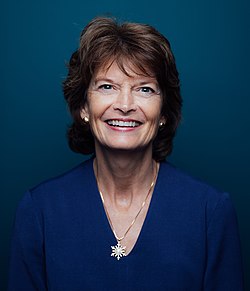 Lisa MurkowskiLisa Ann Murkowski (born May 22Affiliated
 Frank MurkowskiFrank Hughes Murkowski (born March 28Affiliated
 Tony KnowlesAnthony Carroll Knowles (born January 1Affiliated
How the record is sourced and how the score is derived.
The score is formula-derived (Factrail formula v1, version 1.0.0), not an editorial verdict. Read the methodology.
By the Factrail desk · Method: how we source and score · Last reviewed
Dispute a fact on this pageNamed here, or represent someone who is? Request a right of reply.
People and organizations as listed in the Related section of this page; facts, drivers and the pages that name it as listed in the blocks here. Counts, not a rating.