
Josephine Ortleb
Josephine Loulou Ortleb (born 25 November 1986 in Saarbrücken) is a German politician of the Social Democratic Party of Germany (SPD).
- Facts0
- Drivers0
- Indicators0
Josephine Loulou Ortleb (born 25 November 1986 in Saarbrücken) is a German politician of the Social Democratic Party of Germany (SPD).
Josephine Loulou Ortleb (born 25 November 1986 in Saarbrücken) is a German politician of the Social Democratic Party of Germany (SPD). She has sat in the Bundestag for the Saarbrücken constituency (Wahlkreis 296) in Saarland since 2017, each time with a direct mandate, and on 25 March 2025 she was elected a vice president of the Bundestag.
Ortleb passed the Abitur in Saarbrücken in 2007, studied social sciences at the University of Cologne from October 2008 to February 2009, and began a bachelor's course in political management at the City University of Applied Sciences (Hochschule Bremen) from October 2009 to September 2010. She then trained in the hotel and catering trade and in 2014 qualified as a restaurant specialist, a state-certified gastronomist and a Fachwirtin im Gastgewerbe. From September 2010 she worked in her family's Saarbrücken restaurant, Tomate 2, taking a managing role in July 2014, and from April 2015 to September 2017 she headed the constituency office of the SPD member of parliament Elke Ferner. She joined the SPD in 2008 and served on the Saarbrücken city council from 2014 to 2018.
In the 2017 federal election the SPD won Saarbrücken with 32.1 percent of first votes (46,688), ahead of the Christian Democratic Union of Germany on 31.4 percent (45,664), and Ortleb entered the Bundestag on that direct mandate. In 2021 she held the seat against Annegret Kramp-Karrenbauer, then federal defence minister, by 36.9 percent to 25.1 percent of first votes. At the snap election of 23 February 2025 she was returned with 32.4 percent (47,772 votes), ahead of Yvonne Brück of the CDU on 24.8 percent and the Alternative for Germany candidate on 20.6 percent, in a constituency where turnout reached 79.7 percent.
From December 2020 to March 2025 Ortleb was a parliamentary secretary (Parlamentarische Geschäftsführerin) of the SPD Bundestag group and, in that role, a member of the Council of Elders of the Bundestag. The Bundestag elected her vice president on 25 March 2025 with 434 votes in favour, 145 against and 31 abstentions, the largest majority among the vice presidents chosen that day, while Julia Klöckner of the CDU became president. Her legislative work has centred on the committee covering family affairs, senior citizens, women and youth, where the Bundestag describes a focus on greater equality; in the 21st Bundestag she is a full member of the Committee on Education, Family Affairs, Senior Citizens, Women and Youth and of the Franco-German Parliamentary Assembly.
Josephine Ortleb was born on 25 November 1986 in Saarbrücken, the capital of Saarland. That date, and the school and training dates that follow, come from the biography published by the Bundestag, which states that members’ life histories are based on their own disclosures. She grew up in Alt-Saarbrücken. In 2025 she told the Saarbrücker Zeitung that she had been raised in the “charming lanes” of the old town; the paper added that she is widely known there by the nickname Fine.
Her parents ran Tomate 2, a restaurant on Schlossplatz, for decades. The Saarbrücker Zeitung has described the address as a local institution, used by long-standing residents, newcomers, tourists and politicians. Ortleb has said that she grew up “literally between pans and pots” and that she was already working in the family business while still at school, a point the newspaper has also reported separately. The Bundestag biography lists Tomate 2 as that family business.
As a child she went with her father to matches of 1. FC Saarbrücken and became a supporter of the club. In a 2019 interview published by the Bundestag she said that her childhood wish was to be a cook, then a singer, and then a “singing cook.” In the same interview she said that her grandmother, a teacher in Saarbrücken, had been suspended from the school service in the 1970s after taking part in a demonstration for Willy Brandt, and that learning of this as a teenager was one reason she became politically active. She described her own adolescence as rebellious—blue hair, loud clothes and open defiance—and said that being judged by appearance showed her how quickly someone who did not fit a norm could be shut out, whether for looks, origin or sexual orientation.
Ortleb has written that she went to the Gymnasium am Schloss in Saarbrücken after primary school. The Bundestag biography places her at that school from August 1997 to July 2004. From August 2004 to June 2007 she attended the Wirtschaftswissenschaftliches Gymnasium in Saarbrücken, and in June 2007 she passed the Abitur.
She did not go straight from school into a completed degree. In October 2008 she began social sciences at the University of Cologne; the biography ends that enrolment in February 2009. From October 2009 to September 2010 she was enrolled in the bachelor’s programme in Politikmanagement (political management) at Hochschule Bremen, the City University of Applied Sciences. A Saarbrücker Zeitung profile sums up the period as a few semesters of study after the Abitur, followed by vocational training rather than a finished university course. The Bundestag entry records no degree from Cologne or Bremen. Ortleb has written that she tried several paths and then decided to stay in Saarbrücken and train as a restaurant specialist.
In August 2012 she entered the Höhere Berufsfachschule für das Hotel-, Gastronomie- und Fremdenverkehrsgewerbe in Saarbrücken, the higher vocational school for the hotel, restaurant and tourism trades. In January 2014 she passed the examination as a Restaurantfachfrau, the recognised qualification in restaurant service, and the biography ranks her second in her year. In June 2014 she qualified both as a staatlich geprüfte Gastronomin (state-certified gastronomy specialist) and as a Fachwirtin im Gastgewerbe, a higher vocational qualification in the hospitality trade; for the Fachwirtin examination the same biography lists her as best in her year. Those three titles, though not the class rankings, are also reported outside that self-disclosure: the Saarbrücker Zeitung describes her as a trained Restaurantfachfrau, state-certified Gastronomin and Fachwirtin im Gastgewerbe, and Vorwärts has reported an apprenticeship as Restaurantfachfrau followed by further training as Fachwirtin im Gastgewerbe.
Josephine Ortleb's parents ran Tomate 2, a restaurant at the Schlossplatz in Saarbrücken. The operating company, Restaurant Tomate GmbH, was entered in the commercial register of the Amtsgericht Saarbrücken on 20 April 1988. Its registered office is Schloßstraße 2, 66117 Saarbrücken, and its stated object is the operation of the restaurant "Tomate".
The Saarbrücker Zeitung has described Tomate 2 as a meeting place for residents, newcomers, tourists and politicians. In December 2023 it reported that Sibille Strauch, then 66, had directed the restaurant for 35 years and was handing management to her son Liliom Strauch, then 43. A column in the Saarbrücken weekly Forum the month before called her Sibille Strauch-Ortleb and quoted Liliom Strauch: the restaurant had to stay in the family, and the choice had been between him and his sister, Josephine Ortleb, who was too occupied with politics to take it on.
Ortleb had worked there long before that handover. In a March 2025 profile, the Saarbrücker Zeitung wrote that her parents had run Tomate 2 at the Schlossplatz for decades and that she had already helped in the family business while still at school. The biography published by the German Bundestag, which the parliament notes is based on members' own statements, gives later dates for paid roles: from September 2010 she was a shift supervisor (Schichtleiterin) at Tomate 2, and from July 2014 she held a managerial position (geschäftsführende Position).
That wording does not make her the company's statutory managing director. North Data's summary of the register records Caspar Liliom Strauch — entered under his full name, Caspar Liliom Abdahramad Raphael David Sid Strauch — as managing director from 20 September 2023 until 27 July 2026, and Dominika Kinga Czudej-Sledzik from 27 July 2026. Ortleb does disclose a participation (Beteiligung) in Restaurant Tomate GmbH. The Bundestag entry names the company but not the size of the stake.
From April 2015 to September 2017, overlapping the managerial role she reported at the restaurant, Ortleb headed the Saarbrücken constituency office of Elke Ferner, then the Social Democratic Party of Germany (SPD) member of the Bundestag for the city. The office title is part of the same self-reported biography. In the separate disclosure of employment before she entered parliament, she is listed more briefly as a staff member (Mitarbeiterin) of Ferner in Saarbrücken.
On 14 April 2016 the Saarbrücker Zeitung reported that Ferner, then 57, had confirmed she would not stand for the Bundestag again in 2017, 27 years after she first took a seat. The paper noted that she had served from 1990 to 1998 and again from 2002, had been a parliamentary state secretary in the federal family ministry since 2013, and since 2004 had chaired the SPD's national organization of women. She declined to name a successor. Citing its own information, the newspaper wrote that the person being discussed was her constituency staffer Josephine Ortleb, then 29. The same biography dates the end of the office job to September 2017. She won the Saarbrücken constituency at that year's federal election, the first of three direct mandates the Saarbrücker Zeitung has recorded for her there.
The Bundestag biography of Josephine Ortleb, which the parliament states is based on her own information, records her as a member of the Social Democratic Party of Germany (SPD) since 2008. Her first offices in Saarbrücken were in the Young Socialists in the SPD (Jusos): from October 2010 to December 2016 she was deputy chair of the Jusos subdistrict (Unterbezirk) of Saarbrücken, and from May 2011 to March 2013 she worked for the SPD in Saarland, including as the Jusos' state managing director. The SPD Bundestag group's biography adds that the post included the state party's campaign staff and lists her as mobilization team leader for the 2012 election.
From August 2012 to May 2013 she was deputy subdistrict chair of the Association of Social Democratic Women (Arbeitsgemeinschaft sozialdemokratischer Frauen, ASF) in Saarbrücken. The ASF, also called SPD Frauen since 2023, is an SPD working group that describes its aim as equality of women and men in the party and in society; women members belong to it automatically. The Bundestag biography then lists Ortleb as a chair from May 2013 to 2017, without naming the body in that clause. The group's curriculum vitae places that chairmanship with the ASF and adds membership of the ASF state executive. In March 2016 the Saarbrücker Zeitung reported that the ASF Saarbrücken had unanimously confirmed Ortleb, then a city councillor, as chair.
The same Bundestag entry records membership of the SPD Saarbrücken district executive from 2014 and a deputy chair from May 2017, separate from her later role as deputy state chair of the SPD Saarland from 2019. The group biography is more specific: from 2014 she sat on the managing district executive, responsible for membership development, and became its deputy chair in May 2017; from March 2015 to October 2017 she was deputy chair, not chair, of the SPD local branch (Ortsverein) in Saarbrücken-St. Johann.
Ortleb was a member of the Saarbrücken city council (Stadtrat) from 2014 to 2018; the SPD group's biography dates the start to May 2014. Both accounts describe her as co-spokesperson of the culture committee and a member of the main and economic committee (Haupt- und Wirtschaftsausschuss), and the group biography also lists the city's art commission. On 8 June 2016 the Saarbrücker Zeitung named "Josefine Ortleb (SPD)" among the party representatives on that honorary commission, founded in 1992 and then comprising 19 members.
Until 2018 she sat on the supervisory boards of Saarmesse, the state capital's trade-fair company, and of the Max Ophüls Prize, a Saarbrücken festival for early-career German-language film. In January 2016 the Saarmesse supervisory board decided to examine a later use of the Schanzenberg fairgrounds from 2017. Mayor Charlotte Britz said the Internationale Saarmesse would probably be held there for the last time in 2016; the report did not record individual votes. In September 2019 Ortleb wrote on Abgeordnetenwatch that in 2016–2018 she had received only occasional expense allowances, below Bundestag disclosure thresholds, for those two boards and as a deputy member of the administrative board of Sparkassenverband Saarbrücken, posts she said came from council service that had ended.
In 2015 Ortleb received the Helene Weber Prize.
The prize was funded by the Federal Ministry for Family Affairs, Senior Citizens, Women and Youth and organized by the European Academy for Women in Politics and the Economy Berlin (EAF Berlin). It is named after Helene Weber, one of the four women who helped draft the Basic Law for the Federal Republic of Germany and who pressed for the equality provision in Article 3. EAF Berlin states that it was for women who had served, unpaid, for at most two council terms; only Bundestag members could nominate, and a jury chose the winners. The ministry described the aim as strengthening local politics and drawing more women into municipal office.
On 21 May 2015 the ministry announced that a jury chaired by Elke Ferner, parliamentary state secretary to the federal women's minister, had chosen 20 winners rather than the previous 15, from more than 100 applicants, and named Josephine Ortleb in the list. By then she had, since April 2015, been manager of Ferner's constituency office in Saarbrücken, a post she held until September 2017. Manuela Schwesig presented the awards on 11 June 2015 at the French Friedrichstadt Church in Berlin. Two main prizes of 10,000 euros each went, for the first time, to Elisabeth Schwerin of Mittelsachsen and Aferdita Suka of Berlin. The other recipients, the group in which the May list had included Ortleb, each received 500 euros for local activities, individual coaching, and a place in the Helene Weber College network. EAF Berlin again identified her as a 2015 laureate when she joined the academy's board of trustees in 2023.
Josephine Ortleb won the direct mandate in Bundestag constituency 296, Saarbrücken, on 24 September 2017, 26 September 2021 and 23 February 2025, and entered the 19th, 20th and 21st Bundestags by that mandate. The seat goes to the candidate with the most valid first votes (Erststimmen). Each time she was also second on the Saarland state list of the Social Democratic Party of Germany (SPD).
Constituency 296 comprises six municipalities of the Regionalverband Saarbrücken: the state capital Saarbrücken, the town of Völklingen, and Püttlingen, Riegelsberg, Großrosseln and Kleinblittersdorf. The association’s other municipalities lie in constituencies 298 and 299. Those boundaries were unchanged in 2017, 2021 and 2025. Before the 2025 election the district covered 325.7 square kilometres and about 274,300 inhabitants.
At the SPD’s Saarland delegate conference in November 2016, delegates placed Heiko Maas first on the state list and Ortleb, then 29, second, and named her the direct candidate in place of Elke Ferner, the SPD member for the constituency since 1990, who was not standing again. The Federal Returning Officer registered her as Josephine Loulou Ortleb, born in 1986, a hospitality-industry specialist (Fachwirtin im Gastgewerbe), on list place 2. The Christian Democratic Union (CDU) candidate was Bernd Willi Wegner, a master shoemaker born in 1957 and third on the CDU list.
In 2013 the CDU had held the seat by 51,324 first votes (36.9 percent) to the SPD’s 50,286 (36.2 percent); the Saarbrücker Zeitung named Anette Hübinger as the winner in 2009 and 2013. On 24 September 2017, 147,602 of 199,885 eligible voters took part, a turnout of 73.8 percent, up 4.3 points. Of 145,298 valid first votes Ortleb received 46,688 (32.1 percent), 1,024 ahead of Wegner’s 45,664 (31.4 percent). Die Linke was third with 19,262 (13.3 percent), then the Alternative for Germany (AfD) with 12,950 (8.9 percent), Alliance 90/The Greens with 8,782 (6.0 percent) and the Free Democratic Party (FDP) with 7,672 (5.3 percent).
Second votes ranked the CDU first, on 41,394 (28.5 percent), ahead of the SPD on 38,322 (26.4 percent), Die Linke on 21,669 (14.9 percent) and the AfD on 14,042 (9.7 percent). Because the mandate follows first votes, Ortleb entered the 19th Bundestag for Saarbrücken. The Saarbrücker Zeitung reported that it was the only Saarland constituency the SPD won that day, and the party’s first direct win there since 2005.
On 16 June 2021 the SPD’s Saarbrücken constituency conference renominated Ortleb for the 26 September election with 96.5 percent of the votes, the party said. The returning officer again listed her on state-list place 2, as a Restaurantfachfrau. The CDU candidate was Annegret Kramp-Karrenbauer, then federal defence minister, born in 1962 and first on the CDU state list.
Turnout was 74.0 percent: 142,697 of 192,929 eligible voters. Ortleb won 51,749 of 140,398 valid first votes (36.9 percent), 16,497 ahead of Kramp-Karrenbauer’s 35,252 (25.1 percent). The AfD took 12,569 (9.0 percent), the FDP 11,647 (8.3 percent), the Greens 11,143 (7.9 percent) and Die Linke 8,711 (6.2 percent). On second votes the SPD led with 53,537 (38.1 percent, up 11.8 points), ahead of the CDU on 28,797 (20.5 percent), the FDP on 16,438 (11.7 percent), Die Linke on 13,484 (9.6 percent) and the AfD on 13,006 (9.3 percent).
Saarland voters could not cast a Green second vote. On 5 August 2021 the federal electoral committee upheld the rejection of the Greens’ state list after 49 Saarlouis delegates had been excluded from the nomination meeting; the complaint failed by six votes to two, with two abstentions. The Saarbrücken table therefore shows no Green second votes. Ortleb entered the 20th Bundestag by the direct mandate.
The 2025 poll was brought forward. The federal president had set the date for 28 September 2025; on 27 December 2024, at the chancellor’s request, he dissolved the 20th Bundestag and fixed polling day as Sunday 23 February 2025. On 7 December 2024 an SPD state conference elected Esra Limbacher to list place 1 and Ortleb to place 2, with 86 percent of delegate votes, and confirmed her Saarbrücken candidacy with 92 percent. The candidate directory again listed her, born in Saarbrücken in 1986, on list place 2 for constituency 296.
The CDU candidate was Yvonne Brück, born in 1972 and third on the CDU list. Boris Gamanov of the AfD, born in Riga in 1986, stood on AfD list place 2. Jasmin Pies stood for Die Linke and Jeanne Dillschneider, first on the Green list, for the Greens.
Of 187,345 eligible voters, 149,368 voted, a turnout of 79.7 percent, up 5.8 points. Ortleb received 47,772 of 147,516 valid first votes (32.4 percent), ahead of Brück with 36,514 (24.8 percent) and Gamanov with 30,422 (20.6 percent). Die Linke took 12,484 (8.5 percent) and the Greens 10,931 (7.4 percent). Second votes were closer: the CDU led with 33,860 (22.9 percent), the SPD had 32,650 (22.0 percent, down 16.1 points) and the AfD 29,681 (20.0 percent). The Greens received 14,721 (9.9 percent), Die Linke 14,661 (9.9 percent) and the Sahra Wagenknecht Alliance 9,378 (6.3 percent). The Federal Returning Officer recorded Ortleb as elected in the constituency, in line with the final result fixed on 4 March 2025. She entered the 21st Bundestag by that direct mandate.
Since she entered the Bundestag in 2017, Josephine Ortleb's recorded committee work has centred on family, senior citizens, women and youth, with a changing set of substitute seats. The archived biography for the 19th Bundestag (2017–2021) lists her as a full member of the Committee on Family Affairs, Senior Citizens, Women and Youth and of the Council of Elders (Ältestenrat), and as a substitute on the Enquete Commission on Vocational Education—including its project groups 3 and 6—and on the Joint Committee. The Council is not a meeting of the oldest members. It comprises the president, the vice presidents and further members named by the parliamentary groups in proportion to strength, among them the parliamentary managing directors. It supports the president, fixes the weeks of sittings and agrees plenary agendas—as an advisory body, whose proposals the plenary may set aside—and it decides internal matters such as the Bundestag's budget estimate and the allocation of rooms, and takes up disputes between the groups.
In the 20th Bundestag (2021–2025) the archived biography again lists her as a full member of the family-affairs committee, and as a substitute on the Committee on Digital Affairs, the Committee on Tourism, the Joint Committee and the Subcommittee on Global Health. That page does not separately list the Council of Elders. The Bundestag's English profile states that, as a member of the Council, she helped coordinate parliamentary business in the years after her group made her a parliamentary managing director in 2020.
For the 21st Bundestag her biography lists her as vice president and as a member of the Council of Elders. Every member of the Presidium sits on the Council. She is a full member of the Committee on Education, Family Affairs, Senior Citizens, Women and Youth, the committee's name in the current electoral term, and a full member of the Franco-German Parliamentary Assembly. That assembly has 100 members, 50 from the Bundestag and 50 from the French National Assembly, and is meant to meet at least twice a year, alternately in Germany and France.
Ortleb was a parliamentary managing director (Parlamentarische Geschäftsführerin) of the Social Democratic Party of Germany (SPD) Bundestag group from December 2020 until March 2025. The group's chronicle dates the start to 16 December 2020, after Dagmar Ziegler left the post on 26 November 2020 to become a vice president. Each group elects several managing directors to run its day-to-day business with the chair. They prepare plenary sittings, settle agendas with the other groups and in the Council of Elders, assemble members for important votes and keep the group together in divisions, coordinate its bodies and committee places, and deal with the federal government, the Bundesrat, their party and associations. Their preparatory meetings, the PGF rounds, feed into the Council, which sits every sitting week under the president, with a representative of the federal government attending.
After the 2021 election the group, chaired in that term by Rolf Mützenich, kept her in the office. On 9 December 2021 it elected four managing directors to its executive, from 180 votes cast: Johannes Fechner with 173 yes votes, Ortleb with 160, Marianne Schieder with 157 and Gabriele Katzmarek with 145. The 2024 chronicle also names Katja Mast with those four as the managing directors of the 20th term. The Bundestag biography records the office as ending in March 2025, when she joined the Presidium.
On the evening of 24 March 2025 the SPD group nominated Ortleb for a vice-presidency. Group chair Lars Klingbeil proposed her; t-online reported that the executive had agreed unanimously and that the group confirmed her by acclamation, without a show of hands. The SPD had held the presidency in the previous term through Bärbel Bas. After the 2025 election it was in line only for a vice-presidency. Bas had said she would not stand for a deputy's post, and outgoing vice president Aydan Özoğuz was not standing again.
The Bundestag elected her on 25 March 2025 by secret ballot, with 434 yes votes, 145 no votes and 31 abstentions. Saarland broadcaster Saarländischer Rundfunk, giving the same figures, added three invalid ballots and called hers the strongest yes vote of the day. The majority required was 316 in a Bundestag of 630 members, and she accepted. The sitting also elected Julia Klöckner of the Christian Democratic Union (CDU) as president, with 382 yes votes, 204 no votes and 31 abstentions. The other vice presidents were Andrea Lindholz of the Christian Social Union in Bavaria (CSU), with 425 yes, 132 no and 53 abstentions; Omid Nouripour of Alliance 90/The Greens, with 432 yes, 156 no and 22 abstentions; and Bodo Ramelow of Die Linke, with 318 yes, 256 no and 34 abstentions, two above the majority. Gerold Otten, the candidate of the Alternative for Germany (AfD), failed in three ballots, with 185, 190 and 184 yes votes. Before the ballots the house unanimously adopted a joint CDU/CSU–SPD motion that each group would provide one deputy and would keep the right to nominate that person. Gregor Gysi of Die Linke opened the sitting as president by seniority (Alterspräsident), defined by the Bundestag as the longest-serving member.
The Presidium—the president and the vice presidents—meets in every sitting week on the management of the house, including senior staffing, important contracts and public communication. In the plenary the president and the vice presidents normally take the chair in turn about every two hours, and the power to conduct the sitting and keep order passes to whoever is presiding. The president represents the Bundestag and, in protocol, ranks second after the federal president. The vice presidents support that work, and the president may assign them particular tasks.
Josephine Ortleb’s family-policy arguments in the Bundestag, for the Social Democratic Party, have concentrated on gaps in maternity protection. On 30 January 2025 she backed a CDU/CSU bill, the Mutterschutzanpassungsgesetz (Drucksachen 20/14231 and 20/14783). It passed unanimously, with the Left in favour and the BSW absent. The Bundesrat cleared it on 14 February 2025, and the new rules took effect on 1 June 2025.
Until then, protection periods, the employment ban and maternity pay generally applied only to a stillbirth, in practice from about the 24th week; an earlier miscarriage usually meant sick leave. From June 2025 a miscarriage from the 13th week is treated, on a sliding scale, like a birth: up to two weeks from the 13th week, six from the 17th and eight from the 20th. The woman may choose to work and may revoke that choice. The family ministry put miscarriages between the 13th and 24th weeks at about 6,000 a year, against about 84,000 before the 12th week, which stay outside maternity protection. Parallel rules cover civil servants, soldiers and self-employed women in statutory health insurance; privately insured self-employed women were left for later.
Ortleb called the 24-week line arbitrary: her son was born in 2021 in the 23rd week, and she said a miscarriage then would have left her without protection. She credited petitioner Natascha Sagorski. The Left backed the text but would have started the scale in the fourth week. Outgoing family minister Lisa Paus called the cross-party deal the closing of a gap. Successor Karin Prien later called it an achievement and said rules for self-employed women were still to be examined, without a date.
That wider gap returned on 15 October 2026, at the first reading of motions from Alliance 90/The Greens (Drucksache 21/8401) and the Left (Drucksache 21/8461). Ortleb, whose mother ran a restaurant, said self-employed women still faced the same questions about lost income and running costs, and that pregnant women had to count equally whether employed or self-employed. She asked for income replacement, help with costs and substitutes, and little bureaucracy, citing a European Union minimum of 14 weeks, the coalition agreement and the Basic Law. For the Left, Kathrin Gebel said about 27,000 such mothers a year lacked the Act’s pay and periods, and proposed extending the employers’ U2 levy to the self-employed; she said the coalition had promised a bill and not produced one. Ortleb answered that argument over design should not delay a government draft.
On 5 July 2024 the Bundestag adopted, by 381 votes to 169, a government amendment to the Pregnancy Conflict Act (Drucksachen 20/10861 and 20/12151) against pavement harassment at counselling centres and abortion facilities. Every SPD, Green, Free Democratic and Left vote cast was in favour; the CDU/CSU and the Alternative for Germany cast none in favour. Defined conduct within 100 metres of an entrance — blocking access, pressing an opinion on a pregnant woman, or confronting her in ways liable to impair counselling or treatment — becomes an administrative offence with a fine of up to €5,000, and the rule also covers staff.
Ortleb spoke as the SPD group’s women’s-policy rapporteur. She said women should not have to prove they had resisted, and that the group had removed tests such as “against her recognisable will”. She argued for one federal rule rather than a difference between Bremen and Bavaria. CDU/CSU speakers, including Elisabeth Winkelmeier-Becker and Axel Müller, and AfD members objected that the offence cut into freedom of assembly and that fines belonged to the Länder. Ortleb replied that she did not think the Union stood with women entering counselling.
Her declared interests include membership of LSVD, the lesbian and gay association. In July 2025, after Bundestag president Julia Klöckner declined to fly a rainbow flag on the Reichstag for Berlin Christopher Street Day, Ortleb and Green vice-president Omid Nouripour agreed to open the parade and said they wanted to stand with the queer community. She said queer people were being targeted by far-right agitation in programmes, debates and on the street, and the organisers presented the opening as a refusal to treat that as a question of neutrality.
The same declaration lists membership of the Food, Beverages and Catering Union (NGG), in line with her work in the family restaurant. In the October 2026 debate she used that background to argue that maternity cover for the self-employed was equal treatment, not a privilege. She has also been tied to the Parlamentarische Linke, the left current in the SPD Bundestag group: its membership page, archived in April 2022, listed her.
On abortion in Germany, she was among the sponsors of a cross-party bill (Drucksache 20/13775) and a motion on care for unintentionally pregnant women (Drucksache 20/13776). At the first reading on 5 December 2024 she said a recognised right to decide on an unplanned pregnancy required legal, local and free access, and that section 218 stigmatised patients and doctors without reducing abortions. Signed by 328 members, it would have moved abortions in the first twelve weeks after conception out of the Criminal Code, kept counselling, dropped the three-day wait and had statutory insurers pay. Saarländischer Rundfunk quoted her saying doctors stood “with one foot in prison”. The CDU/CSU, the AfD and much of the FDP opposed leaving the 1990s compromise. Critics, including former justice minister Marco Buschmann, doubted it would survive the Federal Constitutional Court; the Catholic Church said women and doctors were not prosecuted if they followed the existing rule. The drafts went to the Legal Affairs Committee. On 11 February 2025 Der Spiegel reported that the committee had refused the special sitting needed for a vote before the election. CDU spokesman Günter Krings called the draft incompatible with the court’s standards; Green and SPD sponsors Ulle Schauws and Carmen Wegge said they would not seek a chance majority with the AfD. The reform was not passed.
On domestic violence, she has linked shelters with criminal-law tools. On 8 May 2026, at the final reading of a government bill on electronic location monitoring and mandatory work with perpetrators (Drucksachen 21/4082 and 21/5809), she said more than 250,000 people a year are recorded as victims and that about 200 women a year are killed. She pointed to a legal right to protection and counselling and to federal funding. That right is the Violence Assistance Act, approved by the Bundesrat on 14 February 2025: an individual claim to free protection and counselling is to run from 2032, after the Länder expand the network, with €2.6 billion in federal money through 2036, which the government called a step toward the Istanbul Convention. The 2026 bill passed with the CDU/CSU, SPD, Greens and AfD; the Left abstained. Ortleb called the ankle monitor a last resort which, she said, had in Spain meant no killing by a monitored partner or former partner, and she credited justice minister Stefanie Hubig. Left speakers said it could be imposed against a woman’s will and did not replace shelters or funded work with perpetrators; Ortleb answered that a step critics found small could still matter to those affected.
Ortleb’s biography on the Bundestag website, which the parliament says is based on members’ own information, records that she has sat on the executive of the Saarbrücken district association of the Social Democratic Party of Germany since 2014 and has been its deputy chair since May 2017. It dates her role as a deputy state chair of the SPD in Saarland from 2019. Delegates kept her on the state executive led by Anke Rehlinger. On 13 November 2021 the four deputy chairs, Ortleb among them, received between 84 and 93 percent. She was returned with 83.7 percent on 18 November 2023 at the conference in Völklingen, and with 87.3 percent at the conference of 14–15 November 2025 in Blieskastel.
The Arbeitsgemeinschaft sozialdemokratischer Frauen (ASF) is the SPD’s women’s organisation. The biography lists Ortleb as deputy chair of ASF Saarbrücken from August 2012 to May 2013 and its chair from May 2013 to 2017; as state chair of ASF Saar from January 2018 to August 2025; as a federal assessor from 2018 to 2021; and as a deputy federal chair from 2021 to 2023. She was elected an assessor on 30 June 2018 at the federal conference in Saarbrücken, on a board chaired by Maria Noichl. At the online conference of 17–18 July 2021, Ulrike Häfner and Noichl became the ASF’s first dual leadership, and Ortleb was elected a deputy chair with Shantha Chaudhuri and Sally Lisa Starken; 130 delegates later confirmed the board in writing with 97.7 percent. The executive elected on 8–9 July 2023 in Berlin did not include her.
A state conference in the Saalbau in Homburg on 12 September 2023 confirmed her as state chair with 96.7 percent, reported by the Saarbrücker Zeitung as just under 97 percent. She said no parliament, including the Saarland Landtag, should have a share of women below 50 percent, and called for parity laws at every level.
The director of the Regionalverband Saarbrücken is elected directly for ten years by voters in its ten municipalities and heads the administration from Saarbrücken Castle. Peter Gillo, of the SPD, was retiring on grounds of age; the public election was in 2024 and the successor was to take office in 2025.
On 5 May 2023 an extraordinary congress of the SPD Kreisverband Saarbrücken-Stadt, at the Saarrondo by the Eurobahnhof, nominated Ortleb with 98 of 101 votes and three against. District chair Ulrich Commerçon called her accessible and familiar with local problems, and pointed to her two direct Bundestag wins. The Kreisverband Saarbrücken-Land nominated Carolin Lehberger, then 43, from Riegelsberg, director since 2018 of the association’s Volkshochschule.
On 27 June 2023 the two associations met at the Q.lisse cultural centre in Quierschied. Of 149 delegates, a secret ballot gave Lehberger 75 votes and Ortleb 73. The Regio-Journal likewise reported 75 votes out of 149 for Lehberger. The Saarbrücker Zeitung described a hall more divided than the party had been for a long time, despite appeals for unity, and wrote that disappointment was visible among prominent members. A commentary called the two-vote margin a shock and recalled that Commerçon had said Ortleb could win campaigns, including against Annegret Kramp-Karrenbauer of the Christian Democratic Union.
The newspaper had asked both candidates for interviews beforehand. Lehberger agreed; Ortleb declined. A column by the publisher of the Regio-Journal alleged pressure from the city association—calls to delegates, a campaign video, and organising by Commerçon—and argued that Ortleb lacked Lehberger’s experience of running the adult-education centre and supervising staff.
Lehberger won the June 2024 runoff against the CDU’s Ralph Schmidt, 53.4 percent to 46.6 percent, on a turnout of 29.3 percent. She took office on 1 January 2025. In a portrait of 14 October 2025, Ortleb said she did not regret the candidacy and had learned from it. The post had appealed to her extremely, she said, but as a Bundestag vice president she could take responsibility and shape decisions. The article described deep divisions between the city and rural SPD associations and presented that later office as a consequence of the defeat.
Members of the Bundestag publish certain outside offices with their biographies. Josephine Ortleb's entry lists roles in equality policy, welfare and sport, and a business participation. She sits on the foundation council of the Bundesstiftung Gleichstellung, which the Bundestag lists among functions in public-law bodies. The foundation's statutory purpose is to strengthen and promote equality between women and men in Germany. The foundation names her among the members put forward for the Social Democratic Party of Germany (SPD) group in the 20th electoral period and again in the 21st. Since 2023 she has also been a trustee of the Europäische Akademie für Frauen in der Politik und Wirtschaft Berlin (EAF Berlin). The academy, which announced the appointment with that of Maren Jasper-Winter on 3 July 2023, describes the board as public figures from politics, business and research who advise it on strategy and substance.
In Saarbrücken she is second chair of Aldona e.V. Founded in 1990 as Hurenselbsthilfe e.V. and renamed Aldona in 2012, it counsels women in sex work and migrant women affected by trafficking, domestic violence, forced marriage and violence in the name of honour. She chairs the Saarland branch of pro familia, listed as such in the organisation's 2025 federal annual report; the association works in family planning, sex education and sexual counselling. She was a board member of Der Paritätische Wohlfahrtsverband, Landesverband Rheinland-Pfalz/Saarland, until 24 September 2025. The biography also lists membership of the Food, Beverages and Catering Union (Gewerkschaft Nahrung-Genuss-Gaststätten, NGG), the Arbeiterwohlfahrt, Aldona, LSVD e.V. — publicly LSVD⁺, Verband Queere Vielfalt — UN Women and pro familia.
In sport she is president of the Altsaarbrücker Turn- und Sportverein. From 2 February 2026 the register lists her on an evaluation commission of the German Olympic Sports Confederation (DOSB) preparing a decision on a German candidate for the Olympic and Paralympic Games. The commission's final report records her as a voting member from 5 March 2026, named for the Bundestag beside representatives of the DOSB, the federal government and the Olympic federations. Constituted on 2 February 2026, it met five times that year to confirm how the candidate concepts had been assessed. She also discloses a participation in Restaurant Tomate GmbH in Saarbrücken.
Ortleb writes that she grew up in Alt-Saarbrücken, where her parents run the restaurant Tomate 2, and that she lives in the St. Arnual district of Saarbrücken. She describes an early interest in 1. FC Saarbrücken, which she traces to going to matches with her father.
In September 2021, late in the federal campaign, she said that a severe infection had caused the premature birth of her son and that she would step back from the campaign to concentrate on her family. She thanked the Winterberg site of Klinikum Saarbrücken and its children's intensive-care unit. The clinic later named the child Moritz and said mother and son had been patients there in the late summer of 2021. He spent 136 days on the unit known as KIS 20. On 27 January 2022 she wrote that they were leaving "lively and happy" after that care, and that the family would first settle at home.
In an interview the clinic published on 13 June 2022, she said Moritz was developing well and had already come with her to Berlin, including to the SPD Bundestag group. She called the months a personal exceptional situation during the COVID-19 pandemic, and said she had not doubted that they were in good hands.
Ranked by shared high-impact facts, then explicit ties, then shared drivers.
 Bärbel BasBärbel Bas (born 3 May 1968) is a German politician of the…Affiliated
 Heiko MaasHeiko Josef Maas is a German lawyer and former politician…Affiliated
 Lars KlingbeilLars Klingbeil is a German politician who has been serving…Affiliated
 Omid NouripourOmid Nouripour (born 18 June 1975) is a German politician…Affiliated
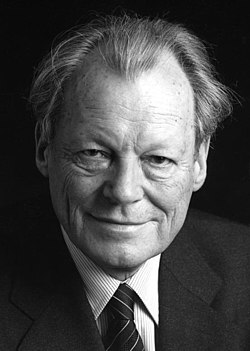 Willy BrandtWilly Brandt (born Herbert Ernst Karl FrahmAffiliated
 Julia KlöcknerJulia Klöckner (born 16 December 1972 in Bad Kreuznach) is…Affiliated
How the record is sourced and how the score is derived.
The score is formula-derived (Factrail formula v1, version 1.0.0), not an editorial verdict. Read the methodology.
By the Factrail desk · Method: how we source and score · Last reviewed
Dispute a fact on this pageNamed here, or represent someone who is? Request a right of reply.
Linked because the text names them, not because anything was measured.
People and organizations as listed in the Related section of this page; facts, drivers and the pages that name it as listed in the blocks here. Counts, not a rating.