
Kathrin Wahlmann
Kathrin Wahlmann (born 4 August 1977 in Osnabrück) is a German jurist and politician of the Social Democratic Party of Germany (SPD)…
- Facts0
- Drivers0
- Indicators0
Kathrin Wahlmann (born 4 August 1977 in Osnabrück) is a German jurist and politician of the Social Democratic Party of Germany (SPD)…
Kathrin Wahlmann (born 4 August 1977 in Osnabrück) is a German jurist and politician of the Social Democratic Party of Germany (SPD) and Minister of Justice of Lower Saxony. She has held that office since 8 November 2022. On 9 November 2022 she took over the ministry from Barbara Havliza. Havliza, her predecessor, belongs to the Christian Democratic Union of Germany. Wahlmann was a deputy member of the German Bundesrat from 8 November 2022 until 20 May 2025 and has been a full member since that day, as well as a member of the Bundesrat's legal committee.
She passed the Abitur in Osnabrück in 1997 and studied law at the University of Münster from 1997 to 2004, including a specialist course in French for lawyers from 1997 to 1999 and an Erasmus semester in 1999–2000 at Paris II Panthéon-Assas. She passed the first state examination in law in 2004 and, after preparatory service in the district of the Higher Regional Court of Oldenburg, the second in 2006. From 2017 to 2020 she was a doctoral student at Leibniz University Hannover. The doctorate was awarded in 2020 for the dissertation Mutterschutz und Elternzeit für Abgeordnete (Maternity protection and parental leave for members of parliament).
From 2007 to 2010 Wahlmann was a probationary judge in the district of the Higher Regional Court of Hamm, and from 2010 to 2018 a judge at the regional court in Bielefeld, with the judicial appointment suspended during her mandate in the Landtag of Lower Saxony. She was a judge at the regional court in Osnabrück from 2019 until 2022. She joined the SPD in 1996, has chaired the municipal council of Hasbergen since 2011, and was a Landtag member from 2013 to 2017. Since 2007 she has been deputy chair of the SPD district association Osnabrück-Land, and since 2008 a member of the SPD Weser-Ems regional executive.
In March 2024 she wrote to federal health minister Karl Lauterbach, also of the SPD, asking that a planned amnesty for people convicted of cannabis offences be struck from the bill or postponed from 1 April to 1 October 2024. The letter, reported by the Hannoversche Allgemeine Zeitung and Der Spiegel, said prosecutors and courts in Lower Saxony would have to review more than 16,000 files and warned of compensation claims and of possible criminal liability for officials. On 20 March 2026 the regional court in Hanover convicted prosecutor Yashar G. of bribery and breach of official secrecy and sentenced him to eight years and six months for selling investigation details to a drug-trafficking group; according to NDR he had continued to work on drug cases until 2024. The Landtag opened a committee of inquiry on 27 May 2026. In November 2026 the CDU alleged mishandling of investigation files in the ministry and political interference; Wahlmann told the Landtag that she had not exerted influence and that the criminal investigation had already been closed. CDU parliamentary leader Sebastian Lechner had described the affair as one of the largest justice scandals in Lower Saxony's history and said Wahlmann bore political responsibility for it. In April 2026 she defended five official trips abroad between the beginning of 2025 and the beginning of 2026, which the ministry put at more than 80,000 euros, telling the Landtag legal committee that the costs complied with budget rules and had informed work on court digitalization in Singapore and on prison security in France. CDU deputy Carina Hermann questioned the benefit of the journeys and said a hotel upgrade in Singapore had breached the travel-expenses regulation.
Kathrin Heike Wahlmann, born Rühl, was born on 4 August 1977 in Osnabrück, Lower Saxony. The Bundesrat’s biographical note lists her as evangelical Lutheran. Published biographies say little about her parents. The Munzinger archive, citing a profile in the Neue Osnabrücker Zeitung of 14 January 2013, reports that her great-grandmother, Caroline Dirkers, was among the first women in the region to take part in municipal politics after the Second World War, and that this family example awakened Wahlmann’s interest in social questions.
Her schooling, as set out in a curriculum vitae on her own website while she sat in the Landtag of Lower Saxony, was in Hasbergen, in the district of Osnabrück. She attended the Hüggelschule in Hasbergen from 1984 to 1988 and, from 1988 to 1990, the orientation stage (Orientierungsstufe) of the Schule am Roten Berg, also in Hasbergen. From 1990 she was a pupil at the Ratsgymnasium in Osnabrück, where she passed the Abitur in 1997. The state government’s curriculum vitae and the Bundesrat likewise date the Abitur to 1997 in Osnabrück, without naming the school; Munzinger names the Ratsgymnasium. In 1996, the year before she left school, she joined the Social Democratic Party of Germany. The same year she became a member of the municipal council of Hasbergen.
From 1997 she studied law at the Westfälische Wilhelms-Universität Münster. Alongside the degree, from 1997 to 1999, she completed the faculty’s subject-specific foreign-language programme “Französisch für Juristinnen und Juristen” (French for lawyers). In the academic year 1999–2000 she spent a semester at the Université Paris II Panthéon-Assas—now Paris-Panthéon-Assas University—under the Erasmus Programme.
The published dates of the first state examination are not uniform. Curricula vitae issued by the Lower Saxony government, the Ministry of Justice and the Bundesrat place the Münster studies in 1997–2004 and the first juristic state examination (Erste juristische Staatsprüfung) in 2004. Munzinger uses the same year for the examination. The Landtag biography, and the curriculum vitae on Wahlmann’s website in 2016, instead date the first examination to 2003; the website also describes the studies in Münster and Paris as running from 1997 to 2003. She then completed the legal preparatory service (Rechtsreferendariat) from 2004 to 2006 in the district of the Higher Regional Court of Oldenburg; the Landtag biography names the regional court in Osnabrück for the same period. She passed the second juristic state examination in 2006.
After the first state law examination, Kathrin Wahlmann completed the juristischer Vorbereitungsdienst, the compulsory practical stage of German legal training, from 2004 to 2006 in the district of the Oberlandesgericht (higher regional court) in Oldenburg. The biography maintained by the Landtag of Lower Saxony places that Rechtsreferendariat at the regional court in Osnabrück, a court within the Oldenburg higher-court district. She passed the second state examination in 2006.
In 2007 she entered the judiciary of North Rhine-Westphalia as a probationary judge (Richterin auf Probe) in the district of the Oberlandesgericht Hamm, a status the justice ministry dates through 2010. The Landtag biography adds that she sat at the regional court in Bielefeld from 2009 and was appointed Richterin am Landgericht in 2010. The ministry and the Lower Saxony state government then list her as a judge of the Bielefeld regional court from 2010 to 2018. When she took over the ministry on 9 November 2022, its account of her career described the same years as entry into the North Rhine-Westphalian judiciary in 2007, including service as a judge in Bielefeld.
The judicial employment relationship was suspended (Ruhen des Richterverhältnisses) for the length of her mandate in the Landtag, which that parliament dates from February 2013 to November 2017. The ministry and Landtag biographies also record two periods of parental leave, from March 2012 to January 2013 and from November 2017 to September 2018, so that the second leave began as the mandate ended.
In 2018 Wahlmann was seconded from the Bielefeld regional court to the regional court in Osnabrück, remaining formally a judge of the Bielefeld court for the duration of the secondment. From 2019 she was a judge of the Osnabrück court; the Bundesrat biography gives that posting as lasting until 2022.
On 1 November 2022, as the Social Democratic Party of Germany and the Greens presented their coalition agreement, NDR reported that she had been a judge at the Osnabrück regional court since 2018 and a Landtag member from 2013 to 2017. The justice ministry, recording the handover from Barbara Havliza on 9 November 2022, said Wahlmann had until then been a judge in Osnabrück, had joined the North Rhine-Westphalian judiciary in 2007, had served among other posts at the Bielefeld court, and had moved to Lower Saxony and Osnabrück in 2018.
The Landtag lists her professional status as Richterin am Landgericht a. D. (außer Dienst). A profile published by Leibniz University Hannover states that since 2022 she has been released from exercising judicial office while serving as justice minister and as a member of the Bundesrat. The ministry and state-government curricula vitae continue to list the Osnabrück judgeship from 2019 next to the ministerial office from 2022, without saying whether the judicial relationship ended or was only suspended.
The same university profile states that she is a member of the trade union ver.di and of the German Association of Judges (Deutscher Richterbund). Those affiliations are not recorded in the biographies published by the justice ministry, the state government, the Bundesrat or the Landtag.
Kathrin Wahlmann has been a member of the Social Democratic Party of Germany (SPD) since 1996. In the same year she became a councillor in Hasbergen, in the district of Osnabrück. A December 2007 profile by the Lower Saxony SPD, published while she was a direct candidate for the state election and still named Kathrin Rühl, described her as a member of the Hasbergen council since 1996, as a member of the district council since 2006, and from that time as first deputy mayor of the municipality.
The former town hall of Hasbergen.
Since 2011 she has been chair of the Hasbergen council (Ratsvorsitzende). The rules of procedure adopted on 3 November 2016, signed by Wahlmann as chair and by Holger Elixmann as mayor, assign the chair the conduct of sittings: the chair opens the meeting, calls on speakers, and may order a member of the public who disrupts a sitting to leave the chamber. The full-time mayor is a separate office from the council chair. At the council’s last sitting of the 2016–2021 term, in October 2021, Wahlmann took leave of Elixmann as mayor. A photograph published with the Neue Osnabrücker Zeitung report of that sitting records that she was also presented with the gold pin of honour of the Niedersächsischer Städte- und Gemeindebund. In January 2026 the Hasbergen SPD branch, then chaired by Katja Mittelberg-Hinxlage, still referred to Wahlmann as council chair when she reported to its annual general meeting.
At the municipal election of 13 September 2026 the municipal election committee recorded her, standing for the SPD in the direct tier, with 444 votes among the candidates elected. The SPD received 8,987 votes and 14 of 26 seats. Because the Alternative for Germany list had been allocated more seats than it had candidates, the unfilled seats stayed vacant for the term and the council’s size was reduced to 24, under the Lower Saxony municipal elections act.
She entered the Kreistag of Landkreis Osnabrück in 2006. She is not among the members the district returning officer listed as elected for 2016–2021; Frank Stiller of Hasbergen was an SPD member of that council.
On the party side, the Bundesrat’s biography records her as deputy chair of the SPD Kreisverband Osnabrück-Land since 2007 and as a member of the executive of the SPD district of Weser-Ems since 2008. The Weser-Ems executive elected on 23 November 2024 lists Dennis Rohde, a member of the Bundestag, as chair, and Wahlmann as one of three deputy chairs, with Karin Logemann and Wiard Siebels, both members of the Landtag. Earlier, as Kathrin Rühl, she chaired the Young Socialists in the SPD in Weser-Ems. The Nordwest-Zeitung reported that she had held the post since 2003 and was re-elected for two further years at a district conference in Osnabrück in April 2005; she was then a 27-year-old legal trainee from Hasbergen, and the organization had more than 3,000 members in the area of the former Weser-Ems administrative district. An alumni profile at Leibniz University Hannover states that she later chaired her local SPD branch and that she served on the Lower Saxony executive of the Working Group of Social Democratic Lawyers (Arbeitsgemeinschaft sozialdemokratischer Juristinnen und Juristen).
On 5 March 2004 the Landtag of Lower Saxony published a joint proposal of its parliamentary groups for members of the 12th Federal Convention; Kathrin Rühl of Hasbergen was on the SPD list. The Bundestag protocol of the Convention, meeting in Berlin on 23 May 2004, includes her in the roll of members and records the election of Horst Köhler, who received 604 votes and accepted the office of federal president.
Kathrin Wahlmann, then still named Kathrin Rühl, was the direct candidate of the Social Democratic Party of Germany (SPD) in constituency 76, Georgsmarienhütte, for the Landtag of Lower Saxony. On 27 January 2008 she received 13,465 first votes (30.3 percent). Martin Bäumer of the Christian Democratic Union of Germany (CDU) won the seat with 23,341 votes (52.6 percent). Rühl was 44th on the SPD state list and did not enter parliament.
On 20 January 2013 she again lost the constituency to Bäumer, 13,947 first votes (31.4 percent) to his 23,282 (52.5 percent), on a turnout of 63.0 percent. Second votes split 44.4 percent CDU and 27.1 percent SPD. Placed 22nd on the SPD Landesliste, she was one of 16 Social Democrats elected from the list; the party won 49 seats. The 17th electoral period ran from 19 February 2013 to 14 November 2017. The Landtag roll listed her as Kathrin Rühl until 25 October 2013 and as Kathrin Wahlmann thereafter. Her judicial post was suspended from February 2013 until November 2017.
At the end of the period she chaired the seven-member subcommittee on the prison system and offender assistance, which had met 53 times; Rundblick already called her its chair in November 2016.
The Leineschloss in Hanover, seat of the Landtag of Lower Saxony.
The 23rd parliamentary committee of inquiry, on the security authorities and the Islamist threat in Lower Saxony, constituted itself on 18 May 2016 and elected Mechthild Ross-Luttmann (CDU) chair and Wahlmann deputy chair. She left that committee on 22 June 2017. The end-of-term report names her chair of the 24th inquiry, set up on 15 June 2017 on a motion of the CDU and the Free Democratic Party (Germany) to examine alleged procurement-law breaches under the SPD–Green government since 19 February 2013, including the redesign of nds.de and the contract with Neoskop. In November 2016 the SPD deputies from Weser-Ems elected her their spokesperson, succeeding Hans-Dieter Haase.
On 22 January 2015 she introduced an SPD and Alliance 90/The Greens motion to rehabilitate men convicted under Paragraph 175 of the Criminal Code (Drucksache 17/2716). She argued that the Nazi-tightened text had been kept in West German law, that consensual acts between men were punished until 1969, and that those convictions conflicted with the Basic Law. It was referred to committee. On 21 January 2016 she opened debate on a coalition pilot for citizen-oriented justice in southern Lower Saxony (Drs. 17/3700). She defended small local courts and proposed regular sittings of the Hildesheim social court in other public buildings for Göttingen and the districts of Osterode am Harz, Northeim and Holzminden. The Landtag adopted the text recommended by the legal-affairs committee: the SPD, the Greens and the FDP in favour, the CDU abstaining. In a personal statement she rejected a suggestion by the CDU deputy Lutz Winkelmann that she had disparaged the state’s judges. On 14 June 2017 she answered a CDU call for a state programme against left-wing extremism (Drs. 17/6901), saying the free democratic order was non-negotiable and that violence from the right, the left or religious motives was unacceptable. The Landtag followed the committee and rejected the motion.
Rundblick reported in April 2017 that she sat on five committees and two commissions besides the Islamism inquiry, covered three constituencies, and combined the Weser-Ems role with the SPD district executive, commuting about two hours each way to Hanover. She did not stand again. Regional SPD delegates had renominated her, by 38 votes out of 40, for an election then expected in January 2018. On 10 April 2017 the deputy from Hasbergen said she would not run. In a letter to SPD colleagues, quoted by Rundblick, she wrote that she had never wanted to give up a career for her children, but would not sacrifice her family and peace of mind to a “feminist mirage.” The same report said she had had a second child during the legislative period and was stopping her parliamentary work. The mandate ended on 14 November 2017. Parental leave ran from November 2017 to September 2018; in 2018 she was seconded from the Landgericht Bielefeld to the Landgericht Osnabrück, and from 2019 she was a judge there.
From 2017 to 2020 Kathrin Wahlmann wrote a doctorate at the law faculty of Leibniz University Hannover while holding judicial office. The faculty accepted Mutterschutz und Elternzeit für Abgeordnete on 15 May 2020, supervised by Veith Mehde, with a second report by Frauke Brosius-Gersdorf. The university records a Dr. iur.; biographies of the Landtag of Lower Saxony and the state government give the grade as summa cum laude. In a university alumni portrait she said that the oral defense, held by videoconference because of the COVID-19 pandemic, was the first disputation in that form at the law faculty.
The preface traces the subject to May 2014, when she gave birth to her second daughter as a member of the Landtag. She wrote that deputies then had neither maternity protection nor parental leave. She continued the mandate with her husband’s year of parental leave, her parents’ help with their older daughter, and pairing to offset her absence until the summer recess, then resumed full parliamentary work, leaving sittings to breastfeed. Having decided not to stand again, she asked whether any German parliament offered such protection, whether the constitution required it, and how it could be regulated.
Duncker & Humblot published the study in 2020 as volume 81 of Beiträge zum Parlamentsrecht, 437 pages, with the law as of 18 December 2019. The publisher’s summary says that express rules for members of the Bundestag and the state parliaments existed only in some chambers and only inadequately. It argues that Articles 6(1), 6(2) and 6(4) and Articles 3(1) and 3(2) of the Basic Law—family and parental rights, protection of every mother, and equality—place a duty on the legislature to introduce rules, and it ends in a reform proposal.
In a 2021 review, Renate Oxenknecht-Witzsch reports the book’s view that the mandate is neither a civil-service post, nor employment, nor an employee-like relationship, so the Maternity Protection Act and the Federal Parental Allowance and Parental Leave Act do not apply. As of December 2019, she summarizes, there was no express statute; the Bundestag and the parliaments of Baden-Württemberg, Bavaria, Rhineland-Palatinate and Berlin had indirect arrangements, including exceptions to cuts in the expense allowance, while several other Länder had neither written rules nor a settled practice. Wahlmann concludes that optional maternity-protection periods and limited parental leave can be reconciled with representation, parliamentary functioning, and the free and equal mandate. The models include absence with the mandate left intact, a dormant mandate with or without a temporary successor, transfer of the vote, compulsory pairing, and remote voting. She would follow section 3 of the Maternity Protection Act for the length of the protection periods but leave uptake to the member, treat up to three years of parental leave as incompatible with parliamentary work, and recommend about six months rather than a period the member sets alone. An outlook links the reform to parity and mandate-sharing, ahead of 53 theses.
Oxenknecht-Witzsch describes the book as closing a research gap and as a possible basis for regulation, while questioning parts of the rights reasoning and noting that six months may be hard to combine with a four- or five-year term and with renomination. A 2022 advisory paper of the Bundestag research services later cited her view that such measures could encourage younger women with children, or wishing to have them, to seek a seat.
The 2022 Lower Saxony state election on 9 October gave the Social Democratic Party of Germany and Alliance 90/The Greens a majority in the Landtag of Lower Saxony. Turnout was 60.3 percent. The SPD won 33.4 percent of second votes and 57 of 146 seats, the Greens 14.5 percent and 24, and the Christian Democratic Union of Germany, junior partner in the outgoing grand coalition, 28.1 percent and 47. The two parties had said they were willing to govern together and opened talks the week after the election.
The new Lower Saxony cabinet after the constitutive session of the Landtag in Hanover on 8 November 2022.
On 1 November they presented the agreement “Sicher in Zeiten des Wandels.” NDR reported that the justice ministry would go to the SPD and to Kathrin Wahlmann, then a judge at the regional court in Osnabrück and a Landtag member from 2013 to 2017. The Greens were to lead four ministries, with Julia Willie Hamburg as deputy to Stephan Weil and education minister. The ten ministers were five women and five men. NDR reported that this met Weil’s pledge to staff the cabinet equally with women and men.
The Landtag of Lower Saxony met in Hanover on 8 November 2022 and elected Weil minister-president by 82 of 145 votes. The majority of the 146 statutory members was 74. Under Article 29 of the state constitution he appointed the ministers, including Wahlmann as minister of justice, and the Landtag confirmed the government. That afternoon the ministers took the oath in Article 31. Wahlmann spoke the constitutional formula and added the optional words “So wahr mir Gott helfe.”
She succeeded Barbara Havliza, the CDU justice minister from 22 November 2017 to 8 November 2022. On 9 November the ministry reported that she took over the building and that Thomas Smollich replaced state secretary Frank-Thomas Hett. Smollich, president of the Higher Administrative Court in Lüneburg and of the state constitutional court, was already listed as justice state secretary at the sitting on 8 November; both earlier offices then fell vacant.
The ministry is the supreme Land authority for the courts, the public prosecutors and the prisons, and it takes part in Land and federal legislation. Supervision of the courts is administrative and does not decide cases. It also appoints and supervises notaries. In Lower Saxony notaries are always lawyers as well, and their work is preventive legal care, including the authentication of transactions. The ministry sits in Hanover. Smollich was state secretary from the formation of the government.
Chapter 9 of the agreement, “Recht und Justiz,” calls the judiciary a pillar of democracy, the rule of law and freedom, and sets a functioning, citizen-oriented and transparent justice system as the coalition’s aim. That part of the text also promises to keep courts across the Land, to staff courts and prosecutors to level 1.0 of the PEBB§Y personnel calculation, to fund digital access and court buildings, and to create a selection committee for senior posts from salary group R3. NDR’s account of the presentation did not discuss that chapter. It highlighted a monthly ticket at 29 euros for pupils and trainees, higher starting pay for teachers, a Land housing company and aid programmes for the energy-price crisis. The Greens’ own summary led with energy supply and faster expansion of wind and solar power. Weil’s declaration to the Landtag on 8 November used the agreement’s title, “Sicher in Zeiten des Wandels.”
As 2024 chair of the justice ministers' conference, Kathrin Wahlmann, justice minister of Lower Saxony (SPD), said ranges in the Strafgesetzbuch had developed "imbalances." Manslaughter and armed drug trafficking both started at five years' imprisonment, which she called "absolutely disproportionate." Bodily injury and offences against physical self-determination were, she said, undervalued, and drug and property offences overvalued; she wanted an expert review rather than an immediate list of changes. She later told the Neue Osnabrücker Zeitung that rape's two-year minimum was too low next to aggravated robbery's five years. The opposition CDU said the state needed more judges and prosecutors, not a rewritten code.
Wahlmann opposed lowering the age of criminal responsibility below 14. Against a CSU plan for a "responsibility procedure" that would put younger children before a youth court, she told the Hannoversche Allgemeine Zeitung: "Children do not belong in court." Parents, schools and youth welfare were responsible, she said, and populist demands "do not address causes."
In March 2024 she wrote to federal health minister Karl Lauterbach, also SPD, asking that retrospective remission under the Cannabis Act be dropped or delayed from 1 April to 1 October. More than 16,000 Lower Saxony proceedings would have to be checked by hand, she warned, with risks of compensation claims and of criminal liability for officials who kept enforcing old sentences. The German Association of Judges said more than 100,000 files nationwide would need review and asked that the amnesty for sentences not yet enforced be removed. The law took effect on 1 April anyway. The ministry later told the Neue Osnabrücker Zeitung that prosecutors reviewed about 16,000 files. In some 3,600 enforcement cases remission or a new sentence was possible; for 540 people the conduct was no longer criminal, about 1,260 aggregate sentences had to be rebuilt, two fine-defaulters were released, and extra detention was cancelled in six cases.
In July 2026 the National Agency for the Prevention of Torture called overcrowded cells "inhuman conditions." April 2026 ministry figures reported by NDR put closed men's prisons at 103.4 percent of capacity in Wolfenbüttel, 99.5 percent in Bremervörde and 98.4 percent in Meppen, and the women's prison at Vechta at 92.2 percent. Prison staff called 85 percent ideal and said 200 to 300 places were missing. The ministry said it took the report "very seriously."
Haus II, the Rotes Haus, at Justizvollzugsanstalt Wolfenbüttel.
In June 2025 the government said Hanover's Hainholz prison, opened in 1963 and still "badly dilapidated," would be rebuilt in use, from 600 to 800 places, with a high-security courtroom. CDU critics called it a "zigzag course," because Thuringia had expected a secure building in Celle, and said a rebuild would not add places for years. The stated cost ran into the hundreds of millions of euros.
On domestic violence, Wahlmann told the Hannoversche Allgemeine that electronic monitoring should apply where an offender was likely to breach a contact ban, so police could intervene short of imprisonment. She cited more than 200,000 cases in Germany in 2022, women the victims in more than 70 percent, and 76 breaches of orders in Lower Saxony. The Weißer Ring backed the idea. The Bundesrat later cleared wider use of electronic tags, warning devices, compulsory anti-violence courses and a higher maximum penalty for breaching orders.
She also argued that killings of women on separation should be murder, telling the newspaper that men who kill a partner treated as property "belong in prison for life," and asked the ministers' conference to have Stefanie Hubig examine an additional murder criterion for such femicides. With Mecklenburg-Vorpommern and Hamburg, Lower Saxony later sought a Bundesrat text writing gender-related motives into homicide law; 132 women were killed by a partner or former partner in 2024, Mecklenburg-Vorpommern's minister said. Hubig called changing the murder provision "a bit like open-heart surgery" and said a killing only because a woman left can already be punished as murder.
Wahlmann had pressed to criminalise sexual harassment without contact after a 2017 Federal Court of Justice ruling that telling an 11-year-old to follow a man so he could touch her was not an offence. In February, ahead of the federal election, the Bundesrat rejected Lower Saxony's draft as too vague; she blamed "party-political squabbling." A later Spiegel survey found seven justice ministries in favour of a ban and Berlin, Bremen and Saxony against.
Staffing in the courts and prosecutors’ offices of Lower Saxony is measured with PEBB§Y, the national system in which 1.0 means enough staff for the caseload. In the Landtag of Lower Saxony in February 2024, Justice Minister Kathrin Wahlmann of the Social Democratic Party said many prosecutors were working “at the limit—and in some cases beyond it.” The statewide prosecutor load had risen from 1.16 in 2017/18 to 1.23 in 2022/23, and the Hanover office, in the higher prosecutor’s district of Celle, from 1.18 to 1.38. New investigations against identified suspects rose from 483,811 in 2017 to 567,238 in 2023. She put the calculated need for 2024 at 117 extra judge and prosecutor posts. Of 11 additional prosecutor posts sought, six were created, at central units in Hanover, Osnabrück and Göttingen. Twenty more were shifted into the Celle district. A decree of 24 January 2024 let that district make temporary exceptions to the usual minimum of eight points in the second state examination. The Christian Democratic Union called that poor government; Wahlmann said the professional standard was not being lowered.
The written answer of 10 September 2024, Drucksache 19/5298, listed offices short of the need calculated from 2023 statistics. Judicial coverage was 88.24 percent at the regional court in Hanover, a gap of 12.02 full-time equivalents, and 78.09 percent at the local court in Salzgitter. Overload reports at the Hanover prosecutor’s office rose from 19 in 2022 to 28 in 2023, and investigations open longer than nine months there from 1,972 in 2017 to 3,819 in 2023. Debating the answer, Wahlmann said no year in the period asked about had a statewide load of 1.0. Employment volume had grown by about 100 full-time posts from the end of 2017 to the end of 2023, the specialist courts were near the target, and the average local-court load was 1.04. After the 2025 budget talks she told dpa that 47 new prosecutor and judge posts, plus 16 in the former middle grade, were provided for from 2025.
Federal law required electronic files by 1 January 2026. Lower Saxony moved labour, social, administrative and finance courts in November 2024 and civil, family and insolvency cases by May 2025; criminal cases came last. In May 2025 the main judges’ council and the main staff council withheld consent to the rest of the rollout. The judges’ council rejected digital files for some local-court work and for criminal cases, citing gaps in software, scanning and training. Staff at the Burgwedel land registry reported outages of several days. The ministry still promised completion by 31 December 2025.
The ministry ordered the June rollout to continue and made the file legally binding that month by ordinance. On 10 June 2025 the administrative court in Hanover refused the staff council’s injunctions (17 B 5896/25, 17 B 5888/25 and 17 B 5893/25), treating those dates as equal to the federal deadline. Federal Justice Minister Stefanie Hubig then offered the Länder paper files until 1 January 2027; a Lower Saxony note of 10 July said a delay was “not necessary.” The federal cabinet adopted that opt-out on 3 September 2025. The union ver.di asked for any extension, citing crashes, long loading times and staff leaving.
At the local court in Emden in August 2025, service staff had at times been unable to work for days because the program crashed, the court’s director said. Wahlmann told the Nordwest-Zeitung that a postponement was procedurally impossible. In November the director in Göttingen told NDR of delays of weeks in insolvency, guardianship and enforcement, and of months for probate. In January 2026 snow roughly doubled home-office use, and a faulty update left about 18,000 documents late at 51 authorities. The ministry said no major wrongful judgments were then known, though up to ten decisions might have been affected. The CDU’s Carina Hermann asked why the file had gone statewide before the move to Dataport was finished; Wahlmann said the files themselves had stayed reachable. In April the ministry said every court and prosecutor’s office was using the file, but that criminal files opened on paper stayed on paper until 31 December 2026. It gave no figures on shorter case times.
As justice minister of Lower Saxony, Kathrin Wahlmann was a deputy member of the German Bundesrat from 8 November 2022 until 20 May 2025 and a full member from that day. The chamber lists her on its legal-affairs committee and records plenary speeches while she was still only a deputy, including the 22 November 2024 referral of Lower Saxony's bill on non-physical sexual harassment, the debate of 14 February 2025, and, on 20 December 2024, the resilience of the Federal Constitutional Court.
A Land votes as one bloc, so her criticism did not always become the state's vote. In March 2024 she wrote to federal health minister Karl Lauterbach, like her in the Social Democratic Party of Germany, asking that the amnesty in the Cannabis Act be dropped or delayed until 1 October. She said Lower Saxony would have to review more than 16,000 cases, and warned of compensation claims and of possible criminal liability for officials. How her party and Alliance 90/The Greens would vote was still open. On 22 March only Bavaria, Baden-Württemberg, Brandenburg and Saarland voted to call the mediation committee. Every other Land except Saxony abstained, and Saxony's divided vote was invalid, so the Act cleared the Bundesrat.
The Conference of Justice Ministers meets twice a year. Its resolutions bind neither the Länder nor the Federation; because justice legislation is usually federal, the ministers use it to settle positions toward the federal justice minister, who attends without a vote. Lower Saxony chaired the 95th conference in 2024, its first chairmanship in 16 years, with the spring session set for 5–6 June at Herrenhausen Palace in Hanover and the autumn session for 28 November at the state's representation in Berlin. Wahlmann presided in succession to Berlin's justice senator Felor Badenberg. In Hanover she described broad agreement on protecting the Constitutional Court, including a two-thirds majority in the Basic Law for electing its judges. In the autumn the ministers found that the Cannabis Act had set back the fight against the black market and organised crime, and asked the federal justice ministry to press that point in the planned evaluation.
On taking the chair she called for a federal commission to rebalance sentencing ranges. Manslaughter and armed drug trafficking shared a five-year minimum, she said, while some drug penalties were too high and penalties for bodily injury and sexual offences too low. She had not yet raised this with the other ministers. The resolutions reported from the autumn sitting did not include that commission.
A narrower bill reached the Bundesrat and failed there. In January 2024 she already wanted sexual harassment without contact made criminal, citing a 2017 decision of the Federal Court of Justice that explicit sexual remarks to strangers, including an 11-year-old, were not an insult. On 24 October 2024 Lower Saxony introduced bill 519/24. The draft avoided the word "catcalling" as vague and belittling. A new section 184i(1) would have punished significant sexual harassment by words or gestures with up to one year in prison or a fine, unless a more serious sexual offence applied; the draft said present law does not. Wahlmann said a failed flirtation should not be punished, and that such conduct was "not harmless — and certainly not a compliment". On 14 February 2025 the Bundesrat refused to lay the draft before the Bundestag and instead asked the federal government for rules on obscene gestures and insults specific enough to apply.
In autumn 2025 she succeeded Hamburg's Anna Gallina as coordinator of the A-Länder, no longer simply the SPD-led states. Legal Tribune Online counted eight — Brandenburg, Bremen, Hamburg, Mecklenburg-Vorpommern, Lower Saxony, North Rhine-Westphalia, Rhineland-Palatinate and Saarland — level with eight Union-led B-Länder. After Green justice ministers left office in Saxony and Thuringia, the SPD had the most portfolios; the others came from the Greens, Die Linke and the Free Democratic Party. In June the eight blocked a Bavarian and Baden-Württemberg proposal on extended DNA analysis of crime-scene traces. Before the 7 November sitting in Leipzig, under Saxony's chair, her ministry said she would take up that role and propose offences for possessing and sharing rape recordings, plus items on a pact for the rule of law, illegal gambling machines and hybrid threats. She again coordinated the A-Länder for the conference in Hamburg on 19 November 2026, where Lower Saxony sought national and European rules on inconspicuous recording devices such as smart glasses.
In June 2023 Wahlmann criticized the federal draft of a Self-Determination Act in the Neue Osnabrücker Zeitung. She said the Transsexuals Act had been too harsh in places, but that reversing it entirely would miss what was at stake, and that it was “quite realistic” some people would exploit a yearly registry-office declaration changing sex and forename. She named abuse by “Triebtäter” (sex offenders), evasion of women’s quotas, and access to women’s shelters, changing rooms and women’s prisons, and asked whether the bill would force Lower Saxony to house biologically male prisoners with women.
The Hannoversche Allgemeine Zeitung reported anger among queer groups. Nico Kerski, managing director of the Queeres Netzwerk Niedersachsen, said the remarks used “common problematic rhetorics” and invented cases “with no relation to reality,” undercutting the right of trans, inter and non-binary people to determine their gender. Swantje Schendel, queer-policy spokesperson for coalition partner Alliance 90/The Greens in the Landtag of Lower Saxony, said misinformation was widespread: raising abuse was legitimate, but the draft judged systematic abuse extremely unlikely, and repeating unrealistic scenarios stirred distrust of transgender people.
On 20 March 2026 the Landgericht Hannover convicted prosecutor Yashar G. of bribery and breach of official secrecy and sentenced him to eight years and six months. It found that over months he had sold investigation details to a drug gang for €5,000 an act and ordered him to pay €45,000; the evidence, it said, would have sufficed without his plea-bargain confession. In September 2026 he dropped his appeal against the prison term; confiscation of the €45,000 stayed with the Federal Court of Justice.
NDR’s chronology places the suspected leaks in 2020–2021, under predecessor Barbara Havliza of the CDU; suspicion of G. existed by June 2022. His home and office were searched on 23 November 2022, just after Wahlmann, of the SPD, took office. The ministry told NDR that the criminal-law department head and the state secretary were briefed the next day and that no special reporting arrangement followed. Hanover left him on a 16-tonne cocaine case; proceedings against him were dropped in October 2023. He left serious drugs only in February 2024, which the ministry said the prosecution service decided itself after a relative’s drug conviction surfaced, yet NDR found he kept the cocaine file. The case reopened on 19 June 2024; the ministry said it was told only about a week before his arrest on 29 October 2024, though Tagesschau reported he had still prosecuted it that August.
The CDU called this one of the “most serious judicial scandals in this state” and a failure of leadership. Carina Hermann said the ministry leadership knew of grave allegations from November 2022 while G. stayed on sensitive cases for nearly two years, and that Wahlmann had admitted wrong decisions and broken reporting duties. On 27 May 2026 the Landtag unanimously opened a committee of inquiry on a CDU motion covering the whole period, including under Havliza. Wiard Siebels (SPD) called it dispensable—the alleged acts predated Wahlmann, and one conviction among some 16,000 staff meant “the justice system worked in the result”—but the SPD still backed the opposition’s right to inquire. Wahlmann promised to accompany the inquiry and repeated a 2024 line, recorded by NDR, that a “Justizskandal” was the wrong word. On 12 December 2024 she told the Landtag the alleged paid leaks fell in 2020 and 2021 and that she had ordered prosecution offices to stop investigating their own staff.
In November 2026 a senior departmental head told the committee that copies of the investigation files had been passed to the minister’s office; the ministry press office disputed that account and said data carriers had arrived in the ministry but not in the minister’s office, and the files were reported to have been missing for a time. CDU deputy Christian Calderone spoke of an “open dissent” at the top of the ministry, said he expected Wahlmann to testify under oath in early December, and accused a departmental head of contacting the Osnabrück prosecutor during the case. On 17 November 2026 Wahlmann told the Landtag that she had not intended or exerted political influence, that the investigation had already ended and a plea agreement been reached, and that a questionnaire had been sent to the Hanover prosecution service so that the ministry could examine why G. had remained in post. The CDU obtained a special sitting of the legal committee for 18 November 2026.
From ministry answers to the CDU, as reported by NDR, Wahlmann made five foreign trips from early 2025 to early 2026—Singapore, Estonia and Latvia, Belgium, Austria and France—at more than €80,000, or more than €88,000 with expenses. Seven days in Singapore cost about €42,000, some €25,000 of it flights. The CDU called the Singapore and Paris trips “luxury trips.” Hermann questioned their value beside the electronic file and the prosecutor case, spoke of “works outings” with a similar staff circle, and said a Singapore hotel upgrade broke travel-expense rules. A three-day 2026 Paris trip with seven staff, the CDU said, cost €22,000.
On 15 April 2026 Wahlmann told the legal committee the costs met budget rules and had produced findings on Singaporean digitalization and French prison security. She called that “best practice”—“I want the best for the justice system of Lower Saxony”—and said Havliza had largely neglected digitalization. In August, CDU deputy Jens Nacke alleged a Baltic “holiday at taxpayers’ expense” and a misleading committee account, after answers described a walk, museum, café and exercise in Tallinn. The ministry said there were 22 official appointments in eight days, that the first night was reimbursable, and that the first evening’s restaurant bill was private.
In an April 2025 Rundblick Niedersachsen commentary, Niklas Kleinwächter wrote that Wahlmann had so far objected more than she had set her own course. He cited her warnings on the Self-Determination Act and on the cannabis law overloading the courts, a stalled sentencing-range reform from her chairmanship of the Justice Ministers’ Conference, and a red-green bid to criminalize catcalling that failed in the Bundesrat. Landtag criticism of the Hanover prosecution service and the ministry had, he wrote, until then regularly bounced off her.
The German National Library records her in the Integrated Authority File under the preferred name Kathrin Wahlmann and lists Kathrin Rühl as a variant name. Her Bundesrat biography describes her as Evangelical Lutheran, married, and the mother of two children. When she took office in November 2022, the Lower Saxony Ministry of Justice likewise stated that she was married and had two children. A profile published by Leibniz University Hannover specifies two daughters, and an interview profile in the Hessische/Niedersächsische Allgemeine describes her as married with two children. Reports have not named her husband. In April 2025 she told the Nordwest-Zeitung, while visiting Jever District Court, that he is from Wilhelmshaven and that she had been there as a tourist for that reason.
She lives in Hasbergen, near Osnabrück, where the Neue Osnabrücker Zeitung identified her in 2017 as the local Social Democratic member of the state parliament. In May 2023 the same newspaper reported that, as justice minister, she was driven each morning by official car from Hasbergen to Hanover and back in the evening, and that she used the journey for work.
The state government’s curriculum vitae records two periods of parental leave while she was a judge at Bielefeld Regional Court, from March 2012 to January 2013 and from November 2017 to September 2018. According to the newsletter Rundblick Niedersachsen, a second child was born during her 2013–2017 term in the Landtag of Lower Saxony. When she withdrew from seeking another term in April 2017, the newsletter quoted a message to colleagues in the Social Democratic Party Landtag group: “I never wanted to be one of the women who sacrifice their career for the children. But on the other hand I am also not willing to sacrifice my family and my peace of mind to a feminist mirage.” In January 2023 she told the Deutsche Presse-Agentur that she wanted to reconcile the ministerial office with private life and to keep at least a “halfway normal life,” and that the children, then still young, had been one reason she did not stand again in 2017.
The Hannover profile also states that she belongs to the services union ver.di and to the German Association of Judges.
Ranked by shared high-impact facts, then explicit ties, then shared drivers.
 Dennis RohdeDennis Rohde (born 24 June 1986 in Oldenburg) is a German…Affiliated
 Stephan WeilStephan Weil (born 15 December 1958) is a German…Affiliated
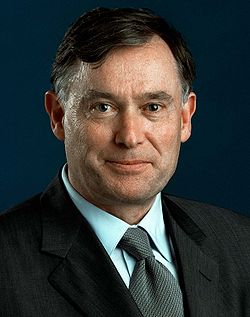 Horst KöhlerHorst Köhler (22 February 1943Affiliated
 Karl LauterbachKarl Wilhelm Lauterbach is a German scientistAffiliated
 Stefanie HubigStefanie Hubig (born 15 December 1968) is a German jurist…Affiliated
How the record is sourced and how the score is derived.
The score is formula-derived (Factrail formula v1, version 1.0.0), not an editorial verdict. Read the methodology.
By the Factrail desk · Method: how we source and score · Last reviewed
Dispute a fact on this pageNamed here, or represent someone who is? Request a right of reply.
People and organizations as listed in the Related section of this page; facts, drivers and the pages that name it as listed in the blocks here. Counts, not a rating.