
Laila Freivalds
Laila Freivalds, born on 22 June 1942 in Riga, Latvia, is a Swedish jurist and a politician of the Swedish Social Democratic Party.
- Facts0
- Drivers0
- Indicators0
Laila Freivalds, born on 22 June 1942 in Riga, Latvia, is a Swedish jurist and a politician of the Swedish Social Democratic Party.
Laila Freivalds, born on 22 June 1942 in Riga, Latvia, is a Swedish jurist and a politician of the Swedish Social Democratic Party. Her family left Latvia in 1944 as Soviet troops advanced, spent three years in a refugee camp in Germany, and in 1947 settled in Landskrona, in southern Sweden. She completed a law degree at Uppsala University in 1970, started as a district-court judge, and in 1973 moved to a court of appeal, with further work as a rent-tribunal judge in Västerås and in the Riksdag’s information department. From 1976 she spent twelve years at the Swedish Consumer Agency, finishing as its director-general and as Consumer Ombudsman.
In 1988 Prime Minister Ingvar Carlsson brought her into the cabinet as Minister for Justice, and she remained there until the 1991 election put Carl Bildt in office. For the next three years she practised at the law firm Baker & McKenzie and advised the Baltic states. After the Social Democrats returned to government she was again minister for justice. The Riksdag record of the new cabinet, read on 7 October 1994, named her head of the Ministry of Justice, and she left that office on 21 September 2000, under Carlsson and then Göran Persson. Together with the 1988–1991 term, that was about nine years at the Ministry of Justice.
She left the government in 2000 after buying an apartment in Stockholm in breach of party rules, and then worked for a Swedish organisation in music, dance and theatre. On 3 October 2003 Persson appointed her to succeed Anna Lindh, who had been stabbed to death the previous month, and the Riksdag dates her tenure as Minister for Foreign Affairs from 10 October 2003. From 1 October to 1 November 2004 she acted as deputy prime minister, the constitutional default for the longest-serving minister while the post was vacant. Persson cited her experience of European Union cooperation, including the negotiations then opening on an EU constitution. Fredrik Reinfeldt, leader of the Moderate Party, said the apartment affair had shown bad judgement and asked how she could be promoted three years later. Freivalds said she felt almost enthusiastic, “despite the sadness at the bottom of it.”
She and Persson were sharply criticised for the government’s response to the 2004 Indian Ocean earthquake and tsunami. On Boxing Day a tour operator’s communications director was at her desk by 5 a.m., while Persson stayed at a holiday retreat and Freivalds went to the theatre; Swedish media reported that she did not appear at the ministry for another 31 hours. About 500 Swedes died. In February 2006 a far-right party’s website that was preparing to publish cartoons of the Prophet Muhammad, first printed in a Danish newspaper, closed on 9 February after a foreign-ministry official contacted the firm that hosted it. Freivalds said she had not ordered the contact; after a ministry report described her as involved, opponents accused her of lying. On 21 March 2006, six months before a general election, she resigned beside Persson, saying that under the circumstances she found it impossible to do her work. Persson said the choice was hers and that Deputy Prime Minister Bosse Ringholm would take the foreign ministry temporarily. Her recorded term as foreign minister ended that day.
Laila Freivalds was born in Riga on 22 June 1942, during World War II. Her father, Osvalds Ernests Freivalds (5 June 1905 – 10 December 1975), was a librarian, publicist and writer from Skujene parish, the son of the farmer Dāvis Freivalds and Alvīne, née Burda. He studied agronomy at the University of Latvia without taking a degree, worked on the temperance paper Jaunā Balss, which he edited in the early 1930s, and from 1934 held posts in the Riga city libraries, heading the library central under German occupation from 1941 to 1944. Her mother was Laima, née Kreicberga.
Freivalds later said she was about two when the war was at its worst. Her mother left Latvia with the children and the maternal grandparents while Osvalds stayed behind; a 2005 profile named the siblings Valda and Vidde and said he had remained to help people flee. Latvian accounts place him in relief work in the Courland Pocket, including in Liepāja, until the enclave fell, after which he crossed to Sweden in 1945 on one of the last refugee boats. By her account he came by way of Gotland and then Lund.
The others spent the interval in refugee camps. She remembered long barracks along a road, rickets from malnutrition, and American soldiers handing out dark chocolate and chewing gum—she said she had never seen chewing gum and still could not eat dark chocolate. She spoke of about two years in the camps before the Swedish Red Cross reunited the family; the 2005 profile put the separation at about three. At a Swedish railway station the children no longer knew their father’s face, and one of them ran into the arms of a stranger. She was five, which places the year in 1947 or 1948, when she came ashore at Landskrona, still full of that chocolate.
The family settled in Uppsala, where both parents, described as academically trained, took factory work. For years they kept the idea of returning to Latvia packed and ready; the return never came. Osvalds worked for a time as an assistant in the Slavic-languages department at Lund University, published in Latvian and Swedish—including De internerade balternas tragedi i Sverige år 1945–1946 (1968), on the interned Balts—and was active in Latvian exile organizations until his death in Uppsala. A 2004 profile described his daughter as a poor refugee child who was able to study law; she said a refugee child’s security depended entirely on the nearest adults.
She took the studentexamen after three years at the läroverk in Uppsala. Classmates interviewed in 2005 remembered her as older and more mature than most of the class, ambitious, often the pupil who carried the discussion, and already set on studying law. Outside school she danced ballet and painted, and one classmate called the family unusually close. Mathematics was her weakest subject: she was given a C, described in that account as a fail, and a classmate said the mark shook her.
Freivalds took a juris kandidat, the professional law degree, at Uppsala in 1970. She then did tingstjänstgöring, the district-court service required of law graduates heading for the bench, and in 1974 was appointed fiskal, a trainee judge, at the Svea Court of Appeal in Stockholm. In 1974–75 she was acting hyresråd, a member of the rent tribunal, in Västerås, and in 1975–76 she worked in the Riksdag’s information service. In 1976 she became a byrådirektör at the Swedish Consumer Agency, the administrative post from which she later entered government as minister for justice. The same year, after the Social Democrats’ election defeat, she had just moved to Lidingö and volunteered for local party work, only to find the queue for assignments long.
In Sweden, Laila Freivalds joined the Swedish Consumer Agency (Konsumentverket) in 1976 as a senior official, became head of a division in 1979, and in 1983 was appointed director-general and Consumer Ombudsman. She kept that double post until 1988, and had also advised inquiries on environmental damage, electricity use, door-to-door sales and tenancy law. A later government biography summarized twelve years at the agency, first as a senior executive officer and then as director-general and ombudsman.
The agency’s instructions made the director-general its chief and, in the same person, Consumer Ombudsman. It was the central consumer authority, charged with helping households, strengthening consumers in the market, and carrying out the ombudsman’s duties under the Marketing Act, the Consumer Credit Act and the act on contract terms in consumer relations. That meant watching marketing and terms of sale, issuing guidelines, testing goods and services, supporting consumer information and local advice, and pressing traders to adapt, with particular attention to vulnerable consumers.
On 4 October 1988, opening the Riksdag, Prime Minister Ingvar Carlsson said that Freivalds would be appointed minister and head of the Ministry of Justice in his Social Democratic government. Svensk Juristtidning recorded the appointment as made that day, from the Consumer Agency.
The statement of government policy promised more capacity for the courts and the prosecution service, a bill to lower the drink-driving limit, support for local crime prevention, priority for violence and economic crime, and a prison regime that prevented escapes while still aiding rehabilitation. The same statement assigned the police to the minister for civil affairs, Bengt K. Å. Johansson. From 1 January 1989 the ordinance on government departments placed the police under the Ministry of Civil Affairs. Her portfolio was the courts, prosecutors and the bulk of civil and criminal legislation.
The bills she countersigned were above all a reform of sales law. On 26 January 1989 Carlsson and Freivalds proposed a new Sale of Goods Act to replace the 1905 statute, with rules on defects, repair or replacement, damages and cancellation, and a proposed start on 1 July 1990. On 1 February 1990 they proposed a separate, mandatory Consumer Sales Act to replace the 1973 act from 1 January 1991, so that the general act would not govern consumer purchases, and they extended the same damages standard to consumer services.
On 16 November 1989 Freivalds proposed a commission to intensify work against violent crime and to improve support for victims, following a victim programme in the 1988 budget and earlier papers on violence, with the emphasis on local cooperation. On 22 November 1990 the government proposed a fundamental law on freedom of expression in radio, television, film, videograms and sound recordings, built on the Freedom of the Press Act, including a ban on censorship and freedom of establishment, with limits still allowed on the use of radio frequencies. The draft set entry into force at 1 January 1992. Under the Instrument of Government, a fundamental law requires two identical Riksdag decisions, and the second may not be taken until a general election has been held and the new Riksdag has met.
The 1991 election ended the term. Statistics Sweden’s series shows the Social Democrats falling from 43.2 percent of the vote in 1988 to 37.7 percent in 1991. On 4 October 1991 Carl Bildt notified the Riksdag of his ministers and named Gun Hellsvik head of the Ministry of Justice. Freivalds left with the Carlsson cabinet. She returned as minister for justice in 1994, after working as an attorney between the two terms.
Olof Palme was shot dead on a Stockholm street on 28 February 1986, walking home from a cinema with his wife, Lisbeth Palme, who was grazed by a bullet. The investigation was already years old when Freivalds became minister, and it was not hers to conduct. By the time the case was tried, police matters belonged to the Ministry of Civil Affairs, while the decision to prosecute lay with the prosecutors. The Instrument of Government bars any authority, including the Riksdag, from directing a court on an individual case, and bars any authority from directing an administrative body on an individual decision about the exercise of public power or the application of law.
Police arrested Christer Pettersson on 14 December 1988, after a new team of investigators revisited statements that had led to his release shortly after the killing. The trial opened on 5 June 1989. On 27 July Stockholm District Court, two professional judges and six lay judges, convicted him of the murder and of endangering Lisbeth Palme and sentenced him to life imprisonment. Judges Carl-Anton Spak and Mikael af Geijerstam dissented for lack of evidence, but a majority was enough. The lay judges accepted Lisbeth Palme’s identification. No weapon or motive was produced, and no witness testified to seeing him fire. Pettersson denied the killing.
On 12 October 1989 the Svea Court of Appeal set the conviction aside because the evidence was not enough, and Pettersson left Kronoberg prison that day. Prosecutor Jörgen Almblad said he would not decide on a Supreme Court appeal until the written judgment of 2 November. Carlsson said the investigation had to go on at full strength. The acquittal left the killing without a convicted perpetrator.
After the Swedish Social Democratic Party left office in 1991, Freivalds ceased to head the Ministry of Justice. A biographical note later issued by the Prime Minister’s Office states that she held the justice portfolio until 2000 except for 1991–94, when she worked as an attorney. Svenska Dagbladet places that practice at the international firm Baker McKenzie in 1992–1994. Munzinger describes the interval as three years at the firm and, at the same time, work as a legal adviser to the Baltic states.
She also sat on the Prison Inquiry (Fängelseutredningen, Ju 1992:06), appointed under the Carl Bildt government to review prison enforcement since the 1974 reform. From 14 April 1992 its members included former minister Laila Freivalds, listed as a Social Democrat, under district-court judge Jan Alvå. She signed the main report, SOU 1993:76, Verkställighet av fängelsestraff (Lund, August 1993), proposing a new prison act, and the final report, SOU 1994:5, Kriminalvård och psykiatri (Lund, January 1994), on mentally disordered prisoners and men convicted of abuse of women and children.
On 7 October 1994 Ingvar Carlsson told the Riksdag that the government taking office that day included Freivalds as minister for justice. The Riksdag’s open-data register records the appointment from 7 October 1994 to 21 September 2000. She was still in the post when Göran Persson delivered the statement of government policy on 22 March 1996, and she kept it after the 1998 election, when Persson reshuffled the cabinet.
Carlsson’s declaration set the justice line of that government: a collected policy against violence, a stronger position for victims, a review of criminal law and of the police, restoration of what the statement called humanity in the prison service, and a sharper campaign against economic crime.
The main sentencing bill was proposition 1997/98:96, Vissa reformer av påföljdssystemet, decided on 2 March 1998 with Freivalds as reporting minister and proposed for 1 January 1999. Community service was to become permanent, with both a conditional sentence and probation, and electronic monitoring was to remain a way of enforcing short prison sentences. Conditional release after half the term was to end: release would come at the earliest after two thirds, could be postponed for misconduct, and conditionally granted liberty could more readily be forfeited.
For young offenders, transfer to social-services care was kept, but with more weight on predictability, consistency and proportionality. The bill introduced closed youth care (sluten ungdomsvård), a fixed-term custodial sanction enforced by the Swedish National Board of Institutional Care rather than the prison service. In the government’s account, someone who would otherwise have received at most six years’ imprisonment for an offence committed before the age of 18 was in principle to receive closed youth care instead, for not less than fourteen days and not more than four years.
A directive of 19 December 1996 appointed an investigator to prepare a prosecution authority for economic crime, the Swedish Economic Crime Authority (Ekobrottsmyndigheten), and a central consultation group, Ekorådet. A directive of 2 October 1997, referring to the 1998 budget bill, instructed an organiser to make the authority able to function from 1 January 1998, taking over economic-crime prosecutions in Stockholm County, Västra Götaland and Skåne, coordinating the work elsewhere, and able to assume particularly complicated cases.
Proposition 1998/99:41 of 28 January 1999, also presented by Freivalds, amended the Criminal Injuries Compensation Act, including a right to reconsideration before the board of the Swedish Crime Victim Authority and to an oral hearing; measures from the Crime Victim Inquiry (SOU 1998:40) were left for a later bill. The appointment ended on 21 September 2000; the controversy that preceded the resignation is treated in the next section.
After Sweden joined the European Union, justice and home affairs fell largely to her ministry. In the membership negotiations Sweden had said it would accept the rules on free movement of persons and the Union treaty’s articles on justice and home-affairs cooperation.
On 1 May 1996 Sweden and the other Nordic countries received Schengen observer status. The Swedish accession agreement was signed in Luxembourg on 19 December 1996, together with accession agreements for Denmark and Finland and cooperation agreements with Iceland and Norway. Proposition 1997/98:42, submitted on 16 December 1997 over Freivalds’s signature, asked the Riksdag to approve accession to the Schengen Agreement, the 1990 implementing convention and an additional protocol, the agreement with Norway and Iceland, and Swedish declarations on cross-border pursuit and on foreign criminal judgments. The bill covers internal and external border control, asylum, police and judicial cooperation, and the Schengen Information System.
At the 18th congress of the International Federation for European Law (FIDE) in Stockholm on 4 June 1998, in a speech printed in Svensk Juristtidning, she said that as justice minister and a participant in the negotiations she could attest that the justice and home-affairs reforms were substantial, especially for border control, free movement, immigration and refugee policy, and civil judicial cooperation. Much of it, she said, moved into the Community’s first pillar, as regulations and directives, with the Court of Justice and the Commission in their ordinary roles. The Treaty of Amsterdam also aimed at an area of freedom, security and justice and made respect for human rights and the rule of law a condition of membership. The ratification bill, proposition 1997/98:58 of 12 February 1998, was presented by Foreign Minister Lena Hjelm-Wallén.
Laila Freivalds and her husband, Johan Hedström, rented a five-room municipal flat of 126 square metres on the top floor of a building beside Kronobergsparken, at Fridhemsplan on Kungsholmen in Stockholm, and had lived there since 1992. In January 1999 they signed a declaration of interest in buying it, and at an association meeting in May 2000 they were among the households that wanted the rentals converted into tenant-owner flats, bostadsrätter. They paid 2.2 million kronor, when the market value was reported at about 3.6 million. Reports called the seller a municipal company in Stockholm but named neither the company nor a street address, and they described no private intermediary: the residents’ association decided to convert the building, under a policy of the bourgeois majority then running the city that municipal tenants could buy their flats.
The purchase cut against the Swedish Social Democratic Party and against a reform Freivalds had signed. On 8 April 1999 she and Prime Minister Göran Persson submitted bill 1998/99:101, proposing that a tenant-owner association could buy a building for conversion only if tenants in at least two-thirds of the rented flats agreed, instead of a simple majority, with the same threshold for a declaration of interest. The Riksdag’s housing committee recommended approval; the bill set 1 July 1999 as the start date. Social Democrats in Stockholm, who opposed selling off public housing, criticised her, among them Annika Billström, then an opposition commissioner, and several Social Democratic members of the housing committee. Bourgeois parties called it hypocrisy.
Freivalds said the couple were not buying to make money. She told Aftonbladet they felt compelled to buy, even though their housing costs would double, because a large majority of tenants wanted the conversion and they did not want to become their neighbours’ tenants, and she was reported as saying she had been against it. Later accounts recorded that the household had itself voted yes. She called the matter private. No contemporary report describes a criminal investigation, a prosecution, or a finding that the purchase was unlawful. The 1999 bill raised the majority required; it did not ban a conversion that met the rule, and a tenant who did not buy could remain a renter of the new association. The charge in the press and inside the party was inconsistency with Social Democratic housing policy, not a breach of the statute.
Aftonbladet reported the planned purchase on 25 August 2000. On the evening of 20 September, after an association meeting, television crews waited outside the flat. Freivalds told them, “It is humiliating. Above all for you. And you. And you. You ought to be ashamed,” and shut the door. She resigned the next day, 21 September, at her own request. Her press release cited a “strong need to protect my family” and said she would not accept journalists creeping around the home, besieging the stairwell and, on one occasion, using physical force.
Persson, who had defended her, said he had failed to persuade her to stay and spoke of bewilderment, dismay and sorrow; she had been due to take on work for Sweden’s presidency of the European Union. Jyllands-Posten wrote that she had not been forced out, and set the resignation beside earlier Social Democratic justice ministers who left early: Ove Rainer in 1983 after legal tax arrangements, Sten Wickbom in 1987 after Stig Bergling’s escape, and Anna-Greta Leijon in 1988 over the Ebbe Carlsson inquiry. Thomas Bodström became minister for justice on 16 October.
On 1 February 2001 she became director of Teatrarnas Riksförbund, the employers’ and industry body for theatre, dance and music, with about 100 member organisations and about 6,000 employees. She said the appointment took no more than ten days and that she would first learn the work at the Royal Dramatic Theatre; the pay, she said, would be about a minister’s, around 75,000 kronor a month. In the early 2000s the federation renamed itself Svensk Scenkonst and decided to call itself a trade organisation. As director she told Svenska Dagbladet that the name covered both its role as an employers’ body and its role as a representative of the performing arts. She left in 2003, when Persson recalled her as minister for foreign affairs after the murder of Anna Lindh; Aftonbladet described Svensk Scenkonst as the post she came from.
Prime Minister Göran Persson named Laila Freivalds Sweden’s minister for foreign affairs on 3 October 2003. She took office on 10 October as head of the Ministry for Foreign Affairs. The post had been vacant in substance since the killing of Anna Lindh in Stockholm the previous month. Jan O. Karlsson, minister for development cooperation, migration and asylum, had been acting head of the ministry and left the government the day Freivalds started, to seek the chair of an international commission on migration.
Persson tied the choice to a wish “to change and rejuvenate the government,” calling her “an experienced politician” whose European work as minister for justice would make her, in his words, “an extraordinarily good foreign minister.” Barbro Holmberg (migration and asylum) and Carin Jämtin (development cooperation) joined the ministry the same day; Deputy Prime Minister Margareta Winberg was to leave on 31 October. Freivalds stayed until 21 March 2006. The Indian Ocean tsunami, and the Muhammad-cartoon dispute that ended the term, are treated later.
The European Union was the brief Persson had stressed. Within weeks Freivalds was in the Riksdag on the draft constitutional treaty, and told the chamber that a parliamentary majority would bind the negotiators even where it cut against the cabinet’s preference.
On 20 November 2003 the Riksdag voted 159–120 against a permanent elected chair of the European Council. Only the Social Democrats backed the government’s preference; the Moderates, Liberals, Christian Democrats, Left Party, Centre and Greens supplied the majority for a rotating presidency. Seventy members were absent. A Left and Green call for a referendum on the constitution failed, 234–41, with four abstentions. Freivalds hoped the debate would let her persuade the other 24 participants that they were wrong, and promised to put the Riksdag’s line “med all den kraft som jag någonsin kan uppbringa” — with all the force she could muster.
The signed text still contained the office. Article I-22 of the Treaty establishing a Constitution for Europe provided that the European Council would elect its president, by qualified majority, for two and a half years, renewable once, and that the president would hold no national office. Heads of state and government signed on 29 October 2004. The Swedish government held that approval belonged to the Riksdag, not a referendum, and planned a bill for September 2005.
Enlargement, a long-standing Swedish priority in the Union, took effect on 1 May 2004, adding Cyprus, Estonia, Latvia, Lithuania, Malta, Poland, Slovakia, Slovenia, the Czech Republic and Hungary. In December the European Council agreed to open talks with Turkey in October 2005 and with Croatia in 2005, the latter if it cooperated with the Hague tribunal. In February Freivalds linked the larger Union to Nordic–Baltic coordination, including membership for Estonia, Latvia and Lithuania in the Nordic Investment Bank.
In the foreign-policy statement of 11 February 2004 the government restated its view of the Iraq War: when the United States and its coalition partners decided to go to war, the United Nations Security Council had been set aside. Freivalds said the United Nations now had to be central to restoring Iraqi sovereignty, and that Sweden would give 345 million kronor over two years, including training of police and lawyers, not combat forces. Aid went mainly through the UN and the World Bank’s International Reconstruction Fund Facility. From December 2003 ten Swedish police instructors trained Iraqi police in Amman, Jordan; the mission was extended by six months in June 2004. In October 2005 she told the Riksdag that Sweden would not send trainers into Iraq for NATO. It would consider courses in NATO countries, already sent instructors to EU rule-of-law training in Denmark, financed training of Iraqi judges and lawyers, and helped pay for the UN protection force under resolution 1546.
On Israel and the Palestinians, the February statement called settlements on occupied land illegal, said the barrier on occupied territory violated international law, and argued that the parties could not carry out the Road Map alone. In Washington on 17 February 2004 she discussed that conflict, the Greater Middle East Initiative and Afghanistan with Secretary of State Colin Powell, who noted Swedish willingness to join a Nordic provincial reconstruction team. In September she visited the Palestinian territories, met President Yasser Arafat, Prime Minister Ahmed Qurei and Foreign Minister Nabil Shaath, and saw the barrier. She condemned an Israeli extrajudicial killing of a Hamas leader and said outsiders had to press both sides to stop the violence. On 12 April 2005 she said the Quartet on the Middle East had to do more for the Road Map, and that refugees, Jerusalem and the pre-1967 borders could not be changed except by agreement.
She also called a larger Security Council, better reflecting the post-1945 world, a lesson of the war, and said Sweden would press the reform panel working for Secretary-General Kofi Annan. The government welcomed the panel’s December 2004 report. The Afghan effort was cast, in the same period, as a contribution alongside the other Nordic countries.
Freivalds was not appointed deputy prime minister. Lars Engqvist, who had held the function, was relieved of it from 1 October 2004, when he left the government. On 21 October Persson announced a reshuffle in which former finance minister Bosse Ringholm would be deputy prime minister and also responsible for sports. The new slate took effect on 1 November; Freivalds stayed at the foreign ministry. For the month between, no substitute had been named. Under chapter 7, section 8 of the Instrument of Government as it then stood, if no deputy had been appointed, or if that deputy too was unable to serve, the prime minister’s duties passed to the minister who had served longest. Freivalds’s terms as minister for justice, 1988–1991 and 1994–2000, plus her return in October 2003, placed her in that position. It was the constitutional default during a vacancy, not a separate office, and it ended when Ringholm’s appointment began.
On 26 December 2004 an earthquake off Sumatra generated the 2004 Indian Ocean earthquake and tsunami. The Swedish Catastrophe Commission put the global death toll at on the order of 250,000; a memorial address in 2024 said more than 220,000 people had died, 543 of them Swedish. In November 2005 the commission still listed 543 Swedes as missing and 525 as identified, with about 1,500 injured, almost all in Thailand—Phuket, the Phi Phi islands and Khao Lak, which the wave reached just after 10:00 local time.
Khao Lak coast before and after the 2004 tsunami, on January 3, 2003 and December 29, 2004.
The consular duty line carried the alarm into the government in Sweden. At 06:12 Ambassador Jonas Hafström said he was going to Phuket and that the embassy crisis plan was running; a morning note spoke of up to 20,000 Swedes in the area. State Secretary Lars Danielsson called Prime Minister Göran Persson at about 07:45. Both had seen television news, and they agreed that no initiative from the prime minister was then required. At about 10:15 Freivalds was briefed, mainly on Sri Lanka. She noted that Aid Minister Carin Jämtin represented the government, sought nothing else, and later said she did not follow the news when off duty, expecting staff to call if they needed her. After Hafström reported a serious situation in Phuket, the argument over a Rescue Services deployment was taken to Cabinet Secretary Hans Dahlgren and not to her. By evening no minister had grasped the scale. Persson was not updated. Defence Minister Leni Björklund, ill and watching television, was probably the best informed.
Contemporary reporting recorded that she went to the theatre in Stockholm that evening and reached the ministry only at 10:30 the next morning. She had called the meeting because she felt uninformed. Dahlgren had seen placards suggesting several hundred Swedish dead; Persson compared the number with the sinking of the MS Estonia. A call from Hafström in Khao Lak removed the remaining doubt. In February 2005 she said she “had no idea what Phuket was” and “absolutely no idea” it was a major Swedish resort. Senior officials who should have led the work were on leave and took from one to more than two days to appear. A reconnaissance and medical team could have left two days sooner; an assessment team instead flew with her and landed at Phuket at 11:35 on 29 December. Sweden contacted no other government on 26 December. Persson said he then treated it as an aid question; he later spoke often with the prime ministers of Norway and Finland. Injured Swedes in Khao Lak said Norwegians and Finns were already being flown home, and Aftenposten asked whether Denmark, Sweden and Norway had all been too slow.
After talks with the parties in the Riksdag, the government on 13 January 2005 appointed a commission under Johan Hirschfeldt. It delivered Sverige och tsunamin – granskning och förslag (SOU 2005:104) on 1 December 2005. The central finding was that the Government Offices had no organisation for a major crisis, so the government was not convened and the Foreign Ministry became lead department by default. Persson, head of the Offices for more than eight years, bore the overall responsibility: not building a crisis function, despite an earlier inquiry, had been a conscious choice. Dahlgren received a large share of the blame for the late reaction. He did not drive the search for information or contact other capitals early, did not inform Freivalds on the first day, and did not take the operational lead. Freivalds was held responsible for preparedness rules too weak for a real crisis capacity and for failed information routines, including the private office that was her channel into the ministry. Senior officials were criticised for staying away, and State Secretary Mikael Sjöberg and Health Minister Ylva Johansson for a passive response that delayed medical help. The report proposed a crisis unit in the Prime Minister’s Office. On 9 December Freivalds wrote that the criticism was justified: “I did not myself realise the scale of the catastrophe on Boxing Day. I deeply regret that.”
The Riksdag’s Committee on the Constitution heard Freivalds and Persson on 16 February 2006. Its report, 2005/06:KU8, dated 30 March 2006 and adopted without dissent, recorded more than 500 Swedish dead, many injured and several thousand evacuated. No full-scale crisis exercise of the Government Offices was held until spring 2005. Persson shared responsibility for that with Björklund. What he was told on 26 December was alarming enough that he should have sought more, and on 27 December—once an Estonia-scale disaster seemed possible—he should have gathered the ministers and taken a formal decision that money was not a constraint. He should also have contacted the head of state.
What Freivalds heard on 26 December—many Swedes in the area, but no confirmed dead or injured—may not alone have shown the toll, and staff should have called her as worse news arrived. Important information stopped lower down. She followed no news that day, however, and should have been more active. The committee held her responsible for the ministry’s failure to analyse and pass on information, for the lack of a plan for a disaster too large for one mission, and for crisis staffing, registration of the missing, reinforcement of Bangkok and Phuket, and evacuation that started too late. It also criticised Björklund, Jämtin, Johansson—who left on holiday on 29 December—and Finance Minister Pär Nuder. Freivalds had already left office: on 21 March 2006 Persson released her from the post, nine days before the committee dated its report.
In September 2005 the Danish newspaper Jyllands-Posten published cartoons of the Prophet Muhammad. By early 2006, republication and protests had become an international crisis; the Ministry for Foreign Affairs later told the Chancellor of Justice that Sweden’s embassy in Damascus was destroyed on 4 February.
The Sweden Democrats, a small anti-immigrant party then outside the Riksdag, invited drawings of Muhammad on the website of their newspaper SD-Kuriren. The contest was announced on 10 January 2006, and a first drawing was published on 3 February. On 8 February Stefan Amér, a political adviser at the ministry, telephoned and then visited Torkel Nyberg, chief executive of the host Levonline. The ministry later said the contact followed consultation with the foreign minister; that Amér asked whether the firm knew the contest was on its server, offered information on reactions abroad and stressed freedom of expression; and that Nyberg saw no need for a special step.
On 9 February the Swedish Security Service contacted Levonline about the threat and, on its account, left any measure to the company. That evening the host took the site down. It reappeared on another server, and the party cancelled the contest after contact with the security service. Levonline’s deputy chief executive said the closure was decided in discussion with the ministry and the security service; the party’s secretary, Björn Söder, called it a breach of contract.
The Freedom of the Press Act (tryckfrihetsförordningen) and the Fundamental Law on Freedom of Expression (yttrandefrihetsgrundlagen) forbid authorities to prohibit or hinder a protected publication because of its content. The Chancellor of Justice found that SD-Kuriren’s site had that protection, and that pressure which in practice stops publication is not allowed, although an authority may in an extreme case discuss voluntary restraint.
Freivalds’s statements and the file diverged. On 9 February the ministry quoted her as ready to defend freedom of the press in every situation, while condemning SD-Kuriren’s provocation and “a small group of extremists.” On 10 February she denied government pressure, and told the news agency TT that the leadership had not urged any official to call the firm: “No, but I cannot direct officials’ work in detail.” Reports said she also denied knowing of the contact in advance. Prime Minister Göran Persson publicly criticised Amér for the approach.
On 20 March it was reported that Carl Henrik Ehrenkrona, the ministry’s legal chief, had written to the Chancellor of Justice that the 8 February contact was made “after consultation with the foreign minister,” to offer information rather than to apply pressure. That morning on Swedish Radio, Freivalds said she had thought the questions were whether the ministry itself had closed the site. In Brussels she denied having lied, and said that once the official’s account was clear “we had done exactly what we had talked about.” Christian Democrats leader Göran Hägglund said Sweden could not have a foreign minister who did not tell the truth; Centre Party leader Maud Olofsson said Freivalds had understood the questions; and Liberals leader Lars Leijonborg said her credibility was gone. Green Party spokesman Peter Eriksson said the serious question was whether she had told the truth.
On the morning of 21 March, at a joint press conference in Stockholm lasting about seven minutes, Persson said he had granted her request to leave.
She said: “The reason I have decided to request my dismissal is that it is impossible to carry out a serious job, and that is damaging for the government, the party and not least for the foreign ministry.” She said that, at a Brussels press conference the evening before on Belarus and the Middle East, journalists had asked only about the affair, and that this was when she decided she could not go on. Persson called the resignation her own decision and said he had no reason to describe himself as misled. He named Deputy Prime Minister Bosse Ringholm foreign minister temporarily. Cabinet secretary Hans Dahlgren resigned the same morning, calling that the usual step for a state secretary when a minister leaves.
About 500 Swedes had died in the 2004 Indian Ocean earthquake and tsunami, and a Catastrophe Commission report had held both Persson and Freivalds responsible for the lack of a mechanism for a major crisis. She left about six months before a general election in which the governing Swedish Social Democratic Party faced a strengthened opposition. On 24 March the Chancellor of Justice found no breach of the censorship ban; because the contact followed consultation with the minister, he treated her as responsible, and ministers are examined by the Riksdag rather than by him. The Constitutional Committee questioned her on 10 April 2007 and later agreed that the ban had not been broken, but held that contacting the host rather than the publisher came too close to pressure and was not appropriate.
Freivalds left office on 21 March 2006 and held no further ministerial post in Sweden. Prime Minister Göran Persson accepted her resignation and called her a competent and forceful foreign minister who had stepped in after the murder of Anna Lindh. She said serious work had become impossible and that staying would harm the government, the party and the Ministry for Foreign Affairs. The Government Offices yearbook lists Bosse Ringholm as foreign minister from 21 to 27 March and Carin Jämtin from 27 March to 23 April, then Jan Eliasson from 24 April until the Swedish Social Democratic Party cabinet left office on 6 October. Fredrik Reinfeldt’s Alliance government took over that day, with Carl Bildt as foreign minister.
The 1988 dictionary Vem är hon records a marriage from 1973 to 1984 to the kanslichef Bo Månsson and, from 1985, to the building engineer Johan Hedström, born in 1939; a 2004 Svenska Dagbladet profile still named Hedström as her husband. In October 2006 she became chair of Dansalliansen, which employs freelance dancers on the model of Teateralliansen; she had directed Svensk Scenkonst in 2001–03 and was still chair in 2012. In March 2016 Bilia’s nomination committee also listed her as chair of Kooperativa Förbundet’s Avtalsnämnd and vice chair of Investment AB Öresund, which it said left her not independent of Bilia’s larger owners. Öresund had proposed her in December 2011 for an extraordinary meeting on 1 February 2012; she declined re-election as vice chair before the meeting of 10 May 2021. Bilia’s annual meeting elected her a director on 8 April 2016; she declined re-election and was not returned on 8 April 2019.
The yearbook places her as minister of justice in 1988–1991 and 1994–2000 and as foreign minister from 2003 to 21 March 2006, in Social Democratic governments from Ingvar Carlsson to Persson. Comment turned on the two resignations. In 2000 she left Justice after Aftonbladet reported that she planned to buy the Stockholm flat she rented when the building became tenant-owned, against a bill she had supported. In March 2006 the opposition demanded that she go once it was reported that she had known an official would contact the host that closed a Sweden Democrats site carrying drawings from the Jyllands-Posten Muhammad cartoons controversy. Aftonbladet called her the first Swedish minister to resign twice and wrote that she had lied about that knowledge; Persson said she had not misled him.
Lena Mellin wrote in Aftonbladet that the exit was formally voluntary but forced by reviews then due, including a likely no-confidence vote once the Committee on the Constitution examined the 2004 Indian Ocean earthquake and tsunami. Svenska Dagbladet wrote that her departure let the committee agree criticism of six ministers without that text being used to unseat someone still in office. In the Riksdag debate on the 2006/07 review, speakers said the committee had found that she was responsible for the Levonline contact and for a message sent in her name to several Muslim governments, and that the conduct was not appropriate and should have been avoided, the contact raising the censorship ban under freedom of the press. The Liberal Party said the Chancellor of Justice had found the contact lawful, but close enough to that ban that the majority should have said “criticism.”
The disputes coincided with a wider change in crisis administration. Persson’s government appointed an independent commission in January 2005 to evaluate the tsunami response; in March 2008 the Reinfeldt government, citing that disaster among others, proposed that one agency—later the Swedish Civil Contingencies Agency—start on 1 January 2009, replacing the Swedish Emergency Management Agency, the Rescue Services Agency and the National Board of Psychological Defence.
Ranked by shared high-impact facts, then explicit ties, then shared drivers.
 Jan EliassonJan Kenneth Eliasson (born 17 September 1940) is a Swedish…Affiliated
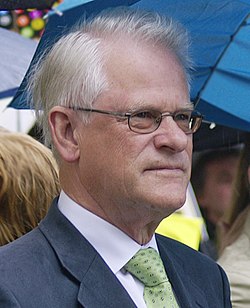 Ingvar CarlssonGösta Ingvar Carlsson (born 9 November 1934) is a retired…Affiliated
 Carl BildtNils Daniel Carl Bildt (born 15 July 1949) is a Swedish…Affiliated
 Fredrik ReinfeldtJohn Fredrik Reinfeldt is a Swedish economist and former…Affiliated
 Göran PerssonHans Göran Persson (born 1949) is a Swedish politician who…Affiliated
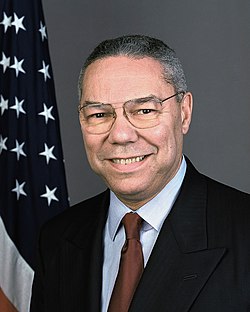 Colin PowellColin Luther Powell (April 5Affiliated
 Anna LindhYlva Anna Maria Lindh (19 June 1957Affiliated
How the record is sourced and how the score is derived.
The score is formula-derived (Factrail formula v1, version 1.0.0), not an editorial verdict. Read the methodology.
By the Factrail desk · Method: how we source and score · Last reviewed
Dispute a fact on this pageNamed here, or represent someone who is? Request a right of reply.