
Markus Blume
Markus Blume (born 14 February 1975 in Munich) is a German politician of the Christian Social Union in Bavaria.
- Facts0
- Drivers0
- Indicators0
Markus Blume (born 14 February 1975 in Munich) is a German politician of the Christian Social Union in Bavaria.
Markus Blume (born 14 February 1975 in Munich) is a German politician of the Christian Social Union in Bavaria. He has been a member of the Landtag of Bavaria since 20 October 2008, directly elected for the constituency of München-Ramersdorf, and since 23 February 2022 he has been Bavarian state minister for science and the arts in the cabinet of Minister-President Markus Söder.
From 2018 until that appointment he was secretary-general of the CSU, after a spell in 2017–2018 as deputy secretary-general. On 23 February 2022 Söder told the CSU Landtag group that Blume would move into the state cabinet as science minister and that Stephan Mayer should succeed him as secretary-general, a reshuffle Söder presented as preparation for the 2023 state election, which he called a fateful vote for the party. The same day the Landtag recorded Blume as state minister.
He passed the Abitur in 1994 at the Städtisches Heinrich-Heine-Gymnasium in Munich and then studied physics at the Ludwig Maximilian University of Munich and political science at the Hochschule für Politik München, finishing in 1998 as a Diplom-Politikwissenschaftler with a Vordiplom in physics. A doctorate in political science at LMU Munich, started in 1999, was abandoned in 2002. Between 2001 and 2002 he worked as a freelance management consultant. From 2002 to 2013 he was a founder and management-board member of Content5 AG, and from 2005 to 2008 a spokesman and strategic adviser to Renova Management AG in Zurich.
Blume joined the Junge Union and the CSU in 1995/1996. From 1999 to 2001 he chaired the Bavarian association of the Ring Christlich-Demokratischer Studenten. He sat on Munich's district committee for Ramersdorf-Perlach from 2002 to 2020 and has chaired the CSU district of Munich-East since 2013. He held the München-Ramersdorf seat at the state elections of 2008, 2013, 2018 and 2023. On 8 October 2023 he received 24,048 first votes, 34.8 percent, ahead of the Green candidate Sanne Kurz with 22.8 percent; turnout in the constituency was 66.2 percent.
In the science portfolio he is, by virtue of office, co-chair of the Länder side of the Joint Science Conference (Gemeinsame Wissenschaftskonferenz), the 2026 president of the science conference of the Standing Conference of the Ministers of Education and Cultural Affairs, and chair of the supervisory boards of Bavaria's six university hospitals. He has been a deputy member of the German Bundesrat for Bavaria since 2 March 2022. The Landtag lists him as married, Protestant and the father of three children, and the science ministry describes him as a father of three living in Munich; the Bundesrat biography still records two children.
Markus Blume was born on 14 February 1975 in Munich. From 1981 to 1985 he attended the Grundschule am Strehleranger, and from 1985 to 1994 the municipal Heinrich-Heine-Gymnasium, taking the Abitur there in 1994. The elementary school is in the borough of Ramersdorf-Perlach; the Gymnasium stands at Max-Reinhardt-Weg 27 in Perlach. In a 2018 interview he said that his parents' house in Munich was close to a skating club in neighbouring Ottobrunn.
Blume began skating at the age of four or five, going twice a week to group sessions at that club in Ottobrunn; his younger sister Sandra joined later. Coaches suggested the siblings form an ice-dance pair, a combination the club had lacked for some time, and they trained and competed as amateurs.
Because he was already tall as a teenager, jumps were difficult, so the pair concentrated on ice dance rather than singles or pair skating. At their peak they were on the ice six days a week for two to three hours, with extra strength and conditioning work, especially in summer, when training also included roller skating on concrete. Programmes were set with their coaches, and their mother made the costumes. Der Spiegel later described Blume as a former German junior champion in ice dance. He has called their last free dance the highlight of the career: an Argentine tango at the 1994 World Junior Figure Skating Championships in Colorado Springs, held from 30 November to 5 December 1993. A compiled results list places Sandra and Markus Blume 13th in the ice-dance event.
He stopped competing after the Abitur. He later said the decision followed friction with the federation and coaches, but mainly a judgement, which his sister shared, that continuing at elite level would postpone the years in which a profession had to be chosen, and that even a mid-field finish at a senior world championship would not have justified that. Leaving the sport, he said, required a hard withdrawal lasting two or three years.
From 1994 to 1998 Blume studied physics at the Ludwig Maximilian University of Munich and political science at the Hochschule für Politik München. In 1998 he graduated as a Diplom-Politikwissenschaftler (Dipl. sc. pol. Univ.) and completed the Vordiplom, the intermediate examination, in physics. During his studies he held a scholarship from the Hanns Seidel Foundation. From 1999 to 2002 he pursued doctoral studies in political science at the same university but left without a degree.
From 2001 to 2002 Blume worked freelance as a management consultant. Official biographies then list him, from 2002 until 2013, as founder and member of the executive board (Vorstand) of Content5 AG; an English curriculum vitae issued by the Bavarian Landtag renders the same post as “founder and director.”
Content5 is a Munich firm. Its own account says that it supplies commissioned research, monitoring and analysis to companies and institutions, and that Markus Hoffmann founded it in 2002 with two partners in order to professionalize knowledge services and knowledge-process outsourcing, and has managed it since. That page does not name the partners. In July 2026 the company’s LinkedIn account described Blume as one of its co-founders when he attended a networking event. The parliamentary biographies give 2013 as the end of the board membership and do not say whether the seat was interrupted during the 2005–2008 advisory post, or on what terms he left. They name no co-founder and record no dispute about the firm.
From 2005 to 2008 the same biographies describe him as spokesman and strategic adviser of Renova Management AG in Zurich. A short biography on a CSU history site uses the more general wording “press spokesman and strategic adviser of an international investment company,” without naming the employer.
Renova Management was a Swiss company of Viktor Vekselberg. On 6 July 2018 the Neue Zürcher Zeitung reported that he had sold it to a Russian company owned by some of his Russian business partners, among them former Renova Management chief executive Alexey Moskow. On 6 April 2018 the U.S. Treasury’s Office of Foreign Assets Control designated Vekselberg for operating in the energy sector of the Russian economy, describing him as founder and chairman of the Renova Group, and designated the group as owned or controlled by him. Both steps came about a decade after the advisory period given for Blume, and his official biographies record no later Renova post.
In a 2018 profile of his appointment as CSU general secretary, Der Spiegel wrote that in the years before he entered the Landtag he worked as an entrepreneur and consultant, “also for a Russian oligarch, which was at times held against him inside the party” (“auch für einen russischen Oligarchen, was ihm zeitweise aus der Partei zum Vorwurf gemacht wurde”). The article named neither the oligarch nor the firm.
Notices in the Swiss Official Gazette of Commerce, as reproduced by Moneyhouse, list a German national named Markus Blume, then domiciled in Feusisberg, as a member of Avelar Energy Ltd. in Zurich, with joint signing authority: entered on 26 September 2007 and removed on 31 January 2008. The notices give no occupation, and the parliamentary biographies do not mention Avelar, so the register entry has not been publicly tied to him beyond the coincidence of name, nationality and dates. The Neue Zürcher Zeitung has written that on 22 December 2006 Vekselberg’s Renova and its finance chief Igor Akhmerov registered a firm named Avelar, and that Renova later put the loss on those businesses at 200 to 350 million euros, after a 2019 sale and Italian proceedings against managers; that account does not mention Blume. Moneyhouse marks the Feusisberg record inactive, with 31 January 2008 as the last notification and no known holdings.
Blume joined the Junge Union in 1995 and the Christian Social Union (CSU) in 1996; as a student he sat from 1997 to 2001 on the Bavarian state executive of the Ring Christlich-Demokratischer Studenten, chaired that association from 1999 to 2001 (and with the chair sat on the CSU state executive), and from 1999 to 2005 was a Deutschlandrat on the state committee of the Bavarian Junge Union. The Landtag of Bavaria dates the Junge Union and CSU membership to 1995/1996 and likewise records the student chairmanship for 1999–2001.
From 1 May 2002 to 30 April 2020 he was an ordinary member, and not an officer, of Bezirksausschuss 16, the district committee for the Munich borough of Ramersdorf-Perlach, through the terms 2002–2008, 2008–2014 and 2014–2020. In the party he was, from 2007, chairman of the CSU branch in Perlach and deputy chairman of the district association CSU München-Ost, and from 2011 a member of the board of the CSU regional association for Munich. At a meeting of that district association in August 2012, still under chairman Georg Kronawitter, delegates renominated Blume for the Landtag constituency covering Ramersdorf-Perlach and Trudering-Riem, with 96 percent of the vote. He became Kreisvorsitzender of CSU München-Ost in 2013. In May 2017 the members re-elected him with 99 percent; his report on the period since the 2015 election covered the siting of refugee accommodation, densification in garden suburbs and missing infrastructure in new estates. The same month, after ten years, he did not stand again as Perlach branch chairman, citing the time taken by the Landtag mandate and by his work as deputy secretary-general. Thomas Kauer, already chair of the district committee and previously Blume's deputy in the branch, was elected unanimously, and Blume stayed on the branch executive as a Beisitzer.
On 5 December 2011, after a meeting of the party executive, CSU chairman Horst Seehofer named Blume, then 36, to succeed Georg Fahrenschon as chair of the CSU economic commission; Fahrenschon had given up the party post on moving to the head of the German Savings Banks Association. On 28 June 2014 Seehofer said Blume would head a new basic-policy commission (Grundsatzkommission) and draft the CSU programme for the following decade, and that its members should "not belong to the Establishment".
The list published on 10 November 2014 named 35 members, eight of them women, drawn mostly from younger office-holders in local government and in the state, federal and European parliaments. Manfred Weber, the previous chair, remained an ordinary member, and Blume said he would add further women as external experts; the commission was to deliver a programme by autumn 2016. For about two years he took the draft through hundreds of meetings of local and district branches. On 5 November 2016 a party congress in Munich adopted the 42-page text Die Ordnung unanimously. Introducing it, Blume said people expected order "in a world of disorder" and called the CSU the party of order in the country. The programme defined a Leitkultur as the "lived basic consensus" of the country, stated that anyone living in Germany must respect it, rejected what it called multicultural arbitrariness, and said that political Islam did not belong in Germany; it also spoke of a strong state and of borders and rules for immigration. It recognised same-sex partnerships on equal terms beside marriage. Blume said the aim was to locate the Union on security, order, tradition and Heimat, arguing that Chancellor Angela Merkel's politics had left a "vacuum to the right of the centre", and that Bavaria and Germany needed "no alternative, because the CSU exists"—a line aimed at the Alternative for Germany. Seehofer called the draft a masterpiece.
The CSU historical archive dates the basic-policy chairmanship to 2014–2016. In mid-January 2017 Seehofer proposed Blume as deputy to secretary-general Andreas Scheuer, to strengthen the party for that year's federal election and the 2018 Bavarian election, with Scheuer concentrated on federal politics; the party executive had still to confirm the appointment, which Die Welt described as a substitute for a cabinet post Seehofer would not open in an election year. Blume held the deputy secretary-generalship from February 2017 until March 2018.
Markus Blume has been a member of the Landtag of Bavaria since 20 October 2008, holding the direct mandate for Stimmkreis 107, München-Ramersdorf, in the Upper Bavaria electoral district through the 16th to the 19th electoral periods. Under the annex to the Bavarian Landtag election law the seat is Munich boroughs 15 and 16, Trudering-Riem and Ramersdorf-Perlach; the addition of a ninth city constituency in 2018 redrew the existing Munich seats, including this one.
At the state election of 28 September 2008, 56.5 percent of 99,988 eligible voters turned out. Blume, for the Christian Social Union, won the seat with 20,925 first votes (37.6 percent). Markus Rinderspacher of the Social Democratic Party was second on 14,263 votes (25.6 percent), with the Free Democratic Party at 10.9 percent and Alliance 90/The Greens at 10.7 percent. On 15 September 2013 turnout was 61.5 percent of 102,867 eligible voters, and Blume took 26,822 first votes (43.0 percent) to Rinderspacher's 18,411 (29.5 percent); the Greens had 8.2 percent.
The narrowest margin came on 14 October 2018. Of 104,497 eligible voters, 69.5 percent voted, and Blume's 21,934 first votes (30.4 percent) finished 6.0 points ahead of Susanne Kurz of the Greens (17,600 votes, 24.4 percent). The SPD followed on 14.0 percent and the Alternative for Germany on 7.8 percent. On 8 October 2023, 66.2 percent of 105,532 eligible voters took part, and Blume received 24,048 first votes (34.8 percent). Sanne Kurz, the name used for her in the 2023 count, was second with 15,752 votes (22.8 percent); Rinderspacher had 9,324 (13.5 percent), AfD candidate Rene Dierkes 8.9 percent and Free Voters candidate Rudolf Schabl 8.0 percent. The CSU, SPD, Free Voters and AfD each had their best Munich first-vote share there, and the Greens their worst.
In the 16th electoral period Blume sat, from 4 December 2008 until the period ended on 7 October 2013, on the petitions committee and the committee for the environment and health. He was also a deputy member of the state health council, deputy chair of the advisory board of the Munich prison JVA München, and, from 13 July 2011, a member of the commission following Bavaria's energy transition. In the CSU group he spoke for the Junge Gruppe, the circle of younger deputies formed in 2008, when the entry age was set at 40 because the faction had so few younger members. The Süddeutsche Zeitung later wrote that he took over that network of members under 40 as soon as he entered the Landtag and treated it as a reserve of talent; in September 2013 he was still its spokesperson.
From 6 November 2013 to 6 June 2018 he belonged to the committee for the economy and media, infrastructure, construction and transport, energy and technology. His second stint on petitions ended on 19 October 2014, and he sat on the committee for health and care from 20 October 2014 to 22 February 2017. The Landtag lists him on the inquiry commission "Integration in Bayern aktiv gestalten und Richtung geben" from 19 July 2016, with the entry renewed on 22 November 2016 and running to 11 July 2018. From December 2013 to September 2021 he chaired the reform advisory board of the Hochschule für Politik München, and from February 2015 to September 2022 he sat on its Hochschulbeirat; the 18th period otherwise lists no ordinary committee seat.
On 23 February 2022 he became state minister for science and the arts and remained a Landtag member. Since 2 March 2022 he has been a deputy member of the German Bundesrat for Bavaria, listed there as a member of the health committee and as second deputy chair of the committee for cultural affairs. The 19th electoral period, still for München-Ramersdorf, opened on 30 October 2023.
In early March 2018, as the Christian Social Union in Bavaria (CSU) filled its posts in Angela Merkel's new cabinet, party chairman Horst Seehofer proposed the Munich member of the Landtag of Bavaria, Markus Blume, to succeed Andreas Scheuer, who was going to the federal transport ministry. Blume had been deputy secretary-general since 2017. Seehofer called him a "safe bet" who could run a state campaign — "thoughtful, strategic, argumentative" — and closer to CDU secretary-general Annegret Kramp-Karrenbauer than to the attacking style long expected in the job. The Saarbrücker Zeitung reported on 5 March that the executive had elected him unanimously, and that he would take office on 14 March, the day Merkel was re-elected chancellor. Der Spiegel described him as a quiet strategist rather than a "Wadlbeißer", the nickname for a secretary-general who lashes opponents, a contrast Seehofer wanted beside Markus Söder.
His first campaign was the 2018 Bavarian state election, with Söder as lead candidate. The CSU won 37.2 percent of valid first and second votes and remained the largest party, but lost the absolute majority; the Alternative for Germany took 10.2 percent and the Free Voters 11.6 percent. The CSU then governed with the Free Voters. Before the vote Spiegel had treated the AfD's 12.4 percent in Bavaria at the 2017 federal election as the central threat, and quoted Blume saying his task was to reunite the "bürgerliches Lager" rather than split it.
Within weeks Söder's cabinet decided that a cross should hang in the entrance of every building run by the Free State, as a sign of Bavaria's historical and cultural character and of its legal and social order. In remarks reported on 26 April 2018, Blume told newspapers of the RedaktionsNetzwerk Deutschland that critics were an "unholy alliance of enemies of religion and self-deniers", and that hanging a cross was a confession requiring no justification. He accused the Greens of a "back-to-front worldview" for attacking Christian symbols. Archbishop Ludwig Schick of Bamberg warned against misuse of the cross, and Bavaria's Catholic and Protestant youth associations called the decree an instrumentalisation. On 29 April Cardinal Reinhard Marx, archbishop of Munich and Freising and chairman of the German Bishops' Conference, told the Süddeutsche Zeitung that Söder had caused "division, unrest, conflict", and that the state had no right to define the cross.
On 22 July 2018 a march under "#ausgehetzt — together against the politics of fear" targeted the CSU's asylum line and, by name, Seehofer, Söder and Alexander Dobrindt. About 130 organisations, including unions, church groups and cultural bodies, had called it. Police counted more than 20,000 people at the Königsplatz rally and called it peaceful; organisers later spoke of 50,000. The CSU put up posters reading "Yes to political decency! No to #ausgehetzt. Bavaria will not be incited."
Blume then told Spiegel that chants of "CSU racist pack", claims that the party was preparing concentration camps, or blame for deaths in the Mediterranean were "the vilest incitement", and he demanded that the SPD and the Greens dissociate themselves. Munich's SPD mayor, Dieter Reiter, called that charge "absolutely ridiculous".
At the party congress on 19 October 2019 the leadership asked delegates to extend the binding 40 percent women's quota, until then limited to state and regional executives, to district boards. Women were about 21 percent of the members, and Söder said the CSU had done "disastrously" among young women. After delegates denounced a quota as undemocratic, a compromise from the Women's Union under Ulrike Scharf passed: the 40 percent figure would apply to district boards only as a non-binding "should". The Münchner Merkur wrote that Blume, who had prepared the reform, had gravely underestimated the anger.
On 8 March 2021, after a call of the CSU presidium, Blume announced that Bundestag member Georg Nüßlein had left the party amid the mask-procurement affair. Munich prosecutors were investigating suspected bribery over six-figure commissions; Nüßlein denied the allegations and did not give up his seat at once. Blume called the exit "unavoidable, also to prevent further damage to the CSU", and said the party expected him to resign the mandate and make restitution.
On 9 September, with the Union weak in the polls, Blume told Spiegel that "of course we would be in a better position with Markus Söder" than with CDU chancellor candidate Armin Laschet, who had won the nomination in April. He called blame on Söder's barbs a "sham argument", and said posters for a Söder candidacy had already been prepared under the line "Ready for Germany". At the federal election on 26 September the CSU's second-vote share in Bavaria was 31.7 percent, 7.1 points below 2017. One headquarters motif was a close-up of a cow with the slogan "Preserve the homeland, strengthen the farmers", later called inside the party the "legendary cow poster". The Süddeutsche Zeitung reported that Landtag colleagues found such designs a failure in city and countryside alike, and that Blume apologised if a motif had displeased anyone or a poster had arrived late, while placing the main cause with the chancellor candidate.
On 23 February 2022 Söder said Blume would enter the cabinet as science minister and that he would propose Bundestag member Stephan Mayer as secretary-general, describing the change as a fresh start before the 2023 state election.
On 23 February 2022 Markus Söder, minister-president of Bavaria, appointed Blume state minister for science and the arts in place of Bernd Sibler. The new ministers were presented to the Landtag of Bavaria that afternoon, and the Kultusministerkonferenz dates the office from that day. Söder, of the Christian Social Union in Bavaria, called him a higher-education specialist; the move also ended his term as CSU secretary-general.
He took over the Hightech Agenda Bayern, which Söder had set out on 10 October 2019: €2 billion through 2023 for artificial intelligence and a higher-education reform, with 1,000 new professorships and 10,000 extra study places, half of them in computer science. In April 2023 Blume told the Landtag the programme would run to 2027 with a further €2 billion on top of €3.5 billion already planned, to keep paying about 2,500 new posts, including those professorships; he called it a guarantor of prosperity. The Süddeutsche Zeitung put the share of professorships already filled at 62 percent, with another 21 percent in process. Green leader Katharina Schulze said a knowledge society could not omit the humanities and social sciences; the SPD's Christian Flisek said basic funding was still too thin and the renovation backlog large.
In April 2024 the universities and the universities of applied sciences warned that the agenda was "massively endangered" if the state reclaimed balances already pledged to multi-year professorships; earlier withdrawals of about 8 percent had been painful, they wrote. Green spokesperson Verena Osgyan said Blume appeared not to understand how a university works. At the 2025 winter semester he called Bavaria "the best campus in Germany," citing 405,115 students, the second-highest figure on record, against accounts from managers and students of dilapidated halls, fewer seminars and unrenewed assistant contracts. SPD spokesperson Katja Weitzel called that a disgrace, and Osgyan said flagship projects were funded while existing buildings were neglected. Blume answered with a figure of €7.2 billion, 37.5 percent above 2018, and the line that a moon mission needed high technology and basic equipment alike.
The Bavarian Higher Education Innovation Act of 5 August 2022 took effect on 1 January 2023. The president appoints professors without being bound by the committee's ranking, may appoint directly without advertisement where a specially qualified person would strengthen the institution's profile, and may exceptionally make an "excellence appointment" with the deans on external reviews. The Education and Science Union (GEW) argued that start-up rules were already squeezing the humanities, citing cuts at Würzburg, a planned end to ancient history at Passau, and a hiring freeze at the Ludwig Maximilian University of Munich.
A first degree and consecutive degrees stay generally free of fees, but institutions may charge students from outside the EU and European Economic Area, with exemptions for holders of a German entrance qualification and people with a settled link to Germany. From winter 2024/25 the Technical University of Munich charged newly enrolled non-EU students generally €2,000 or €3,000 a semester at bachelor's level and €4,000 or €6,000 at master's level. It said in October 2026 that third-country numbers had not fallen substantially, partly because many were exempt. The University of Erlangen–Nuremberg is to charge from summer 2027, and LMU was designing a scheme for no earlier than winter 2027/28 that would spare students already enrolled; the ministry said about half of Bavarian institutions had introduced such fees or were considering them. Blume welcomed the instrument and was open to making it standard, not to restoring general tuition, abolished in 2013. Amir Hasukic of the state student council said the charges selected by wealth and did not repair weak basic funding.
In December 2025 the council exhibited about 90 photographs from 15 institutions of leaking roofs, buckets under rainwater, crumbling floors and, at Erlangen-Nuremberg, a notice that pregnant and breastfeeding people should be tested for pollutants.
Blume called each picture homework and assigned €142 million from a federal special fund to the most urgent cases. On 23 June 2026 the cabinet adopted what it called a further building billion, drawn from Bavaria's share of a federal infrastructure law and a fast-build scheme and described as additive to the core budget: more than 120 measures over about four years, among them part of TUM's Walter Schottky Institute, Würzburg's central library, roofs at Regensburg and four projects at Erlangen-Nuremberg.
The same meeting cleared a BayHIG amending bill, tabled on 7 October 2026 as paper 19/13865 and given a first reading on 20 October; it was not yet law and was drafted to take effect no earlier than 2 January 2027. For unsupervised written work, artificial-intelligence use should not be forbidden but should be documented—the government's "ban on a ban"—and the special-qualification test for direct appointments would lapse. The Frankfurter Allgemeine Zeitung called the examination clause symbolic politics; the German Association of University Professors and Lecturers accepted the direction but warned of the staffing needed to redesign exams, and the GEW called near-unrestricted direct appointments and a scale of discipline from reprimand to expulsion authoritarian. The draft would also require each institution to name a contact person against antisemitism who is not bound by instructions.
Under the Bavarian University Hospitals Act the science minister, or a senior representative, chairs the supervisory board of each of the six university hospitals—Augsburg, Erlangen, the LMU Klinikum, the TUM hospital, Regensburg and Würzburg—and appoints several other members for up to five years.
Blume chaired the Joint Science Conference (GWK) for 2025, with Cem Özdemir as deputy; for 2026 the GWK lists Dorothee Bär as chair and Falko Mohrs as deputy. From 1 February 2026 he remained deputy to the equal chairs of the administrative commission of the German Science and Humanities Council, Rolf-Dieter Jungk and Mohrs, and he is 2026 president of the KMK science ministers' conference after a handover on 29 January. He represents Bavaria on the main committee of the German Research Foundation, deputised by Johannes Eberle; the Max Planck Society senate roll of 20 July 2026 includes him, and from August 2026 he sat ex officio on the senate of the Leibniz Association.
As Bavarian minister for science and the arts, Markus Blume of the Christian Social Union in Bavaria oversees the Free State's museums, theatres and orchestras. In November 2024 he began a "museum offensive" and named Anton Biebl, Munich's outgoing cultural-affairs director, change manager until 2028. Blume said the houses should have "no fear of being popular" and become "more of an experience and less of an authority".
The Landtag of Bavaria lists the board seats that attach to the portfolio. He chairs the Bamberg Symphony foundation, is deputy chair of the Augsburg state-theatre foundation and a member of Nuremberg's, and is a trustee of the Deutsches Museum and a member of the German National Committee for Monument Protection. At the Kulturstiftung der Länder he sits ex officio as Bavaria's culture minister.
Monument law changed twice. From 1 July 2023 an amendment eased permits for solar and geothermal plant on protected buildings — Blume said monument protection "is climate protection" — gave the state title to new archaeological finds, and banned metal detectors on registered sites. In February 2025 he proposed fewer permits for about 109,000 built monuments and about 50,000 archaeological sites — routine works such as fibre connections, and interiors where only the exterior is protected — and promised "no break with the system". The cabinet sent a bill that July; the law in force in 2026 added a voluntary multi-year Denkmalpflegewerk for recurring work and a list of permit-free measures.
In July 2026 Blume said Bavaria would return Pablo Picasso's bronze Fernande — the dealer Alfred Flechtheim called it Beatrice — to Flechtheim's heirs. The state painting collections had bought it in 1964; their director recommended restitution in 2023, and a claim was refused in 2024. Blume credited the rules of the arbitration court for property looted under the Nazis, which heirs could invoke alone from 1 December 2025. Lawyer Markus H. Stötzel called it "long overdue justice" and only a start: other Flechtheim works, including two paintings by Paul Klee, remained in Bavaria.
He also announced a provenance centre at the Institute for Contemporary History, with eight new posts, and a commission under Raphael Gross of the German Historical Museum, including Jewish descendants. The Free State would keep the last word on returns, which Die Welt called the weak point.
The row had opened in February 2025, when the Süddeutsche Zeitung reported a leaked list of about 200 works marked red and about 800 orange. Blume called it a "campaign" and said "such a list does not exist" and had never reached the ministry. Red, he said, meant a suspicion or a claim, not proven loot. He ordered publication of results, an outside review, one million euros more and a timetable by 2026. On 27 February he told the Landtag it was not enough "to trust that things are already running", and intolerable that families had felt like petitioners, while still denying deliberate withholding. Motions from the Social Democrats and from the CSU and the Free Voters passed; a Green motion did not.
Charlotte Knobloch, president of Munich's Jewish community, wrote that trust in restitution of looted art had been shaken, and that even the suspicion heirs were being stalled, more than 25 years after the Washington Principles, was "unbearable". Heirs' lawyers had already named Blume. On 2 April 2025 director-general Bernhard Maaz left after ten years. At the Pinakothek der Moderne Blume cited indications of misconduct and, in places, organisational failure, not mainly about looted art. Biebl stepped in, and a former prosecutor was asked to investigate.
On 12 November 2025 the art historian Meike Hopp reported no systemic failure and no deliberate concealment. The gap was organisation: about 3,000 objects acquired or inventoried after 1945 had not been examined systematically, and the lists stood at 82 red and 446 orange. Blume spoke of "a huge mountain of work" and added five provenance posts to four existing ones. Green spokeswoman Sanne Kurz said an apology to victims' families for decades of delay would have been the minimum.
At the Bavarian National Museum, a project from November 2020 to April 2025 found heirs for all 73 families behind silver bought in 1939–40 under the Nazi metal levy; of 110 objects still held in 2019, 97 were returned. The painting collections also returned a panel from the circle of Lucas Cranach the Elder, St Anne with the Virgin and Child, to the heirs of Ernst Magnus, reversing a 2010 refusal. He had consigned it in Lucerne; in 1941 it was sold to Hermann Göring.
From 1 December 2025 that court replaced the advisory commission. Heirs may apply alone, and Bavaria undertook to answer for its museums, including over Picasso's Madame Soler, which it had for 16 years refused to take to the old body. Tagesschau called Blume one of the architects; he hoped "that in the end we have a restitution law". The lawyer Olaf Ossmann and the historian Willi Korte said claimants must now prove persecution case by case for sales abroad. Rüdiger Mahlo of the Claims Conference still wanted a statute.
As general secretary of the Christian Social Union, Blume treated Christianity as a public mark of the Bavarian state. After the cabinet of Minister-President Markus Söder decided in April 2018 that a cross should hang in every state-authority entrance, he told the RedaktionsNetzwerk Deutschland that critics were an “unheilige Allianz von Religionsfeinden und Selbstverleugnern” (“unholy alliance of enemies of religion and self-deniers”) and that hanging a cross needed no justification. Bavarian Catholic and Protestant youth associations called that a theological emptying and a symbol of exclusion.
The 2018 campaign joined that line to asylum politics and to the Alternative for Germany. A strategy paper of Blume’s, reported on 12 May, called the AfD “an enemy of everything Bavaria stands for” and “nothing other than an alternative to the NPD,” and, invoking Franz Josef Strauß, said “brown filth has no place in Bavaria.” AfD co-chair Jörg Meuthen said the CSU had adopted “Antifa jargon.” At the #ausgehetzt march in Munich on 22 July — police counted at least 20,000 people protesting Union asylum rhetoric — Blume called chants of “CSU racist pack” and claims that the party was preparing camps or was to blame for deaths at sea “the vilest incitement,” and asked the SPD and the Greens to dissociate themselves. Mayor Dieter Reiter called that “absolutely ridiculous.” In June 2020 he recast the attempt to outbid the AfD: one had to stay “on the bright side,” because “you cannot out-stink a skunk” and risked being “pulled onto the dark side.” In November 2020 he called the AfD “a superspreader of political and intellectual filth in Germany” for holding an in-person congress during the pandemic.
After the Hamas attacks of 7 October 2023, science minister Blume addressed campus speech about Israel. In Die Zeit in May 2024 he called protests that did not condemn the attack, while Jewish students felt unsafe, “unbearable,” and demanded a “zero-tolerance strategy” (“Wehret den Anfängen”). Of “From the river to the sea” he said there was nothing to interpret: it denied Israel’s right to exist and was no longer discourse. His interlocutor, Manuela Bojadžijev, said courts had not settled the slogan. In October 2024 he said antisemitism officers were in place at all 33 state institutions, with exmatriculation as a last resort: “Antisemitism is not a standpoint, antisemitism is hatred.”
In January 2026 he announced a statewide ladder of penalties up to exmatriculation or a ban on re-enrolment — the “ultimate sanction” — for what he called a lasting breach of “university peace.” He cited pressure on Jewish students and the cleared pro-Palestine camp at LMU Munich; the bill was also to punish breaches of the ban on gender-inclusive characters. The draft of 7 October 2026 (printed paper 19/13865) names no slogan. An offence covers violence, threats, property damage and other intentional acts against members that disturb, or attempt to disturb, study. Leadership may reprimand, bar classes or expel, with a racist or antisemitic background weighing more heavily, and may block re-enrolment in Bavaria while a danger remains.
Critics said the test still reached protest. LMU’s student representation warned in July 2026 that expulsion without a court would cut into the right to education and chill speech, and noted that Blume had grouped gender-spelling breaches with conduct he called “antisemitic and hostile to Israel.” SPD spokesperson Katja Weitzel said it was unclear which crimes would count and who would decide; the state student council wanted peaceful protest exempted; Green spokesperson Verena Osgyan called the plan “well meant but badly made.” After the first reading on 20 October 2026, the Gewerkschaft Erziehung und Wissenschaft said an “attempt to disturb study operations” could already mean expulsion by the leadership alone, which student spokesperson Christian Stiegler called “Berufsverbote 2.0,” arguing that guilt belonged in court rather than with university leaders.
Blume lives in Munich, where he was born on 14 February 1975. The Bavarian Ministry of Science and the Arts describes him as a father of three who still lives in the city.
Public biographies do not agree on the number of children. The Landtag of Bavaria lists him as married with three; the Bundesrat entry still says that he is married with two.
A Deutsche Presse-Agentur dispatch of 15 January 2025, published by the Süddeutsche Zeitung and Die Welt, reports the later birth. It said Blume had married Aurelia in 2021 and that, on the evening of Tuesday, 14 January 2025, she gave birth to a girl in a Munich clinic. Blume, then 49, told the agency, "Wir sind unendlich glücklich" ("We are infinitely happy"). The report said he already had two older children with his first wife, Janet. The next day he looked in on the retreat of the Christian Social Union Landtag group at Banz Abbey, where members around party leader Markus Söder congratulated him.
The Landtag and the Bundesrat both give his confession as Protestant. The Landtag biography also lists an honorary seat on the Landessynode of the Evangelical Lutheran Church in Bavaria. In November 2023 the Sonntagsblatt reported that he had been a member since 2014. The Landeskirche describes the synod as the church parliament of Bavaria's roughly two million Protestants: it passes church laws, decides personnel questions, adopts the church budget and elects the Landesbischof or Landesbischöfin.
He was returned at the December 2019 election. The Sonntagsblatt reported that the then CSU general secretary had again won a seat for the church district of Munich and Upper Bavaria, and it listed him among the non-ordained members from Munich; two-thirds of that district's deputies were new.
Before the postal ballot of 7 December 2025, the Landeskirche wrote that only 17 percent of sitting members were standing again, and named Blume among prominent members who were not, together with synod president Annekathrin Preidel. The result for the 2026–2032 synod, adopted on 23 March 2026, does not contain his name. He is not on the church's current list of members for the Munich district or among the appointed members. A profile on evangelisch.de of 17 January 2026 described him as having belonged to the Landessynode for twelve years. In October 2026 the Landtag biography still listed the honorary membership.
Ranked by shared high-impact facts, then explicit ties, then shared drivers.
 Horst SeehoferHorst Lorenz Seehofer is a German politician who served as…Affiliated
 Viktor VekselbergViktor Feliksovich Vekselberg (born April 14Affiliated
 Pablo PicassoPablo Picasso (1881–1973) was a Spanish painter and sculptorAffiliated
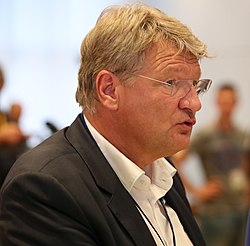 Jörg MeuthenJörg Hubert Meuthen (born 29 June 1961) is a German…Affiliated
 Alexander DobrindtAlexander Dobrindt is a German politician of the Christian…Affiliated
 Angela MerkelAngela Merkel is a German physicist and CDU politician who…Affiliated
How the record is sourced and how the score is derived.
The score is formula-derived (Factrail formula v1, version 1.0.0), not an editorial verdict. Read the methodology.
By the Factrail desk · Method: how we source and score · Last reviewed
Dispute a fact on this pageNamed here, or represent someone who is? Request a right of reply.
People and organizations as listed in the Related section of this page; facts, drivers and the pages that name it as listed in the blocks here. Counts, not a rating.