
Merle Spellerberg
Merle Spellerberg (born 13 November 1996 in Höxter) is a German politician of Alliance 90/The Greens who sat in the Bundestag during its 20th legislative…
- Facts0
- Drivers0
- Indicators0
Merle Spellerberg (born 13 November 1996 in Höxter) is a German politician of Alliance 90/The Greens who sat in the Bundestag during its 20th legislative…
Merle Spellerberg (born 13 November 1996 in Höxter) is a German politician of Alliance 90/The Greens who sat in the Bundestag during its 20th legislative period (2021–2025). The parliament’s biography of her is kept in the archive of that term.
She grew up in Höxter, in eastern North Rhine-Westphalia, where her parents were still living in 2021, and she passed the Abitur in 2016 at the König-Wilhelm-Gymnasium. After school she began a voluntary year with the Diakonisches Werk Württemberg and the weltwärts programme, based at the Erlöserkirche in Jerusalem. In December 2016 she described the city as wonderful and yet complicated, pointing to armed soldiers and constant checks at checkpoints, and she planned to spend Christmas Eve between a service at the Erlöserkirche and a walk to Bethlehem with other volunteers.
By the spring of 2021 she was studying at TU Dresden and had risen, through the Dresden Greens, to state spokesperson of the party’s youth wing. A Saxony party assembly placed her third on the state list for the federal election, behind Paula Piechotta and Bernhard Herrmann; she took the place with 50.89 percent on the first ballot against another candidate. She described her themes as a shift from a profit-centred economy toward social and global justice, planetary limits and the 1.5-degree goal, together with feminism and human rights, in the campaign of the Greens’ chancellor candidate Annalena Baerbock. She entered the 20th Bundestag on that state list, for the constituency Dresden II – Bautzen II (then constituency 160). In the district the Greens received 25,527 first votes (13.6 percent) and 31,265 second votes (16.6 percent); the direct mandate went to the Christian Democratic Union with 35,014 votes (18.6 percent), 35 votes ahead of the Alternative for Germany.
The Bundestag recorded her occupation as student. She was a full member of the Committee on Foreign Affairs and the Defence Committee, spokesperson of the Subcommittee on Disarmament, Arms Control and Non-Proliferation, and a substitute member of the enquiry commission on lessons from Afghanistan for Germany’s future networked engagement. A February 2023 profile on the federal portal deutschland.de, which presented her at 26 as one of the youngest members, quoted her naming feminist struggles and the people closest to her as causes she would drop everything to fight for, and recorded Alexandria Ocasio-Cortez, the Swedish anti-nuclear campaigner Beatrice Fihn and Aminata Touré as people she named. From 17 February 2022 the parliament’s register of outside posts listed her as a member of the board of the Deutsche Härtefallstiftung in Bonn. On 23 February 2023, in a Deutschlandfunk interview given while she was in Moldova, she described hybrid pressure from Russia, from disinformation to leverage through energy supplies, and said the country was holding to its reform course.
On 15 December 2024 the Saxon Greens, meeting in Löbau, again elected her to third place on the state list for the Bundestag election, after Piechotta and Kassem Taher Saleh. The Dresden district association put her forward as its direct candidate in the renumbered constituency 159, Dresden II – Bautzen II. At that election the Greens received 22,140 first votes in the constituency (11.4 percent, 2.2 points below 2021) and 13.1 percent of the second votes; across Saxony their second-vote share was 6.5 percent (167,269 votes). The direct mandate went to Matthias Rentzsch of the Alternative for Germany with 58,238 votes (29.9 percent).
Merle Spellerberg was born on 13 November 1996 in Höxter. She grew up in the town, which she later described as the middle of "East Westphalian nowhere". In April 2021 the Westfalen-Blatt reported that her parents were still living there.
She attended the König-Wilhelm-Gymnasium in Höxter. The school, which in 2017 marked its 150th year under the motto "Zukunft braucht Geschichte" ("The future needs history"), had stood on Bismarckstraße, in a building later used by the district administration, before occupying a new building on the Bielenberg in 1973. At the anniversary it had about 780 pupils and 80 teachers. In 2015, while a pupil there, Spellerberg won the Young Women in Public Affairs Award of the Höxter club of Zonta International. The Neue Westfälische described the prize, then worth 250 euros, as recognition for unpaid work by young women in school, clubs or other organisations, meant to encourage them into public life and early responsibility. Because the club held the next ceremony at the previous winner's school, the 2016 presentation took place at the König-Wilhelm-Gymnasium. She sat the Abitur at the school in the summer of 2016. A Neue Westfälische report of 29 June 2016 named her among that year's 112 graduates.
From August 2016 she undertook a one-year learning and voluntary service (Lern- und Freiwilligendienst) in Israel and Palestine, arranged with the Diakonisches Werk Württemberg and weltwärts. Weltwärts is the development-policy volunteer programme begun in 2008 by the Federal Ministry for Economic Cooperation and Development, under which young people from Germany serve abroad. The Westfalen-Blatt identified the Lutheran Church of the Redeemer (Erlöserkirche) in Jerusalem as the centre of her year, and wrote that she was living in Jerusalem rather than in Bethlehem. A 2021 profile later described the posting as a development-policy voluntary year in Jerusalem and Bethlehem.
At Christmas 2016, aged 20, she told the Westfalen-Blatt that she would watch the entry of the Patriarch of Jerusalem into Bethlehem on the morning of 24 December, attend the Christmas Eve service (Christmette) at the Erlöserkirche that evening, and, weather permitting, walk the roughly ten kilometres to Bethlehem overnight with other volunteers. She said Bethlehem was "nicht so idyllisch, wie man aus der Weihnachtsgeschichte heraus vermuten mag" ("not as idyllic as one might suppose from the Christmas story"). Of Jerusalem she said it was "wunderbar und doch so kompliziert" ("wonderful and yet so complicated"): armed soldiers and passport checks at checkpoints had at first made the conflict, and the political and religious dividing lines, feel ever-present. That impression, she added, had passed; she was living an ordinary routine and using public transport. She had gone after the Abitur, she said, in order to know another country and to change her perspective.
In a Westfalen-Blatt article of 30 January 2017, while the year was still under way, Georg Wieners, head teacher of the König-Wilhelm-Gymnasium, mentioned her with a classmate who had spent three months in Brazil helping neglected people. The paper reported his description of her stay as a one-year practical placement in Jerusalem and as an example of the school's openness to the world.
After the voluntary year she began a course of study in Copenhagen and moved to Dresden in 2018; the account, given while she was a Bundestag candidate, did not name the institution in Copenhagen. By April 2021 she was studying at the Technische Universität Dresden. In September 2021 Pieschen-Aktuell identified her as a student of international relations there, a programme combining public international law, economics and political science. The bachelor run by the university's Center for International Studies is a six-semester Bachelor of Arts, taught mainly in German, giving equal weight to international economics, international law (especially public international law) and international politics, with language training and at least one semester at a university abroad. As reported, the time in Copenhagen came before the move to Dresden, and the 2021 accounts do not identify it with that semester abroad.
Neither the local reporting nor her parliamentary biography records completion of the degree. When she stood for the Bundestag in 2021 she was still described as a student, and the chamber's archived biography for the 2021–2025 term, based on members' own information, gave her occupation as Studentin and her marital status as unmarried.
Spellerberg moved to Dresden in 2018, after a voluntary service year in Jerusalem and Bethlehem and the start of studies in Copenhagen. By April 2021 she had been active for several years with Alliance 90/The Greens in the Dresden district association, and the Westfalen-Blatt reported that she had risen quickly to Landessprecherin of the Grüne Jugend in Saxony. The Grüne Jugend has been the party’s official youth organization since 2001 and describes itself as independent of it.
Green Youth releases named her in that role, with Jonathan Gut, by mid-November 2019. On 17 November, after the Saxon CDU state conference took a position on police identification, she said people at demonstrations should not have to fear police violence and that officers had to answer for disproportionate force. Gut called for a general identification duty and an independent complaints office, for example at the state parliament. On 20 November, World Children’s Day, Spellerberg argued for the vote at 14 and, later, from birth.
The same day, after a board meeting in Dresden, the state association again demanded abolition of Saxony’s office for the protection of the constitution. Spellerberg said it should go, at the latest because of what she called its failure over the murders of the National Socialist Underground: she accused it of obstructing investigations, paying informants who had supported the cell, being “blind in the right eye,” equating left- and right-wing extremism, and discrediting groups such as #wirsindmehr. Gut called for dissolution and a counter-terrorism body with narrow powers under parliamentary control. The Leipziger Zeitung ran these texts as unedited third-party notices.
She was still titled Landessprecherin on 7 November 2020, after a large Querdenker protest in Leipzig. Der Spiegel reported about 20,000 people on the Augustusplatz, including organized far-right participants, a hostile mood toward journalists, and riots by hooligans and neo-Nazis. Spellerberg called the authorities’ handling a total failure of the police, the interior ministry and the state chancellery, saying Nazis and hooligans had attacked journalists unhindered and that left-wing counter-demonstrators had been chased amid shouts of “Sieg Heil.”
At a members’ assembly in Leipzig on the weekend of 17–18 October 2020, the Saxon Green Youth elected Spellerberg and Kassem Taher Saleh as its lead candidates for the 2021 Bundestag election; both said they would also seek places on the party state list. She called for an economy built on social and global justice, planetary limits and the 1.5-degree target rather than profit and a dogma of growth. Gut was described there as re-elected Landessprecher. On 6 November 2021 the assembly chose a new board, with Charlotte Henke, re-elected, and Ella Hanewald as spokespersons.
On 2 May 2020 the Greens’ Länderrat confirmed six delegates to the Council of the European Green Party, drawn from the federal executive, the Europe working group, the Grüne Jugend, the German group in the European Parliament and the Bundestag group. The youth organization’s delegate was Spellerberg; Anna Kraeft and Florian Siekmann were substitutes. The Council was the European Greens’ meeting of member-party delegates; its 32nd session, online on 6 December 2020, drew more than 300 people, though that account does not say whether she attended.
The federal Grüne Jugend’s list of outside posts still named her as Council delegate, with the same substitutes, in captures from June 2021 and January 2022. A capture of 16 May 2022 named Julius Nebel instead, with Solveig Albrecht as substitute. Those earlier pages did not list her among the youth organization’s delegates to the Bundesfrauenrat, the party’s federal women’s council. They named Jana Brix and Lea Schlang, elected in March 2018 for two years, with Mariella Kessler and Nele Siedenburg as substitutes. By May 2022 the published delegate was Jannika Spingler. On the older roster Spellerberg appeared only as a substitute for the federal working group on the economy and finance, a mandate the site dated to the youth congress in spring 2019.
On 24 April 2021 a delegate assembly of Alliance 90/The Greens in Saxony, meeting in Leipzig, set the state list for the Bundestag election of 26 September. Paula Piechotta, a Leipzig radiologist, was placed first without an opponent, receiving 91 votes in favour, 16 against and three abstentions. Bernhard Herrmann took second place with 77 votes. Third place went narrowly to Merle Spellerberg, a Dresden member whom MDR described as head of the Green Youth: the broadcaster reported 57 votes for her, and the Westfalen-Blatt reported 50.89 percent in the first round against one rival. The party was aiming for at least three Saxon seats and a double-digit second-vote share, after 4.6 percent and two members of the Bundestag in 2017.
Spellerberg stood in constituency 160, Dresden II – Bautzen II, and did not win it. Lars Rohwer of the Christian Democratic Union took the direct mandate with 35,014 first votes (18.6 percent), 35 ahead of Andreas Harlaß of the Alternative for Germany (34,979 votes, also 18.6 percent). Harlaß later filed an election complaint with the Bundestag’s electoral-review committee, arguing that officials should have ordered a full recount after a sample check had narrowed an initially reported lead of 39 votes. Behind the two leaders, the Social Democratic Party had 28,700 first votes (15.3 percent), the Greens 25,527 (13.6 percent, up 5.0 points on 2017), Die Linke 22,160 (11.8 percent) and the Free Democratic Party 20,711 (11.0 percent). Turnout was 80.8 percent.
Second votes in the constituency ranked the AfD first, on 19.2 percent, then the Greens on 16.6 percent (31,265 votes, up 7.7 points), the SPD on 16.3 percent, the CDU on 13.8 percent, the FDP on 12.2 percent and the Left on 11.1 percent. Across Saxony the Greens rose to 8.6 percent of second votes (212,320), still behind the AfD (24.6 percent), the SPD (19.3 percent), the CDU (17.2 percent) and the FDP (11.0 percent), and ahead of the Left (9.3 percent). Place 3 was enough for a seat. The archived biography for the 20th Bundestag, covering 2021–2025, records Spellerberg as elected on the Saxony state list, with constituency 160, Dresden II – Bautzen II; Herrmann is recorded the same way for constituency 163.
The election of 23 February 2025 used the same named district under a new number, 159 rather than 160. The federal returning officer states that population change moved one constituency from Saxony-Anhalt to Bavaria, so former constituencies 72 through 255 were renumbered, and that the division is set out in the annex adopted by the 27th amending act to the Federal Elections Act of 7 March 2024. Saxony’s sixteen constituencies were thereafter numbers 150 to 165. Constituency 159, Dresden II – Bautzen II, comprises the Dresden boroughs of Cotta, Klotzsche, Loschwitz, Neustadt and Pieschen, the localities Altfranken, Cossebaude, Gompitz, Langebrück, Mobschatz, Oberwartha, Schönborn, Schönfeld-Weißig and Weixdorf, and, in the district of Bautzen, the municipalities of Arnsdorf, Großröhrsdorf, Ottendorf-Okrilla, Radeberg and Wachau.
On 15 December 2024, at a state congress in Löbau, the Saxon Greens again placed Piechotta first, with about 82 percent and no opponent. Kassem Taher Saleh took second place in a contested vote, 54 percent to Herrmann’s 43 percent. The list published by the state party put Spellerberg third and Herrmann fourth. She was also one of eleven direct candidates in constituency 159.
The direct seat went to Matthias Rentzsch of the AfD, with 58,238 first votes (29.9 percent, up 11.3 points). Rohwer, again the CDU candidate, was second with 47,107 (24.2 percent). Clara Anne Bünger of the Left followed with 31,961 (16.4 percent), then Spellerberg with 22,140 (11.4 percent, down 2.2 points), the SPD’s Stephan Schumann with 18,245 (9.4 percent) and the FDP with 5,130 (2.6 percent). Turnout was 84.1 percent, among 233,483 eligible voters. Second votes in the district put the AfD on 28.6 percent, the CDU on 18.1 percent, the Left on 15.9 percent, the Greens on 13.1 percent (25,517 votes, down 3.6 points), the SPD on 8.5 percent, the Sahra Wagenknecht Alliance on 7.8 percent and the FDP on 3.6 percent.
The statewide second-vote result decided the list. The AfD took 37.3 percent in Saxony, the CDU 19.7 percent, the Left 11.3 percent, the Sahra Wagenknecht Alliance 9.0 percent, the SPD 8.5 percent and the Greens 6.5 percent (167,269 votes, down 2.1 points), with the FDP at 3.2 percent. Turnout was 81.1 percent. On the federal returning officer’s list of members elected from Saxon state lists, the Greens have two names: Piechotta on list place 1 and Saleh on list place 2. Spellerberg is not among the members returned for Saxony, and the constituency seat is recorded for Rentzsch, so list place 3 did not produce a mandate. She told the Neue Westfälische that about 4,000 Green votes had been short of what she needed, that 13.1 percent of second votes in Dresden II – Bautzen II had not offset a Saxon Green group of only two members, and that by about 3 a.m. on election night it was clear she would not sit in the next Bundestag.
In the 20th Bundestag (2021–2025), Merle Spellerberg of Alliance 90/The Greens was a full member of the Foreign Affairs Committee (Auswärtiger Ausschuss). The archived biography also lists her as the Green group’s Obfrau on that committee’s Subcommittee on Disarmament, Arms Control and Non-Proliferation, and as a full member of the Defence Committee; treaty positions and Bundeswehr questions attached to those roles are treated separately. In an interview published on 27 April 2022 she said that, while she wanted to support Foreign Minister Annalena Baerbock where she could, her own subjects included Eastern Europe, what she called “NATO-Abrüstung,” and feminist foreign policy.
The public record is mainly plenary debate. On 22 February 2024 she spoke on German–Polish relations and called Poland’s 2023 election, which ended eight years of Law and Justice government and brought in a coalition around Donald Tusk, a democratic success to which younger voters and women, including those mobilized by the de facto abortion ban, had contributed. She treated a meeting of Baerbock with her Polish and French counterparts as a revival of the Weimar Triangle, said Russia was already directing destabilization and hybrid attacks at European democracies, and, as a member from Saxony, pointed to cross-border civil society as part of the relationship.
On 11 April 2024, debating a CDU/CSU call for a German Arctic strategy, she said the Arctic had warmed almost four times as fast as the global average over forty years and that melting ice was opening competition over routes and resources. She named Russia and China as the main problem, said cooperation with Russia in the Arctic Council had rightly been suspended because of the war against Ukraine, and argued for guidelines that would keep the region free of conflict, put peace and climate protection first, and include a moratorium on deep-sea mining. As a member of the European Union and of NATO, she said, Germany should seek common security arrangements and prevent further militarization, and indigenous peoples had a right to be included in decisions.
On 23 February 2023, while in Moldova for talks, she told Deutschlandfunk’s Silvia Engels that the EU candidate, neighbouring Ukraine, faced what she called worrying hybrid attacks from Russia, from disinformation to blackmail through energy supplies, but was still pursuing reforms. As the station summarized the same interview, she urged support for Moldova’s EU path and warned against repeating what she described as the open-ended delay imposed on the Western Balkans.
On 20 September 2023, the day after Azerbaijan began a military operation in Nagorno-Karabakh, she told Deutschlandfunk’s Dirk-Oliver Heckmann that the violence had to be stopped urgently and that expelling the region’s population was unacceptable. The station headlined her line that Baku wanted to prevent every diplomatic solution, and reported her view that President Ilham Aliyev was using people’s suffering for geopolitical ends.
She had been in the South Caucasus that June. On 27 June, Aravot reported, a delegation she led met Taguhi Tovmasyan, chair of the Armenian parliament’s human-rights committee. Spellerberg asked how far the rights of women, marginalized groups and minorities, and environmental human rights, were protected, and why the National Assembly had not ratified the Istanbul Convention. In a statement the paper carried the next day, Tovmasyan said she had cited fundamental objections from the Armenian Apostolic Church and urged against ratification, and that Spellerberg had expressed hope an independent judiciary in Armenia would develop. The day before that meeting, Public Radio of Armenia reported that Spellerberg had joined an EU Mission in Armenia patrol from Jermuk to Yeraskh with Germany’s chargé d’affaires; the station incorrectly called her a member of the European Parliament.
On 10 October 2024 she opened debate on the coalition motion “For a European future for Georgia,” which the Bundestag recorded as adopted: it backed Georgian EU accession while criticizing what the parliamentary summary called the government’s authoritarian and anti-European course. Spellerberg described months of protest against a law she called an anti-NGO law, criticized an anti-LGBTIQ law of the ruling Georgian Dream, and said there should be no further accession step while those laws remained in force. She welcomed an OSCE election-observation mission that she said Georgia had invited, and said the motion sought practical protection for repressed activists and LGBTIQ people.
She described the policy as a claim about power rather than a count of women in office. In the April 2022 interview she said vulnerable groups, including minorities and not only women, should take part in peace negotiations, that human-rights organizations needed sufficient money, and that rights should be the focus while power was examined together with inequality. She cited Baerbock’s use of the mothers of Srebrenica, in a budget speech, as showing that the approach was, in Spellerberg’s words, not “Gedöns” but a matter of life and survival.
On 12 October 2022 she made the distinction in debate on a CDU/CSU motion, “Resolutely support the Iranian protest movement — make the test case of a women-oriented foreign policy a success.” She said people in Iran, led by women and including schoolgirls and oil workers, were risking their lives after the death of Jina Mahsa Amini, and that substituting “women-oriented” for “feminist” misunderstood an approach aimed at unjust power structures and human insecurity, not only at women. She called the demonstrations feminist protests because they challenged the political system, and addressed people in Iran directly. The Bundestag then referred the motion to the Foreign Affairs Committee; the CDU/CSU voted against referral, so the text was not decided that day.
In the 20th Bundestag, Merle Spellerberg of Alliance 90/The Greens was an ordinary member of the Defence Committee and of the Committee on Foreign Affairs. After Russia’s full-scale invasion of Ukraine, Chancellor Olaf Scholz announced a Zeitenwende and a €100 billion special fund for the Bundeswehr. Spellerberg wrote on 24 June 2022 that she had voted for the fund, adding that she would rather live without armed forces, “aber in solch einer Welt leben wir nicht.” She cited readiness she called inadequate: about a third of the A400M fleet, roughly 40 per cent of helicopters and under 30 per cent of warships. She blamed missed reform and procurement failure under the CDU/CSU more than the size of the budget, and she tied her vote to the coalition’s “1:1” rule so that civilian crisis prevention, humanitarian aid and development aid would keep pace. She called it wrong that cybersecurity and civil protection had been left out of the fund.
On 25 April 2024, on the 2023 report of Parliamentary Commissioner Eva Högl, she said women were 13 per cent of the force and that the ten women in the most senior posts were all medical officers, short of a 20 per cent target. She asked for careers compatible with family and care “auch und gerade in Zeiten von Landes- und Bündnisverteidigung”, and said other findings showed that the Zeitenwende was “nicht nur auf dem Papier”. On 5 December 2024, at first reading of the personnel bill and the agreement on a German brigade in Lithuania, she backed a permanent NATO stationing on the eastern flank and said the “Artikelgesetz Zeitenwende” should raise readiness across the force, including benefits and childcare, not only equip that brigade.
Her Bundestag disclosure lists membership of the board of trustees of the Deutsche Härtefallstiftung in Bonn from 17 February 2022. On 17 March 2022 the Bundestag elected her to that board on the Green group’s proposal, with Johannes Arlt and Falko Droßmann of the Social Democratic Party, Thomas Erndl and Kerstin Vieregge of the CDU/CSU, Alexander Müller of the Free Democratic Party, Dietmar Friedhoff of Alternative for Germany and Ali Al-Dailami of Die Linke.
On 25 April 2024 the Bundestag adopted Drucksache 20/11138, a motion of the SPD, CDU/CSU, Green and FDP groups to introduce a national Veterans Day and improve care for veterans and their families. Every parliamentary group voted in favour; the Left group voted against; there were no abstentions. It fixed 15 June as an annual public day in Berlin and in the Länder, and asked for a concept drawn up with the Defence Committee, the Parliamentary Commissioner and veterans’ organisations. Veterans were defined as those who had served, those still serving and reservists—more than ten million people since the Bundeswehr was founded. The motion also demanded faster aftercare, procedures limited to six months, extension of the Einsatz-Weiterverwendungsgesetz to former career soldiers, and “eine spürbare Aufwertung” of the Härtefallstiftung.
Speaking for the Greens, she was one of the rapporteurs thanked in the debate by Johannes Arlt (SPD), Kerstin Vieregge (CDU/CSU) and Christian Sauter (FDP). Defence Minister Boris Pistorius welcomed the motion as standing for care, respect and recognition. Spellerberg said it concerned “die Menschen, die das Fundament unserer Verteidigungspolitik sind”, and that respect had to mean “schneller, unbürokratischer und umfassender Hilfe”. Of the day itself she said: “Es ist kein Tag von der Bundeswehr für die Bundeswehr. Es ist kein Tag der Heroisierung. Es ist auch kein Tag der Rekrutierung.”
Her written answers separated support for arming Ukraine from opposition to some other exports. On 13 April 2022 she called the war a breach of international law, shared the long-term aim of a European army, and opposed creating one then because parliamentary control was unsettled and Germany’s Parlamentsarmee should not be given up. On 28 June 2022 she wrote that diplomacy had been refused and that arms deliveries were now part of Ukraine’s right of self-defence under international law. Asked whether they would strengthen far-right fighters, she answered on 4 July 2022 that neither the Ukrainian parliament nor the government included such forces, and that the claim was Russian propaganda without a factual basis.
On Saudi Arabia she took the other line. In July 2023 she described reported deliveries as spare parts under older projects with the United Kingdom and Spain, called the approval wrong, and cited the coalition bar on licences to states directly involved in the war in Yemen. In January 2024 Foreign Minister Annalena Baerbock said the government would no longer block further Eurofighter deliveries, because the Saudi air force was intercepting Houthi missiles aimed at Israel. Tagesschau reported criticism inside the Greens from co-leader Ricarda Lang and from the group’s defence spokesperson, Sara Nanni. Spellerberg’s answer of 29 May 2024 remained: “Für mich ist klar, dass es keine Exporte von Eurofightern nach Saudi-Arabien geben darf.” She distinguished ammunition already approved to protect Israel from any delivery of the aircraft.
In the 20th Bundestag (2021–2025), Merle Spellerberg of Alliance 90/The Greens was a full member of the Subcommittee on Disarmament, Arms Control and Non-Proliferation, a body of the Foreign Affairs Committee, and the Greens’ Obfrau—the group’s spokesperson, not the chair. Armin Laschet (CDU) chaired it and Alexander Müller (FDP) was deputy chair. Its business, as Abgeordnetenwatch described it, was current disarmament policy and motions, including proposals to withdraw nuclear weapons from Germany.
From 4 to 6 February 2024 she travelled with a subcommittee delegation to the Conference on Disarmament in Geneva, led by Müller and also including Ralf Stegner (SPD), Peter Aumer (CDU/CSU) and Gerold Otten (AfD). The Bundestag said the members wanted to ask how arms control could fit with deterrence and defence after Russia’s attack on Ukraine. On 29 January 2025 the Sächsische Zeitung profiled her under the headline “Dresden’s fighter for disarmament.”
The Treaty on the Prohibition of Nuclear Weapons entered into force in January 2021. Germany has not joined. At the first Meeting of States Parties, during Nuclear Ban Week in Vienna from 18 to 23 June 2022, Germany was one of 34 observers, with other NATO states. On the eve of the meeting the International Campaign to Abolish Nuclear Weapons held the first conference of Parliamentarians for the TPNW: its report counts 30 parliamentarians from 16 countries, nine of them NATO members, who adopted an action plan.
Spellerberg delivered the group’s joint statement to the Meeting of States Parties for the ICAN delegation. It welcomed the treaty as a comprehensive prohibition, noted more than 12,000 weapons still in existence and sums spent modernising them, and cited Russian threats of use. It expressed “serious concern about the increased push for legitimising deterrence and nuclear sharing,” pledged work to widen membership and to treat the ban as complementing the Treaty on the Non-Proliferation of Nuclear Weapons, and urged colleagues to sign the ICAN Parliamentary Pledge. In a February 2023 deutschland.de interview she named, among people she looked to, the Swedish lawyer Beatrice Fihn—printed as “Beah Fihn”—for her campaigns against nuclear weapons.
On 2 February 2024 she told t-online there must be no European nuclear weapons: that would start a dangerous arms race and a debate over whether the French or British arsenals sufficed. Non-nuclear parties to the non-proliferation treaty, she said, must not acquire them, and a working arms-control architecture had to stay the long-term goal even if it was not possible with Vladimir Putin. Answering a reader who noted that France and Britain already have nuclear weapons, she wrote on 29 May 2024 that they are “the most destructive, inhumane and indiscriminate weapons ever created—regardless of who has them and who uses them.”
The same term included the Zeitenwende after the Russian invasion of Ukraine. On 24 June 2022 Spellerberg wrote that she had voted for the €100 billion special fund for the Bundeswehr, for alliance and defence capability, and that the choice had not been easy: she would prefer a world without armed forces, but the war and the state of equipment made investment unavoidable. She tied that vote to the coalition’s one-to-one rule for military and civilian spending, and called it wrong that cyber security, civil protection and civilian crisis prevention were left out of the fund.
Asked in April 2022 how she would limit escalation and draw on peace research, she answered on 28 June that Berlin had sought a diplomatic solution, that Russia had refused, and that support for Ukraine now included arms so it could exercise its right of self-defence until negotiations could work. In February 2024 she separated that build-up from a nuclear one: NATO, she said, had “much more deterrence to offer than the nuclear kind,” through conventional arms, the special fund and further support for Ukraine.
On 6 January 2025 she and 58 co-sponsors amended the draft of the Greens’ 2025 programme on peace and security. Her wording said Russian imperialism had pushed a nuclear-weapon-free world into the distance but that the aim remained right, and that the party should keep backing the ban treaty as an observer and still seek accession, so as not to fall behind the 2021 programme. The proposed handling was a modified adoption. The programme as published calls Germany’s observer role a success of Green participation in government and a first step toward gradual, joint accession—and, in the same passage, calls nuclear sharing in NATO “an essential pillar of our security” while Russia dismantles disarmament initiatives and threatens with nuclear forces.
In the 20th Bundestag, Merle Spellerberg took part in the German delegation to the NATO Parliamentary Assembly, the consultative inter-parliamentary body founded in 1955 and institutionally separate from NATO. She attended the 68th annual session in Madrid on 18–21 November 2022, reported as centred on Russia’s war against Ukraine, the new Strategic Concept, cyber threats and Afghanistan. In the Committee on Democracy and Security she proposed a feminist security approach beyond the Women, Peace and Security agenda and stressed aid for survivors of sexual violence. At the spring session in Luxembourg on 19–22 May 2023 she called for a ban on landmines and explosive weapons in populated areas, asked how victims could obtain justice, and treated spending on food supply as security spending. In plenary she backed an amendment by Andrés Ingi Jónsson of Iceland committing a declaration to nuclear disarmament; the rapporteur rejected it because Allies’ nuclear forces were, he argued, the central guarantee against Russia.
On 7–8 October 2023 in Copenhagen the committee elected her by acclamation rapporteur of the Sub-Committee on Resilience and Civil Security, a one-year office renewable twice. Her report, Turning the Tide: Addressing the Impact of Water Insecurity on Allied Security, was adopted on 24 November 2024 in Montréal. Presented by the acting chair, Javier Maroto, it links water crises to conflict and Allied resilience and recommends civil preparedness, military adaptation and partnerships. The same meeting elected her special rapporteur of the committee.
On 13 January 2022 the Bundestag, without debate, elected Germany’s delegation to the Parliamentary Assembly of the Council of Europe from proposals by all six parliamentary groups, printed paper 20/392 (neu). For Alliance 90/The Greens, Max Lucks, Julian Pahlke and Filiz Polat were elected full members, and Tabea Rößner, Boris Mijatović and Spellerberg substitutes. The Bundestag’s account described the Assembly as the Council of Europe’s forum of 324 representatives and as many substitutes, which follows the Committee of Ministers and initiates European conventions.
By a decision of 5 July 2022 the Bundestag set up the study commission “Lehren aus Afghanistan für das künftige vernetzte Engagement Deutschlands”. Constituted on 19 September 2022 under Michael Müller (SPD), with Serap Güler (CDU/CSU) as deputy, it was to assess the stabilisation mission in Afghanistan apart from the inquiry into the 2021 withdrawal. Of twelve parliamentarians and twelve experts, the Greens’ full members were Schahina Gambir and Philip Krämer, and the substitutes Deborah Düring and Spellerberg. Her archived biography also lists her as a substitute on Projektgruppe 1, “Sicherheit und Stabilisierung”, and as a full member of the second-phase cluster groups. She sat on Clustergruppe 3, on international steering and coordination, which met eight times from 10 January to 23 September 2024 under Derya Türk-Nachbaur.
An interim report of 19 February 2024 analysed the deployment from 2001 to 2021; the final report, printed paper 20/14500 of 27 January 2025, set out recommendations for future crisis management. With Philip Krämer and the experts Winfried Nachtwei, Egon Ramms and Katja Mielke, Spellerberg signed a dissent arguing that co-responsibility for what they called a strategically failed engagement required a policy toward present-day Afghanistan beyond humanitarian aid, including a liaison office in Kabul short of diplomatic recognition of the Taliban. Further dissents, with Gambir and Mielke and with either Nachtwei or Düring, held that missions abroad give the Bundestag a shaping role beyond ordinary control of foreign policy, and that local staff had made the Afghanistan mission possible at personal risk. AfD members and the expert Reiner Haunreiter replied, rejecting the liaison office.
On 15 June 2022 she was appointed to the ninth advisory board of the Federal Academy for Security Policy, which advises the academy’s board of trustees on inter-agency training; members serve three years, and meetings are usually held twice a year in confidence. She is not listed on the tenth board on the academy’s German site, where the Green parliamentarian is Sara Nanni.
From 2021 to 2025 Merle Spellerberg was the Alliance 90/The Greens member of the Bundestag associated with Dresden II – Bautzen II. The chamber’s archive lists her as elected on the Saxony state list and assigned to constituency 160; for 2025 the same territory was numbered 159. The seat covers the Dresden districts of Cotta, Klotzsche, Loschwitz, Neustadt and Pieschen, nine western and northern localities, and, from the district of Bautzen, Arnsdorf, Großröhrsdorf, Ottendorf-Okrilla, Radeberg and Wachau. The rest of Dresden, and the rest of the Bautzen district, lie in other constituencies.
In Dresden-Neustadt she used the Grüne Ecke at Bischofsplatz 6. A Dresden Greens invitation called the rooms her regional office; the association lists the same address as the office of Landtag members Valentin Lippmann and Thomas Löser. The Bautzen Greens invited people to an open surgery on 3 May 2023 at what they called her constituency office, Bautzner Straße 19 in Kamenz, in western Upper Lusatia but inside Bautzen I, not her own seat. The notice named antifascism, feminism, security, youth, education and a gender-equitable structural transition as her local priorities; the group had also announced a discussion evening with her in Kamenz on 9 December 2022.
Before the 2021 election she told Neustadt-Geflüster that Neustadt was the heart of Dresden’s alternative cultural scene, and that she wanted a Democracy Promotion Act, help for clubs and theatres, and a “city of short distances.” In Pieschen she said she would have kept the Sachsenbad in municipal hands as a neighbourhood centre. In November 2022 she wrote of a visit to the Böhme bakery in Ottendorf-Okrilla about energy prices. That autumn she told TAG24 that structural change still left out local women and civil society. In March 2024 she held an evening surgery at the Weißer Hirsch, in Loschwitz, with councillor Christiane Filius-Jehne and borough councillor Claudia Creutzburg.
On 8 December 2023 the Saxon Office for the Protection of the Constitution classified the state Alternative for Germany as a confirmed right-wing extremist endeavour, after Thuringia and Saxony-Anhalt. President Dirk-Martin Christian said a four-year review left “no doubt,” citing völkisch-nationalist positions and a failure to distance the party from extremist statements. AfD state leader Jörg Urban said the finding had no factual basis and was timed for the 2024 state election. Lippmann, the Greens’ interior spokesman and Spellerberg’s office partner in Neustadt, said anyone still ready to cooperate with the party was a “Steigbügelhalter” for enemies of the constitution, and that civil servants holding AfD office should be examined for removal from the service. The administrative court in Dresden refused an emergency challenge in July 2024, and in a decision reported on 21 January 2025 the Higher Administrative Court in Bautzen rejected the AfD’s complaint in a ruling that cannot be appealed.
Spellerberg cast the conflict as a test of a “wehrhafte Demokratie,” a democracy able to defend itself. She moderated “Wie wehrhaft ist unsere Demokratie?” in Dresden with Lippmann and Michael Nattke of Kulturbüro Sachsen, which advises municipalities and associations on opposing right-wing extremist structures. The invitation cited the Correctiv investigation, Russian disinformation and pressure on women’s rights. A Dresden resident asked her on 30 September 2024 whether she would back a ban procedure. On 10 February 2025 she answered that the AfD sowed hatred and was, in Saxony, classified as confirmed right-wing extremist. She supported examining a ban, which she called an instrument of the constitutional order, but said a case would probably take years and that anti-democratic ideas could not simply be prohibited. She also named association bans, removing enemies of the constitution from the courts and administration, and stronger parliamentary sanctions, and wrote that citizens still had to answer the ideas in argument. In November 2022 she told TAG24 that a Democracy Promotion Act was only a start and that right-wing violence required a turn in domestic security policy; as a 2021 candidate she had promised both neighbourhood papers a clear edge against the right.
Before entering the Bundestag, Spellerberg told the Westfalen-Blatt in April 2021 that the economy should follow social and global justice, planetary limits and the 1.5-degree goal. She named feminism and human rights alongside Annalena Baerbock’s campaign, called democracy “kein Selbstläufer,” and said she wanted a “stabilen Antifaschismus” in parliament and a young woman’s voice in what she called male policy domains.
On Abgeordnetenwatch in February 2022 she defined the focus as a feminist foreign policy for global justice: security seen from the most vulnerable, peace as more than the absence of war, and climate treaties included. In Dresden and Bautzen she said she would work against the far right. In 2022 interviews with TAG24 she called the climate change crisis the reason she had entered politics, and listed Eastern Europe, NATO disarmament and feminist foreign policy among her subjects. A year on, her sharpest disappointment was that the €100 billion fund for the Bundeswehr covered only the military: “Militär ist nur ein Teil unserer Sicherheit.”
A February 2023 profile on deutschland.de recorded the role models she named: Alexandria Ocasio-Cortez, the anti-nuclear campaigner Beatrice Fihn (printed there as Beah Fihn), and Aminata Touré. Honesty, she said, mattered most in a politician; she would drop everything for “Feminist struggles, and the people I love most.” For 2025 the Dresden branch of Alliance 90/The Greens carried her description of herself as a Dresdner, a foreign and security politician, a feminist and an antifascist, grouped under peace, freedom and feminism.
She separated the short term from the long. In February 2024 she told t-online there must be no European nuclear weapons, a “gefährlichen nuklearen Wettlauf,” while the immediate answer was conventional deterrence, the special fund and support for Ukraine. In a Heinrich Böll Foundation podcast she said she still did not like arms, but that some could help reach a peace, as in Ukraine, whereas “in the long run, of course, we do need lesser weapons on this planet.”
In January 2025 the Sächsische Zeitung profiled her renewed candidacy under the headline “Dresdens Kämpferin für Abrüstung.”
Merle Spellerberg in the portrait published with the Sächsische Zeitung profile of her 2025 Bundestag candidacy.
TAG24’s 2022 series asked whether a woman of 25 was taken seriously. She said age barely mattered in the Green group, but that in Hungary a politician told her to remove her mask because she was “eine so schöne Frau.”
On Abgeordnetenwatch, Detlef F. asked in January 2024 whether arms for states that “die Menschlichkeit mit Füßen treten,” naming Saudi Arabia, were Green disarmament, adding that the party preached water and drank champagne. She answered in May that there must be no Eurofighter exports there: the government systematically violated rights and was not a reliable partner. She separated Iris-T missiles, used she said to protect Israel, from a Eurofighter sale Baerbock had said Berlin would support. Sebastian M. asked in 2022 why €100 billion was rational when climate needed the money. She wrote that the vote was not easy—she would rather live without armies—but Russia’s war and missing equipment made it unavoidable.
On 21 December 2022 ANF reported that Defend Kurdistan and Women Defend Rojava said a public condemnation of Turkish attacks, promised at a Dresden meeting on 8 December, never appeared. They called it “Schöne Worte, keine Taten.”
After the 23 February 2025 election the Neue Westfälische reported that, at 28, she had narrowly missed another term: “Knapp 4.000 Stimmen für die Grünen haben mir am Ende gefehlt,” with 13.1 percent of second votes in Dresden II – Bautzen II, short of third place on the Saxony list. Die Zeit on 7 March quoted her refusal to greet Alternative for Germany colleagues—“Ich hab’ keinen Bock, einen Nazi zu grüßen”—and, asked about one inheriting the room, “Es ist doch nur ein Büro.” Under “Was kommt nach der Politik?”, the Dresdner Neueste Nachrichten quoted her saying she had sometimes felt the most competent person in the room. The Bundestag archive, from her own statements, still listed her as a student and single.
Ranked by shared high-impact facts, then explicit ties, then shared drivers.
 Lars RohwerLars Rohwer (born 1 February 1972 in Dresden) is a German…Affiliated
 Paula PiechottaPaula Piechotta (born 19 September 1986 in GeraAffiliated
 Olaf ScholzOlaf Scholz was Chancellor of Germany from December 2021…Affiliated
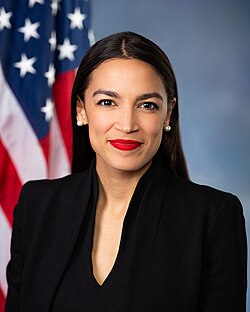 Alexandria Ocasio-CortezAlexandria Ocasio-CortezAffiliated
 Boris PistoriusBoris Ludwig Pistorius is a German lawyer and politician…Affiliated
How the record is sourced and how the score is derived.
The score is formula-derived (Factrail formula v1, version 1.0.0), not an editorial verdict. Read the methodology.
By the Factrail desk · Method: how we source and score · Last reviewed
Dispute a fact on this pageNamed here, or represent someone who is? Request a right of reply.
People and organizations as listed in the Related section of this page; facts, drivers and the pages that name it as listed in the blocks here. Counts, not a rating.