Mile Janakieski
Mile Janakieski (Macedonian: Миле Јанакиески; born 18 September 1978 in Prilep) is a politician from North Macedonia associated with VMRO-DPMNE.
- Facts0
- Drivers0
- Indicators0
Mile Janakieski (Macedonian: Миле Јанакиески; born 18 September 1978 in Prilep) is a politician from North Macedonia associated with VMRO-DPMNE.
Mile Janakieski (Macedonian: Миле Јанакиески; born 18 September 1978 in Prilep) is a politician from North Macedonia associated with VMRO-DPMNE. He was minister of transport and communications from 2006 to 2015, for nearly the whole of Nikola Gruevski's time as prime minister. He completed primary and secondary school in Prilep and in 2001 graduated in management and business administration from the American College in Thessaloniki. From 2001 to 2004 he worked in the Ministry of Finance, as an adviser from November 2001 to November 2002 and then as head of the minister's cabinet; from October 2004 to August 2005 he headed the cabinet of the VMRO-DPMNE president and sat on the party's central committee, and from August 2005 he was general director of the Skopje public water and sewerage enterprise. He is married to Sanja Janakieska and is the father of three children.
On 5 September 2009 a tourist boat capsized on Lake Ohrid, killing 15 Bulgarian tourists. Janakieski offered his resignation that Saturday, saying the ministry had jurisdiction over boats on the lake and that he felt morally responsible. Gruevski declined to accept it after VMRO-DPMNE asked that he remain; opposition parties had urged him to go. He left the ministry in May 2015, during the wiretapping crisis. Zoran Zaev, then leader of the Social Democratic Union of Macedonia, had since February played recordings at a series of press conferences and accused Gruevski and secret-police chief Sašo Mijalkov of ordering illegal surveillance of more than 20,000 people; the tapes were presented as evidence of electoral fraud, interference with the judiciary and other abuses, while Gruevski said they were the work of opposition activists and foreign services. Gruevski accepted the resignations of Janakieski, interior minister Gordana Jankuloska and Mijalkov, whom reporters described as the principal voices on the recordings. A biography compiled by the fact-checking outlet Vistinomer dates Janakieski's irrevocable resignation to 13 May 2015.
The Special Public Prosecutor's Office, created in 2015 to investigate the wiretap allegations and later abolished, filed several cases against him. In "Titanic 1", about alleged election and voting fraud in the 2011 parliamentary elections and the 2013 local elections, he pleaded guilty on 11 February 2022 together with other defendants. A first-instance court sentenced him to four and a half years in prison; on 4 July 2023 the Skopje Appellate Court reduced that term to three years and six months. He was also indicted in "TNT", concerning an illegal demolition, and in "Spanish Steps", concerning the award of a plot of land in Skopje, and he admitted guilt and received a conditional sentence in "Design", about the purchase of double-decker buses for Skopje public transport. Separately, prosecutors charged him, former Assembly speaker Trajko Veljanoski, former education minister Spiro Ristovski and former secret-police chief Vladimir Atanasovski with threatening the constitutional order as alleged organizers of the 27 April 2017 storming of parliament. A first-instance verdict gave the four prison terms ranging from six years to six and a half years; the Appellate Court quashed it and ordered a retrial, and on 23 January 2025 the Skopje Criminal Court granted their request for amnesty and stopped the proceedings.
Janakieski was released early from a Skopje prison on 17 June 2024 while serving the Titanic sentence, after the prison authority cited time already spent in detention and his behaviour. On 14 November 2023 the European Court of Human Rights found that detention measures in the April 27 and Spanish Steps cases violated Article 5 §§ 3 and 4 of the European Convention on Human Rights, for a lack of sufficient reasons and of a speedy review, and ordered the state to pay him €3,900 for non-pecuniary damage and €2,200 for costs and expenses. As of mid-2024, a money-laundering charge in the party-financing case "Talir" was still pending after a misuse-of-office count in that file had expired, and Gruevski, a suspect in several of the same investigations, had been in Hungary since fleeing there in 2018.
Mile Janakieski was born on 18 September 1978 in Prilep. In a 2023 judgment, the European Court of Human Rights recorded that he was born in 1978 and lives in Skopje. Prilep lies in the northern part of the Pelagonia valley, in the south of present-day North Macedonia, at about 620 to 650 metres above sea level. Drawing on the 2002 census, the municipality reported 73,351 inhabitants in the city and 76,768 in the municipality as a whole, and its public profile presents local Prilep tobacco, marble quarrying, and metal, chemical, textile and wood industries as parts of the town's economy.
He completed primary and secondary education in Prilep. Published biographical notes do not name the schools. In 2001 he graduated from the American College of Thessaloniki, the higher-education division of Anatolia College, in Thessaloniki, Greece. Anatolia, which dates its origin to a college founded in 1886 at Merzifon, reopened in Thessaloniki in 1924 and in 1981 created that division—then called SBALA—for post-secondary instruction in business and the liberal arts. The college describes itself as an independent American nonprofit institution operating in Greece and accredited by the New England Commission of Higher Education; the commission's directory, which lists the school as Anatolia American University in Pylea, dates initial accreditation to 1997 and records authority to award bachelor's and master's degrees.
Vistinomer, a fact-checking project, describes Janakieski's qualification as a degree in management and business administration and states that he speaks Greek and English. A profile on the website of VMRO-DPMNE, archived in 2009, states that the degree was in business administration, that he interned at the college from 1999 to 2001, and that he attended its conferences on globalization, marketing and leadership. Accounts of further study do not agree, and no independent record shows that a postgraduate degree was completed. The same party profile states that in 2003 he received a master's degree in European integration from Ss. Cyril and Methodius University of Skopje. Vistinomer, citing a 28 February 2015 interview with the businessman Fiat Canoski, reported instead that Janakieski had enrolled in postgraduate courses at FON University, owned by the Canoski family, and that Canoski did not know whether he had finished.
A November 2018 article described Sanja as two years younger and said the couple had been together for more than a decade before marrying at Saint Jovan Bigorski Monastery during the Easter holidays. In April 2013 the news site A1on reported that a son had been born on their wedding anniversary, that they had then been married for three years, and that their elder son, Mihail, was two years old. A third son, Aleksandar, was born in May 2016. In a July 2019 post reported by Faktor, Sanja wrote that they had three sons and that she had known her husband almost since childhood.
Before the 2006 cabinet, Mile Janakieski worked in the Ministry of Finance of the Republic of Macedonia (now North Macedonia), then for VMRO-DPMNE, and then at a Skopje public enterprise. U.S. Embassy biographies and a later Macedonian dossier do not describe the finance years in the same way. In August 2006, as Nikola Gruevski assembled his first government, the embassy called Janakieski an economist who had served under Gruevski at the ministry from 1999 to 2004, eventually in the Department for Macroeconomic Affairs from 2002 to 2004. A July 2008 embassy note listed three earlier finance posts without dates: assistant manager in the State Foreign Currency Inspectorate, assistant manager in the Sector for Macro Economy and Development Policy, and chief of cabinet to the minister of finance. A May 2016 dossier by the fact-checking project Vistinomer instead places the ministry career in 2001–2004: adviser from November 2001 to November 2002, and only afterward chief of the finance minister's cabinet.
Gruevski left the finance ministry on 1 November 2002. Petar Goshev succeeded him until 7 November 2003, and Nikola Popovski held the post until 28 August 2006. On Vistinomer's dates, the cabinet job would have begun as Gruevski's term ended, under ministers of the Social Democratic Union of Macedonia–led government rather than under Gruevski. The 2006 embassy note instead treats the whole period as service under Gruevski and does not mention a ministerial cabinet.
From October 2004 to August 2005 he was chief of cabinet to the VMRO-DPMNE president, an office Gruevski had held since his election in 2003. By July 2008 the embassy described Janakieski as a member of the party's Central Committee, as did the 2016 dossier; neither dates that membership to 2004–2005.
The August 2006 embassy note said that, after his election to the Skopje City Council in 2005, he was appointed to head the city's public water-supply utility. The 2008 note called him director general of that enterprise in 2005–2006. A State Audit Office report of 17 January 2007 named him director of JP Vodovod i kanalizacija – Skopje from 16 August 2005 to 25 August 2006, after Slobodan Dimitrovski's term as acting director. The audit, limited to citizen receivables in the 2005 accounts, withheld a positive opinion. It found that policies for recognizing short-term receivables had not been prescribed, contrary to international accounting standards, and that the accounts booked a 192.85 million-denar value adjustment, including 163.931 million denars written off as citizens' water and waste charges. Board decisions in February and May 2006, during his directorship, cut the citizen write-off that should have been recognized to 88.057 million denars. Auditors said the original entry had overstated expenses and the loss by 75.874 million denars, partly through misallocated charges, and that the books were corrected during the audit. The report held the directors for that period, including Janakieski, responsible for the account.
On 14 August 2006 Gruevski, as prime minister-designate, proposed him as minister of transport and communications in a lineup the embassy described as dominated by young technocrats. Parliament was expected to vote on 25 August 2006, the date given for the end of the water-utility directorship.
Mile Janakieski was minister of transport and communications in the Republic of Macedonia — the name then in domestic use — from Nikola Gruevski’s first VMRO-DPMNE government until May 2015. A U.S. embassy cable listed him as the proposed transport minister, then head of Skopje’s water utility. Parliament confirmed the cabinet on 26 August 2006. Gruevski accepted Janakieski’s resignation on 12 May 2015.
The main early scheme with outside finance was the missing motorway on Pan-European Corridor X between Demir Kapija and Smokvica. In 2011 the European Bank for Reconstruction and Development agreed a €107 million loan for a 28-kilometre section and toll stations, with EU pre-accession funds and the European Investment Bank. The 28.2 kilometres, costing €227 million, opened on 23 April 2018, after Janakieski had left, and completed Corridor X to motorway standard inside the country.
On Pan-European Corridor VIII, he said in July 2012 that a railway from Kumanovo toward Bulgaria would start by March 2013 with the Kumanovo–Beljakovce section, using a proposed €46.4 million EBRD loan, and that the line to the border would be finished by 2022. By November 2013 the start was still being put off, part of what Balkan Insight called two decades of largely unmet promises of an east–west route.
Highway sections of Corridor VIII went to Chinese firms without an open tender. In 2013 parliament passed a special law for the Kičevo–Ohrid and Miladinovci–Štip motorways so the awards could be tied to credit from the Export–Import Bank of China. Sinohydro, already on a World Bank blacklist, was chosen for Kičevo–Ohrid. Eximbank lent $278.3 million for the 47-kilometre Miladinovci–Štip road, finished in 2019. The 57-kilometre Kičevo–Ohrid highway, begun in 2014 at about €411 million, was still unfinished a decade later. Another Chinese bidder had offered about €369 million, and annexes took the cost to about €598 million after Sinohydro said parts of the route had been badly planned.
In May 2017 the Special Prosecution opened the Traektorija case, with Gruevski the main suspect among four people. It alleged that a contract of about €570 million for the two stretches broke procurement rules and damaged the budget by €155 million. Janakieski was later named among those charged, with deputy prime minister Vladimir Peševski and the state roads director. The case moved little after the special prosecutor’s office was caught in its own corruption scandal. Professor Josif Josifovski said designers and the authorities shared the blame with Sinohydro because the geology had been poorly surveyed.
A law passed before he took office had opened the way for a third mobile operator, which the European Union had sought. In September 2007 VIP, part of Austria’s Mobilkom, launched at 9.09 denars a minute to all domestic networks, which it said was about 51 percent below average tariffs. It had paid €10 million for the licence and planned €50 million more in the network. The company later said it held about 10 percent of the market after a year and was nearing 30 percent by 2013. Separately, Magyar Telekom and Deutsche Telekom paid $95 million in the United States to settle allegations of bribes linked to secret agreements that delayed competition. Balkan Insight reported that the Macedonian politicians associated with those agreements were not investigated at home.
In September 2008 Turkish operator TAV Airports won a 20-year concession for Skopje and Ohrid and a planned cargo airport near Štip. It was the only bidder after Vienna Airport, Hochtief and EGIS withdrew, and it was to rebuild Skopje within two years. Takeover slipped to 1 March 2010. TAV then spoke of about €200 million of works, including a new Skopje terminal; the Štip cargo field was postponed ten years. The two airports then handled fewer than a million passengers a year. In February 2011 Wizz Air became the first low-cost carrier on the Skopje schedule, with London flights from 20 June advertised from €35. TAV tied the route to a plan to grow traffic from about 700,000 passengers.
Housing sat in the same ministry. In June 2009 the Council of Europe Development Bank approved a €25.35 million loan for 37 social-housing buildings in 19 towns, for about 1,708 low-income families. At a draw in Ohrid, Janakieski said 71 flats would be let at 1,000 to 1,500 denars a month to groups such as orphans, people on social assistance, people with disabilities, disaster victims, socially endangered Roma and single parents. He said applicants outnumbered homes and that the electronic allocation was meant to block outside influence. In May 2009 he also announced the sale of 460 state plots for commercial and residential building.
On 5 September 2009 the tourist boat Ilinden sank in Lake Ohrid, about 200 metres from shore, on a calm day. Fifteen Bulgarian tourists drowned. A later judgment recorded 56 people aboard, more than allowed. The boat, built in Regensburg in 1924 and later used for sightseeing, went down within minutes, and the captain was arrested.
Janakieski offered his resignation the same day, saying he was morally responsible because the ministry licensed boats on the lake. VMRO-DPMNE asked Gruevski to keep him, arguing he was not to blame and should be judged on his record. Gruevski refused the resignation; state media reported that decision on 10 September. The Social Democratic Union of Macedonia called the offer a “premeditated bluff” and the refusal “shameful”, and said the ministry was responsible for safety on the lake. On 15 September it tabled a confidence motion against Janakieski and Interior Minister Gordana Jankuloska. MP Jani Makraduli said the port authority and coastal police answered to them, and blamed partisan appointments and unenforced rules. VMRO-DPMNE’s majority made removal unlikely.
In 2011 an Ohrid court sentenced captain Sotir Fileski to one year for involuntary manslaughter, for poor maintenance of the steering gear, an inadequate crew and overloading. Branko Baic, of the German firm Lloyd that had certified the boat, received the same sentence. The inquiry found Ilinden unseaworthy and blamed a torn balancing rope, the excess load and the distribution of passengers. Both men were ordered to pay €42,000 to the families. Janakieski stayed in office.
In February 2015 Zoran Zaev, leader of the opposition Social Democratic Union of Macedonia, began releasing recordings he said showed illegal surveillance by the government of the Republic of Macedonia, now North Macedonia. At a Skopje press conference on 9 February he accused Prime Minister Nikola Gruevski of ordering taps on about 20,000 people, including politicians, journalists, religious leaders and ethnic Albanian politicians. Gruevski accused Zaev of trying to blackmail him into an early election. Police had charged Zaev in late January with plotting, alongside a foreign intelligence service, to topple the government; Zaev denied the charge.
By mid-May Zaev had staged about 30 press conferences. The opposition said the tapes showed election fraud, pressure on courts and prosecutors, rigged tenders and the cover-up of a police killing, and that Interior Minister Gordana Jankuloska, intelligence chief Sašo Mijalkov and Transport Minister Mile Janakieski—in office since Gruevski's VMRO-DPMNE took power in 2006—were leading voices on many of the most serious recordings. Zaev said an insider had supplied them; Gruevski said the opposition and foreign services had fabricated them to bring him down.
The releases brought protests into the streets. On 5 May, after Zaev aired material he said showed Gruevski, Jankuloska and others limiting blame for the June 2011 beating death of 22-year-old Martin Neskovski, about 2,000 people gathered outside government buildings in Skopje and demanded the cabinet's resignation.
The rally began peacefully and turned violent that night, with stones thrown and containers set alight; police used water cannon and tear gas, and the interior ministry said 38 officers were injured, many from shock. SDSM called a larger demonstration for 17 May.
On 9–10 May police fought an armed group in the Kumanovo clashes. The interior ministry said eight officers and 14 gunmen were killed and 37 officers wounded, and named former Kosovo Liberation Army members from Kosovo as the leaders. Gruevski said the group had tried to destabilise the country. European Union enlargement commissioner Johannes Hahn said the fighting should not divert attention from the "very serious internal political situation" or be used "to introduce ethnic tensions."
On the night of 12 May Gruevski accepted the resignations of Jankuloska, Janakieski and Mijalkov, his cousin, without giving a reason, and nominated successors. Mijalkov wrote that he hoped to "help resolve the crisis imposed by the opposition with its anti-state behaviour." Jankuloska wrote that she was leaving "in these tough days, when Macedonia is in deep political crisis." In a letter published that evening by the agency Netpress, Janakieski said accusations against him rested on "glued, mounted, cut and created conversations," including some involving his family, and that his irrevocable resignation was meant to avoid influencing any procedure and to keep the country on course for the EU and NATO.
Parliament confirmed the new ministers on 13 May without SDSM, which had boycotted the chamber since the 2014 election over fraud claims. Mitko Cavkov, head of the Public Security Bureau, became interior minister, and Vlado Misajlovski, head of the state roads enterprise, transport minister. Gruevski called Janakieski an "extremely honest person" and a "diligent worker." Zaev answered that the resignations were "not our ultimate goal" but "just a step towards the end of Nikola Gruevski." The movement Protestiram called the reshuffle "cosmetic." A day earlier the ambassadors of the United States, the EU, Germany, France, Italy and the United Kingdom told Gruevski that inaction on the tapes cast "serious doubt" on Macedonia's democratic commitments and its NATO and EU course.
The departures did not end the standoff. Talks convened by Hahn produced a 2 June accord and, on 15 July in Skopje, an agreement of the four main parties: SDSM would return to parliament, a government would prepare elections for 24 April 2016, and a special prosecutor would investigate crimes arising from the intercepted communications.
Charges brought by the Special Public Prosecutor’s Office in North Macedonia, and later conducted by the ordinary prosecution, concerned Mile Janakieski’s alleged role in election offences and in the financing of VMRO-DPMNE. The election case ended in a final prison sentence after a guilty plea. The financing case remained open after a 2023 Criminal Code change removed one count against him.
“Titanic”, or “Titanic 1”, was that office’s first investigation, opened at the beginning of 2016, into alleged fraud at the 2011 parliamentary elections and the 2013 local elections. The indictment named fugitive former prime minister Nikola Gruevski and officials including Kiril Bozhinovski, Janakieski, interior minister Gordana Jankuloska, Biljana Brishkoska-Boshkovski, Ilija Dimovski and Munir Pepikj. The suspected offences were criminal association, violation of voting rights and of voters’ freedom of choice, election bribery, destruction of election materials and abuse of campaign funds.
On 11 February 2022, at the third hearing of a restarted trial, Janakieski, Jankuloska, Gruevski’s former chief of cabinet Martin Protugjer and five others pleaded guilty. Prosecutor Lile Stefanova asked the Skopje Criminal Court to treat the admissions as grounds for reduced or suspended sentences. Janakieski did not admit misuse of campaign funds, and on 18 March 2022 Stefanova dropped that count. The panel entered a judgment dismissing that charge, so nothing further remained against him in Titanic, while Gruevski, tried in absence, and defendants who had not pleaded stayed in the case.
On 28 February 2022 the panel presided over by Judge Osman Shabani convicted those who had admitted guilt, finding that in the first half of 2011 they had formed a group to commit voting fraud for VMRO-DPMNE. Janakieski received eight months for criminal association, one year for violating voters’ right of determination and three years for destroying election material, merged into four years and six months. Jankuloska received two years and six months, and Protugjer a two-year term that would not be served if he committed no new offence within five years. The panel also ordered Janakieski into house arrest until the judgment became final or the prison term began.
On 4 July 2023 the Skopje Appellate Court partly upheld the appeals and set Janakieski’s sentence at three years and six months. It converted the prison terms of Jankuloska and Pepikj into suspended sentences and left Protugjer’s suspended sentence in place. The Basic Criminal Court in Skopje said the guilty-plea judgment, the appellate decision and the enforcement order credited detention from 14 November 2018 to 26 February 2019 and house arrest from 28 February 2022 until 6 July 2023, about one year and nine months.
On 22 November 2018 the special prosecution filed two indictments in the case it called “Thaler” (Talir). The financing indictment charged Gruevski, Bozhinovski, Janakieski, Dimovski, Leko Ristoski, Elizabeta Cingarovska and VMRO-DPMNE itself. Prosecutors alleged that from 2009 to 2015 Gruevski abused his office to collect party money from anonymous and illegal sources, that Bozhinovski and Janakieski intimidated firms holding public-procurement contracts into providing cash, and that at least €4,608,661 was not returned to the budget. They alleged that the cash was recorded on PP10 slips naming people who had not paid, and that Janakieski was among the signatories who then used it to buy property for the party. A second indictment charged Gruevski and Bozhinovski over construction of the party headquarters. Cingarovska pleaded guilty and received two years’ probation.
The first main hearing was set for 18 February 2019. By October 2024 the case had restarted five times and still had no first-instance verdict. Gruevski was tried in absence after fleeing to Hungary.
On 7 September 2023 President Stevo Pendarovski signed Criminal Code amendments that parliament had adopted the previous day, and said they were not an amnesty. The changes lowered penalties for abuse of office and for criminal association. An anti-corruption platform had urged a veto, warning that cases including Talir would expire. On 25 October 2023 prosecutor Lenche Ristoska asked the court to treat Janakieski’s Article 353 count, which she dated to 2013, as time-barred under the milder law. She said the money-laundering charge continued, with limitation at the end of 2035 for Gruevski, Dimovski, Bozhinovski and Ristoski and at the end of 2026 for the party. She amended the indictment on 27 November 2023, and Judge Shabani said the court would rule on the limitation at the next hearing. By June 2024 Janakieski’s misuse-of-office charge had lapsed, and only money laundering remained against him.
In June 2024 prosecutor Anita Topolova-Isajlovska asked the Supreme Court to annul the December 2018 confirmation of the indictment, arguing that the special prosecution had filed it after its 18-month deadline and that intercepted recordings should not be used as evidence. On 9 October 2024 the Supreme Court refused, holding that the later procedural law was not retroactive. In February 2025 the Constitutional Court ordered parliament to correct the 2023 amendments within six months and said some expiries could not be undone. In April 2026 chief prosecutor Nenad Saveski removed Ristoska from Talir 1 and Talir 2, as a limitation period in one of the cases was expected to expire that August.
Several cases against former transport and communications minister Mile Janakieski alleged abuse of office over state land, a bus tender in Skopje, and a demolition, apart from the election-finance prosecutions and the case over 27 April 2017. Recorded results ran from a conditional sentence to annulment and statutory limitation after Criminal Code amendments adopted in North Macedonia in September 2023.
Toplik, also called Toplik–Sun City, concerned state land in Sopishte, on the southern slopes of Vodno, for the Sun City (Soncev Grad) housing scheme. In October 2016 the special prosecution investigated a former senior ministry official and five employees. Prosecutor Fatime Fetai said that from 3 April 2007 to 18 February 2013 they abused office and caused a little more than one million euros of damage.
The sum treated as damage was default interest, not the land price. A commission reported on 3 April 2007 that tender conditions were not met; the minister replaced it the next day, and a contract was signed with the Skopje firm Sun City. The project was not built. On 18 February 2013 the ministry repaid principal of 223,954,780 denars and interest of 64,206,839 denars, stated as 1,044,000 euros. Janakieski said the sale was lawful and ended because the Constitutional Court annulled the urban plan.
On 5 April 2022 the Basic Criminal Court in Skopje, at first instance, sentenced Janakieski to three years and six months for abuse of office, commission president Tome Gjurchilovski to three years, and Dimitar Dimovski, Marica Taseva, Dimitar Gakjev and Vesa Tomchevska to two-year suspended terms, with five years in which a new offence would activate the sentence. They were to repay about one million euros jointly. The judgment was not final.
On 6 September 2023, the day parliament cut the penalties and deleted Article 353, paragraph 5, the charged provision, the Appellate Court upheld the appeals, annulled the verdict and ordered a retrial, publishing the decision on 17 October. At the retrial the prosecutor reclassified the charge to paragraph 4 and withdrew it against all six for absolute limitation under Article 352 of the criminal-procedure law. That limitation was calculated to February 2023, so the prison terms never became final. Janakieski was then serving a sentence in the separate Titanic case.
Spanish Steps (Španski skali) was a December 2019 indictment, after a June investigation, against Janakieski and ten others over state plots in front of the EVN building on Skopje’s central square, for a project meant to form part of Skopje 2014. Ministry staff, notaries and a businessman were also charged. Prosecutors alleged that from 21 December 2010 to 8 August 2018 officials failed to end the contracts or collect penalties, although the buildings were never built, causing damage of 163,513,868 denars, about 2.6 million euros. The counts were abuse of official position, and one count of unscrupulous work in the service.
A pre-trial judge ordered Janakieski detained on 28 June 2019. The European Court of Human Rights ruled on 14 November 2023 on that detention and later house arrest, not on the charge. The trial was still at first instance in March 2024. On 13 May 2024 the court postponed a hearing and said six of the original eleven accused remained.
On 10 March 2022 Janakieski and two procurement-commission members admitted guilt in Design and each received a two-year conditional sentence, not enforced if they committed no crime within five years. The charge was abuse of office over about 200 double-decker buses for JSP Skopje, in a procedure dated to 2009 or to a February 2010 tender won by the Chinese maker Yutong. The favoured bidder allegedly lacked a bank guarantee and quality certificate, though another offer was about 4.7 million euros lower; the state news agency said there was no budget damage. Igor Janushev, then JSP director and later a VMRO-DPMNE member of parliament, pleaded not guilty. A later non-final judgment gave him a two-year suspended sentence, which reporting said had no effect because parliament had the day before deleted Article 353, paragraph 5.
TNT concerned the demolition of Cosmos, a residential and business complex in Gazi Baba Municipality owned by Fiat Canoski. On 20 May 2022 the Skopje Criminal Court, at first instance, sentenced former prime minister Nikola Gruevski to nine years for abuse of power. He was tried in absentia and had been in Hungary since 2018. Janakieski received three years and former mayor Toni Trajkovski four. All three pleaded not guilty, and the verdict could be appealed. Balkan Insight reported a 2011 demolition ordered in retaliation after Canoski’s PEI party left the VMRO-DPMNE-led alliance. Later reports dated it to 2012, added four years for inspector Elizabeta Najdovska, noted three acquittals, and recorded a joint award to Canoski’s company FINE of nearly 11 million euros.
The appeal did not confirm the verdict. In July 2023 the file was returned over inconsistencies in one penalty and in detention credit. On 6 November 2023 defence lawyer Elenko Milanov sought a rejecting judgment for absolute limitation, and prosecutor Sasho Rajchev said the amendments had cut the penalties and decriminalised the offence in public procurement. The panel deferred its decision. Canoski said the timing would extinguish FINE’s compensation; the court said it had followed procedure. Balkan Insight later listed TNT among at least 14 former special-prosecution cases scrapped after the amendments, passed in one day by a government led by the Social Democratic Union of Macedonia. A 2026 survey reported that the prosecution ended by absolute limitation, with neither a final conviction nor an acquittal.
On 27 April 2017 a majority in the parliament in Skopje — then the Assembly of the Republic of Macedonia, later the Assembly of North Macedonia — elected ethnic Albanian MP Talat Xhaferi of the Democratic Union for Integration as speaker. The vote opened the way to a government led by Zoran Zaev of the Social Democratic Union of Macedonia after the inconclusive December 2016 election. That night about 200 demonstrators, many masked and many supporters of VMRO-DPMNE, the party of former prime minister Nikola Gruevski, broke a police cordon and entered the building. They attacked members of parliament; television footage showed Zaev bleeding from the forehead. Ziadin Sela, an ethnic Albanian MP and leader of the Alliance for Albanians, later testified that he was beaten unconscious in the press room and spent ten days in hospital. The interior ministry said 102 people were treated, including ten MPs and police officers, and police used stun grenades to clear the building.
A 2020 review counted at least seven proceedings and more than 50 defendants, on charges from mob violence and attempted murder to terrorist endangerment of the constitutional order; in one participants’ trial, 17 people received combined terms of about 200 years. On 18 December 2018 all 95 members present passed an Amnesty Law for some suspects. Deputy speaker Frosina Remenski said it excluded organizers and those who prepared the events, people who used physical violence, masked people who committed violence, people carrying weapons, and officials who exceeded their authority; applicants had to ask for it, and prosecutors and courts decided. The law was tied to opposition votes for constitutional changes under the Prespa Agreement with Greece.
On 20 February 2019 prosecutors called the suspected organizing a terrorist conspiracy against the constitutional order, and police arrested former speaker Trajko Veljanoski, former education minister Spiro Ristovski and Janakieski, the former transport minister. A court ordered 30 days’ pretrial detention for Janakieski and Ristovski; Veljanoski, still an MP, invoked immunity and was released, denying the accusations. Prosecutors alleged that from early 2017 the three had planned to block a transfer of power by organizing and financing protests, first at the State Election Commission and then those of a “For Macedonia” movement, ending in the entry into parliament. An indictment filed on 31 May 2019 was accepted in January 2020 against those three and Vladimir Atanasovski, the former secret-police chief, for terrorist endangerment of the constitutional order. Gruevski, who had asylum in Hungary, and former intelligence officer Nikola Boskoski, reported to be in Greece, were also accused, but their cases were stopped until they could be tried.
The trial opened in February 2020 before Judge Ilija Trpkov. All four pleaded not guilty and called the case political persecution. Prosecutor Vilma Ruskoska said Janakieski and Ristovski had arranged transport into Skopje for people to enter the building, and that Veljanoski, while in contact with Gruevski, helped violent men reach the hall where most injuries occurred. The defendants and VMRO-DPMNE said the violence was spontaneous.
On 26 July 2021 the court convicted them as organizers. Veljanoski received six years and six months, Janakieski and Ristovski six years and three months each, and Atanasovski six years. The judgment found a prepared plan of violence to stop the transfer of power, using the party structure, efforts to remove police security, and direction of groups that included patriotic associations. Trpkov said the terms were reduced for the defendants’ conduct and because of the amnesty law. They expressed remorse for the violence while denying organization. Veljanoski, Ristovski and Atanasovski were placed under house arrest; Janakieski, already under house arrest, stayed there. The sentences did not become final.
On 3 April 2023 the Skopje Appellate Court quashed the verdict and ordered a retrial, citing breaches of the Criminal Procedure Code, incomplete findings of fact, and harm to the defence and to a fair trial, including on the pardon law. The defence asked that the 2018 law be applied and sought a Supreme Court interpretation; in December 2023 the hearing was postponed while that opinion was pending. The charge was a terrorist threat to the constitutional order and security.
On 24 December 2024 prosecutors said equal treatment with people already amnestied meant the motion could not be opposed for Janakieski, Ristovski and Veljanoski, but that statutory exceptions barred it for Atanasovski. On 23 January 2025 the Criminal Court nevertheless amnestied all four and stopped the proceedings for threatening the constitutional order. Trpkov said the events had been real and that an attack on parliament was an attack on the state, and that he still thought the law was not meant for organizers. He noted that the prosecution and the Appellate Court had found three defendants had not exceeded their official powers, and that the four were in the same position as others already amnestied; seeking amnesty instead of continuing to trial, he said, was their choice.
Janakieski’s deprivation of liberty began on 14 November 2018, when the organized-crime council of the Basic Court Skopje 1 ordered 30 days’ detention in the Special Prosecution case “Titanic,” citing a risk he would abscond after former prime minister Nikola Gruevski fled the country. The Interior Ministry said he was taken that morning to the prison in Šuto Orizari, Skopje. The Titanic judgment later treated this detention as lasting until 26 February 2019 and credited it against that sentence.
On 20 February 2019 a pre-trial judge ordered prison detention in the separate investigation of the 27 April 2017 events in parliament, on grounds of flight and interference with the inquiry. Two days later a panel replaced prison with 30 days’ house arrest, which was extended until 1 July 2019 and then discontinued because a prison order of 28 June in the “Spanish Steps” case could not run alongside it. On 9 August 2019 the appellate court replaced that prison order with house arrest, referring to his health and adding a passport seizure and bans on contact and communications. The house arrest continued, through repeated extensions, until 23 February 2021, when it was lifted because house arrest had been ordered the same day in a third set of proceedings. In November 2023 the European Court of Human Rights found that aspects of the detention and house arrest in the 27 April and Spanish Steps proceedings breached Article 5 of the European Convention on Human Rights.
The judgment records the third house arrest as lasting until 18 November 2021. That day the Skopje Appellate Court, on a defense appeal, replaced house arrest in the cases coded TNT, Titanic, Talir, Toplik, Trajectory and Spanish Steps with a ban on leaving North Macedonia and Skopje, a duty to report to court, and a ban on a further travel document. On 23 November the criminal court refused a request to return him to prison in the 27 April case.
On 28 February 2022, after a guilty plea in Titanic, the trial court imposed four years and six months’ imprisonment and house arrest until he began to serve the sentence or the judgment became final, and no longer than the term. Police took him home from the court; he could not leave that address without permission and was subject to unannounced checks, on a stated risk of flight tied to a first-instance sentence in the 27 April case and to other proceedings. On 4 July 2023 the Appellate Court reduced the Titanic sentence to three years and six months. The Basic Criminal Court said the judgment and the enforcement order already credited detention from 14 November 2018 to 26 February 2019 and house arrest from 28 February 2022 to 6 July 2023—about one year and nine months—because credit is limited to the same offense. A conditional sentence after a guilty plea in the separate “Design” case was not that term.
On 6 July 2023 he was taken from house arrest to Idrizovo prison to serve the remainder; reports of his release said he was later held at the Skopje prison in Šuto Orizari. In March 2024 the Appellate Court upheld his appeal, rejected the organized-crime prosecution’s appeal, and moved conditional release from 16 January 2025 to 17 June 2024, provided he committed no further offense before it expired. He left that prison on 17 June 2024. The prison administration attributed the release to time already spent in detention and to his conduct. News agencies described the span from November 2018 as about six years across several Special Prosecution cases, covering repeated detention, house arrest and the Titanic prison term rather than one uninterrupted sentence, and including the interval of precautionary restrictions from 18 November 2021 to 28 February 2022.
On 14 November 2023 the Second Section of the European Court of Human Rights unanimously decided Janakieski v. North Macedonia, joining applications nos. 57325/19 and 16291/20, lodged on 30 October 2019 and 14 April 2020. Mile Janakieski, born in 1978 and living in Skopje, was represented by Vlatko Ilievski. He was held from 20 February 2019 to 23 February 2021. In the “Organisers of the events of 27 April in Parliament” case he was suspected of a terrorist threat to the constitutional order over the storming of Parliament on 27 April 2017, including mobilising members of VMRO-DPMNE: prison from 20 to 22 February, then house arrest until 28 June 2019. In the “Spanish Steps” case, prison from that date became house arrest on 9 August 2019 and lasted until 23 February 2021.
Article 5 § 1 complaints under the European Convention on Human Rights were inadmissible for non-exhaustion. They concerned the 28 June 2019 overlap of house arrest and a new prison order, ended on 1 July because the two could not run together, and a 23 August 2019 extension about two weeks early that was not raised on appeal. Compensation under section 553(1)(3) of the Criminal Proceedings Act was held directly available. A complaint of no reasonable suspicion was manifestly ill-founded.
The Article 5 § 3 complaint was admissible and upheld. Prison and house arrest were assessed together, and a reasonable suspicion was accepted. Until the indictment of 12 December 2019 the orders cited risks of flight or interference. Later extensions, through February 2021, relied only on flight risk and repeated the gravity of the charge and the possible sentence. His three children and property were not genuinely weighed against time or lesser measures, and on 2 February 2021 the appellate court reversed the presumption of release. From at least 12 December 2019 the reasons were relevant but not sufficient.
Article 5 § 4 was also violated. Appeals against the extension of 22 November 2019 and extensions from January to September 2020 took between eighteen and twenty-eight days, several decided very near the end of the period reviewed. Multiple appeals, a prosecutor’s reply, hearings, complexity and the COVID-19 pandemic did not justify the delay. Under Article 41 the Court awarded 3,900 euros for non-pecuniary damage and 2,200 euros for costs, payable within three months of finality. A Media Information Agency headline that the detention was unlawful, and its figure of 6,100 euros, goes beyond those holdings.
On 23 June 2026, in Taleski and Others v. North Macedonia, the Court decided application no. 7877/24, lodged on 18 March 2024. In the “Titanic 1” case President Gjorge Ivanov’s pardon of 12 April 2016 was annulled on 27 May 2016, and on 28 February 2022 Janakieski received four and a half years. There was no violation of Article 6 § 1 in that annulment, but by five votes to two a violation for not serving the higher prosecutor’s submissions, with 3,600 euros awarded and 64 euros jointly with Kosta Mitrovski.
In mid-September 2025 the Skopje business site Faktor reported that Mile Janakieski, a former minister of transport and communications and a former closest associate of ex-prime minister Nikola Gruevski, had become an owner of Smart Invest Group, a Pelagonia construction consortium active in North Macedonia. It said he had joined the previous week in place of the Bitola investor Krste Nedelkovski, owner of Konkrit and BV Engineering, with partners Dragi Filevski (Mario Mateo), Pece Taleski (OHO Production), Filip Stojchevski (Chiflik), Vladimir Hristovski (Grafo Prom) and Isni Abazi (One Finance). Fokus, Nezavisen and 4News repeated the account the same day, citing Faktor; none gave a share percentage, a registry extract or a statement from Janakieski.
The firm in that coverage is Друштво за градежништво, производство и услуги СМАРТ ИНВЕСТ ГРОУП ДОО Скопје (EMBS 7685076; tax number 4080023615957), registered in Centar, Skopje, at Filip Vtori Makedonski 11, local 5. A publicly viewable CompanyWall profile lists its activity as preparation of construction projects, classifies it as a micro-enterprise, and names Aleksandar Todosiev and Sime Vasileski as managers. The owners shown are Abazi, Taleski, Stojchevski, Filevski and Hristovski — not Janakieski, and not Nedelkovski — so the change described in the press is not confirmed in that ownership record. Reporters dated the grouping to about two years earlier. The profile shows accounts from 2023 and, for 2025, total revenue of about 16.8 million denars and profit of about 227,000 denars.
Citing the company's website, Faktor wrote that the group then had an investment fund of 30 million euros and was building in Bitola's Zlaten Rid neighbourhood and on Širok Sokak, in Kumanovo, and in Skopje, including a planned 128-apartment complex near Momin Potok in Karpoš. The site attributes capital above 30 million euros, and more than 500 employees, to a network of partner firms including BV Business Group, Chiflik, Mario Mateo, Grafo Prom and OHO Production, and presents the company as a platform pooling outside money for construction. Those figures are the company's claims, not the registered firm's revenue or size.
The reports also said, without a named source, that Janakieski was unofficially regarded as a land consultant to large construction companies. Fokus noted social-media comment asking whether participants had to show a clean criminal record, as for an ordinary licence. The coverage also recorded parole in the Titanic case, time-barred Toplik and Talir charges, an amnesty in the "organizers of 27 April" case, and no known outcome in Spanish Steps.
Ranked by shared high-impact facts, then explicit ties, then shared drivers.
 Zoran ZaevZoran Zaev was Prime Minister of North Macedonia from 31…Affiliated
 Vlado MisajlovskiVlado Misajlovski (Macedonian: Владо МисајловскиAffiliated
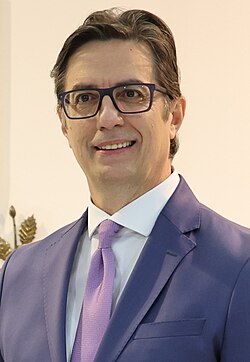 Stevo PendarovskiStevo Pendarovski is a Macedonian politician who served as…Affiliated
 Gjorge IvanovGjorge Ivanov is a Macedonian juristAffiliated
 Johannes HahnJohannes Hahn (born 2 December 1957) is an Austrian…Affiliated
 Nikola GruevskiNikola Gruevski is a former Macedonian politician who…Affiliated
How the record is sourced and how the score is derived.
The score is formula-derived (Factrail formula v1, version 1.0.0), not an editorial verdict. Read the methodology.
By the Factrail desk · Method: how we source and score · Last reviewed
Dispute a fact on this pageNamed here, or represent someone who is? Request a right of reply.
Linked because the text names them, not because anything was measured.
People and organizations as listed in the Related section of this page; facts, drivers and the pages that name it as listed in the blocks here. Counts, not a rating.
Named by 1 page on Factrail.