The central record: nuclear negotiations and the limits of diplomacy
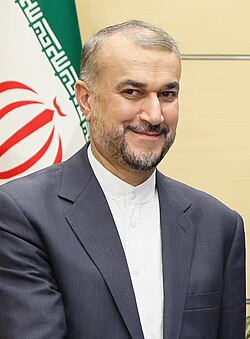
Mohammad Javad Zarif was Iran's foreign minister during the negotiations that produced the 2015 Joint Comprehensive Plan of Action, the agreement between Iran and the E3/EU+3 powers on limits and monitoring of Iran's nuclear programme in exchange for specified nuclear-related sanctions relief. His responsibility is unusually well documented because he was personally identified in the joint announcement of the final agreement alongside EU foreign-policy chief Federica Mogherini. The European External Action Service's original joint statement (opens in a new tab) records the 14 July 2015 conclusion and describes both nuclear commitments and the planned sanctions provisions.
The agreement's legal and political significance was substantial but bounded. Negotiators did not abolish every Iran-related sanction or eliminate future disagreements. The plan provided for agreed restrictions, verification and a sequence of sanctions changes, subject to implementation. The UN Security Council subsequently endorsed the arrangement in Resolution 2231, with monitoring assigned to the International Atomic Energy Agency. The United Nations meeting record (opens in a new tab) documents the Council's decision. Zarif was an important individual negotiator; the agreement was nonetheless a collective act of Iran, the other participating governments, the EU and multilateral institutions, rather than an achievement created by a foreign minister acting alone.
Decisions and consequences: implementation was conditional
The language of the 2015 announcement projected peaceful nuclear activity, improved international cooperation and reciprocal steps on sanctions. Those were objectives built into an agreement. They should not be converted into a claim that Iran's whole foreign policy changed, that all economic damage was reversed, or that later confrontation was impossible. On the American side, Secretary of State John Kerry presented the agreement as a negotiated step toward greater transparency, while acknowledging the work still required. His contemporaneous US State Department remarks (opens in a new tab) independently confirm the negotiation and announcement.
The EU and Iran subsequently described implementation of the deal as opening opportunities for wider diplomatic and economic cooperation. In an April 2016 statement, the EU and Iran referred to implementation day on 16 January 2016 and to further political consultation and cooperation. The European External Action Service (opens in a new tab) makes clear that such engagement was to develop through later actions. For the causal graph, the July 2015 agreement is one negotiated fact and the January 2016 implementation milestone is another; neither should be merged with every later Iranian sanctions measure, uranium inspection or change in domestic living conditions.
Domestic contest and departure from the presidency's advisory team
Zarif's reputation as an advocate of negotiations with Western governments was politically contentious inside Iran. After the foreign-minister period, he became vice president for strategic affairs under President Masoud Pezeshkian, but in March 2025 he announced that he was leaving that post amid pressure from domestic opponents. Reports connected the dispute to conservative criticism and an argument about the citizenship of his children. The Associated Press (opens in a new tab) described the resignation and surrounding political clash, while Al Jazeera (opens in a new tab) reported Zarif's account that a judiciary official advised him to step aside.
These events show both the reach and fragility of his influence. He could lead an international negotiating team and later advise the presidency, but he did not control parliament, the judiciary, the supreme leader or external governments. His 2025 departure is a discrete domestic political event; it does not retroactively erase his documented signature role in 2015. The record warrants careful attribution: diplomacy supplied an agreement with specific obligations, while sanctions implementation, regional security and household outcomes require separate evidence over time. The EU's original 2015 joint statement (opens in a new tab) is a more reliable anchor for what was negotiated than a retrospective claim that the agreement single-handedly resolved, or produced, every subsequent Iran crisis.