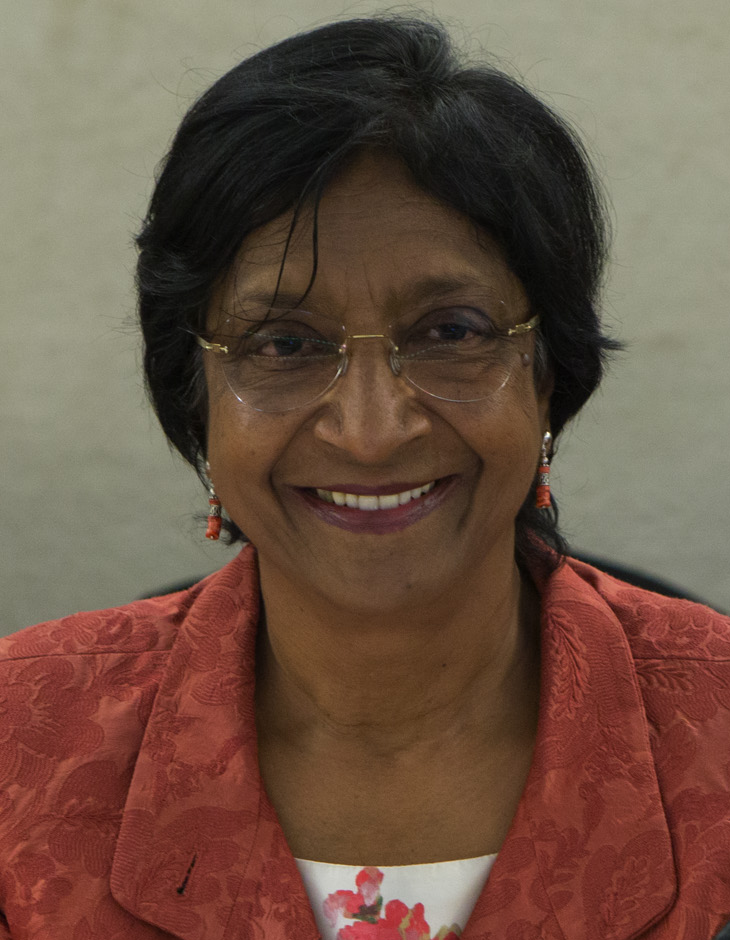
Navi Pillay, also known as Navanethem Pillay, is a South African lawyer and judge who won the 2026 Nobel Peace Prize after a career in international human-rights law. UN and Nobel sources identify her as a former UN High Commissioner for Human Rights, serving from 2008 to 2014, and as a former judge of the International Criminal Tribunal for Rwanda, where she served as president. She later chaired the UN Commission of Inquiry on Israel and the occupied Palestinian territory.
Her latest public intervention is confrontational. In an October 14 interview, Pillay said Israeli Prime Minister Benjamin Netanyahu should be prosecuted for war crimes and expressed confidence that he would eventually stand trial, whether through national courts or the International Criminal Court. She also attacked Donald Trump's sanctions on the ICC as unlawful.
Netanyahu has responded to Pillay's record with equally strong criticism, calling her a "bigot" and accusing her of spreading "blood libels". Israel rejects the genocide findings associated with the inquiry she chaired and argues that the commission and related UN mechanisms are biased against Israel. That criticism is central to a fair profile because Pillay is not a neutral observer in Israel's view; she is a leading author of findings the government rejects.
Legal precision matters. Pillay is calling for prosecution; she is not reporting a conviction. The ICC warrant for Netanyahu is a judicial action, not a final finding of guilt. Her Nobel Prize raises her public profile but does not alter the burden of proof in any criminal proceeding.
Pillay's significance lies in the connection between documentation and enforcement. Her argument is that grave allegations against powerful officials must be tested in courts rather than insulated by office or alliance. Her critics answer that the relevant international bodies lack jurisdiction, neutrality or both. That dispute now places her at the centre of a broader fight over accountability, sovereignty and the reach of international criminal law.