
Nick Smith
Nicolas Rex Smith (born 1964) is a New Zealand civil engineer and politician who represented the National Party as a Member of Parliament…
- Facts0
- Drivers0
- Indicators0
Nicolas Rex Smith (born 1964) is a New Zealand civil engineer and politician who represented the National Party as a Member of Parliament…
Nicolas Rex Smith (born 1964) is a New Zealand civil engineer and politician who represented the National Party as a Member of Parliament from 27 October 1990 to 10 June 2021. He initially held the Tasman electorate before shifting to Nelson, where he served continuously after 1996. During his parliamentary career, Smith occupied 15 ministerial roles across four National-led governments, including Minister of Education and Conservation in 1999, Minister for the Environment, Climate Change Issues, and ACC from 2008 to 2012, and later Minister of Conservation, Housing, and Building and Construction. A proponent of environmental and housing reforms, he sponsored over 50 bills, with 45 enacted into law, focusing on areas such as conservation initiatives and post-earthquake building standards. His tenure featured significant controversies, notably a 2012 resignation from Cabinet after writing a letter on official letterhead advocating for a friend's ACC claim, prompting conflict-of-interest concerns. In his 2021 valedictory address, Smith reflected on his legislative record while issuing a public apology for opposing same-sex marriage legislation, influenced by personal family considerations. Following his parliamentary retirement, he was elected Mayor of Nelson in 2022.
Smith obtained a Bachelor of Engineering degree with first-class honours in civil engineering from the University of Canterbury. He subsequently earned a PhD in geotechnical engineering from the University of Canterbury, with his thesis examining the residual strength of soils and landslide stability.
Prior to entering Parliament in 1990, Smith pursued a career in civil engineering, leveraging his first-class honours degree in the field. His inaugural professional role was as an undergraduate civil engineer with the Ministry of Works and Development, where he contributed to the Queenstown wastewater treatment plant project. This position provided hands-on experience in infrastructure development during the mid-1980s.
Smith also engaged with local engineering initiatives in Rangiora, his hometown, and directed operations at his family's established engineering and construction firm, which specialized in civil projects such as culvert construction for local councils. The family business, founded by his father John C. Smith in 1964 as John C. Smith Contractors Ltd., focused on contracting work in the Canterbury region, aligning with Smith's technical expertise. These roles honed his practical skills in engineering amid New Zealand's transitioning infrastructure sector before his political ascent.
Smith was elected to Parliament on 27 October 1990 as the National Party's MP for the Tasman electorate, coinciding with the formation of the Fourth National Government under Prime Minister Jim Bolger following National's victory in the general election. As a newly elected MP with a background in civil engineering, he initially served on the government backbenches, contributing to parliamentary debates and select committee work during the government's implementation of economic reforms, including aspects of the Employment Contracts Act 1991 and fiscal consolidation measures that reduced public debt from 38% of GDP in 1990 to lower levels by mid-decade.
Alongside fellow incoming National MPs Bill English, Tony Ryall, and Roger Sowry, Smith was recognized early as part of the party's "brat pack" of young, ambitious politicians poised for future leadership roles. He held the Tasman seat until the 1996 election, after which boundary changes renamed it Nelson, which he retained under the mixed-member proportional representation system. In the post-1996 coalition government with New Zealand First, Smith was appointed Associate Minister of Education on 13 December 1996, supporting Minister Wyatt Creech in overseeing policy implementation amid ongoing education sector reforms, such as curriculum reviews and school funding adjustments.
Following Jenny Shipley's replacement of Bolger as Prime Minister in December 1997 and the subsequent collapse of the National-NZ First coalition, Smith was elevated on 1 February 1999 to full ministerial roles as Minister of Education, Minister of Conservation, and Minister of the Education Review Office. In these positions, he managed the tail end of the government's term, addressing conservation priorities like pest control initiatives and education challenges including literacy and numeracy standards, until National's electoral loss on 27 November 1999 ended the administration.
Following National's defeat in the 1999 general election, Smith retained his position as MP for Nelson and was assigned shadow cabinet portfolios for education, the Education Review Office, and associate environment matters including the Environmental Risk Management Authority. These roles positioned him to scrutinize the Labour-Alliance government's policies in education standards and early environmental regulations during Jenny Shipley's leadership.
When Bill English assumed National's leadership in October 2001, Smith maintained opposition scrutiny over education and environment portfolios, contributing to party critiques of government initiatives in these areas amid ongoing leadership instability. In October 2003, following Don Brash's successful challenge to English, Smith was appointed deputy leader on 28 October to balance factional interests from the English camp, but resigned after three weeks on 17 November amid a fiery caucus meeting, reports of erratic behavior, and personal stress leave. This episode highlighted internal party tensions during Brash's early tenure.
By 2008, under John Key's leadership, Smith had shifted focus to environmental policy as National's spokesman for environment, conservation, and climate change, delivering addresses on sustainable governance and opposing the government's emissions trading scheme as rushed, flawed, and economically burdensome. He argued for delayed implementation to mitigate impacts on households and businesses, reflecting National's broader critique of Labour's environmental approach.
Following the National Party's election victory in 2008, Nick Smith was sworn in as Minister for Climate Change Issues and Minister for Accident Compensation Corporation (ACC) on 19 November 2008. In this capacity, he oversaw the implementation of the Emissions Trading Scheme (ETS), which had been legislated under the previous government, while advocating for adjustments to align with international developments and New Zealand's economic interests; in a 2009 speech, he outlined government priorities including adaptation strategies and emissions reduction targets. As ACC Minister, Smith focused on rehabilitation and levy reductions, but his tenure ended abruptly on 21 March 2012 when he resigned all portfolios after acknowledging two "serious errors of judgement" in providing a ministerial services letter supporting a friend's compensation claim, which he later described as misguided intervention.
Smith remained a list MP during the opposition-like period within government until his return to Cabinet on 8 October 2014, appointed as Minister for the Environment, Minister of Conservation, and Minister for Housing and Urban Development. He additionally assumed the Building and Construction portfolio on 5 May 2014. As Conservation Minister, Smith advanced predator control initiatives, including support for sanctuaries like Brook Waimarama, and recognized community efforts through the annual Green Ribbon Awards, which highlighted local environmental guardianship projects starting in 2009 and continuing under his watch. In environmental policy, he issued the National Policy Statement for Freshwater Management in 2011 (during his earlier term) and guided its implementation, aiming to improve water quality through limits on nutrient discharges and collaborative catchment management, though critics from environmental groups argued enforcement remained lax.
In housing, Smith prioritized supply-side measures to address affordability pressures, launching the $1 billion Housing Infrastructure Fund in 2016 to fund water, wastewater, and road upgrades in high-growth areas, enabling development of thousands of new sections. He promoted KiwiSaver HomeStart grants to assist first-home buyers and introduced regulations for warmer, drier rentals, including mandatory insulation and heating standards by July 2019, as part of broader efforts to reduce housing-related health costs estimated at $300 million annually. Smith served in these roles through the 2017 election, after which National entered opposition, contributing to policies that saw housing consents rise by over 50% from 2014 levels amid ongoing debates over demand versus supply drivers.
Smith was re-elected as the electorate MP for Nelson in the 2017 general election held on 23 September, securing the seat with a majority amid National's overall popular vote win but subsequent exclusion from government formation under the MMP system. In opposition, he held spokesperson roles including for State Services, where he criticised the Labour-led coalition's management of public sector contractor spending and the 2018 census rollout, accusing Statistics New Zealand of operational failures under Minister James Shaw. He also served as National's spokesperson for Aquaculture from March 2018 to July 2019.
During the 2020 election campaign, Smith prioritised economic recovery and job creation as key issues, arguing that post-COVID trust in handling the economy would define the contest. Despite these efforts, he lost the Nelson electorate to Labour's Rachel Boyack on 17 October 2020, ending his 24-year hold on the seat. However, his position on National's party list—ranked sufficiently high—enabled him to enter Parliament as a list MP following the party's allocation of seats.
As a list MP from November 2020, Smith continued limited parliamentary duties until announcing his retirement on 31 May 2021, citing personal and professional reasons including an ongoing Parliamentary Service inquiry into a workplace matter. He delivered his valedictory speech on 10 June 2021, reflecting on his 30-year career, apologising for his 2013 vote against same-sex marriage legislation, and advocating for National Party renewal through policy questions on national challenges. This marked the end of his parliamentary service after serving in the 52nd Parliament (2017–2020) as an electorate MP and briefly in the 53rd (2020–2021) via the list.
Smith announced his candidacy for the Nelson mayoralty on 28 July 2022, shortly after retiring from Parliament amid an inquiry into staff relations. His campaign emphasized restoring effective governance to a council he described as dysfunctional, drawing on his extensive parliamentary experience in local infrastructure and regulatory matters. Key pledges included streamlining decision-making, prioritizing housing development, and controlling rates increases to support economic recovery post-COVID-19 restrictions.
The election occurred as part of New Zealand's triennial local government polls, with voting from 16 September to 8 October 2022 under first-past-the-post voting. Smith faced challengers including former councillor Matt Lawrey, but secured victory with a substantial margin, receiving over 10,300 more votes than Lawrey's tally of just over 6,000. Official results confirmed on 10 October 2022, positioning Smith to assume office on 21 October.
Upon taking office, Smith prioritized reforming council processes to address prior inefficiencies, including reducing meeting durations and enhancing accountability among councillors. Early initiatives focused on infrastructure upgrades, such as water supply resilience and urban revitalization, while committing to annual rates rises below inflation where feasible. Despite these efforts, the term encountered headwinds including economic pressures and natural events, though Smith maintained a focus on fiscal restraint, achieving average rates increases under 5% in the initial years barring unforeseen shocks. Voter support for continuity was evident in the 2025 re-election, reflecting perceived improvements in council functionality despite ongoing regional challenges.
In the 2025 Nelson City Council election, conducted from 9 September to 11 October, Nick Smith secured re-election as mayor, running as an independent candidate. Final results, declared on 16 October, confirmed his victory alongside the retention of all incumbent councillors seeking re-election, reflecting voter preference for continuity amid local challenges. Smith's campaign emphasized containing rate increases below 5 percent annually over the ensuing term, excluding unforeseen disasters, and building on post-disaster recovery efforts from prior flooding events.
Post-election, Smith identified economic recovery as a paramount priority, citing a "terrible year" characterized by unprecedented business closures in Nelson. He advocated for revitalizing the central city through targeted projects, including the redevelopment of the local hospital, upgrades to Morrisons Square and Bridge Street, advancement of the Maitahi Village initiative, and bolstering flood protection infrastructure. These efforts aim to address persistent vulnerabilities exposed by recent adverse weather and economic downturns, with Smith planning direct engagement with central government officials to leverage national resources for local transport, housing, and storm resilience improvements.
Ongoing challenges include Nelson's lagging regional economic performance, as evidenced by its bottom ranking among 16 New Zealand regions in the ASB Regional Economic Scoreboard for the prior year, compounded by the need for sustained infrastructure investment without excessive fiscal strain on ratepayers. In September 2025, Smith described the year to date as the city's "annus horribilis," attributing this to a cascade of setbacks in his 35 years of political experience, though specifics centered on cumulative pressures from economic stagnation and recovery demands rather than isolated incidents. Despite these hurdles, the re-election outcome underscores public confidence in Smith's approach to navigating fiscal conservatism alongside practical urban renewal.
As Minister of Conservation from 1996 to 1999, Smith oversaw the establishment of Kahurangi National Park in 1996, New Zealand's second-largest national park spanning 452,000 hectares in the northwest South Island, and contributed to the creation of Rakiura National Park on Stewart Island in 2002 during subsequent policy advocacy. He also supported the designation of 17 marine reserves and initiated pest eradication programs, including those for the Bay of Islands and Northland, emphasizing practical biodiversity protection over expansive regulatory expansion.
During his tenure as Minister for the Environment and Climate Change Issues from 2008 to 2016, Smith implemented reforms to the Emissions Trading Scheme (ETS), phasing in obligations for sectors like forestry and stationary energy starting in 2009, while delaying full inclusion for agriculture until 2015 to mitigate economic impacts on primary industries. These adjustments, including bans on certain high-risk international units in 2011, aimed to ensure the scheme's affordability and integration with global markets, though critics from environmental advocacy groups argued it insufficiently penalized emissions.
In freshwater policy, Smith introduced the National Policy Statement for Freshwater Management in May 2011, setting national standards for water quality and allocation to address degradation from agricultural and urban runoff, with objectives for councils to improve overall freshwater health over time rather than mandating immediate swimmability in all rivers. This framework, built on recommendations from the Land and Water Forum, prioritized collaborative regional plans and economic viability, leading to subsequent consultations on nutrient limits and wetland protections by 2017. Environmental organizations, such as Greenpeace, contested the policy's timelines as overly permissive, but government assessments highlighted measurable progress in regional implementation, including over 70 council plans by 2016 that incorporated limits on nitrogen and phosphorus discharges.
Smith's approach emphasized pragmatic reforms balancing conservation with economic productivity, such as funding over $1 million for community-led environmental projects and accrediting sustainable products under the ETS, reflecting a focus on verifiable outcomes like expanded protected areas totaling millions of hectares rather than unattainable purity standards. He publicly identified national park expansions and pest control as core achievements, underscoring a protectionist stance for public lands while critiquing overly prescriptive regulations that could hinder land-use efficiency.
During his time as Minister of Housing (2013–2014) and Minister for Housing and Urban Development (2014–2016), Nick Smith pursued policies to boost housing supply amid rising affordability pressures, emphasizing regulatory reforms to enable more construction while refocusing public housing on vulnerable groups.
In May 2013, Smith initiated reforms to Housing New Zealand Corporation (HNZ), mandating reviews of all approximately 70,000 tenancies to prioritize allocation to those in the highest need, such as the elderly, disabled, or families with children; this included introducing fixed-term tenancies for new and reviewed cases, with about 3,000 long-term tenants potentially relocating to private rentals or income-related support. The Social Housing Reform Programme, encompassing these changes and incentives for community providers, aimed to diversify housing options and reduce state stock concentration beyond 15% in any community.
Smith sponsored the Housing Accords and Special Housing Areas Act 2013, which facilitated voluntary accords between central government and councils to fast-track consents in designated areas with adequate infrastructure, bypassing standard district plan processes for projects predominantly residential. The Auckland Housing Accord, signed on 21 May 2013 with Mayor Len Brown, targeted 39,000 consents over three years; by November 2014, the first-year goal of 13,000 was surpassed with 11,154 consents notified, contributing to a residential construction uptick. Similar accords were pursued elsewhere, including a 2017 Tasman agreement to streamline developer consents. Smith extended Auckland's accord expiry to December 2016 to sustain momentum amid ongoing supply constraints.
In June 2016, he notified the proposed National Policy Statement on Urban Development Capacity (NPS-UDC), requiring high-growth tier 1 and 2 councils to zone sufficient land for housing and business to match 30-year projections, while annually monitoring development feasibility, affordability metrics like price-to-income ratios, and plan responsiveness to demand signals. The NPS-UDC, gazetted later in 2016, sought to compel competitive land supply under the Resource Management Act, addressing council under-zoning identified as a barrier to construction.
Smith proposed urban development authorities (UDAs) with powers to compulsorily acquire and reconfigure land, approve master plans, and override select local rules for nationally or regionally significant projects, drawing from Productivity Commission recommendations to expedite intensification and greenfield expansion. These complemented broader efforts, including resource management amendments to limit notification requirements and enable urban design controls, though implementation faced delays and partial withdrawals.
Smith served as Minister of Corrections from 8 December 1997 to 1 February 1999, during which he managed a major prison riot and implemented random drug testing protocols across New Zealand's correctional facilities to address substance abuse among inmates.
As Associate Minister of Immigration from 8 December 1997, Smith supported policy implementation under the primary minister, focusing on administrative efficiencies in visa processing and border management, though specific initiatives under his associate role remain limited in public documentation.
He held the position of Minister of Education from 1 February 1999 until the National government's election loss in November 1999, alongside an earlier stint as Associate Minister of Education from 13 December 1996; this brief tenure involved oversight of the Education Review Office and continuity in school sector reforms initiated by predecessors, but no major legislative overhauls were enacted during his time.
Smith was appointed Minister for ACC on 19 November 2008, serving until his resignation on 14 December 2011 amid a controversy involving improper advocacy for a political associate; during his term, he restructured the ACC board by appointing four new members and chair John Judge in 2009 to enhance governance and financial oversight of the no-fault injury compensation scheme.
In the role of Minister of Local Government from 2010 until his 2012 resignation, Smith advanced the Local Government Act 2002 Amendment Act, which streamlined council borrowing limits and performance reporting to promote fiscal responsibility and infrastructure investment at the regional level.
Additionally, as Associate Minister of Treaty Negotiations and Social Welfare in the late 1990s and early 2000s, Smith contributed to settlement processes and welfare policy adjustments, though these roles were secondary and yielded no standout legislative outcomes independently attributable to him.
In May 2021, Nick Smith announced his resignation from Parliament, citing an ongoing employment inquiry by Parliamentary Services into a complaint from a male staffer alleging verbal abuse and bullying by Smith. The incident reportedly stemmed from a recorded verbal altercation captured by a third party, which formed the basis of the staffer's formal complaint. Smith described the matter as a private employment issue that had become public, stating it influenced his decision to retire after 30 years in Parliament to allow the National Party to refresh its caucus.
A draft report from the Parliamentary Services investigation, leaked in December 2021, substantiated multiple staff complaints against Smith, describing his conduct as demeaning, including shouting, swearing, and referring to a staffer as "just a f...... secretary." The document characterized the behavior as harassment and "bullying behaviour," even if Smith did not perceive it as such, based on accounts from former staffers who reported patterns of verbal abuse over years. One affected staffer claimed to have been treated as a "disposable piece of trash" and subsequently blacklisted from other parliamentary roles, with support from a trade union highlighting ongoing impacts.
Smith contested the draft's findings, asserting that the final report did not conclude bullying had occurred and alleging alterations to the document; he called for the release of audio evidence to clarify the events. National Party leaders, including Deputy Leader Shane Reti, maintained the party had no systemic bullying issue, framing the matter as isolated to Smith's office and unrelated to party culture. Former colleagues attributed some tensions to Smith's long career and limited prior management experience, entered politics young without broader professional seasoning in handling staff. The allegations drew broader scrutiny to parliamentary workplace standards, prompting discussions on MP accountability for staff treatment outside direct party oversight.
In March 2004, Smith was convicted of contempt of court by the High Court for breaching suppression orders by publicizing details of a suppressed Family Court case involving a Nelson family, whom he described as victims of judicial overreach in custody matters. The court, in a decision by Justices Wild and MacKenzie, ruled that Smith's actions in highlighting the case to media undermined the administration of justice, despite his stated intent to draw attention to perceived flaws in family law processes. Smith expressed disappointment, arguing the ruling stifled parliamentary scrutiny of court secrecy.
Smith faced multiple defamation proceedings as a defendant. In 1993, the Exclusive Brethren sect sued him for $4 million over statements he made criticizing their influence, but the case settled out of court with no payment required from Smith. More significantly, in 2005, Osmose New Zealand, a timber preservatives firm, initiated a $15 million defamation and injurious falsehood lawsuit against Smith and Dr. Robin Wakeling, alleging false claims made by Smith during the National Party's 2001 "Fixing the RMA" campaign about the firm's products' health risks. The High Court deferred a 2010 hearing to allow settlement talks, which succeeded on June 8, 2010, with confidential terms; Smith described himself as "delighted" at the resolution, though it followed years of litigation that he said risked his financial stability.
Taxpayer-funded legal costs for the Osmose case exceeded $200,000 through Parliamentary Service reimbursements, with Smith disclosing $209,000 by mid-2010; overall, fees for his defamation defenses totaled over $270,000 across cases. In 2014, amid allegations of ministerial interference at Fish & Game, Smith opted not to pursue a contemplated defamation claim against critics, citing insufficient grounds.
In New Zealand's House of Representatives, "naming" an MP is a formal censure by the Speaker for grossly disorderly conduct, invoking Standing Order 85 and requiring parliamentary approval via motion; it typically results in a 24-hour suspension, forfeiture of one day's pay (approximately $328 under the Members of Parliament (Remuneration and Services) Act 2013), exclusion from the debating chamber, voting, select committees, and lodging questions during that period. Smith has been named three times in his parliamentary career, more frequently than most MPs except Winston Peters, with the last prior to 2019 occurring in 2006.
On 7 May 2019, during debate disrupted by a member of the public yelling from the gallery at Police Minister Stuart Nash, Speaker Trevor Mallard named Smith after he interjected, "soft on drugs like the Government." Parliament approved the motion, suspending Smith for 24 hours and docking his pay; he was also removed from the Justice Select Committee for that day. Smith contested the decision, arguing Mallard deviated from neutrality by engaging in debate rather than proceeding to a vote on bill introduction, and described the Speaker as failing to act as an impartial referee.
Smith faced further ejections without naming in subsequent years, including on 21 August 2019, when he was ordered out for directly accusing the Speaker of bias during proceedings, risking escalation to naming if repeated. On 26 June 2020, during Question Time, Deputy Speaker Adrian Rurawhe ejected Smith for persistent interjections and refusal to leave after multiple warnings; upon a third re-entry, Smith was escorted from the chamber by the Serjeant-at-Arms—the first such physical removal since the 1980s—while shouting, "what sort of a Nazi establishment is running the place." These incidents stemmed from Smith's vocal opposition to perceived procedural favoritism toward the government but did not result in formal suspension.
Smith has consistently advocated for fiscal conservatism, emphasizing reduced government spending, debt reduction, and tax relief to promote economic growth. During his time as a National Party MP, he supported policies aimed at returning the budget to surplus after the global financial crisis, highlighting in a 2015 parliamentary debate that fiscal management had progressed from an $18 billion deficit five budgets prior to achieving surpluses through disciplined expenditure control. He criticized opposition parties for lacking credible plans to address rising national debt, positioning National's approach as prioritizing long-term fiscal sustainability over short-term spending increases.
In earlier budget debates, Smith endorsed tax reductions for families as a core National principle, arguing they incentivize work and investment while countering Labour's higher-spending model. He viewed sound fiscal policy as essential for economic recovery, stating in 2020 that public trust in managing post-crisis recovery—through restrained borrowing and targeted investments—would define electoral outcomes.
As Mayor of Nelson since 2022, Smith has applied these principles locally, explicitly identifying as a fiscal conservative and committing to annual income below expenditure to avoid deficits, drawing on Charles Dickens' adage for financial prudence. In his 2025 re-election campaign, he pledged to cap average rates increases at under 5% for three years (excluding natural disasters), framing it as relief amid cost-of-living pressures and a counter to inflationary local government spending. This stance aligns with his broader view that councils must contribute to national economic stability by controlling rates rather than passing burdens to residents.
Smith voted against the Marriage (Definition of Marriage) Amendment Act 2013, which legalized same-sex marriage in New Zealand by redefining marriage to include couples of the same sex. In his valedictory speech on June 9, 2021, he apologized for this position, describing it as the one issue he got wrong in his career, influenced by his son coming out as gay approximately three years earlier and promising to make the public apology.
On environmental matters, Smith identified as a pragmatic environmentalist, prioritizing absolute protection for national parks and native species conservation while favoring resource management reforms that balance ecological preservation with economic development needs. He aligned with a "blue-green" approach, emphasizing practical solutions over litigation, as seen in 2017 changes to the Environmental Legal Assistance Fund that restricted funding to favor collaborative outcomes rather than adversarial court challenges.
Regarding climate change, Smith advocated a moderate stance, supporting the Emissions Trading Scheme and renewable energy initiatives during his tenure, but warned in 2020 against alarmist rhetoric outpacing evidence-based action. As Environment Minister from 2014 to 2017, he set a national target for 90 percent of rivers to be swimmable by 2040, a goal Greenpeace criticized in 2017 as diluted from prior commitments and inadequate for addressing pollution effectively.
Smith has been a proponent of integrating environmental conservatism with economic liberalism within the National Party, co-founding the Bluegreens caucus in 1998 alongside figures such as Guy Salmon and Rob Fenwick to advocate for policies harmonizing enterprise and ecological stewardship. This initiative positioned him as a bridge between the party's traditional rural and business bases and emerging sustainability concerns, emphasizing that genuine conservation requires prosperous communities rather than regulatory overreach.
In reflecting on the National Party's 2020 election defeat, which saw its vote share drop to 25.6%—its worst result since 2002—Smith stressed the imperative of internal stability and unity, cautioning against frequent leadership transitions as a misguided remedy for electoral setbacks. He argued that "if changes in leadership was the answer, we would have won," attributing the loss instead to external factors like national cohesion during the COVID-19 pandemic and internal disarray that alienated voters. Throughout his career, spanning service under leaders from Jim Bolger to Judith Collins, Smith expressed loyalty to the party's successive heads while maintaining policy independence, as evidenced by his valedictory endorsement of Collins' technology sector initiatives alongside acknowledgment of past collaborators like Bill English.
Smith opposed enhancements to party discipline, notably criticizing the 2018 waka-jumping legislation—enacted to enable parties to dismiss list MPs who defected—as undermining parliamentary representation in favor of caucus conformity, framing the debate as a choice between a robust House of Representatives and MPs reduced to "party poodles." This stance reflected his broader preference for MPs exercising judgment on conscience issues over rigid adherence to party lines, fostering a party culture that tolerates principled dissent while prioritizing collective electoral success. In his 30-year tenure, he credited the National Party's volunteer base and organizational structure for enabling such contributions, underscoring a view of leadership as facilitative rather than authoritarian.
Ranked by shared high-impact facts, then explicit ties, then shared drivers.
 Stuart NashStuart Alexander Nash was a New Zealand politician from…Affiliated
 Bill EnglishSir Simon William English KNZM (born 30 December 1961)Affiliated
 Judith CollinsJudith Anne Collins is a New Zealand politician who served…Affiliated
 Winston PetersWinston Raymond Peters is a New Zealand politicianAffiliated
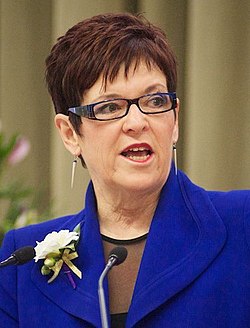 Jenny ShipleyDame Jennifer Mary Shipley DNZM PC (née RobsonAffiliated
 Jim BolgerJames Brendan Bolger ONZ PC (31 May 1935Affiliated
How the record is sourced and how the score is derived.
The score is formula-derived (Factrail formula v1, version 1.0.0), not an editorial verdict. Read the methodology.
By the Factrail desk · Method: how we source and score · Last reviewed
Dispute a fact on this pageNamed here, or represent someone who is? Request a right of reply.
People and organizations as listed in the Related section of this page; facts, drivers and the pages that name it as listed in the blocks here. Counts, not a rating.