
Pinelopi Koujianou Goldberg
Pinelopi (Penny) Koujianou Goldberg (born 1963) is a Greek-American economist who studies international trade, development economics…
- Facts0
- Drivers0
- Indicators0
Pinelopi (Penny) Koujianou Goldberg (born 1963) is a Greek-American economist who studies international trade, development economics…
Pinelopi (Penny) Koujianou Goldberg (born 1963) is a Greek-American economist who studies international trade, development economics, and industrial organization. She is the William Nordhaus Professor of Economics and Global Affairs at Yale University, with a joint appointment in the Department of Economics and the Jackson School of Global Affairs, and an affiliate of the university’s Economic Growth Center. She holds Greek and U.S. citizenship.
Goldberg was born in Athens and educated in Greece at the Deutsche Schule Athen, a German-language school, before studying economics at the University of Freiburg in Germany from 1981 to 1986. She holds a Diplom in economics from Freiburg and a Ph.D. in economics from Stanford University, completed in 1992. Her doctoral research examined the trade conflict between the United States and Japan through the automobile industry and strategic trade policy. She later held faculty posts at Columbia University and Princeton University as well as at Yale, which she joined in 2001.
From 2011 to 2016 she was editor of the American Economic Review, the research journal of the American Economic Association. In April 2018, while she held Yale’s Elihu Professorship of Economics, the World Bank Group appointed her chief economist; she served from November 2018 until March 2020 on public-service leave from Yale.
Her published work estimates how trade policy, exchange rates, and market structure affect prices, firm behavior, inequality, and poverty, including intellectual-property enforcement in developing countries. Later papers and commentary examine renewed protectionism, industrial policy, informal labor markets, and discrimination against women. She has been president of the Econometric Society and is president-elect of the American Economic Association for 2027. In 2019 she was elected to the National Academy of Sciences. She is also a member of the American Academy of Arts and Sciences and an international fellow of the British Academy.
Pinelopi (Penny) Koujianou Goldberg was born in Athens in 1963, the eldest of three daughters of Dionysios Koujianou, a civil engineer, and Niki Bouzaki, an architect. Neither parent spoke German. She has said they admired German technology—her father, in particular, German philosophers, composers, and engineers—and for that reason sent all three daughters to the German School of Athens (Deutsche Schule Athen), a bilingual school founded in 1896. A biographical note carried in the Greek press states that she completed primary school at the Moraitis School and secondary school, the gymnasium and lyceum, at the German School.
About half the subjects at the German School were taught in German and half in Greek, and she also learned French and English. She has described command of a foreign language, and contact with another culture, as especially important for someone growing up in a small country such as Greece. After the school's university-entrance qualification, she has said, she saw few prospects if she stayed in Greece and already expected her future to be abroad.
She nevertheless sat the national panhellenic entrance examinations. The Bodossaki Foundation's biography records that she was admitted in first place to the economics department of the National and Kapodistrian University of Athens and chose not to enroll. She accepted instead a five-year scholarship from the German Academic Exchange Service (DAAD), held from 1981 to 1986, for the study of economics in Germany.
Goldberg studied at the University of Freiburg from 1981 to 1986 and received a Diplom in economics in 1986. She has explained the choice of Freiburg im Breisgau in more than one way. In a 2024 interview with the university she said Freiburg's reputation in economics, its association with Friedrich Hayek, the setting, and family friends in the city made the decision straightforward. Hayek had been professor of economics there from 1962 to 1968 and returned to the city in 1977. In a DAAD portrait she said that economics curricula were then similar across German universities, so she "simply picked the most beautiful city."
She has called the DAAD award both the money that made study abroad possible and an opening onto "a whole new realm of thinking," including a network beyond her previous circle. As a student she already wanted to work at the World Bank, which she associated with understanding the world economy and assisting poorer countries. Greece, she has said, was not very poor in her youth but was poorer than it later became, and her original aim was to raise prosperity at home. An application for a World Bank internship was turned down because she did not have a doctorate. She has said that a reply advising her to apply again once she did stayed with her, and that this was when she first seriously considered an academic career.
German economics instruction at the time, she has recalled, pushed students to read original texts—Adam Smith, Karl Marx, and John Maynard Keynes—rather than to concentrate on the next textbook, grades, or a job, and it looked quite different from the more technical American training of the period. She lived in the student housing complex known as "StuSi" and on Eschholzstraße, studied in the library and in a study group whose conversations ran past the syllabus, and joined a theatre group for foreign students that traveled to avant-garde performances in Switzerland and in German cities, including Basel, Zurich, and Cologne. She has said that this education got her into several leading universities in the United States and made the graduate courses there comparatively easy, and that the habit of looking at politics and society, rather than only at technique, stayed with her.
Doctoral study in economics at Stanford University was supported in 1987–1988 by a Stanford University Fellowship and an Onassis Foundation Graduate Studies Fellowship. She has contrasted Freiburg, where she addressed instructors as "Herr Professor," with the informality of Stanford: at matriculation an administrator introduced her to "Ken," the Nobel laureate Kenneth Arrow, who had arrived wearing a bicycle helmet, and she has said she could not at first get out a complete sentence.
Her dissertation, accepted in 1992, was titled Imperfect Competition in International Markets: The Case of the U.S. Automobile Industry. As a Ph.D. student she worked on the trade conflict between the United States and Japan, using the two countries' automobile industries to study strategic trade policy, an episode she has since compared with later trade disputes. The project was supported by an Olin Foundation Doctoral Dissertation Fellowship in 1990–91. She also received a Stanford University Research Paper Award in 1989 and, from June to September 1989, was a summer intern in the research department of the International Monetary Fund. A closely related article, "Product Differentiation and Oligopoly in International Markets: The Case of the U.S. Automobile Industry," appeared in Econometrica in July 1995.
Goldberg joined the Princeton University faculty as an assistant professor of economics in 1992, the year she received her Ph.D. from Stanford University, and remained there through 1999. In 1999 she became a professor of economics at Columbia University, where she stayed until 2001. Her curriculum vitae lists graduate teaching in international trade, industrial organization, and applied econometrics, and undergraduate teaching in international trade, applied econometrics, and microeconomics.
Yale University hired her with tenure from Columbia in 2001. The Yale Daily News reported the appointment as the economics department’s first tenured woman; chair David Pearce described a long scarcity of mentors for women in the profession and treated the hire as a senior role model. She was professor of economics at Yale from 2001 to 2007. During that period she was a visiting scholar at the Federal Reserve Bank of New York. Princeton’s 2007 notice dated the affiliation from 2004; her curriculum vitae places it in 2006–07. By 2007 she was also a research associate of the National Bureau of Economic Research.
The Princeton Board of Trustees approved her return as professor of economics effective July 1, 2007. The Princeton Weekly Bulletin listed her fields as applied microeconomics, empirical international trade, and development; Yale later described the same work as applied microeconomics, international trade, and industrial organization. She was director of graduate studies in Princeton’s economics department from 2008 to 2010. A 2010 Yale Daily News account said the move put her closer to a home in New York City and in a department then particularly strong in international economics.
Yale brought her back in July 2010 as the William K. Lanman Jr. Professor of Economics, a chair she held through 2017. She told the Yale Daily News she was “here to stay.” The same report said she was one of three tenured women in the department, and that Yale economics had not granted tenure to a woman from its own junior faculty: the tenured women then on the faculty, including Goldberg, had been hired after receiving tenure elsewhere.
In 2017 Goldberg was named the Elihu Professor of Economics. Yale used that title in April 2018, when it announced that she would take public-service leave beginning in late November for an appointment at the World Bank Group. Department chair Dirk Bergemann said that, before the leave, she would teach introductory microeconomics to first-year students. The outside appointment ran from 2018 to 2020; she remained a Yale professor on leave and returned to regular faculty duties afterward.
The title later added global affairs. The Jackson School bulletin for 2022–23 lists her as Elihu Professor of Economics and Global Affairs. Her curriculum vitae carries the Elihu chair, in that longer style, through 2024.
In July 2022 Goldberg took a joint appointment in the Department of Economics and the Jackson School of Global Affairs. The school’s 2022–23 bulletin includes her on its faculty, and Yale’s economics department lists her as an affiliate of the Economic Growth Center.
The same curriculum vitae dates her move, in July 2024, to the William Nordhaus Professor of Economics and Global Affairs, the title Yale’s Faculty of Arts and Sciences used for her in 2025. The Jackson appointment has continued with that chair, and the department lists her fields as applied microeconomics, development economics, industrial organization, and international trade.
Goldberg's work on international trade combines empirical industrial organization—structural models of demand and oligopoly pricing that can support counterfactuals—with reduced-form studies of policy changes and production-side estimates of markups that do not require a demand system. The common question is who gains when prices, costs, and variety change.
In "Product Differentiation and Oligopoly in International Markets: The Case of the U.S. Automobile Industry" (Econometrica, 1995), Goldberg estimated a model of the United States automobile market. Demand was a discrete-choice model fit to Consumer Expenditure Survey microdata and aggregated with population weights; supply was a differentiated-products oligopoly whose prices satisfied multiproduct firms' first-order conditions. The estimates fed counterfactuals on the voluntary export restraint on cars from Japan and on exchange-rate pass-through into U.S. prices.
With Michael M. Knetter, she surveyed the wider evidence in "Goods Prices and Exchange Rates: What Have We Learned?" (Journal of Economic Literature, 1997). Import prices typically move by less than the exchange rate. Common-currency relative prices of similar goods shipped to different markets move with the exchange rate between those markets, which the survey reads as incomplete pass-through from third-degree price discrimination—pricing-to-market—rather than only from a common world price. Borders mattered beyond distance, for reasons not clearly identified, and price discrimination did not by itself imply substantial market power.
With Frank Verboven, Goldberg applied a multiproduct oligopoly model to European car prices from 1980 to 1993 ("The Evolution of Price Dispersion in the European Car Market," The Review of Economic Studies, 2001). Quality-adjusted prices differed persistently, with Italy and the United Kingdom the most expensive, and year-to-year moves tracked exchange rates because local-currency prices responded incompletely. The gaps were traced to demand elasticities and markups, costs, and import quotas: a preference for domestic brands and high Fiat markups in Italy; better-equipped cars and dealer discounts in the United Kingdom; and Japanese-car quotas in Italy, France, and the United Kingdom. About two-thirds of local-currency price inertia was attributed to a local component of marginal cost and one-third to markup adjustment, which requires that perceived demand elasticity rise with price.
A follow-up, "Market Integration and Convergence to the Law of One Price: Evidence from the European Car Market" (Journal of International Economics, 2005), found convergence toward the law of one price, with a half-life of relative-price shocks of about 1.3 to 1.6 years, a speed they hesitated to generalize beyond this market.
Later work uses India's 1991 trade liberalization, which cut tariffs sharply and unevenly across industries. With Amit K. Khandelwal, Nina Pavcnik, and Petia Topalova, Goldberg studied whether newly available imported inputs led domestic firms to make more products. In "Imported Intermediate Inputs and Domestic Product Growth: Evidence from India" (The Quarterly Journal of Economics, 2010), counting new imported varieties lowered the intermediate-goods import-price index by an additional 4.7 percent a year beyond price declines on varieties already imported. Lower input tariffs accounted, on average, for 31 percent of the new products domestic firms introduced between 1989 and 1997, an effect tied more to varieties not previously imported than to cheaper existing imports. The paper did not estimate dynamic productivity gains from the new products. Identification used early-reform tariff cuts not well explained by industry lobbying, to limit reverse causality from new domestic goods to new imports.
In "Multiproduct Firms and Product Turnover in the Developing World: Evidence from India" (The Review of Economics and Statistics, 2010), the same authors found that Indian multiproduct firms resembled U.S. firms in the cross-section but rarely dropped products, and that output-tariff cuts were not associated with that kind of rationalization, which they linked to industrial regulation.
"Prices, Markups, and Trade Reform" (Econometrica, 2016), with Jan De Loecker, Khandelwal, and Pavcnik, separated price changes into marginal costs and markups. Markups were inferred from cost minimization—the gap between a variable input's output elasticity and its revenue share—using quantities so productivity was not confounded with prices; marginal cost was price divided by the markup. Because the method does not assume demand or a mode of competition, the authors note that it cannot support counterfactuals. From 1989 to 1997, average output tariffs fell 62 percentage points and input tariffs 24. Factory-gate prices fell about 18 percent, while marginal costs fell about 31 percent, mostly from cheaper imported inputs. Markups rose about 13 percent, so cost savings were only partly passed through. Conditional on costs, lower output tariffs did reduce markups, especially where markups started high, but input tariffs dominated. Producers gained relative to consumers at least just after the reforms, though higher markups might later have financed new products.
With Shubham Chaudhuri and Panle Jia, Goldberg asked what product patents would imply where, before the World Trade Organization's Agreement on Trade-Related Aspects of Intellectual Property Rights, domestic firms could sell copies of drugs still patented elsewhere. "Estimating the Effects of Global Patent Protection in Pharmaceuticals: A Case Study of Quinolones in India" (American Economic Review, 2006) estimated demand and supply for fluoroquinolone antibiotics and simulated withdrawal of domestic product groups. With price regulation, withdrawing the four domestic groups implied an annual welfare loss on the order of $305 million, about half of 2000 sales in the whole systemic antibacterials segment. About $50 million was lost domestic profit, so most of the loss was consumer welfare, against foreign profit gains of about $19.6 million a year (about $53 million without price regulation). The revised working paper puts the total loss without regulation between about $144 million, if variety loss is transitional, and about $450 million. Losses were much smaller if only one domestic molecule was removed, because consumers treated domestic products as close substitutes. Much of the consumer loss was lost variety, tied to wider retail coverage by domestic firms. The exercise covers one subsegment, omits innovation gains, and could overstate a lasting variety loss if patent holders later expanded distribution or licensing.
The Alfred Marshall Lecture, "Intellectual Property Rights Protection in Developing Countries: The Case of Pharmaceuticals" (Journal of the European Economic Association, 2010), argued that higher prices versus more research was unlikely to be the main effect in poor countries. Price controls and low purchasing power limit price increases, and developing-country sales are small relative to development costs and rich-country sales, so they are unlikely to redirect research. The larger effect is access: low prices, amplified by reference pricing, may lead multinationals to delay or skip entry, and distribution may not reach rural buyers, which can justify short-run policies such as compulsory licensing unless patents bring local distribution or licensing. The quinolone results are treated as specific to India; other markets are discussed through cross-country launch studies rather than one welfare figure.
In a 2007 survey in the Journal of Economic Literature, Goldberg and Nina Pavcnik reviewed how globalization in the 1980s and 1990s coincided with rising economic inequality in developing countries. Trade barriers fell and trade, foreign direct investment, and exchange-rate exposure rose, while inequality measures generally increased—the opposite of the simple Heckscher–Ohlin model and Stolper–Samuelson theorem, which predicted gains for unskilled labor as the abundant factor.
The skill premium rose over those decades in the countries they tabulated. Returns to university versus primary education increased by 68 percent in Mexico (1987–1993), 16 percent in Colombia (1986–1998), and 13 percent in India (1987–1999); they rose by more than 20 percent in Argentina (1992–1998) and by about 10 percent among men in Brazil. In Chile the premium rose, fell, then rose again. Timing often matched reforms in Latin America and India, but tariff cuts came with other reforms, so before-and-after comparisons do not identify a trade effect.
Micro studies found little labor reallocation across broad industries, and wages often moved more than employment, consistent with limited mobility. Skilled-labor demand rose within industries: the largest cuts often hit previously protected, unskilled-intensive sectors; imported intermediates could be skill-intensive for the importer; capital inflows could complement skill; and competition or exports could induce skill-using technical change and quality upgrading. In Colombia, Orazio Attanasio, Goldberg, and Pavcnik tied the college premium mainly to skill-biased technical change that was stronger where tariffs fell more, and found industry wage premiums falling more in harder-hit, less-skilled sectors—channels that still did not fully explain wider inequality, so the net wage effect of the reforms may have been small. Mechanisms were country- and reform-specific, and most evidence concerned wages rather than consumption. The Unequal Effects of Globalization (2023, with Greg Larson; MIT Press), from the 2019 Ohlin Lectures, contrasts falling inequality between countries with uneven effects within them.
Goldberg and Pavcnik also asked whether liberalization raised poverty or the informal economy—jobs outside labor law. In the Journal of Development Economics (2003) they found no link between tariff cuts and informality in Brazil, and in Colombia a link only before a 1990 reform that cut hiring and firing costs; the pre-reform effect was small. Labor-market institutions, not trade policy alone, governed whether firms shifted into informal work. For urban Colombia from 1984 to 1995, poverty was concentrated among the unemployed and, among workers, the informal and those paid below the minimum wage, but tariff cuts did not reduce poverty through those margins or through industry of employment. General-equilibrium channels, including cheaper goods consumed by the poor, remained open.
With Rafael Dix-Carneiro, Costas Meghir, and Gabriel Ulyssea, Goldberg later modeled informality as imperfect enforcement of taxes and regulations, so smaller, less productive firms are less distorted than larger ones. Lower trade barriers then amplify gains from trade by reallocating activity toward more distorted firms. Informality still cushions unemployment after negative labor-demand shocks, but it can deepen real-income losses in downturns by worsening misallocation, and it changes how openness affects cross-firm wage gaps.
With Marie Hyland and Simeon Djankov, Goldberg used the World Bank Group Women, Business and the Law database—190 economies since 1970—to measure legal gaps in women’s work and entrepreneurship. In 2019 the average score was 75.2, about three-quarters of men’s rights in the index (74.4 population-weighted); high-income OECD economies averaged 94.7 and the Middle East and North Africa 49.6, with the largest gaps in pay and parenthood. More equal laws correlated with higher female labor-force participation and a smaller wage gap, but the 2020 American Economic Review: Insights paper treats women and the law as only one factor beside norms, and the correlations do not establish enforcement.
A 2024 Econometrica paper with Gaurav Chiplunkar quantified barriers facing women in business in India, including informal firms. Women’s participation costs were about twice men’s, and women owners faced a 10 to 20 percent higher cost of expanding by hiring; their advantage was hiring women, including within narrow industries and outside family firms. Removing excess barriers while keeping that advantage roughly doubled female participation, raised aggregate productivity about 3 percent, and raised real income about 43 percent, mainly by replacing lower-productivity men-owned firms; removing the hiring advantage as well still yielded most of the gains. The barriers are inferred wedges, often norms rather than statutes. Helping existing firms mattered more than entry, and raising participation without demand for women workers could cut women’s wages.
With Pablo D. Fajgelbaum, Patrick J. Kennedy, and Amit K. Khandelwal, Goldberg studied the 2018 United States tariff increases and retaliation in “The Return to Protectionism” (The Quarterly Journal of Economics, 2020). Targeted imports and exports fell sharply, and pre-duty import prices did not, so tariffs passed through fully to U.S. buyers. Losses to buyers of imports were $51 billion a year (0.27 percent of GDP); after revenue and producer gains, short-run real income fell $7.2 billion (0.04 percent of GDP). Protection favored sectors in politically competitive counties, while retaliation hurt tradable-sector workers in heavily Republican counties most. The estimates omit longer-run wages, uncertainty, and productivity.
A 2024 American Economic Review: Insights paper with those coauthors and Daria Taglioni followed the U.S.–China escalation, covering about $450 billion of trade. Many bystanders increased exports of taxed products to the rest of the world, not only to the United States, so the conflict created net export opportunities. Country-specific elasticities mattered more than prior specialization: downward-sloping suppliers whose goods substituted for U.S. or Chinese varieties gained more than those whose goods complemented them.
With Tristan Reed, writing in the Spring 2023 Brookings Papers on Economic Activity, Goldberg found that trade, capital, and labor flows slowed after 2008–09 but did not reverse, and that trade rebounded in 2021 after a brief 2020 drop. Policy had still turned, after concern over low-wage imports and Russia’s invasion of Ukraine, toward security, “friendshoring,” and export curbs on China’s technology, with likely costs for growth, innovation, and poverty reduction.
On subsidies, Goldberg, Réka Juhász, Nathan J. Lane, Giulia Lo Forte, and Jeff Thurk measured industrial policy in semiconductors. The 2024 working paper, revised in 2026, finds that support mattered to this dual-use semiconductor industry, that subsidies were the main tool, and that China’s subsidies were not exceptional once market size was taken into account.
Pinelopi Koujianou Goldberg’s formal role at the American Economic Review began as a co-editor. On April 20, 2007, the Executive Committee of the American Economic Association, acting on a recommendation from editor Robert A. Moffitt, appointed her co-editor for a three-year term expiring June 30, 2010, in succession to Judith Chevalier. The journal’s list of past editors records that service as 2007–2010 and a later co-editor term in 2017–2018, after she had left the top job.
In the summer of 2009 Moffitt asked to be replaced when his second term ended in December 2010. Association president Angus Deaton appointed a search committee chaired by Anne Case. It screened for scholarship, editorial experience, efficiency, energy, ethical conduct, openness to different methodologies, and geographic diversity. On January 2, 2010, in Atlanta, the Executive Committee voted to appoint Goldberg editor for a three-year term ending in December 2013. She took office in January 2011. The roster of editors from Davis R. Dewey in 1911 through Moffitt lists only men before her; the Yale Daily News reported in September 2010 that she was the first woman named editor-in-chief. Appointment minutes use the title “Editor”; an Association newsletter later called her editor-in-chief, the wording the Review also used for her successor.
In January 2013 the Executive Committee reappointed her to a second three-year term. The past-editors list records her as editor for 2011–2016. In May 2016 the Executive Committee named Esther Duflo editor beginning in January 2017 and thanked Goldberg as she left; a Review notice called Duflo incoming editor-in-chief effective January 1, 2017.
Before taking office she told the Yale Daily News that she had been asked for her views on running the journal and hoped it would keep publishing work that used different perspectives and methods. She expected to go on teaching at Yale University. Department chair Benjamin Polak said the department did not grant leave for editing, so she would keep a full teaching load, with some committee work cut back.
In January 2013 she reported that submissions were stable in 2012 after an 11 percent rise in 2011, when the Review went from four regular issues a year to six. Eight co-editors kept turnaround short: most manuscripts had a first decision within three months, and few took longer than six. The journal published 130 papers in 2012, up 7 percent from 2011, and the wait from acceptance to publication fell from 61 weeks to 54. A rule requiring authors to disclose potential financial conflicts at submission took effect on July 1, 2012; she called the rollout smooth.
Writing in 2015 for the Committee on the Status of Women in the Economics Profession, she tied those changes to standards the Association was applying across its journals. From 2011 the Review used single-blind review—referees stayed anonymous, but authors’ names were shown—because web search had undermined double-blind anonymity and because disclosure statements went to referees with the paper. Co-editors did not handle work by colleagues, advisers, students, or current or recent co-authors; if the best-qualified editor was conflicted, more than one co-editor could be involved. She wrote that she had not seen conflict-of-interest problems at the Review since the 2012 rule. Data and program files had been required since 2004, with an editorial assistant checking that results could be reproduced, but private and restricted data limited that policy. Her 2014 editor’s report, she wrote, found that about 46 percent of 2013 papers using data received some exemption.
On April 26, 2018, World Bank Group President Jim Yong Kim named Pinelopi Koujianou Goldberg chief economist. She was the Elihu Professor of Economics at Yale University and was to begin public-service leave in late November. Kim’s announcement said she would guide the Bank’s research agenda and development strategy, strengthen its ties to academic research, and help shape work on sustainable growth, shared prosperity, and ending extreme poverty. She took up the post in November 2018.
Her predecessor, Paul Romer, had resigned on January 24, 2018, after about 15 months, and returned to New York University after publicly questioning Chile’s place in the Bank’s Doing Business rankings. That earlier dispute is context for a short-tenure pattern, not a controversy about Goldberg.
The main flagship of her tenure was the World Development Report 2020, Trading for Development in the Age of Global Value Chains. The report states that Goldberg, as chief economist, provided overall guidance, and that co-directors Caroline Freund and Aaditya Mattoo of the Bank and Pol Antràs of Harvard University led the team, with Daria Taglioni as task team leader.
Goldberg signed the preface, which described trade and global value chains as being at an inflection point, argued that trade still mattered for development but required rules and cooperation among governments, and offered the report as a policy roadmap. In a February 2020 staff email, President David Malpass credited her with leading the Bank’s first trade-focused development report since the late 1980s.
A February 2019 paper, “Measuring Human Capital,” written with Noam Angrist, Simeon Djankov, and Harry A. Patrinos, built comparable learning scores for 164 countries and territories—about 98 percent of the world’s population—from 2000 to 2017. Enrollment had risen while learning had largely stagnated; girls outperformed boys on measured learning; and human capital accounted for up to about a third of cross-country income differences. A 2021 Nature version put that share between about a fifth and a half.
In December 2019 she co-authored “Gendered Laws” with Marie Hyland and Djankov, using the Bank’s Women, Business and the Law database for 190 economies over five decades. The paper found large, persistent legal gaps, especially on equal pay and parenthood; positive associations between more equal laws and several labor-market outcomes; and a small but increasing causal effect of more equal laws on female labor-force participation.
In early February 2020 Goldberg said she would leave effective March 1, after roughly 15 months, and return to Yale. An internal email reported by Reuters called the choice difficult and said the time was right to resume her university work. Malpass wrote that he valued her “intellectual rigor and curiosity” and her effort to connect the Bank to academic research, and he named Aart Kraay, director of research in the Development Research Group, acting chief economist during a search for a successor.
Contemporaneous coverage linked the departure to delays around “Elite Capture of Foreign Aid: Evidence from Offshore Bank Accounts,” by Jørgen Juel Andersen, Niels Johannesen, and Bank economist Bob Rijkers. Issued in February 2020 as Policy Research Working Paper 9150, and published in 2022 in the Journal of Political Economy, the study matched quarterly World Bank disbursements with Bank for International Settlements data on foreign deposits. For 1990–2010 the main sample was the 22 countries whose annual World Bank aid averaged at least 2 percent of GDP. In a quarter when aid equaled 1 percent of GDP, deposits in secrecy jurisdictions rose by about 3.4 percent relative to a country receiving no aid, with no similar rise in non-haven centers. Implied leakage was about 7.5 percent at the sample mean, and about 5 percent of aggregate disbursements when countries were weighted by their historical aid shares—a lower bound, the authors wrote, because only offshore accounts were counted. They could not reject zero leakage for 46 countries above a 1 percent-of-GDP threshold, and estimated about 15 percent for seven countries above 3 percent. Estimates survived controls for conflict, disasters, and crises, and an instrument based on predetermined commitments. The authors called the pattern consistent with capture in the most aid-dependent countries, while noting other interpretations and that deposits cannot be tied to named account holders.
Publication and motive are not the same claim. The Economist reported on February 13, 2020, that the paper had cleared an internal research review in November 2019 but that, according to informed sources, senior officials blocked release; the Bank, in that account, said no final decision had been taken and that legitimate concerns remained. Vox reported that Goldberg declined to comment and did not publicly cite the paper as her reason for leaving. On February 18 Johannesen posted the paper himself, and the Bank published the working paper within hours, stating that it supported “independent, relevant, peer-reviewed research, including on the important topic of illicit financial flows.” The Economist treated the pairing of a delayed paper and her exit as a correlation, not a demonstrated cause.
A separate change in the chain of command was also reported. The Bretton Woods Project wrote that the chief economist would report to Managing Director Mari Elka Pangestu, appointed in January 2020, rather than directly to the president, and—citing former chief economist Kaushik Basu—described the post as “eroded.” It presented any link to Goldberg’s departure as speculation, not as her account.
After the March 1 departure, the Yale Daily News quoted her as saying that disagreements should be resolved inside an institution, not “by spilling the beans to the press,” but that “constant disagreement and constant friction” was a reason to leave. She said she “did not want to continue legitimizing, through my presence, decisions and directions that I fundamentally disagree with,” while still supporting the Bank’s poverty-reduction mission, which she believed she could serve better from outside. She called a report on international cooperation in trade, and work on legal discrimination against women, her proudest accomplishments. She did not name the offshore-aid paper, and the Bank did not comment to the News.
Goldberg was elected a fellow of the Econometric Society in 2004. In the Society’s 2015 election she was chosen for its Council from North America, and a 2016 vote made her an at-large member of the Executive Committee. She left that at-large seat on 1 January 2019. The 2018 election named her second vice-president. In the 2019 election she became first vice-president, with the Society stating that she would presumably be president in 2021, and the 2020 election named her president for 2021. The Society’s list of past presidents records the 2021 term.
Her presidential address, with Tristan Reed, was published in Econometrica in November 2023 as “Demand-Side Constraints in Development: The Role of Market Size, Trade, and (In)Equality.” The paper identifies development with sustained poverty reduction—a continuing decline, over five years, in the share of people living below $1.90 a day in 2011 purchasing-power-parity dollars—and links that outcome to firms’ adoption of increasing-returns technologies that require a large enough market. Domestic market size is measured from the income distribution, and international market size from binding provisions in the General Agreement on Tariffs and Trade, the World Trade Organization, and 279 preferential trade agreements. The Eastern Economic Association, a separate organization, lists her as its president for 2017.
She was a vice president of the American Economic Association in 2018, a one-year elective office. An Association note in May 2018 referred to her as vice president when her appointment as chief economist of the World Bank Group was announced. In the 2026 election of officers for 2027, the Association named her president-elect, with Stefano DellaVigna and Serena Ng as vice presidents. Under the bylaws, the president-elect succeeds to the presidency the following year, which would place a presidential term in 2028; the office announced for 2027 is president-elect, not president. Yale University’s economics department reported the result on 12 October 2026. In the candidate statement published with the results, she discussed artificial intelligence and the evaluation of scholarship, support for younger researchers, and keeping the profession open to varied methods and perspectives.
Goldberg is a research associate of the National Bureau of Economic Research in its International Trade and Investment and Development Economics programs. The NBER profile also lists affiliations with the Centre for Economic Policy Research, the Institute for Fiscal Studies in London, and CESifo. On the curriculum vitae those ties are a CEPR distinguished fellowship from 2019, an IFS research fellowship from 2019, and a CESifo research-network fellowship from 2024.
She is a fellow of the Bureau for Research and Economic Analysis of Development. BREAD’s current public roster does not list her among the officers or the executive committee, and it does not mark her as a member of the board; the curriculum vitae records board service from 2010 to 2020 and senior-fellow status from 2005 to 2010. She is an affiliate of Yale’s Economic Growth Center.
In March 2020 the Peterson Institute for International Economics announced that she would join on 1 April 2020 as a nonresident senior fellow, after her term as World Bank chief economist. The Institute now lists her with former research staff and describes her as having been a nonresident senior fellow. Her curriculum vitae dates that affiliation from 2020 to 2025.
The National Academy of Sciences elected Goldberg in 2019, in a class the academy announced on 30 April as 100 new members and 25 foreign associates. Yale University identified her then as the Elihu Professor of Economics and as chief economist of the World Bank Group, on public-service leave from Yale. The American Academy of Arts and Sciences elected her in 2014, when she was the William K. Lanman Jr. Professor of Economics, as one of eight Yale faculty in a class of 204 new members. In 2025 the British Academy elected her an international fellow, in a year in which it chose 30 international fellows. In 2024 the Center for Economic Studies at Ludwig Maximilian University of Munich named her Distinguished CES Fellow; the award was conferred in Munich on 19 November at the CES Munich Lectures in Economics.
Pinelopi Koujianou Goldberg speaks at the podium during the Bodossaki Foundation Excellence Award 2026 ceremony.
The Bodossaki Foundation’s 2026 Excellence Award in the social sciences went to Goldberg, a biennial prize of €100,000 for Greek scientists. President Konstantinos Tasoulas presented it on 25 June 2026 at Megaron, the Athens Concert Hall. The same foundation’s distinguished young scientist awards list her 2003 prize in economic science, when she was a professor of economics at Yale. In April 2023 the senate of the University of Freiburg, where she had studied from 1981 to 1986, awarded her the degree of Doktor rerum politicarum honoris causa from the Faculty of Economics and Behavioral Sciences.
Earlier support came while she was at Princeton University. The Alfred P. Sloan Foundation’s 1998 annual report records a Sloan Research Fellowship in economics for Pinelopi K. Goldberg at Princeton, among 100 fellowships of $35,000 each over two years. In 2010 Princeton announced that she had received a Guggenheim Fellowship from the John Simon Guggenheim Memorial Foundation for a project on estimating the effects of trade reforms on productivity and growth with firm-level data. The Toulouse School of Economics awarded her the 2025 Jean-Jacques Laffont Prize, given since 2005 for research combining theory and empirical work, and lists her prize lecture as “Quality Upgrading in the Colombian Coffee Sector.” On 5 November 2025 the WZB Berlin Social Science Center presented her the A.SK Social Science Award in Berlin, a €75,000 prize, for research on the effects of trade policy on prosperity and inequality.
The Stockholm School of Economics invites an economist each year to give the Ohlin Lectures, named for Bertil Ohlin, and publishes the lectures with the MIT Press. Goldberg gave the 2019 lecture, titled “The Unequal Effects of Globalization.” The MIT Press issued the related monograph The Unequal Effects of Globalization, by Goldberg and Greg Larson, on 15 August 2023. Adapted from that lecture, it reviews links among trade, global poverty, regional inequality, labor markets, and firm profits, and discusses place-based policy and international cooperation. On 21 April 2022 she delivered Princeton’s 69th Frank D. Graham Memorial Lecture, “Informality, Trade, and Development.” Her 2024 Munich Lectures, given as Distinguished CES Fellow, were titled “The Changing Nature of Globalization and its Implications for Development.”
Since 2019 she has written for Project Syndicate, which produces commentaries and supplies them to news organizations; its membership includes more than 500 outlets in 156 countries, more than half of which receive the material free or at subsidized rates. By November 2026 the outlet’s columnist page listed 43 of her commentaries. The pieces posted there take up trade policy and tariffs, economic relations between the United States and China, and rules affecting international students and skilled workers.
Ranked by shared high-impact facts, then explicit ties, then shared drivers.
 David MalpassDavid Robert Malpass (born March 8Affiliated
 Angus DeatonSir Angus Deaton (born 1945) is a British-American…Affiliated
 William NordhausWilliam DAffiliated
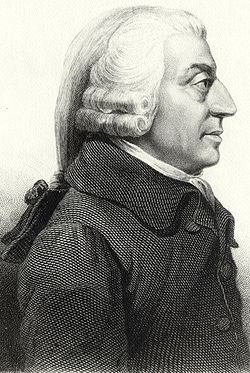 Adam SmithGlasgow professor whose TMSAffiliated
 Karl MarxPolitical economist and Communist League theorist (Q9061Affiliated
 Paul RomerPaul Michael Romer (born November 6Affiliated
How the record is sourced and how the score is derived.
The score is formula-derived (Factrail formula v1, version 1.0.0), not an editorial verdict. Read the methodology.
By the Factrail desk · Method: how we source and score · Last reviewed
Dispute a fact on this pageNamed here, or represent someone who is? Request a right of reply.
People and organizations as listed in the Related section of this page; facts, drivers and the pages that name it as listed in the blocks here. Counts, not a rating.