
Reza Asghari
Reza Asghari (born 1 April 1961 in Isfahan, Iran) is an Iranian-born German economist, university professor and politician…
- Facts0
- Drivers0
- Indicators0
Reza Asghari (born 1 April 1961 in Isfahan, Iran) is an Iranian-born German economist, university professor and politician…
Reza Asghari (born 1 April 1961 in Isfahan, Iran) is an Iranian-born German economist, university professor and politician of the Christian Democratic Union (CDU). He has been a member of the Bundestag since 10 June 2025, when the Lower Saxony state returning officer determined that he entered on the CDU state list as the successor to Henning Otte. The Bundestag lists his occupation as professor, records the mandate as coming from the Lower Saxony list, and notes his candidacy in constituency 49, Salzgitter–Wolfenbüttel, where his constituency office is located. His parliamentary biography states that he is married and has two adult children. The returning officer identified him as a resident of Salzgitter.
Asghari grew up in modest circumstances in Isfahan while Iran was still a monarchy, and he has said that as a young man he was drawn to communist ideas of work and public welfare. In June 1979 he passed the Abitur at the gymnasium of the University of Isfahan, and in October he began civil engineering at the Technical University of Isfahan. In June 1980 the universities were closed during the Cultural Revolution ordered by Ayatollah Ruhollah Khomeini, and he was expelled for political reasons. He then worked as a private tutor in Isfahan until 1982. The same biography dates his arrest by the Revolutionary Guards to August 1983 and his release from political detention to March 1986. In a March 2026 interview he described being held blindfolded for 27 days in a prison courtyard because the cells were full, and being questioned under violence about names, contacts and books.
Called up while Iran was at war with Iraq, he has said he decided not to report for military service and left the country on a passport in a false name, travelling through Turkey and East Germany. He arrived in Germany in August 1987 and was placed in an asylum centre in Salzgitter. In June 1988 he was recognised as a political refugee under Article 16 of the Basic Law. From 1989 to 1994 he studied business informatics at the Technical University of Braunschweig and graduated as a Diplom-Wirtschaftsinformatiker. Between 1994 and 1997 he completed a doctorate (Dr. rer. pol.) in development and growth economics at the university's Institute of Economics. The dissertation appeared in 1998 with Peter Lang as «Iranian Disease» und «Institutional Gap», on the oil sector and the Islamisation of institutions in the Iranian economy.
From 1998 to 2000 he worked as an e-business consultant. In September 2000 he was appointed professor of business administration, internet economics and e-business at the FH Braunschweig/Wolfenbüttel, now Ostfalia University of Applied Sciences. He became a German citizen in 2000. In June 2009 he took up a joint professorship in entrepreneurship at TU Braunschweig and Ostfalia, retitled in 2017 as High-Tech Innovation and Entrepreneurship, and since 2017 he has directed the two institutions' Entrepreneurship Hub. After entering parliament he has continued to teach at TU Braunschweig, with the side income published on his Bundestag page.
At the federal election of 23 February 2025 he received 28.3 percent of the first votes in Salzgitter–Wolfenbüttel (44,809 votes), behind Dunja Kreiser of the Social Democratic Party of Germany on 30.6 percent (48,410). Turnout in the constituency was 81.7 percent of 195,221 eligible voters. Otte, elected in Celle–Uelzen, was chosen as Parliamentary Commissioner for the Armed Forces on 21 May 2025 and gave up his seat at the end of 5 June 2025. In the 21st Bundestag Asghari is a full member of the Committee on the Environment, Climate Action, Nature Conservation and Nuclear Safety and of the Committee on Research, Technology, Space and Technology Assessment. In a March 2026 interview for the Bundestag weekly Das Parlament he said he was glad that Israel and the United States were acting militarily against the Iranian government, which he accused of killing more than 30,000 peaceful demonstrators, and he described Crown Prince Reza Pahlavi as a transitional figure. The Neue Zürcher Zeitung quoted him as saying that candlelight vigils would not impress Iran's clerical rulers.
Reza Asghari was born on 1 April 1961 in Isfahan, Iran, according to the biography published by the German Bundestag, which notes editorially that members' life histories rest on their own statements. A March 2026 Neue Zürcher Zeitung profile added that he grew up in modest circumstances while Mohammad Reza Pahlavi still ruled, and that his parents were illiterate. He told the paper that as a youth he had dreamed of communism—work and prosperity for all, and free health care—and that this "sounded like paradise." The profile says that late in the 1970s he joined the protests that overthrew the monarchy, hoping for a freer life, and that the hope collapsed once clerical rulers took power and had thousands executed. In a February 2026 Focus interview he said he had taken part in the Iranian Revolution at the end of the 1970s as a 17-year-old pupil and soon judged the new order "a hundred times worse" than the shah's system. The Bundestag entry records the Abitur in June 1979 at the gymnasium of the University of Isfahan.
In October 1979, that biography states, he began a civil-engineering course at the Technical University of Isfahan, the Isfahan University of Technology. It dates to June 1980 the closure of every Iranian university in the course of the Cultural Revolution in Iran, which the entry describes as ordered by Ayatollah Ruhollah Khomeini, and says Asghari was then struck from the register for political reasons. The Encyclopaedia Iranica records that a little more than a year after the revolution the government shut the universities and appointed a Headquarters of the Cultural Revolution to reshape higher education around "Islamic values," with large faculty purges. The BBC World Service states that in the spring and summer of 1980 Islamic hardliners closed the universities to drive out secular and moderate groups, and that many students and lecturers were not allowed back when they reopened more than two years later. From 1980 to 1982, the Bundestag text says, he worked as a private tutor in Isfahan. Focus quoted him passing directly from that expulsion to arrest, omitting the interval his parliamentary biography places before detention.
The Bundestag biography states that the Islamic Revolutionary Guard Corps arrested him in August 1983 and that he was released from political custody in March 1986. Interviews supply circumstances the official entry does not. He told Focus that he spent more than two and a half years in Revolutionary Guard prisons without a lawyer, and that for almost a month his captors kept him blindfolded; asked whether he had been tortured, he said yes, and that interrogations occurred in between. The Neue Zürcher Zeitung profile, based on his account, describes 27 days blindfolded in a corner of a prison yard because the cells were full—a figure he said he still remembered because he had counted the days—and repeated questioning in which force was used to obtain names, contacts and the books he had read. Asked what went through his mind, he told the paper only, "That the interrogator would not come back"; the profile called the place one of the regime's torture prisons. In February 2026 the Braunschweiger Zeitung reported that he spoke of torture, abduction and fear in a Revolutionary Guard prison in the 1980s, and the Süddeutsche Zeitung headlined a profile by Daniel Brössler on time in an Iranian torture prison. A January 2020 article in the Braunschweiger Zeitung had already stated that he had been held in Iranian custody. After the March 1986 release, the Neue Zürcher Zeitung reported, he was called up during the Iran–Iraq War, which he understood as a way of sending regime opponents to the front.
In August 1987 Reza Asghari left Iran and arrived in Germany. He later told the Neue Zürcher Zeitung that he had fabricated documents and stamps, obtained a passport under a false name, and travelled through Turkey and the German Democratic Republic, and that he still kept the passport. In a July 2015 interview he described the route as running through Turkey and East Berlin, and said that an older brother was already living in Hanover. He gave as his reasons the danger of conscription during the Iran–Iraq War and the closure of the universities in the Cultural Revolution in Iran.
The Neue Zürcher Zeitung reported that in the summer of 1987 he was housed in an asylum accommodation in Salzgitter. He told regionalHeute.de that he was first registered at the central reception office for refugees in Braunschweig and then assigned to Salzgitter. Under the residence restriction then applied to asylum seekers, he said, being found outside the assigned district could bring a fine of 40 Deutsche Mark, while the support he lived on was 300 Mark a month.
His Bundestag biography, which the parliament notes is based on members’ own statements, records recognition in June 1988 as a political refugee under Article 16 of the Basic Law. Until the 1993 asylum compromise, that constitutional right of asylum consisted of the single sentence “Politisch Verfolgte genießen Asylrecht.” A constitutional amendment that year repealed Article 16(2), sentence 2, and inserted Article 16a, which retained the sentence but restricted who could invoke it.
State integration courses of the later type did not yet exist, and he described learning the language largely by himself. In Salzgitter, he said, the course he could take was a Volkshochschule class of three hours a week, supplemented by private study; an intensive course, available only in Braunschweig, cost 400 Mark. The Bundestag biography lists, from November 1988 to February 1989, a German course in Hanover of the Otto Benecke Stiftung, rendered on that page as “Otte-Benecke-Stiftung.” The organization is the Otto Benecke Stiftung e.V., a Bonn association founded in 1965 that has provided preparatory language teaching and the Garantiefonds Hochschule for young migrants and people granted protection.
He has said that his Iranian school-leaving certificate was not recognized in Germany. After an entrance examination he attended the Studienkolleg in Hanover and took the German Reifeprüfung there before starting a degree. From 1989 to 1994 he studied business informatics (Wirtschaftsinformatik) at the Technische Universität Braunschweig and graduated as a Diplom-Wirtschaftsinformatiker. He later said the first semesters were difficult because subjects such as civil law required specialized German, that mathematics was easier to follow across languages, and that the degree was awarded mit sehr gut. He has also said that he received social assistance after arrival and BAföG during his studies.
From 1994 to 1997 he completed a doctorate at the Institute of Economics (Institut für Wirtschaftswissenschaften) of TU Braunschweig, in its economics section, in development economics and growth economics, and received the degree Dr. rer. pol. The dissertation was published in 1998 by Peter Lang as «Iranian Disease» und «Institutional Gap»: Zur Bedeutung des Erdölsektors und der Islamisierung von Institutionen für die iranische Volkswirtschaft, volume 2331 of the Europäische Hochschulschriften (series V), a German-language book of 140 pages. From 1998 to 2000, before his appointment to a professorship, the Bundestag biography records work in business as an e-business consultant.
In September 2000 Reza Asghari was appointed professor of business administration, internet economics and e-business at the Fachhochschule Braunschweig/Wolfenbüttel, later renamed Ostfalia Hochschule für angewandte Wissenschaften. A March 2005 notice from the Fachhochschule already described him in that post, as managing director of its Institut für E-Business in Wolfenbüttel, and as teaching in the law department; it also named him editor of E-Government in der Praxis, a guide to economic, technical and legal questions in digital administration. His Bundestag biography, which the parliament states is drawn from members’ own information, summarises 2000–2009 as teaching, research and knowledge transfer through pilot projects in e-business and e-government with small and medium-sized firms and municipalities.
He remains on the Ostfalia staff as a co-opted member of the Faculty of Law, listed under Professur für High-Tech Innovation & Entrepreneurship, with an office at Am Exer 2d in Wolfenbüttel.
A cooperation agreement of 30 August 2007 between Ostfalia and the Technische Universität Braunschweig provided for a joint endowed chair, a Stiftungslehrstuhl für Entrepreneurship, with regional funders, and the Entrepreneurship Hub records Asghari’s appointment to that chair on 1 March 2009. His Bundestag biography dates the joint professorship to June 2009. By September 2009 an Ostfalia release called him head of the endowed chair of both institutions and of a new Institut für Entrepreneurship in Wolfenbüttel, whose idea incubator offered students, graduates and research staff up to six months of free workspace to develop a business idea and a business plan. The endowed post was made permanent in 2014. In the Bundestag biography he dates a 2017 redenomination of the TU Braunschweig chair as High-Tech Innovation & Entrepreneurship. The TU places the Entrepreneurship Hub among the institutes of its Faculty of Mechanical Engineering. The biography lists his research emphases as entrepreneurship ecosystems, knowledge commercialisation, innovation and entrepreneurship mindsets, universities’ third mission, business-model innovation and entrepreneurship governance. His direction of federally funded EXIST start-up programmes at the two universities is treated with his other entrepreneurship initiatives.
After he entered the Bundestag on 10 June 2025, the chamber’s biography still gave his occupation as professor. It records a right to return to the university-teacher post at the TU Braunschweig and a paid activity alongside the mandate in that role, with published monthly gross pay of €1,417.00 until November 2025 and €1,774.14 from December 2025.
Until 2018 the joint work was styled the Entrepreneurship Center at Ostfalia and the Lehrstuhl für Entrepreneurship at the TU. The hub’s account says the activity was reconstituted in March 2018 as an institute of the TU Braunschweig and that in April 2018 the center and the chair were combined under the name Entrepreneurship Hub; the Bundestag biography dates his direction of the joint hub from 2017.
The Wolfenbütteler Schaufenster reported the public opening in late July 2018 and quoted Asghari as head of the hub, one institution with sites in Braunschweig and Wolfenbüttel. The TU page names him as head and gives the addresses Rebenring 33 in Braunschweig and Am Exer 2d in Wolfenbüttel. It says the teaching, learning and research programme covers the founding of innovative, technology-based firms and is aimed at students, doctoral researchers and academic staff of both institutions, from introductory “schools” and a master’s specialisation to theses and doctoral workshops in high technology. The stated aim is to present entrepreneurship as a career path oriented toward large societal problems. A regular lecture, Technology Entrepreneurship, is an introduction in which student teams develop a business idea and set it out with the Business Model Canvas.
Asghari’s dissertation appeared in 1998 from Peter Lang, under the author name M. Reza Asghari, as «Iranian Disease» und «Institutional Gap»: Zur Bedeutung des Erdölsektors und der Islamisierung von Institutionen für die iranische Volkswirtschaft. The German National Library catalogues it as a 139-page paperback, ISBN 978-3-631-32423-3, issued in Frankfurt am Main, Berlin, Bern, New York, Paris and Vienna as volume 2331 of Europäische Hochschulschriften, Reihe 5 (Volks- und Betriebswirtschaft), and as the book form of a 1997 dissertation at the Technische Universität Braunschweig. His Bundestag biography, which the parliament says is based on members’ own statements, dates the doctorate (Dr. rer. pol.) to 1994–1997 at the university’s Institut für Wirtschaftswissenschaften, in development and growth economics.
The publisher’s German summary, also stored by the national library as the blurb, says the oil-export boom permanently changed the structure of the economy of Iran. A state strategy of import substitution intensified industrialization aimed at the domestic market; the industry that resulted was highly capital-intensive and dependent on foreign exchange, with little linkage among the new industries, low competitiveness, and a complicated system of protection against foreign rivals. Since the Islamic Revolution, the same account continues, changes in the state, the economic order and property rights strongly affected development. Institutional economics is used to analyse those “meta-economic” shifts. The state apparatus is described as standing among several political institutions, which sharply limits what it can do. Using the economic programme of Akbar Hashemi Rafsanjani (Rafsandschani in the blurb), the summary concludes that deregulation and freeing market forces do not automatically produce development; institutional conditions have to support market mechanisms if development is to be steady.
The same biography lists later research focuses as entrepreneurship ecosystems, knowledge commercialisation (Wissenskommerzialisierung), an innovation or entrepreneurship mindset, the third mission of higher-education institutions, business-model innovation (Geschäftsmodellinnovation) and entrepreneurship governance. The parliament presents that list as the member’s own information.
National-library records from his professorship in business administration, internet economics and e-business at the FH Braunschweig/Wolfenbüttel, later Ostfalia, include two books under his name: the edited e-government volume E-Government in der Praxis: Leitfaden für Politik und Verwaltung (Software- und Support-Verlag, Frankfurt am Main, 2005, ISBN 978-3-935042-53-6) and E-Business schnell+kompakt (entwickler press, Unterhaching, 2007, ISBN 978-3-939084-15-0).
Publisher records document later papers on several of those themes. With Britta Kokemper, “The Impact of Entrepreneurship Governance and Institutional Frameworks on Knowledge-Based Spin-Offs” appeared in the 2018 Springer volume Technology Entrepreneurship (pp. 225–240). Its abstract discusses institutional arrangements for academic spin-offs, scientific results left unused as intellectual property, the entrepreneurial university, and a “holistic Entrepreneurship Governance” from research to a marketable product. “Political Entrepreneurship,” in the 2018 Handbuch Entrepreneurship (Springer Gabler, pp. 165–180), treats creative destruction as a process inside political institutions and analyses entrepreneurship’s effect on the political system in evolutionary-economic terms. With Ricarda Schlimbach, “Das Digital Canvas: Ein Instrument zur Konzeption digitaler Geschäftsmodelle” (HMD Praxis der Wirtschaftsinformatik 57, no. 4, 2020, pp. 866–878) sets out a nine-block tool for digital business models, presented as an alternative to the generic Business Model Canvas. With Matthias Liedtke and Thomas Spengler, “Fostering Entrepreneurial Ecosystems and the Choice of Location for New Companies in Rural Areas – the Case of Germany” (Journal of Small Business Strategy 31, no. 4, 2021, pp. 76–87) uses German Startup Monitor 2019 data on where founders locate firms and on differences between urban and rural startup ecosystems in Germany. With Bijan Khosrawi-Rad and Schlimbach, “Growth Hacking – Der Schlüssel zu beschleunigtem Wachstum für Startups?” (HMD 60, no. 3, 2023, pp. 612–627; online 2022) reports nine expert interviews on low-cost growth methods for resource-limited startups. These are works verified in library and publisher records, not a full bibliography.
EXIST, the start-up programme of the Federal Ministry for Economic Affairs and Energy, funds students, graduates, researchers and higher-education institutions that turn scientific work into companies. In the July 2011 round “EXIST-Gründungskultur – Die Gründerhochschule” (EXIST IV), Ostfalia Hochschule für angewandte Wissenschaften was one of ten winners from 83 applicants, with the Technische Universität Braunschweig as partner; State Secretary Bernhard Heitzer made the award in Berlin on 6 July. TU Braunschweig said about €46 million was set aside over seven years and that its own share would exceed half a million euros over three years; Ostfalia spoke only of several million euros. Fraunhofer ISI later found Ostfalia was one of only three universities of applied sciences with substantial project-phase funding, and that pledged EXIST money in phases I to IV was €1 million to under €2 million for each of the two institutions.
The entry was the master plan “Campus Entrepreneurship”, prepared under Reza Asghari, then head of the Entrepreneurship Center and holder of the joint professorship. It was to expose students to business formation at least once, widen teaching and coaching, and add flexible finance and incubator space. In May 2014 the ministry granted a further €1 million for two years, matched by the universities. That release, which called the 2011 award a two-year grant, said 34 projects at TU Braunschweig and 46 at Ostfalia had used EXIST support in the previous year. Asghari’s Bundestag biography, drawn from members’ own statements, dates his direction of Campus Entrepreneurship to 2012–2017.
In December 2019 the pair won EXIST-Potentiale, in the line “International überzeugen”, with “International TechKnowledgy Hub”: €2 million for the joint application, with Lower Saxony paying the required 10 percent own share. Of 220 applicants, 142 institutions were funded, eleven in Lower Saxony, with about €150 million over four years. Asghari, named project leader at the joint Entrepreneurship Hub, described the aim as international high-tech start-ups in mobility and sustainability that would settle in the region, through agreements continuing research and teaching links in China, India, Singapore and Finland. His biography calls the 2020–2024 project EXIST V “International Entrepreneurship” and says he has led the Entrepreneurship Hub since 2017.
On 10 July 2013 Ostfalia announced Academic Ventures GmbH & Co. The Mast family held 54 percent and Ostfalia 46 percent; Academic Ventures Management GmbH, wholly owned by Ostfalia with €25,000 of capital, was the general partner. The fund opened at €300,000, investing up to €20,000 a company, with a three-member board of Ostfalia, the Mast family and an outside member deciding stakes; Asghari was named managing director. A November 2013 Ostfalia presentation said holdings were long-term, open to all members of both institutions and not confined to science-based spin-offs. Fraunhofer ISI’s 2019 evaluation recorded a later ceiling of €50,000 and investments also at TU Braunschweig and regional non-university institutes.
The partnership was entered at Amtsgericht Braunschweig on 24 November 2011 as HRA 201139 and is now listed as deleted. The management company, HRB 203282, remains active in Wolfenbüttel. A notice of 4 February 2021 recorded that Prof. Dr. Mohamad Reza Asghari had ceased to be its managing director; he had earlier held sole power of representation, and a 2020 amendment limited the company to acting as general partner of the start-up partnership.
His Bundestag disclosures list two holdings, without sizes or income: Institut für digitale Innovation & Start-ups, Salzgitter, and leanact GmbH, Braunschweig. The former is the active Institut für digitale Innovation & Start-ups GmbH, HRB 101145, entered on 20 April 2004 at Wolfgang-Borchert-Straße 27, last changed in the register on 1 March 2022. leanact GmbH, HRB 206035, entered on 24 August 2016, develops and sells software and offers IT and process-optimisation consulting; Hadi Ghorashi is managing director, capital rose in 2016 from €25,000 to €31,250, and the firm is listed as active at Hagenmarkt 8. The disclosure also records an unpaid seat, from 15 June 2026, on the advisory board of Young Entrepreneurs in Science at the Falling Walls Foundation gGmbH in Berlin.
Reza Asghari's documented work with the Christian Democratic Union of Germany began before he joined it. A regionalHeute report dated 9 September 2011 said that Frank Oesterhelweg, described there as CDU Landesvorsitzender and a member of the Landtag of Lower Saxony, had named the then non-partisan professor innovation officer (Innovationsbeauftragter) of the CDU Landesverband Braunschweig, as a channel for scientific advice on the regional economy. Asghari, then head of an entrepreneurship centre shared by the Technical University of Braunschweig and Ostfalia University of Applied Sciences, spoke of tying research more closely to policy in the Braunschweig area. The CDU in Lower Saxony consists of the Landesverbände Braunschweig, Hannover and Oldenburg; the Braunschweig association sits in Braunschweig.
The state party's handbook for its 2024 federal-election assembly lists Asghari, resident in Salzgitter, as a CDU member since 2013, with the function of innovation officer of the Landesverband Braunschweig. regionalHeute still used that title in September 2024, when the Wolfenbüttel CDU selected him as its Bundestag candidate. Further offices appear only in the biography he filed with the German Bundestag, which the parliament notes rests on members' own statements: co-opted member of the Braunschweig Landesvorstand since 2011; member of the Lower Saxony CDU committee on science and culture from 2013 to 2017; and member of the federal CDU committee on education, research and innovation from 2014 to 2017. Those committee seats are not separately documented in the local reports above.
The CDU Kreisverband Wolfenbüttel lists him on its Kreisvorstand as a Beisitzer and labels him Bundestagsabgeordneter. The biography also records board membership, without a start year, in the same passage that dates his MIT membership from 2024.
That biography states that Asghari has belonged since 2018 to the Wirtschaftsrat der CDU e.V. Despite the name, the Wirtschaftsrat describes itself as a legally independent business association, not a subdivision of the CDU: it says it is financed by members and receives no party funds. On 4 February 2025 its Braunschweig–Wolfsburg section reported a lunch discussion with him, identified as head of the Entrepreneurship Hub at TU Braunschweig, on why Germany needed more start-ups; the account does not say he was a member.
The biography also says that since 2024 he has been a member of the "MIT Mittelstands- und Wirtschaftsvereinigung der CDU". That was the former name. On 27 September 2019 its federal congress in Kassel shortened the title to Mittelstands- und Wirtschaftsunion, keeping the abbreviation MIT; it remains an association under the CDU statute. No public roll confirming his membership was found outside the self-reported biography.
The biography further states that he has been a Vertrauensdozent of the Konrad Adenauer Foundation at TU Braunschweig since 2021 and sat on those lecturers' speakers' council (Sprecherrat) from 2023 to 2025. The foundation says each local group of its scholarship holders is accompanied by such lecturers: the students set their own semester programme, and the lecturers advise them on questions about their studies. A capture of the foundation's directory "Präsenz vor Ort", dated 19 January 2026, names Matthias Steinbach, not Asghari, as the lecturer listed for TU Braunschweig and Ostfalia.
In the 2025 German federal election on 23 February 2025, Reza Asghari was the candidate of the Christian Democratic Union (CDU) in constituency 49, Salzgitter–Wolfenbüttel, in Lower Saxony. The seat covers the independent city of Salzgitter, the district of Wolfenbüttel and, from the district of Goslar, Langelsheim, Liebenburg and Seesen. He was also 14th on the CDU state list of 70 candidates admitted by the Land returning officer on 30 January 2025. The published list gives him as Dr. Reza Asghari, born in 1961, resident in Salzgitter, and a professor of innovation and business start-ups. That place did not fill a seat when the 21st Bundestag was constituted.
The Federal Returning Officer’s final result put turnout at 81.7 percent of 195,221 eligible voters, 8.5 percentage points higher than in 2021. Of 158,282 valid first votes, Dunja Kreiser of the Social Democratic Party (SPD) was elected with 48,410 (30.6 percent, down 8.0 points). Asghari, the runner-up, received 44,809 (28.3 percent, up 1.1 points), 3,601 behind Kreiser. The Alternative for Germany took 33,787 (21.3 percent, up 11.5 points). Die Linke received 7.0 percent, Alliance 90/The Greens 6.9 percent and the Free Democratic Party 2.5 percent.
On the second vote, which fixes each party’s seat total, the CDU led the constituency with 42,084 votes (26.5 percent, up 3.6 points). The SPD fell to 38,651 (24.4 percent, down 12.3 points). The AfD again had 21.3 percent (33,838 votes, up 11.4 points), ahead of the Greens on 8.7 percent, Die Linke on 7.8 percent, the Sahra Wagenknecht Alliance on 4.0 percent and the FDP on 3.5 percent. Kreiser held the direct mandate, and Asghari was not a member after the count.
Henning Otte, 12th on the same CDU list, had been returned directly in constituency 44, Celle–Uelzen. On 21 May 2025 the Bundestag elected him Parliamentary Commissioner for the Armed Forces on a joint nomination of the CDU/CSU and the SPD. In a secret ballot, 391 members voted for him, 188 against and 28 abstained. Under Article 45b of the Basic Law, the commissioner is an auxiliary organ of the Bundestag for parliamentary oversight of the Bundeswehr.
Henning Otte in the Bundestag chamber on 21 May 2025, after the vote electing him Parliamentary Commissioner for the Armed Forces.
Otte gave up his membership at the end of 5 June 2025. On 10 June 2025 the Lower Saxony Land returning officer determined under section 48(1) of the Federal Elections Act that Prof. Dr. Reza Asghari of Salzgitter succeeded him. Where a member elected under section 6(1) or 6(4) leaves, that provision fills the seat with the next candidate of the same party under the allocation rules in section 6(1), (3) and (4). Candidates who have left the party, or joined another, since the list was adopted are passed over, as are those who have already refused or resigned a seat. The Land returning officer names the successor, who must accept in writing within a week; if the list is exhausted, the seat stays vacant.
The notice in the Niedersächsisches Ministerialblatt named Asghari as the next CDU list candidate not already taken into account, effective 10 June 2025, without prejudice to the Federal Returning Officer’s own publication. That publication records Otte’s resignation from constituency 44 and lists Asghari, CDU Lower Saxony list number 14, as successor from 10 June 2025. The Bundestag biography states the same date: membership acquired for Henning Otte via the Lower Saxony list, with a candidacy in constituency 49.
The Bundestag lists Reza Asghari, who took his seat on 10 June 2025 for the CDU/CSU on the Lower Saxony list, as a full member (ordentliches Mitglied) of the Committee on the Environment, Climate Action, Nature Conservation and Nuclear Safety and of the Committee on Research, Technology, Space and Technology Assessment. That list shows no substitute seats and no other Bundestag bodies. The CDU/CSU group also assigns him to its working groups on research, technology and space and on the environment, climate action, nature conservation and nuclear safety. For Wahlkreis 49, Salzgitter–Wolfenbüttel, his constituency office is at Im kalten Tale 20, 38304 Wolfenbüttel.
On the research committee he is the CDU/CSU member of the rapporteur group for technology assessment. The group, one member from each parliamentary group, meets about monthly with the committee chair and prepares the technology-assessment office’s decisions by consensus. In this electoral period the chair is committee chairman Karl Lauterbach (SPD); the others are Michael Kaufmann (AfD), Oliver Kaczmarek (SPD), Andrea Lübcke (Alliance 90/The Greens) and Sonja Lemke (Die Linke). The first meeting with that office was on 12 September 2025.
On 19 March 2026 the Bundestag elected Asghari and Jasmina Hostert (SPD) to the board of Stiftung Kinder forschen, on a joint CDU/CSU–SPD nomination (Drucksache 21/4692). The AfD had nominated Martin Reichardt (Drucksache 21/4693), which the parliamentary news service hib noted on 16 March. Asghari and Hostert were elected with the votes of the Union, SPD, Greens and Left against the AfD; Reichardt was not. His disclosure dates the trusteeship from 19 March 2026.
Speeches on his Bundestag page run from 12 September 2025 to 8 September 2026. In the Greens’ hour “Herbst des Klimaschutzes”, introduced as his first speech, he said he had fled Iran 38 years earlier and had been protected under Article 16 of the Basic Law. He accepted human-caused climate change, said the ecological transition had to protect jobs, and said climate neutrality was fixed for 2045, with a 2040 programme to follow that year.
He cited about 2.7 billion euro for the 2025 environment budget (16 September 2025), more than 2.8 billion for 2026 (25 November) and about 2.74 billion for 2027 (8 September 2026). On the research budget of 25 September 2025, and on 13 November on Hightech Agenda Deutschland (Drucksache 21/1100), he called for one funding programme and for moving results into firms, naming artificial intelligence, quantum technology, microelectronics, biotechnology, fusion and climate-neutral energy, and climate-neutral mobility, and saying 18 billion euro was to flow by 2029.
On 29 January 2026, against an AfD motion on weather modification (Drucksache 21/3832), he said geoengineering was already a matter for research and parliamentary technology assessment, and that only the Bundestag can set up an enquete commission. On 15 April 2026, on an AfD motion on academic freedom (Drucksache 21/5318), he said freedom of scholarship and opinion is in the Basic Law and is narrowed by pressure from either political side. On 16 April 2026 he spoke against an AfD motion to end German climate measures in order to cut energy costs (Drucksache 21/5322). He also spoke on 16 January on a Left motion, Solidarität mit den Menschen in Iran (Drucksache 21/3612), and on 30 January on a Green motion, Freiheit für die Menschen in Iran (Drucksache 21/3843).
Conduct-rule statements under the Members of the Bundestag Act are due within three months of taking a seat, and changes within three months, and are published once a duty to publish is confirmed. Side income above 1,000 euro a month, or otherwise 3,000 euro a year, is published to the cent, as gross or as profit before tax.
His return lists, before the mandate, a post as university teacher at the Technical University of Braunschweig with a right of return, and the same post alongside the mandate at a monthly gross of 1,417.00 euro until November 2025 and 1,774.14 euro from December 2025. From 15 June 2026 he lists an unpaid seat on the advisory board of Young Entrepreneurs in Science at Falling Walls Foundation gGmbH, Berlin. It also records the Kinder forschen trusteeship from 19 March 2026 and holdings in the Institut für digitale innovation & Start-ups, Salzgitter, and Leanact GmbH, Braunschweig, with no sum or ownership share published for either firm.
On 16 January 2026 the Bundestag's 54th sitting debated a motion from Die Linke on solidarity with people in Iran (Drucksache 21/3612). Asghari, for the CDU/CSU, said he had spent more than two and a half years in Iranian prisons. He put the dead at an estimated 12,000, said he bowed before demonstrators risking their lives, and called for an end to what he described as appeasement.
He welcomed a United States announcement of targeted strikes and said nonviolent people in Iran had no chance without help from abroad. He closed with two sentences in Persian, which the record transliterates as support for the struggle for democracy and freedom and as hope that the nation would soon realize its legitimate aspirations. The Süddeutsche Zeitung of 2 February 2026 (Daniel Brössler; the headline spelled the name "Ashgari") gave that sense in German and wrote that the stenographers' note of applause from Omid Nouripour alone probably had the simple reason that he, also born in Iran, was the only member who could follow the sentence. After "Danke schön," the protocol records applause from the CDU/CSU, the SPD and the Greens.
On 30 January the 57th sitting debated a Green motion co-sponsored by Nouripour, "Freiheit für die Menschen in Iran" (Drucksache 21/3843). Asghari called the previous day's European Union listing of the Revolutionary Guards a "Sternstunde der deutschen Außenpolitik" and thanked Foreign Minister Johann Wadephul. He estimated 30,000 dead and said he welcomed announced American strikes as the means to destroy what he called the Guards' killing machine and to let the people overthrow the regime. SPD deputy Parsa Marvi said a democratic Iran had to emerge peacefully from Iranian society itself; Left deputy Maren Kaminski called for a stop to deportations and a reception programme.
In Das Parlament (Johanna Metz; the 7 March 2026 issue, released a day earlier by the Bundestag press office), Asghari said he was glad the United States and Israel were striking. He said the regime had killed more than 30,000 peaceful demonstrators in recent weeks and would not reform, so only military action could destroy its killing machine and free the people. He invoked the "responsibility to protect." The interviewer noted that the principle was disputed and that no United Nations mandate existed; Asghari called the legal argument cynical and said negotiations and sanctions had failed. He credited what he called a change of course to Chancellor Friedrich Merz, who he said had stated in the United States that Germany stood with the United States and Israel, and to Wadephul for securing the EU terrorist listing.
He said a plan existed for after the fighting: the population should occupy important state institutions, and Reza Pahlavi, the former shah's son, should manage a transition, with free elections and a parliamentary decision on the form of the state. To critics who said Pahlavi had never distanced himself from his father's authoritarian rule, he answered that too sharp a criticism would alienate monarchists, while saying the shah had made great mistakes but that the economy had prospered and women had had rights. An end to the regime, he said, could bring regional peace and, given Germany's traditionally good economic ties with Iran, a sharp rise in demand for industrial goods.
On 15 March 2026 in Salzgitter he told the Neue Zürcher Zeitung, drawing on Max Weber, that an ethic of conviction rightly calls wars a bad thing, while an ethic of responsibility would judge American and Israeli air strikes morally good if they ended what he called the terror regime. The newspaper reported that the SPD insisted on international law and that Die Linke had advised non-violent protest on the model of East Germany; Bodo Ramelow had said he prayed that Iranians could remove the regime by peaceful means. Asghari rejected the comparison. The NZZ reported him as saying that nobody was shot in 1989, whereas more than 30,000 people were said to have been killed in the latest protests, and quoted him: "Kerzenlichter beeindrucken die Mullahs nicht." He said Iranians had done all they could and now needed outside help, called Pahlavi the figure who could unite the most Iranians, recalled a Munich demonstration he put at 250,000, and said Pahlavi should lead a transitional government.
Asghari sits in the Bundestag for the CDU on the Lower Saxony state list, with a constituency office at Im kalten Tale 20 in Wolfenbüttel for constituency 49, Salzgitter–Wolfenbüttel, where he was the CDU candidate. In February 2025 the direct seat went to Dunja Kreiser of the SPD, with 30.6 percent of first votes; Asghari was second, on 28.3 percent. He lives in Salzgitter.
In September 2026 the Braunschweiger Zeitung reported that he planned a STEM (MINT) launch that autumn for kindergartens and primary schools in the constituency, with Stiftung Kinder forschen, then local training, a regional contest and Berlin visits for teachers at Bundestag expense. The Braunschweig chamber of commerce, the employers’ group Niedersachsen Metall and regional foundations were being drawn in. The Bundestag lists him on the foundation’s Stiftungsrat from 19 March 2026. The Braunschweiger Zeitung called that body a supervisory board.
Participants at the regional MINT kickoff for schools and day-care centres at Ostfalia in Wolfenbüttel on 27 October 2026.
Ostfalia reported that more than 20 school and day-care representatives met on 27 October 2026 at its Am Exer campus. Asghari said STEM subjects underpinned industrial output—more than 90 percent of German exports, he said, were industrial or technical goods—and that “a society that opts out of mathematics cannot last on the world market.” Dean Udo Triltsch said regional firms still sought engineers despite the automotive crisis, and that interest should begin early, including among girls; the foundation, the chamber, Salzgitter’s economy councillor and the Curt Mast Jägermeister Stiftung also spoke.
In June 2026 he told the Braunschweiger Zeitung that Braunschweig–Wolfsburg should seek a large share of the Hightech Agenda’s €18 billion, through a task force tracking calls so research stayed in economic value chains. He cited quantum work at the Physikalisch-Technische Bundesanstalt and TU Braunschweig, mobility research with the German Aerospace Center, the Open Hybrid LabFactory and Volkswagen, and called the Karlsruhe Institute of Technology and the Technical University of Munich faster rivals. By September he said the task force existed and linked weak PISA scores to trouble recruiting engineering students. In September 2025 the paper reported his view that sanctions on Israel would harm Germany, which he said benefits from Israeli start-ups. Disclosures list stakes in the Institut für digitale innovation & Start-ups in Salzgitter and in Leanact GmbH in Braunschweig.
The Bundestag biography, from his own account, states that he was born on 1 April 1961 in Isfahan, Iran, is married and has two adult children. The Neue Zürcher Zeitung reported German citizenship in 2000, continued teaching, and his view that the job is the constituency, not a role in a future Iran. He said an Iranian and a German heart both beat in his chest, “but the German one now beats distinctly louder.”
Early 2026 profiles mostly used a prison-to-parliament frame. Anna Schiller’s NZZ piece of 15 March 2026 set his support for U.S. and Israeli strikes, which he grounded in Max Weber’s ethic of responsibility, against SPD stress on international law; he said candlelight vigils would not move Iran’s rulers. In an interview carried by Das Parlament, he called debate over a missing United Nations mandate cynical. The Süddeutsche Zeitung reported on 2 February 2026 that a speech he closed in Persian, on what he called the Iranian people’s struggle for democracy, drew applause from his own group and from the SPD and the Greens.
Ranked by shared high-impact facts, then explicit ties, then shared drivers.
 Omid NouripourOmid Nouripour (born 18 June 1975) is a German politician…Affiliated
 Friedrich MerzFriedrich Merz has been Chancellor of Germany since May…Affiliated
 Johann WadephulJohann David Wadephul (born 10 February 1963) is a German…Affiliated
 Karl LauterbachKarl Wilhelm Lauterbach is a German scientistAffiliated
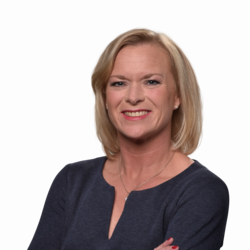 Dunja KreiserDunja Eleonore Angelika Kreiser (born 27 June 1971 in…Affiliated
How the record is sourced and how the score is derived.
The score is formula-derived (Factrail formula v1, version 1.0.0), not an editorial verdict. Read the methodology.
By the Factrail desk · Method: how we source and score · Last reviewed
Dispute a fact on this pageNamed here, or represent someone who is? Request a right of reply.
People and organizations as listed in the Related section of this page; facts, drivers and the pages that name it as listed in the blocks here. Counts, not a rating.