
Suharto
Suharto (8 June 1921 – 27 January 2008) was an Indonesian army general and statesman who served as the second president of Indonesia from 1967 to 1998…
- Facts0
- Drivers0
- Indicators0
Suharto (8 June 1921 – 27 January 2008) was an Indonesian army general and statesman who served as the second president of Indonesia from 1967 to 1998…
Suharto (8 June 1921 – 27 January 2008) was an Indonesian army general and statesman who served as the second president of Indonesia from 1967 to 1998, the longest-serving holder of the office. He assumed power after orchestrating the military response to the 30 September 1965 coup attempt, which triggered anti-communist purges killing between 500,000 and one million people and facilitated the ouster of founding president Sukarno.
Suharto's New Order regime prioritized economic stabilization following Sukarno-era hyperinflation, achieving average annual GDP growth of approximately 7 percent from 1967 to 1997 through foreign investment, oil revenues, and state-led development planning that reduced absolute poverty from over 60 percent to around 11 percent of the population. These gains, however, relied on authoritarian controls, including suppression of political opposition, media censorship, and military dominance over civilian affairs, while fostering cronyism that amassed vast wealth for Suharto's family and inner circle, estimated in the tens of billions of dollars.
Defining controversies included the 1975 invasion and occupation of East Timor, where Indonesian forces oversaw mass killings and displacement affecting hundreds of thousands, as well as domestic operations like the Petrus extrajudicial killings of suspected criminals in the 1980s. Suharto's rule ended with the 1997 Asian financial crisis, which exposed structural vulnerabilities and sparked student-led protests and anti-Chinese riots, forcing his resignation on 21 May 1998 amid collapsing public support and elite defections. He faced subsequent corruption charges but died before trial, leaving a legacy of transformative economic progress intertwined with systemic repression and unaccounted atrocities.
Suharto was born on June 8, 1921, in the village of Kemusuk, located in the Godean district near Yogyakarta in the Dutch East Indies, into a Javanese peasant family of humble origins. His father, Kertosudiro, held the position of a village irrigation official, tasked with regulating water allocation for rice paddies, in addition to farming duties. His mother, Sukirah, hailed from a neighboring hamlet and the couple's marriage dissolved mere weeks after his birth, leaving Suharto as their only child from that union.
In line with traditional Javanese naming conventions, which commonly assign a single given name without a familial surname—reflecting cultural norms emphasizing individual identity over lineage—Suharto bore only that name from birth and retained it lifelong. The instability of his parents' brief marriage led to him being raised partly by extended relatives and foster families during his early years, fostering a self-reliant disposition amid modest agrarian circumstances.
Suharto was born on June 8, 1921, in the small rural village of Kemusuk, located in the Godean district near Yogyakarta in Central Java, during the Dutch colonial period. His parents, Sukirah and Kertosudiro, were ethnic Javanese peasants of modest means, with his father working as an agricultural laborer and his mother from a farming background; the family lived without basic amenities such as electricity or running water. Following his parents' divorce shortly after his birth, Suharto was raised by a series of foster parents and relatives, including extended family members, which exposed him to the instability and hardships of rural peasant life under colonial rule.
He began formal education at age eight, attending the Puluhan Elementary School in Godean, though he frequently changed schools due to family circumstances and financial constraints within the Dutch colonial education system, which prioritized limited access for indigenous Javanese. Suharto completed his middle school education around 1939 at age 18, receiving a basic Dutch-style curriculum that emphasized practical skills but offered no advanced secondary qualifications.
Following middle school, Suharto took a position as an assistant clerk at a village bank (volksbank) in Wuryantaro, handling routine administrative tasks that provided early exposure to bookkeeping and financial operations amid the economic pressures of colonial-era rural Java. He resigned from this role after damaging his uniform in a bicycle accident, an incident highlighting the precariousness of low-wage employment for rural youth. These early experiences in clerical work fostered basic organizational abilities, though the job's monotony underscored his disinterest in sedentary civilian pursuits.
Suharto married Siti Hartinah, commonly known as Ibu Tien, on 26 December 1947 in Surakarta. The union was arranged by family, with Hartinah descending from the Mangkunegaran royal house, a connection that elevated Suharto's social status from his humble Javanese commoner background. The couple had six children—three sons and three daughters—born between 1949 and 1960, forming the core of a cohesive household that prioritized familial loyalty.
Ibu Tien served as Suharto's steadfast companion during his early military career, providing essential stability as the family adapted to frequent relocations tied to his postings across Java and beyond in the revolutionary and post-independence eras. This support manifested in maintaining a low-profile domestic life rooted in Javanese traditions of restraint and harmony, which contrasted with the eventual public scrutiny of their circumstances. Her role extended to fostering a private environment that enabled Suharto's focus on professional duties, while later involving philanthropic efforts aligned with family values, such as welfare initiatives, though these remained secondary to household cohesion in the pre-presidential years.
In late 1942, following the Japanese invasion and occupation of the Dutch East Indies earlier that year, Suharto, then unemployed and facing economic hardship in Yogyakarta, responded to a recruitment drive by enlisting in the Japanese-sponsored Indonesian auxiliary police force. This initial role involved basic security duties under Japanese oversight, marking his entry into organized paramilitary service amid wartime resource constraints and the dissolution of prior Dutch colonial structures.
By 1943, Suharto transferred to the Pembela Tanah Air (PETA), a volunteer defense corps established by the Japanese Imperial Army in October of that year to prepare Indonesian auxiliaries for potential defensive operations against Allied forces. Assigned initially to a coastal defense battalion near Wates, southwest of Yogyakarta, he received training in infantry tactics, marksmanship, and unit discipline, often under harsh conditions that emphasized endurance and hierarchical command. The curriculum drew from Japanese bushido-inspired militarism, instilling a focus on loyalty, physical rigor, and anti-Western sentiments, though Suharto's engagement appears to have been pragmatic, prioritizing skill acquisition over ideological fervor.
Suharto demonstrated aptitude for leadership, achieving rapid promotion to company commander (chudancho) by mid-1944, a rank that positioned Indonesians as mid-level officers in PETA units while Japanese personnel retained overall control. In this capacity, he led training exercises for recruits across Central Java and other regions, including Surakarta and Jakarta, adapting to shortages of equipment by improvising drills with limited arms and emphasizing guerrilla-style maneuvers suited to the archipelago's terrain. Actual combat remained minimal during his PETA tenure, as the force primarily served in internal security and preparedness roles rather than frontline engagements, providing Suharto with foundational operational experience that later proved adaptable.
Following the Indonesian proclamation of independence on August 17, 1945, Suharto rapidly integrated into the republican military forces amid clashes with returning Allied troops seeking to restore Dutch colonial authority. He organized irregular local militias in Central Java into structured units, such as Battalion X of the 3rd Infantry Regiment, and participated in early engagements against British and Dutch forces around Magelang and Semarang in late 1945. These actions involved asymmetric tactics suited to the under-equipped republican fighters facing superior firepower.
By August 1946, Suharto had risen to command the 22nd Regiment within the Diponegoro Division, a key formation in Central Java responsible for defending republican strongholds against Dutch reconquest efforts. The division emphasized disciplined guerrilla operations, intelligence gathering, and coordination with civilian populations to sustain prolonged resistance, reflecting Suharto's focus on maintaining unit cohesion amid resource shortages and internal political divisions. His leadership in the Diponegoro Division contributed to the broader strategy of denying Dutch control over rural areas and key cities like Yogyakarta, the republican capital.
Suharto's tactical acumen was evident in the 1949 General Offensive, where on March 1, he directed a daring dawn assault on Dutch-occupied Yogyakarta, temporarily expelling forces and demonstrating the viability of bold strikes to boost republican morale and international pressure on the Netherlands. Similar efforts supported defenses in Surakarta, involving hit-and-run ambushes and sabotage to disrupt Dutch supply lines. By the revolution's end in 1949, these successes led to his promotion to lieutenant colonel, recognizing his role in asymmetric warfare that helped secure Dutch recognition of Indonesian sovereignty via the Round Table Conference.
Following Indonesian independence in 1949, Suharto remained in the newly formed Tentara Nasional Indonesia Angkatan Darat (TNI-AD), serving primarily in Central Java with the Diponegoro Division. By the early 1950s, he had achieved the rank of lieutenant colonel and led operations against local insurgencies, including elements of the Darul Islam rebellion that sought to establish an Islamic state in the region. These efforts involved coordinating battalions to secure northwestern Central Java against Islamist militants, contributing to the gradual suppression of the uprising that had persisted since 1949.
Suharto's promotion to colonel in the mid-1950s reflected his effectiveness in territorial defense and counterinsurgency, amid the Indonesian Army's efforts to consolidate control over Java amid multiple regional challenges. From 1957 to 1959, as commander of the Diponegoro Division, he managed a force responsible for internal security in Central Java, where Darul Islam remnants continued sporadic resistance until their broader pacification in the early 1960s. His leadership emphasized operational efficiency over ideological alignment, navigating the army's internal divisions without aligning overtly with competing factions such as Javanese regionalists or pro-Sukarno elements. This pragmatic stance facilitated further advancement, earning him promotion to brigadier general around 1960.
In January 1962, Suharto was elevated to major general and appointed commander of Komando Cadangan Strategis Angkatan Darat (Kostrad), the Army Strategic Reserve Command, a elite unit tasked with rapid deployment and national defense. Under his command, Kostrad expanded its capabilities, incorporating airborne and special forces for strategic mobility. Concurrently, Suharto directed Mandala Command, a joint-service operation for the Irian Barat campaign aimed at wresting West New Guinea from Dutch administration. His oversight ensured effective logistics across challenging terrain, supplying over 40,000 troops via amphibious and air operations that culminated in the territory's transfer to Indonesian control by May 1963 under the New York Agreement. This success highlighted his administrative acumen, fostering discreet alliances within the officer corps that positioned him for higher influence without provoking rivalries in the fractious military hierarchy.
Under Sukarno's Guided Democracy, implemented from 1959 following the suspension of the 1950 constitution, Indonesia experienced severe economic mismanagement characterized by fiscal deficits, excessive money printing, and state-led industrialization that prioritized prestige projects over productivity. Inflation accelerated from around 40% in 1960 to hyperinflationary levels exceeding 1,000% annually by the mid-1960s, eroding purchasing power and destabilizing markets. Export revenues shrank due to declining commodity prices and policy-induced isolation, while foreign exchange reserves dwindled, leading to import restrictions and industrial stagnation.
The policy of Konfrontasi, launched in 1963 against the formation of Malaysia, further exacerbated resource strains by committing substantial military expenditures—estimated in the hundreds of millions of dollars annually—and disrupting trade routes, which severed access to vital rice imports from Thailand and Burma. This low-intensity conflict diverted funds from development, inflated defense budgets to over 50% of government spending by 1964, and contributed to widespread food shortages, with millions facing rationing on Java and reports of famine-like conditions in rural areas during 1963–1965. Per capita GDP growth turned negative in the early 1960s, reflecting contraction in agriculture and manufacturing amid these pressures, while infrastructure crumbled from neglect and hyperinflation.
Politically, the era saw the rapid expansion of the Indonesian Communist Party (PKI), which grew from under 8,000 members in the early 1950s to approximately 3 million by 1965, bolstered by affiliations with mass organizations claiming up to 25 million supporters. PKI-led initiatives for unilateral land reforms under the 1960 Basic Agrarian Law sparked rural conflicts, as peasant groups seized holdings from landlords, resulting in localized violence, assassinations, and retaliatory clashes that heightened tensions between communist-affiliated farmers and traditional elites. Corruption among Sukarno's inner circle, including favoritism toward state enterprises and allies, compounded elite rent-seeking, further undermining fiscal discipline and public trust.
These dynamics eroded military cohesion, as unpaid salaries amid hyperinflation diminished troop readiness and fostered resentment toward Sukarno's balancing act between the army and PKI, setting the stage for broader institutional fragility. Overall, the combination of economic collapse and social polarization created a crisis environment by 1965, with empirical indicators like negative real GDP growth and acute shortages signaling the unsustainability of Guided Democracy's ideological priorities over pragmatic governance.
On the night of September 30, 1965, elements of the Indonesian military, including personnel from the presidential guard and air force units, along with supporters linked to the Indonesian Communist Party (PKI), initiated the "30 September Movement" (Gerakan 30 September, or G30S). This group kidnapped and murdered six senior army generals—Ahmad Yani, M.T. Haryono, D.I. Pandjaitan, S. Parman, Suprapto, and Sutoyo—as well as one lieutenant, Pierre Tendean, mistaking him for another officer; the victims' bodies were mutilated and dumped into a well at Lubang Buaya, a site near Jakarta used for military training. The movement broadcast announcements claiming to defend President Sukarno against an alleged "Council of Generals" plotting a right-wing coup, but the targeted officers were known anti-communist figures who opposed the PKI's growing influence amid Sukarno's Guided Democracy.
Major General Suharto, commander of the Army Strategic Reserve Command (Kostrad) and notably absent from the list of targets, rapidly mobilized loyal Kostrad and RPKAD (special forces) units to counter the action. By the morning of October 1, Suharto's forces had secured Merdeka Square, the telecommunications center, and other key sites in Jakarta, effectively neutralizing the movement's hold without significant resistance from its perpetrators, who included figures like Lieutenant Colonel Untung of the Cakrabirawa presidential guard. Suharto assumed temporary command of the army, bypassing the wounded Chief of Staff Ahmad Yani, and directed operations to restore order, framing the incident as a PKI-orchestrated bid for power. Evidence of PKI involvement included directives from party leader D.N. Aidit to affiliated military officers and the party's prior cultivation of "fifth force" militias, which had engaged in violent land reform seizures escalating rural tensions.
The army's subsequent anti-communist campaign, coordinated from Jakarta under Suharto's oversight, transformed the coup's failure into a nationwide purge to eradicate PKI networks and prevent a potential communist consolidation, given the party's 3 million members and alliances with Sukarno's leftist policies. Army units provided lists of suspects, weapons, and logistical support to local militias—often religious or anti-communist youth groups—resulting in mass executions across Java, Bali, Sumatra, and other islands from October 1965 to early 1966. Estimates of the death toll range from 500,000 to over 1 million, primarily PKI cadres, affiliates, and suspected sympathizers, with killings peaking in late 1965 when military commanders explicitly authorized vigilante actions to "cleanse" villages.
This response averted a plausible PKI-dominated regime, as the party's mass base and covert military infiltration—evident in G30S preparations—mirrored preconditions for takeovers in Eastern Europe or China, where minority communist vanguards seized control amid power vacuums. Without decisive elimination of PKI infrastructure, Indonesia risked prolonged civil strife or balkanization, as regional commanders initially hesitated and PKI-affiliated unions mobilized strikes; the purges, while brutal, restored central army authority and halted the slide toward economic collapse and ideological polarization under Sukarno's balancing act between communists and Islamists.
On 11 March 1966, President Sukarno signed the Supersemar (Order of March the Eleventh), a decree granting Lieutenant General Suharto, as army commander, extraordinary powers to restore national order and security following the unrest of the previous year. The decree authorized Suharto to take all necessary measures, including commanding the armed forces and advising on political matters, effectively sidelining Sukarno's direct control amid mounting chaos.
Exercising this authority, Suharto immediately banned the Indonesian Communist Party (PKI) on 12 March 1966, dissolved its affiliated organizations, and directed the military to purge communist influences from government institutions, the armed forces, and civil society. These steps dismantled the PKI's political infrastructure, with mass arrests and executions targeting party leaders and suspected affiliates, framed as essential for national stability. Concurrently, widespread student protests, including marches to Suharto's residence in April 1966 and the Tritura (Three Demands of the People) articulated in October 1966—calling for cabinet reform, dissolution of the pro-Sukarno cabinet, and PKI abolition—bolstered public pressure against Sukarno and endorsed military-led restoration of order.
Through institutional channels, Suharto pursued a formalized transition. A special session of the Provisional People's Consultative Assembly (MPRS), convened from 7 to 12 March 1967, revoked Sukarno's presidential authority via decree and appointed Suharto as acting president on 12 March 1967, placing Sukarno under house arrest. This legal maneuver preserved a veneer of constitutionality under the 1945 framework. In its subsequent session in March 1968, the MPRS elected Suharto to the full presidency for a five-year term, solidifying his leadership and signaling the end of Sukarno's era.
Suharto's consolidation emphasized procedural legitimacy via MPRS deliberations and decrees, contrasting with Sukarno's improvisational style, while military dominance ensured compliance and quelled opposition during the handover. This approach facilitated an orderly regime shift, with early directives restructuring power to prioritize security and anti-communist alignment over Sukarno's confrontational policies.
Suharto's New Order regime articulated a core ideology rooted in the reinforcement of Pancasila as the state's unifying philosophy, stressing belief in one God, humanitarianism, national unity, democracy through consensus, and social justice achieved via harmonious cooperation rather than adversarial class conflict. This approach explicitly repudiated the Marxist class struggle and ideological polarizations that had permeated Sukarno's Guided Democracy (1959–1966), which fostered economic hyperinflation exceeding 600% annually by 1965 and chronic political turmoil through konfrontasi policies and empowered communist influences.
The developmental state model prioritized pragmatic technocratic governance over ideological purity, enlisting U.S.-educated economists—colloquially termed the "Berkeley Mafia," including figures like Widjojo Nitisastro and Ali Wardhana—to formulate policies grounded in empirical economic principles. These technocrats, drawing from modernization theory, advocated for stability as the foundational condition enabling investment and growth, dismissing redistributive egalitarianism that ignored causal sequences of order preceding prosperity.
Central to maintaining this framework was the dwifungsi doctrine, formalized in the 1960s and entrenched under Suharto, which assigned the Indonesian Armed Forces (ABRI) dual roles: territorial defense against external threats and active socio-political participation to safeguard internal cohesion and suppress destabilizing ideologies like communism. By integrating military oversight into governance structures, the New Order ensured the political predictability requisite for developmental initiatives, viewing unchecked pluralism or radicalism as antithetical to sustained progress.
Suharto's New Order regime shifted Indonesia's economy from the inward-looking policies of the Sukarno era toward market-oriented liberalization, emphasizing fiscal discipline, foreign investment incentives, and export promotion under the guidance of technocratic advisors. Initial stabilization efforts in 1966-1967 curbed hyperinflation from over 600% to single digits by 1969 through balanced budgets and monetary restraint, laying the foundation for sustained expansion with average annual GDP growth of about 7% from 1967 to 1997. This growth was driven by policies that prioritized private sector involvement and resource mobilization, contrasting with prior state-centric controls.
The cornerstone of these strategies were the Repelita five-year development plans, starting with Repelita I (1969-1973), which allocated public investments toward infrastructure, human capital, and basic industries while encouraging private enterprise through tax incentives and simplified regulations. Subsequent plans, such as Repelita II (1974-1978), integrated oil revenues to fund capital-intensive projects, achieving targeted growth rates of 5-8% annually by focusing on allocative efficiency and sectoral balance. Deregulation accelerated in the mid-1980s with packages reducing trade barriers, liberalizing foreign exchange, and easing banking restrictions, which boosted non-oil exports from 20% of total exports in 1980 to over 80% by 1995. These reforms empirically enhanced competitiveness by lowering production costs and integrating Indonesia into global supply chains.
The 1970s oil boom, triggered by global price surges, amplified these efforts as petroleum exports rose to 70-80% of total exports, generating revenues that financed infrastructure like highways, power plants, and rural electrification, with GDP expanding at 7.7% annually from 1974 to 1981. Post-1982 price collapse prompted diversification into labor-intensive manufacturing and non-oil commodities, supported by export-processing zones and incentives that shifted industrial output from import substitution to outward orientation, increasing manufactured goods' share in exports from negligible levels to 50% by the early 1990s.
Agricultural modernization complemented industrialization, with Repelita investments in high-yield varieties, fertilizers, and irrigation achieving rice self-sufficiency by 1984, eliminating net imports and stabilizing food prices through output growth from 12 million tons in 1968 to 21 million tons. Foreign direct investment inflows, peaking at $5-6 billion annually in the 1990s, were attracted by guarantees of political stability and repatriation rights, funding resource extraction and assembly operations that capitalized on Indonesia's low-wage labor and natural endowments. This FDI, averaging 2-3% of GDP, directly supported technology transfer and capacity building in sectors like textiles and electronics. Empirical data confirm these strategies' causality in growth, as stability reduced risk premiums, enabling capital accumulation that outpaced population increases.
In 1973, the New Order regime restructured Indonesia's fragmented multi-party system inherited from the Sukarno era by fusing the four main Islamic parties into the United Development Party (PPP) and consolidating the five nationalist and Christian parties into the Indonesian Democratic Party (PDI), while positioning Golkar—the organization of government-aligned functional groups—as the uncontested leading entity. This consolidation aimed to curb ideological divisions and factional strife that had contributed to governance paralysis under Sukarno's Guided Democracy, channeling political energies into a managed framework emphasizing national unity under Pancasila.
Golkar's electoral dominance solidified this stability, securing supermajorities in every general election from 1971 to 1997, including 62.5% of the vote in 1971, 62.1% in 1977, and consistently over 60% thereafter, through mechanisms like mandatory civil servant affiliation and state resource allocation that ensured its preeminence over the tokenized opposition of PPP and PDI. These elections, held every five years, functioned less as contests of ideas than as rituals affirming regime continuity, with PPP and PDI permitted limited mobilization but systematically undermined via internal interventions to prevent any challenge to Golkar's hegemony.
The People's Consultative Assembly (MPR), composed of DPR members plus appointed regional and group representatives dominated by Golkar appointees, provided formal legitimacy by electing Suharto as president in sessions from 1968 onward, often with near-unanimous acclamation, as in his 1973, 1978, and subsequent terms. This body enshrined the regime's broad outlines, including the Five-Year Development Plans, while subordinating policy debates to executive control, thereby averting the parliamentary gridlock and street-level confrontations that marked Sukarno's era of over 100 parties and escalating leftist-nationalist tensions.
Proponents of the New Order argued that such engineered monopartisanship fostered the political predictability essential for attracting investment and executing infrastructure projects, crediting it with transforming Indonesia from near-collapse in 1966—marked by hyperinflation exceeding 600% annually—to average GDP growth of 7% through the 1970s and 1980s. Critics, however, contended that the system's suppression of autonomous opposition engendered democratic deficits, rendering elections performative and stifling accountability, though empirical records show it effectively neutralized the centrifugal forces that had previously risked state fragmentation.
The Suharto administration implemented the Instruksi Presiden (Inpres) programs starting in the early 1970s, directing funds toward rural infrastructure, including the construction of over 60,000 primary schools (SD Inpres) between 1973 and 1978 to achieve universal elementary education. These initiatives demonstrably increased schooling access, with each additional school per 1,000 children yielding 0.12 to 0.19 more years of education for young cohorts exposed early. Complementary Inpres health efforts expanded community health centers (puskesmas), contributing to improved preventive care and vaccination coverage in underserved areas.
Adult literacy rates rose from 71.5% in 1976 to 82.9% by 1990, reflecting the causal impact of expanded primary enrollment under these programs, though urban areas benefited more than remote rural ones. Infant mortality declined from 125 per 1,000 live births in 1970 to 58 by 1990, attributable in part to puskesmas-led maternal and child health services that halved rates over successive decades through targeted interventions like oral rehydration and immunization drives.
The transmigration program, intensified from 1967 onward, resettled over 3 million people from densely populated Java to outer islands by 1998, alleviating Java's overcrowding and providing land allotments that reduced rural poverty by enabling smallholder farming and wage opportunities for participants. The national family planning (Keluarga Berencana) initiative, launched in 1970 under strong government coordination, achieved contraceptive prevalence rising to 55% by the mid-1990s, curbing fertility from 5.6 births per woman in 1970 to 2.7 by 1997 and supporting per capita resource gains amid population pressures.
These measures correlated with poverty headcount falling from approximately 60% in the early 1970s to 11% by 1996, driven by rural-focused human capital investments that empirically uplifted living standards for low-income households, despite persistent disparities favoring transmigration sites with better infrastructure over isolated interiors.
Under Suharto's New Order regime, internal security was underpinned by the dwifungsi (dual function) doctrine of the Angkatan Bersenjata Republik Indonesia (ABRI), which assigned the armed forces both defensive and socio-political roles to safeguard national unity against subversion and separatism. Formalized following an Army seminar in August 1966 and disseminated across services by November 1966, dwifungsi positioned ABRI as a stabilizer in society, with military personnel integrated into civilian governance and development initiatives, such as the ABRI Masuk Desa program that embedded noncommissioned officers in villages for local oversight. This doctrine, enshrined in the 1982 defense law, enabled ABRI to deter internal threats through territorial commands structured hierarchically from regional (Kodam) to sub-district levels, where one-third of the army's 202,900 personnel focused on monitoring and countering potential insurgencies.
ABRI's territorial operations combined combat actions to neutralize opposition with construction efforts to foster infrastructure and economic ties, aiming to erode separatist support in peripheral regions while promoting national cohesion. In Aceh, where the Gerakan Aceh Merdeka (GAM) insurgency emerged in 1976, the government designated the province a military operations zone (Daerah Operasi Militer) from 1990 to 1998, deploying up to 25,000 troops including elite Kostrad and Kopassus units to conduct annihilation campaigns and consolidate control zones. These efforts fragmented GAM into isolated groups and maintained central authority, though the movement persisted at low intensity.
In Irian Jaya (now Papua), counter-insurgency targeted the Organisasi Papua Merdeka (OPM), with major operations in 1977–1978 and 1996–1998 employing territorial battalions for surveillance and suppression of approximately 200 OPM fighters. Strategies emphasized military deterrence alongside development projects to integrate the region economically, suppressing overt separatist activities and reinforcing territorial integrity without resorting to widespread autonomy concessions during the New Order. Proponents of these measures, including regime-aligned military analyses, credited them with preventing the fragmentation seen in earlier rebellions like PRRI/Permesta by embedding ABRI's presence as a proactive bulwark against regional disaffection. Critics, however, argued that such integration constituted overreach, prioritizing coercive stability over local grievances despite empirical containment of insurgencies.
Suharto's foreign policy marked a decisive departure from Sukarno's confrontational adventurism, particularly the Konfrontasi policy against Malaysia that had strained regional ties from 1963 to 1966. Upon assuming power, Suharto swiftly ended the confrontation through diplomatic normalization, dispatching a peace mission to Kuala Lumpur in early 1966, which facilitated reconciliation and set the stage for multilateral cooperation. This pragmatic shift emphasized economic diplomacy over ideological posturing, prioritizing stability and development to attract investment and counter external threats. The founding of the Association of Southeast Asian Nations (ASEAN) on August 8, 1967, in Bangkok—with Indonesia as a core member alongside Malaysia, the Philippines, Singapore, and Thailand—exemplified this approach, promoting regional resilience against communist insurgencies through economic integration and non-interference principles.
While adhering to Indonesia's traditional bebas aktif (free and active) non-aligned doctrine, Suharto's regime tilted toward Western powers to secure anti-communist security guarantees and economic support, viewing alliances as causal levers for internal stability and growth amid threats from China and the Soviet Union. Ties with the United States deepened post-1965, with Washington providing military aid, intelligence, and economic assistance to bolster Suharto's regime against residual communist influences, as evidenced by high-level engagements including meetings with President Gerald Ford, Secretary of State Henry Kissinger, and others in the 1970s. Japan emerged as a pivotal partner, channeling official development assistance (ODA), low-interest loans, and direct investments into infrastructure and industry, recycling petrodollars from Indonesian oil exports to fuel the New Order's industrialization drive; by the 1970s, Japanese funding underpinned key projects, amplifying export-oriented growth.
As an OPEC founding member since 1962, Indonesia under Suharto navigated oil diplomacy with flexibility, often moderating production cuts or price hikes to preserve buyer relationships with industrialized allies like Japan and the US, rather than strictly adhering to cartel quotas that could deter investment. This balanced stance sustained revenue flows—oil accounting for over 70% of export earnings in the 1970s—while avoiding isolation, thereby reinforcing geopolitical alignments that insulated the regime from leftist pressures and enabled sustained developmental inflows. Such policies causally linked external partnerships to domestic economic expansion, with foreign capital inflows rising from $100 million annually in the late 1960s to billions by the 1980s, underpinning poverty reduction and infrastructure without compromising nominal non-alignment.
Following the Carnation Revolution in Portugal on April 25, 1974, which overthrew the authoritarian Estado Novo regime, Portuguese authorities accelerated decolonization processes across their overseas territories, including East Timor. This abrupt shift created a power vacuum in East Timor, where rival political factions vied for control amid deteriorating security, including inter-communal violence and the collapse of colonial administration. The Indonesian government under Suharto, viewing the territory's instability as a potential threat to national security—particularly given its proximity to Indonesia's outer islands—began covert operations to support pro-integration groups like the Timorese Popular Democratic Association (Apodeti) while undermining the dominant Frente Revolucionária de Timor-Leste Independente (FRETILIN).
FRETILIN, which emerged victorious in the brief East Timorese civil war from August 11 to September 11, 1975, against the União Democrática Timorense (UDT), adopted a Marxist-Leninist orientation, declaring East Timor's independence as the Democratic Republic of East Timor on November 28, 1975. This declaration, coupled with FRETILIN's establishment of a one-party state and executions of perceived opponents during the civil war (estimated at around 1,000–2,000 deaths), alarmed Suharto's anti-communist regime, which had purged domestic leftists a decade earlier and feared a Soviet- or Chinese-aligned enclave destabilizing the region akin to post-colonial chaos in Angola or Mozambique. Indonesian intelligence operations, including infiltration and propaganda portraying FRETILIN as communist-dominated, escalated into full-scale military intervention via Operation Seroja on December 7, 1975, with amphibious and airborne assaults on Dili securing the capital within days.
Indonesia formalized the annexation on July 17, 1976, through a "People's Assembly" convened under military oversight, where pro-integration factions including Apodeti and remnants of UDT voted for incorporation as Indonesia's 27th province, Timor Timur. Suharto's administration framed this as an act of self-determination restoring historical ties to the Indonesian archipelago and preventing balkanization or foreign exploitation, though the assembly excluded FRETILIN representatives and was coordinated by Indonesian officials. Integration efforts included administrative reorganization, infrastructure development such as roads and schools, and economic incorporation via transmigration programs to foster loyalty and development, which Indonesian sources credited with raising literacy rates from under 20% to over 50% by the 1980s and integrating the territory into national markets. However, FRETILIN-led resistance persisted as guerrilla warfare, drawing on mountainous terrain and local support, leading to prolonged counter-insurgency operations.
Casualties during the initial invasion and early occupation were compounded by ongoing civil strife, with Indonesian estimates attributing many of the roughly 60,000–100,000 deaths in the first few years to FRETILIN's scorched-earth tactics, famine from disrupted agriculture, and intra-Timorese fighting rather than solely military action. From a causal standpoint, the intervention halted FRETILIN's consolidation of power, averting a potential failed state scenario marked by factional collapse as seen in other decolonized Portuguese territories, and enabled centralized governance that delivered measurable advancements in health and education infrastructure. Critics, including UN resolutions non-recognizing the annexation, contended it suppressed genuine self-determination aspirations, prioritizing territorial unity over local autonomy and exacerbating demographic losses through displacement and conflict. Empirical outcomes reflect a trade-off: stability and modernization under Indonesian rule contrasted with sustained insurgency, culminating in East Timor's eventual independence referendum in 1999 after Suharto's fall.
Indonesia's GDP per capita rose from approximately $70 in 1966 to about $1,000 by the late 1990s, reflecting sustained economic expansion over three decades. The economy achieved an average annual GDP growth rate of nearly 7% between 1965 and 1997, transitioning Indonesia from a low-income to a lower-middle-income status. This growth facilitated the emergence of an urban middle class, estimated at 14 to 15 million people by 1996, driven by industrialization and rising incomes.
Poverty rates declined sharply, with the share of the population below the poverty line falling from over 60% in the mid-1960s to 11% by 1996, lifting tens of millions out of absolute poverty. Absolute poverty incidence specifically dropped from 40% in 1976 to 11% in 1996, correlating with broad-based income gains and reduced malnutrition.
Life expectancy at birth improved from 47 years in 1966 to 67 years by 1997, supported by expanded access to basic health services and nutrition programs. Educational attainment advanced, with primary school enrollment rates reaching near-universal levels by the 1990s and adult literacy rising substantially from around 60% in the early 1970s to over 90% by the mid-1990s.
Infrastructure metrics showed marked progress, including road network expansion from deteriorated post-independence conditions to prioritized rehabilitation and extension after 1967, enhancing connectivity across archipelago regions. Electrification coverage grew from limited urban access in the 1960s to serving a significant portion of the population by the 1990s, underpinning rural development. Urbanization accelerated, with the urban population share increasing from about 17% in 1971 to 30% by 1990, reflecting migration to industrial centers and service sectors.
| Indicator | Mid-1960s Value | Late 1990s Value | Source |
|---|---|---|---|
| GDP per capita (USD) | ~$70 | ~$1,000 | |
| Poverty rate (% of population) | >60% | 11% | |
| Life expectancy (years) | 47 | 67 | |
| Urban population share (%) | ~17% (1971) | ~30% (1990) |
The anti-communist purge in Indonesia from late 1965 to early 1966 stemmed directly from the Indonesian Army's response to the 30 September Movement (G30S), an attempted coup on September 30, 1965, in which mid-level officers, supported by elements of the Indonesian Communist Party (PKI), kidnapped and murdered six senior anti-communist generals, including Army Chief of Staff Ahmad Yani. The PKI, then the world's largest non-ruling communist party with approximately 3 million members and a paramilitary youth wing of up to 500,000, had been aggressively expanding influence under President Sukarno's left-leaning policies, including violent land seizures that heightened rural tensions and positioned it for potential seizure of power amid Sukarno's weakening grip. Army leaders, viewing the G30S as a PKI-orchestrated bid to eliminate rivals and install a communist regime—bolstered by PKI chairman D.N. Aidit's subsequent efforts to mobilize mass support—launched a preemptive counteroffensive to dismantle the party apparatus before it could consolidate control, a move declassified U.S. intelligence assessed as averting a full-scale civil war that could have mirrored the millions of deaths in contemporaneous communist consolidations elsewhere, such as Cambodia's later Khmer Rouge takeover (1.5–2 million dead) or China's Cultural Revolution excesses.
The purge's scale involved systematic army orchestration alongside civilian militias, targeting PKI cadres, affiliates, and suspected sympathizers through arrests, executions, and mass graves, with U.S. embassy reports documenting army encouragement of killings to eradicate the threat comprehensively. Scholarly estimates of the death toll range from 500,000 to 1 million, concentrated in regions of strong PKI presence like Central and East Java (where up to 70% of victims fell) and Bali, with lower figures in Sumatra and Sulawesi due to weaker party organization and faster army intervention; these numbers derive from cross-verified survivor testimonies, army records, and demographic anomalies, though exact counts remain contested owing to incomplete documentation and post-event cover-ups. Regional variations reflected local dynamics: in Java, Nahdlatul Ulama-linked groups conducted many killings amid pre-existing religious tensions with abangan (nominal Muslim) PKI supporters, while in Bali, Hindu-majority communities targeted leftist peasants en masse, often exceeding army directives in fervor. Critics, including human rights organizations, frame the events as excessive or genocidal due to the inclusion of non-combatants and torture allegations, yet causal analysis underscores the purge's prophylactic role: incomplete elimination risked PKI resurgence, as seen in failed partial suppressions elsewhere (e.g., Malaya's communist insurgency persisting post-1948), whereas total eradication neutralized a force poised for armed takeover given its alliances with Beijing and Moscow.
Long-term consequences included the PKI's utter destruction—its leadership executed or imprisoned, membership scattered or killed—paving the way for General Suharto's New Order regime by March 1966, which prioritized anti-communism as a foundational ideology to ensure political stability absent Sukarno-era chaos. This eradication prevented sustained guerrilla warfare or balkanization, enabling three decades of centralized governance that correlated with economic stabilization and growth, as the purge's finality deterred leftist challenges and aligned Indonesia with Western anti-communist blocs during the Cold War. Empirically, the events' success in forestalling a communist victory—potentially costing tens of millions in famine, purges, or conflict, per precedents in Maoist China (estimated 20–45 million excess deaths)—outweighed localized excesses, though lingering trauma fueled authoritarian surveillance and occasional vigilante paranoia into the 21st century; Indonesian military analyses and declassified foreign records affirm the purge as a decisive rupture that secured the archipelago's non-communist trajectory, countering narratives of gratuitous violence by highlighting the PKI's demonstrated coup intent and mass-mobilization capacity.
Suharto's regime fostered extensive cronyism networks that permeated the bureaucracy, military, and business elite, with preferential access to state contracts and resources granted to loyalists and family members. Suharto's children established major conglomerates, such as Bimantara Citra founded by his son Bambang Trihatmodjo in 1981, which expanded into telecommunications, broadcasting, and infrastructure, benefiting from government monopolies and licenses. This system, often termed the "toll-gate economy," required businesses to pay tributes or form partnerships with Suharto's inner circle to secure deals, exemplified by daughter Siti Hardiyanti Rukmana (Tutut)'s control over Jakarta's toll road projects.
While these networks enriched a narrow elite, they also facilitated capital accumulation in a previously underdeveloped private sector, drawing in ethnic Chinese entrepreneurs as partners and enabling resource extraction projects that contributed to industrialization. Crony ties were instrumental in jumpstarting domestic conglomerates amid limited foreign investment, though they distorted market competition by favoring insiders over merit-based allocation. Indonesia's GDP grew at an average annual rate of approximately 7% from 1967 to 1996, reflecting how crony-driven investments in infrastructure and manufacturing supported broader economic expansion despite inefficiencies.
Perceptions of corruption intensified in the late Suharto era, as evidenced by Indonesia's low scores on Transparency International's Corruption Perceptions Index, starting at 1.94 out of 10 in 1995 and fluctuating around 2.0 through 1998, indicating systemic graft comparable to or worse than regional peers like Thailand (2.79 in 1995) and the Philippines (2.94). However, this cronyism was not uniquely familial but regime-wide, embedding patronage as a governance tool that sustained political stability while laying groundwork for private enterprise in a post-colonial economy lacking indigenous capitalists.
The New Order regime under Suharto faced allegations of human rights abuses, including extrajudicial killings, forced disappearances of activists, suppression of political dissent through arrests and violence against protesters, and systematic restrictions on freedom of expression. These claims, primarily advanced by international NGOs such as Amnesty International and Human Rights Watch, centered on actions purportedly taken to preserve internal security and prevent a return to the instability of the Sukarno era, which had featured widespread political violence and economic chaos culminating in the 1965-1966 massacres that killed an estimated 500,000 to 1 million people. Critics contended that such measures constituted violations of due process and civil liberties, yet regime defenders argued they were proportionate responses to threats like rising crime and subversive activities, yielding a net reduction in large-scale conflict deaths compared to prior decades.
A prominent case was the Petrus (Penembakan Misterius) killings of 1983-1985, during which security forces allegedly conducted extrajudicial executions of suspected criminals, particularly in Java, with documented deaths numbering in the hundreds to low thousands—far below the scale of earlier purges but decried as state-sanctioned murder without trial. These operations, linked to military and police units, targeted urban petty criminals and gang members amid a surge in theft and robbery, with the government framing them as preemptive measures to restore public order in densely populated areas; Amnesty International later classified them as arbitrary killings, though empirical data on crime rates post-Petrus indicated a subsequent decline, supporting claims of causal efficacy in deterrence despite the lack of judicial oversight.
Suppression of student-led protests provided another focal point, as authorities repeatedly dispersed demonstrations against corruption or policy grievances—such as the 1974 protests following the Malari riots or the 1989 campus agitations over land disputes—with arrests, beatings, and occasional lethal force, resulting in dozens of documented injuries and detentions but no mass fatalities on the scale of pre-1966 unrest. In response to a 1970 wave of student demonstrations exposing graft, Suharto imposed a ban on campus protests, enforced via military oversight, which curtailed academic freedoms but aligned with the regime's priority of stabilizing education institutions after Sukarno-era politicization had fueled ideological clashes. Human rights groups alleged torture in interrogations of detained students, yet comparative analyses note that overall political violence deaths dropped sharply under New Order stability measures, averting the chronic insurgencies and factional killings that marked Sukarno's Guided Democracy.
Press curbs were enforced through bodies like Kopkamtib (Operational Command for the Restoration of Order and Security), which banned over 100 publications between 1966 and the 1990s for content deemed subversive, including critiques of military involvement in politics or economic favoritism, effectively instituting pre-publication review and self-censorship among journalists. While the 1982 Press Law nominally prohibited censorship, in practice it facilitated closures, such as those of Tempo magazine in 1994 for reporting on government scandals, as documented by Reporters Without Borders; proponents of the system maintained that these controls prevented inflammatory journalism from inciting the ethnic and religious riots prevalent under Sukarno, where unchecked media had amplified communal tensions leading to thousands of deaths. Allegations of disappearances, including the abduction of pro-democracy activists in the late 1990s by military intelligence units, added to the tally, with Amnesty estimating dozens of cases involving torture or extrajudicial execution, though investigations post-Suharto revealed many as targeted operations against perceived security risks rather than indiscriminate terror.
NGO reports, including those from Amnesty International, emphasized these incidents as emblematic of authoritarian excess, yet such accounts have faced scrutiny for selective focus—often amplifying isolated abuses while understating the regime's role in curbing crime waves and separatist threats that could have escalated to Sukarno-level carnage, where annual conflict deaths exceeded those of the entire New Order by orders of magnitude. Empirical metrics, such as reduced homicide rates and absence of nationwide purges after 1966, suggest that security imperatives, while harsh, contributed to a causal framework of order that preserved far more lives through stability than were lost to enforcement actions. Mainstream media and academic sources, influenced by institutional biases toward critiquing authoritarian stability in favor of liberal ideals, have at times overstated the pervasiveness of abuses relative to verifiable data, contrasting with regime records showing targeted rather than systemic extermination.
The Pertamina debt crisis began in February 1975, when the state-owned oil and gas company defaulted on a $40 million short-term loan owed to a group of U.S. Under the leadership of General Ibnu Sutowo, who had headed Pertamina since 1957 and expanded it into a sprawling conglomerate, the firm had aggressively borrowed abroad—often without central government approval—to finance ambitious projects such as LNG plants, refineries, hotels, and shipping ventures. By mid-1975, investigations revealed total debts surpassing $10 billion, more than double initial estimates and equivalent to roughly 30% of Indonesia's GDP, with immediate payment obligations straining the company's liquidity amid fluctuating global oil prices.
Sutowo's unchecked autonomy, granted to leverage oil revenues for national development, facilitated overextension and internal irregularities, including unmonitored guarantees for private ventures and procurement graft, though these were framed by some contemporaries as entrepreneurial risks in a resource-dependent economy rather than deliberate embezzlement. President Suharto, recognizing the threat to fiscal stability, dismissed Sutowo on March 3, 1976, along with seven other top executives, marking a rare purge in the New Order apparatus. The government intervened with a bailout, assuming the liabilities through foreign reserves and domestic budget reallocations, which Suharto described in his January 1976 address as requiring "enormous" funds and prompting austerity measures to service the elevated external obligations. This intervention quadrupled short-term foreign exchange demands, compelling renegotiations with over 100 international creditors and exposing vulnerabilities in state enterprise financing.
The episode highlighted oversight deficiencies in Pertamina's monopoly structure, where military-linked management prioritized expansion over fiscal prudence, yet the regime contained fallout by restructuring the company under civilian oversight and insulating core budgets, averting broader insolvency. Analogous issues, on smaller scales, surfaced in other state firms like Bulog (the national logistics agency), which faced scrutiny for import contract irregularities in the late 1970s, but these were similarly absorbed via internal audits and leadership changes without precipitating regime instability. Such incidents underscored tensions between granting operational leeway to state monopolies for developmental goals and the perils of inadequate transparency in a centralized system, where political patronage could amplify financial missteps, though empirical outcomes showed resilience through ad hoc corrections rather than inherent systemic fragility.
Following the sharp decline in global oil prices from approximately $30 per barrel in 1984 to $10 by 1986, which caused Indonesia's GDP to contract by 3% in 1985 and 6% in 1986 due to heavy reliance on oil exports for revenue, Suharto's administration initiated diversification efforts away from resource dependency toward manufacturing and non-oil exports. This shift involved technocratic reforms emphasizing export-oriented industrialization, with non-oil exports rising from 20% of total exports in the early 1980s to over 70% by the mid-1990s, driven by incentives for labor-intensive sectors like textiles and electronics.
A series of deregulation packages, totaling 22 major measures between March 1985 and May 1990, liberalized trade, banking, and investment regimes by reducing tariffs, simplifying customs procedures, and easing foreign ownership restrictions to attract capital inflows. These policies, influenced by economic advisors like Widjojo Nitisastro, prioritized market mechanisms over state intervention, fostering private sector growth and restoring annual GDP expansion to 6-7% by the late 1980s. Concurrently, B.J. Habibie, as State Minister of Research and Technology since 1978, championed high-technology initiatives, including the development of the state-owned IPTN aircraft manufacturer, which produced regional jets like the CN-235 by 1986, aiming to build indigenous capabilities despite criticisms of inefficiency and over-reliance on subsidies.
In the political sphere, Suharto introduced limited "openness" (keterbukaan) measures around 1989-1990, relaxing press controls and permitting increased student demonstrations and NGO activity to signal adaptability amid economic pressures and international scrutiny. However, this era of controlled liberalization curtailed sharply by the mid-1990s as regime stability took precedence, with crackdowns on perceived threats like labor unrest. Succession planning remained opaque, as Suharto, re-elected for a sixth term in 1993 without designating a clear heir, relied on patronage networks rather than institutional mechanisms, heightening elite uncertainties while maintaining authoritarian continuity through Golkar dominance.
The 1997 Asian Financial Crisis originated externally with Thailand's baht devaluation on July 2, 1997, triggering contagion across Southeast Asia through investor panic and capital flight, which Indonesia—despite robust pre-crisis fundamentals like 7.8% GDP growth in 1996—could not fully insulate against due to regional financial linkages. By late July 1997, Indonesia floated the rupiah, which depreciated from approximately 2,400 IDR per USD to over 4,000 by August, accelerating to 11,000 by January 9, 1998, and peaking near 17,000 amid banking runs and debt servicing failures. This external shock amplified internal vulnerabilities, including heavy reliance on short-term foreign borrowing (reaching $20 billion by late 1997) and inadequately supervised banks exposed to currency mismatches, leading to widespread corporate defaults as import costs surged.
Economic contraction followed sharply: GDP growth slowed to 4.7% in 1997 before plunging to -13.1% in 1998, with per capita GDP dropping 43.2% nominally from 1996 levels, driven by collapsed domestic demand, inflation exceeding 50%, and unemployment rising as non-oil exports faltered despite initial competitiveness gains from depreciation. Pre-crisis buffers, such as foreign reserves of $23 billion at mid-1997 and a current account surplus shift, mitigated immediate collapse but proved insufficient against contagion-fueled outflows exceeding $8 billion in private capital by year-end. The crisis exposed structural flaws in credit allocation, where state-directed lending to connected firms had built unhedged dollar-denominated debts totaling over $80 billion, but these were not the sole cause—global liquidity tightening and herd behavior in emerging markets played causal roles in propagating the downturn beyond Indonesia's borders.
In response, Indonesia secured an IMF-led bailout totaling $43 billion by October 1997, including $10 billion initial disbursements conditional on bank closures, fiscal austerity, and subsidy cuts to address moral hazard in insolvent institutions. These reforms, while stabilizing reserves to $16 billion by mid-1998, inadvertently highlighted crony-linked loans—estimated at 20-30% of banking assets tied to politically favored conglomerates—through mandatory restructuring and transparency mandates, accelerating liquidity crises in firms unable to roll over debts. Empirical analyses attribute the severity to an interaction of external panic (evident in similar but less acute impacts on Malaysia and the Philippines) with domestic fragilities like fixed exchange rate rigidity until the float, rather than isolated policy failures, as evidenced by Indonesia's higher vulnerability scores in pre-crisis debt maturity mismatches compared to unaffected peers. Recovery began tentatively in late 1999 with 0.8% growth, underscoring how prior export-oriented industrialization provided a foundation for rebound despite the shock's depth.
In early 1998, student-led demonstrations demanding reformasi—political reform, an end to corruption, and Suharto's resignation—spread across Indonesian universities, fueled by widespread discontent among a large youth population comprising a significant share of the nation's demographics. These protests, initially peaceful and focused on campuses, grew in scale and intensity, with daily gatherings numbering in the tens of thousands by May, as students rejected government offers for dialogue and escalated calls for systemic change.
The turning point came on May 12, 1998, when security forces fired on protesters at Trisakti University in Jakarta, killing four students and injuring dozens, an event that ignited three days of riots from May 13 to 15 across the capital and other cities like Medan and Surabaya. The unrest involved widespread looting, arson targeting commercial districts, and ethnic violence against Chinese Indonesians, resulting in over 1,000 deaths, hundreds of rapes, and the destruction of thousands of buildings, though investigations attributed much of the chaos to opportunistic mobs rather than organized protesters. Student activists distanced themselves from the riots, maintaining pressure through sustained occupations of key sites like the national parliament, where on May 18 and 19, crowds swelled to over 100,000 demanding Suharto's ouster.
Parallel to the street protests, fractures emerged within Suharto's elite base, eroding the loyalty that had sustained his rule; parliamentary speaker Harmoko publicly urged resignation on May 18, joining opposition figures like Amien Rais in withdrawing support, while some military commanders hesitated to deploy fully against demonstrators, signaling a collapse of the regime's coercive apparatus. Suharto's May 14 attempt to form a "reform cabinet" incorporating limited opposition elements failed to restore legitimacy, as elites and protesters alike dismissed it as insufficient amid ongoing violence and economic hardship.
On May 21, 1998, with mass protests encircling the presidential palace and elite defections mounting, Suharto announced his resignation in a televised address, apologizing for "shortcomings" after 32 years in power and transferring authority to Vice President B.J. Habibie under constitutional provisions, marking the end of the New Order regime without formal impeachment. The transition, while orderly at the top, reflected a pact among wavering elites to avert deeper chaos, though Habibie faced immediate demands from students for further reforms.
Following Suharto's resignation on May 21, 1998, Indonesian authorities initiated investigations into allegations of corruption during his presidency, focusing on claims that he and his family had amassed vast wealth through cronyism and state fund diversions. The Attorney General's Office filed charges in July 2000, accusing Suharto of misusing approximately $97 million in state funds donated to seven foundations under his control between 1993 and 1998, including the Supersemar Foundation and Dakab Foundation. These probes were part of broader post-Suharto reform efforts amid public demands for accountability, though critics argued they served political motives to discredit the New Order regime without risking entrenched elite networks.
On September 28, 2000, a Jakarta court dismissed the charges against Suharto after court-appointed doctors declared him mentally and physically unfit to stand trial, citing advanced health issues including strokes and aphasia that impaired his ability to communicate or comprehend proceedings. The ruling effectively ended the landmark case, with no appeals pursued, leaving Suharto free from formal conviction. Subsequent attempts in the early 2000s to revive probes, including civil asset recovery efforts, yielded no criminal convictions against him personally, as evidentiary hurdles and his deteriorating condition halted progress. Empirically, these outcomes resulted in zero judicial findings of guilt for Suharto on corruption charges, despite extensive documentation of familial business dealings during his tenure.
Estimates of siphoned funds, such as Time magazine's 1999 report of a conservative $15 billion family fortune in assets and Transparency International's range of $15–35 billion embezzled over 32 years, relied on investigative journalism and NGO assessments rather than audited financial records or court-verified evidence. These figures, while cited to highlight systemic graft, faced legal challenges; Suharto's family sued Time for libel, securing an initial $100 million award in 2007 that was overturned on appeal in 2009 due to insufficient proof of malice. Proponents of the probes framed them as essential for democratic reckoning, yet skeptics, including regime defenders, viewed dismissals as evidence of politically motivated prosecutions undermined by incomplete evidence and Suharto's residual influence, underscoring tensions between retribution and verifiable justice in transitional Indonesia. No further trials materialized before his death in 2008, perpetuating debate over whether outcomes reflected genuine impunity or procedural realism.
Following his resignation on May 21, 1998, Suharto retreated to a life of relative seclusion at his residence in Jakarta, limiting public appearances and interactions amid ongoing legal scrutiny and health challenges. He experienced multiple strokes in the years after stepping down, alongside recurring issues with his lungs and kidneys, which necessitated periodic medical interventions but allowed him to remain primarily under family care at home.
Suharto's health deteriorated further in 2006 when he was hospitalized for internal bleeding, during which his kidney and intestinal functions were reported as impaired before stabilizing enough for discharge. By early 2008, at age 86, his condition worsened acutely; he was admitted to Pertamina Hospital in Jakarta on January 4 suffering from anemia and low blood pressure stemming from heart, lung, and kidney dysfunction. Initial treatments including blood transfusions and dialysis showed temporary improvement, but complications escalated rapidly, with kidney function declining, fluid accumulation in the lungs, and the development of sepsis—a severe blood infection—by January 10, rendering his heart unstable.
On January 11, Suharto suffered multi-organ failure, prompting placement on a ventilator and involvement of a large medical team; his heart briefly stopped later that week, alongside lung and kidney failure, though he was revived temporarily. Family members gathered at the hospital as his status remained critical, with dialysis and supportive measures prolonging life but unable to reverse the coma that set in. Suharto died on January 27, 2008, at 1:07 p.m. local time, succumbing to systemic organ failure after nearly a month of intensive care.
Suharto was often described by close associates as leading a simple and frugal personal life, residing in a modest Jakarta house despite his long tenure in power. His daily routine included strict office hours and a preference for unostentatious attire, such as a drab grey safari suit, reflecting a deliberate cultivation of benign authority.
In private, Suharto exhibited restraint and introspection, maintaining a Javanese character marked by an ability to conceal inner thoughts and uphold dignity under pressure. This contrasted with his public image as the impassive "Smiling General," behind which lay rare displays of agitation and a superstitious bent, including concerns over spiritual amulets and auspicious timing for decisions. His children echoed this reflective nature, invoking the Javanese proverb that "to make the right decisions, one must act at the right time."
Suharto's hobbies included golf, which he played regularly with associates and foreign leaders, providing a relaxed outlet amid his reserved demeanor. His religious piety manifested in Javanese mysticism rather than overt displays, blending traditional spiritual practices with personal devotion.
During Suharto's New Order era from 1967 to 1997, Indonesia achieved average annual GDP growth of approximately 7 percent, transforming the economy from post-independence stagnation under Sukarno into one of Asia's high-performing economies. This growth was driven by orthodox macroeconomic policies implemented by a team of Western-trained economists, including Widjojo Nitisastro, who emphasized fiscal discipline, export promotion, and private sector involvement while stabilizing hyperinflation inherited from the prior regime. Per capita income more than quadrupled over this period, reflecting broad-based expansion in agriculture, manufacturing, and services.
Poverty incidence plummeted dramatically, from around 60 percent of the population in the early 1970s to 11 percent by 1996, as measured by national absolute poverty lines, with international benchmarks showing a drop from 64.3 percent in 1975 to 11.4 percent in 1995 using a $1 per day threshold. Investments in rural infrastructure, such as irrigation systems and rural roads under the Repelita five-year plans, boosted agricultural productivity and connected remote areas to markets, directly contributing to food self-sufficiency by the mid-1980s and uplifting rural livelihoods. Human capital development advanced through expanded access to primary education and basic health services, raising literacy rates from 60 percent in 1970 to over 90 percent by 1990 and improving life expectancy from 49 years to 63 years over the same span.
These reforms laid enduring foundations for Indonesia's economic resilience and ascent to G20 membership in 1999, as the accumulated scale and diversification of the economy—rooted in New Order industrialization and export-oriented strategies—enabled sustained post-1998 recovery and average growth of 5-6 percent annually through the 2000s and 2010s. The infrastructure legacy, including electrified villages rising from under 10 percent in 1970 to nearly universal access by the 1990s, continues to support logistics and urbanization, while enhanced [human capital](/page/human capital) stocks have sustained productivity gains amid demographic transitions. Empirical assessments attribute much of Indonesia's transition from low-income to upper-middle-income status to these causal investments, which persisted beyond the 1997 crisis despite institutional disruptions.
| Indicator | Pre-New Order (c. 1960s) | End of Suharto Era (1996-1997) | Long-Term Impact (Post-1998) |
|---|---|---|---|
| GDP Growth (Annual Avg.) | Negative/Hyperinflation | ~7% (1967-1997) | 5-6% sustained |
| Poverty Rate (National) | ~50-60% | ~11% | Further decline to <10% by 2020s |
| Electrification Rate | <5% | ~80% rural | Near-universal, enabling industry |
Suharto's New Order regime (1966–1998) is often debated in terms of whether its authoritarian structures were a necessary bulwark for political stability in Indonesia's fractious post-colonial context or an impediment to democratic development. Proponents of the stability thesis argue that centralized control, enforced through the military's dwifungsi (dual function) doctrine granting the armed forces roles in both security and governance, averted the disintegration that plagued other multi-ethnic states during the era. Indonesia, spanning over 17,000 islands and encompassing more than 300 ethnic groups, had experienced regional rebellions under Sukarno, including the PRRI/Permesta uprising in Sumatra and Sulawesi from 1957 to 1961, which threatened national cohesion. Suharto's consolidation of power suppressed such centrifugal forces, maintaining territorial integrity without successful secessionist movements succeeding beyond the contested 1975 invasion of East Timor, and prevented the kind of balkanization seen in Yugoslavia's 1990s collapse.
Empirically, the regime's durability—spanning 32 years without internal coups or civil wars—contrasts with the instability of Sukarno's Guided Democracy (1959–1966), marked by hyperinflation exceeding 600% annually by 1965 and the Gestapu coup attempt on September 30, 1965, which Suharto leveraged to dismantle the Indonesian Communist Party (PKI). The PKI, with an estimated 3 million members by 1965, posed a credible threat of totalitarian rule akin to Vietnam's or Cambodia's under communism; its suppression, involving 500,000 to 1 million deaths, is critiqued as excessive but arguably forestalled a worse alternative of one-party dominance and potential Soviet or Chinese alignment, which could have invited foreign intervention or ethnic purges. Critics from human rights organizations and Western academia, often emphasizing abuses like the 1965–1966 killings without equivalent scrutiny of PKI's own violent mobilizations (e.g., land seizures and peasant armies), tend to underweight this counterfactual, reflecting a bias toward procedural democracy over contextual necessities in fragile states.
Opponents highlight the costs of power concentration, including the monopolization of politics by Golkar (the regime's electoral vehicle), which secured over 70% of votes in manipulated elections from 1971 onward through intimidation and patronage, stifling pluralism and fostering cronyism. This authoritarianism enabled operations like the 1980s Petrus extrajudicial killings targeting suspected criminals (estimated 10,000–20,000 deaths) under military oversight, prioritizing order over rule of law. Yet, such measures empirically correlated with reduced violent crime and political violence compared to pre-1966 chaos, where army mutinies and communal riots were routine; post-Suharto Indonesia's persistence as a unitary state, despite 1998–2000s separatist flare-ups in Aceh and Papua, underscores the New Order's foundational role in institutionalizing stability, even if at the expense of freedoms. Recent surveys indicate "authoritarian nostalgia" among segments of the population associating Suharto's era with order amid current democratic backsliding, suggesting the debate favors empirical outcomes—intact sovereignty and coup avoidance—over idealized governance absent viable alternatives.
In October 2025, Indonesia's Ministry of Social Affairs proposed Suharto as one of 40 figures for the national hero title, prompting immediate backlash from human rights activists who labeled it an attempt to whitewash his authoritarian regime's abuses, including the 1965-1966 massacres and suppression of dissent. The proposal, submitted for review to President Prabowo Subianto—who served as Suharto's son-in-law and a military officer under his rule—reflected growing elite efforts to reframe Suharto's 32-year tenure amid public frustration with post-1998 democratic instability, such as policy gridlock and corruption scandals. Earlier pushes, including Golkar Party elites' advocacy since 2015, gained traction in 2025 parliamentary moves to remove Suharto from a 1967 anti-corruption decree, signaling coordinated rehabilitation amid economic pressures like inflation exceeding 5% in mid-2025.
This resurgence ties to authoritarian nostalgia, where surveys indicate 40-50% of Indonesians under 40 view Suharto's New Order favorably for its perceived stability and rapid development, contrasting with democracy's "fatigue" from elite capture and uneven growth post-2010. Populi Center polling in 2023-2024 showed nostalgia strongest among rural and lower-income groups, who credit Suharto with reducing poverty from 60% in 1970 to 11% by 1996 via rice self-sufficiency programs and infrastructure like 400,000 km of roads built. Critics from activist networks, often aligned with 1998 reformasi legacies, argue this overlooks causal links between repression—such as the military's dwifungsi doctrine enabling unchecked power—and sustained growth, but empirical data counters by showing GDP per capita rising 14-fold from $110 in 1966 to $1,080 in 1997, outpacing regional peers without similar violence scales.
Scholarly reassessments in the 2020s increasingly weigh Suharto's economic engineering against human rights costs, with data tilting toward net positive impacts: a 2025 Universitas Gadjah Mada analysis posits he qualifies as a hero for anti-colonial and developmental feats, contextualizing 1965 events as anti-communist necessities amid PKI threats that killed 300,000 pre-coup. Balanced studies, like those in the Journal of Contemporary Southeast Asian Affairs, find authoritarian controls enabled technocratic policies—e.g., oil revenue funding 7% annual growth in the 1970s—outweighing abuses when measured by life expectancy gains from 49 to 65 years and literacy from 50% to 85% by 1998, though they note biases in activist sources exaggerating unverified death tolls beyond 500,000 confirmed killings. These views challenge post-1998 narratives dominated by human rights NGOs, whose international funding may incentivize perpetual victimhood framing over causal analysis of how instability under Sukarno (hyperinflation at 650% in 1965) necessitated Suharto's order for prosperity.
Suharto was posthumously honored with a state funeral on January 11, 2008, attended by over 300,000 mourners and dignitaries, reflecting enduring respect among segments of the Indonesian public despite his controversial rule. Efforts to elevate his status further have included repeated proposals to designate him a National Hero (Pahlawan Nasional), a prestigious title conferred by the Ministry of Social Affairs; in April 2025, activists condemned such bids as an attempt to whitewash state crimes, including mass killings and corruption. In October 2025, he was nominated alongside 39 others for consideration, but opposition from human rights groups highlighted systemic biases in official narratives that downplay authoritarian excesses.
Memorials to Suharto persist in Indonesia, including the Purna Bhakti Pertiwi Museum within Taman Mini Indonesia Indah in Jakarta, which chronicles his life and presidency through exhibits of state gifts and achievements. A dedicated Suharto Museum opened in Yogyakarta in 2013, funded by his brother Probosutedjo, showcasing artifacts from his era and emphasizing contributions to national stability and development. Statues erected during his tenure, such as the Arjuna Wijaya monument in Jakarta—depicting a warrior on horseback as a symbol of victory and freedom—remain standing, commemorating military and national triumphs under his leadership.
Cultural depictions of Suharto in Indonesian media and literature often balance acclaim for economic modernization with critiques of repression, though New Order-era films propagated an image of him as the "Father of Development" (Bapak Pembangunan). Post-1998 works, including documentaries and novels, portray him more ambivalently, reflecting public divisions; recent social media trends among youth evoke nostalgia for the stability of his rule amid contemporary economic challenges. His family's continued prominence underscores this persistence, with son Hutomo Mandala Putra (Tommy Suharto) attempting political comebacks, such as a failed gubernatorial bid, while maintaining business influence despite legal scandals. Daughter Siti Hardiyanti Rukmana (Tutut) held ministerial posts late in his regime and remains active in infrastructure sectors, symbolizing dynastic elements that endure in Indonesian politics.
Ranked by shared high-impact facts, then explicit ties, then shared drivers.
 Gerald FordGerald Rudolph Ford JrAffiliated
 Adam MalikAdam Malik Batubara (22 July 1917Affiliated
 Abdurrahman WahidAbdurrahman Wahid (7 September 1940Affiliated
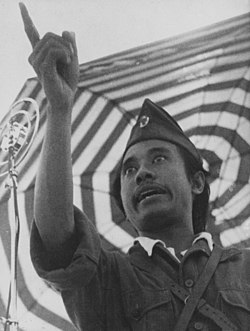 SutomoSutomo (3 October 1920Affiliated
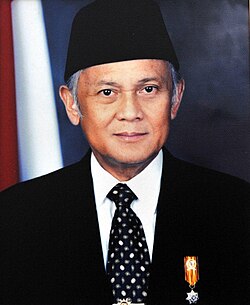 B. J. HabibieBacharuddin Jusuf Habibie (25 June 1936Affiliated
 Hamengkubuwono XSri Sultan Hamengkubuwono X (Javanese: ꦲꦩꦁꦏꦸꦧꦸꦮꦺꦴꦚ ꪧAffiliated
How the record is sourced and how the score is derived.
The score is formula-derived (Factrail formula v1, version 1.0.0), not an editorial verdict. Read the methodology.
By the Factrail desk · Method: how we source and score · Last reviewed
Dispute a fact on this pageNamed here, or represent someone who is? Request a right of reply.
People and organizations as listed in the Related section of this page; facts, drivers and the pages that name it as listed in the blocks here. Counts, not a rating.