
Susanne Eberstein
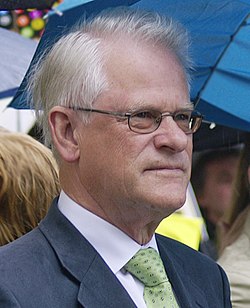
Eva Susanne Eberstein was born on 1 March 1948. She is a Swedish jurist and a politician of the Swedish Social Democratic Party.
- Facts0
- Drivers0
- Indicators0
Eva Susanne Eberstein was born on 1 March 1948. She is a Swedish jurist and a politician of the Swedish Social Democratic Party.
Eva Susanne Eberstein was born on 1 March 1948. She is a Swedish jurist and a politician of the Swedish Social Democratic Party. The Riksdag biography compiled from particulars she supplied for the register of elected members names her parents as the chief district judge Einar Malmberg and Marisa Malmberg, née Thulin. She was an ordinary member of the Riksdag for Västernorrland County from 2 October 1994 to 24 September 2018. From 4 October 2010 to 29 September 2014 she was First Deputy Speaker of the Riksdag.
After a studentexamen in 1967 and a law degree (jur.kand.) in 1972, she served as a district-court notary (tingsnotarie) from 1974 to 1977, as a fiscal at an administrative court of appeal (kammarrättsfiskal) from 1978 to 1981, and as an assessor (kammarrättsassessor) from 1982 to 1989. From 1989 to 2016 she was a judge of appeal (kammarrättsråd) at the Administrative Court of Appeal in Sundsvall. In local government she was vice chair of Sundsvall’s social welfare board from 1986 to 1989 and its chair from 1989 to 1994, and a member of the council of Sundsvall Municipality from 1991 to 1998.
In the Riksdag she sat on the Committee on Finance from 20 October 1994 to 4 October 1998 and was vice chair of the Committee on Health and Welfare from 13 October 1998 to 30 September 2002. She was first vice chair of the Committee on Justice from 5 November 2002 to 17 November 2004, chair of the Committee on Taxation from 23 November 2004 to 2 October 2006, and vice chair of the Advisory Committee on European Union Affairs from 10 October 2006 to 12 October 2010. In the 2014–2018 term she returned to the Committee on Justice as a member.
She was a member of the General Council of Sveriges Riksbank from 2 December 1998 to 19 October 2010, and chaired the council from 24 October 2014 to 9 October 2018 and again from 11 October 2018 to 9 October 2022. The Riksbank describes her as the first woman in that chair: the council appoints the bank’s executive board, follows its management and decides the design of banknotes and coins, and the chair signs the notes together with the governor. She has been a member of the Judges Nomination Board (Domarnämnden) since 1 January 2011, with a further term listed from 2023. On 28 January 2019 the Royal Court announced that the former deputy Speaker would receive His Majesty the King’s Medal of the 12th size in the ribbon of the Order of the Seraphim, for significant contributions to Swedish public administration.
On 7 July 2018 Svenska Dagbladet reported that the actor Hugh Grant had married the Swedish television producer Anna Eberstein in London about two months earlier. A Dagens Nyheter report later described Grant as Susanne Eberstein’s son-in-law and said that she had advised him against a career in politics.
Eva Susanne Eberstein, born Malmberg, was born on 1 March 1948 in Härnösand, in Västernorrland County, according to Statistics Sweden’s extract from the 1948 registers of births, marriages and deaths, preserved by the Swedish National Archives. The Riksdag records the birth year as 1948. In September 2014, when Sundsvalls Tidning described her as 66, she said that a county governorship would have lasted only until March, because a landshövding had to leave office at 67.
In the biography she supplied for the Riksdag booklet Fakta om folkvalda, Eberstein named her parents as the chefsrådman Einar Malmberg and Marisa Malmberg, née Thulin. Under Sweden’s Code of Judicial Procedure, a chefsrådman is a legally trained judge who may head a division of a district court (tingsrätt). She has said that she grew up on Lidingö, northeast of Stockholm, with a single mother, at a time when the island still had industry—including the AGA works and a margarine factory—and was, as she put it, not as exclusive as it later became; politics was not discussed at home, but further study was treated as a matter of course. The parliamentary note gives neither a school nor a childhood address, so that account of Lidingö comes from a May 2021 interview with the Social Democratic association Onsdagsklubben, not from the official biography.
Eberstein took the studentexamen in 1967, the examination that then qualified pupils for university. On 30 June 1967 the government issued Kungl. Maj:ts kungörelse (1967:490) om avveckling av studentexamen m.m., an ordinance providing for that examination to be wound down. She has placed her law studies at Uppsala University in the years around 1968, and the Riksdag biography records the jur.kand., the professional law degree, in 1972.
She later described those years as a time when “everything was political”: many students moved far to the left, while she was more cautious and joined the Swedish Social Democratic Party, with gender equality and social equality as the questions she has identified as her own from then on. As young jurists she and her husband Hans then worked for a time in Ludvika, living in a high-rise area where, she said, poverty shaped everyday life; they could have left, but she called the posting a “wake-up call” and said she wanted to speak for people who could not speak for themselves, a purpose she has said she carried into both the courts and party politics.
Eberstein followed the usual Swedish path into the administrative courts. The biography she gave the Riksdag lists her as a tingsnotarie, a law clerk at a district court, in 1974–1977; a kammarrättsfiskal, a trainee judge at an administrative court of appeal, in 1978–1981; and a kammarrättsassessor, a judge who has completed that training but holds no permanent seat, in 1982–1989. The 1989 Sveriges statskalender still listed her as an assessor at Kammarrätten i Sundsvall. Its notes treat the years after a name as the year of birth and the year the office was assumed; for the assessorship the second year is 1982.
In 1989 she became a kammarrättsråd, a permanent judge of such a court. Ordinary judges in Sweden are appointed by the government on objective grounds such as merit and competence. The 1992 calendar records that entry at the Sundsvall court. Her husband, Hans Oskar Christian Eberstein, had been a kammarrättsråd at the same court since 1983, and both were still listed in 2000. She later wrote, on the Swedish Social Democratic Party's website, that she had worked in that post before politics was her full-time occupation.
The appointment and active sitting soon diverged. The 1991, 1992 and 1994 calendars marked her on leave ("tji", tjänstledig) without giving a reason. Those years also cover her chairmanship of Sundsvall's social welfare committee, dated 1989–1994 in the same biography. From 1994, chapter 4, section 10 of the Instrument of Government let Riksdag members and substitutes carry out the mandate without being blocked by an official duty, and the Riksdag says an employer may not refuse the corresponding leave. In 2000 she was still a kammarrättsråd on the court's list, identified as a member of parliament, with 1989 as the year of appointment. Her Riksdag biography dates the post 1989–2016.
A 2023 courts text on god domarsed (good judicial conduct) says a Swedish judge may hold political views, vote and belong to a party, but that wider party activity can affect how impartiality is perceived and must never be brought into a case. The Administrative Court Procedure Act applies the Code of Judicial Procedure's disqualification rules, including where a municipality is a party and the judge sits on the board handling the matter, and where any other circumstance is apt to undermine confidence in impartiality in that case.
Kammarrätten i Sundsvall is the northernmost of Sweden's four administrative courts of appeal. It hears mainly appeals from first-instance administrative courts in disputes between individuals and public authorities. The circuit is Norrland and Dalarna County — the courts in Falun, Härnösand, Umeå and Luleå. Formed in 1974 from two divisions transferred from Stockholm in the administrative-court reform, it left the old kammarrätt, separated from Kammarkollegiet in 1695, as Kammarrätten i Stockholm.
In 1992 the state calendar gave the court 85 employees and, from 1 July, six divisions: four at Trädgårdsgatan 4 in Sundsvall and two in Umeå, over Kopparberg (later Dalarna), Gävleborg, Västernorrland, Jämtland, Västerbotten and Norrbotten. In 2008 it moved to Södra Tjärngatan 2, shared with Hovrätten för Nedre Norrland beside Bünsowska tjärnen, next to premises used by Sundsvall District Court and the local prosecutors. By the court's 2022 account it had about 50 employees, 12 of them ordinary judges, and about 3,000 cases a year, with lay judges in some hearings. Further appeal is to the Supreme Administrative Court, though statute may limit access to that court and to a kammarrätt.
The biography Susanne Eberstein supplied for the Riksdag booklet Fakta om folkvalda lists her offices in Sundsvall Municipality: vice chair of the social welfare board, socialnämnden, from 1986 to 1989; chair of that board from 1989 to 1994; member of the municipal council, kommunfullmäktige, from 1991 to 1998; and board member of Stadsbacken AB from 1993 to 2000. The municipality describes Stadsbacken as the limited company it owns outright, which holds and manages shares in the companies used to run municipal activities.
The Social Services Act (1980:620) took effect on 1 January 1982. It makes each municipality responsible for social services in its area and assigns that responsibility to a social welfare board. In a May 2021 interview with the Social Democratic association Onsdagsklubben, Eberstein said that a seat on Sundsvall’s board, and then the chair, showed her how much a municipal politician could affect services: the board, she said, answered for both child care and elderly care, with more than 1,000 employees together, and elder care in Sundsvall then kept a high standard with permanently employed staff.
The chairmanship spanned a national shift in responsibility for older people. The Riksdag decided the Ädel reform in December 1990, and it came into force on 1 January 1992: municipalities took over activities that had belonged to the county councils, county-council nursing homes were transferred into what was called special housing (särskilt boende), and municipalities received a consolidated responsibility for long-term service, care and nursing of older people. Eberstein left the board chair in 1994, the year she entered the Riksdag for Västernorrland County, and the biography keeps her on the municipal council until 1998.
Social Democratic Women in Sweden (S-kvinnor), formally Sveriges socialdemokratiska kvinnoförbund, is the women’s federation attached to the Swedish Social Democratic Party. Its own history says that the first Social Democratic women’s club was formed in Stockholm in 1892 and that 120 clubs joined in 1920 to found the national body, with early demands for childcare, education, tolerable working conditions, equal pay, and women’s right to decide over their own bodies, including free abortion; the same account says the federation strongly opposed a Swedish nuclear weapon in the 1950s, that in 1994 it secured “varannan damernas” — alternate places for women and men — on every Social Democratic ballot paper and parity in bodies appointed by Social Democrats, that a 1997 party congress on its initiative decided to criminalize the purchase of sex (enacted in 1999), and that the party has called itself feminist since its 2001 congress.
The federation is organized in local clubs and districts. Its list for Västernorrland names a district club and clubs in Sundsvall, Härnösand, Matfors, Gullänget and Nybo/Östavall, among them Sundsvalls S-kvinnor. The parliamentary biography records Eberstein as chair of S-kvinnor in Västernorrland from 1996 to 2011, a district post held through most of her years in the Riksdag and after she had already left the social welfare board.
She has placed the start of that local engagement in the years after she moved to Sundsvall in 1973. In the Onsdagsklubben interview she said contact with S-kvinnor was decisive: in the women’s club she met contemporaries who wanted to pursue questions that mattered to young women; there, she said, she took part in starting one of the first women’s shelters, which led her into politics; and joining the party was not immediate — she was told a brochure would be sent — but she did become a member and soon received municipal assignments.
Sundsvalls Tidning, marking the shelter’s 25th anniversary, reported that Sundsvall was among the first Swedish cities to open one: the association Kvinnogemenskap was formed in February 1981 and the shelter opened that autumn, after a motion to the municipal council and a start-up grant of 50,000–60,000 kronor. That account of the motion, the grant and the opening does not mention Eberstein.
Susanne Eberstein, born in 1948, entered the Riksdag for the Swedish Social Democratic Party at the 1994 Swedish general election, held on 18 September 1994. She was elected for Västernorrland County (Västernorrlands läns valkrets), the multi-member constituency covering that county. Sweden elects its 349 members by proportional representation across 29 constituencies, with 310 fixed constituency seats and 39 adjustment seats. Eberstein, then living in Sundsvall, was 45 or 46. She was a judge (kammarrättsråd) at the administrative court of appeal in Sundsvall, a post she held from 1989 to 2016, and had chaired the municipality's social welfare board from 1989 to 1994 while sitting on the municipal council from 1991 to 1998.
The election returned the Social Democrats to government after three years in opposition. Statistics Sweden recorded 45.3 percent of valid votes for the party nationally, 2,513,905 votes and 161 seats, up from 37.7 percent and 138 seats in 1991, and a turnout of 86.8 percent. In Västernorrland the party received 55.0 percent, 95,266 votes, and six of the 12 seats credited to the constituency. Carl Bildt, prime minister since 4 October 1991 at the head of a coalition of the Moderates, the Liberal Party (Folkpartiet), the Centre Party and the Christian Democrats, left office on 7 October 1994. On 6 October the Riksdag approved Ingvar Carlsson as prime minister by 180 votes to 26, with 130 abstentions. Carlsson, prime minister from 1986 to 1991, took office again on 7 October and that day read a government declaration for a Social Democratic cabinet.
The new chamber met on 3 October 1994. In the opening roll for Västernorrland, Eberstein was listed as a Social Democratic ledamot, a member holding a seat, and not as an ersättare (substitute). The Riksdag's open-data register dates that appointment from 3 October 1994 to 5 October 1998. Its public profile describes her whole service as ordinary membership (ordinarie) for the county through 24 September 2018, and gives 2 October 1994 as the start, one day before the opening sitting and the register's first appointment.
She was returned at the general elections of 1998, 2002, 2006, 2010 and 2014. The register records an unbroken series of serving-member appointments: 5 October 1998–30 September 2002, 30 September 2002–2 October 2006, 2 October 2006–4 October 2010, 4 October 2010–29 September 2014, and 29 September 2014–24 September 2018. In the county, Statistics Sweden's figures for the Social Democrats' share of valid votes, and for seats allocated to the constituency, were 45.1 percent and five seats in 1998, 49.3 percent and five in 2002, 46.0 percent and five in 2006, 44.0 percent and five in 2010, and 46.3 percent and five in 2014. The constituency's total seats in those elections were 10, 10, 11, 9 and 10. The Election Authority's final results match those later seat totals and give the party's county share as 45.96 percent in 2006, 43.97 percent in 2010 and 46.25 percent in 2014.
On the 2010 Social Democratic ballot in the county she was placed first. In February 2014 the district nomination committee proposed the same order as four years earlier — Eberstein, then Jasenko Omanovic, Eva Sonidsson, Ingemar Nilsson and Kristina Nilsson — with the list to be fixed at a district congress in Ånge that April. From 4 October 2010 to 29 September 2014 she was also First Deputy Speaker, an office separate from the electoral record summarized here. Nationally the Social Democrats governed until Fredrik Reinfeldt took office on 6 October 2006 and returned to government when Stefan Löfven became prime minister on 3 October 2014. Eberstein's county seat continued through both periods: the party kept five seats there at every election from 1998 to 2014.
She did not sit after the 2018 election. In February 2018 Allehanda published the county party's proposed Riksdag list, headed by Löfven; the ten names printed did not include her. On 24 August 2018 Sundsvalls Tidning reported that, after 24 years, she was leaving the Riksdag and Sundsvall, and headlined her statement that she would spend more time with her grandchildren. She said that with those 24 years she believed she was the Sundsvall resident who had served longest in the Riksdag. Her last appointment ended on 24 September 2018. At that election the Social Democrats took 39.80 percent of valid votes in the county and four seats, out of eight allocated to the constituency, and the member register has no later Riksdag appointment for her.
From her first term until 2010, Susanne Eberstein’s main work in the Riksdag ran through five bodies. The assignment register lists the Swedish Social Democratic Party member as a member of finansutskottet (the Committee on Finance) from 20 October 1994 to 4 October 1998; as vice ordförande (vice chair) of socialutskottet (the Committee on Health and Welfare) from 13 October 1998 to 30 September 2002, and as andre vice ordförande (second vice chair) of that committee only from 8 to 23 October 2002; as förste vice ordförande (first vice chair) of justitieutskottet (the Committee on Justice) from 5 November 2002 to 17 November 2004; as ordförande (chair) of skatteutskottet (the Committee on Taxation) from 23 November 2004 to 2 October 2006; and as vice chair of EU-nämnden (the Committee on EU Affairs) from 10 October 2006 to 12 October 2010.
Finansutskottet prepares guidelines for economic and budget policy, matters on Sveriges Riksbank, expenditure ceilings and the revenue estimate, and monetary, credit and public-debt policy, including Sweden’s fee to the European Communities. Eberstein was an ordinary member for the 1994–1998 term. In 1997/98 the committee met 33 times. Its autumn framework report proposed expenditure ceilings and a revenue estimate; in spring 1998 it took up the ceiling for 2001 and proposed lowering the ceilings already set for 1999 and 2000.
Socialutskottet prepares care of children and young people (except preschool and school-age childcare), older people and people with disabilities, substance abuse and other social services, alcohol policy and health care, including expenditure area 9. The register calls the 1998–2002 post vice chair. The committee’s account of 1999/2000 is more precise: Ingrid Burman of the Left Party was chair, Chris Heister of the Moderate Party first vice chair, and Eberstein second vice chair. That session’s larger items included the 2000 budget for expenditure area 9 (bet. 1999/2000:SoU1), alcohol and health-care questions, compulsory psychiatric care and forensic psychiatric care (bet. 1999/2000:SoU13), and a national disability-policy plan. On 10 December 1999 she opened the debate on SoU1, moved the committee’s proposal, and argued that the painful 1990s consolidation had held the welfare systems together so gaps could be repaired, citing unemployment and sickness benefits restored to 80 per cent, restored pensions and higher child allowances.
Justitieutskottet prepares the courts, prosecution service, police, prisons, the National Council for Crime Prevention and the Crime Victim Authority, the criminal and procedural codes, and expenditure area 4. Eberstein was a member from 24 October to 4 November 2002, then first vice chair until 17 November 2004. In 2002/03 the chair was Johan Pehrson of the Liberals, with Eberstein as first vice chair and Alice Åström of the Left Party as second vice chair. On 15 December 2003 she presented the report on expenditure area 4: just over 26.4 billion kronor, 1.1 billion more than the year before, including 825 million kronor more for the police. The same day she introduced the report on government bill 2003/04:7, carrying out the European Union framework decision on a European arrest warrant and normally replacing extradition to other member states with surrender under a new statute. On 10 November 2004, days before she left, she defended reorganizing the tingsrätter (district courts), saying statute left their number to the government and that many old court matters had already moved elsewhere.
Skatteutskottet prepares state and municipal taxes, assessment and payment, population registration (folkbokföring) and enforcement, and expenditure area 3. A substitute in 1994–1998, she joined as a member on 18 November 2004 and became chair on 23 November, after Arne Kjörnsberg left on 1 November to chair the finance committee. The report of 30 November 2004 ending inheritance and gift tax at the close of 2004, bet. 2004/05:SkU18 on bill 2004/05:25, was signed on the committee’s behalf by Eberstein. In 2005/06 the committee held 26 minuted meetings, adopted 38 reports and handled its part of the 2006 budget, 23 further bills and 638 motion demands. It backed reformed rules for owners of closely held companies, tax measures after the storm Gudrun, a carbon-dioxide-based vehicle tax, a tax on air passengers, and a single national Kronofogdemyndigheten (Swedish Enforcement Authority) in place of ten regional authorities. On 23 November 2005 she said she stood by the wealth tax, because those with more should contribute more, and called the property tax a base economists favoured, while noting new exemptions for ordinary households.
EU-nämnden does not prepare bills. The government, which represents Sweden in the European Union, must consult it before meetings of the Council of the European Union and the European Council, and receives a negotiating mandate. The government is not legally bound, but the Committee on the Constitution has held that ministers should follow the committee unless they have very strong reasons not to. Eberstein was a substitute from 9 October 2000 to 8 October 2002 and vice chair from 10 October 2006 to 12 October 2010. In the EU debate of 6 March 2008 she criticized Minister for EU Affairs Cecilia Malmström, saying the priorities for the presidency then being planned largely repeated the European Commission’s 2009 strategy and were too broad to be priorities, and that Swedish interests should be stated more clearly.
At the new Riksdag's first sitting, on 4 October 2010, the Social Democrats did not nominate Susanne Eberstein for Speaker. Sven-Erik Österberg, for the Social Democratic group and with the Green Party and the Left Party, proposed Kent Härstedt; the Alliance parties proposed the incumbent, Per Westerberg of the Moderate Party. In a secret ballot, read while Mona Sahlin presided as acting president by seniority, Westerberg received 194 votes and Härstedt 153, with two members absent. The Alliance and the Sweden Democrats together held 193 seats, and reporting at the time treated the Sweden Democrats as having voted for Westerberg, so one further vote for him came from outside those parties. The chamber then elected Eberstein First Deputy Speaker (förste vice talman) by acclamation, on Österberg's nomination. The same sitting chose Ulf Holm of the Greens as Second Deputy Speaker, by 325 votes to 20 for the Sweden Democrats' Mikael Jansson, and Liselott Hagberg of the Liberal People's Party as Third Deputy Speaker by acclamation. Eberstein served until 29 September 2014, while Westerberg remained Speaker.
The Speaker presides over the chamber, plans the Riksdag's work and, under the Instrument of Government, proposes a prime minister when a government is to be formed. The Speaker is on leave from membership and neither debates nor votes; a substitute from the same party and constituency sits instead. With the three deputy speakers, the Speaker forms the presidium, which meets on how the work is to be led. A deputy speaker may preside in the Speaker's place and represent the Riksdag, may vote while presiding but may not speak to the substance of the business, and otherwise sits as an ordinary member. The Speaker chairs the Riksdag Board (riksdagsstyrelsen), which directs the Riksdag Administration and deliberates on the planning of parliamentary business; the deputy speakers may take part, and one of them chairs the Board if the Speaker is absent. Since 1 July 2000 the Board has been the single directing organ, having replaced the administrative board and the Speaker's Conference (talmanskonferensen).
After the September 2014 election the Social Democrats, the largest party in the largest bloc, were in line to name the Speaker. SVT reported that the new Social Democratic group had to choose between former Speaker Björn von Sydow and Eberstein, the sitting First Deputy Speaker. Both had been members for about twenty years, and neither would say whether they were candidates. On 29 September the group instead nominated Urban Ahlin, its foreign-policy spokesperson and a member since 1994. Mikael Damberg proposed him in the chamber, citing twelve years as chair or deputy chair of the Committee on Foreign Affairs and a record of cross-party agreement. Party leader Stefan Löfven told TT that the group had united easily despite "many good candidates," citing Ahlin's twenty years in the Riksdag, his grasp of the parliamentary task, his foreign-affairs work—where, Löfven said, parties most needed to be brought together across the blocs—and his international contacts. Anna Kinberg Batra, for the Alliance, named no opponent, invoking the practice that the Speaker comes from the largest party in the largest grouping, and the chamber elected Ahlin by acclamation. She then nominated Tobias Billström of the Moderates as First Deputy Speaker; he was elected by acclamation the same day, ending Eberstein's term.
Expressen's commentator K-G Bergström called the choice a surprise and a slight to Eberstein, whom the paper said had been reported as the favourite. Sundsvalls Tidning headlined the result "Eberstein ratades som talman" ("Eberstein was passed over as Speaker"). Eberstein told the paper she had not expected the office: she had stood for re-election so that older members would be present—only eleven were over 65—and had never counted on the speakership. She remained a member, so Niklas Säwén, aged 22 and next on the Västernorrland Social Democratic list, did not take the seat he would have filled as her substitute had she become Speaker.
The Riksdag elects the General Council of Sveriges Riksbank (Riksbanksfullmäktige). The Sveriges Riksbank Act (1988:1385), repealed on 1 January 2023, gave the bank eleven council members chosen by the Riksdag; the council then elected its own chair and vice-chair. The Riksbank states that the Riksdag also elects eleven deputies, for the same term as members of the Riksdag.
Under that Act the council appointed the six-member Executive Board for five or six years, named its chair governor and at least one vice-chair a deputy governor, and set their pay. Removal of a board member followed Chapter 9, Article 13 of the Instrument of Government and required agreement by at least eight council members. The chair and vice-chair could attend board meetings and speak but could not propose or vote; other business was for the Executive Board. The Riksbank describes the council as following up the bank's work and the board's management of it, including through that attendance.
Susanne Eberstein, of the Swedish Social Democratic Party, was a member from 2 December 1998 to 19 October 2010. The Riksbank's historical note gives that spell as 1999–2010. At the constituting meeting on 24 October 2014 the new council elected her chair and Michael Lundholm vice-chair. The Riksbank states that she was the first woman in the post, succeeding Johan Gernandt, whom it lists as chair from 2006 to 2014. The Riksdag register records her as chair from 24 October 2014 to 9 October 2018 and from 11 October 2018 to 9 October 2022. The Riksbank reported that the constituting meeting of 21 November 2018 re-elected her and Lundholm. On 21 October 2022 the council elected Bo Broman of the Sweden Democrats chair and Tomas Eneroth vice-chair.
The new council's first board appointment filled a vacancy left by its predecessor. On 7 October 2014, while Gernandt was still chair, the council released Deputy Governor Karolina Ekholm early — her term ran to 15 March 2015 — to become state secretary to Finance Minister Magdalena Andersson, and left the succession to the incoming council. On 19 December 2014 Eberstein and Lundholm said the council had unanimously appointed Henry Ohlsson, professor of economics at Uppsala University, for six years from 12 January 2015.
Chapter 5 of the 1988 Act required the council to determine the design of the notes and coins the Riksbank issues. The Riksbank states that the notes carry the signatures of the council's chair and the governor, and that as chair Eberstein signed them with the governor.
Before she became chair she sat on the working group that proposed the figures for the six denominations introduced in 2015–2016. She told Dagens Industri that the brief was an even split of women and men, well-known cultural figures, and different parts of Sweden, and that she practised her signature with a special pen for the printing plate. The new 100- and 500-krona notes, valid from 3 October 2016, carried her signature beside that of Governor Stefan Ingves. The paper described the Greta Garbo 100-krona note and the Birgit Nilsson 500-krona note as the first Swedish banknotes with a woman's signature; the first Swedish banknote dates from 1661.
The council's oversight of the board concerned shareholdings and the bank's pandemic purchases of corporate bonds. On 17 December 2021 the council, with Eberstein as chair, found the link between the holdings of Ingves and Deputy Governor Cecilia Skingsley, share-price movements, and their role in the decisions too weak to be a conflict of interest under the Administrative Procedure Act, and found no failure of duty. Eberstein said monetary-policy decisions affect everyone's finances, including the board's, and that public disclosure of members' assets to the Riksdag aided scrutiny.
In February 2022 Svenska Dagbladet reported that the legal assessment was made by the council's secretariat, using Riksbank staff, and that KPMG had not reviewed the law independently. A professor of political science called that wholly inappropriate, and Ulrik Åshuvud of Transparency International Sweden asked for an outside inquiry. Eberstein said the council should obviously use the bank's lawyers — "very honourable" lawyers, in her words — and stood unanimously by the finding. She said the Act required the review to be carried out inside the bank. Mats Persson of the Liberals wrote that the suspicion itself called for different handling if the public was to trust the Riksbank.
Apart from committee seats in the Riksdag, the deputy speakership and the General Council of the Riksbank, Eberstein has held board, oversight and inquiry posts recorded in the biography she supplied for Fakta om folkvalda. That page’s current assignments name only Domarnämnden.
The biography records a board seat at Riksgäldskontoret, the National Debt Office, from 1994 to 2000, and at Rikspolisstyrelsen, the National Police Board, from 2007 to 2013, plus the chair of the police authority in Västernorrland County (2001–2014), membership of the Police Organisation Committee (2011–2014) and the chair of the Swedish National Council for Crime Prevention (2003–2006).
It dates membership of Säkerhets- och integritetsskyddsnämnden to 2007–2015. The Riksdag set up that authority from 1 January 2008 to supervise secret coercive measures and the Swedish Security Service’s handling of personal data; the 2008 annual report lists Eberstein, nominated by the Social Democrats. SVT reported on 2 January 2009 that she, of Sundsvall, had been appointed to the three-member Signalspaningsnämnden, which was to check how the National Defence Radio Establishment (FRA) used the signals-intelligence law then in force until a court took over. Centre Party member Staffan Danielsson and chief judge Runar Viksten were proposed with her.
The biography also lists, without end dates, the Security Service’s insynsråd and the Prosecutor-General’s insynsråd from 2015, and Domstolsverket’s insynsråd from 2016. Dagens Nyheter on 26 March 2024 described her as the Social Democrats’ representative on Domstolsverket’s council, which follows the courts administration and advises the director-general. A later organisation page names Anna Wallentheim instead and does not list Eberstein.
As a one-person investigator for the government, the biography records SOU 1996:29 on research funding, SOU 1997:69 on large-scale research and SOU 2003:7 on healthcare providers. Appointed on 9 June 1999 to review the Care of Young Persons (Special Provisions) Act (committee S 1999:07), she submitted Omhändertagen (SOU 2000:77) in August 2000. Under Dir. 2003:33 she was appointed from 1 April 2003 and in June delivered SOU 2003:69 on alcohol advertising in print. On 7 July 2022, under Dir. 2022:106, she became special investigator of the Inquiry on Youth Crime Boards (S 2022:11), to adapt Danish youth-crime boards to Swedish law without changing sanctions or procedure; Dir. 2023:26 shortened the deadline to 27 March 2024. SOU 2024:30, dated 8 May 2024, proposed a new agency, Myndigheten mot ungdomskriminalitet, and a referring role for the Swedish Police Authority.
The Act on the Appointment of Permanent Judges (2010:1390) gives Domarnämnden the task of preparing appointments of ordinary judges, proposing names to the government and promoting recruitment. Proposals cannot be appealed, and the government is not bound by them; before appointing someone not proposed, it must hear the board. Of nine members, each with a substitute and a term of at most four years, five are or have been ordinary judges, two are lawyers outside the courts (one an advocate) and two represent the public. The Riksdag elects the public members and substitutes; the government appoints the rest. The Riksdag also describes the board as proposing rent-tribunal judges (hyresråd).
It elected Eberstein (Social Democrats) with Maria Abrahamsson (Moderate) on 14 December 2010, from 1 January 2011, and with Jessika Roswall (Moderate) on 13 November 2014, from 1 January 2015. On 16 October 2018 it elected her with Roswall for 1 September 2019–31 December 2022; the assignment register starts that term on 1 January 2019. On 18 October 2022 it elected Matheus Enholm (Sweden Democrats) and Eberstein, recorded from 1 January 2023 with no end date. From 1 January 2025 the published list still names former member of the Riksdag Susanne Eberstein, with Johan Büser as her substitute.
Eberstein, a Social Democrat, has described equality between women and men, and social equality, as what drew her into politics and what remained her main concerns. In May 2021 she told Eva Åhlström of Onsdagsklubben, "Jag vill vara en röst för dem som inte kan föra sin egen talan" ("I want to be a voice for those who cannot speak for themselves"). She said expanded childcare had been decisive for gender equality.
In the Riksdag she was vice chair of the social affairs committee (socialutskottet) from 13 October 1998 to 30 September 2002, and chair of the committee on taxation from 23 November 2004 to 2 October 2006. In the chamber on 23 March 2005, during debate on income-tax motions that included a deduction for household services, she said she wanted "en gemensam generell välfärd, öppen för alla och lika för alla," and not tax cuts for those who already paid the most. Social Democrats, she said, would always defend welfare even if that meant higher taxes, because general welfare came before people becoming richer in their own pockets. She called a cleaning deduction a subsidy from other taxpayers, and said Denmark had dropped a similar scheme because it cost too much.
In 1999, during debate on adoption by same-sex couples, Expressen quoted her: "Man kan inte chansa. Det är som att släppa ut ett nytt lösningsmedel och säga: Det är ingen som vet om det här är livsfarligt. Men vi släpper ut det och ser vad som händer" ("One cannot gamble; it is like releasing an untested solvent and waiting to see"). An Aftonbladet editorial in 2014 quoted a Dagens Nyheter article in which she wrote that children adopted by homosexual couples "har det inte lätt" and that "Vi kan därför inte låta adoptivbarn bli missionärer för nya familjeformer." Before the Social Democratic congress in November 2001 she wrote in Aftonbladet urging delegates to vote no, because "barnens bästa går före homorättigheter" and because "Barn vill inte avvika från mängden, utan likna varandra så långt som möjligt," according to an editorial by Åsa Petersen.
Government bill 2001/02:123 later proposed that registered partners be allowed to be assessed as adoptive parents, jointly or of the other partner's child, to take effect on a date the government set once Sweden had denounced the 1967 European adoption convention. On 5 June 2002 the chamber approved lagutskottets report 2001/02:LU27 to that effect, by 193 votes to 66 on the main adoption point. In 2009 the Riksdag made marriage gender-neutral: on 1 April it adopted the Committee on Civil Affairs report by 261 votes to 22, with 16 abstentions, and the amendments took effect on 1 May 2009.
When Eberstein was discussed in September 2014 as a possible Speaker, TV4 reported a written statement calling the 1999 remark careless ("vårdslöst") and saying she had already apologised to people she had hurt. TV4 wrote that no such apology had been published, that she would not elaborate, and that she declined an interview and walked away; the Left Party said she should explain herself. On 25 September an Aftonbladet editorial by Somar Al Naher argued she should not become Speaker, citing the 1999 statements.
In December 2013, as First Deputy Speaker, Eberstein had G. E. Schröder's Baroque painting of Juno removed from the Riksdag guest dining room, where it had hung since 1983. She told the news agency TT, as SVT reported, that it was a feminist question: "Det är tråkigt med en barbröstad kvinna när jag sitter på offentliga middagar med utländska gäster. Jag tycker det känns litet svårt att sitta där med män som tittar på oss kvinnor." The administration said paintings were rotated and left the wall empty; a presiding officer, speaking anonymously, cited sensitivity toward foreign guests, especially from Muslim countries, which Eberstein said was not what decided the matter. Carl B. Hamilton of the Liberal People's Party called a painting of Gustav III's coronation worse, as praise for the king who crushed the Age of Liberty's parliament.
In November 2011 SVT, following TV4, reported that the Riksdag had reimbursed the whole cost of a tenant-owned flat in central Stockholm that Eberstein and her husband bought in 1997, although he owned half, a sum SVT put at more than half a million kronor. She told SVT Mittnytt that she had followed the rules, that her husband had helped pay for the flat, and that she lived there on weekdays and returned to Sundsvall at weekends. Without the allowance, she said, she would have used a Riksdag flat, which also costs. SVT noted the same pattern for Count Archibald Douglas, husband of Moderate member Walburga Habsburg Douglas, whose central Stockholm rent the state had paid in full for five years.
Eberstein is married to Hans Eberstein. In a 2021 interview she described them as young jurists who served for a time in Ludvika and, in 1973, moved to Sundsvall as part of what she called the “green wave,” because a court within walking distance suited two people working full time. During her years in the Riksdag she kept a base in both places. In November 2011 she told SVT that she lived on weekdays in a tenant-owned flat in central Stockholm which the couple had bought in 1997, and that she went home to Sundsvall at weekends; her husband owned half the flat. When she left parliament after 24 years, Sundsvalls Tidning reported on 24 August 2018 that she was leaving Sundsvall in order to spend more time with her grandchildren. In the May 2021 interview she said she had since moved to Stockholm, and that she and Hans then had six grandchildren, three in Stockholm and three in London.
Their daughter, Anna Elisabet Eberstein, was born in September 1978. She grew up in Sundsvall and worked as a television producer, including, Swedish newspapers reported, as a producer for the sports network ESPN. On 21 May 2018 the BBC reported that the actor Hugh Grant was to marry her, describing her as a Swedish television producer and the mother of three of his children. Aftonbladet reported on 26 May that the couple had married the previous Friday, exchanging rings at Chelsea Old Town Hall in Chelsea, London. In January 2014, after reports that they had a son born in London in September 2012, Eberstein wrote that the child was “a wonderfully sweet little boy” whom she had gained as a grandchild, and that she already had one grandchild.
In March 2024 Dagens Nyheter reported that Grant had considered entering politics but had been advised against it by Eberstein. She told the paper that he was married to her daughter and that they had three small children, and that she did not want them exposed to “the hate and the disgust” a political career would bring; because he was so well known, she said, social media would bring a storm of attention. She was then a member of the advisory council (insynsråd) of the Swedish National Courts Administration. Quoted by Dagens Nyheter from an Entertainment Weekly interview, Grant said that when the subject arose she told him not to do it, calling politics horse-trading and the abuse unthinkable.
On 28 January 2019 Carl XVI Gustaf decided that year’s awards of the Seraphim Medal, H.M. the King’s Medal and the Litteris et Artibus medal. The King’s Medal of the 12th size in the ribbon of the Order of the Seraphim was conferred on former deputy Speaker of the Riksdag Susanne Eberstein “för betydande insatser inom svensk statsförvaltning” (“for significant contributions within Swedish public administration”). The Royal Orders describe that grade as the medal in gold of the 12th size—gilt fine silver, 43 millimetres in diameter—worn with the Seraphim ribbon; the women’s version is worn as a bow at the left shoulder.
The King presented the medals on 13 February 2019 in Lovisa Ulrika’s dining room at Stockholm Palace, with the Queen present. Since 2009 the presentations that follow the 28 January and 6 June announcements have normally been held there: the King hands over the medals and the Queen the accompanying letters.
Ranked by shared high-impact facts, then explicit ties, then shared drivers.
 Johan PehrsonCarl Johan Georg Pehrson is a Swedish politician who…Affiliated
 Magdalena AnderssonEva Magdalena Andersson (born 1967) is a Swedish economist…Affiliated
 Ingvar CarlssonGösta Ingvar Carlsson (born 9 November 1934) is a retired…Affiliated
 Carl BildtNils Daniel Carl Bildt (born 15 July 1949) is a Swedish…Affiliated
 Fredrik ReinfeldtJohn Fredrik Reinfeldt is a Swedish economist and former…Affiliated
 Stefan LöfvenKjell Stefan Löfven is a Swedish politician who served as…Affiliated
How the record is sourced and how the score is derived.
The score is formula-derived (Factrail formula v1, version 1.0.0), not an editorial verdict. Read the methodology.
By the Factrail desk · Method: how we source and score · Last reviewed
Dispute a fact on this pageNamed here, or represent someone who is? Request a right of reply.
People and organizations as listed in the Related section of this page; facts, drivers and the pages that name it as listed in the blocks here. Counts, not a rating.