
Thomas Hacker
Thomas Hacker (born 9 October 1967 in Bayreuth) is a German business graduate (Diplom-Kaufmann)…
- Facts0
- Drivers0
- Indicators0
Thomas Hacker (born 9 October 1967 in Bayreuth) is a German business graduate (Diplom-Kaufmann), tax adviser and politician of the Free Democratic Party (FDP). He sat in the Bundestag for Bavaria from 2017 through the 20th electoral term, elected on the FDP state list in the Bayreuth constituency, and was the FDP parliamentary group's spokesman on media policy. At the 2025 federal election the FDP won 4.3 percent of second votes, down from 11.4 percent in 2021, and took no seats in the 21st Bundestag. An American architect of the same name, Thomas Hacker, a Fellow of the American Institute of Architects, joined the University of Oregon faculty in 1970 and died on 27 February 2023 at the age of 81.
He attended the Lerchenbühl primary school in Bayreuth from 1974 to 1978 and the Graf-Münster-Gymnasium from 1978 to 1987. He trained as a bank clerk from 1987 to 1989, did military service from October 1989 to September 1990, and studied business administration from 1990 to 1996. He passed the tax-adviser examination in 2001. The Bundestag's archived biography, which rests on his own statements, lists his later occupation as a self-employed consultant. The Landtag biography, likewise his own account as of 2013, describes him as Evangelical Lutheran and unmarried.
Hacker joined the FDP in 1995. He chaired the party's Bayreuth district association from 1997 to 2009 and, at the close of his state-parliament term, was chair of the Upper Franconia regional association, a post the Landtag record dates from 2006. He was a member of the Landtag of Bavaria from 20 October 2008 to 7 October 2013 for the Upper Franconia electoral region and chaired the FDP parliamentary group from 31 October 2008 until he left the chamber. He sat on the Bayreuth city council from 2008 to 2022. In the 20th Bundestag he was a full member of the Committee on European Union Affairs, the Committee on Culture and Media and the Subcommittee on Foreign Cultural and Educational Policy, serving as the FDP's lead member on that subcommittee, and a deputy member of the Foreign Affairs Committee. In Wahlkreis 237 Bayreuth the Christian Social Union won the direct mandate in 2017 and 2021, with 46.5 percent and 42.4 percent of first votes, while the FDP's first-vote share was 6.6 percent and 7.2 percent.
Since 2013 he has been president of the Thomas-Dehler-Stiftung. The same disclosure lists him on the members' assembly of the Goethe-Institut, the board of trustees of the foundation for the Memorial to the Murdered Jews of Europe, and the council of the Humboldt Forum in the Berlin Palace. In 2018 he accepted a penalty order from the Bayreuth district court for embezzlement in connection with rent the FDP had paid for an office in a property he owned; the fine was below 90 day-fines, so he is not recorded as previously convicted, and the court spokesman said the party suffered no financial loss. In May 2022 the Bundestag lifted his immunity, unanimously and without debate, so that the economic-crimes unit of the Hof public prosecutor could investigate suspected tax evasion over a late return on income earned in a practice between his departure from the Landtag in 2013 and his election to the Bundestag. Hacker, himself a qualified tax adviser, told the Frankenpost that he had not evaded tax and that the delay came from a status-clarification procedure over whether the work was freelance or subject to social insurance.
Thomas Hacker was born on 9 October 1967 in Bayreuth, in Upper Franconia, Bavaria, Germany. The biographical notes published by the Bavarian Landtag and the German Bundestag are his own statements. They record him as unmarried and as evangelical Lutheran (evangelisch-lutherisch), the confession of the Evangelical Lutheran Church in Bavaria; the Bundestag text for the 20th electoral period shortens the affiliation to Protestant (evangelisch). Those profiles do not name parents, siblings, or a family home. In a self-description on Abgeordnetenwatch he wrote that he was born in Bayreuth, grew up there, went to school there, and completed his business-administration studies at the city's university. He also wrote that voluntary work had mattered to him from early youth, including as a supervisor (Betreuer) with the Naturfreundejugend.
The Landtag biography, given as his own information at the time he left that parliament in 2013, places his primary schooling at the Lerchenbühlschule from 1974 to 1978. The City of Bayreuth lists the Grundschule Bayreuth-Lerchenbühl, at Lerchenbühl 11, as a primary school for grades 1 to 4. His change of school in 1978 fits that four-year primary stage. The same Landtag note, and the Bundestag biography for the 20th electoral period, both state that he then attended the Graf-Münster-Gymnasium in Bayreuth from 1978 to 1987. The Bundestag entry for the 19th electoral period lists the Abitur among his qualifications, without naming the school in that shorter text. The Graf-Münster-Gymnasium is a state Gymnasium of the Free State of Bavaria at Schützenplatz 12; the Bavarian Ministry of Education lists a scientific-technological track and a language track, both running through to the upper school. The parliamentary biographies do not say which track he took, or what grades he received.
From 1987 to 1989 he trained as a bank clerk (Bankkaufmann or, in the Landtag spelling, Bank-Kaufmann). Neither biography names the bank or the vocational school. Abgeordnetenwatch repeats the credential in a short list of professional qualifications: bank clerk, Diplom-Kaufmann, and the tax-adviser examination.
He then did military service (Wehrdienst). The Landtag biography dates it from October 1989 to September 1990; the later Bundestag biography gives the years 1989 to 1990. Neither names a branch, unit, or rank. Wehrdienst was service under German conscription: the Wehrpflichtgesetz makes male German citizens liable from the completed eighteenth year of age and requires those called up to report to the Bundeswehr.
From 1990 to 1996 he studied business administration (Betriebswirtschaftslehre). The Bundestag biography records the years and the subject but not the university. On Abgeordnetenwatch he stated that the degree was taken at the University of Bayreuth. The university's account of a campus visit on 13 November 2020 describes him as an alumnus who had graduated there in the 1990s and still treated the university as his alma mater. The university was founded in 1975, and its chronicle records that a Diplom programme in business administration was established in the winter semester 1978/79. Landtag and Bundestag biographies style him Diplom-Kaufmann. They do not record a specialization, a thesis title, or a more precise graduation date than the span 1990–1996.
In 2001 he passed the Steuerberaterexamen, the state examination for the regulated profession of Steuerberater (tax adviser). The Federal Chamber of Tax Advisers states that a candidate with a completed university degree in economics or law is admitted to the examination only after a further period of practical work on taxes administered by the federal or Land revenue authorities, and that only the competent chamber can decide whether a given course of study meets the statutory test. The parliamentary biographies do not describe what he did between the end of his studies in 1996 and the examination in 2001. An entry prepared by the Haus der Bayerischen Geschichte for its history of the Bavarian parliament records that from 2002 he worked as a tax adviser.
The biography published by the Haus der Bayerischen Geschichte states that from 2002 Thomas Hacker worked as a Steuerberater and partner in an auditing and tax firm based in Kulmbach, with offices in Bayreuth, Bamberg, Kemnath and Weiden in der Oberpfalz; the account does not name the firm.
In September 2017 Bayerischer Rundfunk reported that he was again working as a tax adviser after the Free Democratic Party lost its seats in the Landtag of Bavaria in 2013. He said he had never entirely left the profession while a deputy, so the return was relatively moderate, although the practice took some months to reorganize, and that on entering the Landtag about nine years earlier he had kept some client mandates before passing part of them to colleagues.
The Bundestag disclosure for the 19th electoral period classified his occupation before the mandate as management consultant (Unternehmensberater) in Bayreuth, described him in the biographical note as a self-employed consultant, and listed consulting in Bayreuth as paid work alongside the mandate. It published receipts from C.P.A. Steuerberatungsgesellschaft mbH & Co. KG, Bayreuth, in Stufe 3 for 2017, Stufe 4 for 2019 and Stufe 2 for 2020. Under the code of conduct then in force, gross receipts, not taxable income, appeared in bands—Stufe 1 more than 1,000 euros up to 3,500 euros, Stufe 2 up to 7,000, Stufe 3 up to 15,000 and Stufe 4 up to 30,000—with the year marking an annual total of irregular payments. For the 20th electoral period the biography, drawn from his own statement, described his then-current work as that of a self-employed consultant and again listed consulting in Bayreuth, without a euro amount.
The Landtag profile, based on his own information when he left that parliament in 2013, named him a member of the Verwaltungsrat of Sparkasse Bayreuth. Disclosures for the 19th and 20th Bundestag terms instead recorded membership of the bank's Verbandsversammlung until 30 June 2022, with no income band. On 23 January 2017 Bavaria's interior ministry, answering a written question, identified the carrier as the Zweckverband Sparkasse Bayreuth-Pegnitz, held by the city of Bayreuth (45 percent), the district of Bayreuth (41.25 percent) and Pegnitz (13.75 percent).
In the 19th term the municipal-company seats were marked honorary: he was a member of the supervisory boards of Stadtwerke Bayreuth Holding GmbH, Stadtwerke Bayreuth Energie und Wasser GmbH and Stadtwerke Bayreuth Verkehr und Bäder GmbH, and deputy chair of Stadtwerke Bayreuth Energiehandel GmbH and of GEWOG Wohnungsbau- und Wohnungsfürsorgegesellschaft der Stadt Bayreuth mbH, and a member of the board of BTB Bayreuther Thermalbad GmbH. Bayreuth's 2020 participation report describes the utilities holding as wholly owned by the city and GEWOG, founded by agreement of 21 April 1949, as the municipal housing company whose main purpose is a secure and socially responsible supply of housing; it lists Hacker on those boards and, from 1 May 2020, as deputy chair at Energiehandel and GEWOG and as a member of the thermal-bath board. The 20th-term disclosure ends each of those company seats, and his seat on Bayreuth city council, on 30 June 2022. Published council pay was 18,720 euros for 2021 and 4,782 euros gross for 2022, the latter marked as an estimate because no notification had been filed; the 19th-term disclosure had placed council pay in Stufe 2 for 2017 and Stufe 4 for 2018, 2019 and 2020.
His seat on the Verwaltungsrat of Studentenwerk Oberfranken was marked honorary in the 19th term and was still listed, with no end date, in the 20th. Annual reports of the Studierendenwerk Oberfranken, a public-law body for students' social, economic and cultural interests in Upper Franconia, name Dipl.-Kfm. Thomas Hacker as the member for the category "personality of public life" (Persönlichkeit des öffentlichen Lebens) on the board serving from 8 July 2021 and on the board serving from 1 February 2024.
Hacker has been a member of the Free Democratic Party (FDP) since 1995. He chaired the party's Kreisverband in Bayreuth from 1997 to 2009. In the Bezirksverband for Upper Franconia he was treasurer from 1998 to 2006 and chairman from 2006 to 2016. At a regional congress in Stegaurach in November 2010, delegates confirmed him as chairman with every vote cast. A further regional congress removed him in November 2016. He told the Nordbayerischer Kurier that support for a change had already been apparent, that two votes decided the result, and that a decade in the office had led some members to want a new lineup ahead of the coming federal and state elections. Thomas Nagel of Kulmbach succeeded him. Hacker remained on the Upper Franconian presidium and on the FDP state executive in Bavaria.
On 9 April 2011 the Bavarian party congress in Amberg elected him one of three deputy state chairmen: 303 delegates voted for him, 40 against and 19 abstained, a share reported as 84 percent. Martin Zeil and Andreas Fischer kept the other deputy posts; Renate Will did not stand again. The parliamentary-history record of the Haus der Bayerischen Geschichte dates that deputy chairmanship to 2011–2013. At the state congress in Bamberg on 23 November 2013 he stood for the state chair after Sabine Leutheusser-Schnarrenberger said she would step down once the FDP had failed to return to the Landtag of Bavaria and the Bundestag. Albert Duin defeated him by 205 votes to 157, and Hacker said he accepted the result.
Delegates at the federal congress in Rostock elected him to the FDP federal executive in May 2011. As of December 2012 he was still described as a member of that body since 2011. The federal congress in Berlin re-elected him in March 2013.
He sat on the Bayreuth city council for the FDP from 2008 until 30 June 2022.
From 2008 to 2014 he was deputy chairman of a joint council group of Junges Bayreuth and the FDP, and from 2014 chairman of a joint group of the FDP and Die Unabhängigen. In the council election of 15 March 2020, held the same day as the mayoral vote, the FDP received 59,558 votes (5.3 percent) and two of the 44 seats. Hacker, third on the FDP list, polled 8,753 votes and finished first among the party's candidates; Stephan Huttner took the second seat with 6,824. Turnout was 50.3 percent: 29,677 of 58,945 eligible voters cast ballots. The Christian Social Union won 10 seats with 24.1 percent, Alliance 90/The Greens eight seats with 18.0 percent, the Social Democratic Party eight with 17.7 percent, and the Free Voters/Bayreuther Gemeinschaft seven with 15.3 percent. Junges Bayreuth took three seats (6.5 percent), Alternative for Germany two (3.9 percent), Die Unabhängigen two (5.0 percent), Die Linke one (1.7 percent) and the Frauenliste one (2.4 percent).
By June 2022 that joint group brought together the FDP, Die Unabhängigen and the Frauenliste, five members in all, with Hacker as chairman. On 8 June 2022 he wrote to mayor Thomas Ebersberger resigning the seat; 30 June was his last day, and the meeting of 29 June his last sitting. He told the Bayreuther Tagblatt that extra Bundestag work after the FDP joined the federal coalition, and the prospect of more travel once coronavirus restrictions were lifted at the end of March 2022, had led him to the step, which he called a consistent decision. The Nordbayerischer Kurier reported the resignation after 14 years on the council. Luisa Funke-Barjak, chair of the FDP's Bayreuth city association and the next substitute on the 2020 list, was to take the seat from 1 July 2022; a new group chairman had not yet been chosen when the resignation was announced.
Hacker was the FDP candidate for mayor in the election of 15 March 2020. The election committee, meeting on 17 March, recorded 58,945 eligible voters, 29,683 ballots cast (a turnout of 50.4 percent), 29,453 valid votes and 230 invalid votes. Of the valid votes, Thomas Ebersberger (CSU) received 7,653 (26.0 percent), Brigitte Merk-Erbe (Bayreuther Gemeinschaft–Free Voters) 7,521 (25.5 percent), Andreas Zippel (SPD) 7,157 (24.3 percent), Klaus Wührl-Struller (Alliance 90/The Greens) 3,683 (12.5 percent), Stefan Schuh (Junges Bayreuth) 1,517 (5.2 percent), Hacker 1,256 (4.3 percent) and Gert-Dieter Meier (Die Unabhängigen) 666 (2.3 percent). No candidate had more than half of the valid votes, so a runoff was set for 29 March between Ebersberger and Merk-Erbe.
Thomas Hacker was a member of the Landtag of Bavaria, the state parliament of Bavaria, from 20 October 2008 to 7 October 2013. At the 2008 Bavarian state election of 28 September 2008 he stood for the Free Democratic Party (FDP) in Upper Franconia, where each administrative region is one electoral district and seats follow an improved proportional system in which first and second votes are added as Gesamtstimmen. He was first on the FDP district list and the party's candidate in the Bayreuth constituency, Stimmkreis 403, where he received 4,951 first votes, against 22,720 for Walter Nadler of the Christian Social Union (CSU), who won the seat. The state returning officer recorded 14,933 votes for Hacker in Upper Franconia, 9,982 of them second votes, and marked him as elected from the list; he was the only FDP deputy returned from that region.
Statewide the FDP received 847,227 valid votes, 8.0 percent, and 16 of 187 seats, in a Landtag enlarged by overhang and leveling mandates. The CSU, with 43.4 percent and 92 seats, lost the absolute majority it had held in the previous Landtag. On 27 October 2008 the parties signed a coalition agreement in Munich; the signatories were Horst Seehofer, FDP state chair Sabine Leutheusser-Schnarrenberger, and the group leaders Georg Schmid (CSU) and Martin Zeil (FDP). The same day the Landtag elected Seehofer minister-president, by 104 votes to 71 with seven abstentions, four fewer than the partners' 108 seats. Spiegel called it the first coalition in Bavaria after more than four decades of uninterrupted absolute CSU majorities. The cabinet was sworn in on 30 October. In Seehofer's first cabinet the FDP received the economics and science portfolios: Zeil became economics minister and deputy minister-president, Wolfgang Heubisch science minister, and Katja Hessel a state secretary in the economics ministry.
Zeil was still FDP group leader on the day the agreement was signed. The Landtag lists Hacker as chairman of the FDP group from 31 October 2008 to 7 October 2013. A Deutsche Presse-Agentur report later carried by Bild said that his election in the autumn of 2008 had been unanimous and unopposed. He led the 16-member group for the rest of the term. The Landtag's list of his offices names no permanent subject committee. It records the Council of Elders (Ältestenrat), as a deputy member from 14 November 2008 to 16 May 2011 and as a full member from 17 May 2011 to 7 October 2013, together with the Federal Convention (Bundesversammlung) in Berlin on 23 May 2009, 30 June 2010 and 18 March 2012, and the board of the Bavarian State Foundation from 6 October 2009 until he left parliament.
In August 2010 Hacker and Zeil wrote to Seehofer about opinion research commissioned by the state chancellery which recommended concentrating attacks on the SPD, the Greens and possibly the FDP, and they asked that the coalition committee be called. Hacker told Spiegel Online that the episode was probably unique in the history of the Federal Republic and that the committee should meet quickly. In June 2011, after more than 20 CSU deputies voted with the SPD on waste-management law despite a coalition arrangement to reject the motion, participants quoted him in the chamber as saying the coalition was breaking ("jetzt bricht die Koalition"); he then met Schmid. In March 2011 the Swabian FDP deputy Georg Barfuß challenged him for the chairmanship. FDP sources cited by the agency gave Hacker 11 of the 16 votes and Barfuß 4, and Hacker remained chairman.
On 10 December 2012 an Upper Franconia assembly in Bayreuth again placed him first on the regional list, by 30 votes to none, with Thomas Nagel second. At the 2013 Bavarian state election on 15 September he again contested Bayreuth and headed the list, with 4,380 first votes and 4,779 second votes, 9,159 in all. Gudrun Brendel-Fischer of the CSU won the constituency, and the FDP took no list seat in Upper Franconia. Statewide the party fell to 390,038 votes, 3.3 percent, 4.7 points below 2008, and won no seats. Article 14(4) of the Bavarian constitution withholds Landtag seats from any nomination that does not receive at least five percent of the valid votes cast in the state. Hacker's membership ended with the legislative period on 7 October 2013. The CSU took 101 of 180 seats in the new Landtag.
Thomas Hacker was a member of the Bundestag in its 19th electoral period (2017–2021) and its 20th (2021–2025), sitting for the Free Democratic Party on a Bavaria state-list mandate rather than a constituency plurality. The Bundestag's biographies for both terms place him in constituency 237, Bayreuth, and record the mandate as won over the state list. An electoral period ends when the next Bundestag convenes. His membership therefore lasted until the 21st Bundestag opened on 25 March 2025, after the FDP had won no seats.
At the federal election of 24 September 2017, Hacker was the FDP candidate from Bayreuth and stood tenth on the Bavarian state list, a place that had looked short of a seat when the list was elected. In constituency 237 the Christian Social Union took the direct mandate with 58,665 first votes (46.5 percent). Of 126,171 valid first votes, the FDP received 8,368 (6.6 percent, 3.9 points above 2013); of 126,529 valid second votes, it received 11,369 (9.0 percent, up 4.2 points). Turnout was 77.6 percent of 163,934 eligible voters. Across Bavaria the FDP won 10.2 percent of second votes (751,248). On the Federal Returning Officer's preliminary count, reported by the Bavarian State Office for Statistics, that result gave the FDP 12 of Bavaria's 108 seats in a Bundestag of 709. A Bayreuth paper later wrote that Hacker had entered narrowly as the tenth name on the list. Nationally the FDP returned to the Bundestag with 10.7 percent of second votes (4,999,449) and 80 seats.
He stood again on 26 September 2021, this time 13th on the Bavarian FDP list. On the morning of the election, local reporting described constituency 237 as the city and rural district of Bayreuth plus the northern part of the district of Forchheim, and identified the sitting CSU member Silke Launert as the likely winner of the direct seat. The CSU did win the constituency, with 54,465 first votes (42.4 percent, down 4.1 points); the Social Democratic Party was second on first votes, at 19.4 percent. Of 128,330 valid first votes the FDP received 9,182 (7.2 percent, up 0.5 points), and of 128,530 valid second votes 12,020 (9.4 percent, up 0.4 points). Turnout was 79.5 percent of 162,430 eligible voters. The same local report judged another term possible if the FDP improved on 2017 and overhang and balance seats enlarged the Bundestag. Bavaria gave the FDP 10.5 percent of second votes (798,591). The preliminary allocation was 14 of the state's 116 seats in a Bundestag of 735, and the parliamentary biography records Hacker as again elected on the state list. Nationally the FDP took 11.4 percent (5,291,013 second votes) and 91 seats.
The next election was brought forward to 23 February 2025, and the Bayreuth constituency was numbered 236. Delegates of the Bavarian FDP, meeting in Ingolstadt on 21 December 2024, placed Hacker 12th on the state list, and he stood for the Bundestag again. Launert won the direct seat with 59,366 first votes (44.5 percent); Tobias Matthias Peterka of the Alternative for Germany was second, with 18.8 percent. The FDP fell to 3,680 first votes (2.8 percent, down 4.4 points) and 4,987 second votes (3.7 percent, down 5.6 points). Turnout was 84.1 percent of 159,361 eligible voters. In Bavaria as a whole the FDP received 4.2 percent of second votes (333,257).
In the 19th Bundestag the published list of his parliamentary offices names Hacker as a full member of the Committee on European Union Affairs and of the Committee on Culture and Media, and as the FDP group's coordinator (Obmann) on the culture and media committee. That list does not record a seat on the Foreign Affairs Committee or on the Subcommittee on Foreign Cultural and Educational Policy.
In the 20th Bundestag he was again a full member of the European Union affairs committee and of the Committee on Culture and Media. He was also a full member, and the FDP coordinator, of the Subcommittee on Foreign Cultural and Educational Policy, and a deputy member of the Foreign Affairs Committee. The biography for the term, which the Bundestag states rests on members' own disclosures, additionally describes him as the FDP parliamentary group's spokesman on media policy.
After the 2021 election the SPD, Alliance 90/The Greens and the FDP negotiated a coalition. On 21 October 2021 the FDP set out who would sit in each working group and named Christian Lindner, Volker Wissing, Marco Buschmann and Bettina Stark-Watzinger as its lead negotiators. Hacker was one of four FDP members assigned to working group 15, culture and media policy, with Otto Fricke, Thomas Nückel and Christopher Vorwerk. The three parties formed the traffic-light coalition under Chancellor Olaf Scholz, which lasted until the autumn of 2024.
On 6 November 2024 a government spokesman confirmed that Scholz was dismissing Finance Minister Lindner, and reporting that evening treated the coalition as finished. Scholz then tabled a confidence question under Article 68 of the Basic Law. On 16 December 2024 the Bundestag refused him confidence, by 394 votes to 207, with 116 abstentions. Federal President Frank-Walter Steinmeier dissolved the 20th Bundestag on 27 December 2024 and fixed the election for 23 February 2025.
The Federal Electoral Committee established the final result on 14 March 2025. Turnout was 82.5 percent, against 76.4 percent in 2021. The FDP received 4.3 percent of second votes (2,148,757), down from 11.4 percent in 2021. The new Bundestag was fixed at 630 members, compared with 735 in 2021, and the seat table did not include the FDP. With the party awarded no seats, 12th place on the Bavarian list did not return Hacker, and the opening of the 21st Bundestag on 25 March 2025 ended the electoral period in which he had sat.
As media-policy spokesman of the Free Democratic Party group in the Bundestag, Thomas Hacker told DWDL.de on 31 July 2018 that public broadcasting should remain, but with less duplication and less entertainment. Quiz shows and daily soaps, he said, do not serve diversity of opinion, and public channels should not buy licences against global companies at the fee-payer’s expense. DWDL reported that ARD called entertainment a form of public value, while ZDF did not comment. From the FDP’s 2017 programme he took a medium-term halving of the household contribution and rejected indexing the fee as a cost without a return and a weakening of the KEF.
In June 2020 he presented a group motion asking the federal government to urge the Länder to suspend a rise from €17.50 to €18.36 until pandemic effects on the broadcasters and on receipts had been checked, because “the old foundations no longer exist.” The minister-presidents had accepted the KEF figure in March, Saxony-Anhalt abstaining, and every state parliament still had to agree; some deputies of the Christian Democratic Union wanted a pause, while culture minister Monika Grütters opposed one. Fifteen Länder approved the treaty in 2020, but Saxony-Anhalt had not by 31 December, so it failed. On 20 July 2021 the Federal Constitutional Court held that this breached the broadcasting freedom of ARD, ZDF and Deutschlandradio, and put €18.36 in force from that day rather than 1 January. Only all the Länder together may leave a KEF finding, and not for programme-policy reasons; the court rejected Saxony-Anhalt’s structural-reform plea and found its pandemic case short of facts.
In September 2022, after reports that ARD intendants had approved their own expenses, Hacker told Die Welt that oversight should match private business, that the boards encouraged an “absolutist autocracy,” and that the offer — 20 television channels, 71 regional radio stations plus three national services, 900 ARD podcasts and 119 apps — should shrink to core tasks. Helge Lindh of the Social Democratic Party wanted less power for management; Tabea Rößner of the Greens said neither the Länder nor the broadcasters had reformed themselves.
On 13 October 2020 he was the first-named sponsor of printed paper 19/23303 on library e-lending. About 3,300 libraries offered e-books and held some 4.1 million titles by the end of 2019, but licences cost more than print, were often windowed, allowed one user at a time and drew no royalty of the sort paid on paper books. Citing VOB (C-174/15) and Tom Kabinet (C-263/18), the motion refused a copyright exception, proposed section 27a of the Copyright Act to define electronic lending, required customary licences for aggregators, and assigned disputes to the patent office’s arbitration board.
On 17 January 2019 Hacker said the Commons’ rejection of the withdrawal agreement threatened an unregulated Brexit. He called the European Union a peace project. Britain had no plan after 45 years, he argued; the political declaration could still cover economy, security and science, an Article 50 extension should leave room for a majority or a second referendum, and “Europe’s door is open.” Detlef Seif of the CDU answered that neither side had a majority for a hard exit.
On 17 January 2020 he said the Brexit talks had stalled EU reform and that an eleven-month trade negotiation, against multi-year deals with Singapore, Canada and Japan, would dominate the German Council presidency. He wanted 18 commissioners rather than 27, Council majority votes and a European constitution, which AfD deputy Norbert Kleinwächter said had already been rejected, and he urged support for the Western Balkans, including next steps with North Macedonia and Albania.
On 14 May 2020, on rule-of-law motions including an FDP text on journalists that he led, he treated press freedom as part of the rule of law. Using the Council of Europe platform, he cited Hungary, Malta and Slovakia, and attacks that month on ZDF, ARD and WDR teams in Berlin and Dortmund. The EU committee recommended rejecting the FDP text; Diether Dehm of Die Linke called budget sanctions legally weak, and Christoph Ploß of the CDU preferred tying funds to rule-of-law tests by majority rather than treaty changes that Poland and Hungary could veto.
On 25 January 2023 he quoted a line attributed to Konrad Adenauer, that trust is the basis of foreign policy, and called foreign cultural and educational work its third pillar. The Philipp Schwartz Initiative of the Alexander von Humboldt Foundation and the Hilde Domin Programme of the German Academic Exchange Service had, he said, helped researchers, artists, students and journalists after Russia’s full-scale invasion. The 2023 budget, on his account, had not cut the intermediary organisations, and a qualified freeze on the Goethe-Institut had started a reform the Bundestag would follow; Deutsche Welle should answer disinformation shown in a December 2022 intrusion into a Russian broadcaster. Gesine Lötzsch of the Left answered that ministers had sought a cut of about €55 million, and that the Goethe-Institut dropped teacher training until the budget committee restored the money.
After the February 2019 mediation-committee deal on the Digital Pact for schools, Hacker said, in a statement carried by Der Neue Wiesentbote, that the constitutional change connected schools to digital learning and that federal money would cover teacher training and technical staff, not only buildings and cables.
On 23 March 2021 he was the first-named sponsor of printed paper 19/27822 on film funding. The motion called the Film Promotion Act a levy-financed cinema law overtaken by streaming, put combined public support in 2019 at €455.92 million, and said about 70 percent of German productions drew 10,000 admissions or fewer. It asked for more reference funding of successful films, a study of Hungarian-style tax relief or a British credit, and for gender equity and diversity to be built into the system.
On 19 December 2024, in the second and third reading, he said the bill replaced juries with support tied to awards and admissions, gave the agency more freedom to set guidelines, and extended the Medialeistung advertising credit to streamers. A tax incentive to bring shoots back to Babelsberg and Geiselgasteig was still missing, he told minister Claudia Roth. Gender justice, diversity and inclusion, he argued, belonged in general law and in voluntary industry codes, not in this statute. Michael Sacher of the Greens regretted losing a diversity board; Stefan Seidler of the SSW said the SPD, the Greens and above all the FDP had struck those clauses out; Martin Renner of the AfD said he would vote no because the wider incentive package was absent.
The archived Bundestag record for Thomas Hacker's 2021–2025 term pairs a short self-written biography with the published list of outside functions. Three civic entries are marked honorary (ehrenamtlich): the presidency of the Thomas-Dehler-Stiftung; from 16 October 2023, the third deputy chair of the Kulturakademie Tarabya advisory board; and, from 15 December 2023, a seat on the Kuratorium of the Stiftung Verbundenheit mit den Deutschen im Ausland.
He has been president of the Thomas-Dehler-Stiftung since December 2013, an office the disclosure marks as honorary. Founded in 1979 by the Bavarian Free Democratic Party and the Friedrich Naumann Foundation, the foundation describes itself as Bavaria's liberal political-education body, close to the FDP and named for Thomas Dehler; its board page still names Hacker as president. The disclosure lists him as vice president of the Südosteuropa-Gesellschaft, a Munich association founded in 1952 and supported by the Federal Foreign Office for political, scholarly and cultural exchange with Southeast Europe; he is not named on the society's current presidium page. He sits on the Kuratorium of the Europäische Akademie Bayern, founded in 1976 to provide European political education in Bavaria with funding from the state education ministry, where he is identified as chairman of the Dehler foundation, and on the board of Europäische Bewegung Deutschland, a European-policy network founded in 1949 with 230 member organisations, listed there for the FDP.
In Bayreuth the disclosure records him as a member of the church council of the Evangelical Lutheran parish of Bayreuth-Altstadt, at the Erlöserkirche, and of the deanery synod of Bayreuth–Bad Berneck Süd in the Evangelical Lutheran Church in Bavaria. During his February 2025 Bundestag campaign a local profile treated the church roles as current and described him as a former Naturfreundejugend leader, long-time former chairman of 1. FC Bayreuth von 1910 e.V., and treasurer and supervisor at Treff e.V.; his 2017–2021 Bundestag biography still listed the club chair. Treff e.V. is a non-confessional, non-partisan Altstadt association for children and youth, founded in 1996 by clergy of St. Hedwig and the Erlöserkirche, the school head and local residents, and a recognised youth-welfare body since 1998. Hacker has called himself a founding member who joined its youth trips.
The Erlöserkirche in Bayreuth-Altstadt, a modern brick church with a separate tower.
On 1 December 2014, President of the Landtag of Bavaria Barbara Stamm awarded the Bavarian Constitutional Medal; Hacker was one of 45 recipients in silver, with five others receiving gold. Given since 1961, the medal recognises contributions to cohesion in Bavaria and to the values of the Bavarian constitution; Hacker's citation emphasised youth work, church office and the Dehler presidency.
The disclosure lists him as an extraordinary member of the members' assembly of the Goethe-Institut. The institute's statute provides for one Bundestag member from each parliamentary group, named for a legislative period, and defines its purpose as promoting the German language, international cultural cooperation and a picture of Germany. He is also listed on the Kuratorium of the foundation for the Memorial to the Murdered Jews of Europe, whose purpose is remembrance of the Nazi genocide of Europe's Jews and upkeep of the memorial, and on the Kuratorium of the foundation of the German Historical Museum, whose purpose is to present German history in its European context; members of that Kuratorium serve honorarily. Further entries are the Stiftungsrat of Stiftung Flucht, Vertreibung, Versöhnung, which remembers flight and expulsion in the twentieth century in the context of the Second World War and Nazi policy; a deputy seat on the Stiftungsrat of the Federal Foundation for the Reappraisal of the SED Dictatorship, concerned with dictatorship in the Soviet occupation zone and in the GDR, the state of the Socialist Unity Party of Germany; and the Stiftungsrat of the Stiftung Humboldt Forum im Berliner Schloss, which the Humboldt Forum describes as builder, owner and operator of the cultural complex in central Berlin.
The self-written biography uses the wording "Kunstform Schloss Hohenstein"; the disclosure and the forum's team page use Kunstforum Schloss Hohenstein and place Hacker on the Beirat. Schloss Hohenstein, near Coburg, passed in 2016 to the Oskar-Hacker-Stiftung, which presents the Kunstforum among its activities. Kulturakademie Tarabya is a federal artist residency in Istanbul, run by the German Embassy in Ankara and curated by the Goethe-Institut; its advisory board appoints the jury and advises on the programme. The Bayreuth-based Stiftung Verbundenheit supports German minorities and German-speaking communities abroad, and lists Hacker on its Kuratorium.
In 2016 the Free Democratic Party (FDP) in Upper Franconia used rooms in a private house of its treasurer, Thomas Hacker, on St.-Nikolaus-Straße in Bayreuth, as its office. Nordbayern.de reported about 140 square metres at 600 euro a month plus heating, and four months’ rent paid into Hacker’s private account, as in earlier years, although it should have gone to a bank credit account that still showed a balance, as security. He told the Süddeutsche Zeitung that he was building a house which had cost more than planned, and that the rent should therefore not have reached his private account.
A party member complained to the Bayreuth prosecutor’s office in mid-February 2017. The state association in Munich filed no complaint; in January 2017 it had the accounts examined, and Hacker repaid the money that month. Herbert Potzel, chief senior public prosecutor, said the complaint did not at once show which offences might apply, that files had to be obtained, and that the office investigated without regard to the person and without delay. The inquiry ended in early October 2017.
On 4 October 2017 the Amtsgericht Bayreuth issued penalty order 124 Js 5002/17 for breach of trust (Untreue) in five cases: four rent payments, and a failure to sign a third-party-debtor declaration that the FDP knew of the bank debt and that the rent was not to be paid to him. The sum was described as four figures. For a misdemeanour, a prosecutor who considers a trial unnecessary may ask a criminal judge, or a court with lay judges, to set the legal consequences in a written penalty order; the request itself is the charge, and a fine may be imposed. The defendant has two weeks after service to object, and if none is filed in time the order is equivalent to a final judgment. Hacker accepted it, so the order took that effect. It was made shortly after the 2017 federal election and shortly before the new Bundestag met and his immunity began.
Neither the court spokesman nor Hacker stated the number of day-fines. The Süddeutsche Zeitung reported that there were fewer than 90 and that he was therefore not regarded as previously convicted. A fine of no more than 90 day-fines is omitted from the certificate of conduct if no other penalty is registered. The spokesman said the FDP suffered no financial loss, and Hacker called the episode an “organisational error”. Potzel said the missing declaration was a “risk” to party assets: not damage already suffered, but enough to complete the offence. The state association said its auditors found no material loss to the Upper Franconian FDP. Hacker resigned as treasurer, the lease was ended, and district chairman Thomas Nagel said the resignation had “cleared the way for a new start” and that the matter was Hacker’s rather than the party’s. Hacker said a bank letter had missed the party postbox, that as a tax adviser he should have understood the declaration, and that he had apologised to the party bodies. When the order became public in March 2018, he told the Süddeutsche Zeitung he suspected “party friends” of trying to harm his reputation.
Article 46(2) of the Basic Law allows a Bundestag member to be prosecuted for a criminal offence only with the chamber’s permission, unless caught in the act or on the following day. On 28 April 2022 the Bundestag unanimously authorised proceedings against Hacker, following a recommendation of the Committee for the Scrutiny of Elections, Immunity and the Rules of Procedure (Drucksache 20/1580) on a request in a Federal Ministry of Justice letter of 4 April 2022. The Frankenpost reported that, as usual, there was no further debate, and that the economic-offences division in Hof confirmed it had the case but would not describe its contents or progress.
The vote opened an investigation; it was not a charge or a conviction. Hacker told the Süddeutsche Zeitung that two tax returns, about a year and a half late, were enough for an initial suspicion, the delay arising from a dispute over whether work in a tax practice in which he had a stake, carried on beside politics, was freelance or employment liable for social insurance. To the Frankenpost he spoke of one late return and an initial suspicion of tax evasion, covering practice income after he left the Landtag of Bavaria in 2013 and before his 2017 election to the Bundestag. He said the status inquiry had dragged on, the return had been filed for more than a year, he had not underpaid tax, and the income was comparatively small; the paper called him a qualified tax adviser. The Bayreuther Tagblatt quoted him attributing the late returns to a multi-year Deutsche Rentenversicherung status procedure, settled only in court, and quoted Hof as confirming only that a case was pending. Those Bundestag papers and May 2022 reports do not record an indictment, a penalty order, or a judgment.
On 8 June 2022 he told Mayor Thomas Ebersberger he would leave the Bayreuth council on 30 June, citing the time taken by the Bundestag seat—more travel after coronavirus restrictions ended and during Russia’s war against Ukraine, and extra duties after the FDP entered government—and saying the immunity case was unconnected. Luisa Funke-Barjak succeeded him on 1 July; he had been a councillor since 2008 and chair of the FDP/DU and Frauenliste group.
Ranked by shared high-impact facts, then explicit ties, then shared drivers.
 Horst SeehoferHorst Lorenz Seehofer is a German politician who served as…Affiliated
 Christian LindnerChristian Wolfgang Lindner is a German retired politician…Affiliated
 Silke LaunertSilke Launert (born 27 December 1976 in Stadtsteinach) is…Affiliated
 Marco BuschmannMarco Buschmann is a German lawyer and politician of the…Affiliated
 Olaf ScholzOlaf Scholz was Chancellor of Germany from December 2021…Affiliated
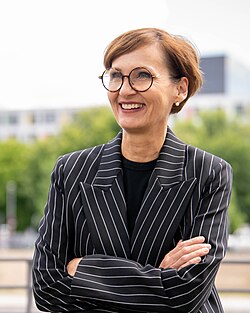 Bettina Stark-WatzingerBettina Stark-Watzinger (born 12 May 1968) is a German…Affiliated
How the record is sourced and how the score is derived.
The score is formula-derived (Factrail formula v1, version 1.0.0), not an editorial verdict. Read the methodology.
By the Factrail desk · Method: how we source and score · Last reviewed
Dispute a fact on this pageNamed here, or represent someone who is? Request a right of reply.
People and organizations as listed in the Related section of this page; facts, drivers and the pages that name it as listed in the blocks here. Counts, not a rating.