
Ulla Jelpke
Ursula Jelpke, known as Ulla Jelpke (born 9 June 1951 in Hamburg), is a German journalist and politician.
- Facts0
- Drivers0
- Indicators0
Ursula Jelpke, known as Ulla Jelpke (born 9 June 1951 in Hamburg), is a German journalist and politician.
Ursula Jelpke, known as Ulla Jelpke (born 9 June 1951 in Hamburg), is a German journalist and politician. She was a member of the Bundestag from 1990 to 2002 and from 2005 to 2021, and the domestic-policy spokesperson of her parliamentary group, listed by the chamber for the later terms as spokesperson for the Die Linke group. She entered in 1990 as an independent member of the Party of Democratic Socialism group and joined that party only in 2005. In May 2010 Der Spiegel described her as elected on the state list of North Rhine-Westphalia, with constituency offices in Dortmund and Münster, and as the group's interior-policy spokesperson.
The Bundestag's archived biography records training as a hairdresser, clerk and bookseller, a second-chance degree as a Diplom-Sozialökonomin in 1993, and work as a volunteer in the prison service from 1981 to 2000. The same text says she was active on the left in the late 1960s, above all in the autonomous women's movement and in the peace and environmental movements. Neues Deutschland, reporting her decision to leave parliament, placed the Kommunistischer Bund and the Grün-Alternative Liste on that path, and noted that she sat for the Liste in the Hamburg Bürgerschaft in the 1980s. The chamber's biography dates two elections to the Bürgerschaft between 1981 and 1989, with her work concentrated in the interior, legal, women's and social committees, and three years as the group's women's-affairs officer under the rotation rule. From 2002 to 2005 she headed the domestic-politics desk of the Berlin daily junge Welt.
In the Bundestag she worked on interior and security policy, migration rules and what Neues Deutschland called repression against left-wing structures, and answers to her minor interpellations were regularly taken up by national media. The Frankfurter Rundschau credited her with hundreds of minor interpellations on flight and migration and called her one of her party's most recognizable voices on those subjects. In the 19th electoral term she was a full member and the group's lead member of the Committee on Internal Affairs and Homeland, and a deputy member of the Committee on Legal Affairs and Consumer Protection.
In the June 2008 debate on a new law for the Federal Criminal Police Office, the Neue Zürcher Zeitung reported that she told the chamber the government wanted to rebuild National Socialist structures and that what was being created was "eine geheim ermittelnde Staatspolizei". The paper wrote that the SPD called the remark a serious misstep and demanded an apology in the Bundestag, that CDU deputy group leader Wolfgang Bosbach accused her of mocking the victims of the Nazi dictatorship, and that the Greens also distanced themselves. In May 2010 Der Spiegel reported a greeting she had sent to former officers of the Stasi foreign-intelligence branch, the Hauptverwaltung Aufklärung, praising their "mutigen Einsatz für den Frieden" and describing their post-reunification imprisonment, contrasted with unpunished operations of the Federal Intelligence Service, as "ein himmelschreiendes Unrecht". The executive board of the Left group told Spiegel the greeting had not been commissioned by it.
In November 2020 she wrote to Left colleagues from North Rhine-Westphalia that she would not stand in the 2021 federal election, because it was time for newer members to follow. By 1 December 2021 the Frankfurter Rundschau was interviewing her as a departing member of the Bundestag. In that interview she said she had turned 70 that year and had been politically active since the age of 18. She described the power of a parliamentary mandate to get answers from ministries, where nongovernmental groups often received none, as "eine privilegierte Position".
Ulla Jelpke was born on 9 June 1951 in Hamburg. Bundestag biographies use that forename, as does the preferred heading in the authority file of the German National Library; the same file also records Ursula Jelpke as a name variant. Published accounts do not name her parents. In 2021 she said she came from a working-class family and had studied on the second-chance route.
Die Zeit reported in 2001, from her account, that at the age of 16, after a rape, she gave birth to a daughter and consented to a confidential adoption (Inkognito-Adoption), in which only the adoptive parents knew the birth mother's name. She later looked for the child and, after 22 years, asked in a magazine article that her daughter get in touch; the adoptive family then made contact. By the time of the interview the daughter was 34 and the two had known each other for twelve years. Jelpke said they had a very good relationship, and that she was glad the law had not then permitted a fully anonymous adoption: in her desperation she might have used it, and finding her daughter later would have been much harder.
Der Spiegel reported in 2008 that she had lived for five years in a girls' home which she described as prison-like (knastähnlich). Elected spokesperson for the home, she negotiated over going-out times and pocket money. The parliamentary biography, which the Bundestag says is based on members' own information, lists completed training as a hairdresser (Friseurin), commercial clerk (Kontoristin) and bookseller (Buchhändlerin), without dates for those apprenticeships, and states that from 1981 to 2000 she was active as a Strafvollzugshelferin, a prison welfare helper.
The Archiv Demokratischer Sozialismus at the Rosa Luxemburg Foundation dates her higher education to 1986–1993 at what it calls the Hamburger Universität für Wirtschaft und Politik, with a 1993 degree as Diplom-Soziologin. The national library record likewise gives the academic degree Diplom-Soziologin and lists sociologist and economist among her occupations.
Bundestag biographies, again drawn from her own details, agree on a 1993 completion via the second educational path (Zweiter Bildungsweg) but not on the title. For the 18th electoral period the text reads Diplom-Soziologin and Volkswirtin; for the 19th it reads Diplom-Sozialökonomin.
The school behind those labels was, during her enrolment, the Hochschule für Wirtschaft und Politik (HWP), not yet the university named in later biographies. It opened on 1 November 1948 as the Akademie für Gemeinwirtschaft, founded to train staff for publicly oriented enterprise and, from the outset, to admit people without the Abitur if vocational training and work experience and an entrance test were judged sufficient. Renamed the Akademie für Wirtschaft und Politik in 1961, it became the HWP in 1970 and moved to Von-Melle-Park 9. From 1979 graduates received a Diplom rather than the earlier title of Betriebs-, Volks- or Sozialwirt. In 1981 the HWP added a nine-semester university degree, the Diplom-Sozialökonom or Diplom-Sozialökonomin, made up of a six-semester first stage and a three-semester project stage, alongside the shorter diplomas. The German Rectors' Conference placed it among the universities in 1993; the name HWP – Hamburger Universität für Wirtschaft und Politik dates only from August 2001. On 1 April 2005 the HWP became the department of social economics (Fachbereich Sozialökonomie) in the University of Hamburg.
Examination regulations in force from 2002, after Jelpke had finished, still show that two-stage pattern. Diplomprüfung I conferred, according to the chosen field, a Diplom-Betriebswirt, Diplom-Sozialwirt, Diplom-Volkswirt or Diplom-Wirtschafts- und Arbeitsjurist; Diplomprüfung II conferred the Diplom-Sozialökonom. A degree titled Diplom-Soziologe is not among them. The 19th-period title Diplom-Sozialökonomin is the HWP's advanced degree; "Diplom-Soziologin und Volkswirtin" names disciplines the programme joined, but the record does not establish two separate diplomas. She said in 2021 that she was just reaching the end of her studies when she entered the Bundestag, which matches a course finished in 1993.
Ulla Jelpke's political activity began in Hamburg in 1968, when she was 17. After leaving her family home she lived in an open girls' residential home, which she later described as almost prison-like, and from there made contact with the West German student movement. She joined demonstrations against the Vietnam War, began reading Marx and Lenin, and with others from the home entered the trade-union youth.
Her archived Bundestag biography, based on her own information, places those years "above all in the autonomous women's, peace and environmental movements." The record of her time in the Kommunistischer Bund is narrower and, on feminism, partly at odds with that summary. Michael Steffen's history of the group, drawing on a 1997 interview with her, notes a strong interest in women's politics but states that she was not a member of its women's working group. In a 1981 debate in the paper Arbeiterkampf she argued for returning women's policy to what she called the "communist" essentials of 1975 and for ending an adaptation to the autonomous women's movement. A text she co-signed was headed "Wir sind keine Feministinnen, na und!"
The same year she edited Das höchste Glück auf Erden. Frauen in linken Organisationen, a collection of essays and interviews published in Hamburg by the KB-linked Buntbuch-Verlag (272 pages; ISBN 3-88653-028-0).
The Kommunistischer Bund (KB) was one of the K-Gruppen formed in the Federal Republic from the post-1968 radical left. It was set up in Hamburg in the autumn of 1971 by the merger of the Sozialistisches Arbeiter- und Lehrlingszentrum (SALZ) and the Kommunistischer Arbeiterbund Hamburg; smaller Marxist-Leninist circles then joined. Its statute, published in November 1971, took Marxism–Leninism as its basis, cited the Chinese Cultural Revolution as an organizational model, and adopted democratic centralism. The KB did not declare itself a party and issued no programme, only the statute. A founding member, Heiner Möller, later said the group "had 'Maoists'" but "was not a 'Maoist' organization."
Its center was northern Germany, especially Hamburg. Practical work concentrated on factories and trade unions and, later, on the anti-nuclear movement. The fortnightly Arbeiterkampf was its central organ; in 1977 the average print run exceeded 23,000. Steffen counts nearly 2,500 members and sympathizers that year. Resignations in 1978 and the split of the "Gruppe Z" in December 1979, many of whose members moved toward the Greens, cut that figure to about 1,000; by 1984 it was a little over 300.
Jelpke came in through the Hamburg SALZ and belonged to the KB from its formation. She worked first in printing, then in metalworking. The Leitendes Gremium, of at most twelve people and kept semi-secret, was all male until 1976, when she, Heidi Kaiser and a third woman joined it. Jelpke took responsibility for the metal committee. She was a paid functionary from the later 1970s until the KB's financial crisis of 1981, the year she also helped found the KB-dominated Hamburger Alternative Liste, and she left the organization's structures in the mid-1980s. Later accounts that call her a KB co-founder, or a member of its leadership in 1982, go beyond this: the 1971 step was a merger of groups, and her documented seat on the Leitendes Gremium dates from 1976.
Argument over German reunification split the remainder. A majority wanted to work with the Party of Democratic Socialism; a minority moved toward the later anti-German current. Of 235 members meeting in Hamburg in March 1990, the balance was about 60 to 40. A last congress in Hamburg-Wandsbek on 20 April 1991, with about 200 members and sympathizers present, dissolved the KB. From the majority, Jelpke and Andrea Lederer entered the first all-German Bundestag in 1990 on the PDS/Linke Liste ticket.
The Grün-Alternative Liste (GAL) was formed in Hamburg in spring 1982 so that the local Greens and the Alternative Liste could run together. A founding congress on 13 and 14 March 1982 adopted a rule that deputies be replaced after about two years, refused posts in the city senate, and left open support for a Social Democratic minority administration. Thea Bock was the lead candidate.
On 6 June 1982 the GAL won 7.7 percent and nine seats, 73,404 votes, and entered the Hamburgische Bürgerschaft for the first time. The Social Democratic Party lost its absolute majority (42.7 percent, 55 seats); the Christian Democratic Union was largest (43.2 percent, 56 seats). Talks on tolerating a senate under Klaus von Dohnanyi failed, the parliament dissolved itself, and a snap election on 19 December 1982 restored an SPD majority (51.3 percent, 64 seats). The GAL fell to 6.8 percent and eight seats.
Jelpke’s Bundestag biography, based on her own information, says she was twice elected a GAL deputy between 1981 and 1989. No Bürgerschaft election was held in 1981; the GAL’s first seats date from June 1982. In March 1987 the taz called the women’s group her second time in the chamber.
The biography says she worked mainly in the interior, legal, women’s and social committees, and that rotation took her out of the mandate for three years as Frauenreferentin of the GAL group. In the 1986 campaign Der Spiegel identified her in that post and quoted her remark that much of the criticism of an all-women list was kept to the pub.
For 9 November 1986 the GAL stood only women, a plan of the “Freche Frauen” around Adrienne Goehler. Regula Bott called it a mystification of femininity; Thomas Ebermann said being a woman did not itself ennoble a politician; and the Rosa Biber, a gay group, were refused places. Goehler later said the split between fundamentalist and realist wings helped the list pass. Headed by Christina Kukielka, it won 10.4 percent and 13 seats. The CDU took 41.9 percent and 54 seats and the SPD 41.7 percent and 53.
On 26 November 1986 the thirteen deputies, Jelpke among them, entered in pinstripe suits, with ties or bow ties and Kasper puppets, after Dohnanyi had called the campaign a puppet theatre. Thea Bock chaired the group. Conditions for tolerating an SPD senate included a nuclear exit, an end to heavy metals in the Elbe, residence rights for foreigners, and a 50 percent quota for women in the public service. The Hamburger Abendblatt later reported that support for the SPD minority budget brought five million marks for alternative projects. In March 1987 Jelpke told the taz that more women were speaking in public, including on arms exports. On 17 May 1987 the GAL fell to 7.0 percent and eight seats, and the FDP joined an SPD-led senate.
The biography dates the end of her time as a GAL deputy to 1989. In July 1990 the taz still listed her, with Michael Stamm, as a Green and GAL member and as a former Bürgerschaft deputy, while Hamburg leftists prepared a “Linke Liste” to work with the Party of Democratic Socialism. Stamm said he would leave; the article recorded no such statement from Jelpke. By 24 September 1990 she headed the North Rhine-Westphalia reserve list of the Linke Liste/PDS and called the Greens a group without perspective, occupied with SPD coalitions rather than opposition. The taz described her as a left-wing feminist who had reached the GAL through the Kommunistischer Bund.
Jelpke entered the Bundestag at the election of 2 December 1990 and sat through the 12th, 13th and 14th terms, until 2002. She did not win a constituency. The Federal Statistical Office’s register of members elected from state lists names her as the Party of Democratic Socialism (PDS) candidate in first place on the North Rhine-Westphalia list. In September 1990 a supporters’ meeting of the Linke Liste/PDS in Dortmund had put her, a Hamburg politician from the Grün-Alternative Liste, forward for that place; the tageszeitung reported that formal confirmation by the electoral party was still expected. Nationally the PDS took 2.4 percent of the second vote and 17 seats. Neues Deutschland later wrote that from 1990 to 2002 she was a non-party member of the PDS parliamentary group and, once the party had one, of its Fraktion, and that she joined the PDS only in 2005.
The biography for the 13th term calls her, from 1990, interior-policy spokesperson of the PDS group. She was returned in 1994 again from first place on the North Rhine-Westphalia PDS list, in a year when the party won 30 seats on 4.4 percent of the national second vote. In 1998 she again headed that list and also stood in constituency 059, Cologne I. The PDS then took 5.1 percent and 36 seats, and the 14th-term biography describes her as speaker of the interior and legal-policy working group of the PDS Fraktion.
In 2002 she was second on the PDS list in North Rhine-Westphalia, behind Ursula Lötzer. The party received 4.0 percent of the second vote and two seats, and she was not returned. From 2002 to 2005 she was interior-policy editor at the Berlin daily junge Welt.
She returned at the 2005 election, the year Neues Deutschland dates her entry into the PDS, and then sat until the end of the 19th term. The state returning officer’s notice of members elected from lists places her fifth for Die Linkspartei (Die Linke) in North Rhine-Westphalia, behind Oskar Lafontaine, Ursula Lötzer, Inge Höger-Neuling and Paul Schäfer. By 2006 the Bundestag called her interior-policy spokesperson of the group Die Linke. The party of that name was formed in 2007 by the merger of the PDS and the Electoral Alternative for Labour and Social Justice (WASG); the two had already campaigned in alliance in 2005.
Further North Rhine-Westphalia list places were second in 2009, third in 2013 and fifth in 2017, and she was elected from the list each time. In the 17th term her constituency of candidacy was Dortmund II (Wahlkreis 144), where the Left took 10.6 percent of the first votes (14,819); Ursula Burchardt of the SPD won the seat with 42.4 percent. In the 18th and 19th terms the constituency was Dortmund I (Wahlkreis 142). There the Left received 6.0 percent of the first votes in 2013 (8,835), against 45.4 percent for Marco Bülow of the SPD, and 7.7 percent on 24 September 2017 (11,874), when the SPD won the seat with 38.8 percent.
On 26 November 2020 she emailed Left members from North Rhine-Westphalia that she would not stand again, so that others could move up. The 19th-term biography dates her membership from the constitution of that Bundestag on 24 October 2017 until 26 October 2021.
The North Rhine-Westphalia list was the route for every term she served: PDS place 1 in 1990, 1994 and 1998; PDS place 2, without a seat, in 2002; then Left places 5, 2, 3 and 5. Those notices give her residence as Hamburg in 2005 and 2009 and as Berlin in 2013 and 2017. She was not elected in Dortmund II or Dortmund I.
In the 13th term she was a full member of the Interior Committee, of the Committee on Electoral Scrutiny, Immunity and the Rules of Procedure, and of the study commission on so-called sects and psycho-groups, and a deputy member of the plutonium investigative committee. A biography issued at the start of the 16th term describes her, for 1990–2002, as chair of the PDS working group on interior and legal policy and as the group’s interior spokesperson. In the 16th term she was a full member of the Interior Committee and a deputy member of the Committee on Economic Cooperation and Development. In the 17th she remained on the Interior Committee and was a deputy member of the Legal Affairs Committee.
In the 18th term she was a full member and Obfrau—the group’s lead member—of the Interior Committee, and a deputy member of the Committee on Human Rights and Humanitarian Aid and of the Committee on Legal Affairs and Consumer Protection. In the 19th the interior committee was the Committee on Internal Affairs and Homeland (Ausschuss für Inneres und Heimat). She was again a full member and Obfrau, and a deputy member of the Committee on Legal Affairs and Consumer Protection and of the parliamentary accompanying body on the COVID-19 pandemic. The same biography, which the Bundestag says rests on members’ own accounts, still lists her as interior-policy spokesperson of the Left group.
As interior-policy spokesperson for the Party of Democratic Socialism and, after 2007, for Die Linke, Jelpke used minor interpellations as a standing check on the government. In the 17th Bundestag (2009–2013) a Zeit count recorded 958 written and oral questions from her, more than from any other member. She said the Frankfurter Allgemeine Zeitung had called the method “Behördenerziehung,” a label she accepted because it forced agencies to keep statistics and state a public position, including on right-wing violence, and that the Interior Ministry knew her as “die Nervensäge des Innenministers.”
In April 2007 the Defence Ministry told Jelpke and the Left group that about 1,100 personnel were planned for the G8 summit at Heiligendamm, without coercive powers, and that the scale would be clear only shortly before the meeting. Der Spiegel reported that Mecklenburg-Vorpommern had already had Tornado flights and Fennek vehicles approved in April, and that Jelpke was seeking a Council of Elders reprimand for misleading parliament. In October 2011 she co-signed a question on mobile operators keeping traffic data, including cell location, for up to six months. The Economics Ministry replied that this was billing storage under the Telecommunications Act, not the retention struck down in 2010; it withheld a breakdown by company, said the network regulator was checking, and saw no need to act because the data-protection commissioner had not objected. In 2016 the Interior Ministry told her that the Federal Police kept no statistics on people suspected of terrorism during a check, which she called “völlig unglaubwürdig.”
On 9 November 2007 the Bundestag passed the law reorganising telecommunications surveillance and implementing the EU data-retention directive: 366 of 524 members present voted in favour, 156 against and two abstained. The CDU/CSU–SPD majority carried the bill; the FDP, Alliance 90/The Greens and the Left voted against it. Providers were to store traffic and location data for six months. Justice Minister Brigitte Zypries said Germany was “not on the way to a surveillance state”; CDU deputy Siegfried Kauder said the coalition wanted “not a glass person, but a glass criminal.” At first reading in July, Jelpke had called the draft “still more observation and snooping on a scale that hardly allows any control” and a “fundamental-rights interference of maximum scatter,” which she said was unconstitutional.
On 2 March 2010 the Federal Constitutional Court voided sections 113a and 113b of the Telecommunications Act and the related retrieval rule in the Code of Criminal Procedure, as incompatible with Article 10 of the Basic Law. It held that six months’ storage without a specific occasion was not forbidden in itself, but that the statute lacked sufficient rules on security, purposes, transparency and legal protection. Jelpke was listed among supporters of the “Freiheit statt Angst” march in Berlin on 11 October 2008, called by 117 organisations against retention and other surveillance. Organisers put the crowd at about 50,000 and the police at fewer than 20,000.
In June 2007 Jelpke co-sponsored a Left motion stating that covert online searches of computers had no statutory basis and demanding that work on them stop. On 12 November 2008 the Bundestag nevertheless gave the Federal Criminal Police Office preventive powers against international terrorism, including secret online searches and surveillance inside homes, by 375 votes to 168 with six abstentions. The coalition supplied the majority; FDP, Greens and Left opposed the bill. Interior Minister Wolfgang Schäuble told critics to stop “defaming the liberal constitutional state” and said the measures were to prevent serious crimes. Jelpke called it a “dangerous step into the surveillance state” and a “German FBI,” and compared BKA self-supervision of online searches to putting an alcoholic in a liquor shop. Gisela Piltz (FDP) likewise rejected a “German FBI,” and Wolfgang Wieland (Greens) a “monster authority.” On 20 April 2016 the court held the secret powers compatible in principle, but the 2009 rules too vague and lacking safeguards for private life and oversight; most could continue, restricted, until 30 June 2018.
Article 35 of the Basic Law allows the Bundeswehr to assist the Länder in disasters; Article 87a otherwise limits it to defence. After the Heiligendamm Tornados and Fenneks, Renate Künast (Greens) said parliament had been misled in the service of a gradual domestic role for soldiers, and Max Stadler (FDP) called flights over demonstrators a “disastrous signal.” On 3 July 2012 the court’s plenary held that Article 35 does not exclude military weapons in a catastrophe of exceptional scale, as a last resort decided by the whole federal government, but ruled out action against demonstrators. Hans-Peter Uhl (CSU) said some attacks would overwhelm the police. Jelpke told the tageszeitung that “law-and-order politicians” could now keep military means “in the threatening background” for large demonstrations and mass strikes.
On 26 May 1993 the Bundestag changed the constitutional asylum right by the two-thirds majority required to amend the Basic Law. Of 654 votes on the bill revising Articles 16 and 18, 521 were in favour, 132 against and one abstention. The majority was the CDU/CSU, the FDP and part of the SPD. New Article 16a keeps asylum for persons persecuted on political grounds, but bars it for anyone entering from a member state of the European Communities or another "safe third country" where the Refugee Convention and the European Convention on Human Rights apply. Those states are named by a law needing Bundesrat consent; removal may proceed during a challenge, and statute may list safe countries of origin. With only such states on its land borders, the constitutional claim is usually closed, though other protection remains. The law of 28 June 1993 (BGBl. I p. 1002) took effect on 30 June 1993. The same night the benefits bill later called the Asylbewerberleistungsgesetz passed, 540 to 98, with 13 abstentions.
Jelpke, for the PDS/Linke Liste, said the change had been hurried through on the back of neo-fascist and racist violence, quoted press lines calling Roma a "plague" and a "Seuche", and closed: "Demokratische Politik wurde durch Populismus ersetzt. Wir lehnen dieses Gesetz ab." The 132 votes against were 101 SPD members, the PDS/Linke Liste deputies on the list (including her), Alliance 90/The Greens, seven FDP members including Gerhart Baum and Burkhard Hirsch, and independent Ulrich Briefs. In May 1996 the Federal Constitutional Court held Article 16a, including the third-country rule, compatible with Article 79(3).
The Asylbewerberleistungsgesetz set a lower rate outside ordinary social assistance. On 18 July 2012 the Federal Constitutional Court held the cash sums in section 3, barely altered since 1993, below the dignified minimum under Article 1(1) and the social-state clause, and said dignity could not be cut to deter migration. The residence obligation (Residenzpflicht) was narrowed rather than repealed: from 1 January 2015 it generally ends after three months, under a law the Bundestag passed on 4 December 2014 and the Bundesrat on 19 December. In June 2010 Jelpke and Die Linke moved to abolish it, calling it unique in Europe and likening it to apartheid.
The Asylpaket II, in force on 17 March 2016, suspended family reunification for subsidiary protection; the pause was extended, and from 1 August 2018 relatives' permits were capped at 1,000 a month. Jelpke's bill of 5 June 2018 would have restored a legal claim, arguing the forecast numbers had been too high. On 1 August 2018 Bavaria turned initial reception centres in all seven regions into ANKER sites, first to carry out the federal coalition agreement: Interior Minister Joachim Herrmann said people would stay until a decision and move to a municipality, as a rule, only if recognised.
On 15 December 2016 a charter took 34 rejected men to Kabul. Interior Minister Thomas de Maizière said about a third had convictions and that Afghanistan was "hinreichend sicher" for them; 16 of 50 people listed had absconded. Linke chair Katja Kipping called further flights a human-rights breach. Jelpke's question of 10 March 2017 recorded three flights (34, 26 and 18 people), court blocks in single cases, and opposition from churches, refugee groups and Amnesty International. After 19 people were flown from Düsseldorf in January 2018, she told Der Tagesspiegel that removal to a war zone should not arise. After a Mediterranean sinking of at least 800 people, the European Council on 23 April 2015 tripled funds for Frontex without making rescue the task. Her European Union motion of 6 May 2015, "Das Mittelmeer darf nicht zum Massengrab werden", demanded legal routes, a civilian rescue service and Frontex's abolition.
In 1993 she also edited Rassismus in Europa (Pahl-Rugenstein, Bonn, 96 pages). On 13 November 2017 she asked how many antiziganist offences, victims and attacks on Sinti and Roma homes and vehicles had been recorded since 2015, setting the questions against the Porajmos, the Nazi genocide of European Sinti and Roma.
From 2002 to 2005, between terms in the Bundestag, Jelpke headed the domestic-politics desk of the Berlin daily junge Welt, according to the archived biography for the 19th electoral term, which the Bundestag says rests on members' own information. Der Spiegel reported in 2006 that after leaving parliament she became the paper's Innenpolitikchefin and wrote that the Party of Democratic Socialism had to stop currying favour with the apparatus of power.
The same article recalled that in the GDR junge Welt had been the central organ of the Free German Youth, quoted editor-in-chief Arnold Schölzel calling the paper Marxist and anticapitalist, and quoted the Federal Office for the Protection of the Constitution as having found indications of extremist efforts. The Süddeutsche Zeitung reported that on 18 July 2024 the Verwaltungsgericht Berlin dismissed the publisher's lawsuit, so that the paper remains listed in the federal Verfassungsschutzbericht as left-wing extremist and under observation, and that the court accepted the description "Marxist-Leninist" because of repeated positive references to Lenin.
Ossietzky, a biweekly for politics, culture and economics, lists Jelpke as a Herausgeberin with Rainer Butenschön, Daniela Dahn, Rolf Gössner and Otto Köhler; the publishing association is Die Weltbühne e.V. On 14 November 1997 the trade paper kress reported that a circle around Eckart Spoo, then a Frankfurter Rundschau correspondent, had founded what it called a modern Weltbühne, named Ossietzky after Carl von Ossietzky, the 1935 Nobel Peace Prize laureate. The magazine dates the founding to 1997, by former contributors to the Weltbühne after it ceased in 1993, and says the biweekly continues that antimilitarist and antifascist line. Neither the biography nor the masthead dates when she joined the Herausgeberkreis.
The German National Library records several short political books under Jelpke, Ulla (GND 109851463). In 1981 the Buntbuch-Verlag in Hamburg published Das höchste Glück auf Erden: Frauen in linken Organisationen, a 272-page illustrated volume she edited (ISBN 3-88653-028-0). In 1992 the PDS Rheinland-Pfalz and the Linke Liste Mainz issued two first editions in the series Podium progressiv, neither with an ISBN in the national bibliography. Die Eroberung der Akten (volume 13), edited by her with others, is a 184-page collection of analyses and documents on the origins and consequences of the Stasi Records Act. Zur Situation im Strafvollzug: eine Zwischenbilanz (volume 12) is her own 90-page interim account of conditions in the prison system. Rassismus in Europa, which she edited with others, followed in 1993 from Pahl-Rugenstein in Bonn as volume 16 (96 pages, ISBN 3-89144-157-6).
She did not edit Ruck-wärts in die Zukunft: zur Ideologie des Neokonservatismus (Duisburg: Duisburger Institut für Sprach- und Sozialforschung, 1998, ISBN 3-927388-64-5; 311 pages in the national bibliography), whose named editor is Annelie Buntenbach, with others. Unrast, which distributes it, describes an analysis of neoconservatism in the 1990s that joined neoliberal economic modernization to restorative value politics and authoritarian ideas of the state. With Katina Schubert and Mark Holzberger she wrote the chapter "Der Amsterdamer Vertrag und das Problem fehlender Demokratie in der europäischen Innenpolitik," on the Treaty of Amsterdam. The Portal für Politikwissenschaft notes that the occasion was Roman Herzog's Adlon speech.
Mit Links! 3 Jahrzehnte im Bundestag 1990–2021, edited by her, is absent from that search. The 225-page documentation, finalized in September 2021 and issued under her own responsibility, presents her parliamentary work over seven legislative periods, including the break from 2002 to 2005, and domestic-policy developments since 1990, from the security apparatus, antifascism and the Bundeswehr to prisons and asylum.
On 20 June 2008, in the first reading of a bill giving the Federal Criminal Police Office preventive counter-terrorism powers, Ulla Jelpke, interior spokesperson of Die Linke, told the Bundestag: "Was da geschaffen wird, ist eine geheim ermittelnde Staatspolizei. Das ist nun wirklich das Allerletzte, was wir brauchen können." She was attacking covert home surveillance, online searches and a national "Superpolizeibehörde"; the record shows applause from her group and an SPD call to talk about the SED instead, and does not name the Gestapo.
Other parties treated the phrase as that analogy. Reuters, in the Neue Zürcher Zeitung, reported an accusation that the government wanted to rebuild National Socialist structures; the SPD called it a "massiver Fehltritt" and sought an apology, and CDU/CSU deputy leader Wolfgang Bosbach spoke of mocking Nazi victims. He told Die Welt that equating the BKA with the Gestapo relativized "fürchterlichen Verbrechen". Sebastian Edathy demanded an apology in the chamber or by letter and called the comparison "entweder böswillig oder nicht zurechnungsfähig"; Dieter Wiefelspütz termed it "unterirdisch", while vice-president Wolfgang Thierse issued no reprimand but called it "hart an der Grenze der Zulässigkeit". Wolfgang Wieland of Alliance 90/The Greens said of a secret state police: "Die haben wir nicht, und die werden wir auch nicht bekommen."
Jelpke did not apologize. She said her aim had not been "zu vergleichen, was nicht zu vergleichen ist", but to stop a central police body gaining intelligence powers, and told Der Spiegel she had "einen wunden Punkt getroffen".
In May 2010 Jelpke sent a greeting, printed in junge Welt and on her website, to former officers of the Main Directorate for Reconnaissance, the foreign arm of the East German Stasi. More than twenty years after "der sogenannten Wende", she wrote, the "Stasi-Keule" still discredited "jede positive Erinnerung an soziale Errungenschaften der DDR" and criticism of capitalism, while anticommunists worked "mit Schaum vorm Munde" at the "Dämonisierung" of the German Democratic Republic and the Stasi. "Umfangreiche nüchterne wissenschaftliche Untersuchungen" had, she said, come "aus Euren Kreisen"; one need not share every view, but hardly any service had been so fully examined by its own former staff. Many had been jailed for their "mutigen Einsatz für den Frieden", while spies of the Federal Intelligence Service, "eines von Altnazis aufgebauten aggressiven imperialistischen Dienstes", went unpunished — a "himmelschreiendes Unrecht".
The group's board told Spiegel it had not commissioned the text, amid talks in North Rhine-Westphalia on a Social Democrat–Green–Left government. CSU spokesman Stephan Mayer called it "schlicht unwürdig" and sought an apology to Stasi victims; CDU deputy Arnold Vaatz said it aimed "im Kern auf die Abschaffung der Demokratie". Ronald Lässig of the Vereinigung der Opfer des Stalinismus said the Stasi had "ein ganzes Volk systematisch unterdrückt und zwar mit allen Mitteln".
On 27 May she wrote that she did not mean to "Verfehlungen oder sogar Verbrechen zu verharmlosen", because such acts had chiefly harmed socialism and often hit convinced socialists. Rainer Eppelmann and Anna Kaminsky of the Bundesstiftung zur Aufarbeitung der SED-Diktatur said this still ignored victims who were spied on, broken by Zersetzung, imprisoned, kidnapped or killed unless they had professed socialism, and called it a mockery of those victims.
In July 2008, after the Kurdistan Workers' Party abducted three Germans, the Left withdrew a motion against treating the PKK as a criminal organization. Karl-Theodor zu Guttenberg said a "PKK-Unterstützermilieu" reached Bundestag offices and that Jelpke's had a "besondere Koordinatorenrolle". Der Spiegel reported that aide Nick Brauns also spoke for a Berlin Kurdistan committee, quoted her "Es besteht Diskussionsbedarf", and noted an uncoordinated Turkey trip "auf Bitten kurdischer Freunde"; it alleged contacts, not a conviction.
In December 2007 the tageszeitung reported a Bundestag reading she hosted for junge Welt correspondent Heike Schrader days after Schrader's arrest on suspicion of late-1990s membership of the banned Revolutionary People's Liberation Party/Front. Jelpke called her "eine couragierte Journalistin" under an "absurdes Ermittlungsverfahren" and the arrest a "gezielten Einschüchterungsversuch"; Schrader said the group had then been legal.
In a March 2006 Kontraste item on a Left row over Cuba, Jelpke was shown saying Cuba chiefly respected human rights and, asked about press freedom and political prisoners, answering "Ja, aber ich finde das jetzt eine kleinkarierte Diskussion." She called this a "böswillige Unterstellung": she had meant the interviewer's manner, and another question had been cut in before the sentence.
In January 2014 Focus, citing police and domestic intelligence, alleged a "Späh-Angriff": a list of public Bundeswehr events answered to her on 19 September 2013 appeared on Indymedia two days later, before Bundestag publication. Bosbach said that exceeded parliamentary control and served "den Kampf gegen unseren Staat". Jelpke told Telepolis that advance sharing of public answers was routine; no charge followed.
In 1993 the Landgericht Bonn fined her, then of the Party of Democratic Socialism, 15 daily rates of 200 marks for a 1991 Bannmeile breach: handing out a press release at the Chancellery during asylum talks. In October 2019 in Neukölln she called Clankriminalität "irreführend und diskriminierend" and a "Dreckskampagne" against people of Muslim or Arab origin. Scholar Ralph Ghadban called that "verantwortungslos" and "ein Akt der Sabotage".
The Bundesamt für Verfassungsschutz collected information on members of the Bundestag group of the PDS and, after 2007, Die Linke. In May 2014 the federal government told parliament that the office held personal information on 25 group members at the end of the 17th electoral term and on 19 when the 18th began in September 2013, before it ended targeted observation of the party’s Bundestag and European Parliament members. A party file opened in 1995 held about 9,600 items.
In January 2012 Der Spiegel named Jelpke among 27 Linke members under observation. In June 2013 it reported an internal dossier that still treated at least 25 as suspected members of groupings the office called openly extremist, including the Antikapitalistische Linke and the Kommunistische Plattform.
A notice of 12 February 2007, answering her request under section 15 of the Federal Constitutional Protection Act, said open-source material had built up since a 1997 disclosure. It recorded her signature on the 2006 appeal “Für eine antikapitalistische Linke,” contacts the office associated with left-wing extremism, Kurdish solidarity work, and a listing in the journal of Rote Hilfe among signatories of a 2002 appeal. Subject files on those inner-party groupings continued after November 2012 and could still name members of parliament.
On 17 September 2013 the Second Senate of the Bundesverfassungsgericht held, in Bodo Ramelow’s case (2 BvR 2436/10 and 2 BvE 6/08), that observation interferes with the free mandate under Article 38 of the Basic Law. It is lawful only if proportionate, in particular where a member misuses the mandate against the free democratic basic order; party membership alone allows only a temporary check. Ramelow’s long observation failed that test, and the Senate set aside a judgment of the Bundesverwaltungsgericht of 21 July 2010.
The office then conceded claims in Cologne. On 21 August 2014 the Verwaltungsgericht Köln, by acknowledgment judgment 20 K 1468/08, ordered destruction of Gregor Gysi’s personal file and deletion of his stored data after the office acknowledged the claim.
Jelpke has written that a 2014 judgment of the same court ordered deletion of her data, destruction of her file, and an end to future collection and use. In the question answered that May she argued that Karlsruhe’s test had not been met for any member of the group, and that anticapitalism and extra-parliamentary ties were not breaches of the Basic Law.
The government said observation of the party’s Bundestag and European Parliament members had ended for reasons of priority. Questioners noted that a letter of 13 March 2014 from interior minister Thomas de Maizière to Gysi did not concede a legal duty to stop, and the office said it would still record members who came to notice over efforts it treated as extremist. In Petra Pau’s case the office told the Cologne court on 21 February 2013 that observation had rested only on her leading party role; the deletion claim was then settled.
In May 2008 Jelpke said the Verfassungsschutz served “to spy on and defame political opponents” and should be abolished. The same year she pressed Die Linke to demand dissolution of the intelligence services, including the Bundesnachrichtendienst. The party executive’s compromise, reported by the taz, made abolition a “long-term aim” while also treating reformed services as legitimate; she wanted “long-term” removed. In 2019 she co-sponsored printed paper 19/8960, which called the services “a foreign body in democracy” and proposed replacing the domestic office with a coordination body without collection powers and a public foundation. That remained a party demand, not a court finding.
In November 2020 Ulla Jelpke told fellow members of the Die Linke delegation from North Rhine-Westphalia that she would not stand in the 2021 federal election. Neues Deutschland reported the email, in which she wrote that it was time “for new comrades to move up” and thanked the state association. The paper described her as one of the group’s most prominent members—her time in the Bundestag, broken only from 2002 to 2005, went back to 1990—and said no obvious successor was in sight. In July 2021, recently turned 70, she told the same paper that the intensity of the work made it reasonable to have time for herself, and that she had no fixed plans.
At the election of 26 September 2021, Die Linke’s share of second votes fell from 9.2 percent in 2017 to 4.9 percent. The party still returned to the Bundestag, with 39 seats, because it won three constituency mandates, and the taz reported that Jelpke, the economic-policy specialist Fabio De Masi, the foreign-policy specialist Stefan Liebich and the former Attac managing director Sabine Leidig had already declined to run again. The 20th Bundestag held its constitutive sitting on 26 October 2021, opening the new electoral term and ending the mandate she had held in the 19th. As a record of the departure she issued a 225-page documentation, Mit Links! Drei Jahrzehnte im Bundestag, on her work as a member.
In an interview the Frankfurter Rundschau published on 1 December 2021, she called the mandate a “privileged position,” because an MP’s office could press ministries over individual visa and family-reunification cases in a way non-governmental groups often could not. She said governments had stopped showing shame about pushbacks at the external borders of the European Union, and she doubted that the incoming coalition of the Social Democratic Party, Alliance 90/The Greens and the Free Democratic Party would move far on asylum. She argued that the Federal Office for Migration and Refugees should be less exposed to political direction, and said she could not imagine a Left group without an offensive refugee policy even though the caucus had shrunk by nearly half. After nearly 30 years in the Bundestag and five in the Hamburg Parliament, she wanted less constant pressure and time the mandate had crowded out, and she said she had no plan yet for staying in public debate.
The paper’s biographical note recorded that she had been a co-editor of, and a writer for, the fortnightly Ossietzky since 2002. The magazine’s masthead continued to list her as an editor, with Rainer Butenschön, Daniela Dahn, Rolf Gössner and Otto Köhler, including on the page for issue 23/2024. Topic pages for her name at Neues Deutschland and the taz show no articles after 2021.
Ranked by shared high-impact facts, then explicit ties, then shared drivers.
 Karl-Theodor zu GuttenbergKarl-Theodor zu Guttenberg (born 5 December 1971) is a…Affiliated
 Roman HerzogRoman Herzog (5 April 1934Affiliated
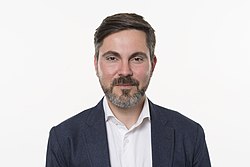 Fabio De MasiFabio De Masi (born 7 March 1980) is a German politician…Affiliated
 Petra PauPetra Pau (born 9 August 1963) is a German politician who…Affiliated
 Bodo RamelowBodo Ramelow (born 16 February 1956) is a German…Affiliated
 Jan KorteJan Korte (born 5 April 1977 in Osnabrück) is a German…Affiliated
How the record is sourced and how the score is derived.
The score is formula-derived (Factrail formula v1, version 1.0.0), not an editorial verdict. Read the methodology.
By the Factrail desk · Method: how we source and score · Last reviewed
Dispute a fact on this pageNamed here, or represent someone who is? Request a right of reply.
People and organizations as listed in the Related section of this page; facts, drivers and the pages that name it as listed in the blocks here. Counts, not a rating.